Author:SOP Work Pods Manufacturer TIME:2026-10-16
A fabric sample answers what a new interior could look like. It does not answer how much of that interior would need to change if one seat face required renewal. For buyers comparing office furniture meeting pods, that second question can change the preferred seating and finish configuration before an order is placed.
Plan upholstery replacement as a specific procurement choice, not a repair tutorial. Establish which surfaces are upholstered, whether any are independently serviceable, what the approved replacement includes and how the workplace would accommodate the work. Some offered assemblies may have fixed coverings with no separate renewal route. A clear limitation is more useful than an unsupported promise that every fabric can be changed.
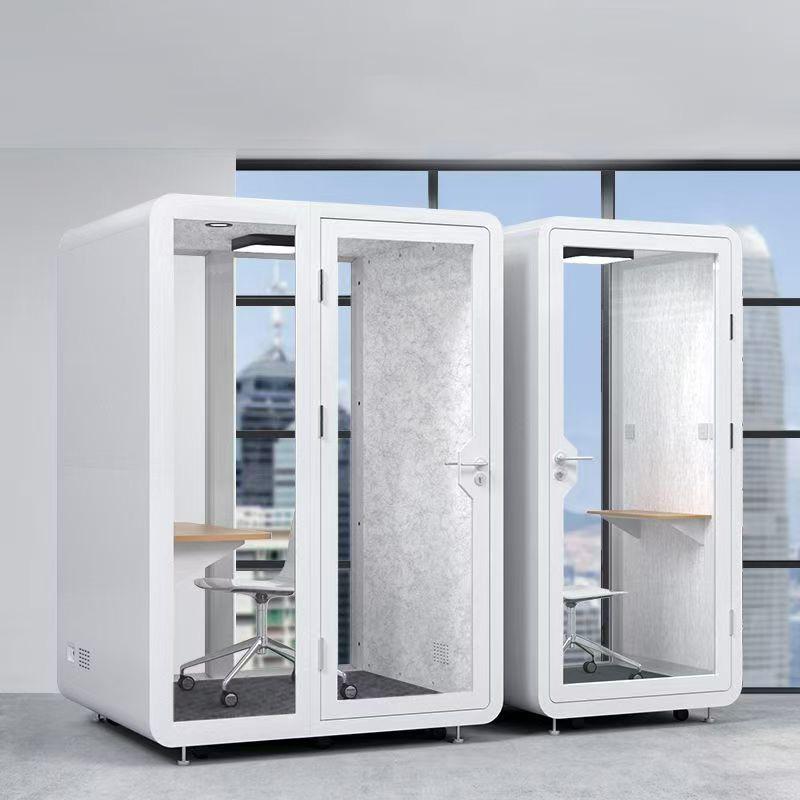
Mark the proposed interior drawing with distinct references for the seat face, backrest, loose cushion if included, fabric-faced wall areas and any independent chair. Use the supplier's component names when available. Do not label every soft-looking surface upholstery. A visible texture does not establish the material, its backing or how it is attached. The purpose of the map is to direct different questions to the right component, not to infer construction from an image.
Keep furniture and enclosure responsibilities separate. An independently supplied chair may follow its furniture provider's renewal route, while an integrated bench may belong to the pod configuration. A wall lining may be part of an assembly rather than a removable decorative layer. Ask which provider is responsible for each proposed fabric-bearing item and which components are excluded from the quotation. This prevents a broad statement about replaceable seating from being applied to surrounding wall surfaces.
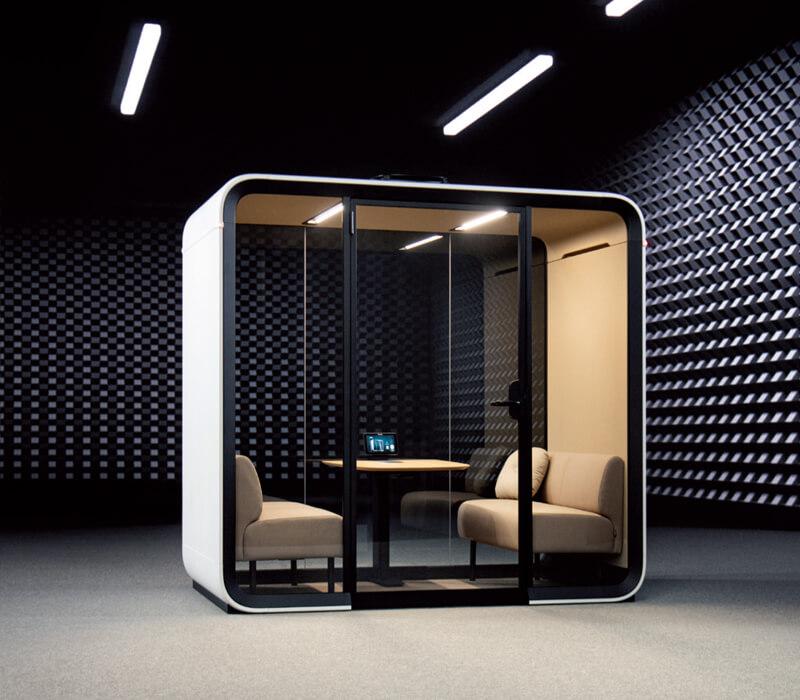
For each mapped surface, ask what would actually be supplied if that area needed renewal: a fitted cover, a complete upholstered cushion, a seat module, a finished panel or a larger assembly. These are possible service levels, not promised product features. Ask whether removal and fitting must be performed by the supplier, another approved provider or a designated service team. Do not lift a seat, peel a lining or open a fastening to find out. Request an explanation tied to the offered construction, with its limitations stated. The table separates the items that can otherwise become one ambiguous quotation line called replacement fabric. A confirmed larger renewal unit may still be acceptable; it simply creates a different purchasing choice.
| Mapped fabric-bearing item | Renewal boundary to confirm | Specification consequence |
|---|---|---|
| Seat face | Cover alone or complete upholstered seat component | Compare the actual supplied unit, not a fabric-only price |
| Backrest | Independent back component or combined seat assembly | Identify any acceptable upholstery changed at the same time |
| Loose cushion, if included | Approved finished cushion or supported cover option | Keep its reference separate from fixed seating |
| Fabric-faced wall area | Finished panel, larger assembly or no separate renewal | Do not extend furniture upholstery permissions to the enclosure |
| Independent chair | Chair provider's supported upholstery or component route | Assign responsibility outside the pod order where appropriate |
For a quotation involving SOP meeting pods, attach the fabric-component map to the selected configuration and ask which proposed renewal routes actually apply.
Ask for a labeled sample of the selected fabric and identify whether it represents the face material alone or the finished upholstered component. Preserve the supplier's fabric reference, color designation and any relevant component reference together. A loose sample is useful for a future comparison, but it does not establish attachment compatibility, installed performance or continuing availability.
Discuss the visual result of replacing only one area. A new piece beside retained upholstery may be perceived differently from a complete new set. Rather than demand an undefined perfect match, decide which neighboring surfaces must be reviewed together under the intended lighting. For example, the two opposing seat faces might form one visual group while the wall surfaces remain a separate group. This is a design choice to agree, not a universal rule.
Ask what happens if the original selection is unavailable when renewal is needed. The response should identify how a current sample is obtained and who approves an alternative for the affected assembly. Do not treat a retained swatch as reserved stock. If the buyer requires material reservation, request an explicit offer covering identity, quantity, storage responsibility and the limits of that arrangement.
Give competing suppliers the same hypothetical task: renew the identified face of one seat while keeping all other acceptable finishes. Ask each to mark the smallest supported intervention and the surrounding components it would include. One proposal might allow a finished cushion replacement; another might require a larger seat assembly. Neither answer should be assumed in advance. The comparison reveals the scope behind the offer without creating a story about an actual damaged product.
Request an itemized commercial description for that scenario, separating the approved supplied component, sample approval, service attendance and any required off-site work. Obtain current quotations instead of inventing future prices or service times. Then repeat only the question that changes the decision: what additional scope would be needed if the buyer wanted the adjacent seat to match? This keeps the exercise about upholstery renewal, not a catalogue of every possible spare part.
Ask the proposed service provider to explain where its team needs to stand, which furniture interfaces affect access and whether the work is performed inside the pod or elsewhere. A component being independently replaceable does not establish that it can be renewed in the final layout without other arrangements. Ask about the selected table and bench configuration together, including whether approved work would require temporary removal of an adjacent item by the service team.
Translate the response into an access and downtime allowance for the workplace. Separate waiting for a component from the period when the pod must be unavailable. Confirm the appointment prerequisites, any off-site movement, the provider's completion steps and who coordinates access. Do not promise a same-day turnaround or assume occupants can use part of the enclosure during work. When a layout makes the supported intervention impractical, reconsider that furniture option before purchasing rather than relying on a future improvised approach.
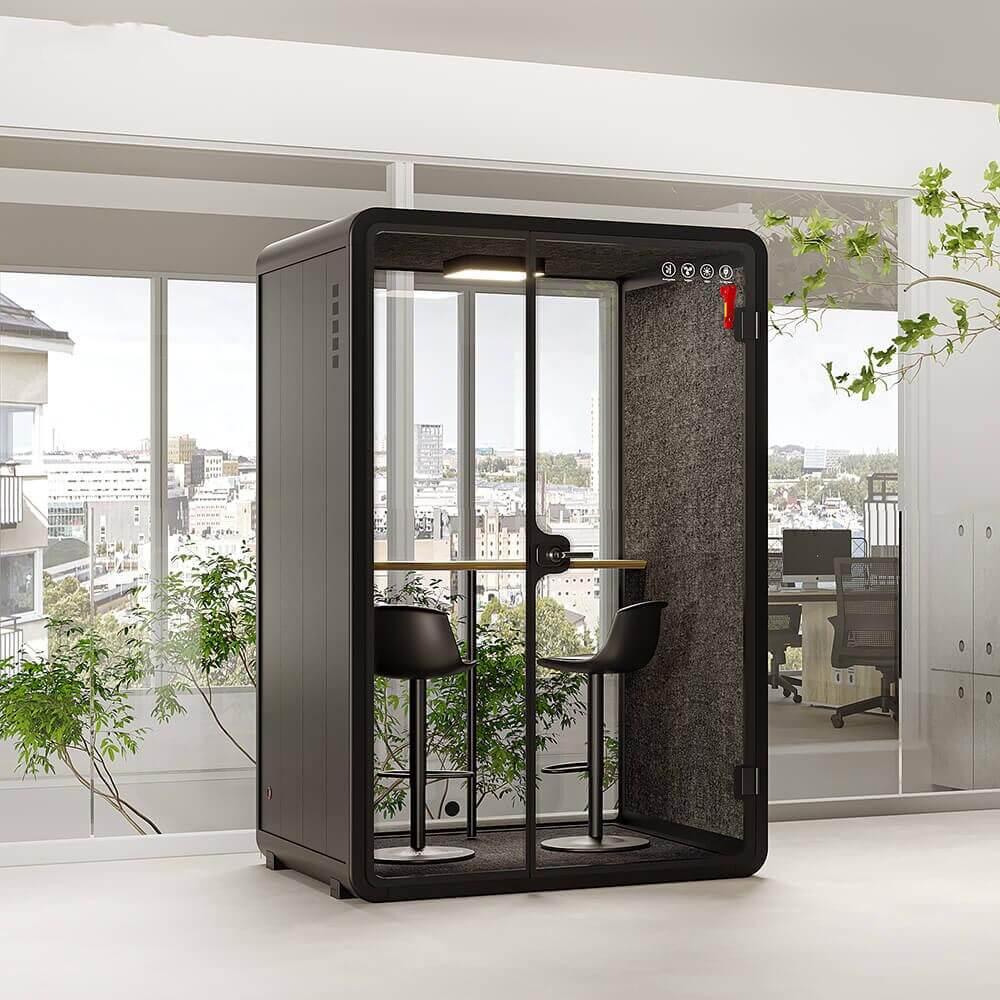
A fabric proposed for a seat should not automatically be offered as a wall replacement, even when the colors appear close. Ask the supplier to identify which material and finished component it approves for each location. Keep the face, backing, padding and attachment boundary together in the serviceability discussion where they form part of the supplied item.
If a substitute is proposed, ask the responsible provider what product-specific review and documentation it requires before approval. Do not infer an acoustic, fire, hygiene or durability result from the fabric name, a swatch or the fact that another manufacturer uses a similar material. This guide does not establish any rating or authorize a material substitution.
The facilities team should also know which care instructions would accompany the renewed component. The question at this stage is whether the offered renewal route fits the workplace's supported care arrangements, not how to diagnose a mark or clean an existing stain. Do not expand the procurement exercise into cleaning experiments or do-it-yourself reupholstery.
Where the appearance of renewed seating matters, request a finished sample or authorized demonstration representing the offered component. Review the visible seam position, direction of any pattern and relationship to neighboring surfaces only where those details are actually present. Ask which attributes the sample represents and which remain subject to the final configuration. A flat swatch cannot show every finished edge. Keep the comparison non-invasive: no pulling covers or probing concealed fixings. If a representative finished sample is unavailable, record the specific appearance questions still open rather than substituting assumptions from a photograph. The buyer can then choose whether to seek a clearer sample, accept a defined visual limitation or select a different upholstery option.
Complete one fabric-component serviceability specification for the preferred offer. For each mapped item, retain the selected finish reference, minimum approved renewal unit, approved provider, matching group, sample arrangement and required service access. Identify fixed or unsupported surfaces explicitly. Keep the record focused on fabric-bearing components; it is not the general parts stock list or a maintenance log for every system in the pod.
Use that specification to choose between the actual proposals. A buyer prioritizing localized renewal may prefer an option with a confirmed smaller intervention. Another may accept replacing a coordinated set to preserve an agreed visual result. Neither approach is automatically cheaper or more durable. Ask purchasing to retain the accepted scope and exclusions with the order, and hand the references to facilities. Future work can then start from an approved configuration instead of reopening what replacement upholstery was supposed to mean.
Does removable upholstery mean office staff can replace it?
No. Confirm both the supported renewal unit and the permitted service provider. A component may be replaceable only through an approved service visit. Do not turn a statement about serviceability into permission to remove covers, panels or fixings.
Can the same fabric be specified for benches and wall panels?
Only if the responsible supplier confirms the selection for each intended assembly. A common color or texture is not evidence of interchangeability. Record seating and wall approvals separately, including any components for which no upholstery renewal option is offered.
Should buyers purchase spare fabric at the initial order?
Not automatically. First establish whether loose fabric is usable within the approved service route. A supported replacement might instead be a finished component. Any reserve purchase needs agreed identification, storage and later installation arrangements; an offcut alone does not establish future serviceability.
Must an entire seating set change when one area is renewed?
Not necessarily. Separate the minimum technical intervention from the buyer's visual matching preference. Ask what can be renewed independently, then review whether the proposed sample is acceptable beside retained upholstery. A coordinated larger renewal is a choice to price, not a default rule.
What if the selected covering has no separate renewal route?
Record that limitation and ask whether a larger approved assembly is available. Compare its scope and access needs with another offered configuration. Do not assume a local upholsterer can create an equivalent solution without the responsible supplier's approval.
Does a supplier's sample guarantee the same finish years later?
No. Keep the sample and reference as a comparison baseline, then request current availability when needed. If continuity is important to the initial purchase, obtain a specific supplier proposal rather than treating a sample or color name as a permanent supply commitment.
The useful upholstery question for office furniture meeting pods is not simply whether replacement parts exist. It is how much of the selected interior must change, through which approved route, to renew a named fabric-bearing component. Fixed coverings, independent furniture and enclosure linings need different answers.
Before choosing the final seating and finish package, compare one localized renewal scenario and record the accepted matching boundary, samples and service access. Keep that fabric-component specification with the order. It makes future renewal a defined purchasing choice without promising removable upholstery, universal material compatibility or do-it-yourself repairs.

 Tel: +8613538031763
 Email: info@sopworkpod.com
 MP/WhatsApp: +8613538031763
 Manufacturer Address:Liucheng Lujiang District,Meixi Road,Nanan City,Fujian,China