
Need Help?
Please leave your contact information to get our latest catalog
Get In Touch Now >

Author:SOP Work Pods Manufacturer TIME:2026-08-21
A phone pod can be considered for voice recording, podcast practice, remote auditions, or spoken-word work when a full studio build is not practical. The video on this page provides a visual reference for the enclosure and its working scale. It should be used to start a technical discussion, not as proof of a particular sound-isolation result.
Recording requirements are different from ordinary office calls. A buyer needs to consider the microphone, performer position, internal reflections, ventilation sound, equipment heat, cable routes, and the type of audio that will be captured. The following guide explains what to observe while watching and what to verify before selecting a configuration.
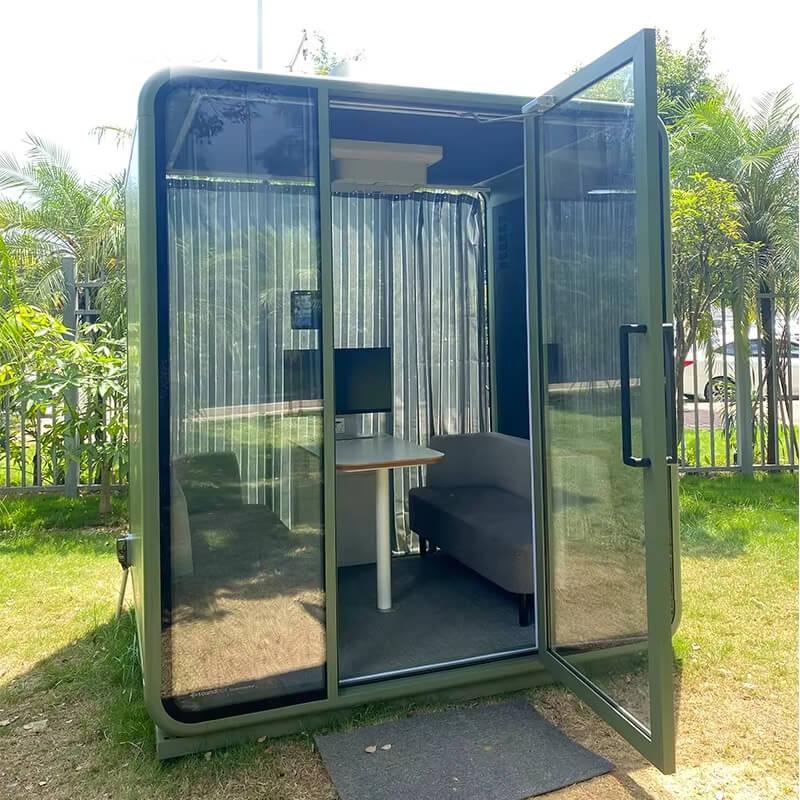
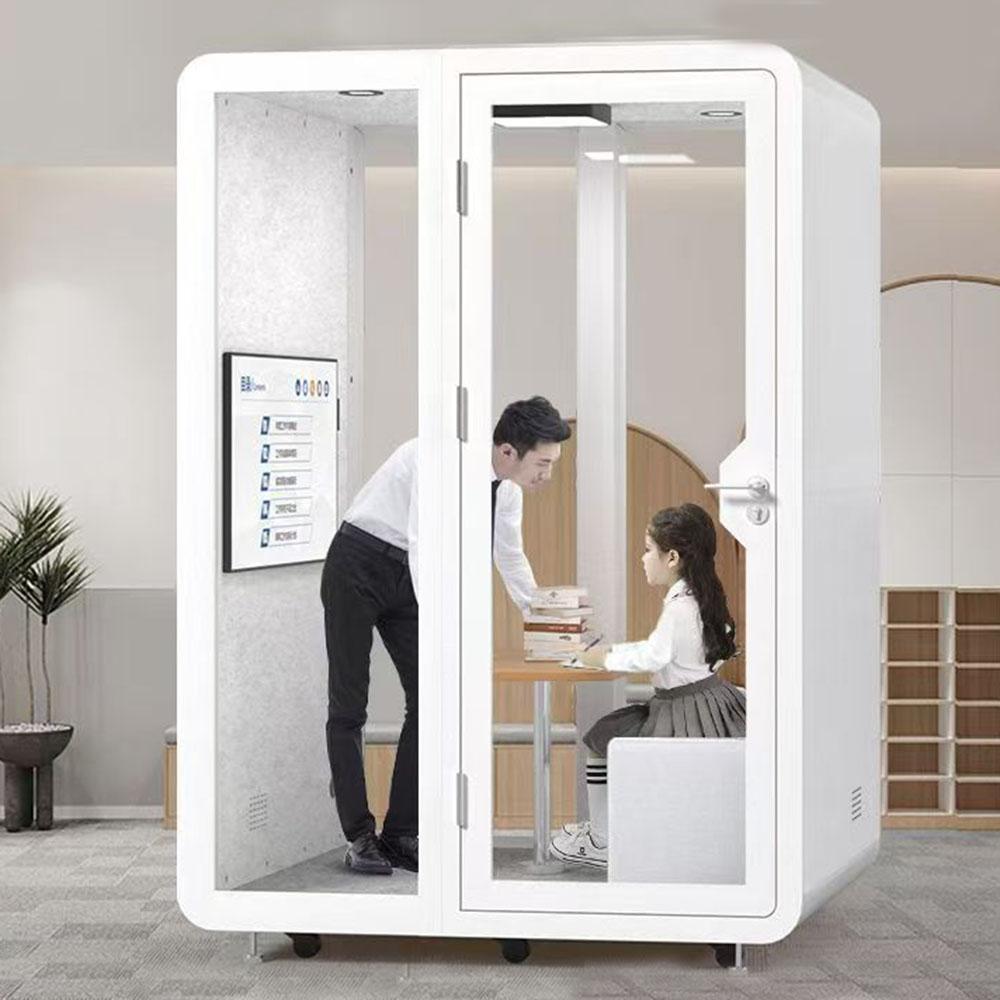
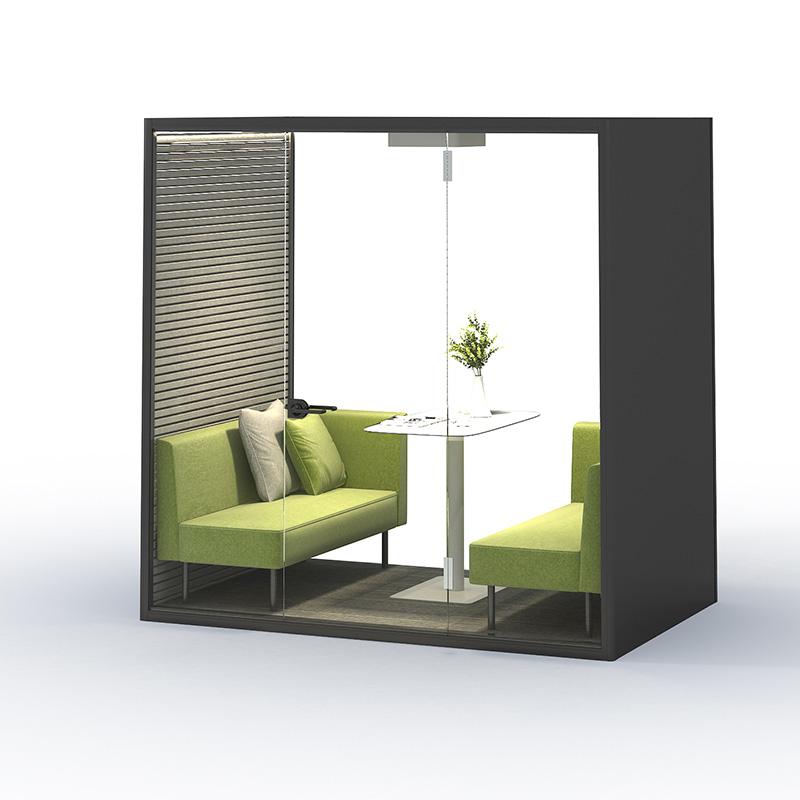
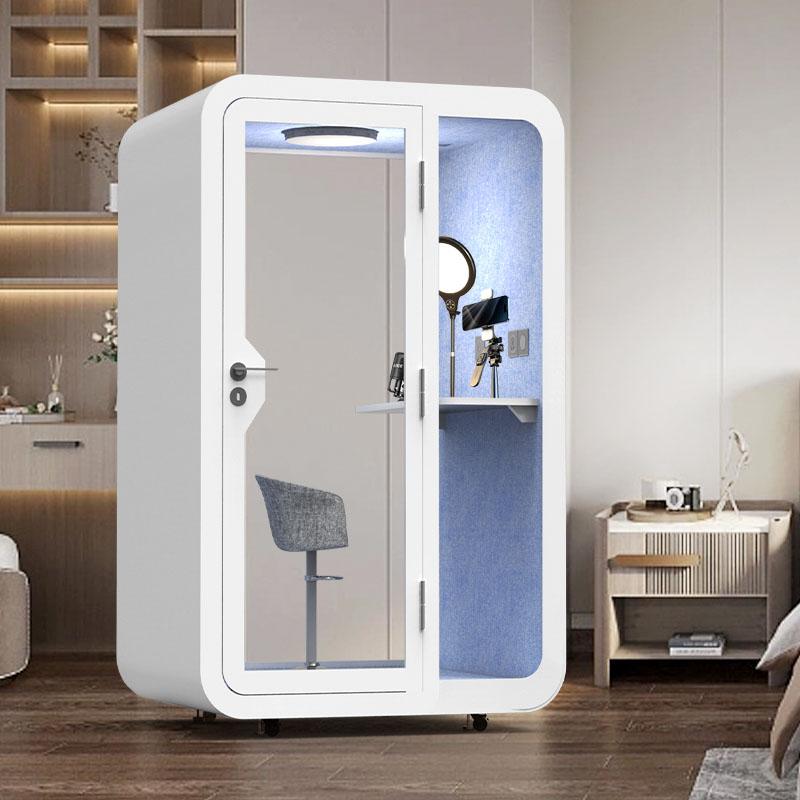
Use the video to judge visible facts: the approximate working volume, door position, glass area, furniture arrangement, lighting, ventilation outlets, and the space available around a seated or standing user. Pause at different views and compare what can be seen with your own equipment list. A microphone stand, music stand, laptop, interface, headphones, and cables can use more room than a normal office call setup.
The video cannot establish how the pod will sound with every voice, instrument, microphone pattern, or room location. It also cannot confirm a laboratory value unless the exact tested model, configuration, method, and conditions are identified separately. Keep visual observations and technical evidence in different columns of the project record.
An office booth is generally arranged for speech intelligibility, privacy, short sessions, and simple device connection. Recording work may require lower background noise, controlled reflections, repeatable microphone placement, longer occupied periods, and a quieter ventilation state. Define whether the intended task is podcast speech, voice-over, vocal practice, acoustic instrument capture, or online teaching. Each task creates a different tolerance for room sound and equipment movement.
Also define what happens outside the enclosure. The goal may be to reduce disturbance to nearby people, reduce external noise entering the recording, or both. These are related but separate objectives. Avoid using the word "soundproof" as an absolute promise; request configuration-specific data and perform a representative recording trial whenever the result matters commercially.
Draw the interior layout before choosing the pod. Mark the user, microphone, stand, pop filter, music or script support, laptop, audio interface, headphones, power supply, and cable path. Confirm that the door can open without moving the equipment and that the user can leave safely. If the setup changes between seated podcasts and standing vocals, review both arrangements.
Heat and airflow matter during long sessions. Check whether the ventilation path is blocked by acoustic treatment or equipment, how the user controls airflow, and whether fan sound is acceptable for the intended microphone distance. Power and data connections should be reachable without loose cables across the entry route. The soundproof music booth product reference can help identify a relevant product family, but the final decision should use the exact dimensions and options offered.
Ask the supplier to distinguish external sound reduction from internal sound absorption. External reduction concerns sound passing through the enclosure. Internal absorption concerns reflections inside the room. A booth can reduce surrounding noise while still producing an unsuitable recording tone, or it can have a controlled interior while allowing more external noise than expected.
Review the complete assembly: panels, glass, door, seals, floor contact, ceiling, ventilation openings, cable penetrations, and installation tolerances. If a test report is supplied, record the specimen, method, frequency range, operating state, and whether ventilation was active. Do not transfer a component value to the complete installed pod without supporting evidence.
| Review area | What to observe or test | Decision record |
|---|---|---|
| Recording task | Voice, podcast, lesson, audition, or instrument; seated or standing | Primary and secondary use cases |
| Equipment fit | Microphone, stand, interface, script support, power, and cable route | Scaled interior layout |
| Room sound | Reflections, tonal balance, background sound, and repeatability | Representative audio sample |
| Comfort | Airflow, fan sound, lighting, heat, and session duration | Occupied trial notes |
| Installation | Door alignment, seals, service openings, and surrounding room noise | Handover checklist |
Use the same microphone position, gain structure, script, and operating state when comparing options. Record the source file rather than relying on a memory of which sample sounded better. This creates a more useful decision than a generic claim about studio quality.
Can every office phone pod be used as a recording booth?
No. Confirm the internal layout, ventilation sound, power, reflection control, and configuration-specific acoustic evidence for the intended recording task.
Does the video prove a sound-isolation rating?
No. It shows visible configuration and use. Technical performance requires documentation or a representative test tied to the exact model and operating condition.
What should be tested before purchase?
Use the intended microphone and equipment, record representative material, test occupied comfort, and review external listener positions as well as the captured audio.
Why is ventilation part of the recording decision?
Airflow affects comfort, while fan and air-path sound may enter a sensitive microphone. Both need to be reviewed during a realistic session.
This video is most useful as a visual starting point for a recording-pod brief. Define the audio task, map the equipment, separate isolation from absorption, and compare samples under controlled conditions. A configuration should move forward only when its working space, comfort, service access, and recorded result support the intended use.


 Tel: +8613538031763
 Email: info@sopworkpod.com
 MP/WhatsApp: +8613538031763
 Manufacturer Address:Liucheng Lujiang District,Meixi Road,Nanan City,Fujian,China