Office Meeting Booths: Choose a Dealer Demonstration Range
Author:SOP Work Pods ManufacturerTIME:2026-11-19
MENU
Buying another demonstration enclosure can expand a furniture dealer's display without expanding the decisions a buyer can make there. Imagine two proposed units that differ mainly in upholstery: both may leave the same shared-table question unanswered. The purchase decision concerns the coverage added by the assortment, not how impressive each unit looks alone.
For office meeting booths, build a demonstration purchase schedule around unresolved buyer questions. Decide which questions need an enclosure, which need a different furnished arrangement, and which can be answered through smaller samples or drawings. The result can justify a narrower range, an additional unit or a confirmed offsite demonstration route without inventing demand or sales returns.
Group Inquiry Tasks Before Counting Models
Start with the dealer's own enquiry briefs where those records exist. Remove confidential details and extract the decision still preventing selection: sharing a document, comparing individual and group use, choosing a furniture format, or understanding a proposed finish. Do not substitute assumed market segments for actual questions. A company label such as technology business says little about what its buyer needs to examine.
Group questions that require the same physical relationship. Several enquiries may all concern whether opposing seats support a shared reference. They do not automatically justify separate enclosures. Conversely, one enquiry may contain two genuinely different requirements, such as individual calls and discussions around a table. Keep those requirements separate even when the same person raised them.
Distinguish a known question from an untested commercial hypothesis. When there are no usable records, ask the sales team to state which decisions it expects the display to support and label those assumptions. That creates a reviewable starting point without claiming that a larger range will attract more customers.
Retain the reason a question needs physical representation. An enquiry about an unavailable document is not automatically a case for buying another enclosure. An enquiry about a furnished relationship may be. Separating those causes prevents a documentation gap from becoming an unnecessary asset purchase, while preserving a genuine physical gap for the assortment review.
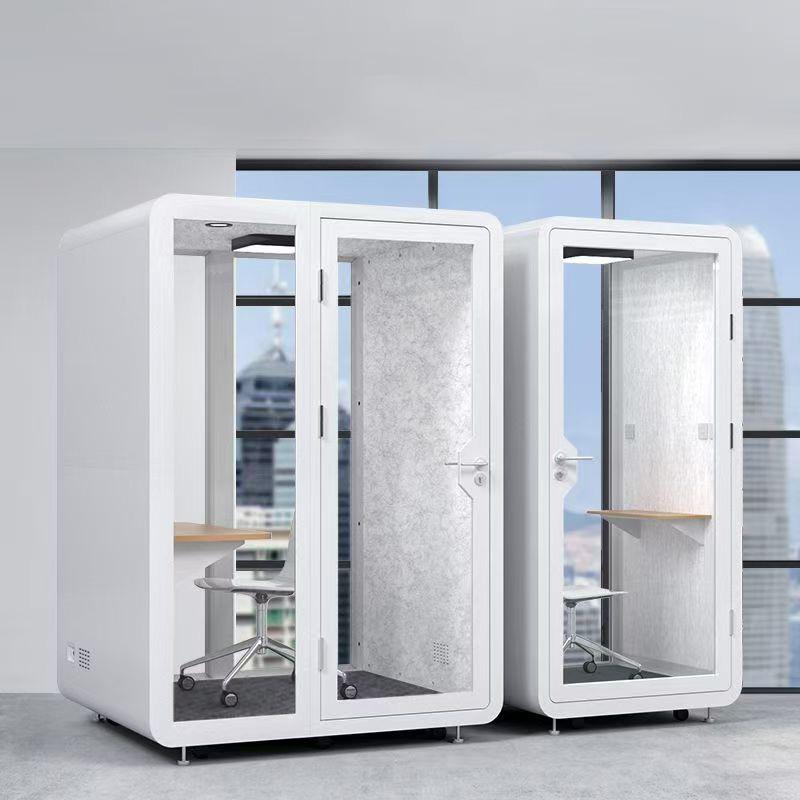
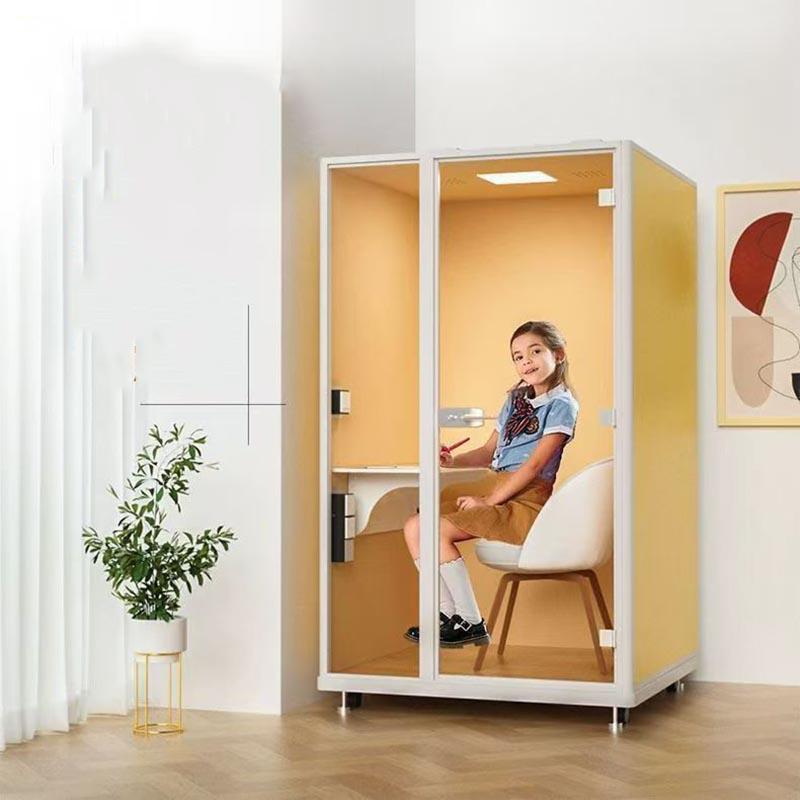
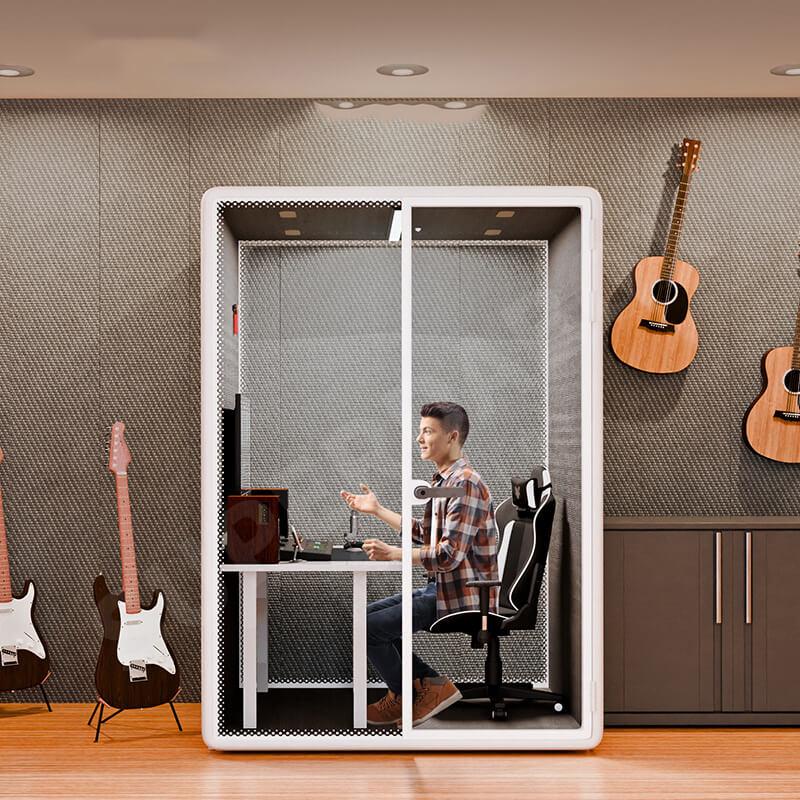
Two white single-user booths show an office chair and a high stool; they offer an individual-work comparison, not evidence of shared meeting capacity.
Give Each Proposed Unit a Different Physical Role
For meeting pods, describe roles before selecting model names. An individual booth can provide a comparison boundary: this is a separate workspace rather than a shared meeting enclosure. A furnished pod with facing stools and a narrow table raises another set of questions. An arrangement with opposing upholstered seats and a table offers a different furniture relationship to examine. These are candidate roles, not proof that every dealer needs all three.
Keep capacity tied to the actual offered configuration. Neither a photograph nor the number of visible cushions establishes an approved meeting capacity. Ask which furniture arrangement the quoted enclosure contains and what intended use the supplier supports. A solo booth can help explain a category difference, but it cannot represent the experience of two people sharing a meeting table. Give it no group-use coverage on that basis.
Use the offered configurations within SOP meeting pods to identify distinct demonstration roles, then request the specific furniture drawings before assigning any unit a coverage claim.
Reserve Full Enclosures for Questions That Need Them
For each enquiry task, identify the smallest medium that can answer it honestly. A loose finish sample may support a colour discussion. A furnished drawing can establish what has been proposed. Neither recreates the relationship between people, furniture and an enclosure. Buying a complete unit to repeat an answer already available from samples needs a separate justification.
Do not reverse that argument and use a drawing to close a question about actual seated experience. The drawing may help shortlist a layout while leaving the physical comparison open. Record the unresolved part rather than giving every information source equal authority.
Ask whether an option changes only a surface or changes the task itself. A different table position can alter the sharing arrangement and may deserve physical representation. A finish difference may not. These distinctions require configuration-specific confirmation; appearance alone cannot establish that two offers are functionally equivalent.
Keep technical evidence outside this coverage shortcut. A displayed enclosure does not prove the performance of every unrepresented option. Relevant supplier documents remain necessary for the configuration ultimately quoted, regardless of how efficiently the dealer has assembled its display.
Physical representation: the proposed furnished enclosure is needed to examine the identified relationship.
Sample or drawing: the source answers a bounded material or configuration question, with its limits retained.
Unrepresented: neither the owned assortment nor a confirmed alternative supplies the required physical comparison.
Buy the Next Decision, Not the Next Catalogue Variant
Use the table as an illustrative coverage map, not a recommended stock list. Replace its questions with the dealer's actual briefs and name the proposed units against the relevant roles. Mark whether each answer is physically represented, supported only by documents, or still unavailable. Those labels make gaps visible without turning a partial demonstration into blanket product approval.
Give partially covered questions their own explanation. A displayed seat arrangement might help a buyer understand the conversation format while leaving a different table proposal unexplored. Do not fill that gap by crediting the whole model family. Identify the unrepresented relationship, then determine whether another asset would actually answer it or merely offer another incomplete example of the same format.
Evaluate each additional unit against the assortment already proposed. Temporarily remove it from the plan and ask which important buyer decision becomes impossible to examine. If the answer is only a cosmetic comparison already covered by samples, reconsider the purchase. If a different shared-work arrangement disappears, identify that exact loss. This subtraction exercise exposes redundancy more clearly than counting models, finishes or doors. It also prevents a visually distinctive unit from receiving credit for a decision it cannot actually support.
Buyer question
Physical range role
Answer without another enclosure
Extra-unit purchase trigger
Is this individual work or shared discussion?
Separate individual and shared-use examples
Drawings identify the proposed categories
A meaningful category comparison is otherwise missing
How does the pair share a reference?
Confirmed seat-and-table relationship
A drawing can shortlist the arrangement
The needed furnished relationship is not represented
Which upholstery colour should be specified?
No automatic new enclosure role
Relevant current finish samples
A separate physical issue remains beyond the sample
Does another furniture format change the choice?
Distinct confirmed meeting arrangement
Furniture drawings expose the proposed difference
The difference affects a real unresolved enquiry task
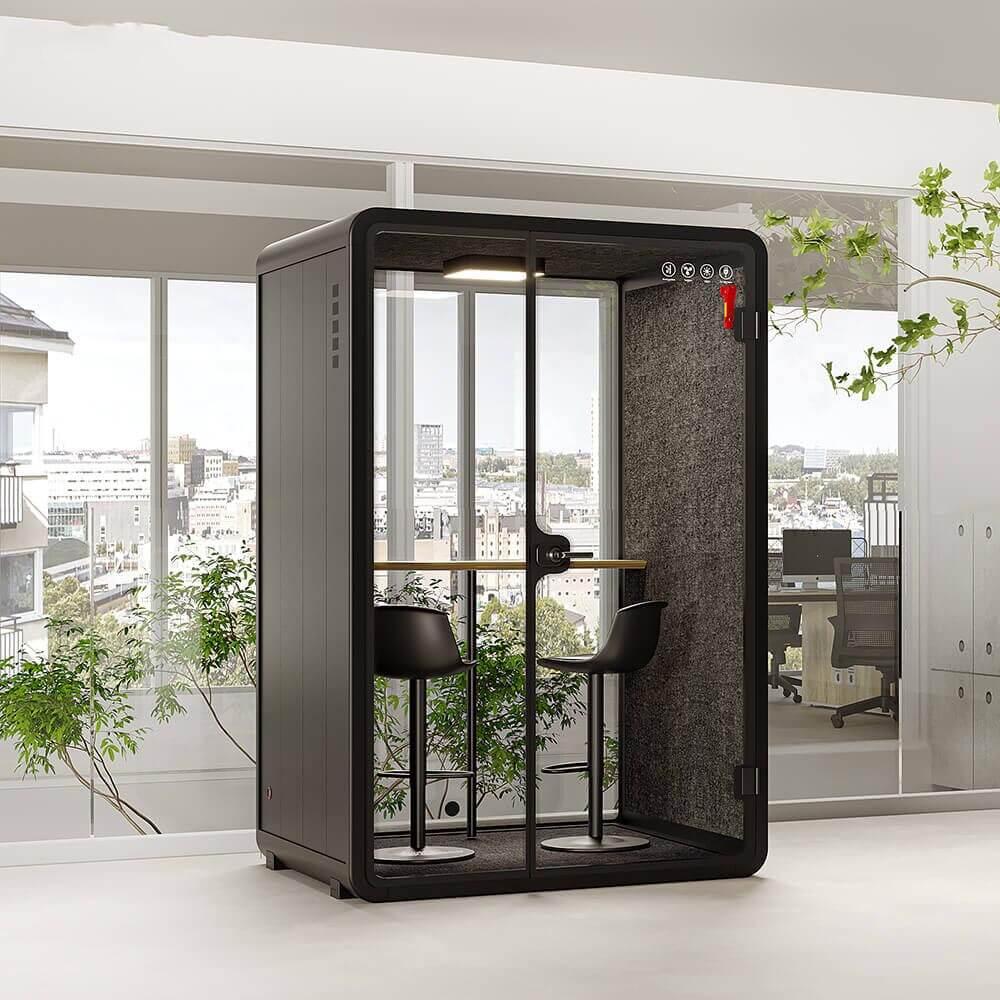
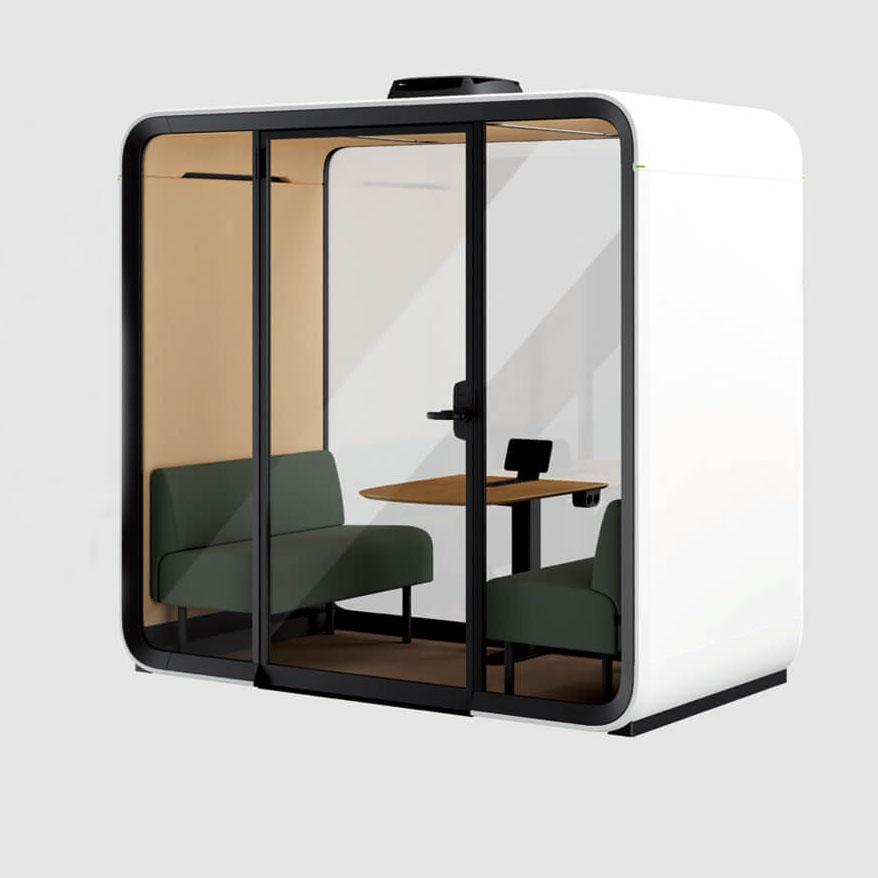
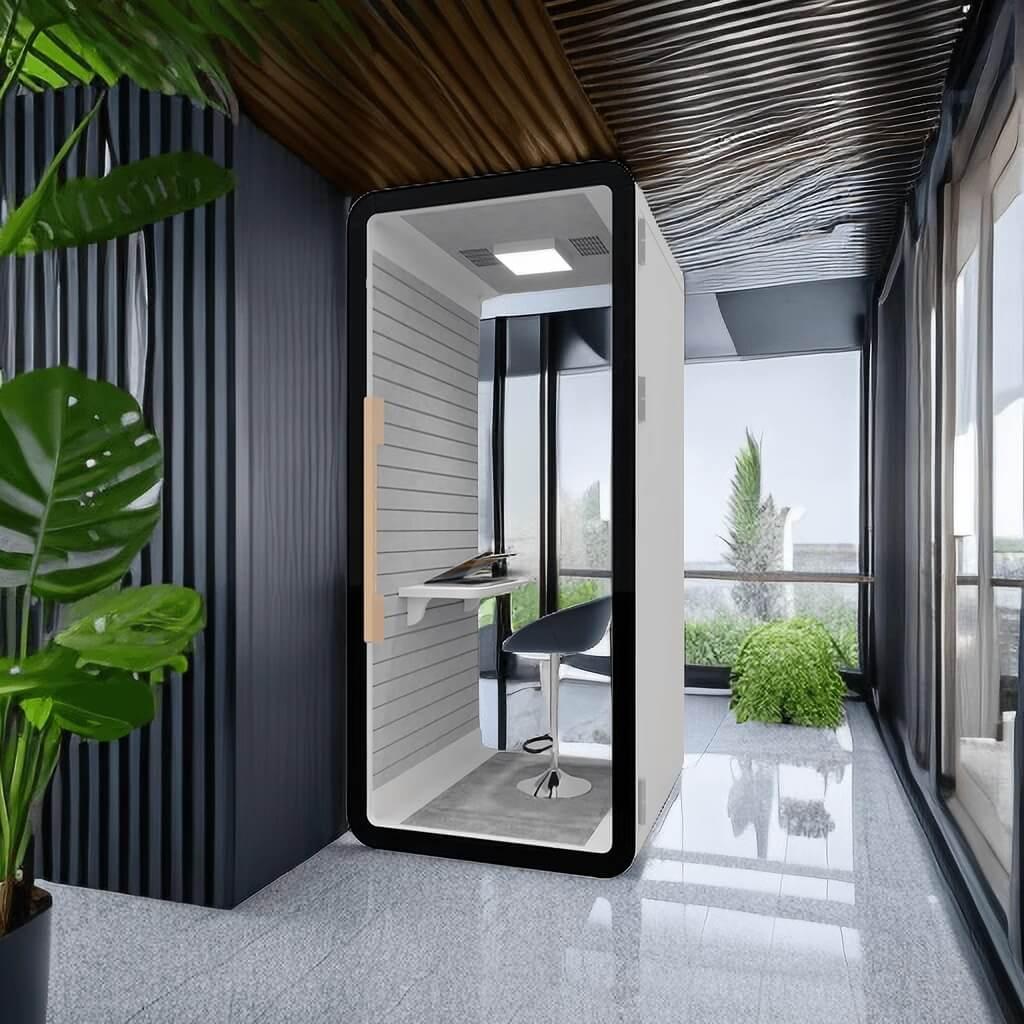
The black pod contains facing stools and a narrow table beside office glazing, a distinct furnished relationship to place on the assortment coverage map.
Charge Each Added Role for Its Space and Upkeep
Compare the added decision coverage with the space the unit actually requires. Use the supplier's applicable clearances and the showroom's reviewed layout, not the enclosure rectangle alone. An extra display that displaces another useful comparison or consumes necessary circulation has a real opportunity cost even before a monetary value is assigned.
Ask the dealer's operations owner to identify the recurring commitments of each candidate: cleaning, condition review, permitted service access, current product information and responsibility for faults. Keep these as named obligations until quotations and internal costs are available. Do not invent a margin, payback period or expected conversion improvement to make the assortment appear financially settled.
Consider whether the proposed range remains manageable when a display needs attention. A unit that is temporarily unavailable may remove a unique demonstration role. Decide how that gap will be communicated and whether another confirmed route exists. Buying a duplicate for resilience is a separate commercial choice, not additional question coverage; its justification should say so explicitly.
Compare Ownership With an Arranged Demonstration Route
A question can remain physically answerable without the dealer owning the relevant enclosure. Ask whether a supplier, partner or other permitted location can offer an appointment with the required configuration. Treat that as an option to confirm, not as an available service. Identify whose permission is needed, what can actually be examined and who will coordinate the arrangement before counting it toward coverage.
Compare the buyer's practical route as well as the dealer's purchase saving. An alternative is weak if its furniture differs from the proposed order or the required comparison cannot be arranged when needed. Preserve that uncertainty rather than presenting a distant example as an equivalent demonstration. Where no dependable route exists, choose between purchasing the missing role and clearly leaving that portion of the range unrepresented.
A smaller honest display is preferable to a broad claim resting on an appointment nobody has agreed to provide. If that arrangement is withdrawn, reopen the affected purchase line instead of continuing to count the alternative as coverage. An old agreement should not remain a permanent favourable assumption.
Approve a Purchase Schedule With Explicit Gaps
Give every proposed display line a role, an exact quoted configuration, the buyer questions it represents and the questions it does not. Then assign one disposition: buy as a demonstration asset, retain an existing suitable asset, use a confirmed alternative route, or defer representation. The schedule should explain the assortment as a whole rather than repeating independent product descriptions.
Keep demonstration assets separate from resale stock. A decision to show a configuration is not a forecast that customers will order it, and it does not authorize stock quantities, discounts or immediate delivery promises. If a display might later be sold, its condition, commercial treatment and replacement of the lost demonstration role need their own agreement. Do not let that possibility silently justify the initial purchase.
Leave a proposed purchase unapproved when its coverage depends on furniture that has not been identified in the offer. Ask for a corrected scope rather than buying the shell and hoping to recreate the required relationship later. Equally, an empty display position need not be filled immediately: retain the space while the unresolved task and the appropriate configuration are clarified.
Review the coverage map when enquiry tasks or the represented configuration change. Record what new decision an addition would support, what existing answer it duplicates and which route it replaces. Remove a role only after acknowledging the resulting gap. This keeps future purchasing tied to useful buyer coverage rather than allowing the range to grow through unrelated attractive offers.
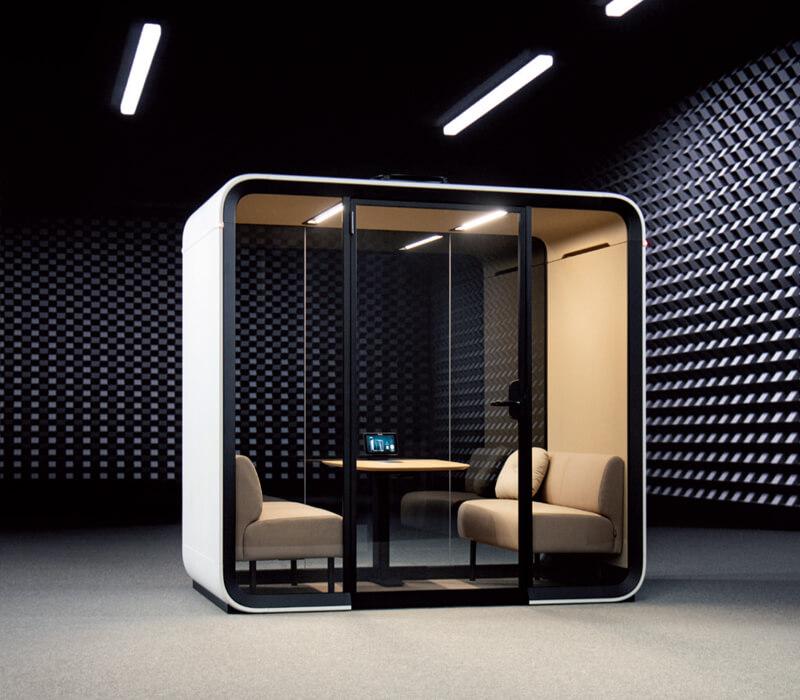
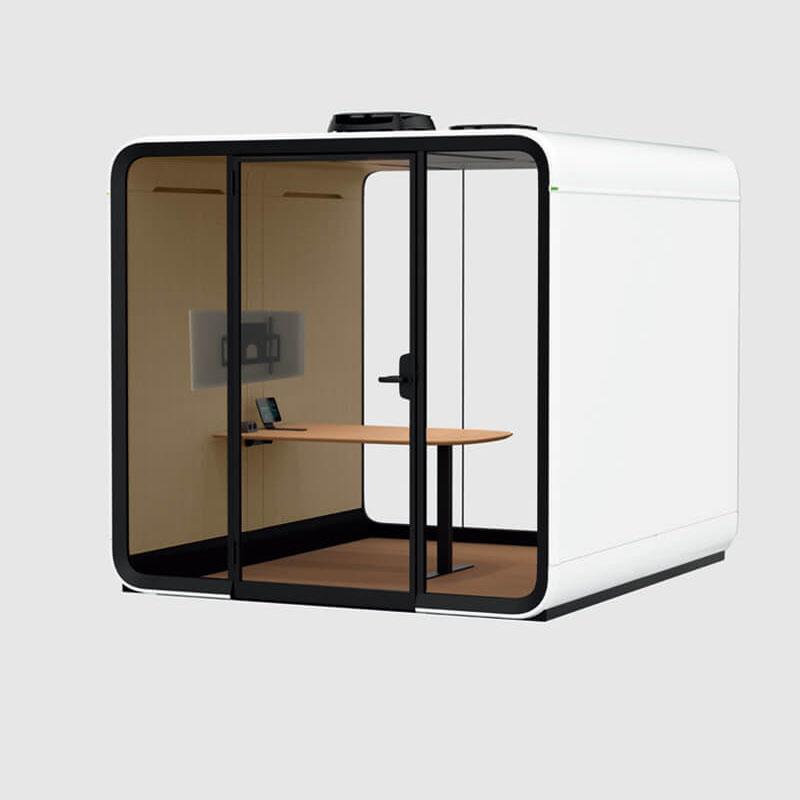
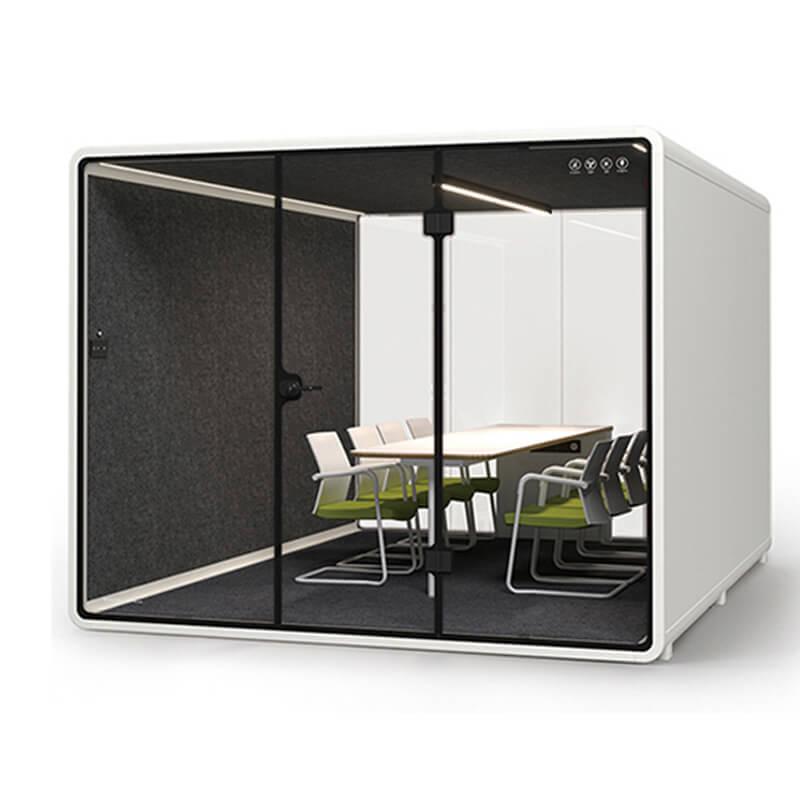
Opposing upholstered seats and a table are visible through the wide white pod's glazed front; this meeting format needs its own defined demonstration role.
FAQ: Choosing the Demonstration Assortment
Should a new dealer buy one unit from every size family?
Not automatically. Start with the decisions the dealer needs to represent and compare what each extra unit adds. Size variety can still leave the same furniture question unanswered. Keep unsupported sizes quote-only, with their physical demonstration gap clearly disclosed.
Can an individual booth count toward the meeting range?
It can provide a clearly labelled comparison with individual work. It cannot demonstrate shared meeting capacity or a shared table relationship. Credit it only for the distinction it actually represents, not for a group-use decision that requires a different configuration.
Is a second finish enough reason to buy another display?
Only if the dealer identifies a question that the relevant samples and existing enclosure cannot answer. Otherwise, treat it as duplicated coverage and justify it separately. A visually different display is not necessarily an additional useful comparison.
What if the purchase budget cannot cover an important role?
Seek a confirmed alternative demonstration arrangement or retain the role as unrepresented. Do not claim that an unrelated owned unit answers it. The schedule can defer a purchase while making the gap and its effect on recommendations visible.
Conclusion
Approve the smallest justified assortment that covers the dealer's identified physical comparison tasks, with samples, drawings and confirmed alternatives doing their appropriate jobs. For every purchase line, name the decision that would otherwise remain unanswered. Leave unresolved roles visible and demonstration spending separate from resale inventory. That gives the dealer a defensible buy, retain or defer decision instead of a display collection whose extra units add no new buyer answer.



 Tel: +8613538031763
 Email: info@sopworkpod.com
 MP/WhatsApp: +8613538031763
 Manufacturer Address:Liucheng Lujiang District,Meixi Road,Nanan City,Fujian,China