Need Help?
Please leave your contact information to get our latest catalog
Get In Touch Now >


Author:SOP Work Pods Manufacturer TIME:2026-11-17
A booth purchase can make more call space available while leaving a wheelchair user dependent on a different room. The buying question is therefore not simply whether a wheelchair can cross the doorway. Can the intended person reach the enclosure, enter on their chosen terms, arrange their work, make the call and leave with the same practical choice other colleagues have? That complete journey belongs in the enquiry before a model is selected.
Treat an office phone booth room as a furnished workspace to specify with its intended users. The useful output is a procurement brief connecting ordinary actions to supplier information and workplace arrangements. It should let the buyer request a suitable offered configuration, change the proposal or retain another usable room without asking the person to compensate for an unsuitable purchase.
Invite the intended user to describe a normal call from leaving their desk to returning. Ask about their chosen working position, the equipment they bring and whether they want assistance at any point. Keep the discussion about actions and preferences; procurement does not need a medical history. Obtain agreement before recording personal equipment details or involving another observer.
Separate requirements from possible solutions. A person may need to remain in their wheelchair, use their own device position or have room for an agreed assistant. Writing those needs first prevents a supplier's existing stool and shelf from becoming the assumed starting point. Ask which parts of the journey must remain independent and which support the person actually wants.
Agree how the person will comment on the proposal and who handles the project's accessibility review. A willing participant can explain their experience without being responsible for approving the building or representing every wheelchair user. If participation is unavailable, retain the unresolved user questions rather than inventing a representative body size or assuming a colleague's experience transfers.
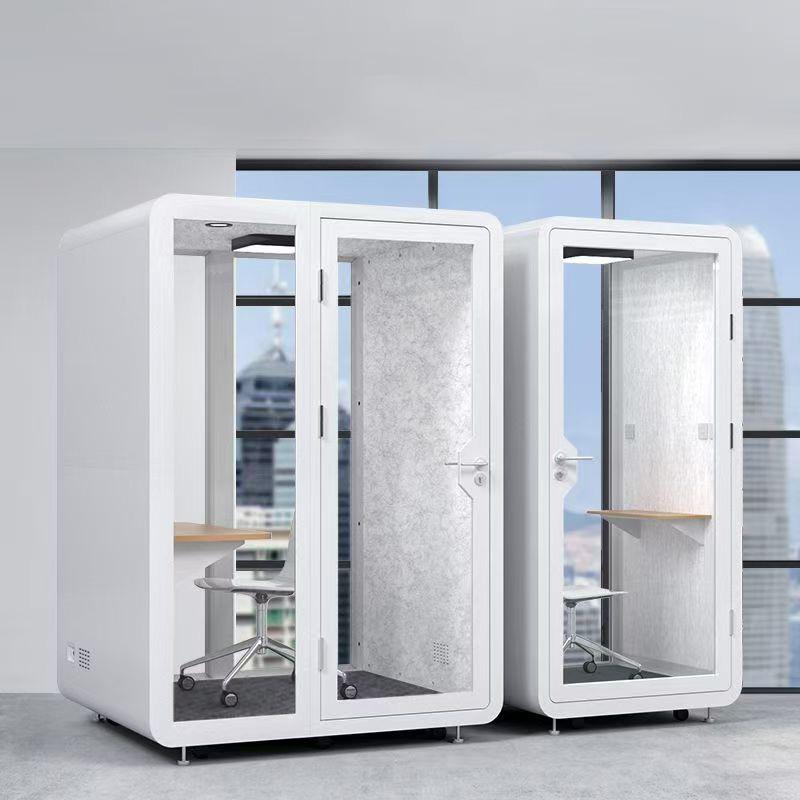
Follow the person's ordinary workplace route to the proposed enclosure, including how they find it and discover whether it is available. A conveniently located booth for standing colleagues may require a different approach for someone using a wheelchair. Ask the workplace planner to show that approach with the normal furniture and occupied circulation present, not just a clear presentation floor.
Discuss waiting and redirection. If the booth is occupied, where can the person wait without obstructing movement, and how do they reach an alternative? If allocation depends on a display, reception point or staff process, ask whether that route is usable too. An accessible physical destination is a poor service if requesting it requires an avoidable trip or finding someone who happens to be nearby.
Request drawings and operating information for approaching, opening, crossing and closing the offered doorway. Include the door movement, threshold detail, handle arrangement and the furniture nearest the entrance. The reviewer needs to understand where the person would position themselves throughout the sequence. A clear opening measurement alone leaves the approach and closing actions unexplained.
Ask the supplier which door and threshold arrangements are actually offered. If an alternative is proposed, obtain its identity and revised drawing before relying on it. Do not describe a ramp, altered latch or removed component as a simple workplace adjustment. Such proposals need the supplier's documented response and the relevant site review, not improvisation after delivery.
Use the person's account to expose awkward transitions: holding a door while changing position, reaching behind to close it, or finding nowhere to place an item during entry. Send these as specific design questions. This is more useful than asking whether the booth is accessible, because the seller can answer against an identifiable action and configuration.
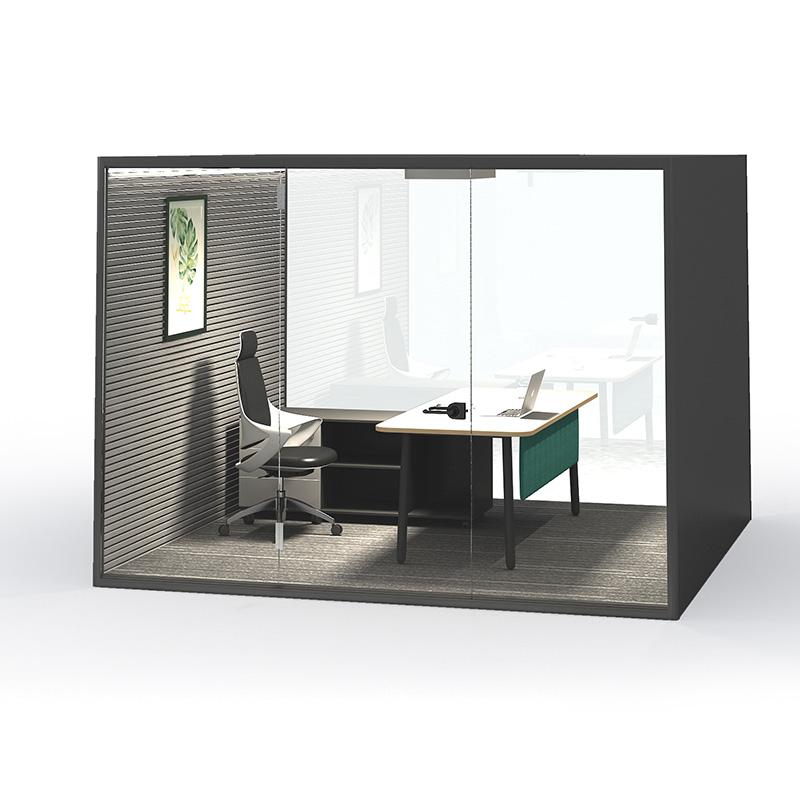
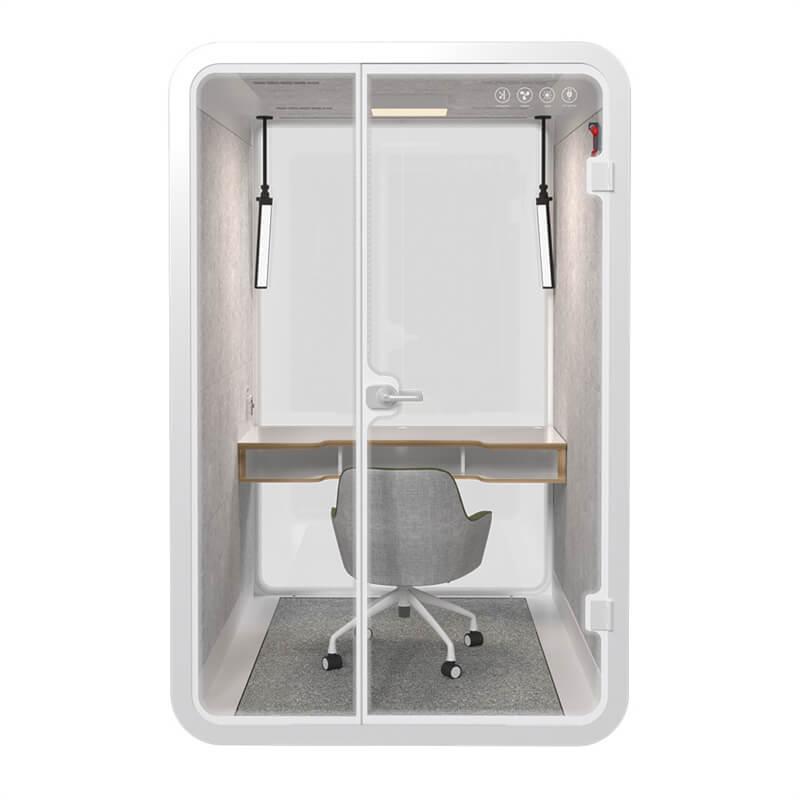
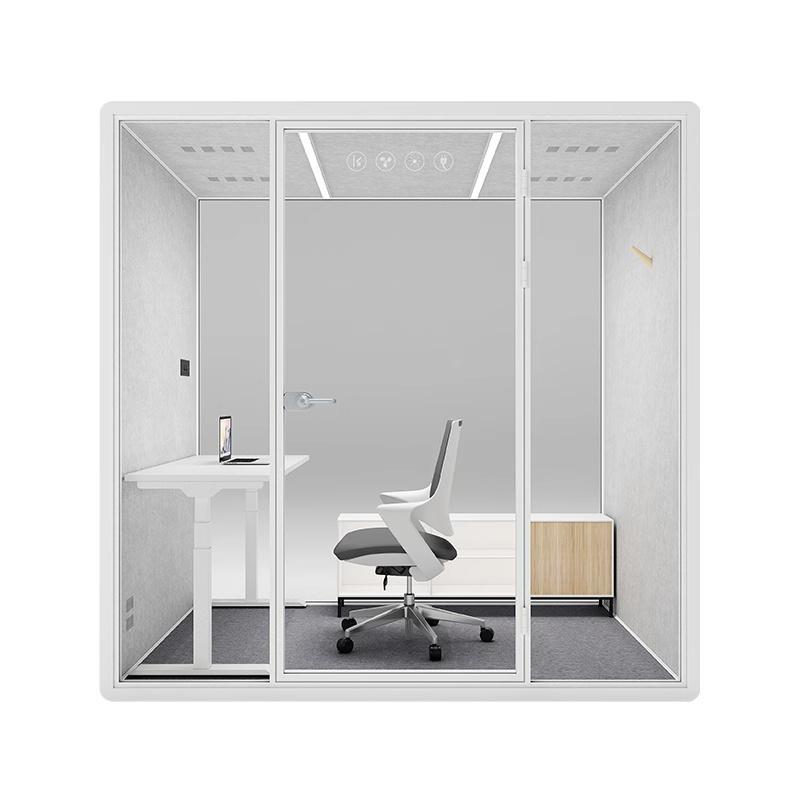
Ask for a furnished plan and relevant elevations showing the proposed work surface, supports, any seat, controls and ordinary equipment. Indicate the wheelchair user's intended position and movement between entry and work. Include the space consumed by their usual bag or device where relevant. An empty interior drawing cannot settle a question created by furniture that will be present every day.
If the person remains in their wheelchair, ask whether a seat can be omitted as an offered configuration. If so, clarify the resulting floor, fittings and work surface arrangement. Do not assume a loose-looking stool can be removed or that taking a seat out creates usable turning space. The seller should return the complete proposed interior, not a photograph with one object notionally erased.
Describe the actual work: placing a laptop, seeing the screen, using a headset and handling notes. Ask the user what must stay within their ordinary working arrangement. Include controls as one part of that workspace, alongside the surface and device position, rather than reducing the entire access discussion to whether a switch can be reached.
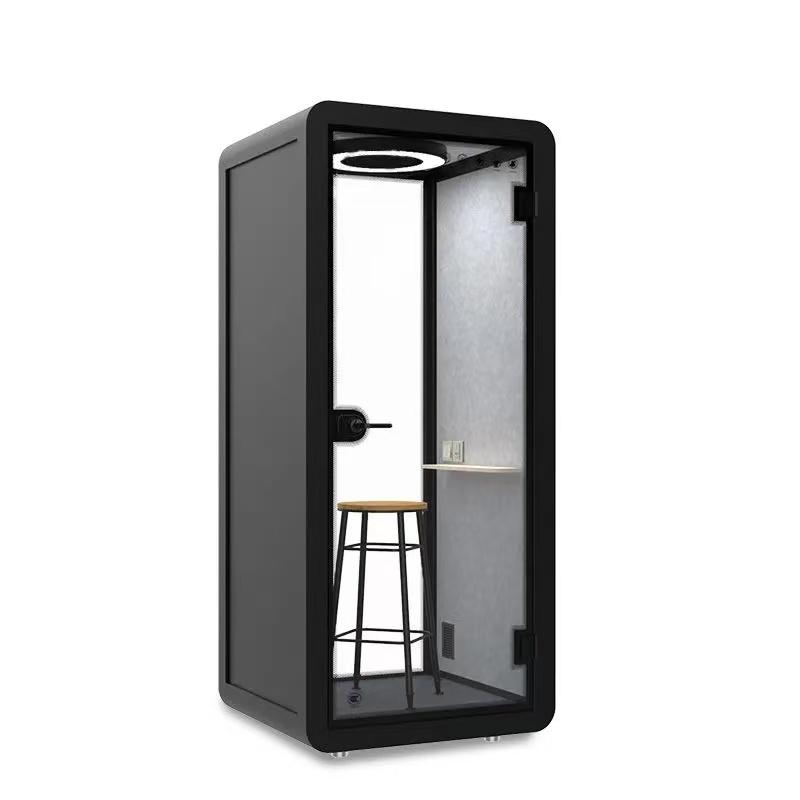
When requesting an offer for SOP office phone booths, attach the furnished journey brief so the seller can distinguish an available configuration from an alteration still needing an answer.
Use the table to divide the enquiry between the seller and the workplace team. Its rows are requests, not findings about a pictured enclosure. Add drawing references and open questions to the working copy. Where a reply changes the furniture or doorway, return to the connected actions instead of closing only the row containing the new part. A solution that makes entry easier can still change the usable working position or departure.
Read each reply for what the person would actually do differently. Moving a work surface might resolve positioning while leaving nowhere agreed for a bag during departure. Return those connected questions together.
If the seller cannot document a proposed seat-free option, keep it outside the current comparison instead of treating expected flexibility as committed supply. Ask which supported alternative addresses the same actions. A revised enquiry should preserve the person's requirements while allowing the supplier to change the proposed solution. That keeps the conversation focused on a usable offer rather than accumulating reassuring answers about separate components that have never been shown together.
| Journey action | Supplier information to request | Workplace condition to resolve | Who brings the answer together |
|---|---|---|---|
| Arrive and identify the enclosure | Door location on the proposed arrangement | Usable approach and allocation route | Workplace planner with the intended user |
| Enter and close the door | Doorway detail and ordinary operating sequence | Approach space with adjacent furniture present | Accessibility reviewer with the supplier |
| Position and make the call | Furnished plan and work surface elevations | Chosen device position and requested assistance | Buyer with user and supplier contributions |
| Leave with ordinary belongings | Inside doorway operation in the furnished layout | Clear onward route and available alternative room | Workplace planner and accessibility reviewer |
Ask whether the user wants assistance and what that assistance involves. Opening a door on request, accompanying someone inside and helping arrange equipment are different provisions. An assistant's presence may change the enclosure and furniture being considered. Give the supplier that intended arrangement explicitly rather than quietly adding another person to a proposal intended for a different use.
If agreed support is part of the journey, identify how it is requested and provided when needed. Do not substitute an informal promise that a colleague will always help. Equally, do not require assistance where the user wants independent use and a suitable alternative can provide it. Compare office phone booths against the agreed level of independence, not against an assumption that someone can make an unsuitable arrangement workable.
Discuss the alternative room at the same time. It should support the intended task through an allocation route the person can use, not merely appear as a distant fallback on a floor plan. Ask the user whether the alternative provides a workable choice while supplier questions remain open.
Describe ordinary departure with the person's belongings and device, including moving away from the work surface and operating the doorway from inside. Keep the discussion in normal service conditions. This procurement brief does not need a power interruption exercise to ask whether the furnished arrangement supports leaving in the person's chosen way.
Then consider what the person should find on their next visit. If a movable seat has been put back, a trolley occupies the approach or a shared surface has been rearranged, the agreed configuration may no longer be available. Give facilities a clear description of what must remain as specified and who restores it. Do not make the user negotiate furniture removal before every call.
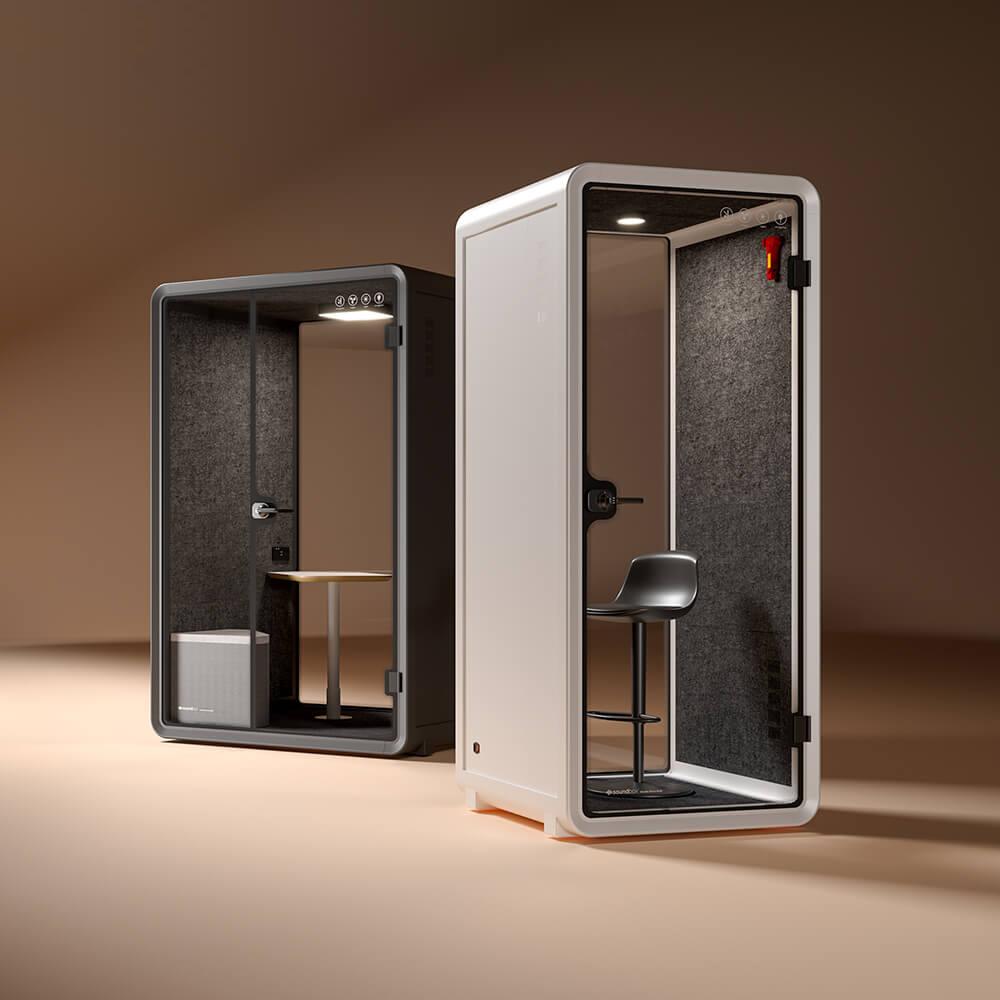
Assemble the journey account, selected furniture drawing, doorway information, assistance arrangement and alternative workspace into one enquiry. Distinguish what the supplier offers from what the workplace must provide. Ask the responsible accessibility reviewer to identify any remaining design questions for the location. That review determines applicable requirements; this article supplies no dimensional rule or compliance verdict.
Invite the user to comment on the returned proposal before the buyer settles the configuration. If an appropriate demonstration becomes available, agree which unresolved ordinary actions it can clarify and let the participant stop or decline. A demonstration supplements the documented proposal; it does not make the participant responsible for approving it. If a required action remains unsupported, change the order candidate rather than recording the gap as an accepted personal inconvenience.
Is a wide doorway enough to keep a candidate on the shortlist?
It answers only part of entry. Keep approach, closing, furnished positioning, ordinary work and departure in the enquiry. A candidate remains provisional when one of those required actions has no supported answer, even if the doorway itself looks promising.
Should procurement ask the person to transfer to the supplied seat?
Do not assume transfer is wanted or appropriate. Record the person's chosen working position first and ask the seller for a configuration that addresses it. A different seating method should not become a condition imposed merely to fit an existing product offer.
Can the buyer simply order the enclosure without its stool?
Request confirmation that seat omission is offered and obtain the resulting furnished drawing. The remaining supports, surface and doorway still need review. An absent stool does not establish usable wheelchair space, and this guide does not authorize removing supplied fittings after delivery.
What if users want different working arrangements?
Keep their requirements separate and compare which offered configurations or other rooms support each journey. Do not average conflicting needs into an imaginary typical user. The purchase brief can identify more than one usable option without claiming one enclosure serves everyone.
Who decides whether a proposed arrangement meets applicable requirements?
The responsible project reviewers determine that for the location and configuration. The supplier provides product information, the user explains their needs and procurement resolves the offer. Those contributions inform the review but do not replace it with a photograph or an individual's demonstration.
Send the supplier a journey they can answer, not a request for an accessible label. The purchasing brief should preserve the intended person's choices from arrival through furnished work to departure, with the workplace commitments that make the next visit equally practical. A supported configuration is worth considering; an unresolved essential action is a reason to revise the candidate. Keep another usable room available while that choice is made, and carry the user's actual requirements into the order instead of asking them to adapt after it arrives.

 Tel: +8613538031763
 Email: info@sopworkpod.com
 MP/WhatsApp: +8613538031763
 Manufacturer Address:Liucheng Lujiang District,Meixi Road,Nanan City,Fujian,China