





Need Help?
Please leave your contact information to get our latest catalog
Get In Touch Now >


Author:SOP Work Pods Manufacturer TIME:2026-11-16
A delivery label uses a different description from the purchase order. The cartons might contain the right configuration, but counting them and starting assembly would not explain the mismatch. Receipt needs its own evidence: which shipment arrived, what each supplier packing line refers to and which differences still require an answer.
For a portable soundproof booth, keep this reconciliation separate from unloading, lifting and assembly methods. Those operations belong to the appropriately authorized teams and supplier instructions. The buyer's receiving coordinator needs an order-linked record that can distinguish a missing package from an unfamiliar label or a visible condition concern. The approach below is a proposed receipt process, not a description of a SOP customer delivery or a claim about the seller's carton system. Do not invent identifiers, package counts or packing dimensions that the supplier has not supplied.
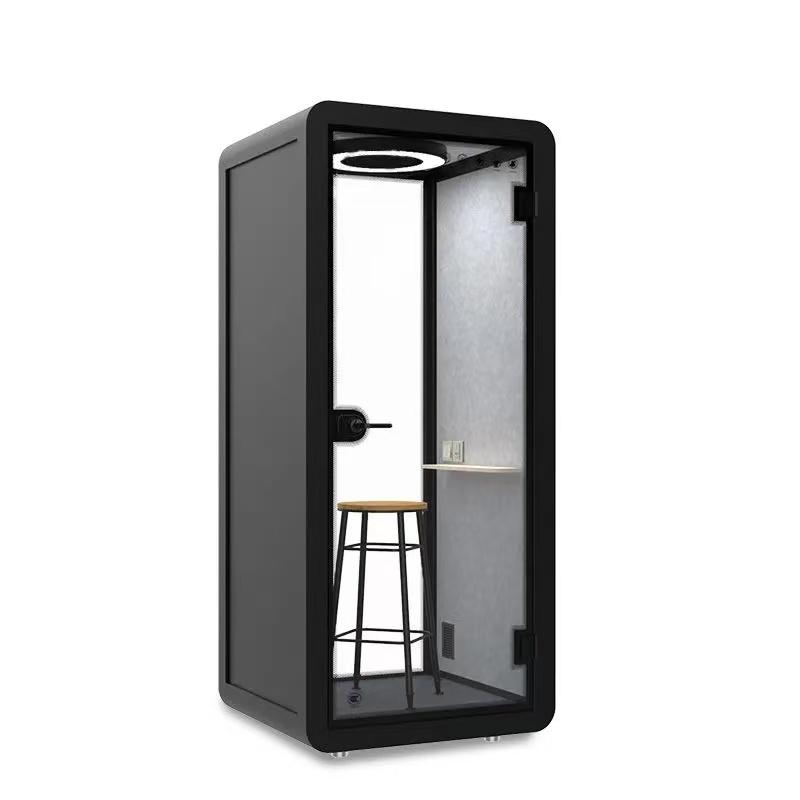
SOP's RB105 page lists an assembled external size of 2100 by 1600 by 2200 millimetres and a model weight of 800 kilograms. Neither figure establishes the size or weight of a shipping package. They also do not tell the receiving team how many cartons will arrive, which fittings travel separately or what the transport documents will call them.
Ask for the actual shipment packing list tied to the order and quoted configuration. Request an explanation of the references that will appear on the packages and documents. If the seller uses separate references for model, accessory set and shipment, preserve those distinctions rather than treating any matching product word as sufficient identification.
Keep the packing-list version with the expected-delivery record. A revised list should be identifiable as revised, with the seller explaining what changed. An informal message that a package is optional cannot replace a confirmed explanation when the order and shipment description still disagree.

Use theSOP recording booth product rangeas the model reference in the order file, then request a separate packing list identifying the actual shipment and the quoted configuration.
Use the confirmed quotation or order to identify the enclosure and included components. Then use the shipment list to describe how that order is packed for this delivery. Those documents answer different questions. A package label may use a logistics shorthand that does not reproduce the complete commercial description.
Ask the purchasing owner to identify any agreed substitutions or separately delivered items before receipt. The receiving coordinator should not discover those decisions by guessing from an unfamiliar carton description. Where an order change has not been confirmed, keep the apparent discrepancy open and direct the enquiry to the responsible purchasing and supplier contacts.
Do not rewrite the original order wording merely to make the receipt appear consistent. Retain the expected line, observed reference and supplier explanation together. That relationship lets a later reviewer see whether the seller clarified a label, confirmed a substitution or acknowledged an outstanding item without losing the original purchasing requirement.
The receiving team can record the references visible on the delivered packages through its authorized receipt procedure. Follow the workplace's rules for photographs and document retention. An image of a label should connect to a particular receipt entry, rather than becoming an unstructured collection that nobody can map back to the order.
Keep observation and interpretation separate. A label may be present but unclear, a reference may differ from the expected line, or a package may have a visible condition concern. Describe what the team observed without declaring concealed parts correct, damaged or safe from the outer packaging alone.
Do not direct ordinary recipients to move heavy packages, open electrical assemblies or remove protective components to find a reference. Questions requiring inspection beyond the authorized receipt procedure should go to the designated supplier or qualified team. A blank field is preferable to an invented identity obtained through an unsafe or unapproved investigation.
Start with one supplier packing line and its stated package references. Connect it to the delivered references the team recorded, then mark whether the relationship is clear, unresolved or answered by a documented supplier clarification. The labels are administrative receipt states, not technical approval of the enclosure.
A matching total count does not necessarily resolve line-level questions. One accessory package may remain unidentified even if the overall number of packages agrees with the list.
Equally, unfamiliar wording does not automatically prove an item is missing. Ask the seller to establish the relationship before assigning either conclusion.
The table is a suggested ledger structure, not a list of RB105's actual cartons. Fill it from the supplier's shipment information and the real receipt observations. Keep the person responsible for each open enquiry with the record so an assembly coordinator can distinguish a resolved wording difference from a package that still lacks an explanation.
| Supplier packing line | Observed receipt reference | Exception and next answer |
|---|---|---|
| Quoted enclosure configuration | Delivery document and visible package label | Ask the seller to reconcile any different description |
| Expected package count | Received count recorded by the receiving team | Request a confirmed explanation for an unmatched line |
| Listed accessory package | Its identifiable shipment reference | Keep an unidentified or apparently absent package unresolved |
| Visible condition record | Dated receipt observation and package reference | Ask the designated supplier route for authorized next steps |
An identity exception concerns the relationship between the order, packing line and received reference. A condition exception concerns what the authorized team observed about the delivery. The same package can have both. Combining them into one vague problem description can make a supplier answer appear complete when it addresses only one question.
For an identity enquiry, include the order reference, expected line and observed label wording. Ask what confirms the relationship. For a visible condition concern, include the package reference and the permitted observation record, then ask the designated route for authorized next steps. Do not invent an acceptance tolerance or tell the team to repair anything.
Retain an unresolved status when the answer is incomplete. An explanation that two names describe the same configuration may close the naming question while leaving a condition enquiry unanswered. The receiving ledger should preserve that separation, rather than changing the whole delivery to accepted because one email was helpful.
Name the contact who can reconcile the delivered configuration with the commercial agreement. The receiving coordinator may have enough information to record an exception without authority to accept a substitution. Keep that decision with the purchasing owner and supplier route identified for the order.
Ask for an answer tied to the original line and observed reference. A general assurance that the shipment is complete may not tell the assembly team what an unidentified package contains or whether an apparently absent accessory is elsewhere. Request the specific explanation needed to complete the ledger, without manufacturing a service deadline or a contractual remedy. Carry the answer back into the receipt record with its reference and scope. If a supplier response changes the expected list, preserve the earlier version as history and identify the confirmed current list. A cover coordinator should be able to trace the resolution without asking someone to summarize an undocumented telephone conversation.
The receiving and purchasing owners should establish which receipt questions must be resolved before the assembly team proceeds under its approved method. This article does not prescribe that technical release decision. It explains the record the responsible people need to see: matched lines, documented exceptions and any supplier-directed next steps.
Keep an unresolved package identity visible at the handoff. Do not let an installer discover it after relying on a completed receipt summary. Equally, do not describe a line match as proof that concealed components are undamaged or that installation conditions are suitable. Receipt reconciliation and technical checks have different owners and evidence.
If a partial release is proposed by the authorized parties, record exactly which scope it covers and which exception remains. An overall green status can obscure that boundary. The assembly team must use the relevant supplier instructions and qualified handling arrangements; the receipt ledger is not an alternative set of assembly directions.

Group the confirmed order, packing-list version, observed references and clarification replies into an accessible purchasing record. Avoid replacing that packet with a spreadsheet that contains only a final status. The next owner may need to understand why a line with different wording was accepted or which expected item remained outstanding.
Have a colleague who did not make the original enquiry locate one resolved difference and explain its supporting answer from the record. Use a hypothetical example if the process is still being designed, and mark it as such. The exercise evaluates traceability; it does not establish a real delivery defect or a measured receiving performance.
Decide who carries any open line after the delivery stage. If it remains with purchasing, the assembly or facilities owner needs a clear contact and current reference. Closing the receipt administration should not silently abandon an unresolved supplier question. The useful outcome is a dependable handoff of the actual shipment evidence.
Can RB105's listed 800-kilogram weight be used for a carton receipt entry?
Not without shipment-specific confirmation. The model page lists a product weight, not each package's transport weight. Ask the supplier for the actual packing and shipping information, and leave unloading or handling decisions to the authorized teams using the appropriate instructions.
Does the right number of cartons prove every order line arrived?
No. The total can agree while a particular package remains unidentified or a line-to-reference relationship is unclear. Reconcile the supplier packing lines and observed labels, then ask for the missing explanation. Do not infer either completeness or shortage from count alone.
Should the coordinator open a component to find its identity?
Only actions within the authorized receipt procedure belong in this task. Do not investigate concealed electrical parts or improvise handling to fill a record field. Refer a missing or unclear identity to the designated supplier or qualified team and preserve the question as unresolved.
What if the carton uses a shorter product name than the order?
Keep both names in the enquiry and ask the supplier to establish their relationship for the quoted configuration. Different wording may be logistics shorthand, but the receiving team should not assume that explanation. Retain the documented clarification beside the original order and receipt reference.
Does a completed receipt ledger authorize assembly?
It documents line reconciliation, not technical permission. The responsible owners determine release under the agreed supplier and installation arrangements. Pass the ledger with any remaining exceptions; do not treat an administrative match as proof of component condition, electrical suitability or an approved assembly method.
Use assembled-model specifications to identify the purchase, then obtain shipment-specific packing information to identify the delivery. A clear receipt ledger connects expected lines, visible references and supplier answers without inventing carton data or substituting for authorized handling and assembly procedures.
Resolve naming and condition questions separately, preserve the scope of each reply and hand the record to the purchasing and assembly owners. Release only the evidence that has actually been reconciled, with open exceptions still visible. That is a stronger buying control than a package count followed by an unsupported assumption that everything is ready.

 Tel: +8613538031763
 Email: info@sopworkpod.com
 MP/WhatsApp: +8613538031763
 Manufacturer Address:Liucheng Lujiang District,Meixi Road,Nanan City,Fujian,China