
Need Help?
Please leave your contact information to get our latest catalog
Get In Touch Now >


Author:SOP Work Pods Manufacturer TIME:2026-11-11
The speaker finishes a sentence, the interpreter starts, and the listener points to a document nobody else can see. This is a hypothetical meeting moment, not a customer account. It shows why three chairs are not the whole specification for an interpreted conversation: each participant needs a place in the exchange, not merely somewhere to sit.
When comparing acoustic meeting pods for an in-person session, start with consecutive interpretation, where the speaker pauses and the interpreter conveys the preceding passage. That is a different room task from simultaneous interpretation or a hybrid video conference. The buying question is whether the proposed furniture lets a speaker, interpreter and listener exchange turns and refer to material without repeatedly reorganizing themselves. A small rehearsal can reveal an unsuitable arrangement; it cannot certify translation quality, confidentiality or professional suitability for a regulated meeting.
Describe who will be physically present. A listener may also become the next speaker; the interpreter needs to follow both people rather than face only the person who hired them. If an additional host must remain inside, the task has changed to four people. Do not squeeze that role into a three-person trial and carry the result into the purchase decision unchanged. Ask the interpreter how they normally manage consecutive turns, note taking and clarification. Some will prefer a particular relative position or a clear view of each participant's face. Treat that professional input as a requirement for the offered arrangement, not as a universal rule about where every interpreter should sit. Explain the intended meeting subject without circulating unnecessary confidential material for the trial.
Define what is outside scope as well. This exercise does not select a simultaneous interpreting system, specify a recording service or validate a language professional. If headphones, microphones or remote participants become necessary, prepare a separate configuration review. Otherwise equipment decisions can obscure the simpler problem of three people seeing and hearing the exchange.
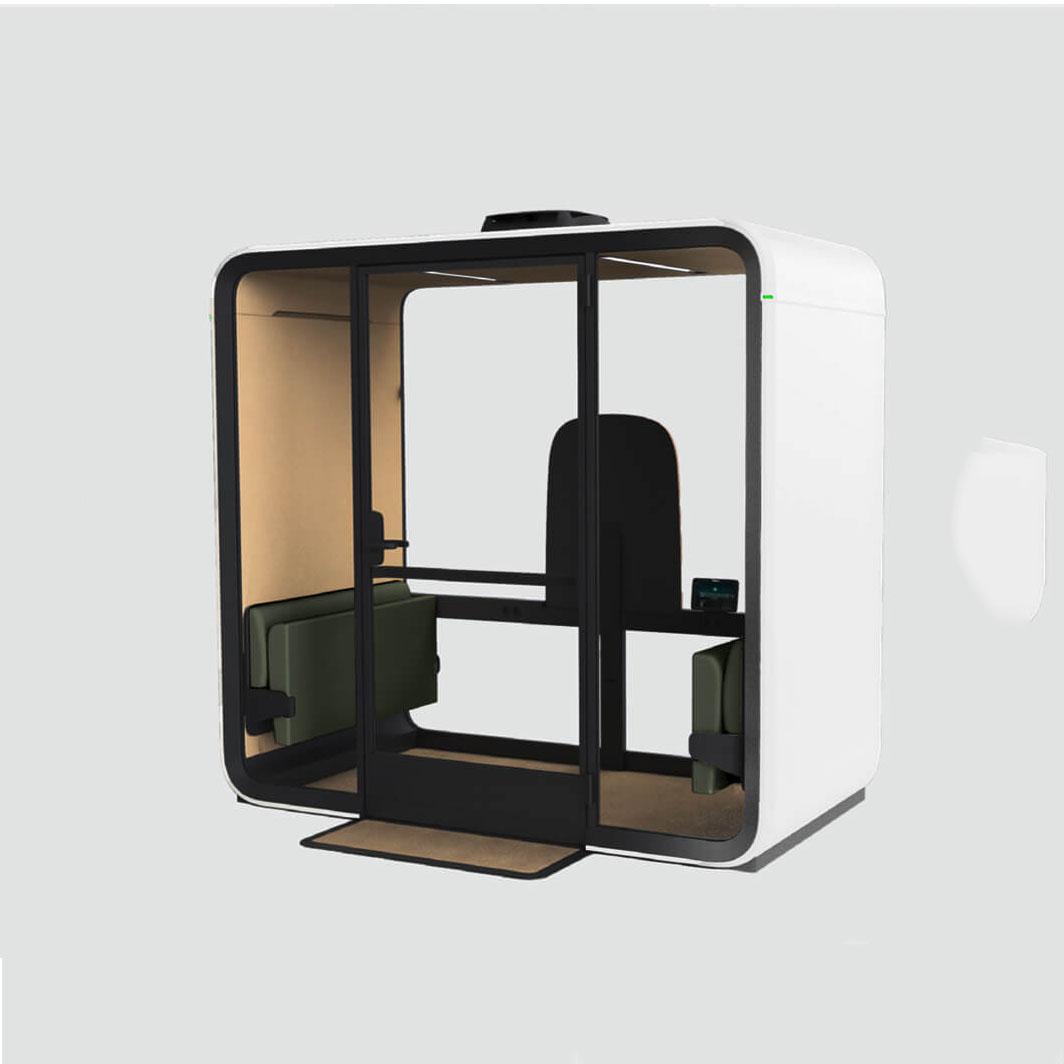
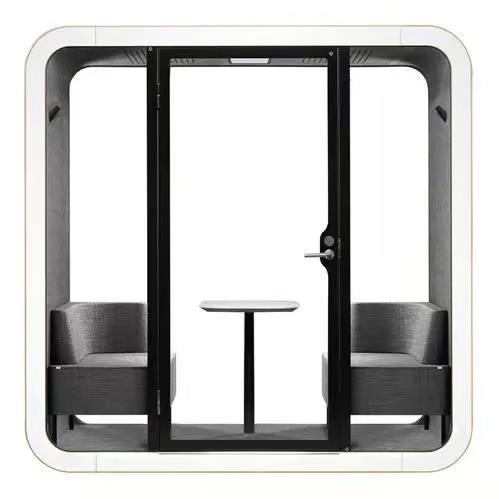
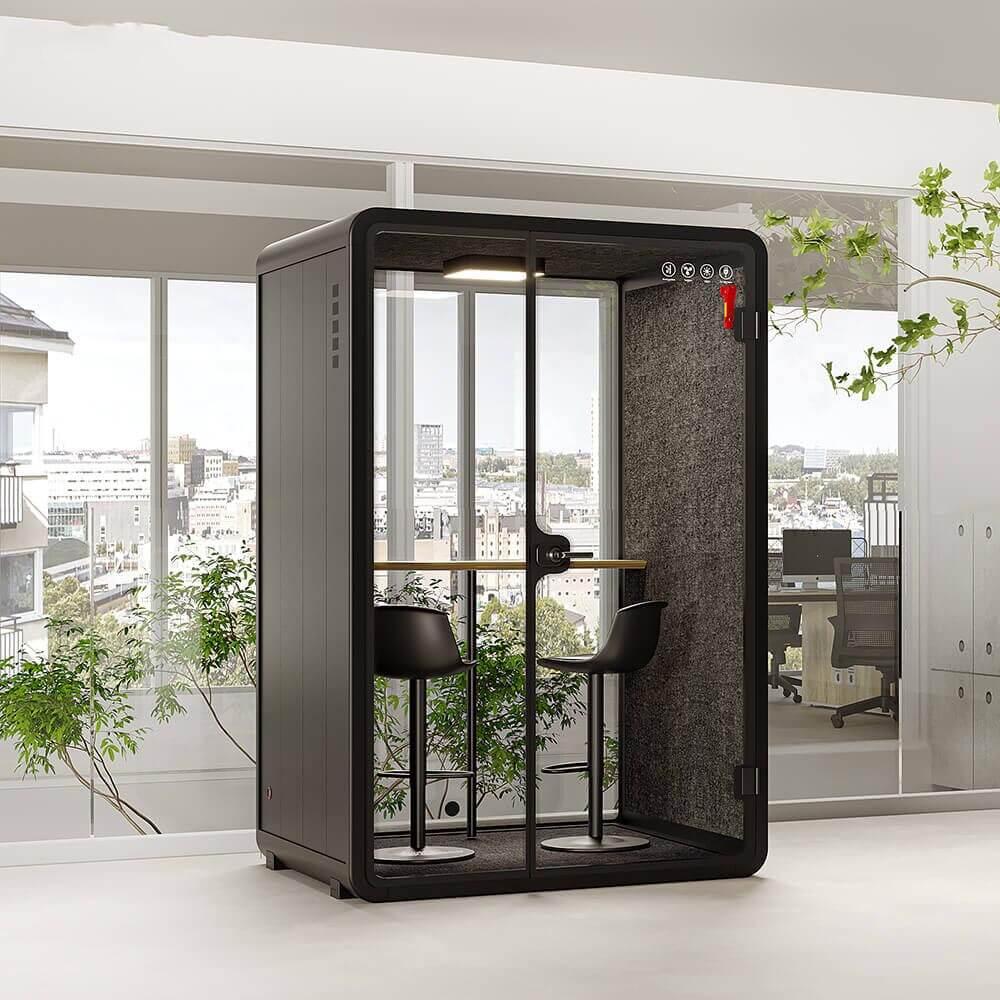
The SOP MP106 product page lists an external size of 2100 by 1600 by 2200 millimetres and an internal size of 1900 by 1400 by 1940 millimetres. Those figures describe the listed model, not an approved three-person interpreting layout. The same page describes seating and a charging table, but the buyer still needs the drawing and furniture specification for the actual quotation.
Request a plan showing the usable seating positions, table, door movement and any fixed fittings. Put each proposed role on that plan. A sofa position described in marketing copy may not provide the working surface or orientation an interpreter needs. Equally, an extra chair shown in an informal sketch should not be treated as a confirmed supplied component.
Keep a distinction between enclosure dimensions and demonstrated fit. The trial should use the offered furniture, or a clearly described equivalent that leaves the relevant limitations visible. Record every difference between the trial and the quote. An empty enclosure demonstration cannot establish how three people will work once the table and seats occupy the space.
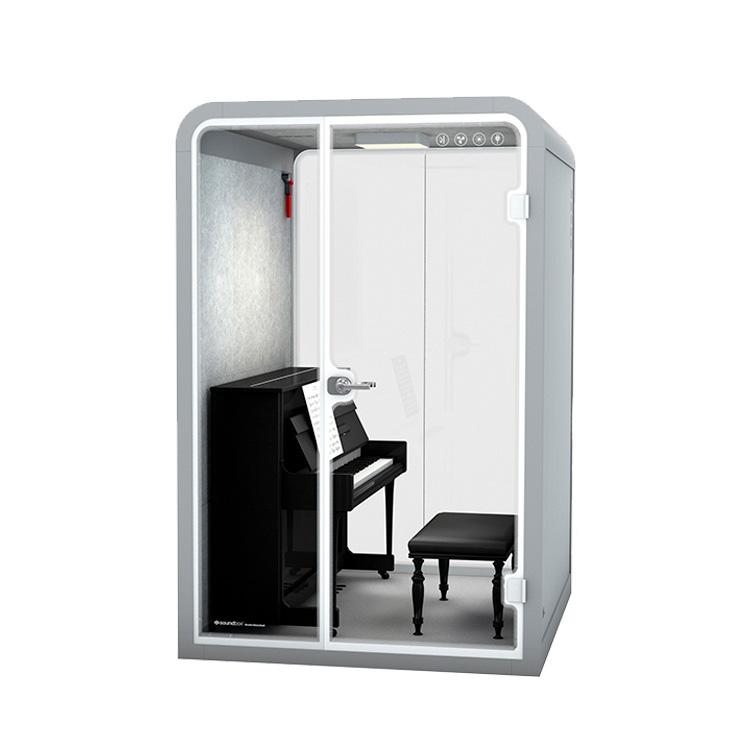
Use theSOP meeting pod configurationsto request the offered furniture drawing for the three roles, rather than assuming the photographed seating arrangement suits interpreted dialogue.
Use the participants' ordinary seated positions first. Ask the speaker to address the listener, then pause for the interpreter. Observe whether the interpreter can follow the speaker while still noticing when the listener wants to interrupt or ask for clarification. A layout that continually turns the listener into an observer rather than a participant needs revision.
Sightline problems are not all solved by moving furniture closer together. A tabletop object, laptop lid or stack of papers might interrupt the view of a face or agreed hand cue. Remove only items that would genuinely be absent in the real meeting. If the proposed solution depends on eliminating necessary work materials, it has not solved the specified task.
Try the conversation in both directions, with the original listener becoming the speaker. Note the change in attention and body orientation rather than rating the room by a vague impression of spaciousness. Ask the interpreter which movements are merely unfamiliar and which would interrupt the way they need to work. Their explanation helps avoid redesigning around an isolated pause.
Introduce a neutral document with short, numbered lines. These are invented rehearsal materials, not a representation of a customer's file. Ask the speaker to identify a line, let the interpreter convey the reference, and have the listener locate it. Watch for reaching across another participant or holding a page where only one person can read it.
Choose the document method deliberately. Separate copies may avoid a shared viewing problem, while a common copy may keep references synchronized.
A screen can offer another route, but its position and controls would need confirmation for the quoted room. Do not assume that a charging table is a presentation system or that the enclosure includes a display.
Ask who changes the document and who checks that everyone is referring to the same version. Keep the interpreter's note space distinct from the shared material if that is their requested working arrangement. The trial should reveal whether a reference can travel through the conversation without a second negotiation over where the paper belongs.
Use a short passage that the participants understand and the interpreter is willing to use. The purpose is to observe room use, not catch translation errors. Agree that anyone can stop the trial to explain a missed cue or obstructed view. A completed passage is not sufficient evidence when one participant had to compensate by leaning, moving or repeatedly asking for attention.
Have a host make brief notes using agreed categories: cue missed, reference not visible, seat moved, or clarification route unclear. Avoid recording personal judgments about the interpreter. Distinguish a room condition from a procedural issue; a confusing instruction may need a clearer meeting convention rather than a different enclosure.
The table is a suggested observation log, not a dataset or a scoring standard. Add the proposed seat arrangement and the furniture version to the actual trial record. A later reviewer should be able to understand why a change was suggested without hearing a private conversation or relying on an unsupported claim that the pod improved communication.
| Moment in the rehearsal | Person observing | Useful note |
|---|---|---|
| Speaker pauses for interpretation | Interpreter | Whether the agreed turn cue is visible and understood |
| Listener asks for clarification | Speaker | Whether attention returns to the listener rather than only the interpreter |
| A neutral document is introduced | All three participants | Whether each person can see the relevant line without moving a seat |
| A term needs correction | Meeting host | Where the conversation pauses and who confirms the revised wording |
A rehearsed opening is often smoother than the moment when someone needs to interrupt. Include a listener's clarification question after the first interpreted passage. Ask the interpreter and participants how they want that question acknowledged, then see whether the agreed cue remains visible from the offered seats. Repeat only the part that produced uncertainty rather than starting the entire presentation again.
Next, use a harmless invented term that the speaker chooses to correct. The interpreter should be able to stop and establish the revised wording through the meeting's agreed procedure. The room cannot resolve terminology, but its arrangement can make the correction awkward if participants lose eye contact or compete for attention around a shared document.
Do not impose a speaking speed or fixed passage length based on this article. The interpreter and meeting participants should settle those working conventions for the actual session. Procurement needs a record of the relevant room conditions and unresolved fittings, not a universal formula for consecutive interpretation.
Keep a compact record naming the proposed model, furniture drawing, participant roles and materials used. Include only the observations needed to explain the decision. A sketch with seat labels may be more useful than a recording of the conversation, and it avoids turning a simple layout exercise into an unnecessary collection of speech or documents.
If anyone proposes recording, obtain the appropriate permission and follow the organization's applicable policy. Do not assume that an enclosed setting makes recording acceptable. The same boundary applies to sensitive papers: neutral trial material can test visibility, but it cannot establish whether the eventual session should take place in this room.
Use the product page as a starting reference, not as evidence of a measured interpreting outcome. Its dimensions do not prove speech privacy, and a participant saying that a passage was easy to hear does not establish an acoustic rating. If the real meeting requires additional privacy assessment or a different environment, keep that requirement separate and unresolved until the responsible owner evaluates it.
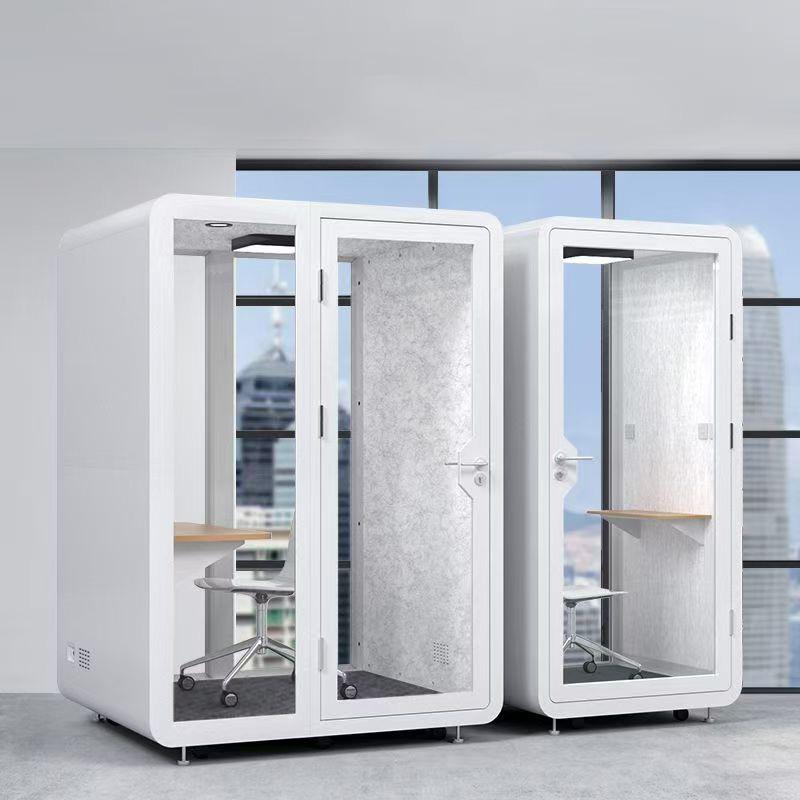
Compare the demonstrated arrangement with the offer line by line where it matters: seats, table, document position and any added equipment. Request a revised drawing if a different chair or table position solved the rehearsal problem. Verbal agreement that the supplier can provide something similar leaves the buyer without a clear configuration to verify at delivery.
Record a limitation when the three roles cannot work together in the available arrangement. A larger meeting space or a different furniture option may be the appropriate answer. Do not turn a failed rehearsal into a claim that the enclosure is generally unsuitable, nor turn a successful one into approval for extra participants or simultaneous interpretation.
The purchase recommendation should state the exact task supported by the evidence. For example, an internal note might say that the three-role consecutive-turn exercise used a particular drawing and neutral document method, with named remaining questions. That is more defensible than describing the pod as interpretation-ready without showing what was tested.
Does MP106's listed internal size prove that three interpreting roles fit?
No. The dimensions establish a model reference, while the offered furniture determines much of the usable arrangement. Ask for the quoted seating and table drawing, then rehearse with the three roles. Do not derive an interpreting capacity from an enclosure size or a marketing photograph alone.
Can the same trial approve simultaneous interpretation?
Not by itself. Simultaneous work can involve different professional practices and equipment. This article addresses consecutive turns among physically present participants. If the intended service changes, ask the interpreter and supplier to review that actual arrangement instead of extending the earlier result.
Must the interpreter sit between the other two people?
There is no universal seating prescription here. Ask the interpreter what they need to follow each participant and manage notes, then test the proposed positions. The key observation is whether each role can participate without recurrent visual or document-access interruptions.
Should a translation error be entered as a room defect?
No. A layout rehearsal is not a language-quality audit. Record an observed obstruction or missed cue separately from a terminology or interpreting question. Let the relevant professional address the latter; procurement should not attribute it to the enclosure without evidence.
Is a video or audio recording necessary for the buying decision?
Usually the layout question can be documented through a role sketch and observation notes. Any recording requires its own permissions and policy review. A recording also cannot supply a certified acoustic result or establish that sensitive future meetings belong in the same setting.
Choose a meeting pod for an interpreted conversation by following the three roles through turns, references and clarification, not by accepting a nominal seat count. MP106's published dimensions provide a concrete starting point, but the proposed furniture and participant arrangement need their own demonstration.
Bring the interpreter into the rehearsal, retain the annotated arrangement and return the unresolved fittings to the supplier. Approve only the configuration and consecutive-turn task that were actually examined. That leaves professional interpreting decisions and any sensitive-meeting requirements with the people responsible for them.

 Tel: +8613538031763
 Email: info@sopworkpod.com
 MP/WhatsApp: +8613538031763
 Manufacturer Address:Liucheng Lujiang District,Meixi Road,Nanan City,Fujian,China