Need Help?
Please leave your contact information to get our latest catalog
Get In Touch Now >

Author:SOP Work Pods Manufacturer TIME:2026-10-29
A dull bump interrupts the gap between two spoken lines. Someone walked past, but the recording alone does not explain how that event reached the microphone. Was it audible through the air, carried through the floor and microphone support, or associated with something the narrator touched? Buying a soundproof vocal booth on the strength of the word soundproof leaves that question unanswered.
Start with competing explanations, not an accessory shopping list. The useful result is a shortlist of disturbance patterns, the paths still worth investigating, and a comparison at the intended site that could change the buying decision. A quiet showroom visit cannot supply that last piece.
Write what happened in terms another listener could recognize: a single bump after a footstep, a short rattle while moving notes, or a continuous tone during otherwise quiet occupancy. Record when it appeared and what people were doing. Avoid naming a structural defect from its sound. A low-sounding disturbance is not, by itself, evidence of vibration arriving through the floor. Several events may happen together when a person enters or adjusts a chair.
Start with the activity that worries the buyer most. For a narrator beside a busy passage, that might be ordinary walking; for someone using a desk-mounted microphone arm, it might be placing a script on the tabletop. Keep these as separate questions. A booth that appears satisfactory during still, silent occupancy has not yet been observed during either activity. Conversely, a disturbance that was not heard should be recorded as absent during the observed event, not impossible at that location.
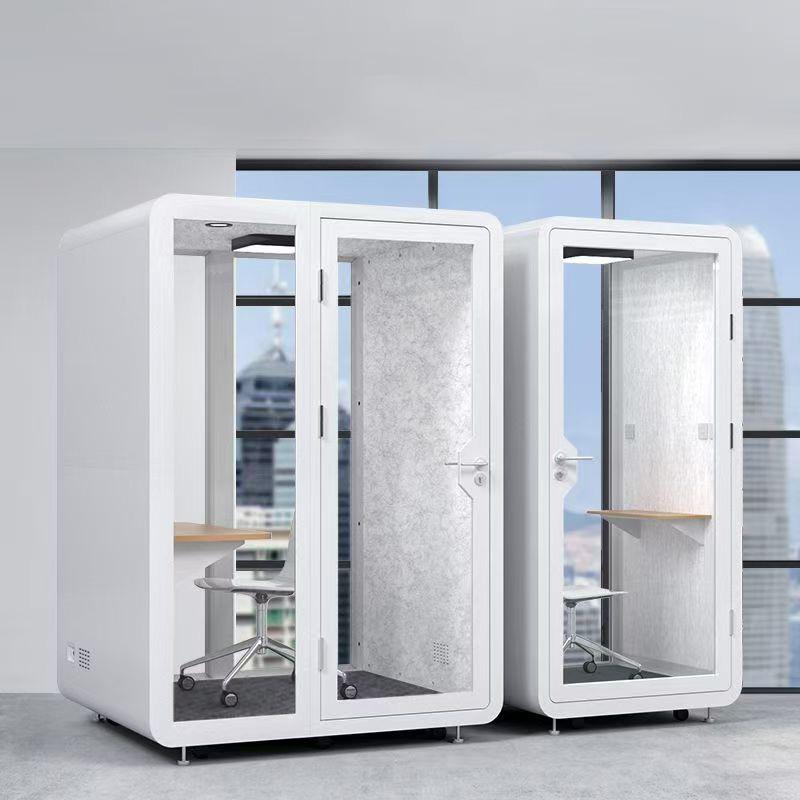
Put the microphone at the end of a simple sketch. Behind it, draw the support it actually uses: a floor stand, a desktop stand, or an arm attached to a surface. Continue to the floor or furniture supporting that assembly. Identify visible contacts, including a cable resting against furniture, without tugging cables or taking anything apart. The drawing describes connections that might matter; it does not establish which one carried a recorded disturbance.
Now add the air around the microphone as another possible path. An ordinary step can be heard in the room as well as coincide with movement transmitted through a support. A fan or other machine may also raise more than one question. Do not sort every hum into an airborne category and every bump into a mechanical one. Microphone mounting instructions can be model-specific: guidance about stand-transmitted vibration on one model is not a requirement to buy the same accessory for all microphones.
Agree where observation is allowed and obtain permission before making any recording. Use harmless spoken material, not a real customer session. Where recording is prohibited, listen live and keep written event notes, accepting that there will be no replay. Ask nearby participants to continue ordinary permitted activity; do not create impacts by stamping, dropping objects, striking surfaces, or repeatedly slamming a door.
Keep the booth in its approved occupied condition, with ventilation operating normally. Note the selected microphone, support, capture route, and visible processing settings. Do not hide an automatic setting you cannot control. An observer can mark the timing of a normal step or desk action without interrupting the narrator. Include a period when that particular activity is absent, while leaving the other conditions as similar as practical.
During replay, ask whether the reported event coincides with the disturbance and whether the same association appears again. Preserve moments that do not fit. One matching moment suggests a question; inconsistent repeats may mean the event was misidentified or another variable changed.
An observer's timing note should distinguish a person walking outside from the narrator moving a foot inside. If both happen together, keep them as a combined event until an ordinary repeat separates them. Do not ask the narrator to freeze in a posture that would be impractical for the job. You are buying for normal vocal work, so a result dependent on eliminating every natural movement would leave the practical question unresolved.
If placing notes on the desk accompanies a bump, first distinguish the placement from the following page turn, chair movement, and spoken line. There is no need to tap the microphone or deliberately excite the furniture. Observe the ordinary sequence again with its actions distinguishable. For a further comparison, the equipment owner may offer another compatible, stable support that is already approved for the microphone and safe in the available space. A floor-supported arrangement and a desk-mounted one have different contact chains, but switching between them can also move the microphone or change its angle. Note those differences instead of calling the exercise a controlled isolation test. Keep the speaking position and capture settings comparable where practical, and have the owner handle adjustments according to the equipment instructions. Never improvise a suspended support, place loose materials under booth feet, alter fixed fittings, or obstruct the exit. If a useful comparison cannot be made without those changes, keep the suspected desk route open rather than attempting a physical remedy.
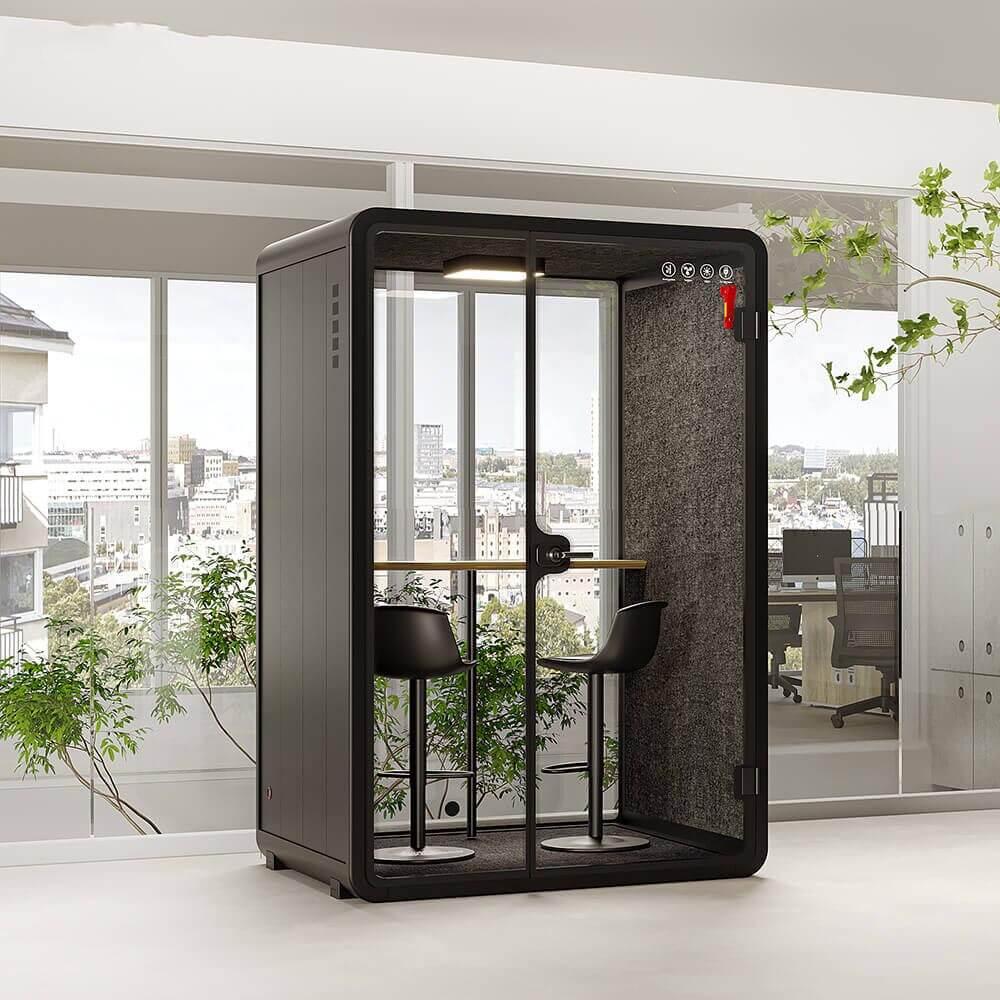
Suppose desk contact is the leading suspicion. Does the interruption also occur while the desk is untouched? If it does, that observation weakens a desk-contact-only explanation. It does not make every other possible route equally likely. Keep the timing notes beside the listening impression so that an explanation can be revised without rewriting what was actually observed.
For a suspected floor route, ask whether a repeatable ordinary activity is associated with the recording across the permitted support arrangements. If both hear it, there may still be an airborne contribution or a contact common to both. If only one hears it, the changed microphone geometry remains a possible explanation. The table offers questions for narrowing the shortlist, not diagnostic rules or completed results.
Listen on the same playback equipment at an unchanged comfortable level. Preserve the earliest available files. Filtering, noise removal, and edited silence can hide the feature under discussion; any processed listening copy must remain distinguishable from the capture used to describe the event.
| Observed pattern | Question still open | Useful contrasting observation |
|---|---|---|
| Bump near ordinary footsteps | Airborne sound, floor/support route, or another simultaneous action? | The same activity with local desk contact absent. |
| Interruption during script placement | Desk contact or the associated handling sound? | Placement and page turning observed separately. |
| Continuous hum between events | Airborne, mechanical, capture-chain, or mixed contribution? | Whether it persists when the suspected ordinary activity stops. |
| Different result on another supported mount | Changed contact chain or changed microphone position? | Document both arrangements and any geometry that could not be matched. |
A supplier demonstration can show how a named microphone arrangement behaves during the events available there. It cannot reproduce an unknown building floor merely because the enclosure looks like the one being quoted. Ask where the sample stands, how its furniture and equipment are supported, and which normal surrounding activities were present. An unusually quiet visit leaves the missing activity untested, not successfully resisted.
Bring the intended site's disturbance description to the conversation. Identify the proposed room, nearby activity, and recording hours without claiming to know hidden construction. Ask the supplier and the responsible site professional which remaining question needs an on-site assessment. A building-related question may require expertise beyond the booth salesperson's remit. Do not infer a required structural remedy from this listening exercise. If the candidate booth cannot be demonstrated at the destination before ordering, state exactly which comparison remains unavailable and discuss that uncertainty before committing on an acoustic assumption. Any later assessment should use the agreed occupied setup, not a retrospectively invented test intended to justify the purchase.
When reviewing SOP recording booth configurations, ask which proposed floor and furniture arrangement the demonstration actually represents.
Reduce the notes to the few patterns relevant to the proposed recording work. For each, keep an event description, the associated audio moment if permitted, a possible source-path-receiver chain, and an observation that does not fit it. Name the remaining comparison in concrete terms. Footsteps near the intended room have not been observed is more useful than needs more testing. Keep a steady unexplained hum separate from a step-linked bump, even when both occur in the same clip.
The buyer can then distinguish an equipment-support question from an unresolved site question without pretending either has been solved. Ask the microphone or support supplier about the former; involve the booth supplier and site specialist where building transmission remains plausible. Do not translate a narrow improvement with one arrangement into a promise that the enclosure eliminates vibration. Decide which unresolved pattern would prevent the intended work, and leave that purchase assumption open until the relevant comparison is available.
Does a bump that I can feel prove the microphone received it through the floor?
No. The sensation and recorded event can be associated without establishing the route into the microphone. Note both, then retain competing air and support-path explanations. A more specific assessment may be needed before attributing the recording to building transmission.
Should every vocal microphone have an external shock mount?
Do not assume that. Consult the exact microphone's mounting instructions and the support's compatibility requirements. Some designs incorporate internal isolation. Whether an additional compatible mount helps the observed problem is a separate question, not an automatic condition of buying a booth.
Can a frequency display identify the vibration source?
A display can help locate a recurring feature for discussion, but it does not establish the physical path or originating activity on its own. Keep event timing and setup observations. Avoid naming a fan, floor, or electrical fault from a visual feature alone.
What if the suspected footsteps never occur during the visit?
Record that limitation and seek an agreed observation during representative ordinary use. Do not substitute heavy impacts or a louder staged event. The unanswered question concerns the site's real activity, not how dramatic a demonstration can be made.
Does a quiet floor comparison establish the booth's sound isolation rating?
No. It describes those events, that capture arrangement, and that location. It provides neither a laboratory rating nor evidence for every source direction or frequency. Keep any formal acoustic documentation separate from these buyer observations.
Take the disturbance shortlist, not a confident diagnosis, into the buying discussion. The strongest entry identifies an ordinary event, a plausible route, a contrasting observation, and the site comparison that remains missing. Where the desk support explains only part of the pattern, leave the rest visible. Where the showroom cannot represent the destination, do not erase the difference with a product label. A soundproof vocal booth decision should acknowledge what the available observations narrow down and what still requires competent investigation at the intended location.

 Tel: +8613538031763
 Email: info@sopworkpod.com
 MP/WhatsApp: +8613538031763
 Manufacturer Address:Liucheng Lujiang District,Meixi Road,Nanan City,Fujian,China