Author:SOP Work Pods Manufacturer TIME:2026-09-25
STC and speech privacy are related but they do not answer the same buyer question. STC is a rating used for a defined transmission-loss test scope, while speech privacy concerns how understandable a conversation is to a listener under a particular room, distance, background, and operating condition. A pod can have a document with an STC value and still require a separate review of speech privacy in the office.
The practical risk is scope confusion. A component rating may describe a panel, glass element, or door, while a buyer is deciding about a complete enclosure with joints, seals, ventilation openings, services, furniture, and a surrounding room. The number should therefore be treated as one evidence layer, not as an absolute promise.
This guide uses an evidence-dossier method. Define the question, identify the test object and conditions, separate transmission from intelligibility, map site variables, and set an acceptance record. Do not invent a rating, certification, or pass result where the supplied document does not provide one.
Start by reading the scope line before the number. Identify the tested object, dimensions, construction, joints, door or glazing condition, method, laboratory context, and any exclusions. A value attached to a single material does not automatically describe the assembled pod. Record the model or configuration reference so the document can be matched to the offered product.
Ask what changed between the tested object and the proposed site unit. Different glazing, door seals, service openings, ventilation routes, panel joints, furniture, or assembly methods may change the boundary. The comparison is still useful, but the difference should remain visible in the buyer's evidence record.
A careful brief begins by defining the sound problem in plain language. Is the concern that speech leaves the pod, that outside noise enters, that a user needs concentration, or that a meeting must remain confidential? These are related questions but not interchangeable. Write the listener, location, activity, and consequence of failure before comparing documents. A clear brief prevents a single acoustic term from becoming a substitute for the actual privacy requirement.
Transmission loss describes an acoustic test relationship under defined conditions. Speech privacy asks a listener-focused question: can the words be understood outside the enclosure? Background sound, listener distance, speaker level, room absorption, reflections, and the position of the booth can change that answer. These variables make speech privacy a broader application question than a single material rating.
Avoid replacing one with the other in a quotation. A buyer can ask for the relevant acoustic evidence and separately define a practical observation or test method for the intended use. The result should state the condition and limitation, not a universal statement that every conversation is private or inaudible.
| Evidence layer | Question answered | Limit to record |
|---|---|---|
| Component rating | How the named element performed under its stated method | Does not prove the assembled pod |
| Complete-enclosure document | How the offered enclosure performed in the stated configuration | Does not cover every occupied office |
| Site layout review | How position, listeners, routes, and background affect the question | Does not replace a formal test |
| Practical observation | What selected people noticed under recorded conditions | Does not create a universal rating |
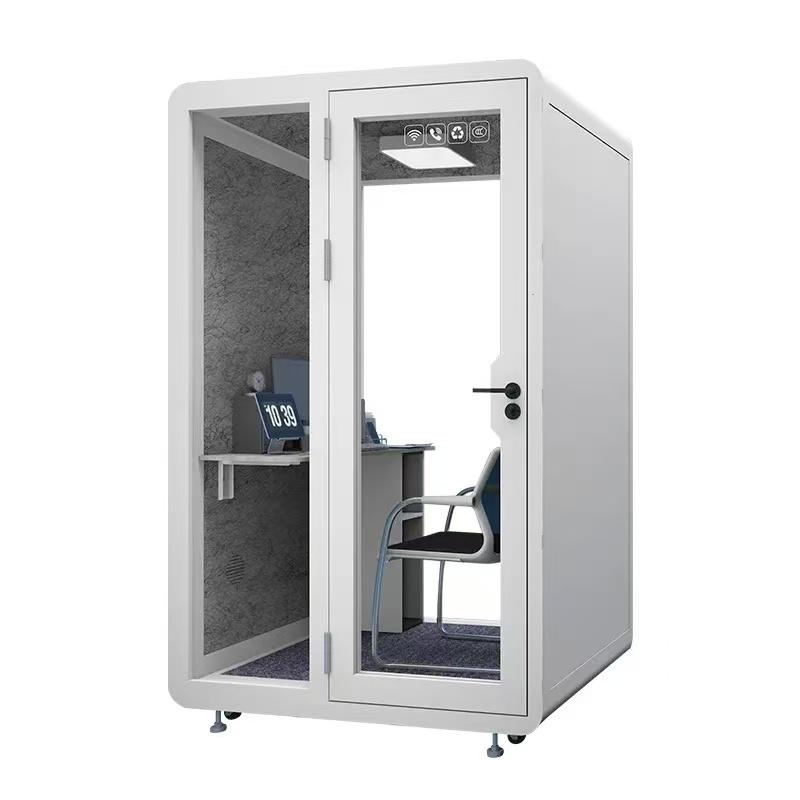
Ask which evidence applies to the offered configuration and which conditions were present during any test. Door seals, glazing, ventilation openings, adjacent partitions, furniture, installation quality, and the room around the pod may all affect the practical result. Keep a record of the configuration, test scope, and limitations. If a supplier uses a rating term, ask what decision it is meant to support rather than assuming that the number answers every privacy question.
Inspect the boundary as a system: door perimeter, threshold, glazing edges, panels, corners, ventilation openings, cable routes, service panels, and any site-made penetration. An acoustic document is easier to use when the buyer knows which interfaces could make the offered unit different from the tested configuration. Note visible gaps, contact, loose trim, or a door that does not settle consistently.
The purpose of an inspection is not to diagnose a cause without evidence. Record location, condition, operating state, and follow-up owner. If a formal test is required, define who performs it and which configuration applies. Keep the observation separate from a laboratory number so that repair, placement, and documentation decisions do not become confused.
Speech privacy is also shaped by behaviour and layout. A pod beside a quiet desk area may make a low-level conversation noticeable even when the enclosure reduces sound transmission. A pod near a printer or circulation route may have a different masking context but more interruptions. Review where listeners are likely to stand, sit, or pass, then consider whether placement, user guidance, or room planning can solve part of the problem without changing the entire product choice.
Speech privacy changes with context. Map nearby desks, circulation, hard reflective surfaces, printers, doors, mechanical sound, and the place where a listener could stand or sit. A booth next to a quiet workstation may create a different concern from one beside an active collaboration area. Distance and orientation should be recorded with the proposed layout.
Use the normal operating state when observing. Ventilation, lighting, door closure, user posture, and nearby activity are part of the real condition. A demonstration after hours can help reveal visible or operational issues, but it cannot stand in for every occupied period. Repeat the same observation when a concern is material to the decision.
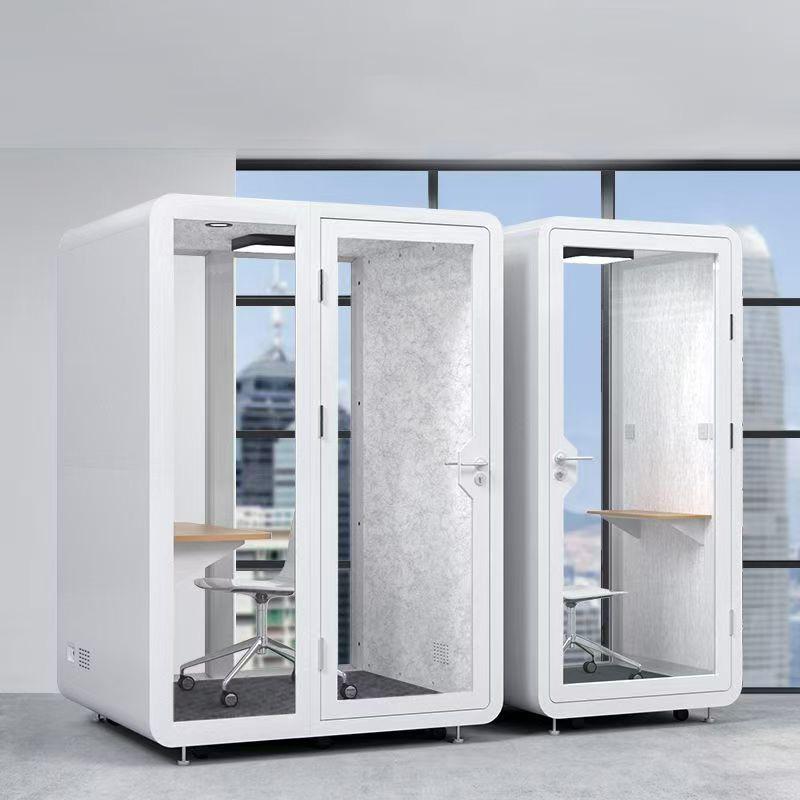
The final record should distinguish a product comparison from a site acceptance check. The comparison can list the stated acoustic evidence, configuration, openings, and intended use. The acceptance check can examine doors, interfaces, ventilation, adjacent surfaces, placement, and the agreed listening condition. Keeping those records separate makes it easier to explain what has been demonstrated, what remains a project responsibility, and what cannot be promised without a site-specific review.
A useful supplier question identifies the tested object and the intended comparison. Ask for the method, scope, configuration, dimensions, conditions, and limitations rather than requesting a number without context. If one supplier offers a component value and another offers complete-enclosure evidence, keep the rows separate instead of treating them as equal results.
Also ask how the offered configuration differs from the document. Record ventilation state, doors, seals, glass, service openings, furniture, and installation assumptions where supplied. A supplier may provide a document, a clarification, or a recommendation for a site observation. Each has a different evidentiary role and should be labelled accordingly.
For a product configuration reference, review office pod product options, then ask which acoustic evidence applies to the complete enclosure and the intended office condition.
Use cautious language in the buyer-facing decision record. State the privacy objective, the evidence reviewed, the conditions that were not tested, and the practical controls that reduce exposure. Avoid translating a component description into a guaranteed room result. If the consequence of disclosure is high, involve the responsible project and compliance parties early and define a site-specific review rather than relying on a general product comparison.
A site record should identify the pod, location, date, operating state, speaker position, listener positions, surrounding conditions, and the question being observed. Do not record confidential call content. The record can note whether speech was understood, whether a sound was noticeable, whether the door and ventilation operated normally, and what follow-up is required.
A practical observation is not automatically a formal acoustic test. State that boundary clearly. Use the record to compare locations, identify a placement issue, or confirm that a supplier clarification has been addressed. If a contractual performance test applies, use the agreed method and responsible party rather than improvising a pass threshold.
It is helpful to record the listener position used in the review. A person seated beside the pod, walking past the door, working across the room, or occupying an adjacent enclosure may experience the conversation differently. The position does not create a universal score, but it makes the project discussion concrete and helps the buyer decide whether placement, user guidance, masking, or another control deserves attention.
The buying conclusion should name the evidence that is sufficient for the current decision and the evidence that remains open. A buyer may approve a configuration for ordinary calls after reviewing scope, site placement, comfort, and a defined observation, while still requiring a separate local review or formal test for a higher-consequence use.
Keep the language proportional. STC can help compare a defined test object; speech privacy depends on the complete enclosure and its environment. A careful record protects the buyer from both extremes: dismissing useful technical evidence and treating a single rating as a guaranteed outcome.
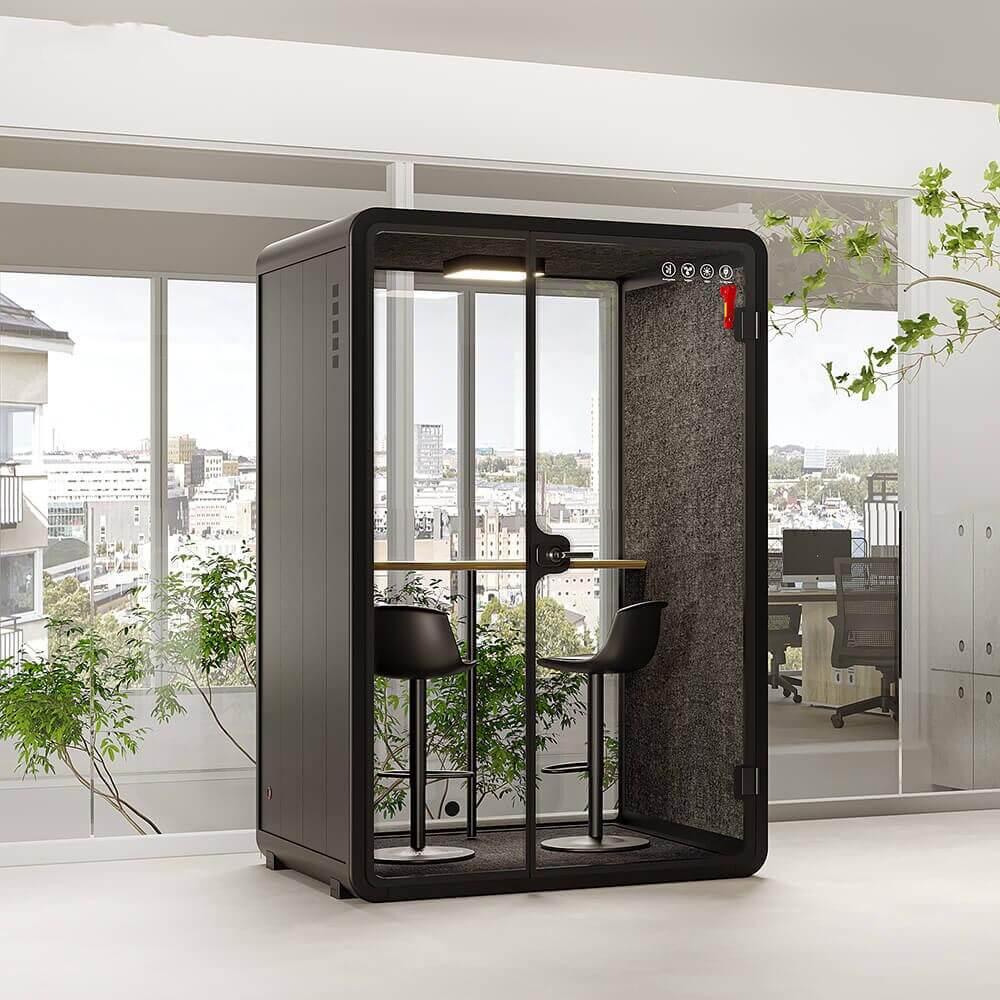
Keep the acoustic discussion connected to the wider user experience. A pod that reduces one exposure but creates heat, glare, poor access, or difficult service may not be the right answer for the site. The selection record should therefore state the acoustic objective together with comfort, placement, operation, and review responsibilities, so privacy is treated as one decision criterion rather than the whole product story.
Does a higher STC value automatically mean better speech privacy?
No. STC and speech privacy describe different questions. Privacy also depends on the complete enclosure, background sound, distance, listener position, and operating condition.
Can a glass STC value describe an office pod?
Not by itself. A glass value describes the named element under its test scope. Ask how the complete pod, joints, door, ventilation, and services are addressed.
What should a buyer request from a supplier?
Request the method, tested object, configuration, conditions, limitations, and explanation of differences from the offered unit. Keep component and complete-enclosure evidence separate.
Can an after-hours listening check prove privacy?
It can provide a site observation under recorded conditions, but it is not automatically a formal acoustic test or universal guarantee.
When should a formal test be used?
Use the contract or project requirement that applies to the decision. Define the method, configuration, responsible party, and interpretation before testing.
STC and speech privacy should be kept as two connected evidence layers. Read the scope of the rating, trace the complete pod boundary, map listener and background conditions, and define a site observation or formal test that matches the actual decision.
The next action is to build an evidence table for the offered configuration. It should show what each document can answer, what it cannot prove, and which condition still needs confirmation before approval.

 Tel: +8613538031763
 Email: info@sopworkpod.com
 MP/WhatsApp: +8613538031763
 Manufacturer Address:Liucheng Lujiang District,Meixi Road,Nanan City,Fujian,China