Author:SOP Work Pods Manufacturer TIME:2026-09-22
Office pods for coworking spaces should be chosen from member behaviour rather than from a generic seat count. A flexible workspace may serve freelancers, small companies, remote employees, visitors, and teams that need a short private conversation. Those users create different peaks, booking habits, and expectations about visibility. The best starting point is a demand map that connects each pod type to a real work pattern.
The decision is not simply whether a pod looks private. It is whether the space can offer an understandable mix of focus, calls, short meetings, and quiet study without creating queues or an unfair booking system. Review privacy, access, comfort, cleaning, service access, and relocation before deciding how many units belong in one zone.
This guide uses a member-journey method. First describe the moments that cause a person to leave an open desk. Then compare pod sizes, locate them against circulation and host operations, define how reservations work, and set a review point after occupancy. Local building, fire, accessibility, landlord, and electrical requirements still need confirmation for the actual site.
Record the reasons members seek enclosure. A freelancer may need a confidential client call, a remote employee may need a video meeting, and a small company may need a two-person discussion without booking a formal room. Write the task, likely duration, privacy consequence, equipment, and time window for each moment. Avoid recording conversation content; demand can be understood from purpose and duration.
Separate occasional exceptions from recurring demand. A single event should not determine the whole inventory, while a recurring lunchtime queue should not be hidden by an average. Compare check-in information, booking requests, host observations, and anonymous user feedback where those records are already available. The result is a demand profile, not a promise that every request will be met immediately.
A useful worksheet has one row for each member situation and separate columns for privacy, duration, equipment, access, and reset effort. Keep the worksheet close to the floor plan so a proposed count can be tested against real routes. If a pod is intended for confidential work, record who controls access and how a host can respond when the space is occupied. If the pod is intended for flexible work, record how users discover availability and how a person can leave without interrupting another member.
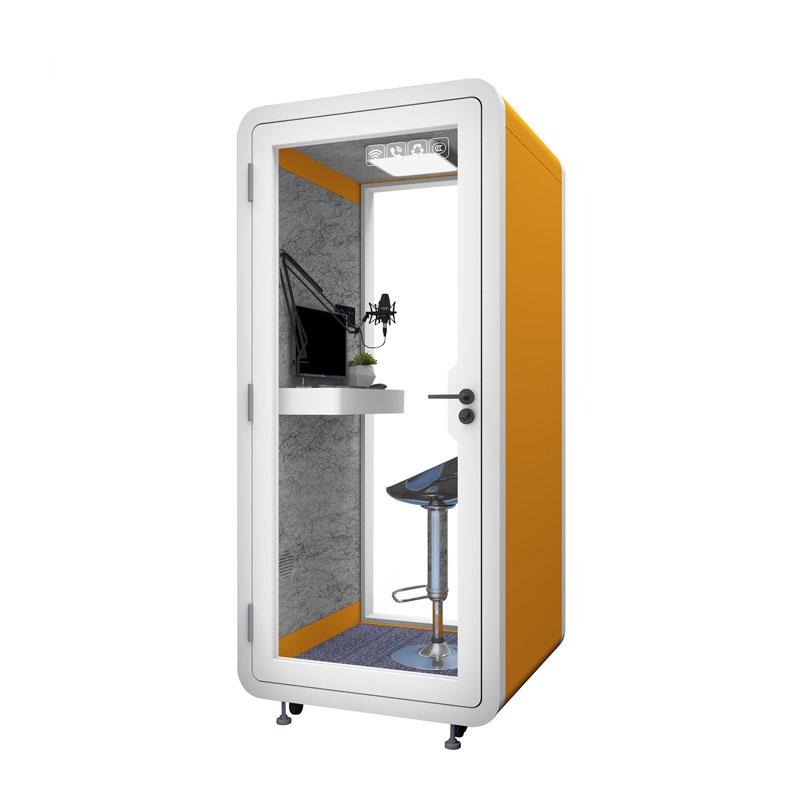
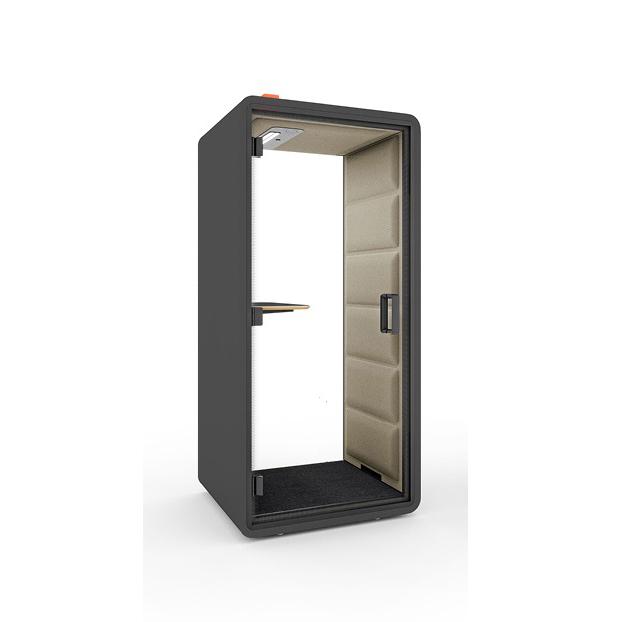
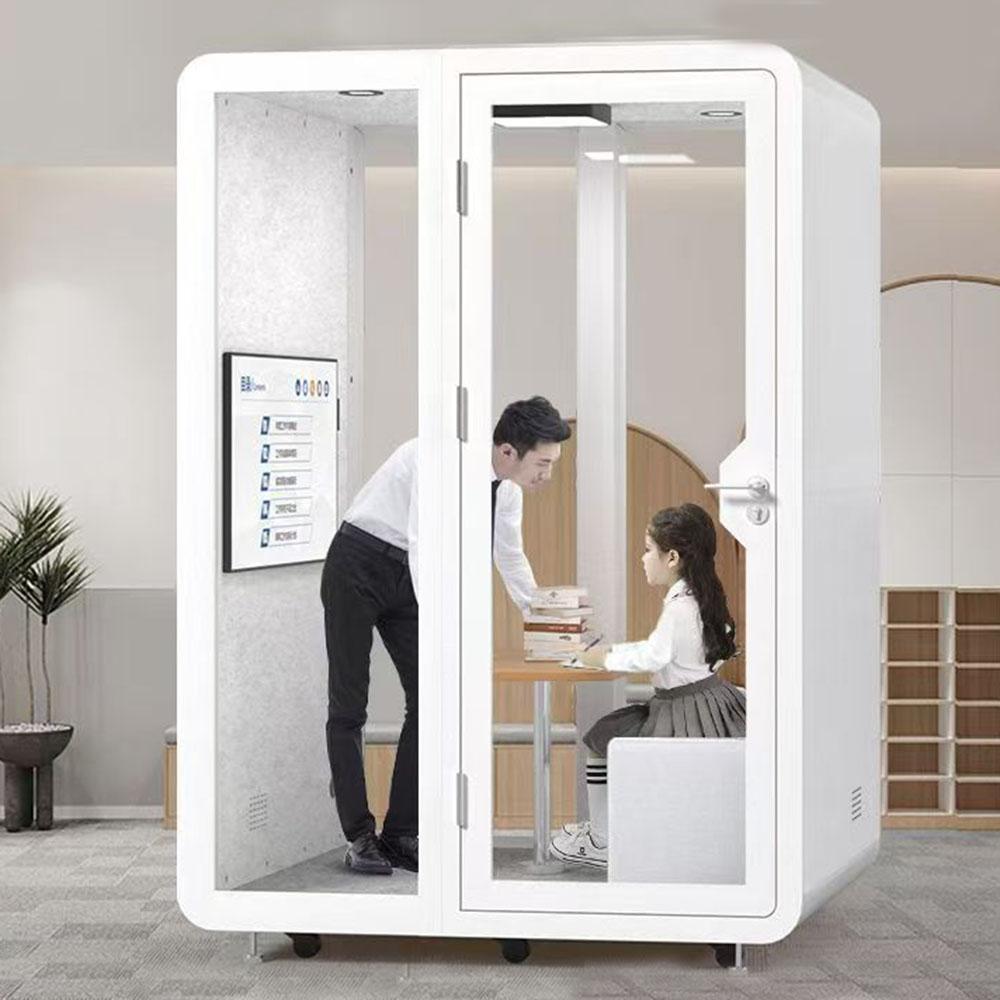
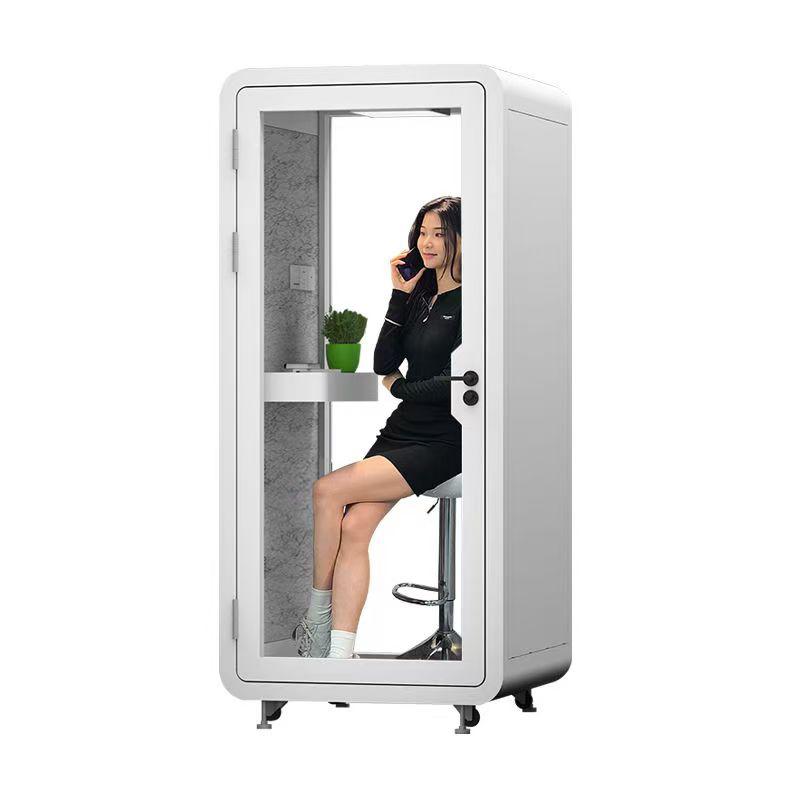
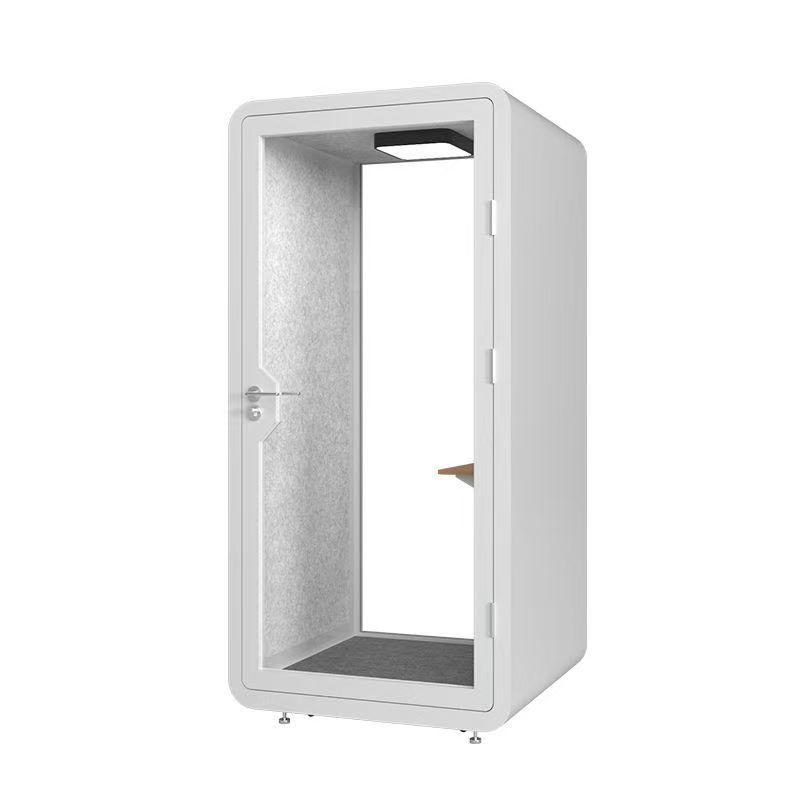
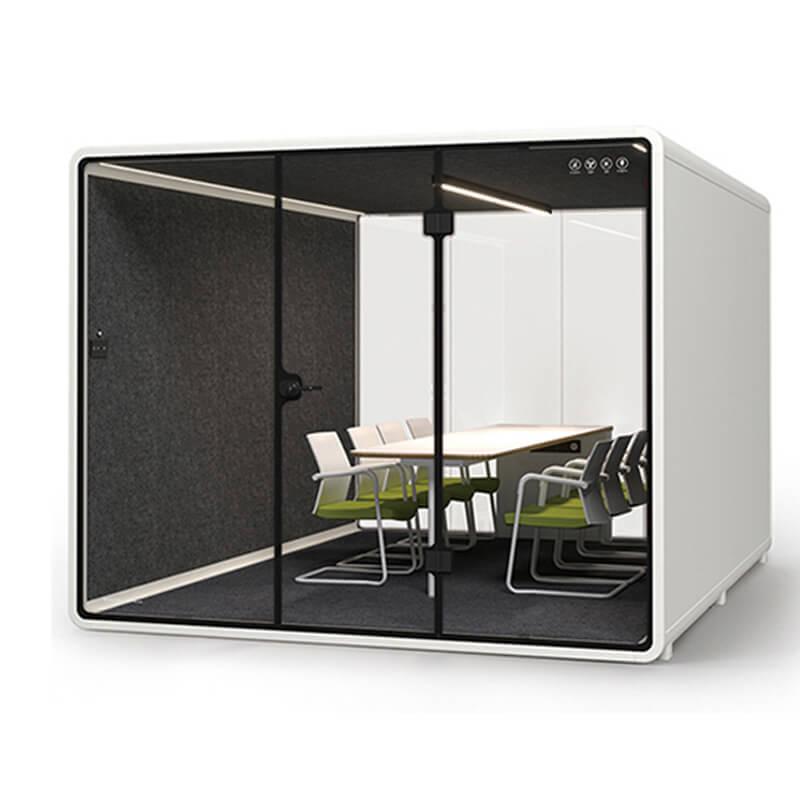
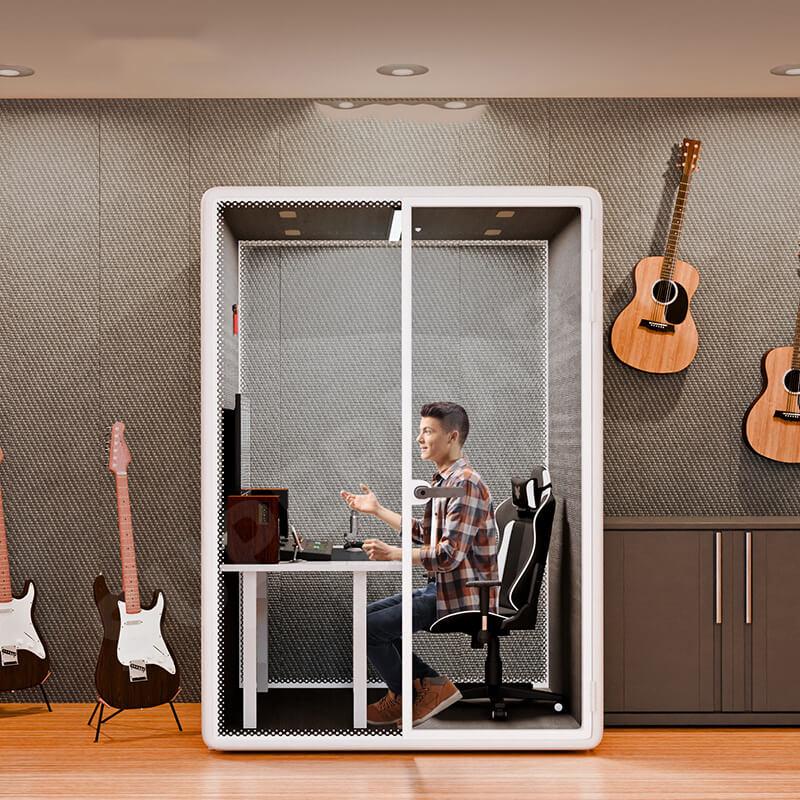
A one-person phone booth and a two-to-four-person meeting pod solve different problems. Calls need speech privacy, device power, lighting, ventilation, and a quick turnover. Small meetings add door movement, shared sightlines, table use, screen position, and a different noise path. Treating both as one category makes the inventory look efficient while leaving the wrong user waiting.
Create a simple scenario matrix with the member task on one side and the required enclosure on the other. Mark which needs are mandatory, which are preferences, and which can be handled by existing rooms. This makes it easier to explain why one larger pod is not automatically an alternative to several individual booths, especially when users arrive at different times.
| Member task | Useful pod question | Record before approval |
|---|---|---|
| Private one-person call | Is a booth available near the intended route without exposing the call? | Peak demand, duration, power, comfort, privacy condition |
| Two-person discussion | Will both users have usable seating, door clearance, and a workable table? | Occupancy pattern, equipment, sightlines, turnover |
| Small hybrid meeting | Can participants connect, hear, see, and leave without blocking circulation? | Screen position, service points, booking length, host rule |
| Quiet focused work | Does the location protect concentration without creating a reservation bottleneck? | Noise context, session length, cleaning, review trigger |
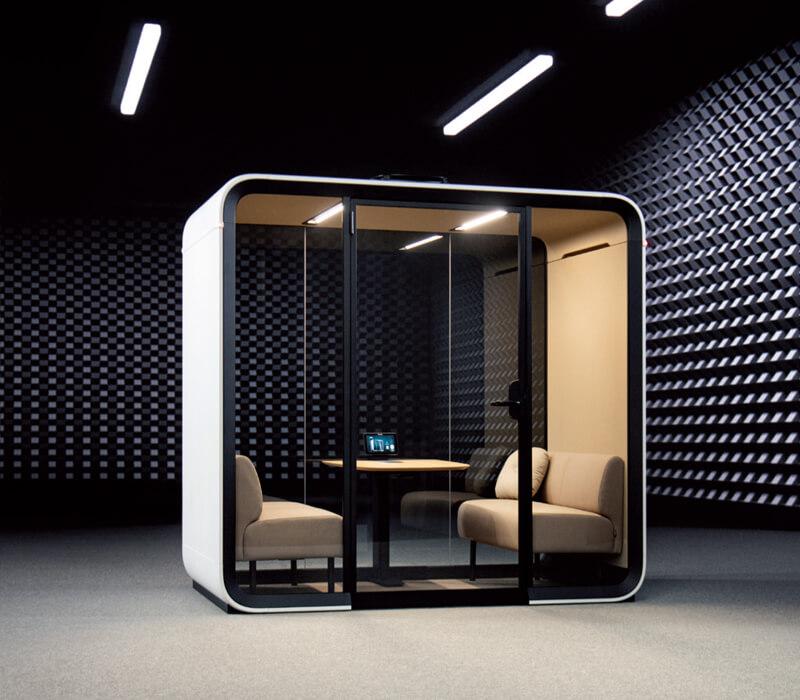
Do not hide uncertainty behind a capacity label. A four-person pod may have four seats but still be a poor choice for a short call if the room is difficult to enter, the screen cannot be shared, or the booking period is too long. A single booth may be useful for a call but unsuitable for accessible use, a document review, or a conversation that needs another person present. The demand map should make these boundaries visible before the product mix is approved.
Use peak windows to test the proposed mix. Look at the busiest periods for calls, interviews, focused work, and short meetings, then ask what happens when two user groups arrive together. The objective is not to eliminate all waiting. It is to identify whether a queue is acceptable, whether a booking rule can reduce it, and whether a different size mix would release more useful capacity.
Record the trade-off between quantity and flexibility. More single-user booths may serve distributed call demand, while a meeting pod may absorb group work that would otherwise occupy a lounge or conference room. Keep the assumption visible: a pod can be available and still be unsuitable if the user needs a screen, a second chair, accessibility clearance, or a quieter position.
Operational ownership should be written beside every important assumption. The host team may own booking rules and first-line checks, while the supplier may own component information and service guidance. The landlord, designer, installer, or local authority may own other site questions. Naming the owner avoids a common handover problem in which a pod is installed but nobody is responsible for checking its position, cleaning route, controls, or user instructions.
Coworking placement must work for members and operators. Review the route from reception to the pod, host visibility, cleaning access, emergency movement, nearby desks, waiting behaviour, and the position of doors. A hidden corner may feel private but create service friction. A central location may be easy to find but expose calls to passing listeners or create a queue beside a shared work table.
Walk the proposed positions during a busy period, not only in an empty room. Note voices, printers, kitchen activity, lift doors, glare, reflections, and the way people pause before entering. Keep enough service and air clearance for the offered product, and do not infer local compliance from a drawing. The location decision should be recorded with the reason for accepting its trade-offs.
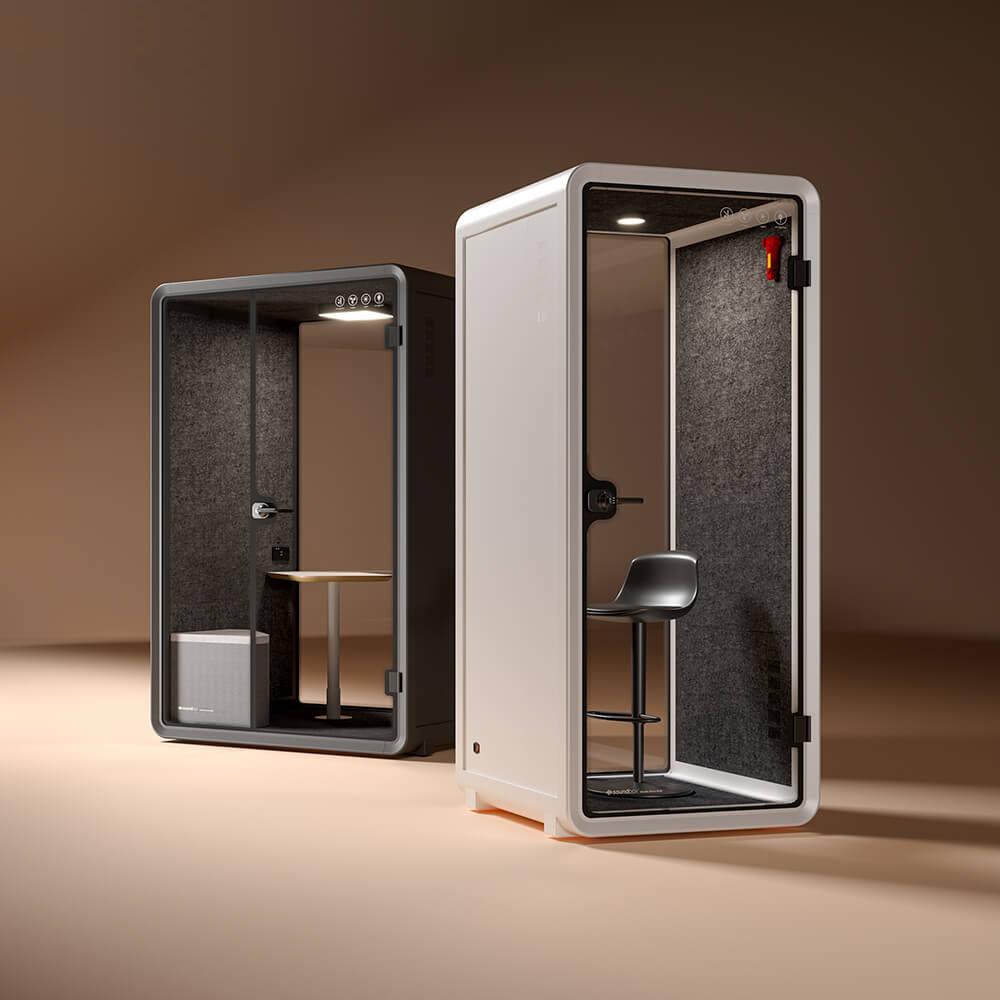
A short pilot can be more informative than a long argument about averages. Observe the proposed location through a busy period, record which scenarios are served, and note the work that moves back to open desks. Review both successful use and rejected use. The aim is not to manufacture a perfect forecast; it is to learn whether the selected pod mix supports the members the coworking space actually serves.
A pod is part of the coworking service model, so the booking rule matters as much as the furniture. Define the shortest useful booking unit, how early members may reserve, what happens when a person does not arrive, and whether a current user may extend a session. The rule should fit the actual turnover and avoid making a private booth unusable for short tasks because every reservation is too long.
Keep exceptions visible. A member handling a confidential call may need to finish a session, while a team meeting may require a larger pod and longer setup. Give hosts a way to resolve conflicts without inventing a new rule at the desk. Review rejected bookings and no-show patterns after launch; they can indicate capacity, policy, or interface problems rather than a need for more pods.
When comparing options, keep the commercial decision separate from the operating decision. A lower unit cost may be attractive, but a cheaper arrangement can create longer booking periods, more host intervention, or a poor location that reduces use. Record delivery, installation, service, cleaning, relocation, and future expansion questions alongside the initial price discussion. This gives the coworking team a fuller basis for selecting a useful and maintainable inventory.
Members experience the complete operating system. Check seat or stool comfort, reach to power, lighting, screen reflections, door use, ventilation controls, cleaning method, and the time needed to reset the space. Use the normal operating state when observing comfort. A short demonstration with systems disabled can hide a condition that appears during a real call or study period.
Assign a service route for doors, seals, lights, fans, controls, furniture, and visible damage. The coworking operator should know what members can report, what hosts can check, and when a supplier is required. A dated service log helps distinguish repeated configuration problems from misuse and gives the operator evidence before deciding to relocate or add capacity.
For a product-level comparison, review office pod product options, then match the selected configuration to the coworking floor plan and operating rules.
Keep the final recommendation narrow enough to act on. State the intended users, the selected pod types, the proposed locations, the booking assumption, the service owner, and the evidence still required. A focused recommendation is easier for a coworking operator to approve, explain to members, and revisit after real occupancy than a broad claim that one model is ideal for every workspace.
Choose a review date before ordering. Compare the planned scenario mix with observed use, blocked bookings, no-shows, queue locations, cleaning effort, service calls, and complaints about visibility or comfort. Avoid claiming that the initial inventory is universally correct. The value of the review is the decision it enables: adjust rules, change locations, add a different size, or stop expanding.
Keep the original floor plan, configuration schedule, operating rules, and observation notes together. If a problem occurs, repeat the same observation method before changing several variables at once. That record allows the coworking team to tell whether the issue came from pod selection, member behaviour, placement, building conditions, or an unclear booking process.
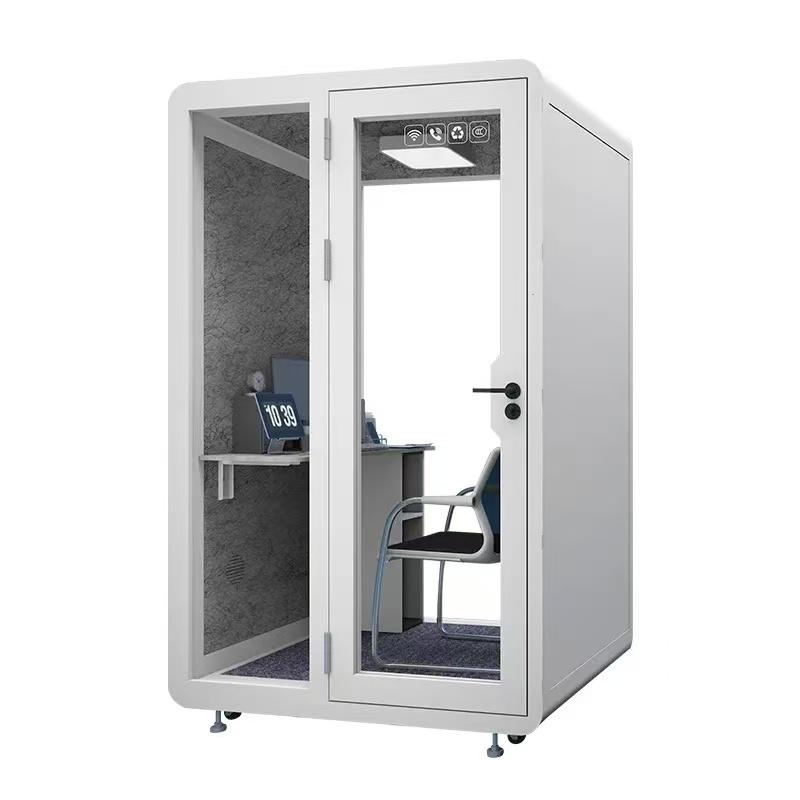
Finally, make the review trigger visible to the team that will operate the space. A change in member mix, floor plan, booking demand, service burden, or building condition may justify a new review. Naming those signals keeps the inventory decision alive without turning every complaint into an immediate product change.
How many office pods does a coworking space need?
There is no universal count. Start with observed demand by task, duration, and peak window, then compare the proposed mix with existing rooms and a review plan.
Should coworking pods be bookable by the hour?
Use a booking unit that matches real turnover and privacy needs. Test the rule against short calls, longer meetings, no-shows, and host workload.
Are phone booths enough for hybrid coworking teams?
Not always. Hybrid meetings may require a larger enclosure, a screen, shared power, and a different booking duration. Match the pod to the participant pattern.
Where should pods be placed in a coworking office?
Review routes, nearby work, host visibility, service access, waiting behaviour, building conditions, and the privacy consequence of passing listeners.
When should the pod mix be changed?
Change it after a repeatable review shows a persistent mismatch that cannot be solved by placement, booking, cleaning, service, or member guidance.
Office pods for coworking spaces should be selected as part of a member service, not as isolated furniture. Map real tasks, separate one-person calls from group work, test peaks, place pods with routes and sightlines, and define how the operator will learn from occupancy.
The next practical step is a short demand and floor-plan review using the same scenario rows for every option. That record gives the coworking team a defensible pod mix and a clear reason for any later adjustment.

 Tel: +8613538031763
 Email: info@sopworkpod.com
 MP/WhatsApp: +8613538031763
 Manufacturer Address:Liucheng Lujiang District,Meixi Road,Nanan City,Fujian,China