Author:SOP Work Pods Manufacturer TIME:2026-09-18
Office meeting room pods in Norway should be sized from observed meeting behaviour rather than a generic seats-per-employee ratio. A workplace may report a shortage of rooms even when the real problem is uneven demand, oversized rooms occupied by two people, poor booking discipline, slow reset, or pods located away from the teams that need them.
This article is a planning reference, not a claim about a named Norwegian installation. It uses a ten-day demand diary to connect actual meetings with pod capacity, placement, booking, and handover. Norwegian building, fire, electrical, accessibility, property, and workplace requirements remain matters for the qualified local project parties.
A good diary is intentionally small. It does not monitor conversation content or identify employees. It records time band, group size, session length, meeting mode, outcome of the room search, and the reason an available space was rejected. Those observations produce a clearer brief than asking staff whether they would like more quiet rooms.
Select two representative working weeks and include days with known attendance differences. At agreed observation points, record requested start time, actual group size, expected duration, in-person or hybrid mode, room or pod found, waiting time, and any abandonment. Use broad team zones rather than personal names. Add a short code for the rejection reason, such as wrong capacity, missing screen, excessive distance, or no privacy.
Keep planned and unplanned meetings separate. A room calendar shows reservations but misses hallway discussions that need privacy and booked rooms that sit empty. A walk-through shows occupancy but misses the meeting that never happened. Combining calendar counts, anonymous observation, and a short facilities log gives a more reliable demand picture while respecting workplace data boundaries.
Agree data handling before the diary starts. State who may collect and review the aggregate record, how long it is retained, and which fields are unnecessary. Avoid cameras, audio, meeting subjects, attendee names, or inferred performance. Share the purpose with employees and use the organisation's established consultation and privacy processes. A narrow dataset is easier to trust, and it gives enough evidence for capacity planning without creating an unrelated monitoring system.
Sort observations into useful bands: one person joining a remote call, two people in a short discussion, three or four people collaborating, and larger groups that belong in conventional rooms. Count frequency and duration for each band. A four-person pod selected because four is the highest observed number may spend most of its life holding one caller; the distribution matters more than the maximum.
Review furniture and technology together with occupancy. Two people sharing a document need different table depth from four people listening briefly. Hybrid sessions need a credible camera position, screen sightline, power, and cable management. Write these tasks beside the capacity band so a nominal seat count does not become the only specification.
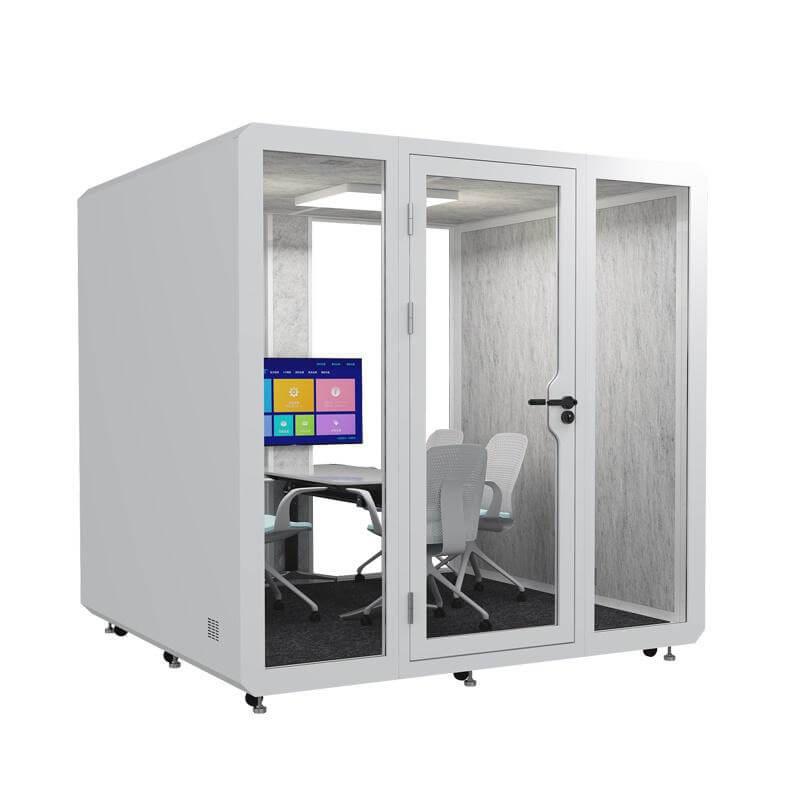
Plot demand by time band and team zone. Identify the periods when all suitable spaces are occupied and distinguish a recurring peak from an isolated event. A mix of smaller pods may release conventional rooms for larger groups, while one larger pod may better serve a team that repeatedly meets as four. Keep both the rejected and preferred mix visible in the decision note.
Test the calculation against absence and no-show behaviour. If bookings are frequently released late, a cancellation rule or occupancy signal may recover capacity without another pod. If people avoid an available pod because it lacks a screen or feels remote, the issue concerns configuration or placement. The purchase quantity should answer the cause shown by the diary.
Model at least three capacity options against the same peak. For each option, show how many observed requests it could serve, which requests still need conventional rooms, and what happens if one pod is unavailable. Include travel and reset time rather than treating every slot as continuously productive. The purpose is not to predict occupancy perfectly. It is to expose whether the preferred mix remains useful when attendance, hybrid participation, or service availability varies.
| Demand signal | Diary evidence | Likely response | Check before adding pods |
|---|---|---|---|
| One-person hybrid calls occupy large rooms | Frequent solo sessions during the same time band | Protect smaller call spaces and release larger rooms | Technology, privacy, booking, and nearby phone-booth capacity |
| Two-to-four-person groups wait | Repeated delay or abandoned meetings | Review meeting-pod quantity and zone placement | Session length, table task, circulation, and conventional room availability |
| Pods appear free but are avoided | Low use plus consistent rejection reasons | Correct configuration, naming, comfort, or location | Do not treat the issue as a simple quantity shortage |
| Bookings exceed observed occupancy | No-shows or early finishes during peaks | Introduce release and walk-up rules | Privacy policy, reliable occupancy evidence, and user communication |
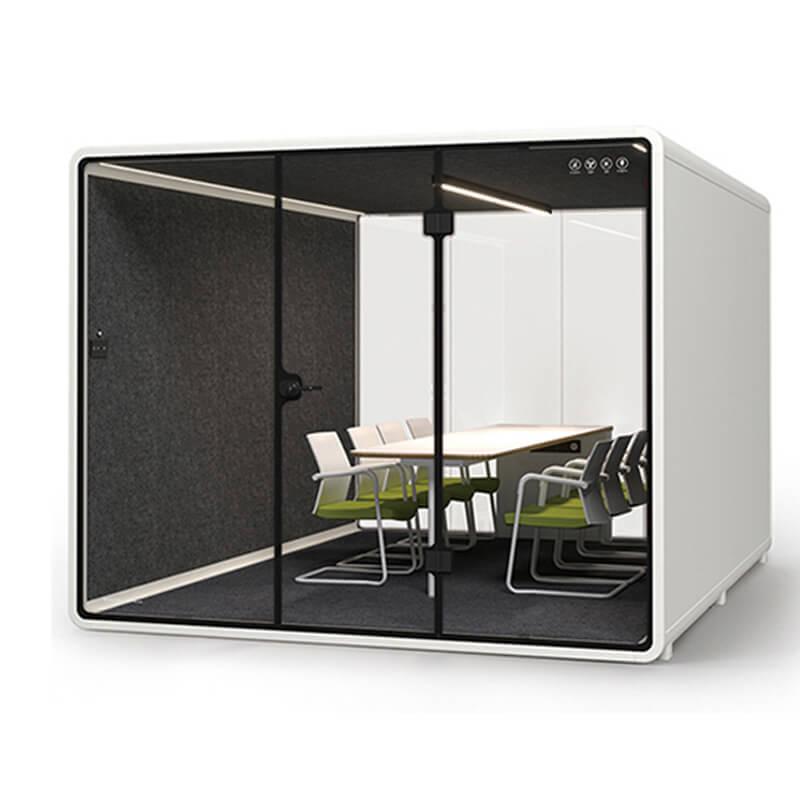
For configuration context, compare meeting pod sizes and configurations, then return to the site-specific evidence and responsibility checks in this guide.
Decide which pods are bookable, which support walk-up use, and how a user signals occupancy. Specify the longest normal booking, the release point for no-shows, buffer time for air refresh or cleaning where required, and who resolves repeated misuse. Keep the rule visible at the point of booking and at the pod rather than burying it in a facilities document.
Align names in the calendar with signs on the floor. Users lose time when a booking says one name while the door and wayfinding show another. Include capacity and key equipment in the listing. After launch, compare bookings with observed use for a limited review period, using aggregate data and the organisation's privacy rules.
Treat the operating rule as a small workplace change. Assign an owner, publish the effective date, make support easy to find, and give teams a route to report naming, equipment, or no-show problems. Review behaviour after two and six weeks. If users work around the rule, ask which part creates friction before adding restrictions. A clear and adjustable convention can recover more practical capacity than a complex booking feature nobody understands.
Walk from the teams generating demand to each candidate position. Record travel time, route congestion, door conflicts, screen visibility, emergency and accessible circulation, daylight glare, nearby quiet work, and service access. A pod that looks central on a drawing may sit across a controlled door or beside a queue that discourages private use.
Observe the candidate area during the diary's peak periods. Mark where people pause, where chairs move into circulation, and where surrounding speech is strongest. Keep manufacturer clearances around doors, panels, and air paths on the plan. Local project reviewers should confirm every building interface before the location is frozen.
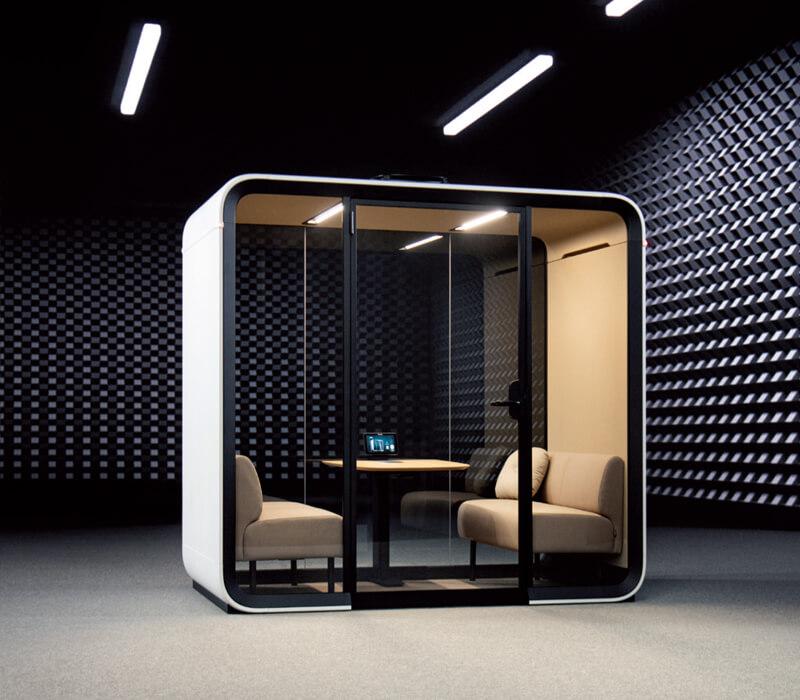
Use the diary to define realistic trial sessions. A ten-minute stand-up and a forty-five-minute hybrid review place different demands on seating, table reach, air movement, lighting, and device power. Ask representative users to complete the actual task and record occupancy, duration, control settings, and specific observations.
Avoid reducing comfort to a single approval vote. Note whether users understand controls, whether screen reflections change by time of day, whether cables cross the entry, and whether the next group finds the space ready. Feed concrete issues back into configuration, booking buffer, cleaning, or placement decisions before final acceptance.
Check reset work between sessions as part of capacity. A pod that needs frequent support, cable correction, furniture repositioning, or extended cleaning has fewer usable periods than its calendar suggests. Record the cause and responsible response so the team can improve setup without shortening every booking by guesswork. Review the pattern weekly during the pilot period.
Where programme and procurement allow, start with a defined pilot zone. Freeze the pod configuration and operating rules, then repeat the same diary fields after occupancy. Compare unmet demand, group-size fit, travel, no-shows, user-reported faults, and conventional room release. Do not change several variables during the observation window without recording them.
Agree the expansion rule before results arrive. It might require recurring unmet two-to-four-person demand, acceptable functional observations, a manageable service record, and no unresolved placement issue. A pilot has value when it produces a decision, including the decision to adjust the mix or stop. Archive the baseline, result, and local approvals with the procurement file.
Keep the pilot decision balanced. Record benefits such as released rooms and shorter searches beside costs such as cleaning, support, downtime, technology, and occupied floor area. Note which groups gained access and which remained underserved. The steering group can then expand, relocate, reconfigure, or stop on a stated basis. Preserve the rejected option and reason as well, because a future attendance change may make that option relevant again.
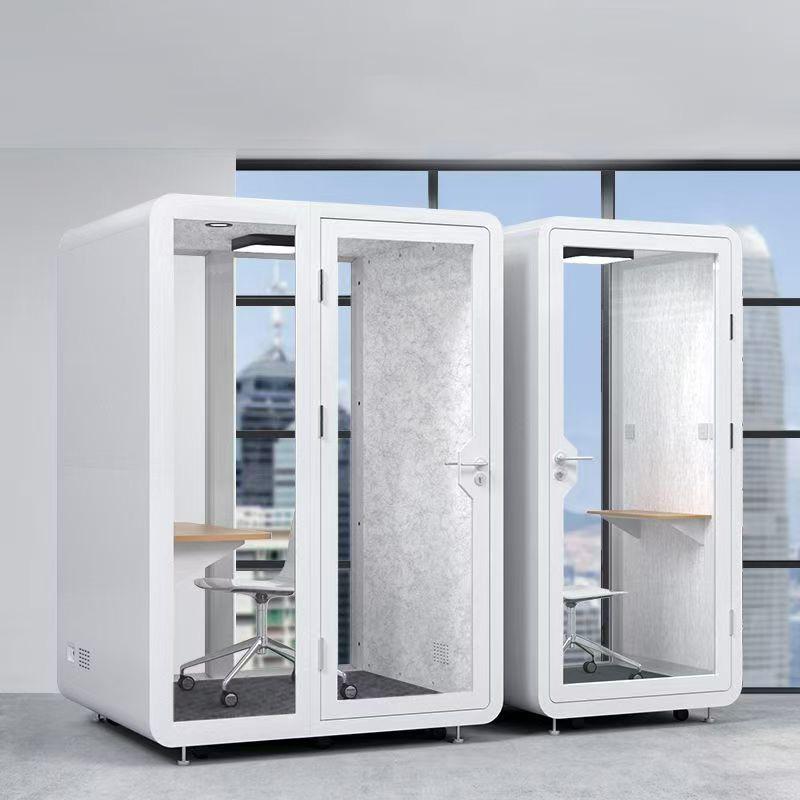
Before approving a Norwegian meeting room pod mix, record how a request becomes a booking, how long an unused reservation remains protected, and who may release it. This matters when small sessions compete with larger meetings. A short pilot can compare the demand diary with actual booking behavior, failed searches, cleaning turns, and reported comfort. Use those observations to adjust the mix rather than treating a catalogue capacity as the final answer.
How long should a meeting-space demand diary run?
Two representative working weeks often reveal recurring time bands, but the period should include meaningful attendance patterns and avoid unusual events unless those events create the demand being studied.
Can calendar bookings replace physical observation?
No. Calendars miss abandoned searches and may include no-shows. Use aggregate booking data with anonymous occupancy observations and facilities records, following the organisation's privacy rules.
Is a four-person pod always better than a two-person pod?
No. Choose the mix from group-size frequency, session task, peak pressure, placement, and available conventional rooms. Maximum observed attendance should not decide the whole fleet.
Should every meeting pod be bookable?
Not necessarily. Some workplaces benefit from a mix of bookable and walk-up spaces. The rule should be explicit, visible, measurable, and reviewed after occupancy.
Does this guide confirm compliance in Norway?
No. It identifies project information to assemble. Qualified local parties must confirm building, fire, electrical, accessibility, property, and workplace requirements for the actual site.
Office meeting room pods in Norway should follow the shape of real demand. A short anonymous diary can show who is waiting, which capacities are scarce, where bookings fail, and why apparently available spaces remain unused.
Convert that evidence into a pod mix, placement plan, operating rule, comfort trial, and expansion threshold. The decision then remains understandable after the workplace changes, while local reviewers retain responsibility for the Norwegian site interfaces.

 Tel: +8613538031763
 Email: info@sopworkpod.com
 MP/WhatsApp: +8613538031763
 Manufacturer Address:Liucheng Lujiang District,Meixi Road,Nanan City,Fujian,China