Author:SOP Work Pods Manufacturer TIME:2026-08-11
Table of Contents
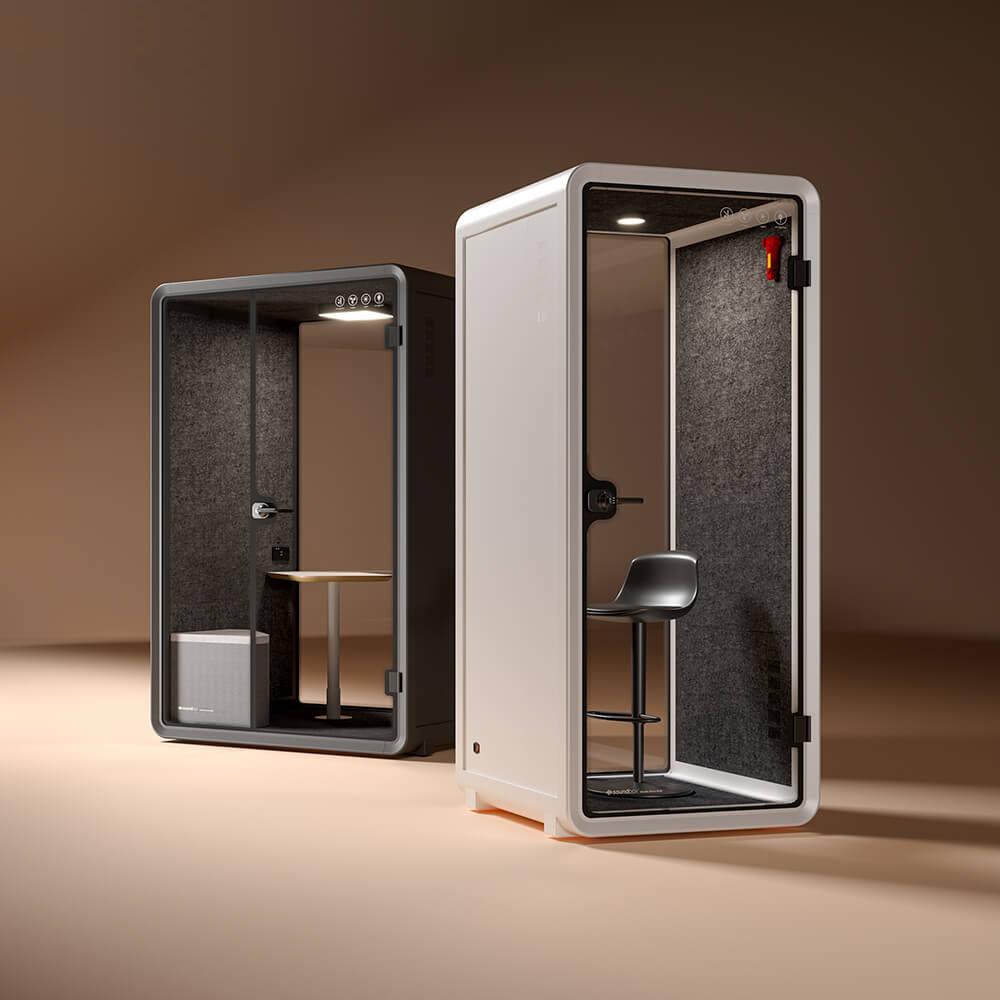
A mobile office pod can give an exhibition team a calmer place for distributor talks, technical reviews, interviews, and follow-up calls. It can also become an expensive object that arrives late, blocks the stand, overloads temporary power, or has nowhere to store its packing crate. The difference is usually decided by event planning rather than by the booth's appearance.
Trade shows compress delivery, assembly, selling, cleaning, and removal into a short timetable. The pod must pass through that entire cycle. A useful checklist follows the pod from the freight vehicle to the stand, through several days of visitor use, and back into its crate. This makes the decision more concrete than asking whether a product is simply "portable."
Define what will happen inside the pod. A two-person distributor meeting has different needs from a one-person video call. A product demonstration may require a screen and sample storage. A contract discussion may require four seats and a table large enough for documents. Write down the normal meeting length, expected visitor count, equipment, and number of sessions per day.
Decide what the pod should not do. It should not become the only storage room for bags, brochures, tools, and coats. It should not be reserved for senior staff while the sales team handles confidential calls in the aisle. It should not require a technician every time a light, fan, or socket needs attention. Clear boundaries help the stand manager protect the space for its intended work.
A simple event brief can fit on one page: purpose, occupancy, meeting duration, stand location, venue, show dates, assembly period, power supply, freight contact, and responsible team member. Suppliers can respond more accurately when this brief accompanies the request for quotation.
Exhibition halls control loading times, fire routes, stand height, floor loading, electrical connections, and contractor access. The pod must fit the approved stand drawing and the organizer's technical manual. Confirm whether a ceiling, enclosed room, or tall structure requires additional review. Ask whether sprinklers, smoke detection, emergency lighting, or ventilation openings are affected by the stand design.
Measure the route, not only the stand. Check loading-bay limits, freight doors, corridor turns, lift dimensions, temporary ramps, and the final gap between neighboring stands. A modular product may be moved as panels, but the largest glass, floor, roof, or door component still needs a clear path. Record the largest packed and unpacked component rather than relying on the assembled exterior size.
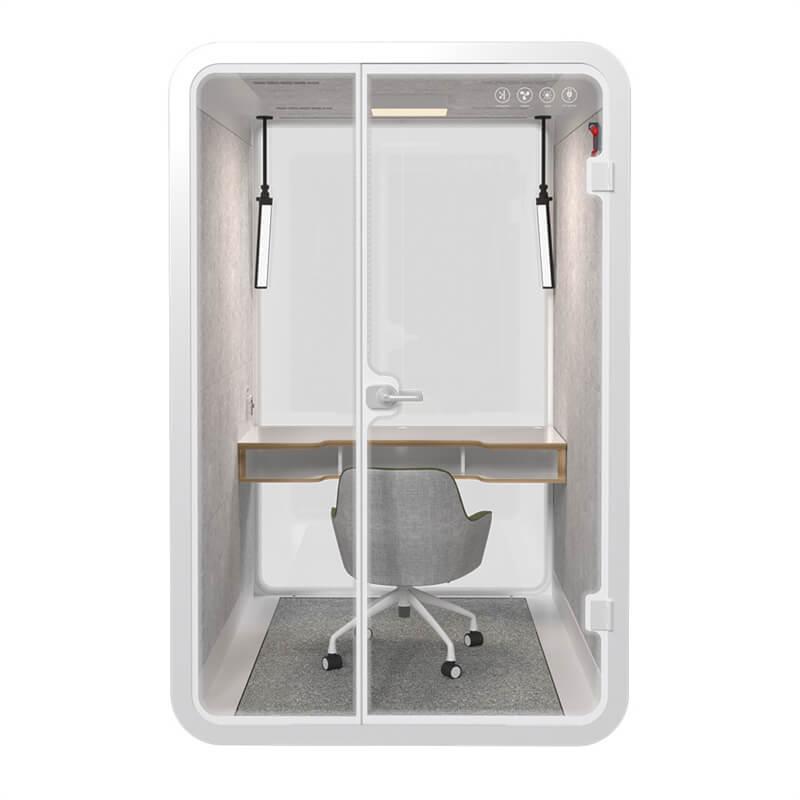
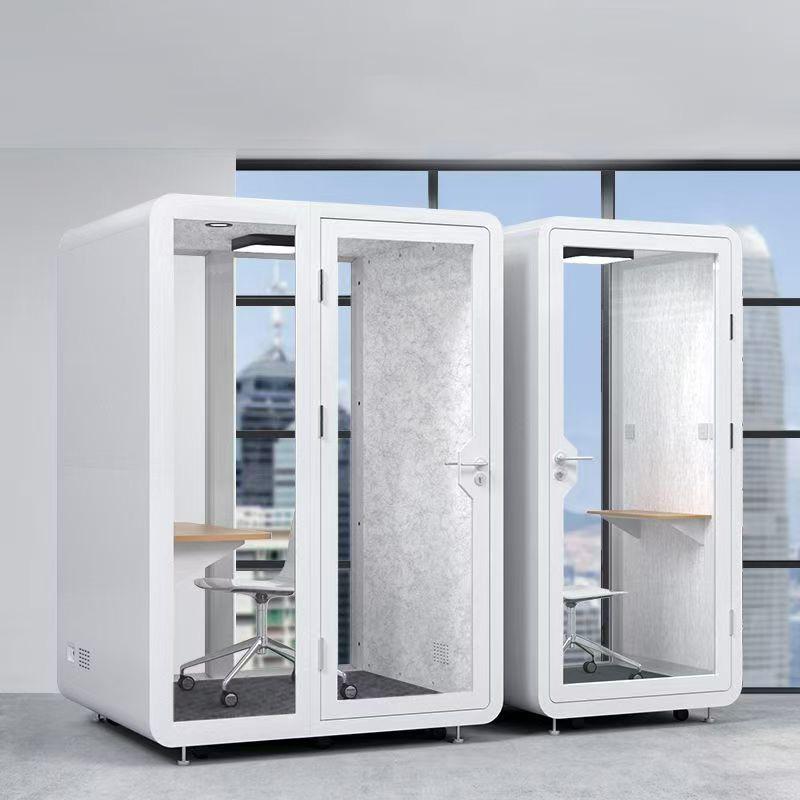
Within the stand, protect visitor circulation. Door swing should not enter the aisle or collide with a display. People waiting for the pod should not block the reception counter. If the stand has raised flooring, confirm how the pod load and power cable will be supported. When reviewing mobile office pod options, include the approved floor plan so the product discussion begins with real access and operating limits.
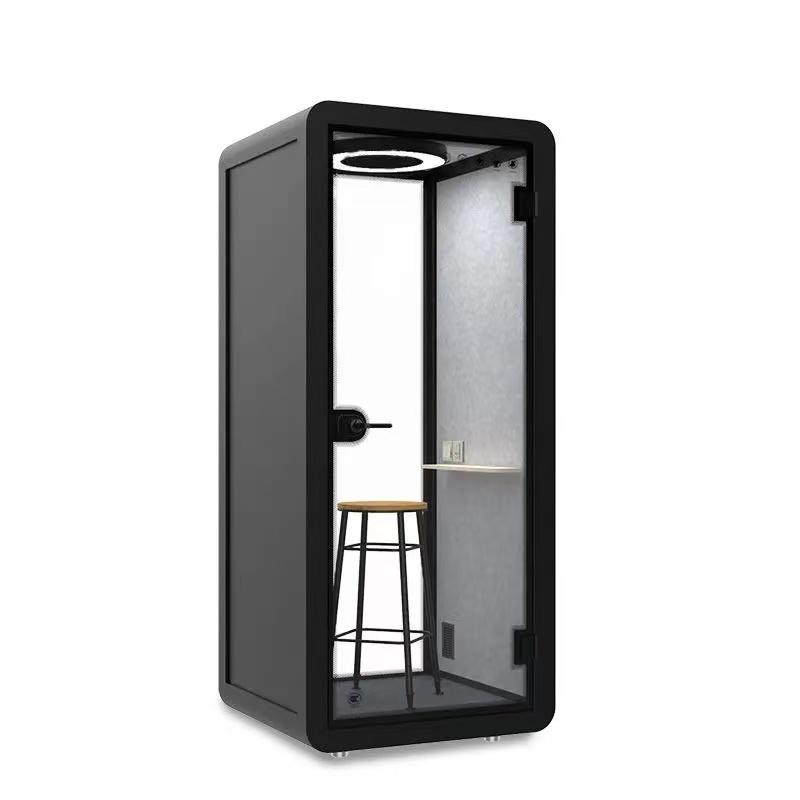
Event logistics are a round trip. Ask how the pod is packed, which packages must remain available for removal, and whether the crate can be stored by the venue's logistics contractor. Disposing of custom packing after installation may save space during the show but create a serious problem at dismantling time.
The packing list should identify every package, weight, dimensions, lifting point, and component name. Photograph the unopened crate and each layer during unpacking. Keep hardware in labeled containers. If the pod will travel to more than one event, packing must be designed for repeated handling rather than a single delivery to a permanent office.
Confirm responsibility at every transfer: factory to freight forwarder, forwarder to venue, venue to stand, stand to storage, and the reverse route after closing. The lowest freight quote may exclude waiting time, forklift service, empty-crate storage, or delivery to the final stand position. These exclusions should be visible before the budget is approved.
Exhibition assembly often takes place while flooring, graphics, lighting, and product displays are still being installed. Sequence matters. A pod assembled too early can be damaged by ladders and material movement. A pod assembled too late can block cleaning, electrical testing, or final stand inspection.
Create a timed installation plan. Include crate arrival, component check, floor protection, structural assembly, glass installation, furniture, electrical connection, fan and light test, cleaning, and handover. Add time for correction. A schedule that ends at the exact hall deadline leaves no room for a missing connector, damaged seal, or door adjustment.
The handover should be completed before visitor admission. Open and close the door repeatedly. Check lighting, ventilation, sockets, furniture, visible finishes, and cable containment. Sit inside while the stand sound system and neighboring construction noise are active. Confirm who holds spare keys, tools, cleaning materials, and supplier contact details during the event.
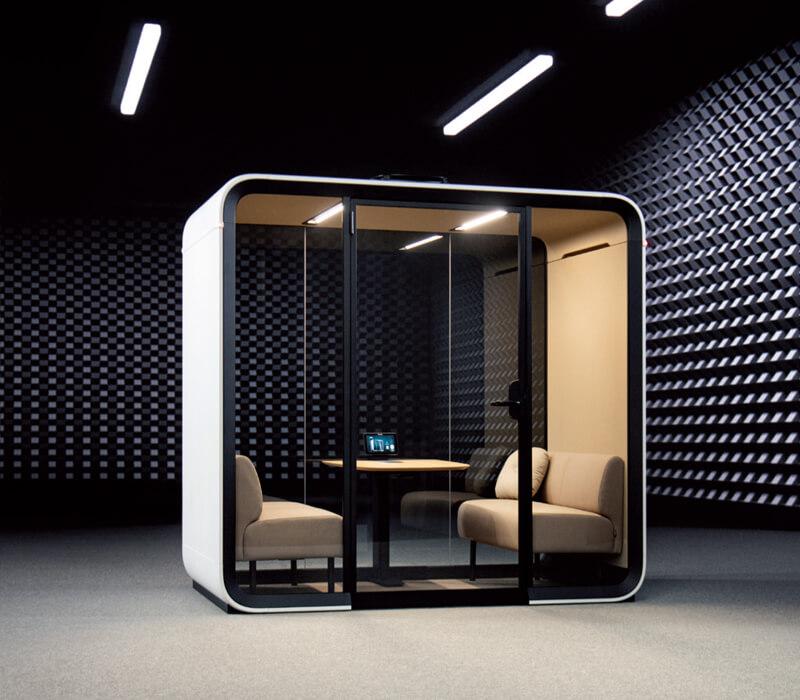
A trade-show pod does not create silence. Public-address systems, demonstrations, crowds, music, and neighboring stands can remain audible. The practical objective is to improve speech clarity and reduce the chance that passersby understand a sensitive conversation. Buyers should describe this objective accurately to visitors and staff.
Test the pod during build-up or a comparable noisy period. One person should speak at a normal meeting level inside while another listens at the reception desk and aisle edge. Then repeat the test with the door opening and closing. This reveals whether the waiting area, door direction, or staff behavior exposes more conversation than the wall construction.
Operating rules help. Ask visitors to close the door fully. Limit standing meetings near the entrance. Keep confidential papers away from exposed glass. Use a booking buffer for high-value discussions so one group does not wait immediately outside. For video calls, use a headset to reduce loudspeaker sound and improve microphone consistency.
Temporary exhibition power can differ from a normal office circuit. Confirm voltage, plug type, circuit capacity, distribution board responsibility, and the route from the stand supply to the pod. Avoid loose extension leads across visitor routes. If a screen, laptop chargers, product samples, or lighting share the circuit, calculate the combined load with the stand contractor.
Heat can build quickly under hall lighting. Test ventilation with the booth occupied and the door closed for a realistic meeting length. The hall may be cool before opening and much warmer when visitors arrive. Check whether the fan intake or outlet is blocked by graphics, drapes, storage, or an adjacent wall.
Assign a daily opening and closing routine. At opening, inspect the door, light, fan, sockets, table, seats, glass, and floor. During the day, remove waste and reset cables between meetings. At closing, switch off equipment according to the supplier's instructions and note any damage. A two-minute record can prevent a small loose fitting from becoming a failure during an important meeting.
Six to eight weeks before the event
Before dispatch
Before the hall opens
After the event
The product price is only one part of event value. Reuse can justify a stronger crate, replaceable finishes, and standardized hardware, while a one-time event may favor rental or a simpler meeting-room solution. Compare the complete cycle.
| Decision factor | Single-event use | Multi-event program | Evidence to review |
|---|---|---|---|
| Packing | Protection for one delivery and return | Reusable crate and repeatable packing sequence | Crate drawing, package list, packing photos |
| Assembly | Local contractor may be sufficient | Standard tools and repeatable crew training matter | Assembly time, crew size, tool list |
| Finish durability | Short display period | Repeated handling, cleaning, and storage | Replaceable panels, touch-up method, corner protection |
| Transport cost | One outbound and return movement | Route optimization across several venues | Packed volume, weight, storage and handling fees |
| Branding | Event-specific graphics | Changeable graphics for different campaigns | Graphic fixing method and removal test |
| Operational value | Number and quality of meetings at one show | Consistent private meeting capacity across events | Booking record, meeting duration, user feedback |
Can a mobile office pod be installed at every exhibition?
No. Venue rules, stand design approval, delivery access, floor loading, power, fire requirements, and assembly time vary. Obtain written approval for the specific event.
How early should the pod arrive?
Arrival should fit the organizer's freight slot and the stand construction sequence. Build in enough time for inspection, assembly, testing, cleaning, and correction before the hall opens.
Will the pod make a trade-show conversation completely private?
It can improve speech control and reduce distraction, but the result depends on door use, placement, crowd noise, glass exposure, and speaking level. Test practical speech privacy at the final stand.
Should the packing crate be kept during the event?
Yes, when it is designed for return or repeated transport. Arrange empty-crate storage with the venue or logistics contractor before delivery.
What proves that a trade-show pod is worth reusing?
Track meeting bookings, duration, visitor purpose, staff feedback, installation hours, freight cost, damage, and storage cost. These records show whether reuse creates better value than renting meeting space or rebuilding an enclosed room.
A mobile office pod works at a trade show when it is planned as event equipment rather than permanent office furniture. The key checks are venue approval, route dimensions, packing, crate storage, assembly sequence, temporary power, heat, visitor circulation, operating rules, and return logistics. Each item should have a named owner and evidence before dispatch.
For one event, compare the complete installed cost with rental meeting options. For repeated events, place more weight on reusable packing, standardized assembly, repairable finishes, and consistent handover records. A careful round-trip plan protects the pod, the stand schedule, and the conversations it was purchased to support.

 Tel: +8613538031763
 Email: info@sopworkpod.com
 MP/WhatsApp: +8613538031763
 Manufacturer Address:Liucheng Lujiang District,Meixi Road,Nanan City,Fujian,China