Author:SOP Work Pods Manufacturer TIME:2026-07-30
Table of Contents
1. Write a recording brief before shopping
2. Investigate lease and building constraints
3. Build an apartment noise survey
4. Separate isolation from room acoustics
5. Verify structure, delivery, and assembly
6. Plan ventilation and electrical service
7. Manage neighbor impact with evidence
8. Commission the booth with recordings
9. Use a pre-order risk register
Ordering a soundproof booth for apartment recording is a building-and-workflow decision, not simply an acoustic purchase. The buyer must coordinate the recording source, acceptable noise floor, room dimensions, neighbors, lease conditions, floor capacity, delivery path, ventilation, electrical supply, and future move-out. A booth that performs well in a factory can still disappoint if it is placed over a vibrating floor, beside a lift shaft, or in a room with no assembly clearance.
The safest method is to create a pre-order dossier. It should contain the recording brief, measured site conditions, written building permissions, product evidence, installation plan, and acceptance tests. This gives the supplier meaningful information and helps the buyer distinguish verified performance from a general claim such as "studio quality" or "soundproof."
Define what will be recorded, how loud it is, how long sessions last, and the quality expected. Spoken-word voiceover with a close microphone has different needs from singing, acoustic guitar, brass, amplified instruments, or percussion. Also identify whether the priority is keeping apartment noise out of the recording, keeping performance sound away from neighbors, controlling reflections around the microphone, or all three.
Record the existing signal chain: microphone type and pattern, mount, preamplifier or interface, computer fan behavior, monitoring method, cable connections, and screen position. Note whether the performer stands, sits, reads from a display, uses a music stand, or needs room for an instrument. The internal layout must support these actions without placing the microphone directly in a ventilation stream or forcing cables through an unsealed door.
Set measurable acceptance targets where possible. These may include an acceptable recorded background level during a defined quiet period, no audible fan cycling in a sample, comfortable temperature after a specified session, and a practical reduction in sound at a neighbor-facing location. Targets should match the real production purpose; a commercial audiobook workflow may justify a different threshold from occasional video narration.
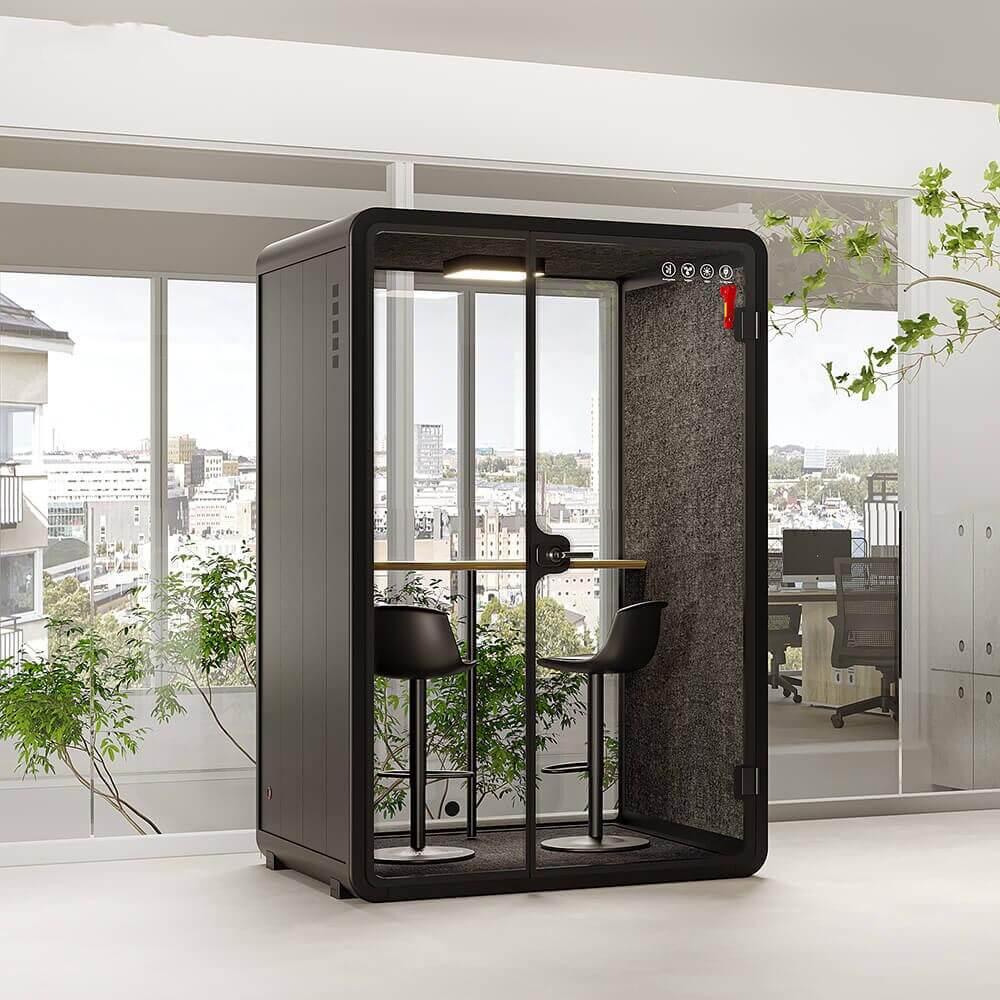
Read the lease, building handbook, and alteration rules before paying a deposit. Some apartments restrict commercial activity, instrument practice, heavy objects, drilling, service changes, delivery hours, or use of common areas. A freestanding booth may still require approval because of weight, electrical work, fire systems, or the number of delivery components.
Ask the landlord, property manager, or relevant building representative for written confirmation of the proposed installation. Provide dimensions, total and distributed weight, assembly method, location, power demand, ventilation behavior, and whether any fixing to the building is proposed. Verbal approval can be forgotten when staff change or a neighbor complains.
Review fire detection, sprinklers, egress, window access, heating, and existing ventilation with qualified local professionals where required. Do not cover a detector, obstruct a required path, or assume a plug-in enclosure is exempt from all building rules. Keep approvals and product documents with the apartment records so they can be produced during inspections or move-out.
Listen and record observations across several days. Apartment noise is time-dependent: lifts, plumbing, traffic, rooftop equipment, neighboring televisions, footsteps, refuse collection, and HVAC can appear at different hours. Note whether each sound is airborne, structure-borne, intermittent, tonal, or impact-driven. A booth usually has more difficulty with low-frequency vibration and structure-borne transmission than with ordinary mid-frequency speech.
Use repeatable measurement positions and keep a time log. Even when consumer instruments are not laboratory grade, consistent readings and audio samples can help compare candidate locations within the apartment. Place the microphone where it would be used and capture quiet room tone during intended recording hours. Avoid relying on a single unusually quiet afternoon.
Test the floor for vibration from walking, appliances, and building plant. If possible, compare a wall-adjacent position with a more independent location. Corners can save space but may intensify low-frequency behavior and restrict booth service access. Share the survey with the supplier and ask which conditions its published test data does and does not address.
Sound isolation concerns transmission between inside and outside. Internal acoustic treatment concerns reflections and decay within the booth. A product may reduce external speech yet still produce a boxy recording because the microphone is close to parallel hard surfaces. Conversely, soft interior panels can improve voice tone without preventing neighbors from hearing a loud source.
Ask for complete-assembly test information, not only a rating for one wall panel. Doors, seals, glazing, joints, floor interfaces, and ventilation paths often control real performance. Understand the test configuration, frequency range, and difference between laboratory conditions and an apartment installation. No single headline number describes every voice, instrument, or building path.
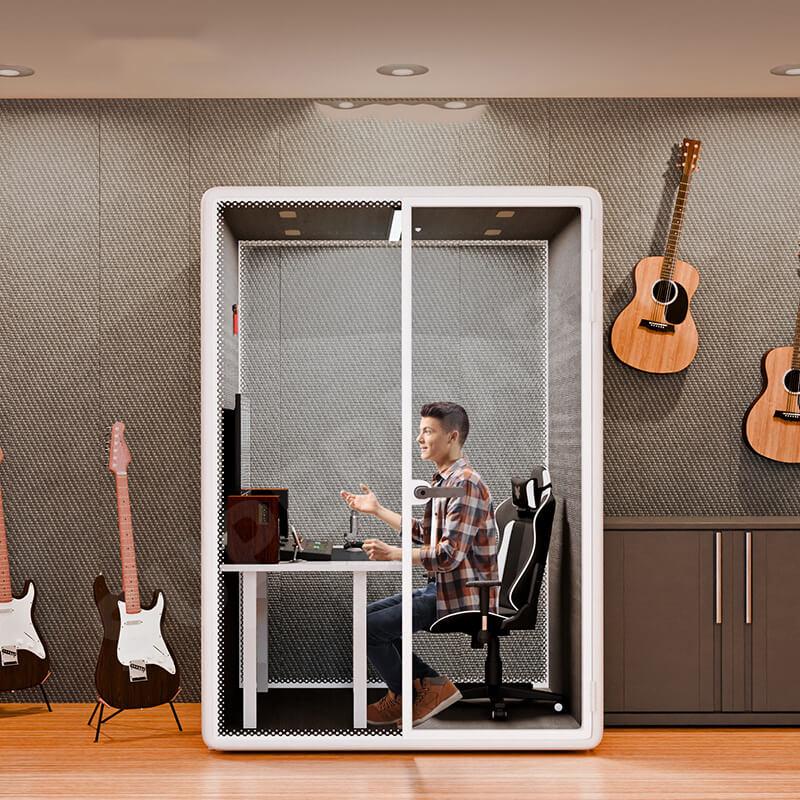
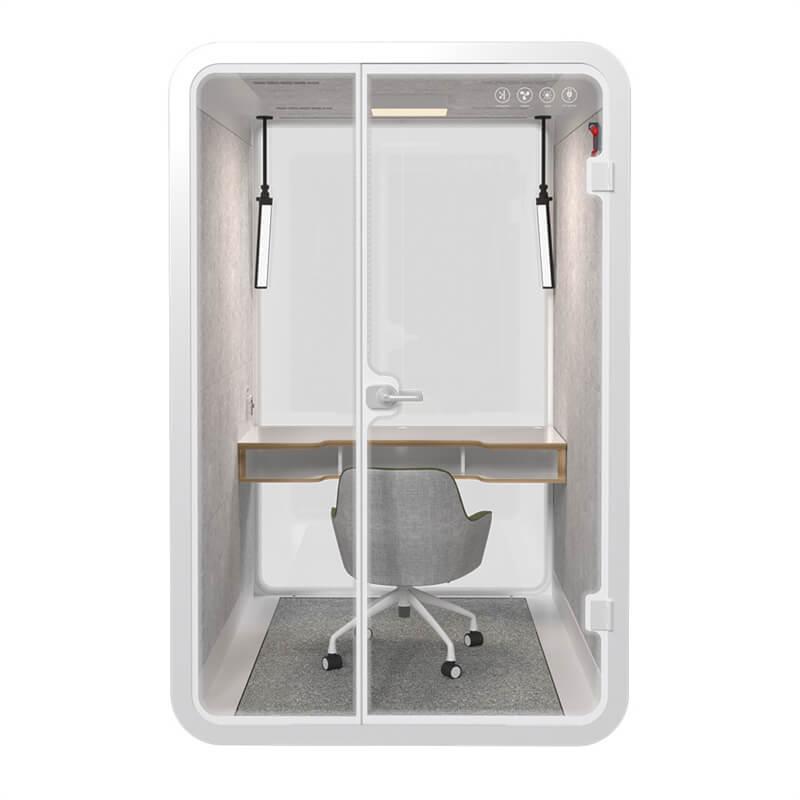
Inside, evaluate decay, flutter, low-frequency buildup, and the balance between absorption and useful liveliness. A removable or adjustable treatment scheme can support different microphones and performers. Buyers comparing purpose-built options may review a soundproof recording booth range, but should make the final choice against their own noise survey and test brief.
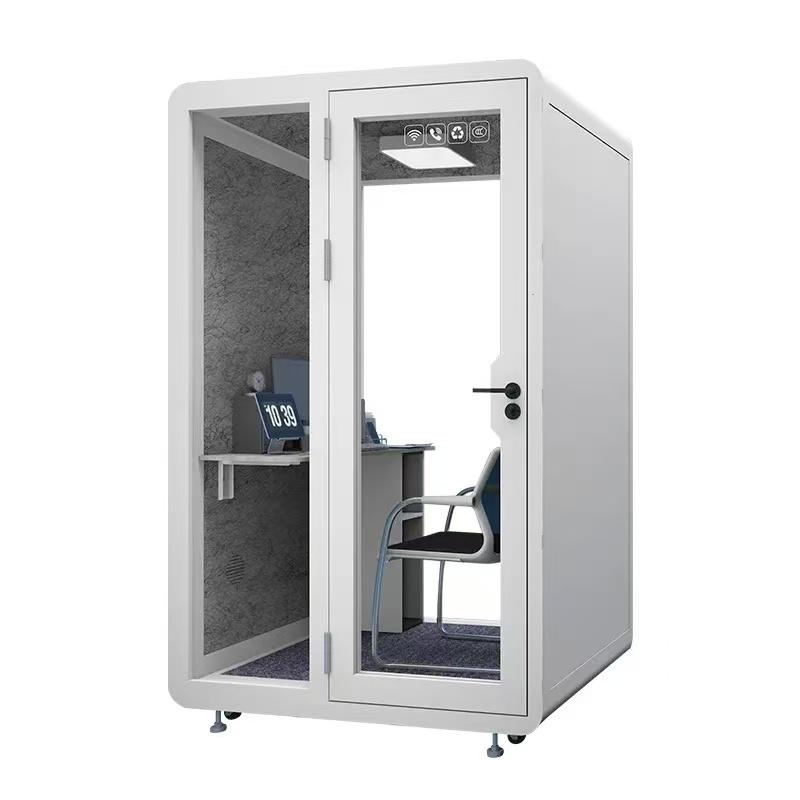
Obtain the installed weight, point loads, base dimensions, and any dynamic considerations from the supplier. Divide total weight by footprint only as an initial check; feet, leveling pads, or concentrated equipment can create local loads. A qualified building professional should assess uncertainty, especially in older buildings or where records are incomplete.
Measure the entire delivery route: vehicle access, loading restrictions, doors, corridors, corners, lift car, lift capacity, stair landings, ceiling height, and apartment entrance. Record the largest and heaviest component, not only the assembled size. Packaging can add dimensions. Confirm whether panels can be carried safely by the available crew without damaging common finishes.
Inside the room, allow assembly and maintenance clearance. The booth may require access around several sides before it reaches its final position. Check floor level, skirting boards, sockets, radiators, curtains, and window operation. Protect the apartment floor with a method compatible with both the booth and the finish, while avoiding an improvised soft layer that changes stability or isolation.
Recording sessions combine body heat, lighting, computers, interfaces, and sometimes displays in a small volume. Ask for airflow information, control behavior, filter access, and an occupied-duration demonstration. Listen to the ventilation system through the actual microphone and preamp settings. A fan that sounds quiet to the ear may become prominent after compression or noise-floor processing.
Confirm how fresh air reaches the room containing the booth. Recirculating air inside an enclosure does not solve poor conditions in the surrounding apartment. Leave specified clearance around inlets and outlets, and consider how open windows, apartment HVAC, or portable systems affect both noise and temperature.
List every electrical load and connection. Use appropriately installed outlets and obtain professional advice where circuits or fixed wiring may change. Plan cable entry so it does not compromise seals or create a trip hazard. Network reliability should be tested if sessions are directed remotely. Keep noisy computers outside only when cable length, latency, security, and ventilation arrangements have been resolved.
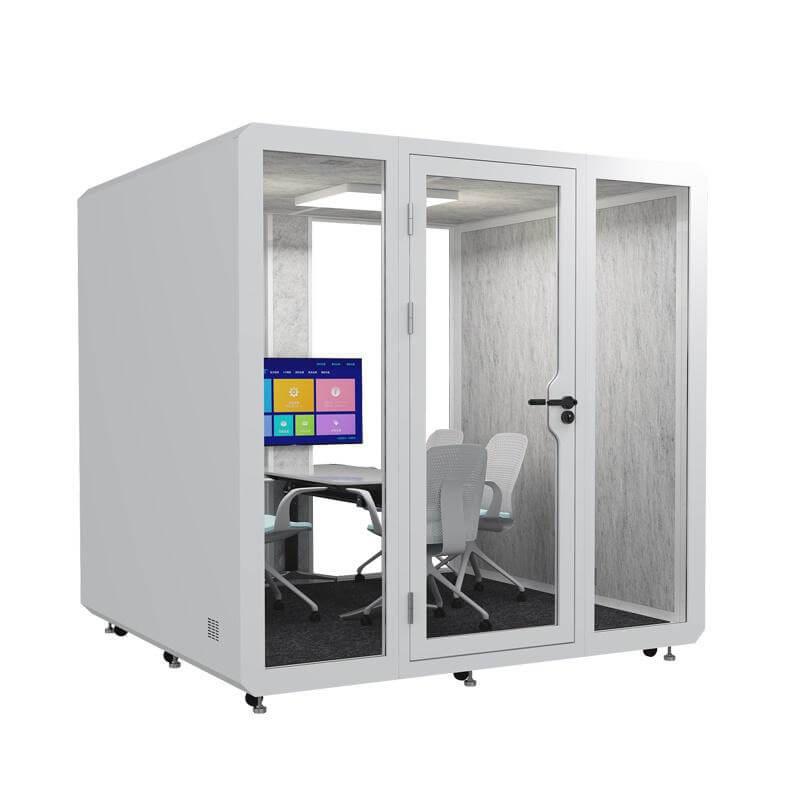
Good neighbor management begins before installation. Identify the apartments above, below, and beside the proposed room, along with likely transmission paths through floors, shared walls, ducts, and corridors. The booth may reduce airborne sound while impact or bass energy continues through the structure. Loud-source recording needs especially conservative expectations.
Agree reasonable operating hours and monitor early sessions. Compare conditions at the apartment entrance, shared corridor, and relevant internal boundaries before and after installation. Where direct neighbor access is inappropriate, work through the building manager. Keep dates, source type, level settings, booth configuration, and observations so that any complaint can be investigated rather than argued from memory.
Do not promise that no sound will ever be audible. A more credible plan states the intended source, operating limits, test method, and action if a threshold is exceeded. Possible actions include reducing source level, changing hours, relocating the booth, adding a verified isolation measure, or suspending a use that the apartment cannot support.
Commissioning should use the same performer, microphone, gain structure, and software expected in production. Capture standardized passages and room tone with ventilation off, at normal setting, and at maximum practical setting. Record external noise events rather than deleting them from the test. Assess both raw files and normal processing, because equalization and compression can expose sounds that were unobtrusive in headphones.
Run an inside-to-outside test with the intended source at a documented level. Observe the apartment room, entrance, corridor, and any approved comparison point. Repeat door opening and closing, cable routing, and fan settings exactly as they will be used. Check temperature and user comfort at the end of the longest expected session.
Create an acceptance sheet with passed items, defects, corrective owners, and retest dates. Photograph seal alignment and service clearances. Store product manuals, serial numbers, approved cleaners, filter details, disassembly instructions, and the move-out method. Final payment or acceptance should follow the agreed contract and evidence, not simply the fact that assembly is complete.
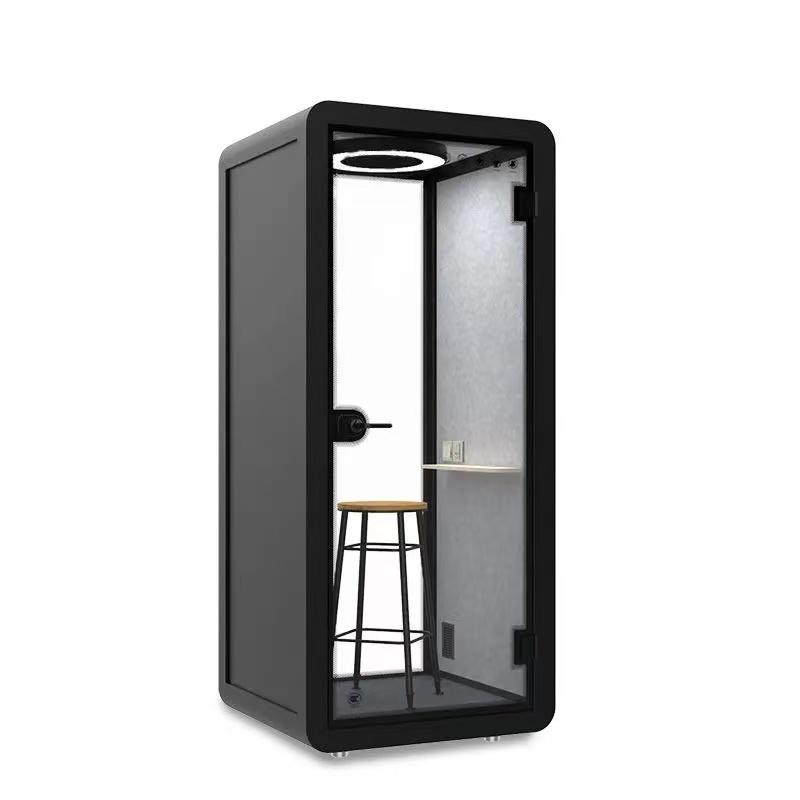
A short risk register focuses conversations with the supplier, property manager, and installer. Assign each item an owner and close it with evidence before ordering or scheduling delivery.
| Risk | Evidence required | Owner | Stop condition |
|---|---|---|---|
| Lease or building restriction | Written approval and stated conditions | Buyer or tenant | No clear permission for the installation |
| Unverified floor load | Installed loads and qualified review where needed | Building team | Structure cannot be confirmed suitable |
| Delivery route failure | Measured route and component schedule | Installer | Any component cannot reach the room safely |
| Recording noise remains high | Site survey and applicable booth test data | Buyer and supplier | Evidence does not address dominant noise path |
| Heat or fan noise | Occupied recording test | Supplier | Production session cannot meet comfort and audio target |
| Neighbor disturbance | Source limits, hours, post-install comparison | Buyer | Intended use conflicts with building limits |
| Move-out damage | Disassembly, protection, and restoration plan | Buyer and installer | No feasible exit route or restoration method |
Will a booth stop all sound from reaching neighbors?
No responsible assessment should assume that. Results depend on source level and frequency, booth construction, seals, ventilation, floor interfaces, building structure, location, and neighbor sensitivity.
Can the booth sit directly on an apartment floor?
Only after checking load, level, finish protection, stability, and the manufacturer's installation method. Improvised pads can change both safety and acoustic behavior.
Is a booth suitable for drums or amplified bass?
These sources create demanding low-frequency and structure-borne energy. Obtain source-specific evidence and qualified building advice; many apartment situations will not support them at useful levels.
Should the computer stay inside?
That depends on fan noise, heat, cable length, security, and workflow. Test the complete signal chain rather than assuming an outside computer is automatically practical.
What happens when the tenant moves?
The purchase plan should include disassembly, component handling, exit-route verification, storage or resale, and restoration of any approved building work.
Before ordering a soundproof booth for apartment recording, buyers should prove that the intended recording workflow, building, lease, structure, delivery route, air supply, electrical plan, and neighbor expectations can work together. Isolation data is valuable only when its scope is understood and compared with the apartment's dominant noise paths.
A documented pre-order dossier and source-specific commissioning test protect both recording quality and the living environment. They also give the supplier a precise problem to solve. That is a stronger basis for purchase than choosing by a headline acoustic number or discovering building constraints after the panels arrive.

 Tel: +8613538031763
 Email: info@sopworkpod.com
 MP/WhatsApp: +8613538031763
 Manufacturer Address:Liucheng Lujiang District,Meixi Road,Nanan City,Fujian,China