Author:SOP Work Pods Manufacturer TIME:2026-08-28
Ventilation in a drum isolation booth should be judged after the drummer stops as well as while the instrument is playing. A short demonstration can miss musician exertion, equipment heat, changing fan perception, cumulative sessions, and the time needed to restore an acceptable condition for the next user.
The airflow route also interacts with acoustic openings, fan sound, microphone position, the surrounding room, door behavior, controls, and maintenance. Improving one condition without observing the others can move the problem rather than solve it.
This review uses a session-and-recovery diary. It defines the load, traces the installed air path, listens in each session mode, records occupied behavior over time, and sets recovery and maintenance triggers without inventing airflow, temperature, acoustic, or comfort measurements.
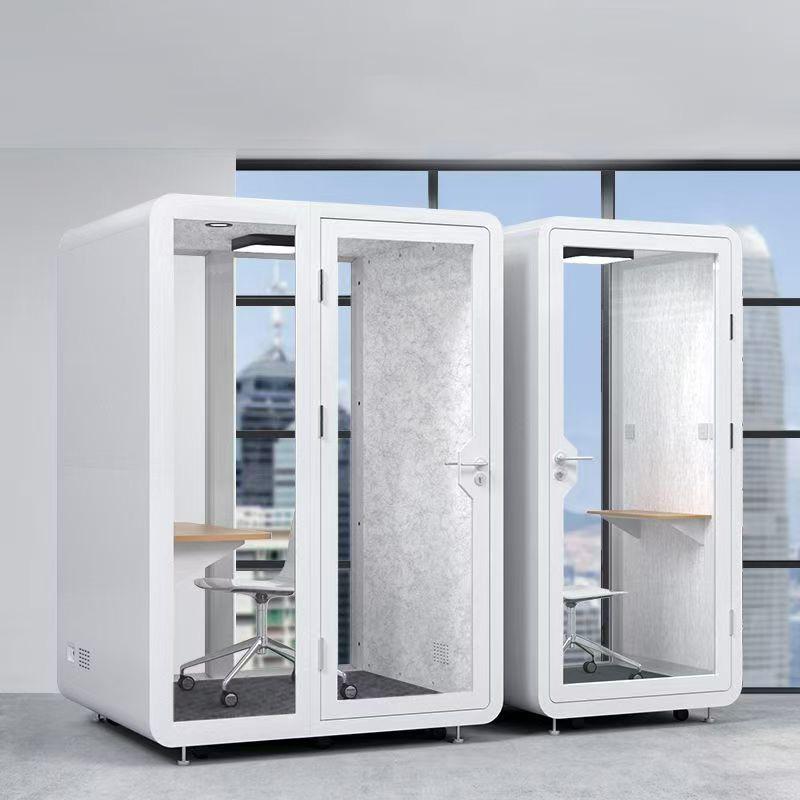
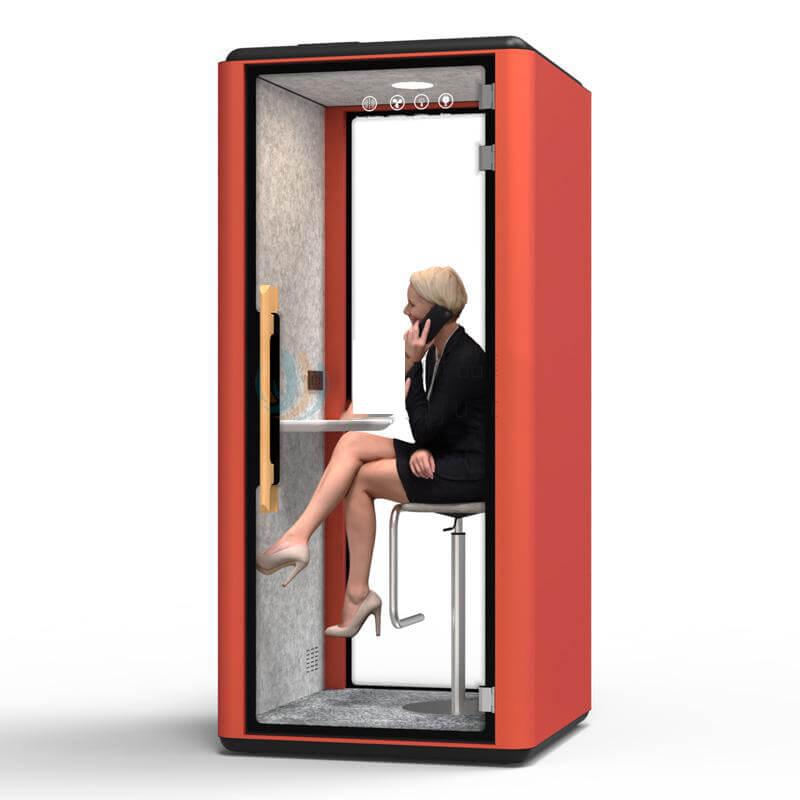
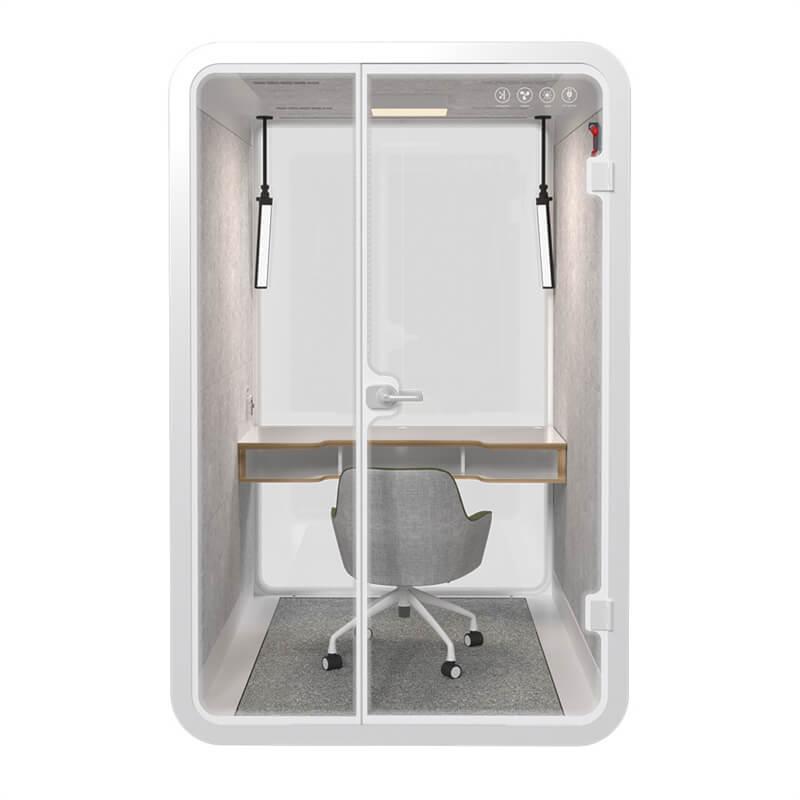
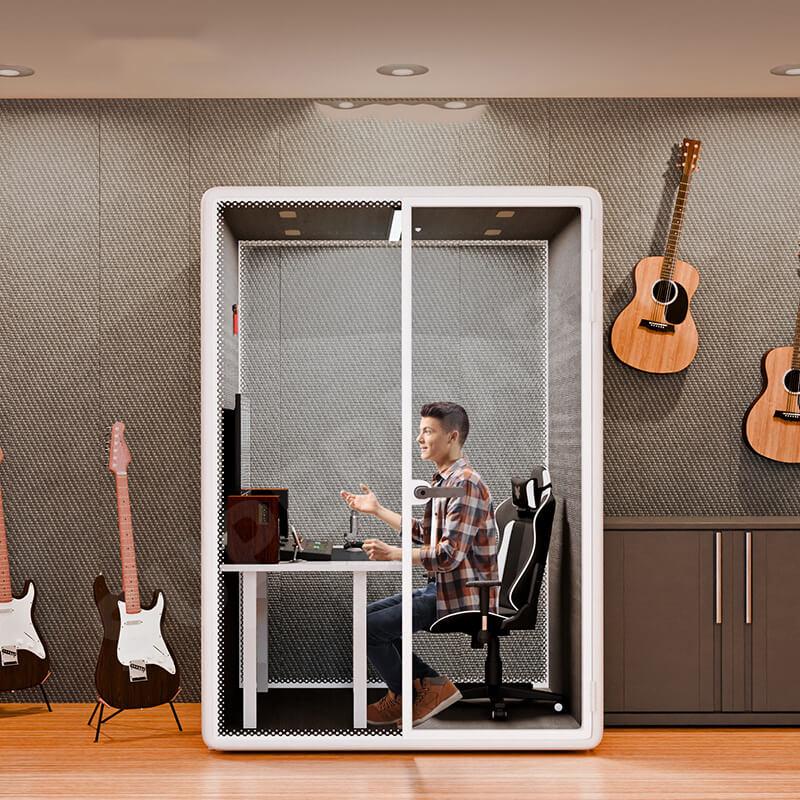
Ventilation demand starts with the musician, instrument, equipment, activity, duration, breaks, and consecutive-use pattern. Follow supply and extract paths through the delivered booth and its surrounding room rather than relying on nominal occupancy.
Define musician activity equipment and session load.
Record player count, instrument setup, performance intensity, warm-up, recording or lesson activity, duration, breaks, lighting, amplifiers or electronics, device heat, clothing, room condition, and consecutive-session pattern.
Observe a representative session or rehearse the planned activity and preserve the conditions rather than substituting nominal occupancy.
Reopen the ventilation diary if Preserve contradictory observations and limitations because an easy demonstration understating the highest normal occupied load becomes plausible.
Finish the ventilation diary entry with a decision to approve a bounded ventilation design and trial case. Name its correction owner and next trial condition.
Trace supply extract and room interaction paths.
Identify inlets, outlets, fan location, duct or internal routes, silencers where included, clearances, obstructions, recirculation concerns, room air, return-air interaction, door opening, controls, service access, and changes after installation.
Use current model and site information to follow the complete air path and inspect the delivered configuration.
Reopen the ventilation diary if Preserve contradictory observations and limitations because blocked or short-circuited airflow reducing occupied usefulness becomes plausible.
The ventilation diary should state how to release an installed airflow path record. Place each open limitation beside the responsible owner and review trigger.
Every opening and fan is both an airflow component and a possible sound interface. Playing, quiet instruction, recording, warm-up, and standby may require different accepted settings and different listener checks.
Review ventilation openings as acoustic interfaces.
Examine opening size and location, internal path, fan and airflow sound, adjacent listeners, instrument source, floor and ceiling routes, door state, penetrations, and the difference between airflow need and sound-control evidence.
Play representative drum sound and listen at mapped positions with ventilation in each accepted setting.
Reopen the ventilation diary if Preserve contradictory observations and limitations because improving airflow by creating an unverified sound route becomes plausible.
Release this ventilation diary step only when the team can approve operating settings with acoustic limits. Its retained evidence shows unresolved conditions and next actions.
Separate fan sound from instrument and room sound.
Consider startup, steady operation, tonal or changing character, vibration, control steps, microphone proximity, recording, teacher communication, quiet instruction, user preference, and external listeners.
Observe fan sound before, during, and after performance with normal equipment and collect musician, teacher or engineer, and external-listener observations as relevant.
Reopen the ventilation diary if Preserve contradictory observations and limitations because a fan acceptable during loud playing disrupting quiet work or recording becomes plausible.
Turn the ventilation diary finding into an instruction to define setting by session mode. Record the invalidating condition and person who must respond.
| Cycle point | Record without inventing a value | How to interpret it | Operating response |
|---|---|---|---|
| Before playing | Room condition, controls, door, equipment, user entry | Starting condition for this trial | Reset or hold if the baseline is unknown |
| During active session | Activity, fan response, airflow and temperature perception, behavior | Whether the assigned mode remains usable | Adjust only within approved settings or stop |
| Immediately after | Door policy, fan state, equipment heat, user comment | Beginning of recovery | Apply the recorded turnover routine |
| Next-user entry | Perceived condition, compressed gap, consecutive load | Whether capacity is ready to repeat | Extend recovery, reduce schedule, or reopen review |
| Maintenance check | Openings, filters where fitted, obstruction, vibration, unusual sound | Whether the accepted route has changed | Clean, isolate, service, and retest as applicable |
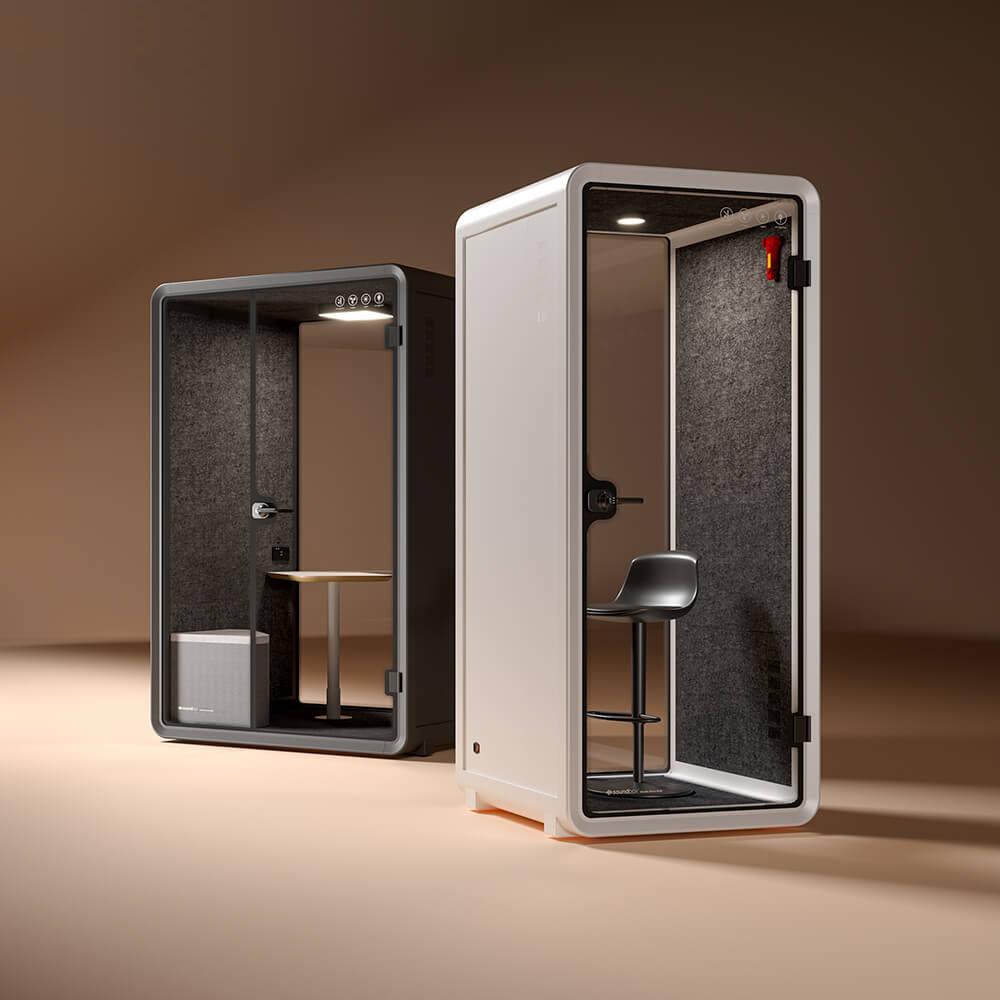
The decisive record continues beyond the first session. Observe comfort over time, post-session recovery, the next user's entry, compressed turnover, filters, obstructions, controls, unusual sound, faults, and return to service.
Run an occupied comfort diary through the full session.
Record time, activity, occupancy, equipment, door, controls, airflow perception, temperature perception, fan response, exertion, breaks, water, discomfort, concentration, communication, door opening, early stop, and limitations.
Use representative users for the normal maximum session and preserve observations at intervals without inventing comfort statistics.
Reopen the ventilation diary if Preserve contradictory observations and limitations because end-of-session recall hiding when comfort began to fail becomes plausible.
Close the ventilation diary route by agreeing how to set duration control and break conditions. Preserve its accepted boundary, correction, and reason for retest.
Observe recovery and readiness for the next user.
Review post-session operation, door opening policy, fan setting, perceived recovery, room interaction, equipment removal, cleaning, scheduling gap, next-user entry, consecutive heat load, and what happens when turnover is compressed.
Run back-to-back trial cycles and record whether the accepted condition can be restored consistently.
Reopen the ventilation diary if Preserve contradictory observations and limitations because one successful session hiding cumulative turnover problems becomes plausible.
This ventilation diary output explains how to release a recovery and scheduling routine. It identifies the owner, remaining uncertainty, and change that reopens review.
Maintain filters fans openings and controls.
Define inspection and cleaning of openings, filters where fitted, fan and vibration, controls, grilles, obstructions, dust, cable or equipment interference, fault reporting, isolation, service access, parts, documentation, and return-to-service checks.
Ask the receiving team to perform or explain routine tasks and rehearse response to reduced airflow or unusual sound.
Reopen the ventilation diary if Preserve contradictory observations and limitations because ventilation performance degrading unnoticed until users open the door becomes plausible.
End the ventilation diary step with an explicit route to accept maintenance ownership and escalation triggers. Attach context, limitation, and operating ownership.
The accepted diary can then guide a review of the enclosed pod configuration options for controls, service access, occupied space, and site interaction without assuming a drum-specific result.
Run the diary as an operating protocol
Prepare the booth in the intended room with the delivered ventilation path, normal equipment, and approved controls. Record the starting condition before the user enters. The trial should represent a normal demanding session rather than an extreme invented case or an easy demonstration selected only to pass.
During the session, make brief entries at planned points and whenever behavior changes. Note whether the musician adjusts controls, opens the door, pauses unexpectedly, changes posture, reduces activity, comments on fan sound, or ends early. Preserve the observation without turning it into a temperature, airflow, or acoustic value that was not measured.
Continue after exit. Record the accepted post-session fan and door routine, equipment removal, cleaning actions, perceived recovery, next-user entry, and any compressed turnover. Repeat enough of the operating cycle to expose whether the starting condition can be restored, while keeping the trial scope and limitations visible.
Finally, introduce a maintenance or fault prompt. The operator should locate instructions, identify service access, inspect openings and filters where fitted, recognize obstruction or unusual sound, isolate the booth when needed, contact the responsible route, and define the check required before return to service.
The diary ends with an operating decision for each session mode: release, adjust within the approved range, change the schedule, investigate, or hold the booth. Add the condition that would trigger a new occupied cycle, such as another room position, altered equipment, changed ventilation parts, or a different consecutive-use pattern.
Give the receiving operator direct access to that decision and its limits before routine booking begins, and retire superseded instructions.
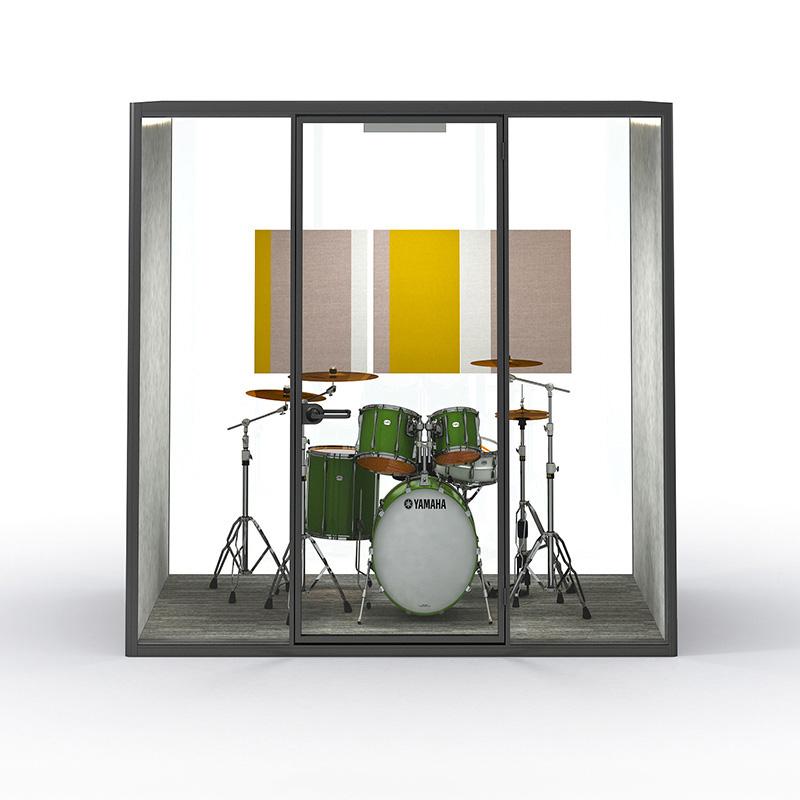
Drumming can combine physical exertion, instrument activity, lighting, amplifiers or electronics, equipment heat, warm-up, performance, recording, teaching, long sessions, short breaks, and consecutive users. Nominal occupancy does not describe that operating load.
Define a representative demanding session without inventing an extreme case. Preserve the musician, equipment, activity, duration, settings, room condition, and turnover pattern so the observation remains bounded and can be repeated.
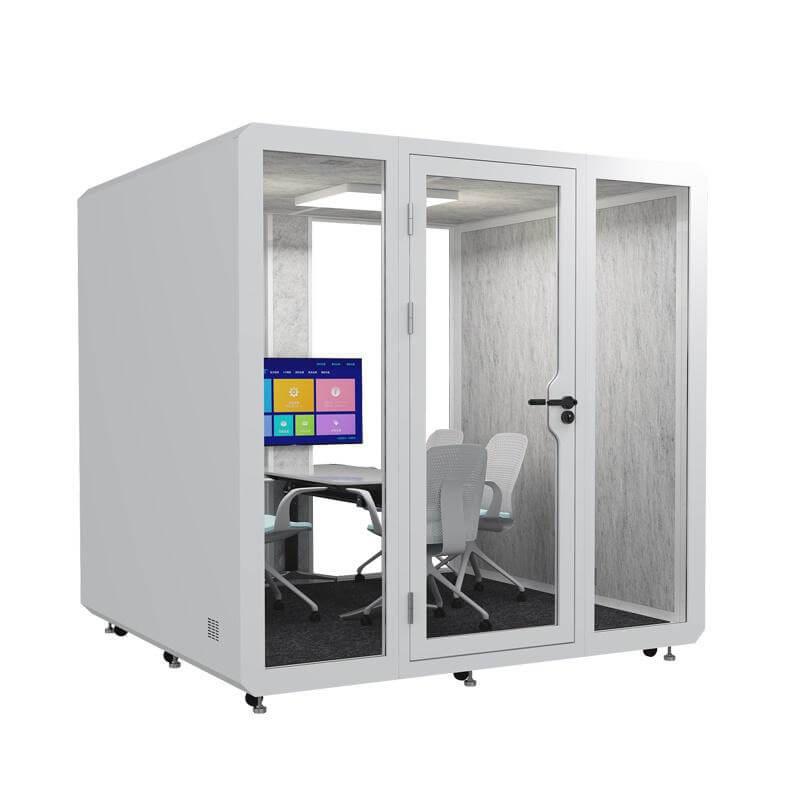
Trace inlets, outlets, fan position, internal or duct routes, silencers where included, clearances, obstructions, recirculation concerns, room-air interaction, controls, and service access. Then treat every opening as a possible acoustic path in the installed room.
Observe representative drum sound at mapped listener positions with the door and ventilation in each accepted state. The operating decision must support airflow without assuming that an unreviewed opening has no effect on the sound boundary.
Startup character, steady fan sound, tonal changes, vibration, control steps, and airflow noise may be masked during loud playing yet become intrusive during quiet instruction, setup, recording, listening, or communication. Microphone proximity and external listeners can change the concern.
Observe before, during, and after performance in the intended mode. Set accepted controls by use condition and preserve any setting that improves comfort but creates an unresolved recording or listener issue.
Scheduling should include the post-session routine and evidence that the accepted starting condition can return before the next user. Note fan and door state, equipment removal, cleaning, perceived recovery, next entry, consecutive load, and what happens when the gap is compressed.
Do not invent a universal recovery time. Use the bounded diary to set the local gap or hold condition, and reopen the cycle when activity, equipment, room position, ventilation configuration, or user pattern changes.
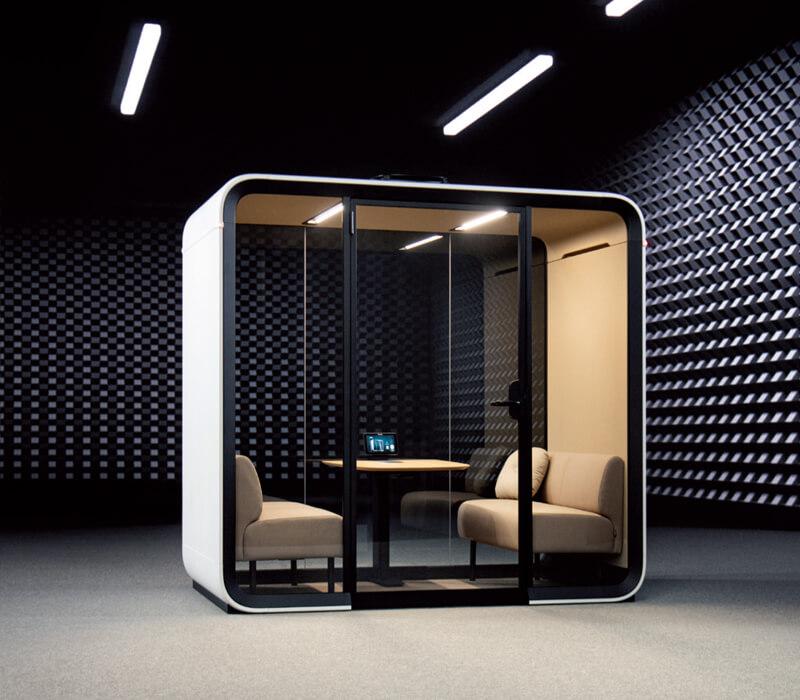
Ventilation supports a drum isolation booth when the installed air path, acoustic openings, fan behavior, occupied session, recovery period, and maintenance route work as one bounded operating cycle. Empty or short demonstrations cannot establish that result.
Release settings by session mode and preserve the conditions behind them. State duration, break, recovery, consecutive-use, fault, cleaning, and retest triggers without turning observations into invented engineering measurements.
The next action is to run the diary through a representative performance and the following user entry. Accept the cycle only when operators can repeat the condition, recognize degradation, and route a fault before routine door opening becomes the unofficial ventilation plan.

 Tel: +8613538031763
 Email: info@sopworkpod.com
 MP/WhatsApp: +8613538031763
 Manufacturer Address:Liucheng Lujiang District,Meixi Road,Nanan City,Fujian,China