Need Help?
Please leave your contact information to get our latest catalog
Get In Touch Now >


Author:SOP Work Pods Manufacturer TIME:2026-08-28
A booth can sound quiet during a demonstration and still interrupt the person who needs it. The employee leaves a desk, searches for an available unit, adjusts a chair, reconnects a laptop, discovers poor wireless service, and returns to the desk to collect a cable. By the time work begins, the original interruption has been replaced by a chain of smaller ones. Privacy may improve while focus recovery remains slow.
The phrase ultimate privacy and focus therefore needs a practical boundary. An office telephone booth can reduce some speech and visual exposure, but the useful outcome depends on access, setup steps, the task, listener positions, comfort, controls, session length, support, and the return to normal work. A product statement does not establish how those elements behave for a particular team.
Use an interruption budget to examine the complete work cycle. Count the events that break or delay the task, identify which events the booth removes, and note which events the booth introduces. Then observe recovery: how readily the user settles, completes the protected work, handles a new interruption, leaves the enclosure, and resumes the next task. That evidence is more actionable than asking whether the booth feels focused.
Choose a defined work cycle, such as a confidential call, a thirty-minute writing block, a scheduled video conversation, or a short review of sensitive notes. Mark the moment the user decides to leave the desk and the point at which the following task is underway. Between those points, list searching, booking, walking, waiting, carrying materials, opening, adjusting, connecting, troubleshooting, exiting, resetting, and returning.
Classify each event by source. The surrounding office may create overheard speech, questions from colleagues, movement, or screen exposure. The pod may create a queue, unfamiliar control, poor device position, thermal discomfort, or a support delay. Team policy may create an excessive booking step or no fallback when the unit is occupied. Keeping sources separate prevents a pod issue from becoming a general complaint about open work.
Estimate importance through consequence rather than invented productivity percentages. A one-time light adjustment differs from a repeated network failure; an occasional question differs from exposure of confidential content. Ask whether the event prevents, delays, fragments, or merely changes the task. This produces a priority order that facilities and IT can act on.
Repeat the same route at more than one credible time. Arrival patterns, office occupancy, nearby calls, sunlight, room temperature, and booth demand can alter the interruption budget. A route that works in an empty morning may fail during the team's call peak. Preserve the condition beside the observation instead of averaging unlike experiences into one score.
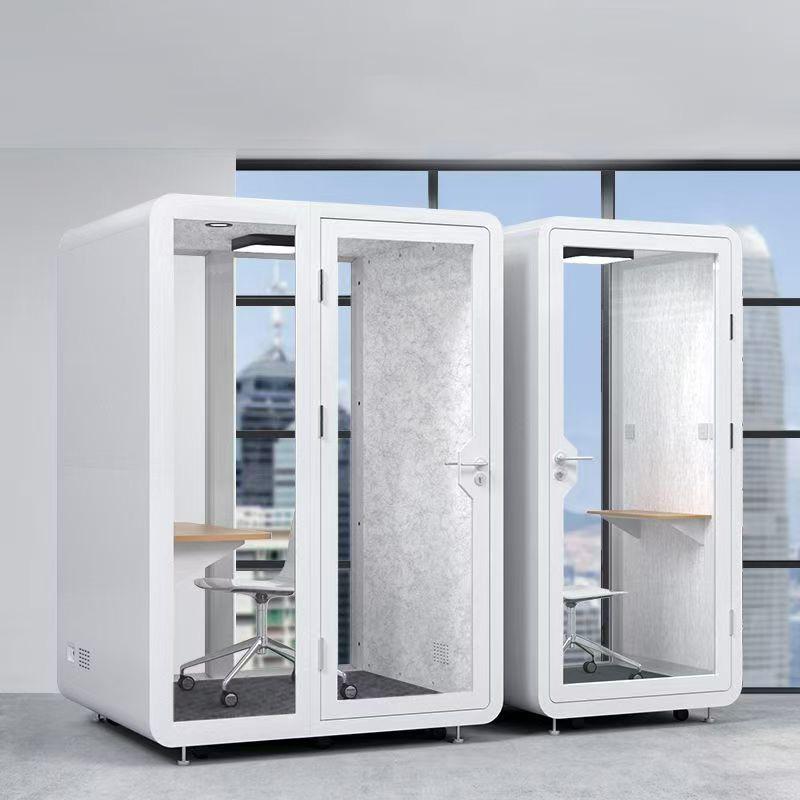
Watch a first-time user locate, identify, book, enter, and prepare the booth using the instructions that will remain after handover. Do not let a project team member silently solve every step. Note ambiguous availability signals, a door that is difficult to operate while carrying equipment, unclear lighting or airflow controls, and any item the user must fetch after entry.
Check privacy during transition, not only after the door closes. The user may announce a caller's name while waiting, expose a screen on the approach, or begin speaking before the enclosure is sealed. Booking labels can also reveal meeting details. If the transition creates exposure, alter the route, display practice, orientation, or instructions and repeat the walk.
Prepare the office telephone booth configuration for the normal task rather than a staged empty display. Include the chair position, work surface, power route, charging need, device stand, papers, bag, and any approved accessibility aid. A configuration that forces several adjustments at every visit consumes the focus period even when all parts technically fit.
Keep assistance proportionate. A visible fault-report route and simple operating cues can reduce uncertainty, but extensive instruction is evidence that the service remains difficult. Record whether the correction belongs to layout, technology, maintenance, booking, or training. The owner should be able to remove the friction rather than repeat the explanation indefinitely.
Let the user perform the intended activity for a representative duration. Observe whether nearby speech still draws attention, whether outgoing words can be followed at relevant positions, whether movement behind glazing remains distracting, and whether device notifications or room controls interrupt the sequence. Describe the event and response; do not claim a neurological or productivity effect that was not measured.
Introduce one credible interruption according to normal workplace practice. A colleague may approach, a message may arrive, the network may pause, or another person may wait outside. The question is whether the user can recognize the event, decide whether to respond, preserve private material, and resume the original task without rebuilding the whole setup. A good enclosure does not eliminate every interruption, but it can make response boundaries clearer.
Watch the final minutes. Users sometimes raise device volume as they tire, prop a warm door, move closer to glazing, or leave materials behind. These changes can affect privacy and the next booking. The accepted work cycle should include exit, reset, and any recovery time required before another occupant can use the space comfortably.
Compare the cycle with its prior location. The relevant outcome may be fewer desk interruptions, a safer speech boundary, less equipment handling, or a more predictable period for concentrated work. It may also reveal a trade-off, such as increased walking or limited availability. Keep both sides in the decision rather than reporting only the improvement.
| Work-cycle event | Possible interruption source | Observable recovery evidence | Owner or decision |
|---|---|---|---|
| Locate and enter | Availability signal, queue, approach, door operation | User reaches the correct unit with required materials | Facilities adjusts route or booking |
| Set up protected work | Furniture, controls, power, data, device position | Normal task begins without repeated assistance | IT or facilities removes setup friction |
| Handle an interruption | Approach, message, fault, surrounding activity | User protects information and resumes the original task | Team policy states response boundary |
| Exit and resume | Reset, forgotten items, return path, next booking | Space is ready and the next task starts predictably | Operations owns reset and fault closure |
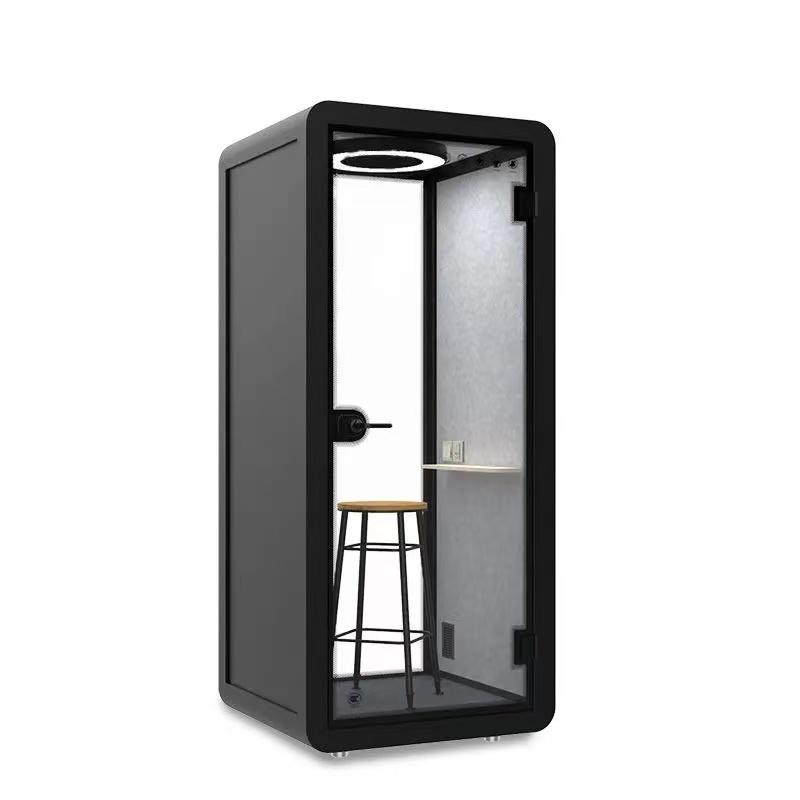
Reach and comprehension matter more than the number of controls. From the occupied posture, ask the user to adjust lighting and available airflow settings, connect power, position the device, and locate assistance. Observe labels, feedback, control delay, glare, fan character, drafts, table height, leg space, and the room required for normal belongings. The selected model and furniture arrangement define the result.
Extend observation across the longest intended block and a following booking. Equipment and bodies release heat; settings may reset; cleaning or ventilation recovery may be needed; a fault may become apparent only after continued use. State the conditions and avoid turning comfort reports into unsupported temperature or air-quality claims. If the use limit is short, preserve that limit in booking guidance.
Support must cover the real failure modes. Decide who handles booking errors, control faults, damaged seals, lighting, ventilation, power, data, cleaning, and furniture. Give users one reporting route while assigning findings behind the scenes. A booth that remains unavailable because ownership is unclear adds a large interruption to everyone who planned around it.
Review accessibility and choice without assuming one arrangement suits all users. Approach, door operation, turning, reach, posture, lighting, sound, and enclosure preference can vary. Provide an equivalent alternative where the booth does not fit the person or task. Focus support is stronger when the service offers choice rather than requiring every employee to tolerate one setting.
Combine the observations into a short operating condition. Name the supported tasks, normal duration, expected equipment, booking method, privacy limit, reset action, fault route, and alternative space. Exclude tasks that exceed the listener, sightline, occupancy, technology, or comfort boundary. This condition can be understood by users and audited by facilities.
Run the condition with several work styles rather than seeking unanimous preference. One person may value visual separation, another fast access, and another reliable device setup. Look for repeated service barriers and task failures, not personality explanations. A team standard should accommodate legitimate variation and keep a fallback available.
Review demand alongside recovery quality. High bookings may indicate value, scarcity, novelty, or misuse; low bookings may indicate weak demand, poor location, unfamiliarity, a broken control, or an unsuitable configuration. Pair usage patterns with observations and fault records before deciding to add, move, or remove units.
A credible privacy-and-focus claim is local and conditional. It states what work the booth supports, what exposure it reduces, how quickly users can establish the task, what limits remain, and who maintains the route. That language is less dramatic than ultimate, but it is far more useful to a team deciding where protected work belongs.
No. Reduced surrounding speech may help a task, but access, setup, visual movement, device reliability, comfort, duration, and support can still interrupt it. Observe the complete work cycle and compare it with the prior location before drawing a team-level conclusion.
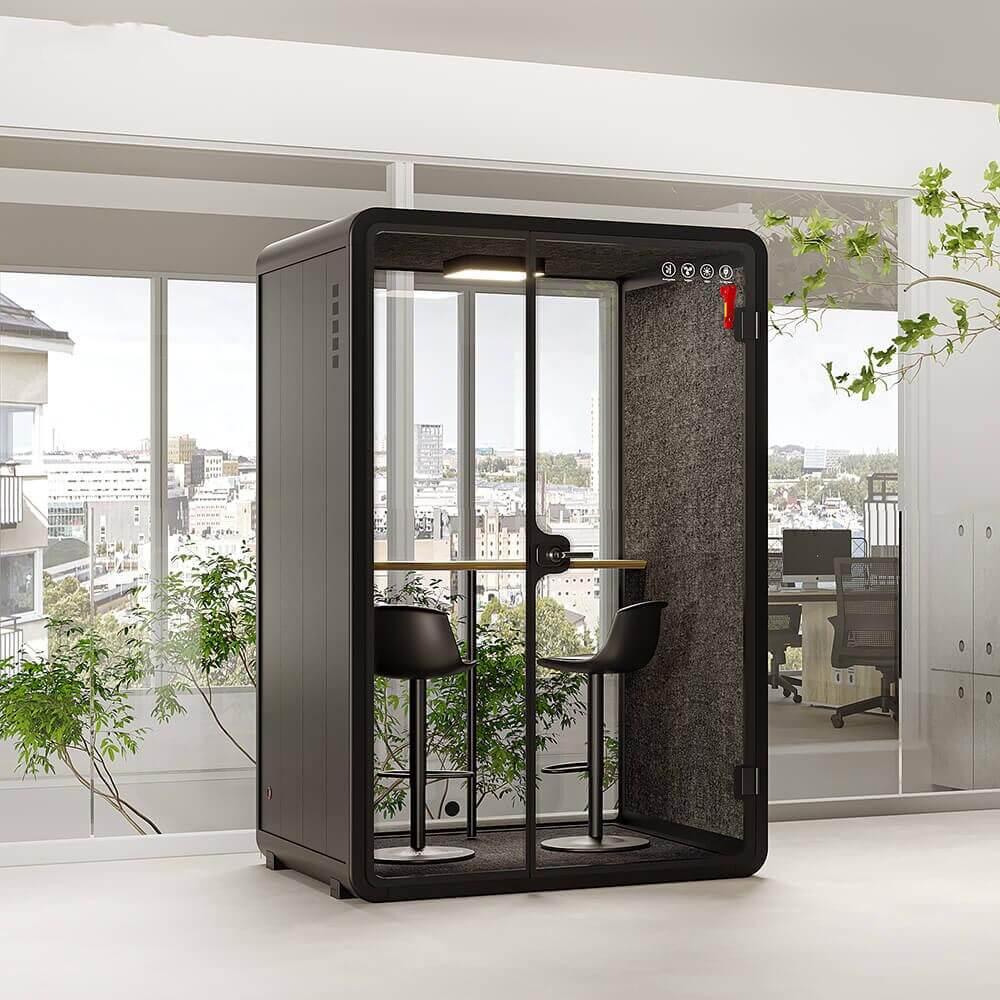
Use the longest normal task the team expects the booth to support, plus entry, setup, exit, and reset. Include a following booking when repeated use matters. A brief demonstration can reveal controls, but it cannot represent a sustained work block or recovery between occupants.
Give users a known alternative that protects the same essential task boundary. That may be another enclosure, an approved room, a different time, or remote participation. The fallback should not expose why a person needs privacy or force sensitive work back to an open desk.
Combine repeated denied demand, task displacement, completed work-cycle observations, fault history, and the performance of available alternatives. Booking totals alone cannot distinguish useful demand from novelty, poor scheduling, or a unit that stays reserved while unusable.
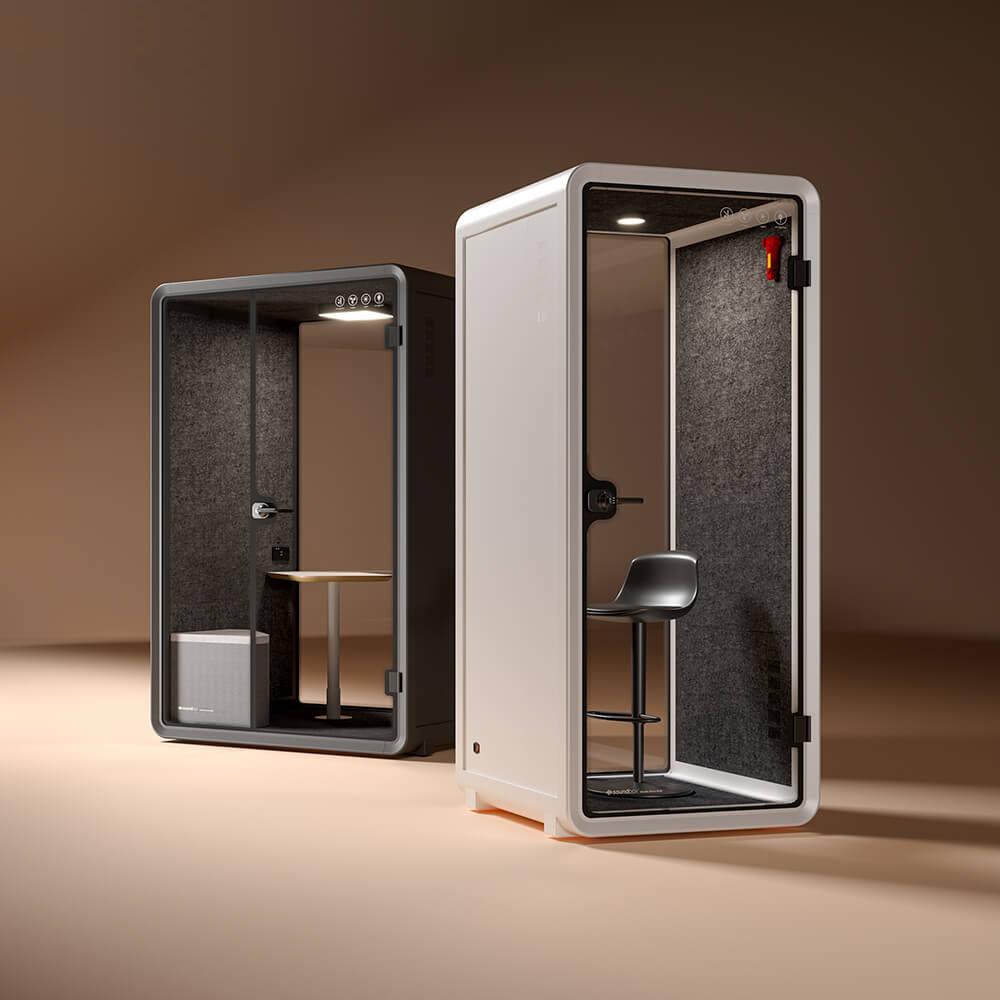
An office telephone booth supports privacy and focus when it removes important interruptions without replacing them with access, setup, comfort, or support friction. The defensible result belongs to a defined task, user route, listener boundary, configuration, duration, and operating condition rather than to the enclosure in isolation.
Choose one recurring team work cycle and observe it from desk departure through task resumption. Remove the highest-consequence friction, confirm the privacy limit, and keep an equivalent fallback. Only then should the team change its standard, relocate the unit, or use recorded denied demand to justify another booth.
Use WhatsApp or the inquiry form to share the call pattern, available floor area, device setup, and quantity required for an office telephone booth quotation.

 Tel: +8613538031763
 Email: info@sopworkpod.com
 MP/WhatsApp: +8613538031763
 Manufacturer Address:Liucheng Lujiang District,Meixi Road,Nanan City,Fujian,China