Need Help?
Please leave your contact information to get our latest catalog
Get In Touch Now >


Author:SOP Work Pods Manufacturer TIME:2026-11-18
An evening call can sit inside three different schedules: when employees intend to work, when the building provides its normal services and when someone can provide help. Those schedules need not end together. Buying an open office phone booth does not bring them into alignment, even when the enclosure is installed, powered and available on the room calendar.
Before extending access, build an operating-window proposal that names the services needed for the whole visit and the people who will fund and support them. The decision may be an agreed evening window, use within existing staffed hours or another room. The important result is a service the workplace can actually provide, not a longer booking calendar with the uncovered obligations left to occupants.
Ask the requesting team for its actual pattern: which working days need evening access, whether calls recur and when the final person expects to leave. Distinguish regular use from occasional exceptions. A recurring international meeting and an infrequent late finish may justify different service arrangements. Use the team's schedule rather than assuming the booth should remain available whenever one employee has a building pass.
Include preparation and departure, not just the call appointment. People need to reach the floor, set up their normal equipment, complete the conversation and leave through the agreed workplace route. If the appointment ends at the building service boundary, the full visit extends beyond it. Ask the service owners what window they can support and bring that answer back to the team before publishing availability.
Keep the request specific to the intended indoor location and task. Do not describe evening access as permission for overnight occupancy or a different use of the enclosure. A manager's wish to offer flexibility is the start of the service brief, not confirmation that every supporting arrangement already exists.
The first clock is the employee-use window. The second is the host building's service window: access to the relevant floor, surrounding lighting, room conditioning and other services the facilities team identifies as necessary. The third is the support window, covering the people authorized to help with ordinary workplace problems and the separate arrangements for urgent situations. Get each schedule from its owner.
Separate confirmed coverage from requests. Building entry may remain available after the usual room-service schedule, while reception has already closed. A supplier may accept a service message without providing an evening response. Put those differences on the same comparison rather than calling them all after-hours access. A phone number and a powered socket are not equivalent to a supported workplace.
The table organizes these overlaps without inventing operating times. Replace the descriptions with the site's actual schedules and agreed extensions. Where coverage is missing, identify the purchasing decision needed to close it. Do not move the desired booking window into the confirmed column merely because no one has objected.
| Clock | Schedule to obtain | Gap the comparison can reveal | Decision owner |
|---|---|---|---|
| Employee use | Preparation through final departure on requested days | The visit continues after ordinary building service ends | Requesting team confirms need and flexibility |
| Building services | Access, surrounding services and any agreed extensions | Entry remains possible but a required service is not covered | Building operator defines provision and extension terms |
| Support | Attended workplace help and the supplier's separate response coverage | Workplace help ends early or technical repair waits until the next service period | Workplace owner and buyer agree cover, limits and an available alternative |
Request the building operator's actual terms for extending relevant services. Ask what area an extension covers, who may request it, how much notice is needed and whether changes or cancellations affect the charge. These are questions about the building agreement. Do not assume that conditioning a single enclosure can be purchased separately from the surrounding floor or that a standard overtime fee exists.
Allocate the cost before approving the window. The team asking for evening access may fund recurring extensions, while facilities administers the request. Alternatively, a shared workplace budget may cover an agreed service period. Either arrangement needs a named budget holder and a way to handle exceptions. Keep unknown prices marked as pending rather than estimating a low running cost from the booth's component list.
Compare the uncovered obligation with a suitable room that is already supported during those hours. Consider both service availability and the work that room must accommodate. This comparison can justify a narrower booth window without undermining the daytime purchase. It also prevents an occasional late call from silently creating a permanent staffing or building-service commitment.
Ask who releases a requested extension when a call is cancelled or moved. The team changing its meeting may not be the person authorized to amend building services. Include that handoff in the budget arrangement, together with any provider terms that still apply. For a repeating request, distinguish confirmation of the recurring schedule from authorization of unexpected extra days. This lets the budget holder understand the obligation being accepted without relying on invented annual savings or predicting how often people will stay late.
When comparing office phone booths for evening use, ask the seller for the offered enclosure's ordinary operating instructions and service dependencies. Ask facilities separately which surrounding conditions and services must remain available for its intended use. The presence of a fan does not establish independent room conditioning or permission to occupy the building outside its supported hours. Procurement needs both answers, attached to different responsible parties.
Keep any ordinary lighting, power or connection arrangements within the site's authorized procedures. Do not extend access by changing timers, bypassing controls or asking occupants to restore a building service themselves. If an extension requires operator action, include that action in the service request and confirm who arranges it. The task here is to obtain coverage, not conduct a fan trial or deliberately interrupt services.
Record any restrictions the seller places on ordinary use and pass them to the workplace owner. If the buyer wants a different operating pattern, obtain a specific response about the quoted configuration. Avoid turning a general product description into a promise of continuous availability, automatic recovery or overnight support.
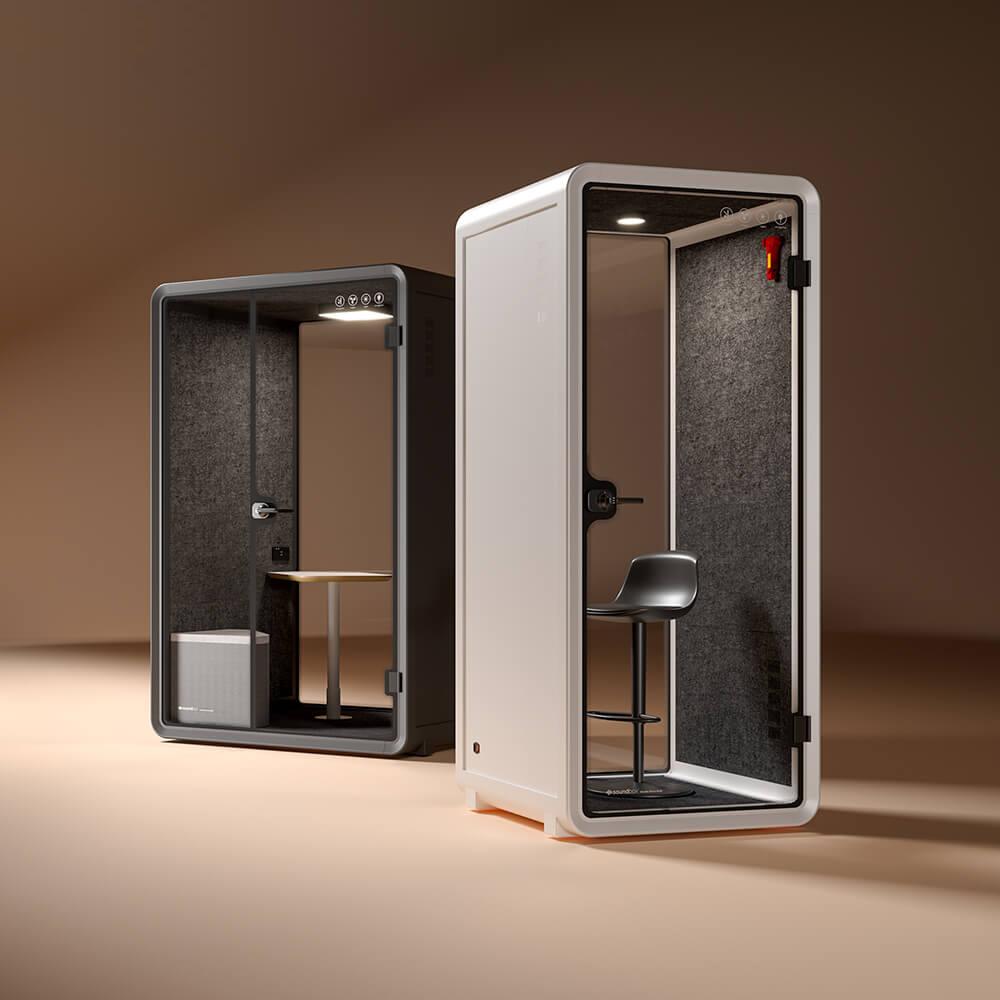
For the enclosure part of the proposal, request the ordinary operating information for SOP office phone booths; keep building service extensions and workplace support commitments on their own purchasing lines.
Identify the workplace contact available during the proposed window and what that person can actually do. Ordinary questions might concern an unavailable room, unclear instructions or a service that is not in the expected state. The contact needs authority to withdraw availability and direct the user to the agreed alternative. Merely forwarding a message to tomorrow's facilities queue leaves tonight's decision with the occupant.
Distinguish workplace help, technical repair and urgent assistance. A security desk may handle building access but not diagnose enclosure equipment. A supplier may provide technical support only during its stated coverage. The employer's responsible team must determine the appropriate arrangements where someone could be working alone; do not assume another person somewhere in the building provides adequate cover.
Give the evening contact a neutral enclosure reference, the agreed hours and the alternative-room decision. They do not need the subject of a private call. If cover ends before the planned visit does, either fund an appropriate extension or shorten the available window. Do not leave the last user with a contact route known to be unattended.
Compare the proposed hours with cleaning, maintenance and security rounds. These are normal operations, not exceptional failures. Ask whether a cleaner expects an empty enclosure, whether maintenance temporarily removes it from service and who communicates that status. A booked late call should not depend on the occupant negotiating a new cleaning arrangement at the door.
Give the availability calendar one responsible owner. That owner should use the agreed service schedule, including nonstandard working days and planned closures. When a building service extension is requested but unconfirmed, keep the affected period unavailable. A recurring booking must not automatically become an instruction to pay for services or to keep support staff on duty.
Arrange how the last visit returns the resource to normal workplace management. Users follow the supplier-confirmed ordinary instructions and the site's departure procedure. Facilities handles any separate service closure. This division avoids making an employee responsible for technical shutdown simply because they made the final call.
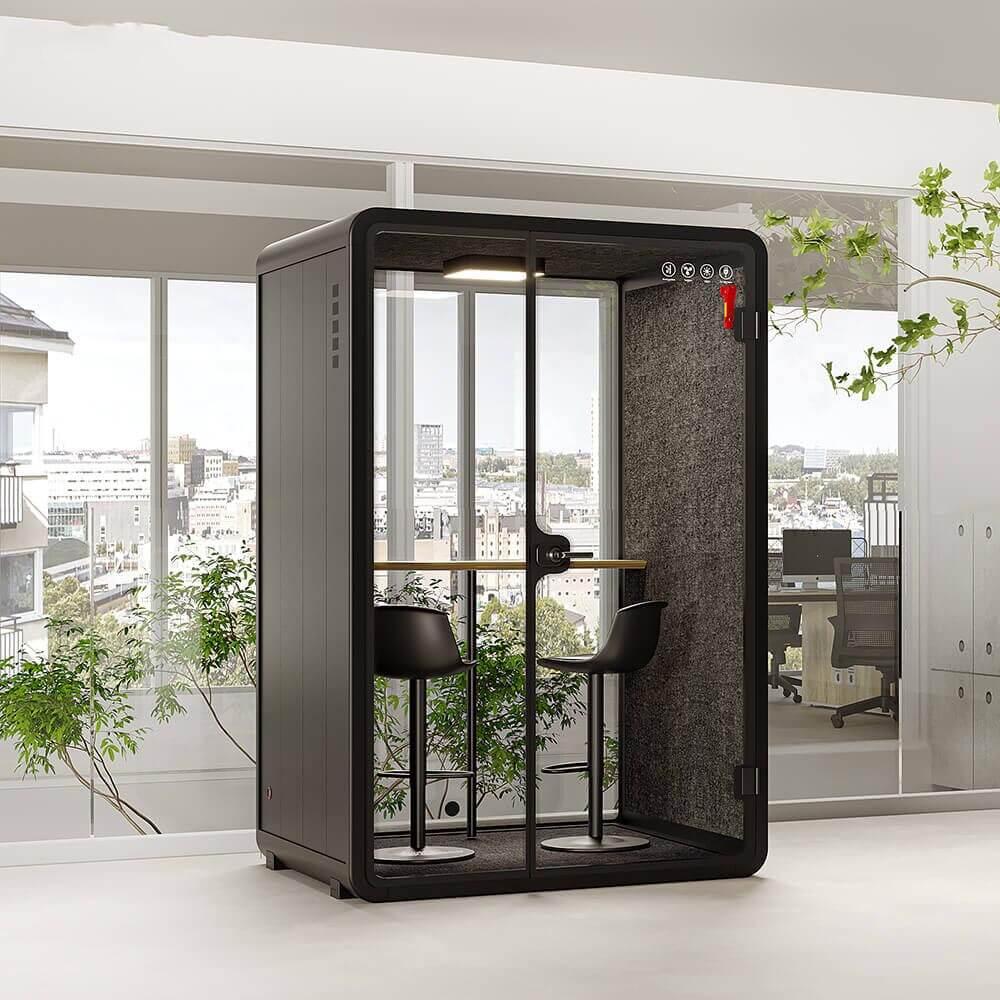
Bring the confirmed schedules, service terms, budget approval and support contacts together before changing access. The workplace owner should be able to state which periods are available, which services cover the entire visit and what happens when that coverage is absent. Apply the site's existing review for occupied hours and lone working; the enclosure purchase does not replace those decisions.
Use plain closure conditions: the agreed building service extension is unconfirmed, scheduled support is unavailable or the enclosure has been withdrawn for maintenance. Direct people to the agreed alternative rather than asking them to judge whether an uncovered session is probably acceptable. Urgent situations remain under the workplace's established arrangements, not an improvised booth-specific response.
When the request changes, reopen the affected commitment. A later final call, a different working day or a reduced support roster may change the funded window. Have the same owner update availability and tell affected teams. Review the service when real requests no longer match the arrangement, without inventing utilization figures or treating unchanged bookings as proof that coverage remains suitable.
Does an employee's building pass establish evening booth availability?
No. It may establish an entry permission, but the workplace still needs to confirm the relevant services, support and permitted use for the complete visit. Keep access permission separate from the decision to make the enclosure available.
Who should pay for a recurring service extension?
The organization needs to allocate that obligation explicitly. Obtain the actual service terms first, then name the budget holder and who may authorize exceptions. The enclosure price does not determine whether the requesting team, a shared budget or another owner funds the extension.
Can a security contact replace supplier support?
Not automatically. Confirm the security contact's actual role, such as access assistance or directing someone to another approved room. Product diagnosis and repair remain within the agreed technical service arrangement. Do not promise an evening repair response from a general building contact.
What if the late call happens only occasionally?
Ask whether the building and workplace offer a workable exception process with adequate notice and approval. Compare that obligation with an already supported room. Occasional need does not automatically require permanent extended hours, but it still needs confirmed coverage before the visit.
Should the calendar stay open while an extension request is pending?
Keep the uncovered period unavailable until its owner confirms the required provision. Otherwise a reservation can create an expectation the workplace has not agreed to support. Tell the requesting team what remains pending and provide the appropriate alternative rather than leaving the uncertainty to the last occupant.
Choose the evening service before extending the calendar. Align the intended visit with confirmed building provision and attended support, then assign the cost and authority for any extension. A smaller, dependable operating window can answer the real request better than unrestricted availability that relies on unfunded work.
Keep the window under one workplace owner who can amend it when schedules change. If that owner cannot identify both coverage and funding, use existing staffed hours or another supported room. The buying decision is whether the organization can maintain this particular service, not whether an enclosure can be described as always open.

 Tel: +8613538031763
 Email: info@sopworkpod.com
 MP/WhatsApp: +8613538031763
 Manufacturer Address:Liucheng Lujiang District,Meixi Road,Nanan City,Fujian,China