


Need Help?
Please leave your contact information to get our latest catalog
Get In Touch Now >


Author:SOP Work Pods Manufacturer TIME:2026-10-23
The cleaning contract is already agreed, but the booth is not yet ordered. Its proposed care sheet excludes a product the contractor intends to use on one selected surface. Which commitment changes? For a modern office phone booth, that is a procurement question to settle while the product, finish and service arrangement are still choices, not after the first cleaning visit.
Begin with the named cleaning product and the exact surface that lacks approval. The objective is an orderable combination with a supported care schedule. This discussion does not diagnose marks, recommend chemicals, prescribe cleaning methods or evaluate disinfection. It resolves who can accept an alternative when the buyer's routine and the supplier's instructions do not agree.
Write the issue as a relationship, not a complaint that the booth is difficult to clean: the contractor proposes this identified product for this named component, but the applicable supplier response excludes it or has not confirmed it. Those two responses require different handling. An exclusion needs a changed proposal; an unanswered compatibility question needs evidence. Do not convert silence into permission or treat an explicit prohibition as something a buyer demonstration can overrule. Attach both the cleaning requirement and the relevant supplier instruction so each party is answering the same conflict. Ask whether that product is mandatory under the workplace's contract or merely the contractor's current preference; the available purchasing choices depend on that distinction.
Have the cleaning provider supply the manufacturer's name, full trade name, item or product code, supplied form, and current product information used for the proposal. Record the document date or revision where available. Descriptions such as the usual cleaner, a mild product or the blue bottle cannot define the purchase condition. A brand family may contain several products, so the item identity matters even when the contractor regards them as interchangeable.
Ask whether the identified item will remain available through the contractor's normal supply route and whether substitutions are allowed in that service agreement. This is a request for the provider's present commitment, not a promise of future availability. If it cannot commit to one product, require a process for obtaining approval of a proposed replacement before use. Do not leave the supplier assessing one named item while the commercial agreement permits a different item to arrive without review.
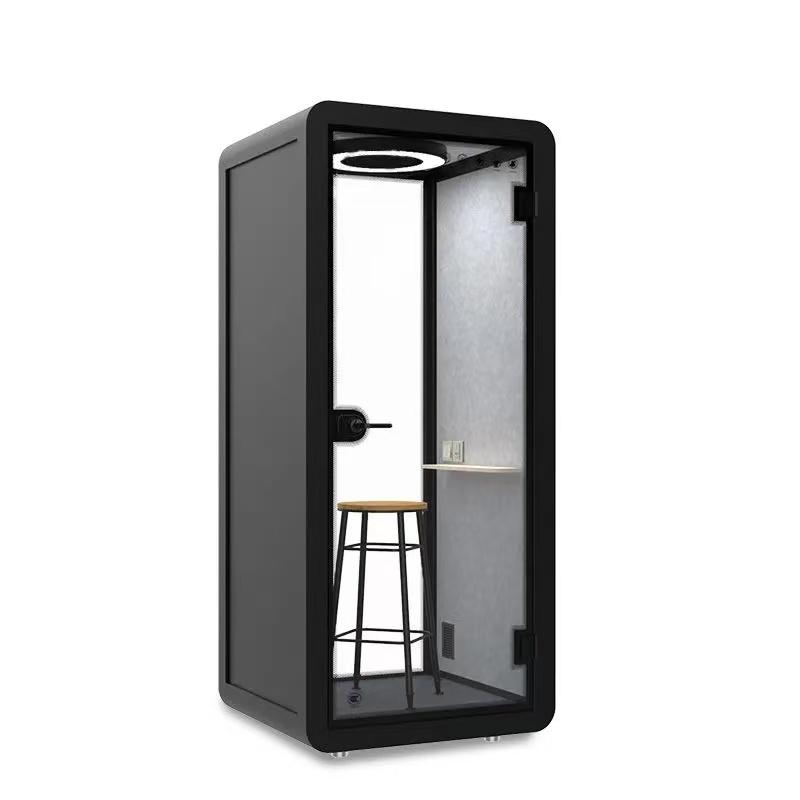
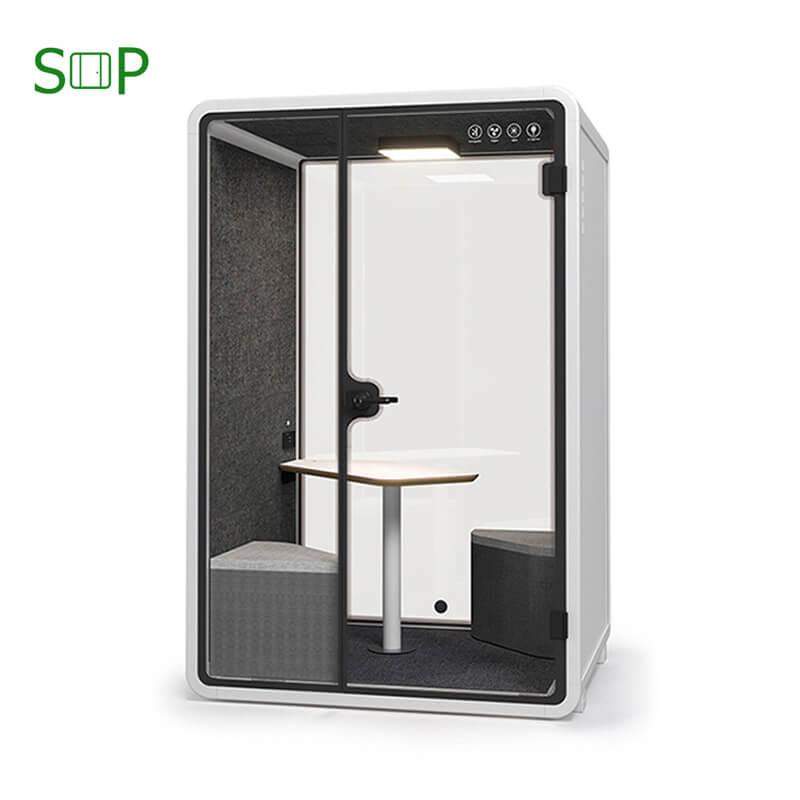
On the booth side, request the proposed component and finish identifiers for the actual quotation. Name the worktop, door treatment, interior panel or other affected surface specifically. These are questions to resolve from supplier information, not claims about what any SOP model contains. A white finish or clear door in a photograph does not identify the material, coating or applicable care instruction.
Ask what the supplied approval covers at the component's boundaries. A response concerning a worktop face should say whether the offered edge treatment is included. A glazing answer should not silently approve an adjacent graphic or frame finish. The buyer does not need to infer the construction: the supplier needs to identify the surfaces within its answer and flag what remains outside it.
Keep this scope tied to the configuration being priced. If an optional finish has different instructions, obtain its own answer before treating it as a substitute. An attractive sample from another configuration cannot resolve the proposed product-surface pair, even when both finishes share a colour name.
Include the proposed finish schedule when requesting SOP office phone booths, and ask for compatibility answers against the cleaning provider's identified products before accepting the selected surfaces.
Send the exact product identity and current information to the supplier with the component schedule. Request a clear disposition for each intended pairing: accepted under identified instructions, excluded, or awaiting clarification. Ask the supplier to state the scope of its answer and any conditions by reference to the applicable care guidance. Do not rewrite that response into a chemical recipe or borrow directions from another booth manufacturer's manual.
The table distinguishes responses that often become blurred in a purchasing discussion. It contains possible approval situations, not compatibility findings for a real cleaner or booth. Approval for a worktop is not approval for every surface nearby. Likewise, a product's general suitability statement does not establish that the pod supplier accepts it on the exact supplied finish. When the two providers' answers conflict, return the same pair to both parties for resolution rather than choosing the more convenient document.
| Response on the exact pairing | Purchasing meaning | What closes the question |
|---|---|---|
| Accepted under identified care instructions | Conditional support, limited to the named surface | Contractor accepts and can supply the specified service |
| Accepted on one component; excluded on another | Partial approval cannot cover the whole booth | A supported product exception or different surface |
| Product or finish identity is incomplete | No comparable pair has been reviewed | Both identities supplied and a matching response received |
| Care document and product information disagree | Neither document resolves the conflict alone | Responsible providers clarify the same current pairing |
| Supplier declines the required product | Current combination does not meet the brief | Change an approved selection or reject this combination |
Consider a hypothetical offer in which the named daily cleaner is accepted for the selected worktop but excluded for the chosen door finish. If the cleaning contract permits an exception, ask the contractor whether it can provide and reliably distinguish a supplier-approved alternative for that surface. If the contract requires one product throughout, ask the booth supplier whether a different supported finish can satisfy that exact requirement. Compare the resulting service scope, appearance and quoted commercial consequences without inventing a cost advantage. If neither side can change, the combination does not meet the brief. Do not leave the conflict to the cleaner on delivery day, and do not dilute the requirement into a vague promise to take care. A decision to choose another configuration can be more precise than an exception that nobody can operate.

A sample review is not the default way to decide whether an unknown chemical is acceptable. First ask whether the supplier needs a sample exercise at all and whether it has an approved procedure for the identified product and representative component. It may be able to resolve the question from applicable information, or it may decline the pairing. Neither outcome calls for a buyer-devised spot test on a showroom or delivered booth.
If an exercise is authorized, have the supplier identify the sample, its relationship to the proposed surface, the permitted procedure, the responsible person and the question the result can answer. Retain the supplier's interpretation, including limits. An unchanged appearance is not evidence for every service interval, adjacent material or future product variant. Do not trial an unapproved product on a finished pod, add an undocumented treatment or promote a sample observation into a durability or hygiene claim.
Once the pairing is supported, ask the contractor to demonstrate on paper how it will deliver the agreed division between surfaces. The schedule should identify the component location, approved product identity, applicable instruction and responsible service role. Have the provider confirm any frequency or working conditions from the accepted care guidance and the agreed service requirement; this article supplies no generic interval. Where the guidance and service requirement remain inconsistent, the order condition is still open.
Pay attention to exceptions that are commercially accepted but operationally unclear. Can the provider distinguish the products assigned to different surfaces, supply the approved item, and communicate the difference to replacement staff without asking them to interpret a material specification? Obtain its answer before the exception becomes part of the order. This is a feasibility check for the proposed contract, not an instruction to clean the booth. If the service cannot support the exception, return to the product or surface choice.
Tie purchase release to agreement on the selected components, current cleaning-product identities and supported schedule. State which supplier and contractor responses form that agreement and which exclusions remain. Assign a specific purchasing hold to an unresolved mandatory surface instead of declaring the whole offer approved with questions outstanding. Also agree what triggers a fresh compatibility answer: a proposed product substitution, changed product information, revised finish or different component. Do not require buyers to guess whether a replacement is chemically equivalent. The responsible providers must confirm applicability before the changed pairing is accepted; the old approval remains evidence for the old identities only.
Can the buyer approve the contractor's usual cleaner on its own?
No. Familiarity with the workplace product does not settle compatibility with the offered surface. The contractor identifies what it will supply; the relevant supplier confirms the product-surface pairing. Procurement joins those commitments and keeps any disagreement visible before releasing the order.
Is a safety data sheet enough to close the surface question?
Keep current product information available to the responsible providers, but do not treat possession of a document as a compatibility approval. The required answer must address the identified cleaner and supplied component under the applicable care instructions. Missing approval remains missing even when the product paperwork is complete.
Must every surface have the same cleaning product?
Only if that is the buyer's actual service requirement and a supported combination can meet it. Otherwise, a surface-specific exception may be considered if the contractor can deliver it. Do not assume either a single-product policy or a multi-product schedule will suit every offer.
Does a supplier-approved sample replace written acceptance?
No. A sample exercise answers only its authorized question for the identified sample and procedure. Ask the supplier to explain how the result affects the proposed pairing. It cannot erase an exclusion or establish unobserved long-term performance simply because no visible change was noticed.
Does compatibility approval confirm disinfection effectiveness?
No. This purchasing decision concerns whether the named product is accepted for the specified surface under supported care instructions. It does not evaluate hygiene outcomes or establish that the workplace's separate health requirements have been met.
Release the modern office phone booth order only when the selected surfaces and the contractor's named products have a supported relationship. Where they conflict, make a deliberate purchasing choice: a deliverable cleaner exception, an approved surface alternative, or a different offer. Leave neither party expecting the other to solve the contradiction after delivery. The agreed care schedule should describe the combination being bought, with no unresolved chemical experiment hidden inside an ordinary cleaning obligation.

 Tel: +8613538031763
 Email: info@sopworkpod.com
 MP/WhatsApp: +8613538031763
 Manufacturer Address:Liucheng Lujiang District,Meixi Road,Nanan City,Fujian,China