Need Help?
Please leave your contact information to get our latest catalog
Get In Touch Now >


Author:SOP Work Pods Manufacturer TIME:2026-10-20
The colleague beside a proposed booth may never hear the caller's words, yet still notice each arrival and departure. When selecting a private phone booth for office use, that brief closing event deserves its own question: does ordinary door operation interrupt the work happening outside? A conversation heard through a closed enclosure and a momentary closing sound are different observations, even when both are described casually as noise.
Use a comparison of normal closing events to decide whether a candidate deserves further consideration beside particular desks. The exercise below is a proposed buyer trial, not a reported product result. It supplies neither an acoustic rating nor permission to modify door hardware.
Define the event before listening. For this comparison, it starts when someone normally brings the door toward its closed position and ends when the door has settled. Exclude the subsequent conversation. Keep an incidental footstep, a chair movement, and a nearby drawer in separate notes rather than charging every sound during entry to the door. The purpose is to identify a brief disturbance that a purchaser might otherwise overlook during a demonstration focused on the person inside.
Ask the demonstrator to explain the intended everyday operation of the exact door. Different offers may use different hardware; a controlled-closing description does not establish what SOP supplies. Watch an ordinary entry and an ordinary exit before the listening exercise. If the door rubs, fails to close normally, or raises a safety concern, stop that candidate's comparison and refer it for competent inspection. A faulty example cannot answer the question about normal operation, and this exercise should not become a repair tutorial.
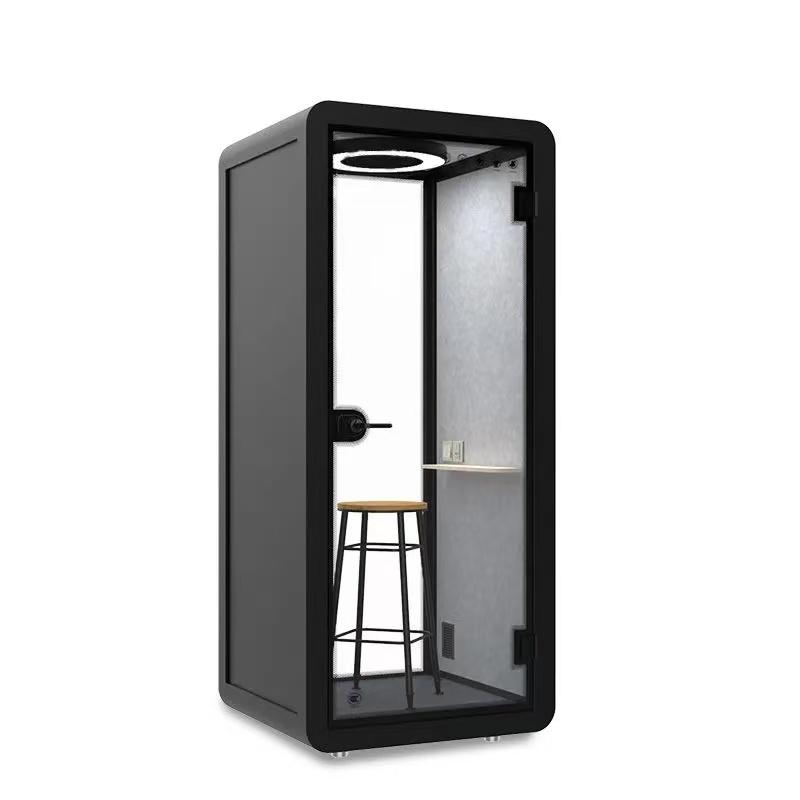
Place the listener at a representative neighboring work position, not standing beside the handle waiting for a click. Use an ordinary, harmless task such as reading a paragraph or checking entries in a sample schedule. The listener should be able to describe whether attention stayed with that task. Do not introduce difficult timed work or interpret the exercise as a productivity measurement.
Agree three descriptions beforehand: heard while continuing, noticed and paused, or uncertain because another event overlapped. These distinguish audibility from interference without inventing a sound-level threshold. Let the listener add a short explanation, particularly where a sound was noticeable but did not cause them to lose their place.
Choose the positions because people actually work there. A desk directly facing the booth and another farther along the same desk row can present separate purchase concerns. Keep them separate in the findings. A favorable response at one seat should not erase an interruption at the seat whose occupant will encounter the door most often.
If neighboring work includes live calls, a reading exercise is only preliminary. Arrange a harmless practice conversation at that desk and ask whether the closing event caused the listener to miss or request repetition of a spoken point. Keep this distinct from testing speech escaping the booth. The caller inside need not be speaking at all: the question remains whether the neighbor's current activity survives an ordinary closure without a disruptive break.
When comparing SOP office phone booths, ask which quoted door configuration can be demonstrated through ordinary entry and exit beside a representative work position.
Have the operator enter, close the door as instructed, pause, then leave and close it normally again. Do not add a hard push, release from an exaggerated opening, or create a dramatic slam. Keep ventilation and other supplied services in their usual operating state. An observer can mark the arrival and departure events while the listener continues the agreed task; there is no need to announce each closing moment or ask for running commentary.
After each pair, let the listener describe what happened before the demonstrator explains what they expected to happen. Repeat enough ordinary pairs to understand whether the first response recurs, without turning the visit into an endurance exercise or a crowd around the booth. Include another consenting operator where practical, following the same instructions. If a difference appears between operators, describe the ordinary action that differed. Do not label one person careless or prescribe an unnaturally delicate routine merely to improve the demonstration.
Use a short listening strip rather than one overall quietness score. For each closing event, place the listener's response alongside the task they were doing and any interruption nearby. The distinction between a brief sound and its effect on that task is the useful result. A sharp click that did not interrupt reading and a duller sound followed by a pause need not lead to the same workplace judgment.
The descriptions in the table are possible observations, not findings from an installation. Use them to avoid collapsing different situations into a single adjective. A pause is worth discussing, but it does not prove harm, reduced output, or a technical fault.
Also record when the listener cannot attribute the interruption. If a chair moved as the door closed, keep that event unresolved and wait for a normal opportunity to repeat it. Do not repeatedly engineer an empty, unusually silent office and then present that condition as the ordinary workplace.
| Possible event note | Task response | Interpretation for this comparison |
|---|---|---|
| Arrival closure heard | Reading continued | Audible event without a reported pause |
| Departure closure noticed | Reader lost the current line | Interruption to examine at that desk |
| Closure and drawer movement overlapped | Attention shifted | Cause unresolved; retain both events |
| Different listener used another desk | No pause reported | Separate position, not a replacement for the first finding |
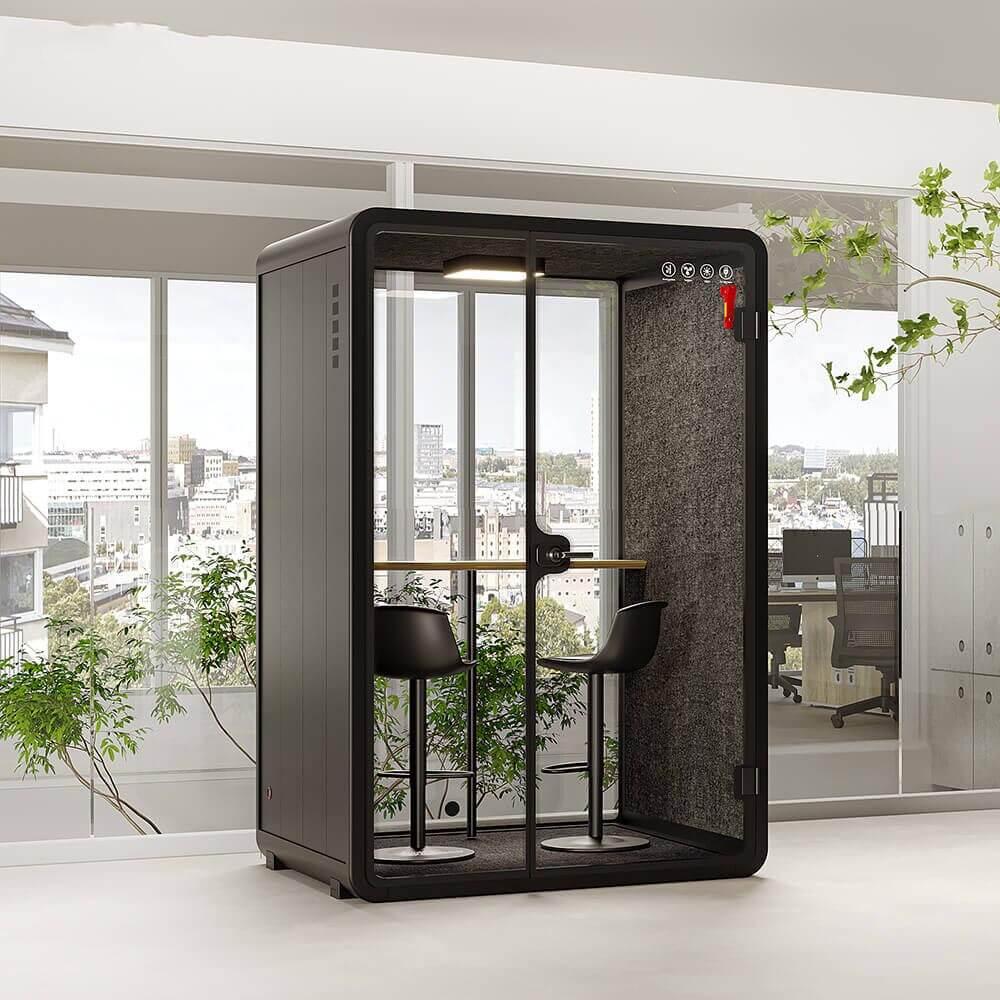
When comparing two candidates, retain the task, listener position relative to the entrance, ordinary operating instructions, and surrounding activity as consistently as practical. If the second demonstration occurs in another showroom, say so. It can reveal whether an event deserves attention, but it cannot establish that one product is quieter in the future office. Different distances, furniture, and background activity leave the product comparison unsettled.
Within one demonstration, change one useful condition at a time. First compare arrival with departure at the same desk; then consider another occupied position. If several people offer opinions, ask what each was doing and where they sat. Their responses may legitimately differ. Do not average them into a performance score. Where the evidence comes only from a supplier video, request a suitable demonstration instead of ranking the soundtrack: the recording position and playback conditions are not the neighboring worker's listening experience.
An isolated closing sound and a sequence of ordinary arrivals create different planning questions. After examining individual events, consider the workplace's intended pattern: occasional calls, frequent short calls, or turnover concentrated around meetings. Use actual observations or the team's stated schedule where available. A booking count is not automatically a count of closures, because someone may leave briefly or enter without starting a booked session.
Include a stretch of the same neighboring task with no planned booth entry or exit. This gives the listener a practical reference for ordinary interruptions already present. It does not provide a statistical control or isolate a measured effect. Its purpose is narrower: avoid blaming the door for an interruption that the person describes as unrelated or continuously present.
Discuss the observed event alongside that pattern without manufacturing a forecast. A listener who readily resumes after one interruption may still want a different location beside a frequently used booth. Conversely, hearing a closing sound occasionally does not by itself rule out a candidate. The decision should explain which work would be interrupted and how often that situation is reasonably expected, with uncertainty retained. Do not promise that neighbors will get used to it, or assume they should wear headphones to compensate for a purchasing choice they did not make.
The useful outcome is a disposition for this normal closing event beside these work positions. A candidate may remain suitable for the proposed location, need a representative site comparison, or be unsuitable beside the affected task. If a showroom was the only available setting, make the next comparison part of the purchase discussion rather than describing the office result as settled. There is no universal number of acceptable interruptions in this exercise.
Where ordinary closure repeatedly conflicts with the neighboring task, compare a different feasible location or another demonstrated configuration. Any layout alternative still needs its own access and services review; listening does not approve those matters. Do not promise a later closer adjustment, add cushioning, defeat the latch, or ask users to leave the door partly open. If the only favorable result depends on an operating habit the team cannot realistically maintain, keep the candidate out of that location's shortlist rather than postponing the conflict until installation.
Does a speech-privacy result answer the closing question?
No. It addresses a different sound and operating condition. Keep any speech-privacy evidence with its own scope. The closing exercise considers a short event heard by a neighbor, not whether words spoken during the call can be understood outside.
Should the buyer request a deliberately hard closure?
No. Use the demonstrated everyday operation and stop if the mechanism behaves abnormally. Deliberate slamming changes the question and can create a safety or damage risk; it is not required to compare normal closing disturbance before purchase.
What if everyone hears the door but nobody pauses?
Record that distinction. Audibility alone does not establish an unacceptable interruption. Discuss whether the observed condition represents the intended desks and turnover pattern before using it to support a location choice; do not rename the door silent.
Can an advertised controlled-closing feature settle the decision?
It can prompt a configuration question, but it cannot substitute for the relevant demonstration. Establish what the offered unit actually includes. Do not transfer another manufacturer's hardware or behavior to SOP, or infer the neighbor's response from the feature name.
What should happen when a listener finds the exercise uncomfortable?
Stop and retain the concern without asking the person to tolerate more repetitions. Discuss another appropriate evaluation arrangement or location with the responsible workplace team. The purchase exercise is not a health assessment and should not test anyone's tolerance limits.
Choose the next step from the neighbor's actual task response: retain the candidate for that location, arrange the missing representative comparison, or remove it from that desk area's shortlist. Preserve arrival and departure observations separately where they differ. A booth can remain worth considering elsewhere without being a good neighbor to this particular task.
Bring the unresolved closing event to the next demonstration, not a request for an unsupported quietness promise. The purchase question is whether ordinary use fits the nearby work without special handling, not whether a product label sounds reassuring.

 Tel: +8613538031763
 Email: info@sopworkpod.com
 MP/WhatsApp: +8613538031763
 Manufacturer Address:Liucheng Lujiang District,Meixi Road,Nanan City,Fujian,China