Need Help?
Please leave your contact information to get our latest catalog
Get In Touch Now >


Author:SOP Work Pods Manufacturer TIME:2026-10-19
A desk phone lights up inside the demonstration pod. The buyer makes a call and hears a colleague answer. That is a useful start, but it leaves another ordinary task unanswered: can a caller reach this telephone, be placed on hold and then reach the intended transfer recipient without being lost between them? A powered display and one outgoing connection do not settle the complete calling requirement.
For office telephone pods intended to house a wired desk phone, arrange a purchasing trial around the actual handset and calling service. The result should identify completed call actions and who accepts any unresolved service requirement. This is not a mobile-reception comparison, an acoustic test or a guide to configuring a workplace network.
Name the proposed desk-phone model, its supplied handset, the calling service and the user task. Decide whether the phone serves a shared location or a named work role, without collecting account credentials. Ask the responsible telephony provider which functions are included in that particular service. Features can depend on the phone model, calling platform and configuration; a familiar button does not establish that its function is available in the proposed arrangement.
Select a small required set: incoming calls, outgoing calls, hold and resume, and the transfer method people actually use. Add another feature only when it affects the purchase. Also let the intended user lift and replace the handset, read the display and reach ordinary controls with their normal notes present. Record any surface or cord-position conflict for the supplier. Do not add brackets, reroute concealed cables or assume a desk phone is included with the enclosure.
Before arranging calls, ask the authorized IT or telephony owner to confirm the planned connection and power arrangement for the exact phone. Some desk phones support Power over Ethernet, where a compatible network connection also supplies power. That depends on the actual equipment and approved installation. A socket with a familiar shape does not prove PoE provision, usable calling service or compatibility with the selected telephone.
Have the responsible provider establish readiness and any required registration before the buyer's trial. Keep network credentials, activation information and protected settings out of the purchasing record. The enclosure supplier confirms its offered physical provision; IT confirms the permitted network arrangement; the telephony owner confirms the service. Do not bridge a missing connection with an improvised adapter, alter security controls, open electrical panels or make wiring changes to complete the demonstration.
Record whether the proposed site connection or a showroom arrangement is being used. If installation has not happened, identify the destination check still required. A successful showroom call cannot accept an office connection that does not yet exist. Keep normal lighting and ventilation operating, and use only the supplier-approved furniture and cable arrangement throughout the trial.
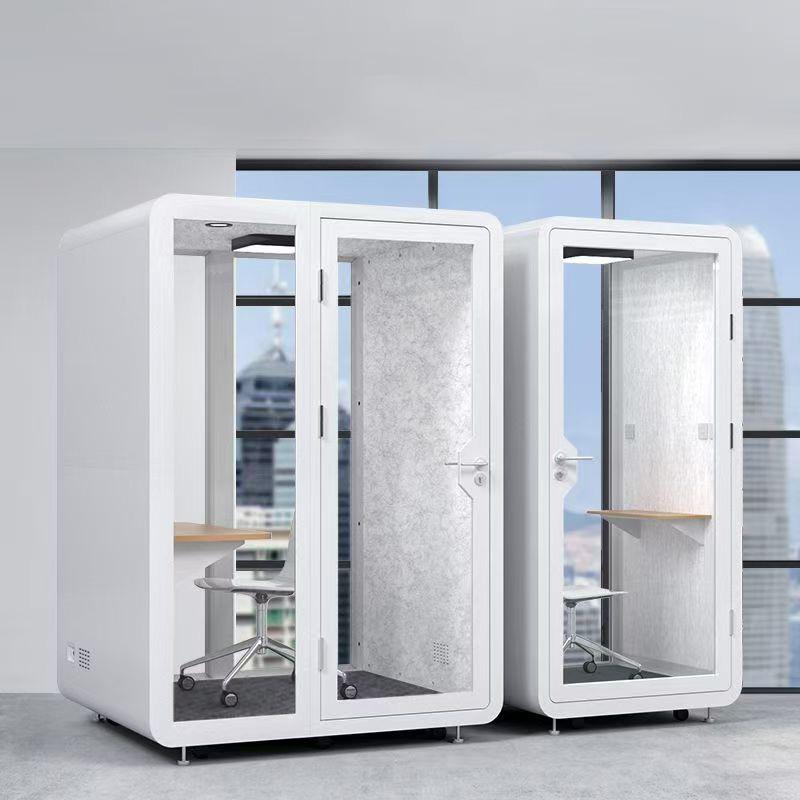
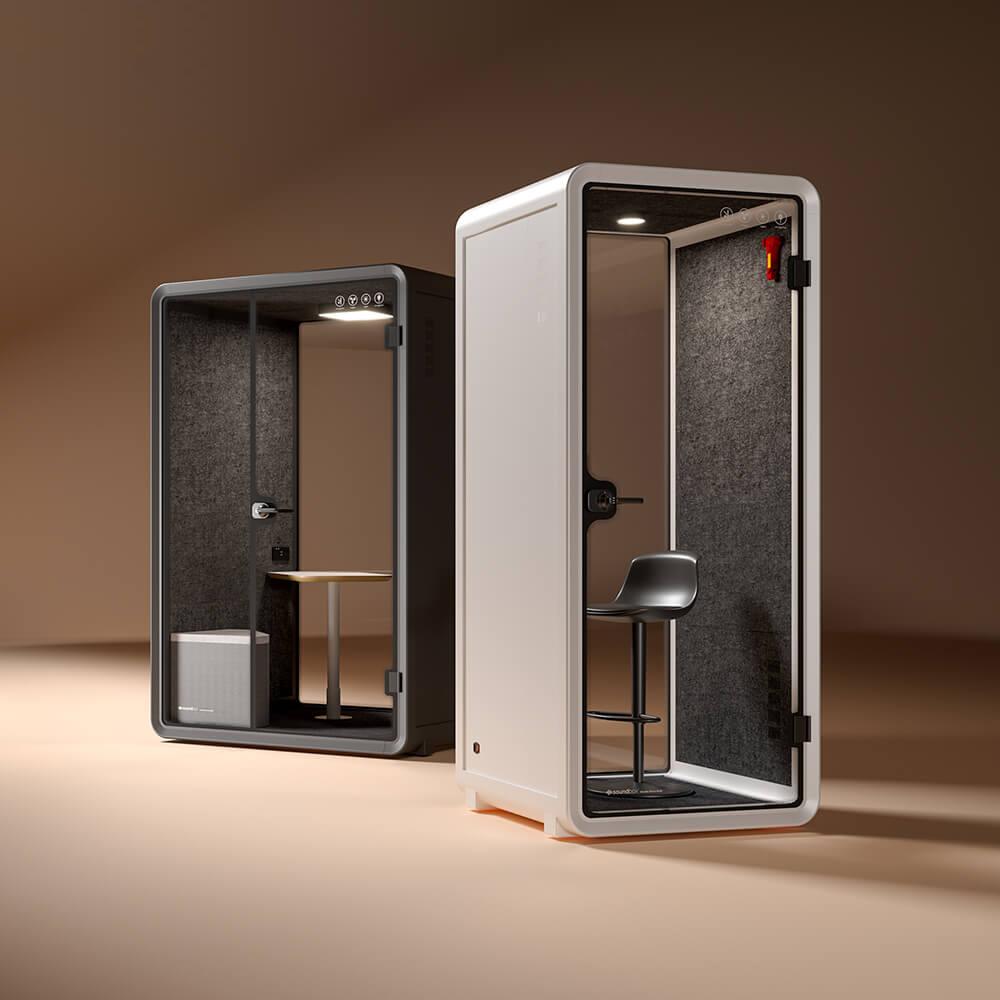
When requesting a configuration for SOP phone booths, include the intended handset position and supplier-approved cable provision as questions; the product reference does not establish a network connection or supplied telephone.
Ask a consenting colleague at an agreed test endpoint to call the destination assigned for the trial. Keep actual numbers in the organization's controlled records; the buyer's sheet can use labels such as Desk Phone A and Caller B. Establish which device should ring and what identification is expected before making the call. If the intended route includes an internal extension and a public incoming number, treat those as separate requirements rather than assuming one proves the other.
Observe whether the correct telephone alerts, whether the seated user notices the alert under normal booth conditions, and whether answering with the handset connects the two participants. Use harmless conversation and confirm that both can exchange it. Record a missed alert, wrong destination or incomplete connection separately. Do not increase the ringer beyond ordinary permitted use just to obtain a pass. When the observed identity differs from the agreed one, have the provider explain it before accepting that route.
Use the same desk phone to call an authorized test destination through the organization's normal dialing procedure. Ask the receiving colleague to confirm the expected caller identity where that is part of the requirement, then exchange a brief neutral message. Keep internal and permitted external dialing results distinct. Do not dial emergency services, premium numbers, unknown recipients or real customers for testing. Arrange any external call charges with the responsible owner beforehand.
End the call using the phone's documented ordinary controls and confirm with the other participant that it has ended. Check the intended user's normal handset replacement rather than leaving the phone in an artificial demonstration position. Then receive another agreed call to verify the next-use sequence. An outgoing call that worked once should not conceal a phone left unavailable afterward. Record what happened; an unexpected busy indication is a service question, not evidence that the pod caused a fault.
| Required call action | Local observation | Other participant's confirmation | Acceptance question |
|---|---|---|---|
| Incoming call | Intended phone alerts and answers | Caller reaches the intended user | Did the specified destination work? |
| Outgoing call | Call placed through approved dialing | Recipient confirms arrival and expected identity | Did the required outgoing route work? |
| Hold and resume | Original call remains identifiable | Original conversation resumes | Was continuity preserved? |
| Transfer to a colleague | Documented transfer action completes | Caller and recipient confirm their connection | Did delivery complete beyond the local display? |
| Call end and next use | Phone returns to the expected idle state | Next agreed caller reaches the phone | Is the normal next-call sequence usable? |
Arrange three consenting participants: Caller B, the person at Desk Phone A and Recipient C. The telephony owner should identify the approved transfer method and explain the normal user controls for that model and service. A consultation before completing the transfer and an immediate transfer are different tasks. Test only the method the workplace requires, or record both separately if both are specified.
Start with B connected to A. Using the supplied instructions, let A place the call on hold and resume it. Ask B what happened during the transition and confirm that the original conversation resumes. Next, carry out the agreed transfer to C. Collect C's confirmation that the intended call arrived and B's confirmation that they reached C. A disappearing call on A's display alone is not evidence of successful delivery.
Include an unavailable-recipient branch only if the provider has defined the supported behavior and agreed a test destination. Ask where the original caller should end up and who remains responsible for the call. Observe that outcome without improvising button sequences. Keep a missed transfer open even when direct dialing to C works. Those results answer different questions about the calling service.
A shared desk phone may need call waiting, a message indication, a directory entry or keypad selection in an automated menu. Ask which of these are configured and relevant; do not turn the trial into a tour of every feature advertised for the phone family. For each selected feature, state the expected user action and recipient-side result. Use a provider-approved test menu or test mailbox rather than accessing private messages or entering real account information.
For a second incoming call, for example, agree what should happen to the existing conversation before anyone dials. Record the alert and the permitted handling outcome, not just the appearance of a second line on screen. For voicemail, a dummy test message and its intended notification may be sufficient; follow the provider's authorized process. Leave conferencing, recording, monitoring and other unrequested functions outside scope. Their availability or legality is not established by this desk-phone trial.
When a required action fails, record the trial label, time, phone model, confirmed service arrangement, call direction, action and each participant's observation. Name the last completed step and the expected next outcome. Send that concise record to the agreed telephony owner, who can coordinate network or equipment investigation through authorized channels. Do not collect packet captures, explore administrator menus or change power and network connections as buyer troubleshooting. If the provider substitutes a handset or changes the approved service configuration, identify the change and repeat the affected call actions before carrying acceptance forward. Keep the earlier failure attached to the repeat. The task is to close a specific service requirement, not to attribute every missed call to the enclosure or to accept a different telephone silently.
Complete the call-action record with observed complete, failed, not tested or not required beside each action. Identify the person authorized to accept the calling service and the workplace owner who accepts the user sequence. The pod supplier should answer its own configuration questions without being assumed to control the buyer's telephone service. Retain a support contact and repeat-test responsibility for every unresolved required action, rather than closing the file because the furniture has been delivered.
Before purchasing, attach the required call outcomes and outstanding site checks to the offer comparison. A desk phone borrowed for a showroom test must not disappear from the equipment assumptions. If a required transfer or incoming route remains unresolved, keep that condition visible when selecting the proposed arrangement. Any later change to the phone, service or approved connection should prompt review of the affected call actions. This acceptance is limited to the tested calling scope; it does not certify privacy, network resilience or emergency calling.
Does a phone that powers on prove the proposed connection is ready?
No. Keep power readiness separate from the required calling outcomes. Ask the authorized provider to establish the supported arrangement, then observe the agreed incoming, outgoing and feature actions. A lit display does not complete the purchasing trial.
Can a laptop call replace the desk-phone demonstration?
It demonstrates a different endpoint and user sequence. If the workplace requires a wired desk phone, use that phone and its intended service. A successful laptop or mobile call does not establish the handset's inbound route, transfer behavior or enabled features.
Is pressing Transfer enough to accept the transfer requirement?
No. Obtain the receiving colleague's and original caller's accounts of the completed connection. Record the approved transfer method. A local screen change may show that an action occurred without showing that the intended recipient received the caller.
What should happen if the planned location has no approved wired provision?
Leave that prerequisite unresolved and ask the responsible site and IT owners for an approved proposal. Do not run a temporary cable through a door seal, add unapproved power equipment or weaken access controls. Price and assess the supported arrangement before relying on it.
Who decides whether an intermittent call failure is acceptable?
The named service acceptance owner should review the recorded action, provider response and agreed repeat evidence with the workplace owner. Preserve the failure and later results. The furniture supplier's delivery sign-off should not silently become approval of an unresolved telephone-service requirement.
A useful wired-call review for office telephone pods ends with more than a working screen. It shows that the intended phone can receive and place the required calls, preserve the agreed hold and transfer sequence, and return to the expected next-use state. Extra features belong in that record only when they are required and supported.
Take the completed call-action record into the purchase decision, with a named provider owner for every failed or untested requirement. Keep authorized network preparation separate from the buyer's ordinary calling trial. Accept the stated phone-and-service arrangement, not an undocumented promise that any desk phone will work in any pod.

 Tel: +8613538031763
 Email: info@sopworkpod.com
 MP/WhatsApp: +8613538031763
 Manufacturer Address:Liucheng Lujiang District,Meixi Road,Nanan City,Fujian,China