Author:SOP Work Pods Manufacturer TIME:2026-08-28
Seven suppliers can quote seven office meeting pods and still answer seven different questions. One amount may cover a furnished unit delivered in modules, another may stop at the factory gate, and a third may include assembly while leaving electrical work, unloading, or handover to the buyer. The numbers are real, but the comparison is not yet fair.
A useful price review begins before the totals are ranked. The buyer writes one operating brief, names every project interface, and asks each supplier to mark what is included, excluded, optional, or dependent on a site condition. That process does not promise that the highest or lowest figure is correct. It makes the commercial boundary visible enough for procurement, facilities, finance, and the supplier to discuss the same deliverable.
The method below treats price as a chain of responsibilities rather than a single figure. It is designed for project orders where capacity, furniture, access, installation, services, evidence, and later support can change the final cost or the risk carried by the buyer.
Start with the work that the meeting pod must support. Record the usual number of participants, the longest normal session, whether remote people join, what devices and documents are used, and how quickly one group must hand the room to the next. A four-seat label does not reveal table space, camera position, circulation, or whether four people can work with laptops at the same time. The demand brief gives those labels a common reference.
Keep unusual events separate from the repeated requirement. A quarterly presentation for six people should not automatically define a pod used mostly by two-person project reviews. The buyer can describe a normal case, a demanding but credible case, and an exclusion that will continue to use another room. Suppliers then price the same use boundary instead of quietly selecting the easiest interpretation.
The brief should be short enough to attach to every request for quotation. Include the proposed location, known access constraints, expected furniture and technology, buyer-supplied items, and the evidence required at handover. When a supplier proposes an alternative, ask it to show which line of the brief changes and why. That keeps a cost-saving option from becoming an unrecorded reduction in scope.

Break each quotation into three layers. The first is the physical pod: enclosure, door, glazing, furniture, lighting, ventilation, controls, and the service points described by the supplier. The second is the selected option set, such as a display provision, alternative table, access feature, finish, or additional connection. The third is project work: packing, freight, unloading, route protection, assembly, building connections, testing, waste removal, and handover.
This separation prevents an attractive base price from absorbing attention while required work sits elsewhere. It also prevents double counting. If the supplier includes assembly but the local contractor has allowed for the same task, the comparison should identify that overlap. If neither party includes final electrical connection, the omission remains open rather than being assigned a zero value.
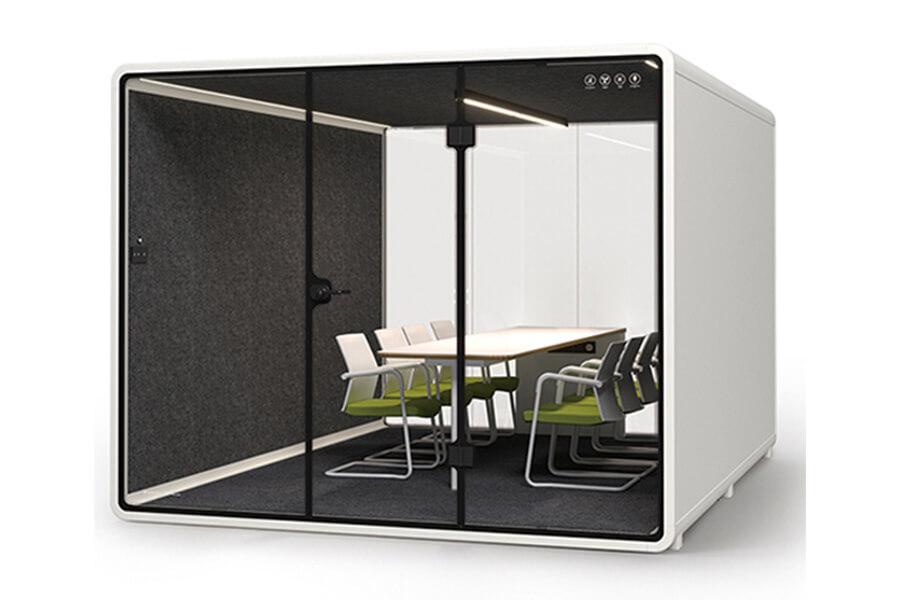
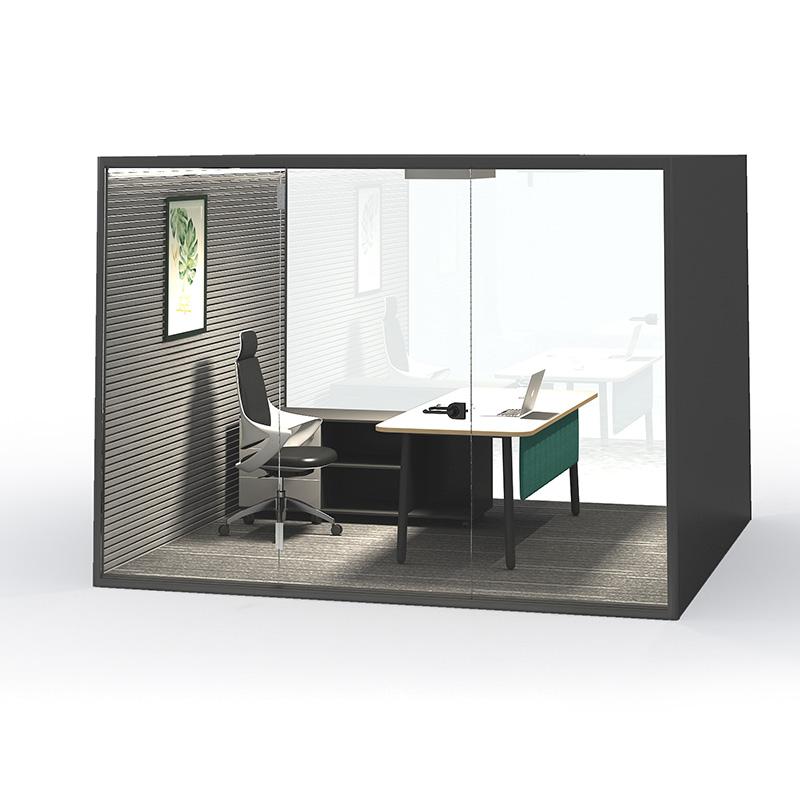
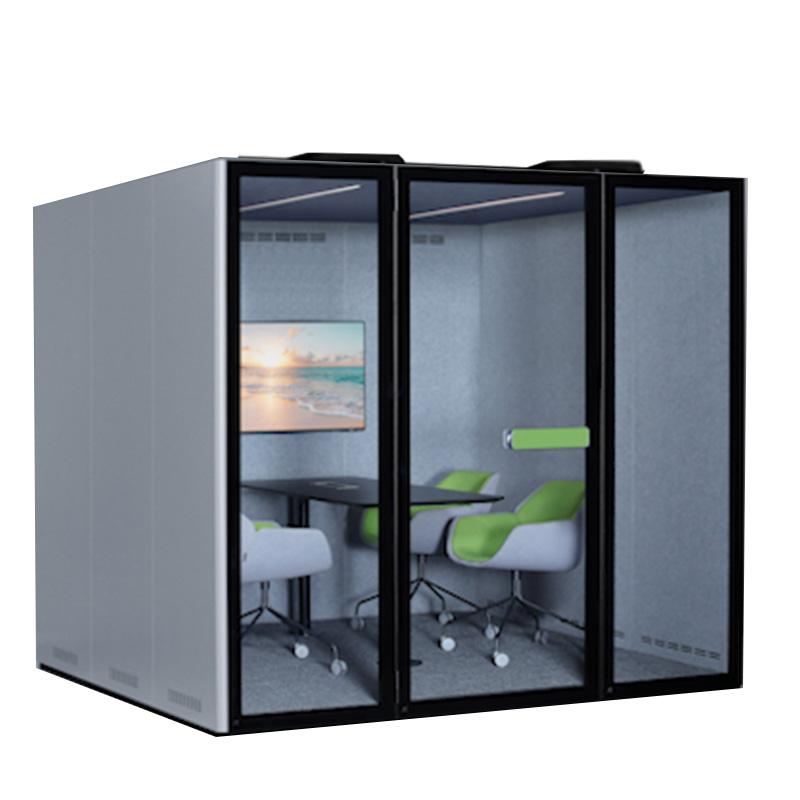
Use the same product vocabulary across bids. Buyers reviewing meeting pod configurations should compare the usable arrangement and responsibility boundary, not assume that similar marketing names describe identical contents. Ask for a component or scope schedule that can be read beside the quotation. A photograph helps with orientation, but it is not a substitute for a written inclusion.
A pod reaches the workplace through a real loading point, corridor, lift, doorway, floor route, and installation area. Confirm the delivery state and the largest handling unit before deciding whether a route is suitable. Record opening sizes, turns, lift limits supplied by the building team, floor protection needs, working-hour restrictions, storage space, and the point where packaging can be removed. Do not infer these conditions from a finished product dimension alone.
The same discipline applies to services. Mark who provides the final power connection, data path, network equipment, conferencing devices, and any building-side approvals. A supplier can describe the pod connection it offers, while the buyer remains responsible for the host building. The quotation should state the handoff point between those scopes and the information each party needs before installation.
Access and services are not miscellaneous notes. They can change labor, sequence, attendance, and the feasibility of a proposed location. A comparable quotation therefore carries a site-interface appendix with named owners and unresolved questions. Procurement can price an allowance if local information is incomplete, but it should label that amount as an allowance rather than a confirmed inclusion.
Enter each supplier response against the same rows and retain the supplier's wording in a source column. Convert a row to included only when the quotation or an attached schedule supports that reading. Use separate states for optional, excluded, buyer work, allowance, and clarification required. A blank cell is not a saving; it is a question that can affect the award decision.
The register below is deliberately about scope, not invented price benchmarks. Add the quoted amount in the project currency, then reference the exact document or clarification that defines it. Where offers use different capacities or furniture, normalize the configuration first and show the adjustment separately. Finance can then see the commercial effect without losing the reason for it.
Keep revisions visible. When a clarification changes one row, date the change and identify the superseded response instead of overwriting the earlier basis. This matters when an option moves into the base scope, a route survey removes an allowance, or a local contractor accepts a task. The review team can then explain why the comparable total changed without reconstructing the history from email. It also prevents a late quotation version from being compared with an earlier configuration from another supplier.
| Comparison row | Supplier response to capture | Buyer-side check | Commercial treatment |
|---|---|---|---|
| Usable meeting arrangement | Selected capacity, furniture, glazing, controls, and service points | Matches the issued demand brief and layout | Base scope or priced alternative |
| Delivery and access | Delivery state, unloading, route, protection, storage, and working hours | Route information is current and assigned | Included, allowance, or buyer work |
| Assembly and connections | Assembly boundary, final power or data handoff, testing, and attendance | No gap or double count between trades | Included, excluded, or clarification |
| Handover evidence | Documents, operating guidance, defect route, and acceptance attendance | Evidence can be witnessed before release | Included deliverable or option |
| Later support | Warranty route, service contact, parts process, and relocation boundary | Ownership is workable for the site | Operating responsibility |

A quotation can contain a confident performance phrase while attaching important conditions in another document. Link each statement that matters to the project to its source, test method, configuration, and limitation. The buyer does not need to convert every claim into a universal promise. It needs enough evidence to decide whether the offered configuration is appropriate for the intended location and meeting pattern.
Read the evidence before assigning commercial weight. Confirm that the offered configuration, selected options, and relevant test or observation context are identifiable. A document can be useful without answering every site question, but the gap should remain visible. If the buyer requires a handover observation, name the method and acceptance owner rather than treating brochure language as completed proof.
Exclusions deserve the same attention. Look for responsibilities hidden in general notes, validity periods, access assumptions, packaging terms, attendance limits, and language that makes the offer dependent on information not yet supplied. Ask suppliers to confirm the effect of each unresolved condition. If a response changes price or scope, update both the register and the comparison date so the audit trail remains coherent.
Avoid turning risk into a vague percentage added to every bid. Name the actual uncertainty: route not surveyed, local connection unpriced, option not selected, evidence pending, or service responsibility unclear. The project team can then close the issue, hold a specific allowance, or reject an interpretation. That is more useful than pretending that a generic contingency makes unlike offers comparable.
Check the relationship between payment milestones and evidence. A deposit, dispatch payment, delivery payment, or final balance may be commercially normal for a particular contract, but the buyer should know which approved configuration, inspection, document, or handover event supports each release. This article does not prescribe terms. It asks the project to connect its negotiated terms to events it can recognize, so commercial control follows the same scope boundary as the technical review.
Do not wait for one final meeting to discover that technical and commercial assumptions differ. Use a sequence of small releases: demand brief accepted, configuration aligned, site interfaces assigned, normalized price reviewed, evidence gaps closed, and contract documents reconciled. Each gate should identify the owner, the document that supports the decision, and any condition that travels to the next stage.
Before award, read the purchase order scope against the final normalization register. Confirm that accepted clarifications are part of the contract set and that superseded offers cannot be mistaken for the current basis. Check tax, currency, validity, payment milestones, and change-control language using the buyer's normal commercial process; these items should not be inferred from product content.
The result is not a claim that one supplier is universally cheaper. It is a comparison in which the buyer can explain what each amount buys, which work remains outside it, and what evidence will be required before handover. That explanation is the practical meaning of a comparable office meeting pod price.

Not by price alone. First align the meeting arrangement, included components, project services, exclusions, and later responsibilities. A lower figure may be appropriate, but the buyer should be able to show that it represents the same required outcome or a consciously accepted trade-off.
Compare dimensioned usable layouts and the actual meeting behavior rather than the label. Check seats, table area, circulation, device placement, display sightlines, door movement, and the demanding normal scenario. Record any configuration adjustment as a separate normalization line.
They should be visible in the same total responsibility view even when contracted separately. Mark who packs, transports, unloads, protects the route, assembles, connects, tests, removes waste, and attends handover. This exposes gaps and prevents duplicate allowances.

Reconcile the final configuration, site information, exclusions, accepted clarifications, delivery state, connection boundaries, handover evidence, and current commercial document. The purchase order should point to the same approved scope that procurement used for the comparison.
An office meeting pod price becomes comparable when every supplier is answering the same operating brief and every project interface has an owner. The buyer should be able to move from the total back to the configuration, delivery state, site work, evidence, and support boundary without guessing.
Choose the offer whose complete responsibility is acceptable and documented, not the offer that wins only after blank cells are treated as free. Keep the normalization register with the order so later changes can be traced to an agreed baseline.

 Tel: +8613538031763
 Email: info@sopworkpod.com
 MP/WhatsApp: +8613538031763
 Manufacturer Address:Liucheng Lujiang District,Meixi Road,Nanan City,Fujian,China