Author:SOP Work Pods Manufacturer TIME:2026-07-31
Coworking Pod Operations Ledger
For a coworking operator, office pods for rent are not only physical assets. They become bookable services with a promise about availability, privacy, comfort, technology, cleanliness, and support. A pod that performs well in a private corporate office can produce complaints in a coworking site if booking rules are unclear, turnover is too short, or members expect every enclosure to support the same call type.
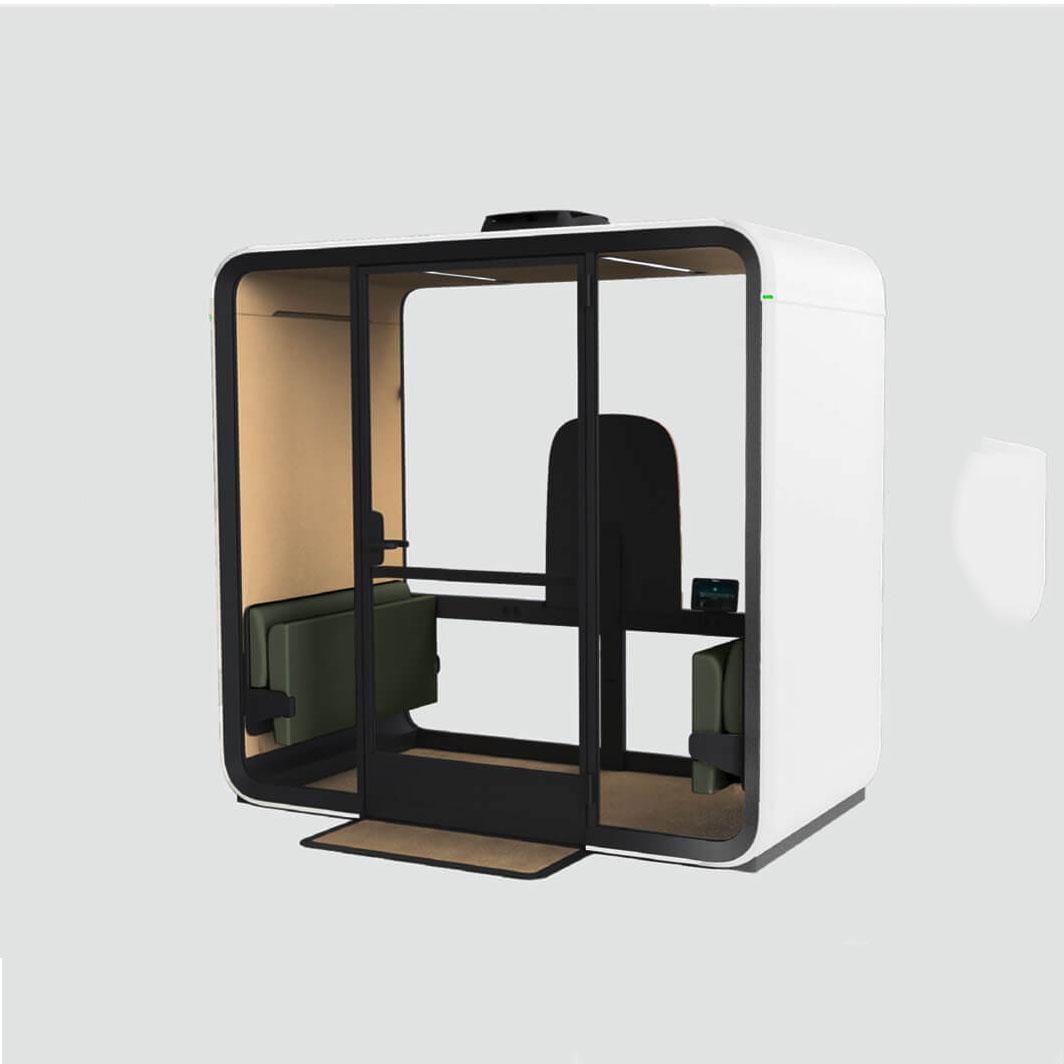
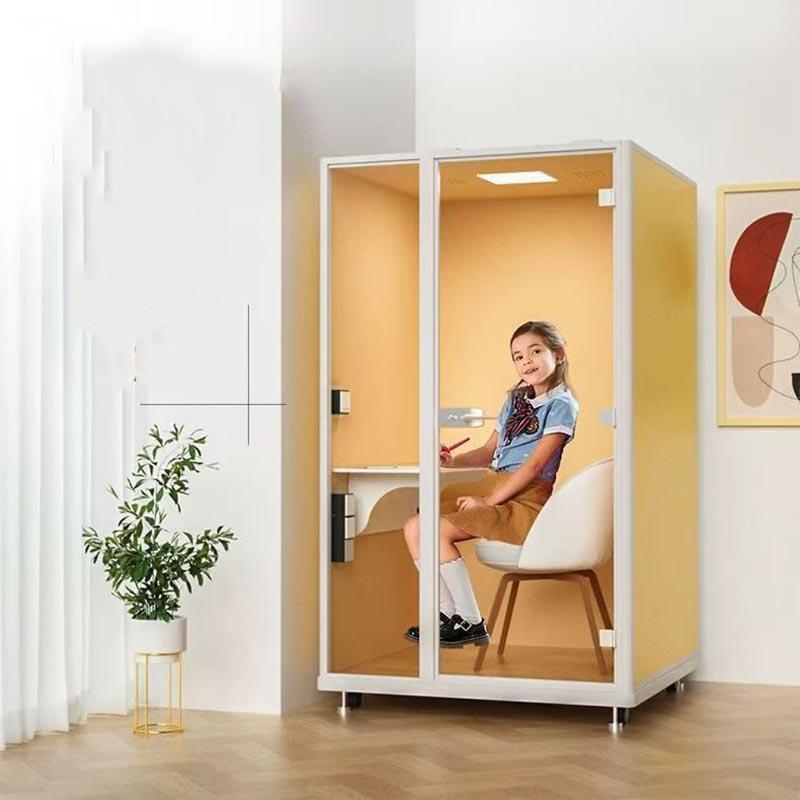
The business case should connect member demand to full operating cost and service evidence. That includes installation, booking software, cleaning, energy, maintenance, downtime, relocation, and staff time. The onsite video displayed above shows a customizable office-pod example selected from the site's existing library. Operators should use a configured sample and pilot data before purchasing at scale.
Define whether pod access is included in membership, sold by time, bundled into meeting-room credits, reserved for certain plans, or offered to day-pass users. State which equipment is included, how support is requested, whether external guests may join, and what happens when a previous booking overruns. The price is only understandable when the service boundary is visible.
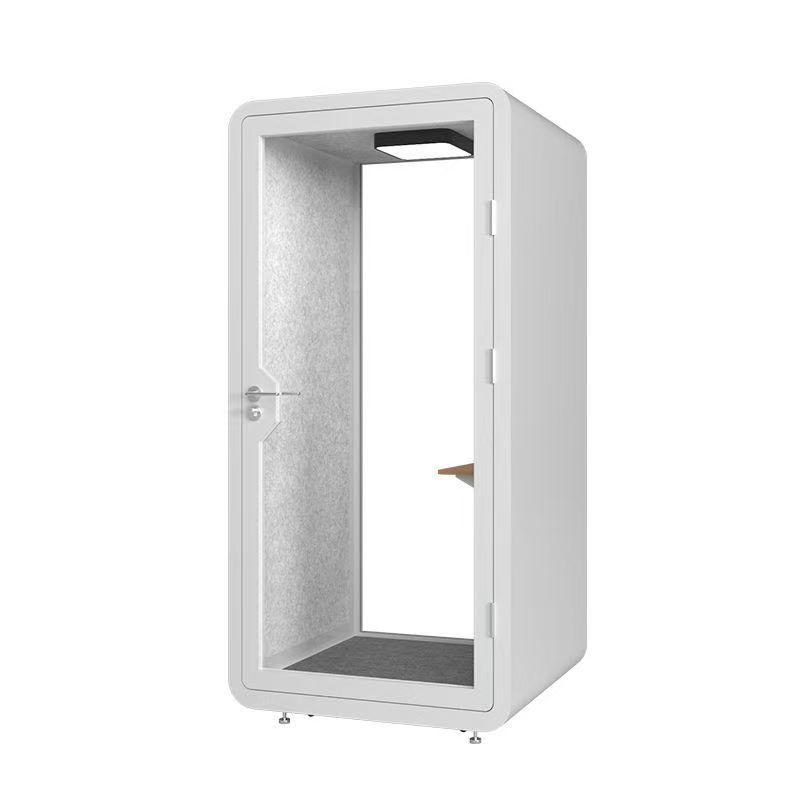
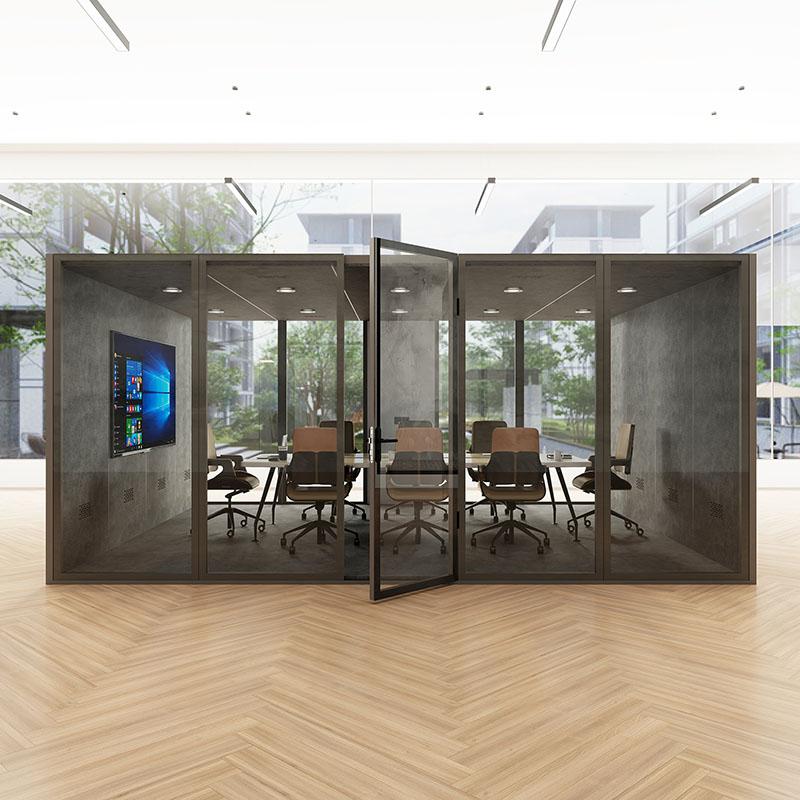
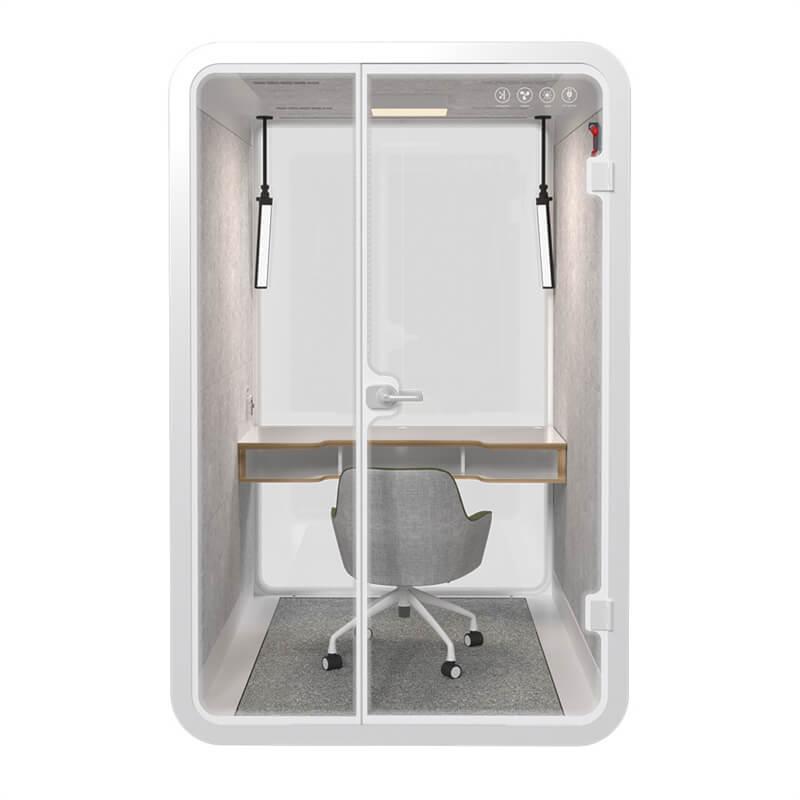
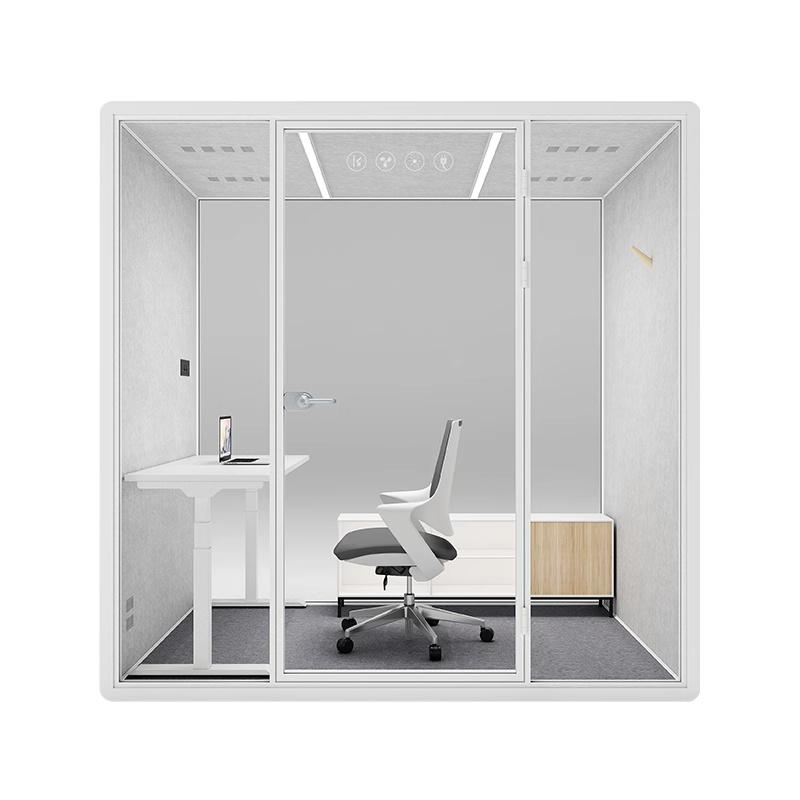
Separate a one-person call booth, two-person conversation booth, and larger meeting pod in the booking interface. Each should display usable capacity, equipment, accessibility information, typical use, and any duration limit. Do not let a generic “pod” label cause members to reserve a focus booth for a four-person pitch. Clear service names reduce both misuse and staff intervention.
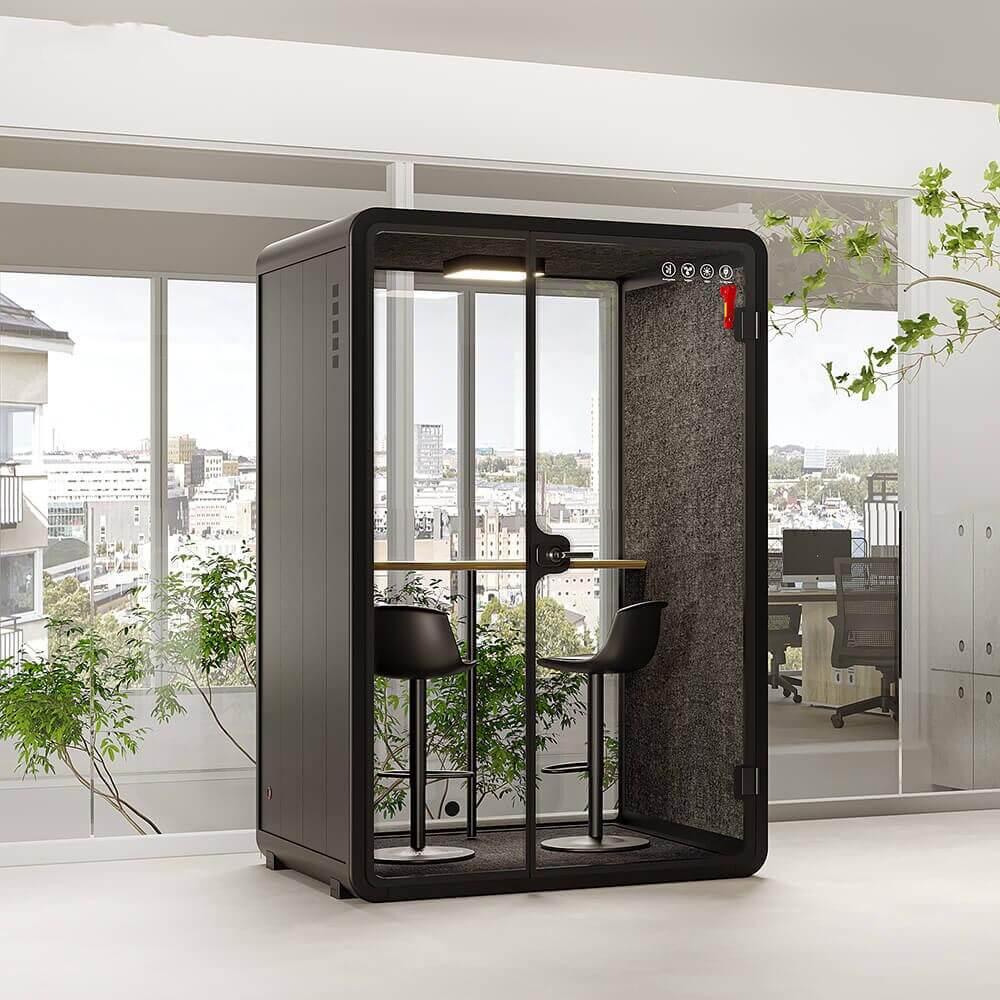
Segment demand by task rather than member company size. Useful categories include brief private calls, scheduled video meetings, interviews, coaching, confidential administration, individual focus, and two-person discussion. Measure when each category occurs and how long it lasts. Peak simultaneous call demand is more important than daily averages because rejected bookings happen in clusters.
Observe what members do when a pod is unavailable. They may leave the site, take calls in circulation areas, occupy a larger room, or postpone work. These substitutions have different business costs. A pilot should record abandoned searches, waiting time, room substitution, and member comments. The result helps select the mix of sizes instead of buying identical units because they are simple to manage.
A charge can control scarce capacity, but it can also push sensitive calls into open areas. An unlimited inclusive model may improve convenience but encourage long single-person bookings. Test pricing against the behavior the operator wants: short reliable private access, fair availability, and appropriate use of larger meeting rooms. Publish the rule in plain language and apply it consistently.
Calculate a contribution view using occupied minutes, realistic utilization, membership value, support labor, cleaning, electricity, maintenance, booking fees, downtime, and depreciation or lease cost. Do not assume every unbooked minute is lost revenue; some spare capacity is necessary for peak access and recovery. Compare scenarios rather than presenting one precise forecast as certainty.
Measure booked time, actual occupied time where permitted, no-shows, early releases, overruns, failed access, abandoned searches, maintenance closure, and recovery blocks. Review by hour and day. A pod showing high booked utilization may still be inefficient if members reserve it speculatively and do not arrive. Use reminders and release rules before assuming more capacity is required.
Queue data should be connected to pod type. If individual call booths are full while larger pods remain empty, change booking guidance or inventory rather than reporting one combined utilization rate. Watch for recurring single users in team pods and long focus bookings in call booths. The office pod collection can be compared against these task-specific gaps while the established article title remains unchanged.
Review demand by member segment and hour, not only by monthly total. Day-pass users, resident teams, interviewers, and international callers may create different peaks. A time-stamped waiting list, abandoned booking record, and reason code show whether the operator needs another asset, a policy change, or clearer wayfinding.
Compare the revised policy for two normal operating weeks before committing capital, so avoidable calendar friction is not mistaken for a shortage of pods.
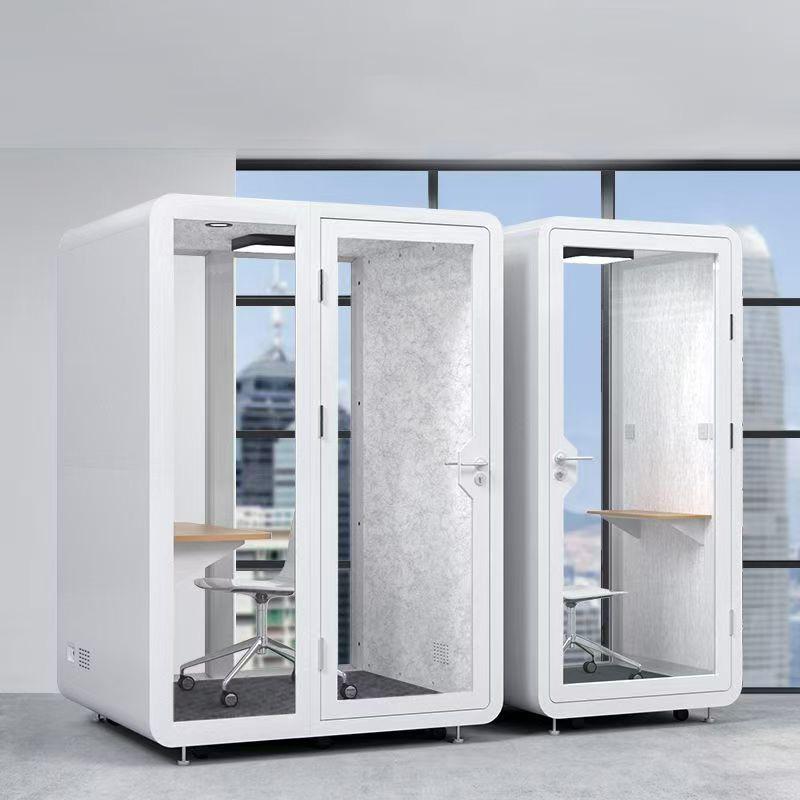
Use accurate language. A pod can reduce distraction and speech intelligibility, but the operator should not promise absolute soundproofing unless a specific claim is supported for the installed conditions. Test normal conversation from nearby desks and circulation paths. Also review views through glazing, screen orientation, camera background, door closure, and gaps created by user cables.
Tell members how to handle highly sensitive conversations. The site may identify particular rooms, headsets, or booking settings, while some matters require the member's own security controls. Staff should know how to respond to a privacy concern without discussing the member's content. Record location and condition of the issue for facilities investigation.
Set a reset interval from actual occupancy, ventilation recovery, member flow, and cleaning needs. High-frequency phone booths may need quick surface checks throughout the day and a deeper scheduled clean. Use products approved for glazing, seals, upholstery, controls, and finishes. Strong fragrance can make a small enclosure unusable even when surfaces are clean.
Provide visible but discreet user responsibilities: remove belongings, end the booking, sign out of devices, report faults, and leave the door in the recommended position. Staff should check abandoned notes, spills, damage, blocked air paths, and missing adapters. Define a lost-property and confidential-paper process so cleaning does not create a data incident.
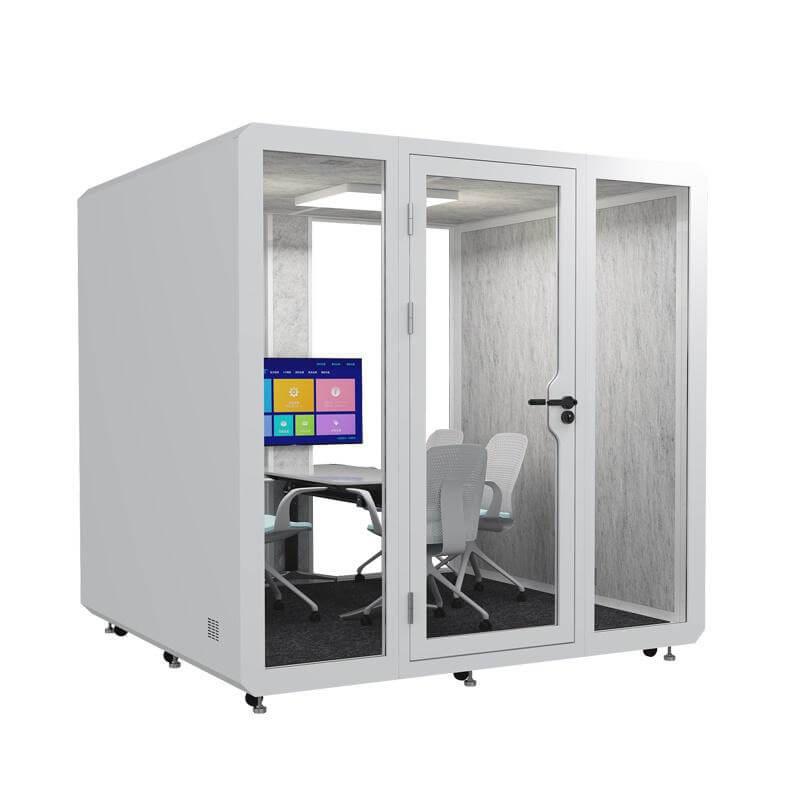
Create a fault classification. Safety, electrical, door, glazing, severe ventilation, or privacy faults may require immediate closure. A missing cable can be resolved with an approved spare. A light or fan issue needs a defined diagnostic route and parts source. The booking system should remove unavailable inventory quickly and offer affected members a suitable alternative.
Keep model, serial, finish, component, warranty, supplier, and service information in the asset register. Hold only the spare parts that can be stored and replaced safely by authorized staff. Track mean closure time and repeat faults by unit. A cheap component that repeatedly closes a popular booth has a larger service cost than its purchase price suggests.
Movability should be documented as a process: disassembly, trained labor, protection, internal transport, freight, reassembly, connections, testing, and booking downtime. Keep assembly instructions and the approved configuration. Before moving, survey the new access route, floor, power, data, surrounding work, and emergency circulation. Repeat privacy and comfort tests in the new position.
If the operator leases or finances the pod, confirm ownership, alteration, maintenance, insurance, return condition, and removal obligations. At site exit, include packaging or protection, access bookings, utility disconnection, waste, floor repair, and records transfer. Residual or resale value should be treated as a scenario supported by condition and market evidence, not a guaranteed return.

| Dashboard measure | What it reveals | Decision it supports | Misreading to avoid |
|---|---|---|---|
| Peak rejected demand by pod type | Capacity unavailable when members need it | Inventory mix or booking rule | Using daily average demand |
| No-show and early-release rate | Reserved time not actually needed | Reminder and release policy | Calling all booked time productive |
| Refund or complaint reason | Service failures behind revenue data | Technical or operating correction | Grouping all complaints together |
| Reset and recovery duration | True interval between reliable bookings | Calendar buffer and staffing | Maximizing back-to-back slots |
| Fault closure hours | Business impact of maintenance | Spares and service agreement | Reviewing repair cost alone |
| Large-room substitution | Wrong space used when booths are unavailable | Portfolio balance | Looking only at pod revenue |
Should pod time be included in coworking membership?
It can be included, charged, or credit-based. Test how each model affects fair access, sensitive-call behavior, room substitution, and administration. Publish a simple rule and review data after launch.
How many pods does a coworking site need?
Measure peak simultaneous demand by task and pod size, no-shows, abandoned searches, and use of larger rooms. Pilot the mix before applying a fixed headcount ratio.
Can members use pods for confidential calls?
Describe installed privacy honestly and provide site guidance. Members remain responsible for their own devices, accounts, call content, and any higher security requirements.
What is a reasonable maximum booking?
It depends on pod type, comfort, demand, membership promise, and alternatives. Use occupied trials and queue data, then allow staff to handle justified exceptions consistently.
How often should pods be inspected?
Combine quick high-frequency checks with scheduled maintenance based on use and supplier guidance. Inspect immediately after a safety, door, electrical, ventilation, or privacy complaint.
Coworking operators should evaluate office pods for rent as managed services. Define the offer, segment member demand, choose a pricing rule that supports appropriate use, measure queues and substitutions, state privacy accurately, schedule turnover, and plan downtime and relocation. A pod creates value when members can reserve the right type, enter on time, complete their work comfortably, and trust the reset. That operating reliability is more important than maximizing every available minute on the calendar.

 Tel: +8613538031763
 Email: info@sopworkpod.com
 MP/WhatsApp: +8613538031763
 Manufacturer Address:Liucheng Lujiang District,Meixi Road,Nanan City,Fujian,China