Need Help?
Please leave your contact information to get our latest catalog
Get In Touch Now >


Author:SOP Work Pods Manufacturer TIME:2026-06-04
An office pod specification is a structured description of the pod's dimensions, occupancy, acoustic design, ventilation, lighting, electrical configuration, materials, furniture, installation method, and service requirements. It is not just a product sheet. For a buyer, the specification is the bridge between a workplace problem and a buildable product. If the specification is incomplete, the quote may look simple but hide important risks in comfort, installation, maintenance, and final cost.
Reading office pod specifications before requesting a quote helps facility managers, procurement teams, designers, architects, and workplace planners compare products with less guesswork. A professional specification should explain what the pod is designed to do, where it can be placed, how privacy is created, how fresh air and power are handled, and what the buyer must prepare before delivery.
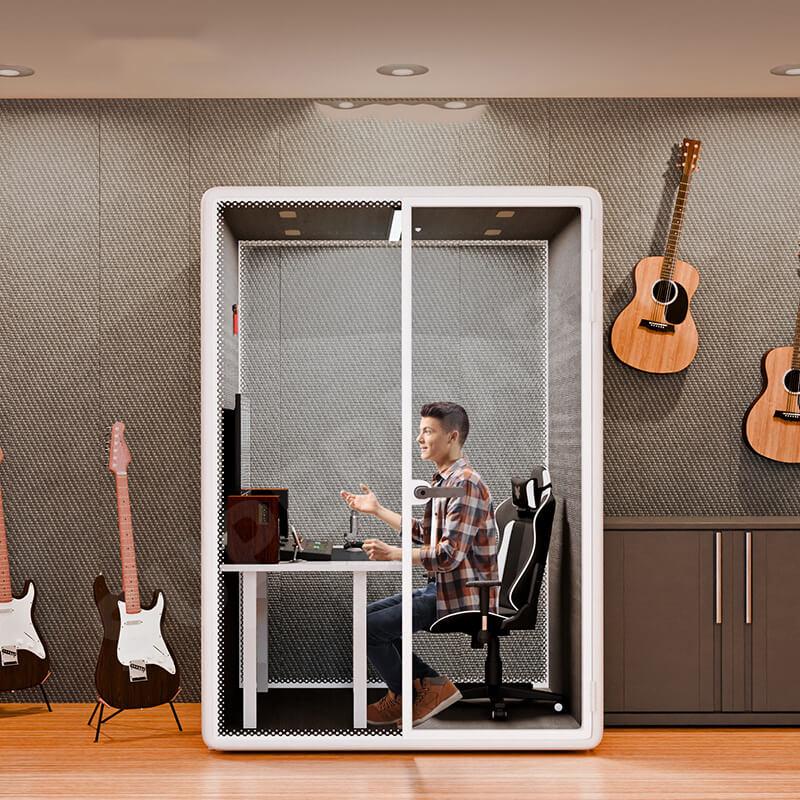
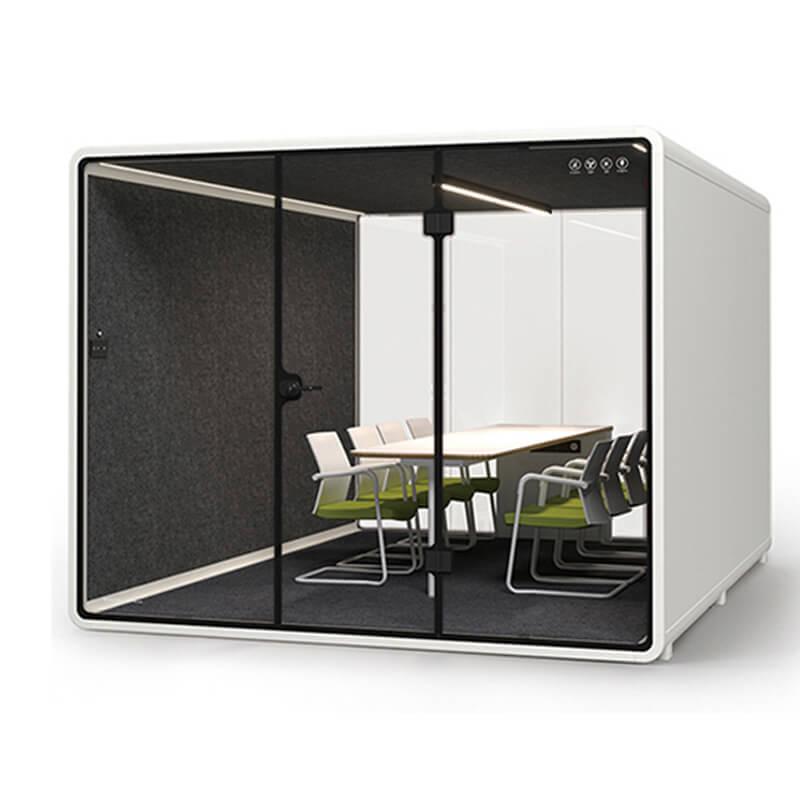
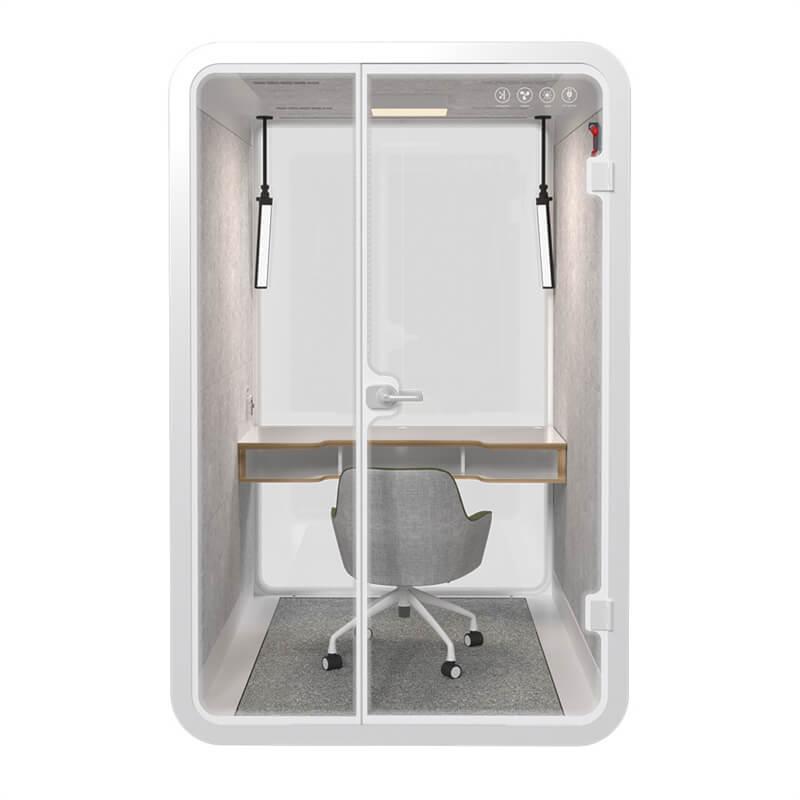
Office pod specifications can be classified into five groups: spatial specifications, acoustic specifications, comfort specifications, functional specifications, and project specifications. This classification helps buyers compare documents that may otherwise look very different. Some suppliers emphasize appearance, while others provide more technical information. A classification table makes missing information easier to notice.
| Specification group | What it includes | Why buyers should check it |
|---|---|---|
| Spatial specifications | External size, internal size, footprint, door swing, occupancy | Confirms whether the pod fits the floor plan and user behavior |
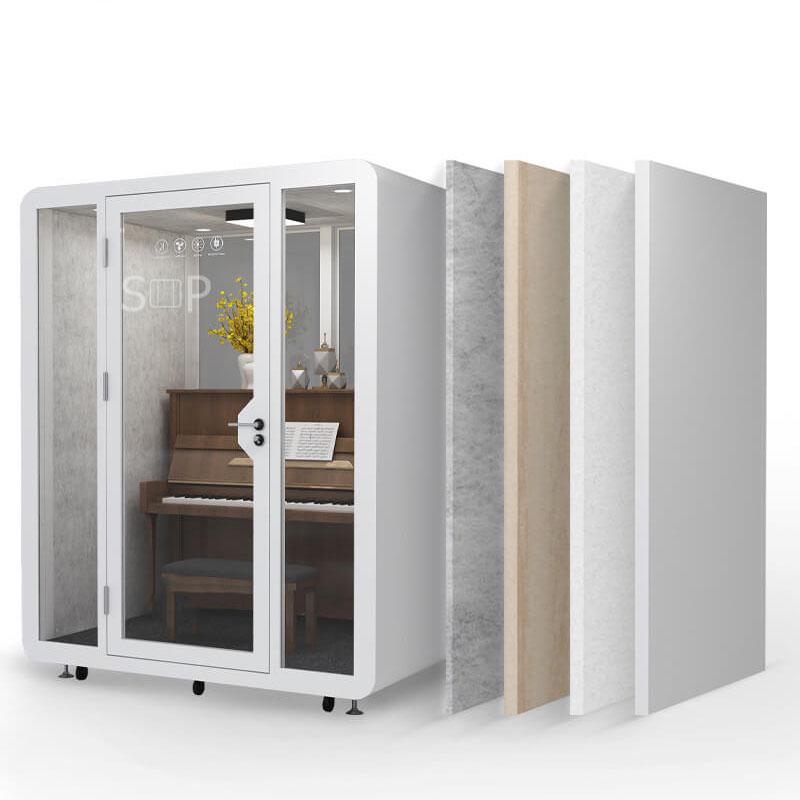
| Acoustic specifications | Panel structure, glass, door seal, speech privacy, sound absorption | Shows how the pod reduces distraction and protects conversations |
| Comfort specifications | Ventilation, fan noise, lighting, seating, temperature comfort | Determines whether people will use the pod repeatedly |
| Functional specifications | Power outlets, USB ports, cable route, table, screen or monitor support | Connects the pod to real calls, laptops, hybrid meetings, and daily work |
| Project specifications | Packing, delivery path, installation time, spare parts, warranty | Reduces project delays and long-term service risk |
This classification is useful because a weak specification may simply omit important details. Buyers should treat missing information, such as door swing, ventilation openings, plug type, or local voltage, as a question to resolve before requesting a final quote.
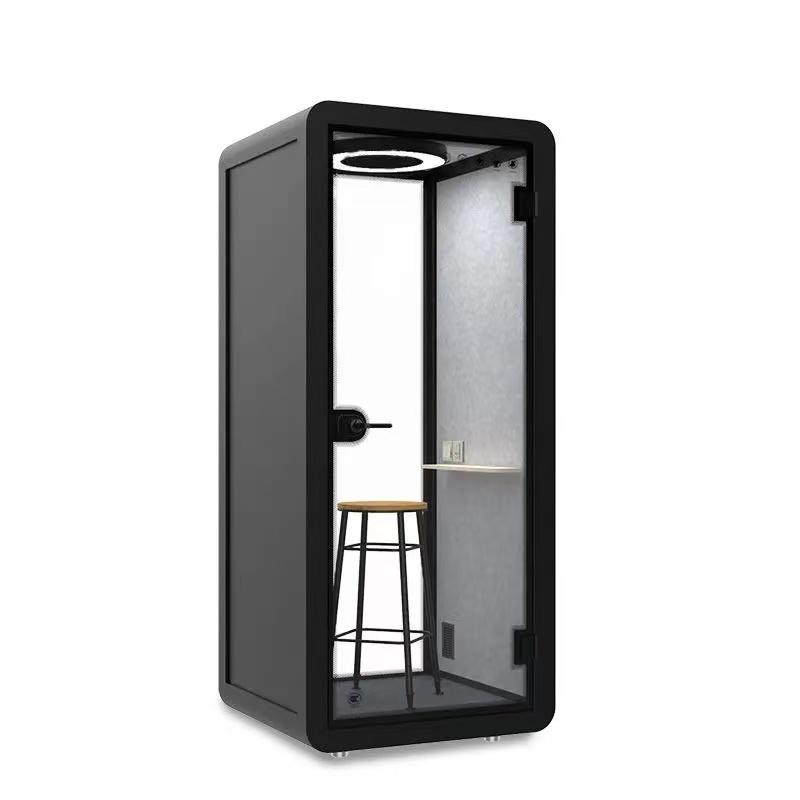
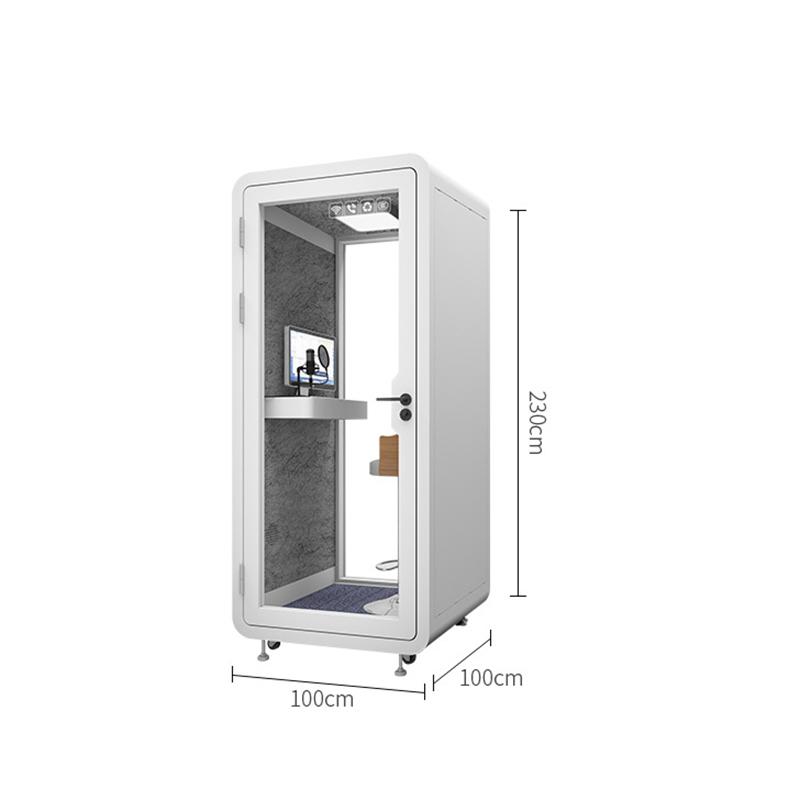
Size data should be read in two layers: external size and internal usable space. External size tells the buyer whether the pod can fit on the floor. Internal usable space tells the buyer whether people can work comfortably inside. A compact phone booth may fit a narrow office area, but if the internal shelf, stool, or standing posture is not suitable for the user's call length, the product may still fail in daily use.
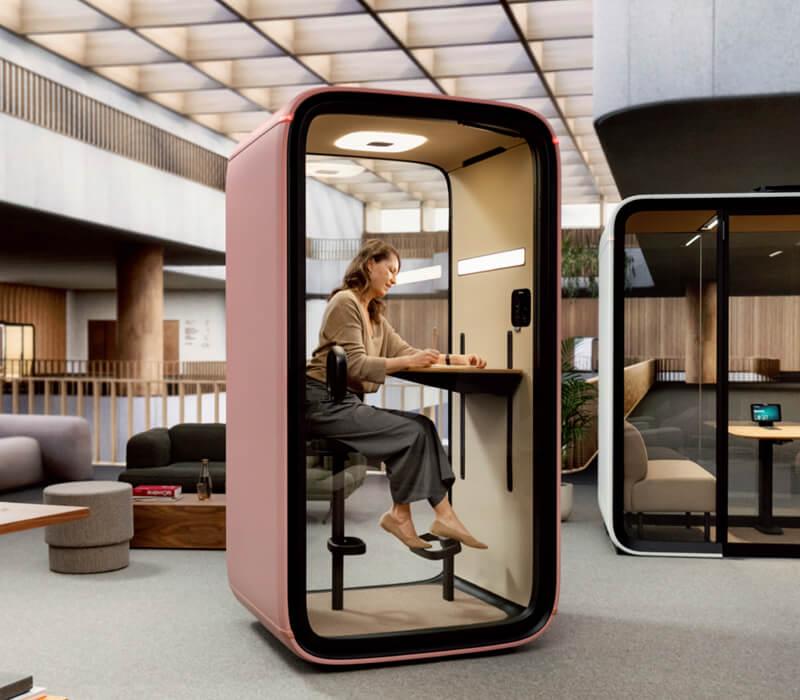
Occupancy should be treated as a functional recommendation, not a decorative label. A four-person meeting pod should allow four users to sit with reasonable knee space, table access, ventilation comfort, and video-call usability. If the pod technically fits four seats but feels crowded during a one-hour hybrid meeting, the specification is not aligned with the buyer's use case. Buyers should ask whether the stated occupancy is suitable for short meetings, long meetings, or occasional use only.
Layout data should include door direction, table placement, cable route, and the position of ventilation openings. A door that opens into a busy corridor may create a safety issue. A table that blocks the cable route may force users to leave the door open. These details are not minor; they affect whether the pod can be used as intended.
Acoustic specifications should be read as evidence, not as adjectives. Terms like "quiet," "soundproof," or "acoustic" do not tell the buyer how much speech privacy the pod actually provides. A useful specification should describe the panel structure, glass type, door seal, and the acoustic test method used to measure performance.
Buyers should ask three questions about acoustic data. First, what was measured: sound absorption, sound insulation, or speech privacy? These are different properties. Second, under what conditions was the measurement taken: with the door closed, with the ventilation fan on, or in a specific room environment? Third, what does the number mean for a real conversation: can a colleague standing outside hear a normal phone call, a raised voice, or only loud laughter?
Acoustic evidence should also state the boundary of the claim. A pod may reduce sound transmission through its walls but still leak sound through the ventilation grille, the door gap, or the glass panel. Buyers should ask whether the acoustic rating applies to the complete assembled pod or only to a single panel tested in a laboratory.
Ventilation is a comfort specification that is often understated. A pod without adequate fresh air becomes stuffy during an ordinary occupied session. A pod with a noisy fan creates a different problem: the user may turn the fan off and lose ventilation entirely. Buyers should check the airflow rate, the fan noise level, and whether the ventilation system runs continuously or only when the light is on.
Lighting should be reviewed for task suitability, not just brightness. A video-call user needs even, shadow-free light on the face. A reading user needs focused light on the table. A pod with a single ceiling light may not serve both purposes. Buyers should ask whether the lighting is dimmable, whether it creates glare on the screen, and whether the color temperature suits the intended use.
Power specifications should include the number of outlets, their position, the plug type, the local voltage, and the cable route. A pod with two outlets at floor level may be useless for a user who needs to charge a laptop and a phone at table height. Buyers should also check whether the pod requires a dedicated electrical circuit or can be plugged into a standard wall socket.
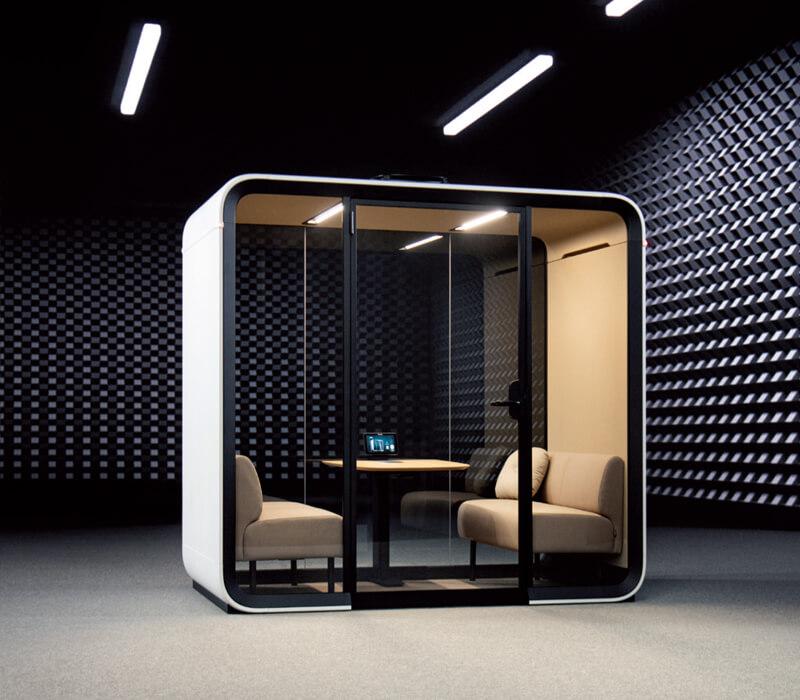
Comparing two office pod quotes requires a translation worksheet, not a price comparison. Two suppliers may use the same label, such as "ventilation," but mean different things. One may include a continuous fan with a filter; the other may include a passive vent that relies on the room's air conditioning. The price difference may reflect a real difference in daily comfort.
Buyers should build a specification translation worksheet before requesting a quote. The worksheet should list each printed term from the datasheet, the possible meanings the supplier may intend, the evidence required to confirm the meaning, the instruction to include in the quote request, and the acceptance check to perform at delivery.
| Printed term | Possible meanings | Required evidence | Quote instruction | Acceptance check |
|---|---|---|---|---|
| External size | Overall footprint including handles, or usable floor footprint | Dimensioned drawing with external and internal measurements | State which dimension applies to the floor plan | Measure the installed pod against the drawing |
| Occupancy | Seating capacity, or comfortable working capacity | Photo or drawing with seated users and knee space | State the intended meeting duration and user count | Test with the actual user group |
| Acoustic rating | Panel-only test, or complete pod test | Test report with test boundary and conditions | Ask whether the rating includes door and ventilation | Perform a speech privacy check on site |
| Ventilation | Passive vent, or powered fan with filter | Airflow rate and fan noise specification | State the expected occupancy and call duration | Check airflow and noise at the user's ear position |
| Power | One outlet, or multiple outlets with USB | Electrical diagram with outlet positions and plug type | State the devices the user will connect | Test all outlets at table height |
| Furniture | Stool included, or chair and table included | Furniture list with dimensions and material | State whether the pod is used for sitting or standing | Verify the furniture is installed and adjustable |
This worksheet converts a sales document into a measurable checklist. It also gives the buyer a clear basis for asking follow-up questions before the quote is finalized.
Every office pod specification has boundaries that the buyer must understand before approval. The first boundary is the installation condition. A pod may require a flat floor, a minimum ceiling height, or a specific clearance for the door swing. If the site does not meet these conditions, the pod may not perform as specified.
The second boundary is the interface with the building. The pod's ventilation may depend on the room's air conditioning. The pod's power may require a dedicated circuit. The pod's acoustic performance may be affected by the surrounding room's reverberation. Buyers should ask which building services the pod needs and which it provides internally.
The third boundary is the scope of supply. A quote may include the pod only, or the pod plus delivery, installation, and commissioning. Buyers should check whether the quote includes the electrical connection, the furniture, the cable management, and the final cleaning. A low quote may simply exclude more items.
The fourth boundary is the acceptance condition. Buyers should define what they will check at delivery: dimensions, door operation, ventilation airflow, lighting function, power outlets, and acoustic privacy. Without a written acceptance check, the buyer may accept a pod that does not match the specification.
A buyer decision framework should start with the use case, not the product. The buyer should define the user, the task, the duration, the location, and the expected frequency of use. A phone booth for short calls has different requirements than a focus pod for deep work or a meeting pod for hybrid collaboration.
The framework should then translate the use case into measurable requirements. For each requirement, the buyer should identify the specification item that will confirm it. For example, a requirement for "private phone calls" translates into a speech privacy specification. A requirement for "comfortable two-hour focus sessions" translates into ventilation, lighting, and seating specifications.
The framework should also include a site check. The buyer should measure the available floor space, the ceiling height, the door clearance, the power outlet location, and the air conditioning capacity. These measurements become the constraints for the specification.
Finally, the framework should include a quote comparison step. The buyer should use the specification translation worksheet to compare two or three quotes on the same items. The goal is not to find the cheapest quote but to find the quote that matches the use case with the fewest hidden assumptions.
A quote-ready specification schedule is the final deliverable of your reading process. It is a single document that combines your use case, your site measurements, your required evidence, and your acceptance checks. This schedule becomes the attachment to your quote request, so every supplier responds to the same baseline.
Start the schedule with the project context: the number of pods, the intended locations, the user profiles, and the expected usage patterns. Then list the non-negotiable specification items: external dimensions, internal usable dimensions, occupancy with duration, acoustic evidence with boundary, ventilation airflow and noise, lighting type and control, power outlets and voltage, furniture scope, and installation scope.
For each item, add a column for the supplier's response and a column for your acceptance check. This turns the schedule into a comparison tool. When the quotes arrive, you can transfer the supplier's stated values into the schedule and compare them side by side. The schedule also protects you at delivery: if the installed pod does not match the accepted values, you have a written reference for the discrepancy.
Buyers who prepare this schedule before requesting quotes often discover that their initial requirements were incomplete. The schedule forces clarity on items that are easy to overlook, such as door swing direction, cable entry point, or the position of the ventilation grille. This clarity reduces the number of follow-up emails and the risk of receiving a quote that does not match the actual site.
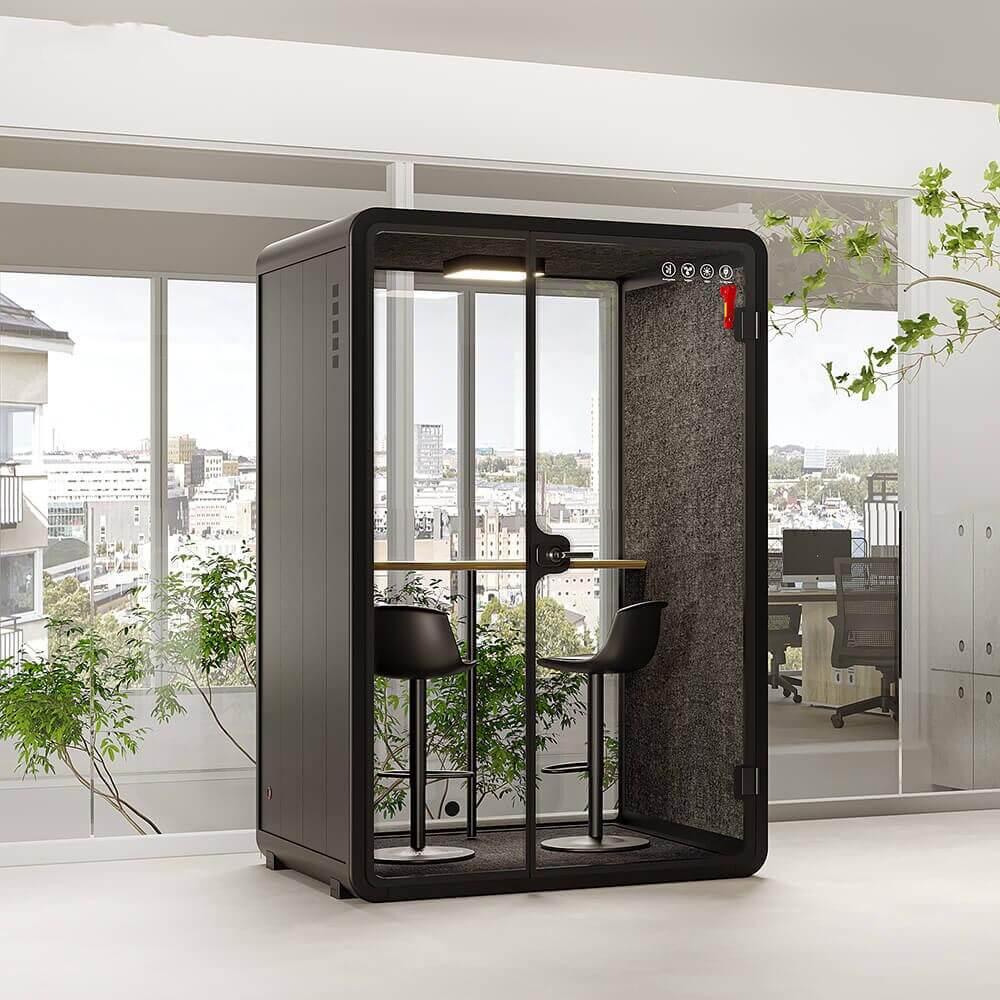
What is the most important specification to check before requesting a quote?
The most important specification is the one that matches your primary use case. For a phone booth, check the acoustic evidence and ventilation. For a meeting pod, check the occupancy comfort and power configuration. There is no single universal specification; the priority depends on how the pod will be used.
How can I tell if an acoustic rating is reliable?
Ask whether the rating was measured on the complete assembled pod or on a single panel. Ask for the test method, the test conditions, and whether the door and ventilation were included. A reliable rating should state its boundary clearly.
Should I compare external or internal dimensions?
Compare both. External dimensions tell you whether the pod fits the floor plan. Internal dimensions tell you whether users can work comfortably. A quote that lists only external dimensions is incomplete.
What should I do if a specification omits ventilation or power details?
Treat the omission as a question. Ask the supplier to provide the airflow rate, fan noise, outlet positions, plug type, and voltage. If the supplier cannot provide these details, the quote is not ready for comparison.
How do I know if the stated occupancy is realistic?
Ask for a photo or drawing with seated users and knee space. Test the pod with your actual user group before approving the final specification. A stated occupancy of four may mean four seats, not four comfortable users.
Reading an office pod specification means translating sales labels into a controlled requirement schedule. Separate external dimensions from usable interior space, identify the offered occupancy condition, confirm whether acoustic evidence covers the complete enclosure, and connect ventilation, lighting, power, furniture, delivery, and installation to the actual site.
Send the same schedule to every shortlisted supplier and require each field to be answered, qualified, or marked as an exclusion. Carry the accepted responses into the order and use them again at delivery. That process gives the quotation a clear boundary and gives the buyer an evidence-based way to resolve differences before they become site problems.

 Tel: +8613538031763
 Email: info@sopworkpod.com
 MP/WhatsApp: +8613538031763
 Manufacturer Address:Liucheng Lujiang District,Meixi Road,Nanan City,Fujian,China