Need Help?
Please leave your contact information to get our latest catalog
Get In Touch Now >


Author:SOP Work Pods Manufacturer TIME:2026-06-03
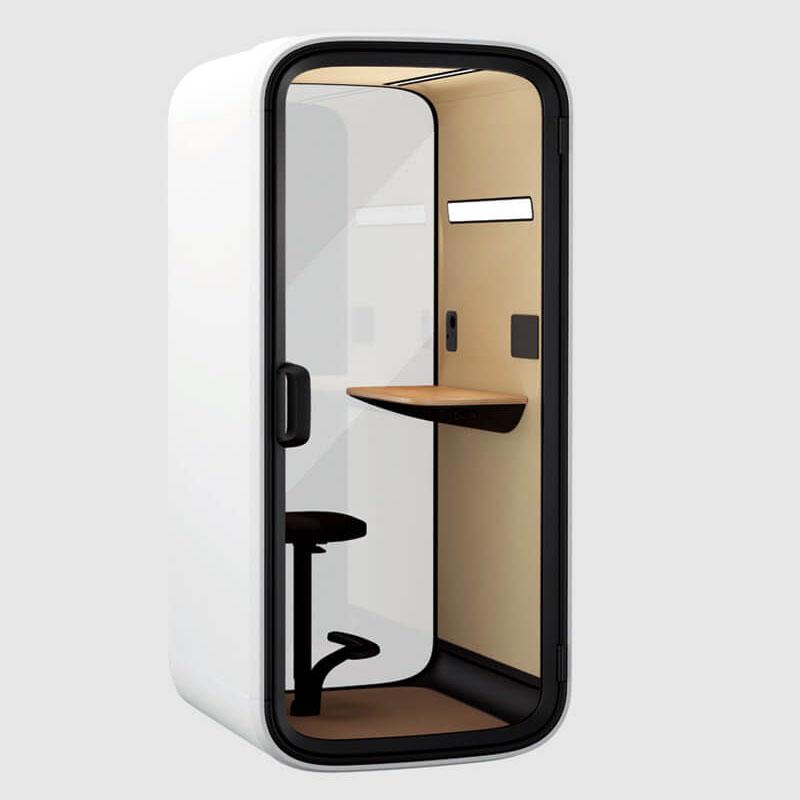
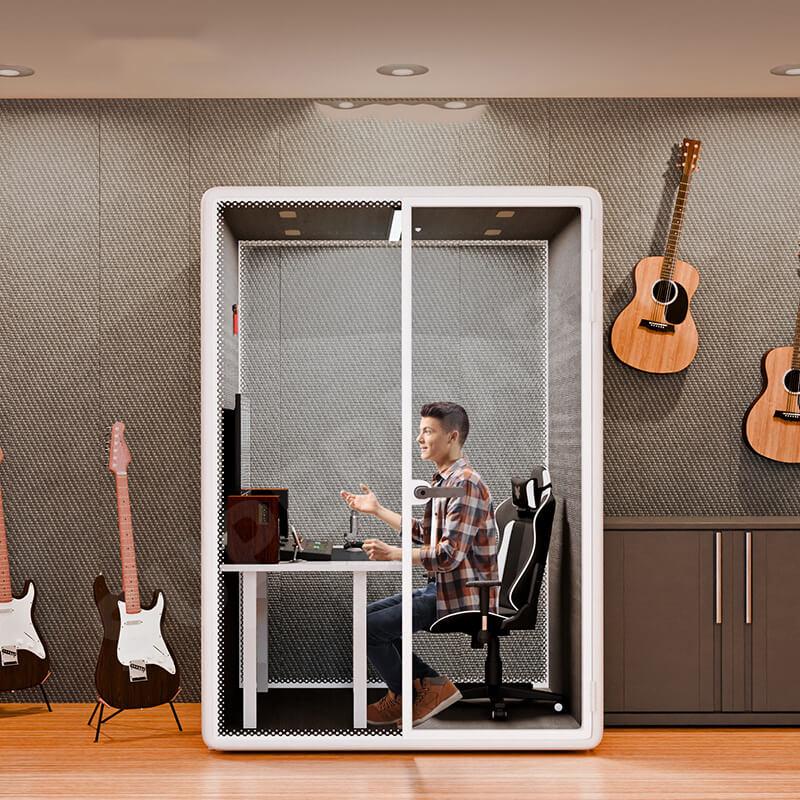
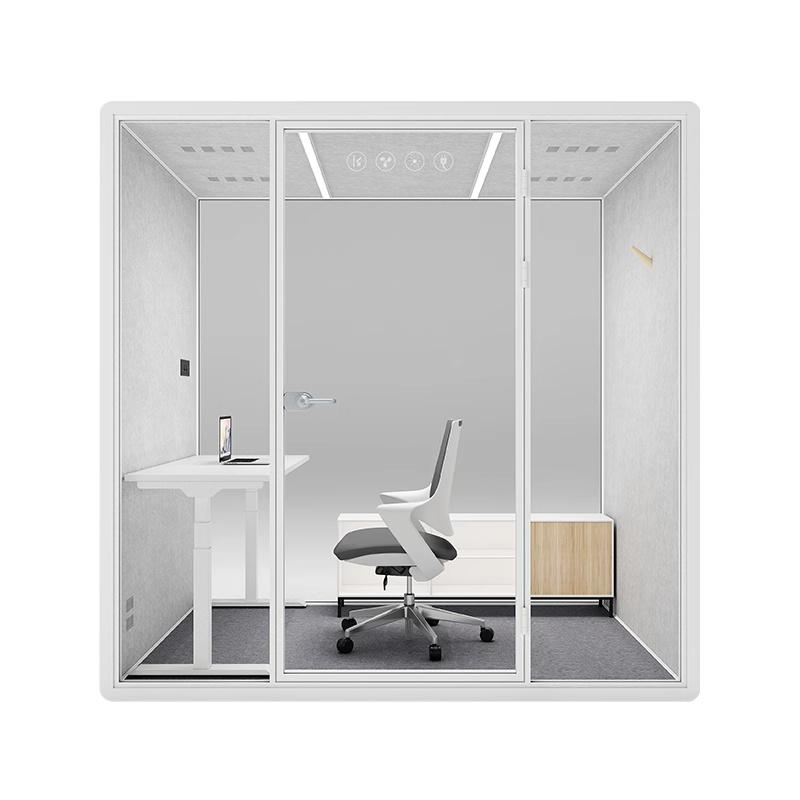
An office pod and a built meeting room can both create enclosed collaboration space, but they create value in different ways. A built room is integrated into the premises and can be tailored deeply. A pod is a manufactured product that can often be installed with less construction and may retain relocation value. The better option depends on the lease, schedule, service connections, acoustic target, capacity pattern, approvals, and expected life of the layout.
The comparison should be made at project level. Headline pod price should not be compared with a contractor's incomplete partition allowance, and a complete construction quotation should not be compared with a pod price that excludes freight, assembly, electrical connection, or site work. A fair appraisal normalizes both options and tests how each one responds when the office changes.
Start with the activity rather than the construction method. Define expected occupants, meeting length, video use, screen sharing, confidential speech, accessibility, booking demand, furniture, cleaning, and operating hours. Include a plan showing location, circulation, nearby desks, ceiling services, power, data, ventilation, fire systems, and landlord boundaries. Both the pod supplier and building contractor should respond to this same brief.
State the acceptance outcomes. Examples include understandable speech for remote participants, low speech intelligibility at nearby workstations, acceptable temperature during the longest session, reachable controls, clear circulation, and recovery between bookings. If one option is allowed to promise general performance while the other must meet measurable outcomes, the comparison is already biased.
Core assumption: A meeting space is valuable only when people can book it, enter it, complete the intended work, and return it to service without creating a new operational problem nearby.
For the built room, include design, surveys, permissions, landlord review, demolition, partitions, doors, glazing, ceiling changes, ventilation, electrical and data work, lighting, fire-system coordination, finishes, furniture, professional fees, contractor preliminaries, testing, cleaning, and reinstatement obligations. An early partition price may cover only a fraction of that scope.
For the pod, include configuration, options, packaging, freight, customs where relevant, unloading, internal movement, assembly, site electrical connection, floor preparation, local approvals, furniture, commissioning, waste, and warranty support. Confirm whether the offered pod is the tested configuration and whether changes to glass, door, ventilation, or panels affect the evidence.
Build a range rather than one precise number. Add a known-cost column, an allowance column, and an uncertainty owner. A mature comparison does not hide unknowns at zero. It records when a survey, sample, quotation clarification, or authority decision will replace the allowance.
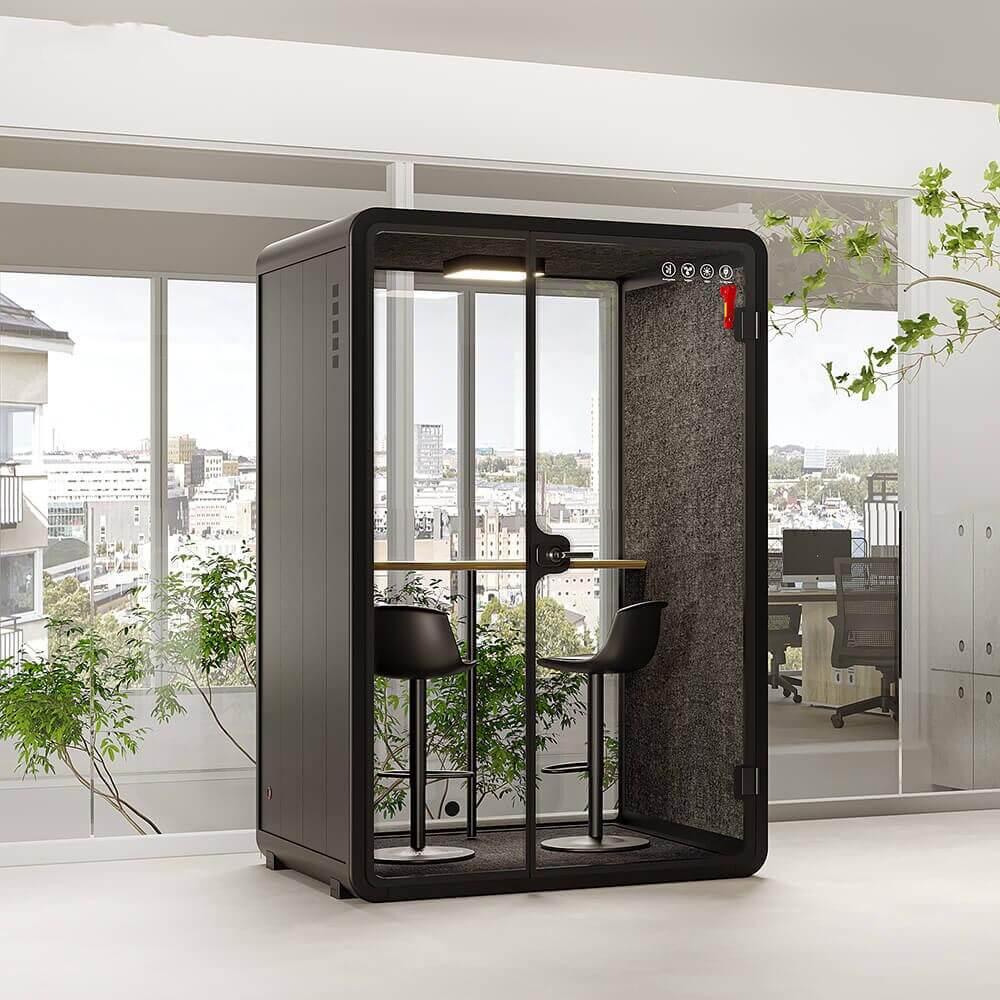
A built room can require design coordination, approvals, procurement, noisy work, dust control, temporary barriers, service shutdowns, inspections, and making good. The duration depends on site conditions and local processes, but the work often touches more parties than the partition itself suggests. If construction occurs in an occupied office, include out-of-hours premiums, decant space, lost desks, security controls, and the management time needed to coordinate the work.
A pod may shorten site activity because much of the work happens in a factory. It still needs production, shipping, access planning, assembly, and service checks. A missed elevator dimension or unprepared power point can erase the schedule advantage. Compare the critical path for both options, not simply factory assembly time versus contractor installation time.
Give disruption a financial value. Estimate affected workstations, hours of restricted access, temporary room costs, cleaning, staff moves, and the consequence of a delayed opening. These values may be approximate, but showing them prevents the project from treating business interruption as free.
A built room can use the building structure, ceiling, and mechanical services, but its performance depends on details at doors, glazing, ceilings, floors, penetrations, and ventilation paths. A pod arrives as a coordinated enclosure, yet its results depend on the complete offered build-up, fan operation, door seals, floor level, and final location. Neither option should receive an acoustic pass from a wall rating or a product adjective alone.
Review speech privacy and interior room quality separately. Remote meetings need manageable reverberation, suitable microphone distance, quiet ventilation, camera lighting, and a stable network. Sensitive conversations also require a location where stationary listeners do not wait beside the entrance. Run comparable speech and video-call tests for both options.
Ventilation responsibility is different. A built room is usually coordinated into the building design. A pod may contain its own fans while still sitting within the room's wider indoor-air environment. Ask a qualified project team to verify the applicable ventilation, fire, electrical, accessibility, and egress conditions for the chosen installation. Product mobility does not remove site obligations.
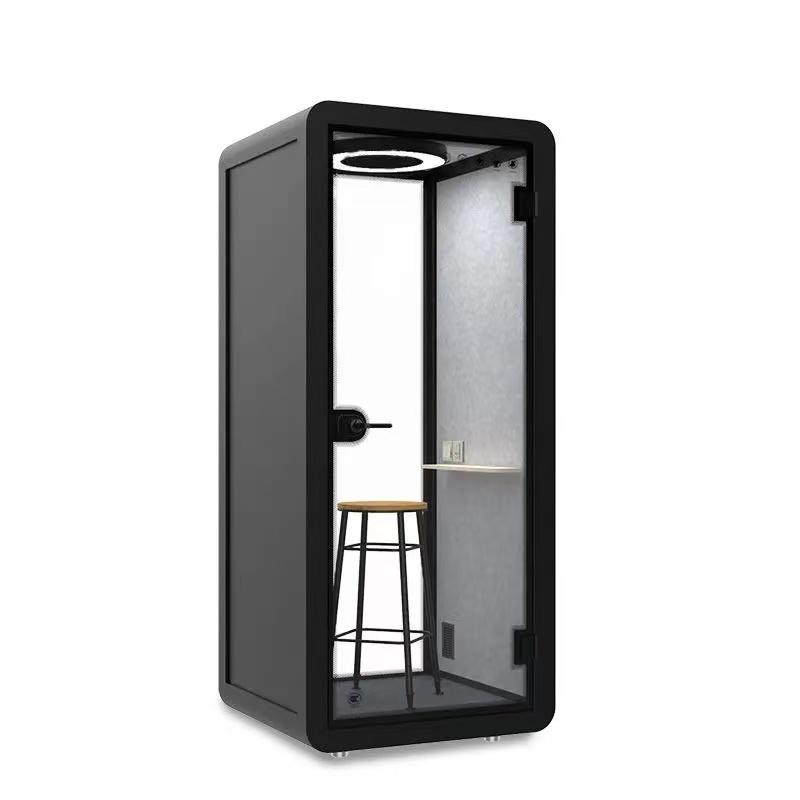
A four-person room is not automatically more valuable than two single-person booths. Examine booking data or conduct a two-week manual count. Record group size, meeting duration, privacy level, video requirement, denied bookings, and time of day. Many offices have frequent one-person video calls and occasional multi-person meetings; others need project rooms that remain occupied for hours.
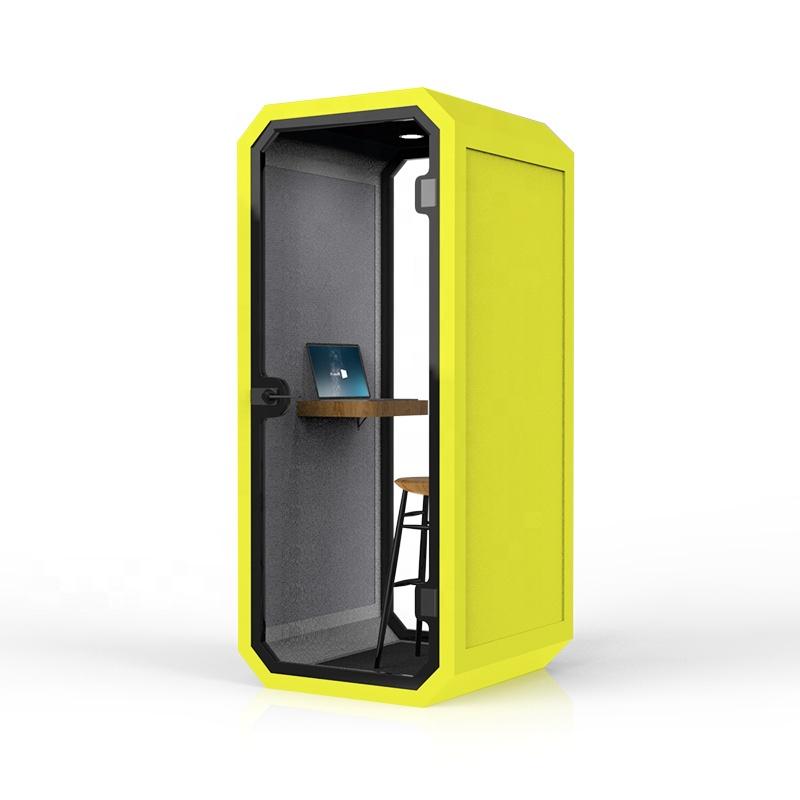
Test combinations. One meeting pod may solve scheduled team sessions but leave individual callers competing for it. Several phone booths may increase call capacity but not support collaborative work. A built room may offer flexible furniture and a larger display but consume more floor area. Value comes from the portfolio that reduces the most costly unmet demand, not from maximizing seats behind one door.
Include utilization rules. Booking length, cancellation, visible availability, cleaning turnaround, food policy, and priority users influence usable capacity. A technically successful room can still have poor value if it is informally claimed by one team or used as storage.
Permanent construction may be appropriate in a long-term headquarters with a stable plan and a need for deep integration. In a shorter lease or changing office, reinstatement and stranded improvement risk matter. The buyer should review landlord consent, alterations clauses, depreciation policy, and the likely cost of removing or leaving the room at exit.
A relocatable pod can preserve some option value, but mobility is not free. Dismantling, replacement seals, packaging, transport, reassembly, electrical checks, finish repairs, and warranty rules should be estimated. Verify that the future route and new location are plausible. A pod that technically comes apart but cannot pass through the building is not a useful mobile asset.
Consider configuration change. A built room may be easier to refit with different furniture or technology. A product pod may have fixed internal dimensions but a predictable component system. Ask what can be changed without affecting acoustic performance, structural integrity, certifications, or warranty.
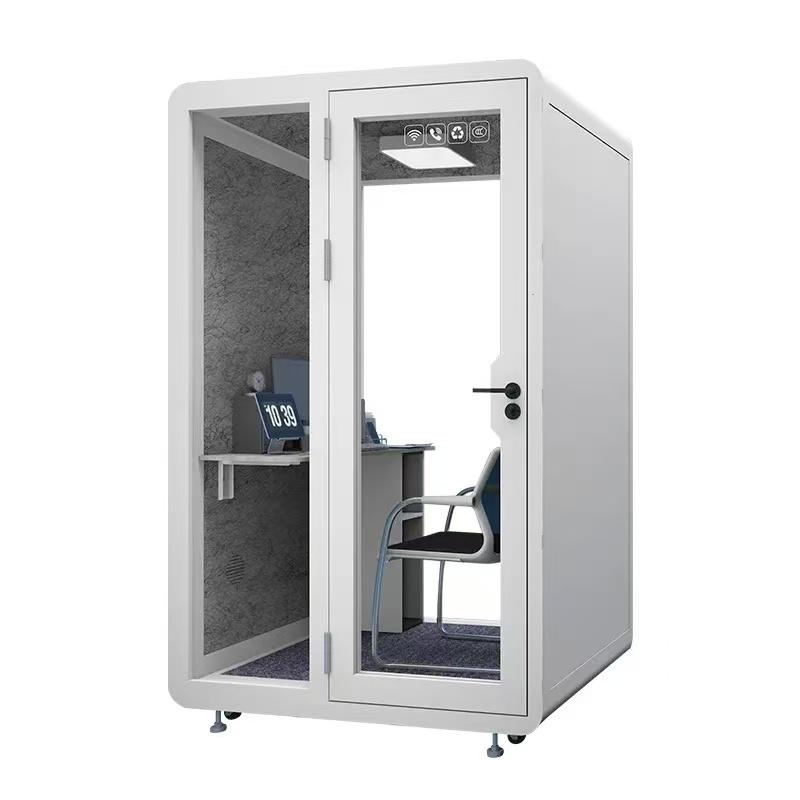
The table below is a screening tool, not a substitute for project review. Mark the consequence of each condition and attach evidence. A condition can favor one option strongly, weakly, or not at all depending on the location and specification.
| Project condition | Pod may offer better value when | Built room may offer better value when |
|---|---|---|
| Schedule | Factory production and short site work fit the route and approvals | Construction is already mobilized and services are coordinated |
| Lease | Layout or location may change and relocation is documented | Long occupation justifies permanent integration |
| Customization | A proven product configuration meets the need | Unusual geometry, capacity, finishes, or services are essential |
| Operational impact | Occupied-office disruption carries a high cost | Work can occur in vacant space without business interruption |
| Future service | Supplier parts and relocation support are credible | Local trades and standard building components are easier to maintain |
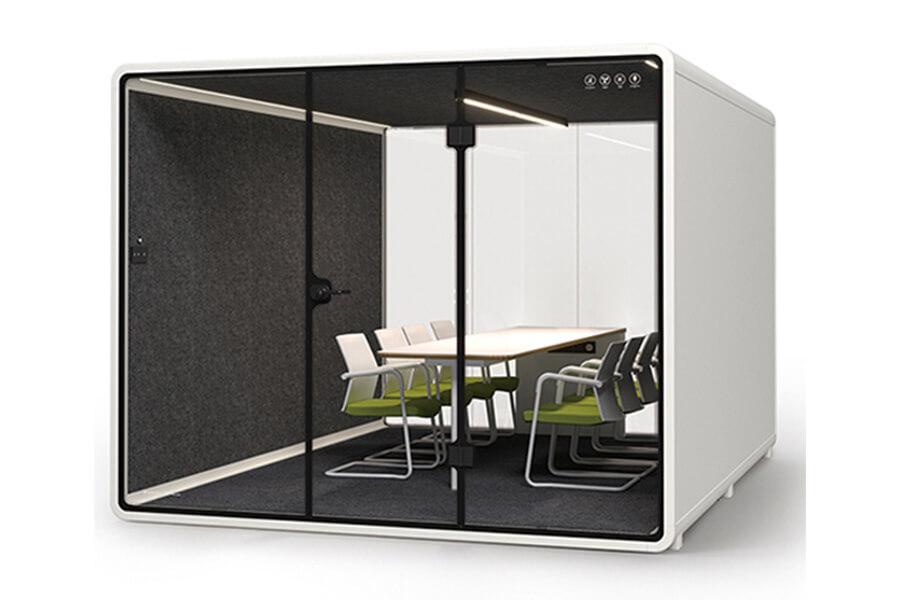
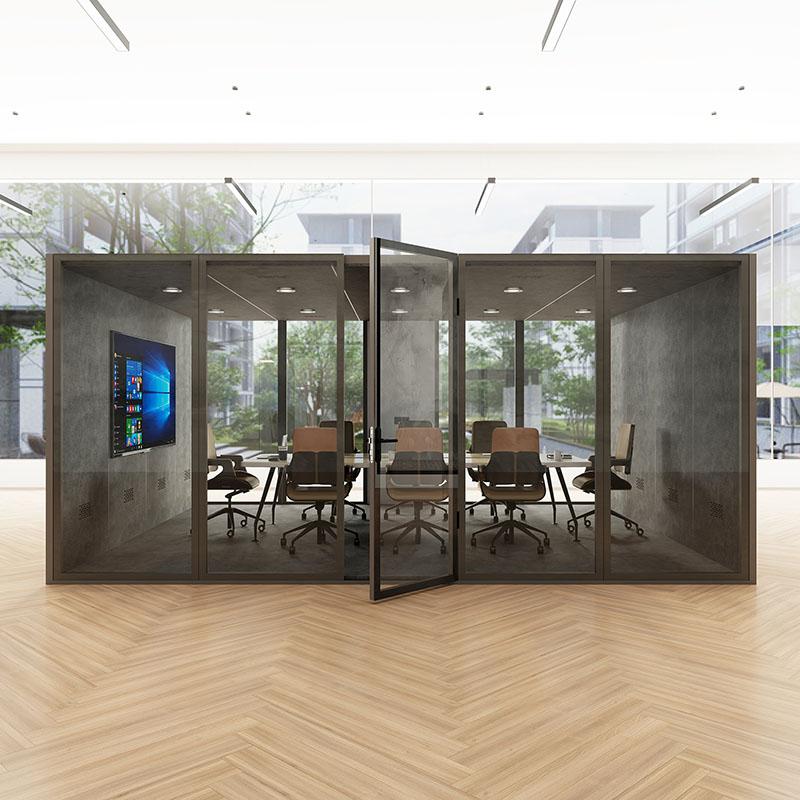
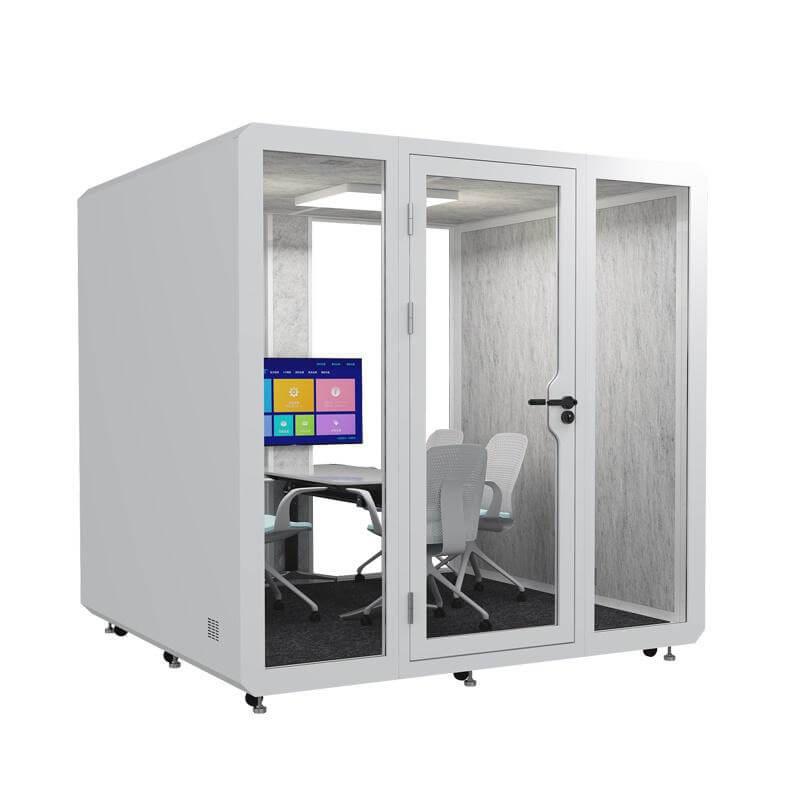
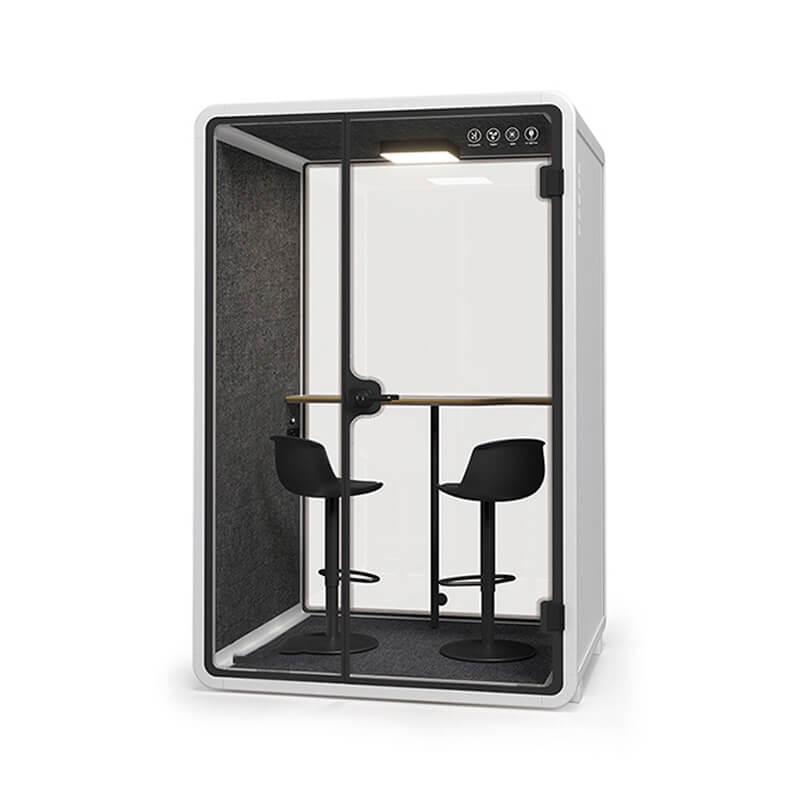
When a pod remains viable, review meeting pod options for collaborative spaces alongside the same room brief used for construction. Keep dimensions, service interfaces, and acceptance criteria attached to the comparison so product selection does not drift away from the original business need.
The final paper should show the problem, options, exclusions, installed-cost range, programme, disruption, performance evidence, lease assumptions, major risks, and sensitivity. State what would reverse the recommendation. For example, a pod may be preferred unless the delivery route fails, while a built room may be preferred only if landlord approval and mechanical capacity are confirmed by a particular date.
Avoid false precision. Use comparable study periods and explain residual value. Do not claim that a pod pays back in a fixed number of months unless the organization has measured the alternative cost and expected utilization. The most credible recommendation is often conditional: approve the preferred option after a sample test, final route survey, or contractor clarification closes the highest uncertainty.
Decision sentence: Select the option that meets the mandatory performance and site gates, then produces the lowest risk-adjusted cost for the expected life of the office plan.
Is an office pod always cheaper than a meeting room?
No. Compare complete installed scopes. Site access, freight, pod options, or local work can increase pod cost, while a simple room inside an existing construction project may be efficient.
Which option is faster?
A pod often reduces work at the office, but production, shipping, approvals, and delivery access still matter. Compare critical paths using confirmed dates rather than generic installation claims.
Can a pod provide the same privacy as a built room?
Either option can perform well or poorly. Review relevant complete-system evidence, weak paths, ventilation noise, location, and the actual sensitivity of conversations. Test the delivered solution.
How should relocation value be counted?
Estimate dismantling, packing, transport, parts, reassembly, and recommissioning, then apply a realistic probability that the pod will be reused. Do not count the full purchase price as residual value.
Who should participate in the decision?
Facilities, procurement, finance, IT, representative users, design or building specialists, and the landlord where relevant should review the interfaces they own.
An office pod is often strong when speed, low disruption, and future layout change matter. A built meeting room is often strong when deep integration, unusual customization, and a stable long-term plan matter. Neither is automatically better value.
Use one activity brief, normalize installed scope, price disruption, test performance, and expose lease and relocation assumptions. Once both options are compared on the same evidence, the decision becomes less about product category and more about which solution remains useful across the likely life of the workplace.

 Tel: +8613538031763
 Email: info@sopworkpod.com
 MP/WhatsApp: +8613538031763
 Manufacturer Address:Liucheng Lujiang District,Meixi Road,Nanan City,Fujian,China