Author:SOP Work Pods Manufacturer TIME:2026-08-28
An office telephone booth can arrive with clean finishes and still create daily friction. A door that needs a second pull, a control users cannot find, an awkward laptop position, a call that becomes uncomfortable, or a fault with no owner can each reduce use. Quality is therefore not a photograph. It is the booth’s ability to support a complete call repeatedly, and to recover when something goes wrong.
Efficiency should be judged with the same care. It is not an invented productivity percentage. It is observable movement from finding an available booth to entering, setting up, completing the call, leaving the space ready, and reporting a problem. A review can follow that route and identify which physical, operational, or support condition creates delay.
This article uses a failure-mode register. It asks what can interrupt the call route, how the buyer can observe it, and who must close the issue before acceptance.
Describe the calls the booth is expected to contain. A short internal check-in, a confidential HR conversation, a sales call with screen sharing, and a long support escalation place different demands on speech behavior, devices, posture, privacy, and occupied comfort. Choose the repeated call and a demanding normal call, then name any activity that belongs in a larger room.
Translate that use into observable characteristics. Users need to find the booth, understand availability, enter safely, close the door, reach controls and power, place a laptop, speak naturally, and leave without a special workaround. Operations needs surfaces it can clean, components it can inspect, and a fault route that does not depend on personal knowledge.
Avoid scoring quality with adjectives such as premium or efficient. Write the failure effect instead: conversation detail is exposed, the user raises their voice, the camera angle is poor, heat prompts an early exit, the door is left ajar, or the next person finds the space unready. Those effects give the inspection a purpose and can be witnessed without inventing performance data.
Prioritize the effects before inspection. A condition that blocks safe entry, defeats the assigned privacy boundary, or makes the normal call impossible deserves a different response from a small cosmetic mark. The project can use its own defect process, but the categories should describe consequences and release decisions. This prevents a long list of minor observations from making an unresolved critical issue appear less important.
Begin the physical review before routine use hides defects. Compare delivered components with the approved configuration and look for damage, incomplete fixings, uneven joints, loose furniture, damaged seals, obstructed openings, finish problems, and controls that do not match the handover information. Photograph the exact issue and its location rather than using a general defect note.
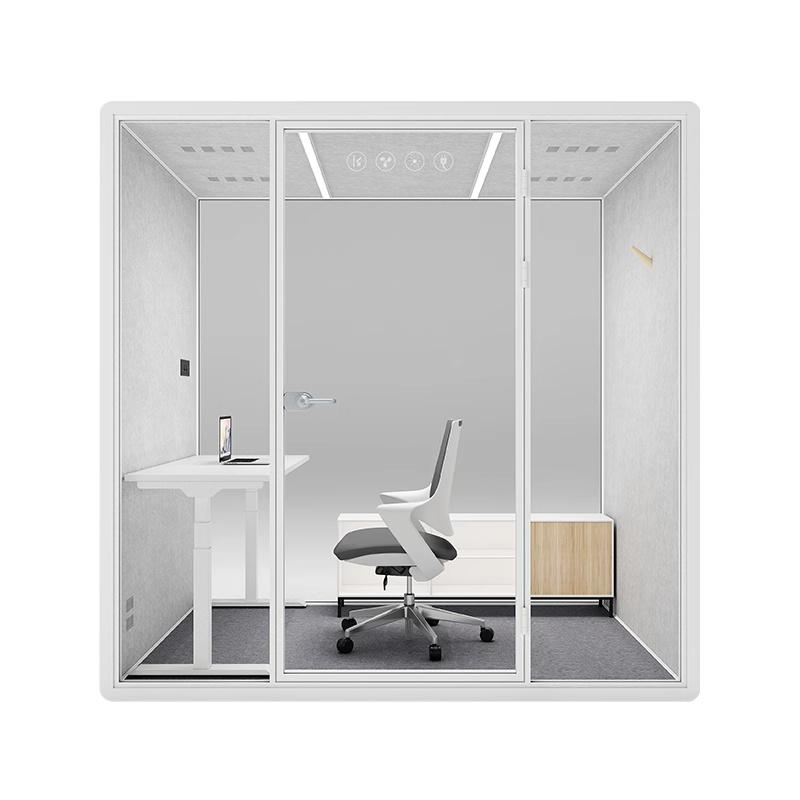
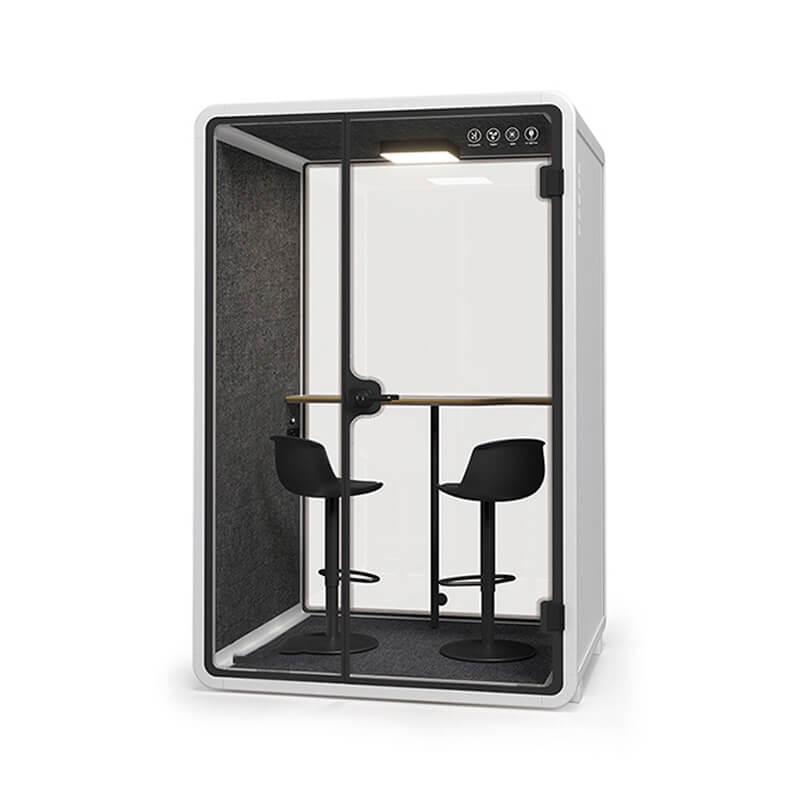
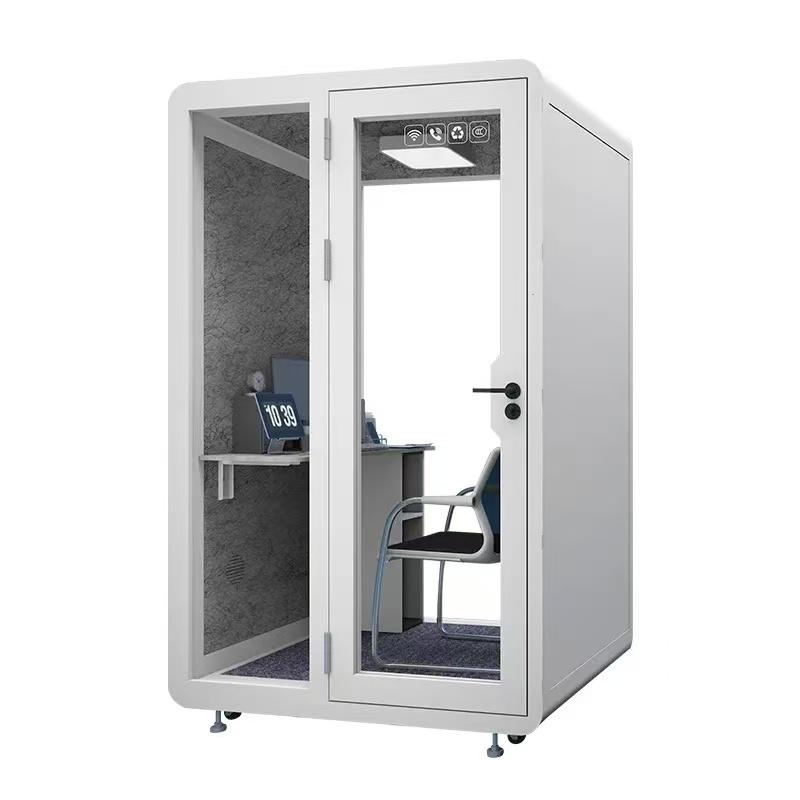
When reviewing office telephone booths, keep the selected component schedule beside the inspection. Similar outward forms can carry different furniture, controls, service points, or support boundaries, so the accepted condition must refer to the unit actually ordered.
Operate the door repeatedly from inside and outside. Check the handle, latch, closing behavior, threshold, and clear route of entry. Use lighting, ventilation, sockets, and any supplied controls as an ordinary user would. The review is not a destructive test and should follow supplier instructions, but it should confirm that normal touchpoints behave consistently.
Keep appearance and function linked. A small finish issue may be cosmetic, while a misaligned seal or difficult control can affect daily use. Record severity by user consequence and required correction. This prevents an impressive visual presentation from masking a defect that will interrupt every call.
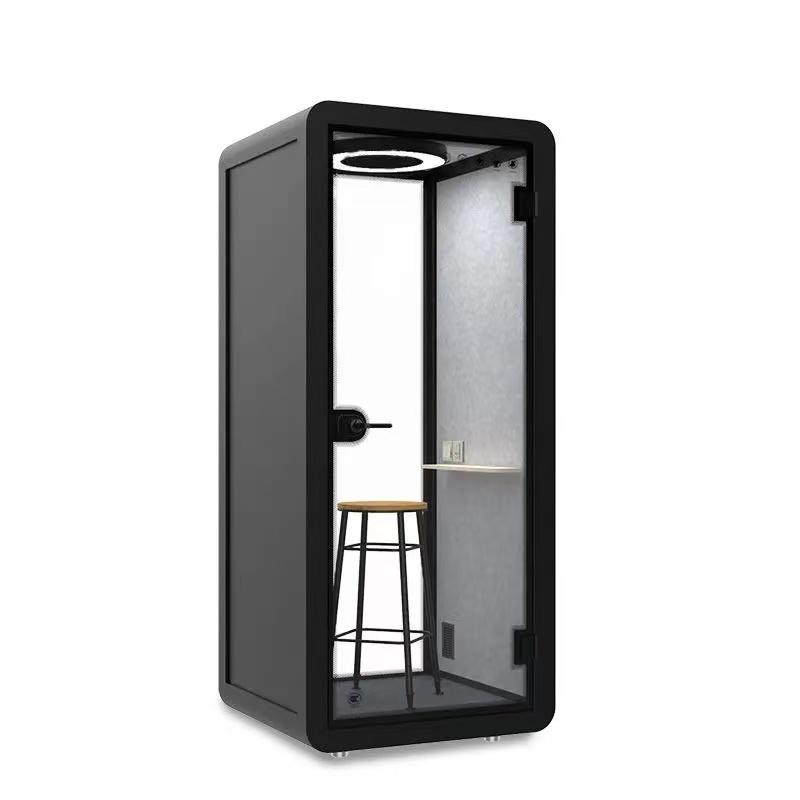
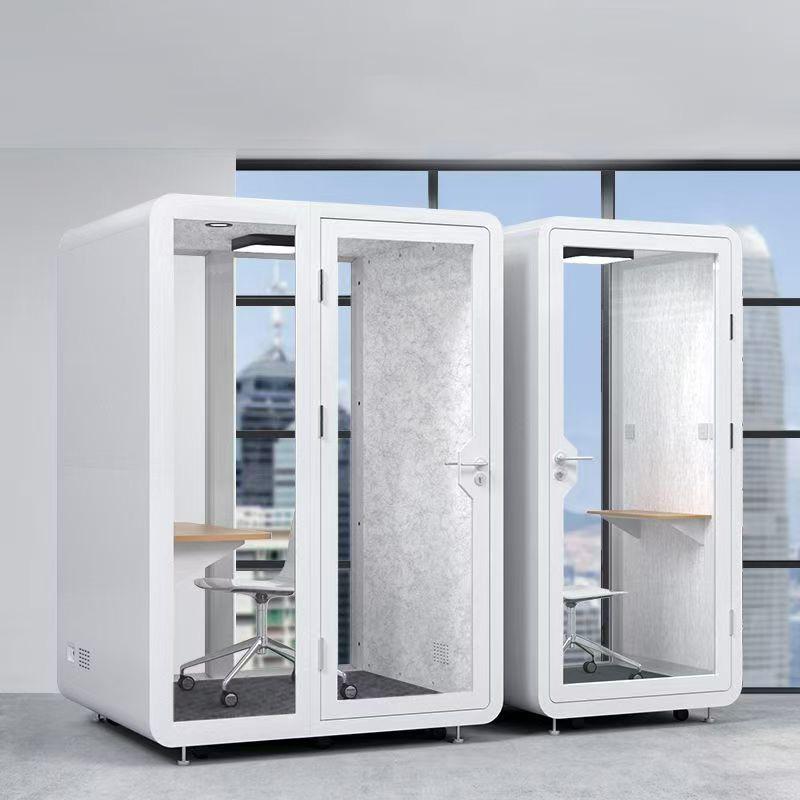
Quality depends on the installed context. Use normal speech inside while an observer stands at relevant neighboring desks or circulation points. Record whether words can be understood, whether surrounding activity distracts the caller, and what background condition was present. Do not turn one observation into a universal acoustic rating. It is evidence for this location, configuration, and use.
Review sightlines as carefully as sound. Glass can support visibility and safety, but screen content, notes, or facial expressions may be exposed from certain approaches. Check the seated camera background, door orientation, and views from nearby paths. Operational controls such as screen positioning or privacy behavior may be part of the solution, and those conditions should be explicit.
Access is also part of quality. Check the clear approach, threshold, handle reach, internal movement, emergency egress route, and the suitability of furniture for intended users. Where an accessibility requirement applies, obtain the project’s authoritative criteria instead of assuming that a capacity label proves compliance.
Follow several ordinary calls from search to reset. Notice failed booking attempts, confusion over occupancy, time spent connecting devices, cable or power problems, adjustment of lighting or ventilation, interruptions at the door, and items left behind. The aim is not to publish an artificial time saving. It is to locate repeated friction that the project can remove.
A smooth route often depends on small decisions outside the enclosure: booking status, naming, user guidance, nearby etiquette, network readiness, cleaning frequency, and a visible way to report faults. Separate product condition from workplace operation so the right team receives each action. Repeating the route after corrections shows whether the friction was actually removed.
Use the register below to connect a possible failure with its effect and a proportionate check. Add project-specific rows rather than forcing every booth into the same list.
Observe more than one user when the booth serves different teams. Familiar users may develop shortcuts that hide poor instructions, while a first-time visitor may reveal unclear occupancy, controls, or fault reporting. Keep the observations separate and look for repeated friction. The goal is not to grade people; it is to see whether the environment explains itself well enough for the expected range of ordinary users.
| Possible interruption | Effect on the call route | Acceptance observation | Owner to close |
|---|---|---|---|
| Door or seal does not settle consistently | Privacy behavior changes or users repeat the closing action | Operate from both sides and inspect alignment | Supplier or installer |
| Power, controls, or device position is unclear | Setup is delayed or users improvise | Run the intended device setup | Facilities, IT, or supplier |
| Location exposes speech or screens | Sensitive work moves elsewhere | Observe from relevant neighboring positions | Workplace team |
| Occupied condition becomes difficult | Calls end early or the door is left open | Use the demanding normal call duration | Configuration and operations |
| Fault reporting has no route | The booth remains unavailable | Submit a sample report and trace the response | Operations and service owner |
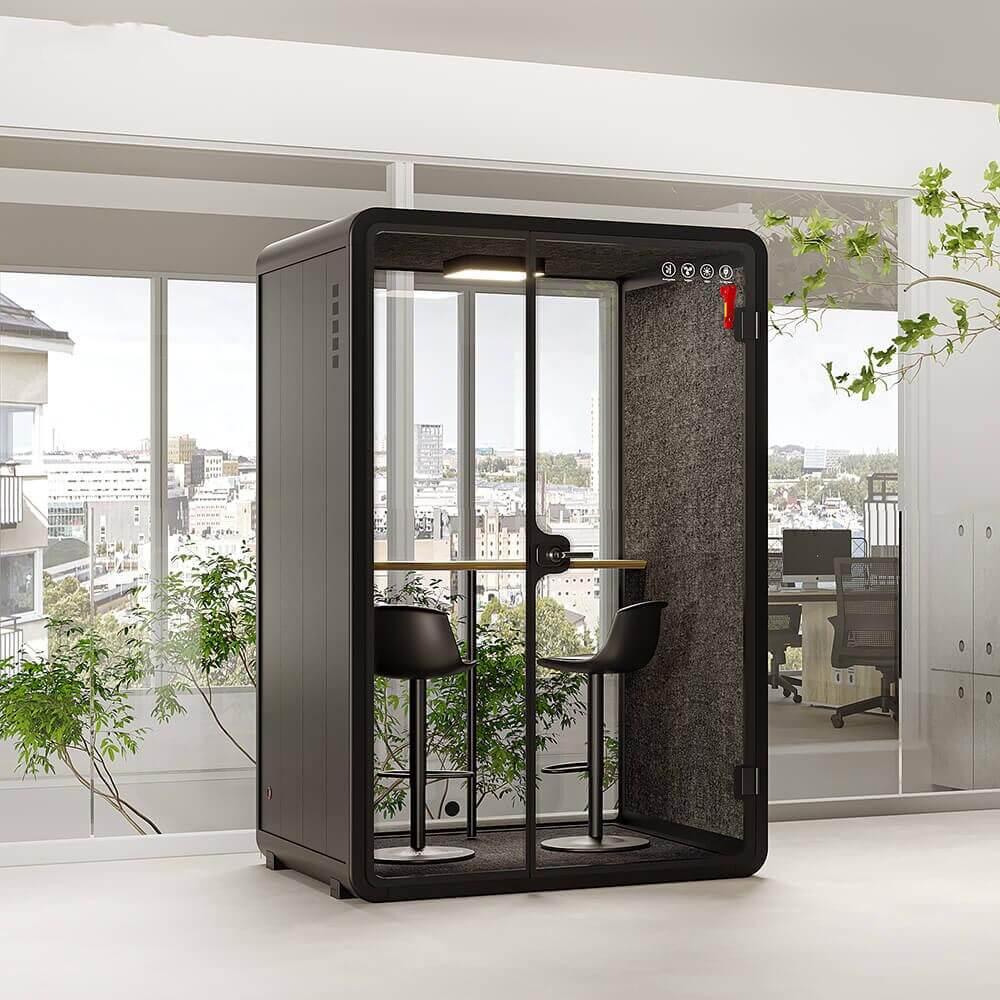
Handover quality can fade if nobody owns routine inspection. Define how surfaces are cleaned, how air paths and visible components are checked, what users may adjust, and which tasks require trained service. Use the supplier’s instructions for the offered configuration. Avoid creating maintenance intervals or methods that have no authoritative source.
Agree how faults are described. A useful report names the booth, time, operating condition, symptom, affected function, and any safe action already taken. It does not ask users to diagnose hidden causes. The service owner can then distinguish a product issue, building service issue, device problem, or operating misunderstanding and route it correctly.
Ask how replacement components are identified and requested, what information the service team needs, and which responsibilities change if the booth is moved. This is not a promise that every part or relocation will be available. It is a request for a documented route appropriate to the selected product and contract.
Close the review with a witnessed call route. Use the approved location, representative devices, normal speech, intended controls, and a credible duration. Include entry, setup, call, exit, reset, cleaning expectation, and a sample fault report. Record configuration and context so the result can be understood later.
Do not hide a serious failure inside an average score. A problem that defeats the assigned call should block release or carry a clearly approved condition. Minor observations can enter a defect list with owners and dates. Recheck the affected route after correction instead of accepting a photograph as proof that the user consequence is gone.
Store the inspection register, operating guidance, configuration record, defect closure, and service contacts together. This evidence makes quality maintainable. It also gives the team a reference when user behavior changes, a fault returns, or another booth is considered for a different call type.
Set a short post-handover review based on actual site operation rather than a promised outcome. Examine recurring fault reports, door-open behavior, booking conflicts, cleaning issues, and calls that still move elsewhere. Some findings may belong to IT or workplace rules rather than the booth. Keeping that distinction allows targeted correction and avoids rewriting the original acceptance result to fit later expectations.
When several booths are installed, do not assume one acceptance observation covers all of them. Use the approved method on every unit for basic condition and function, then select representative locations for contextual speech and user-route checks. Differences in assembly, placement, nearby activity, or service connection can matter. Record unit identity and location so later faults can be compared with the correct handover evidence.
Consistent support for the assigned call is more useful than one visual feature. Users should be able to enter, set up, speak, use their devices, remain for the normal duration, leave, and reset the booth without recurring workarounds. The context and limitations should be recorded.
Yes. Observe the call route and record avoidable friction such as search confusion, setup failures, control problems, interruptions, poor reset, or slow fault routing. Correct the cause and repeat the route. This measures process quality without inventing a business outcome.
No. It provides an observation for the tested configuration, location, background condition, speaker behavior, and listener position. Keep that context with the result and use supplier documentation only within its stated test boundary.
Retain the approved configuration, inspection register, site observations, operating instructions, defect closure, cleaning ownership, service contacts, and the acceptance call record. Add authoritative project criteria where accessibility, safety, or building requirements apply.
Modern office telephone booth quality is visible in the full route from finding the space to resetting it for the next user. Efficiency follows when defects, setup friction, operating gaps, and fault ownership are removed from that route.
Accept the booth on witnessed behavior and a maintainable evidence file. Clean finishes matter, but the stronger decision is one that connects every important characteristic to the call it protects and the owner who will keep it working.
Repeat the affected part of the route whenever a defect, move, or equipment change alters that basis for future users.

 Tel: +8613538031763
 Email: info@sopworkpod.com
 MP/WhatsApp: +8613538031763
 Manufacturer Address:Liucheng Lujiang District,Meixi Road,Nanan City,Fujian,China