
Need Help?
Please leave your contact information to get our latest catalog
Get In Touch Now >


Author:SOP Work Pods Manufacturer TIME:2026-08-28
When a two-person review moves from a six-seat room into a meeting booth, the booth appears busy and the room appears available. Yet the portfolio has changed in more than one place: travel paths shift, booking options change, another team may use the released room, and facilities inherit another asset to clean, support, and repair. The visible rise of booths is therefore a room-system question rather than a count of installed units.
Meeting booths for offices portfolio planning starts by tracing tasks through the existing mix of open areas, focus rooms, meeting rooms, hybrid spaces, visitor rooms, and informal corners. A booth is retained only when it accepts a defined task without creating unacceptable displacement, privacy, comfort, or operating effects.
The review is intentionally reversible. It uses pilots, task migration, service evidence, and lifecycle controls to decide whether each unit should stay, move, change configuration, expand, or leave. Popularity outside the workplace is not used as local demand proof.
Inventory the current room portfolio and the work it is expected to support. Record occupancy, privacy, technology, duration, urgency, location, booking method, and known exclusions for each space type. Then observe failures: searches that find no suitable room, confidential conversations held in circulation, remote meetings that occupy oversized rooms, short huddles that disturb desks, and users who abandon a session or leave the floor.
Preserve context around the evidence. A relocation, temporary room closure, project deadline, or unusual visitor period can change demand. Note the observation window and available alternatives. The goal is to identify recurring tasks with a credible enclosure need, not to turn every inconvenience into a booth requirement.
Interview facilities and support teams as well as frequent users. They can reveal faults, cleaning work, forgotten booking rules, technology calls, and rooms that appear available in data but are avoided in practice. Keep anecdotal observations labelled as such until another evidence route supports them; their value is to direct the next check, not to become instant demand totals.
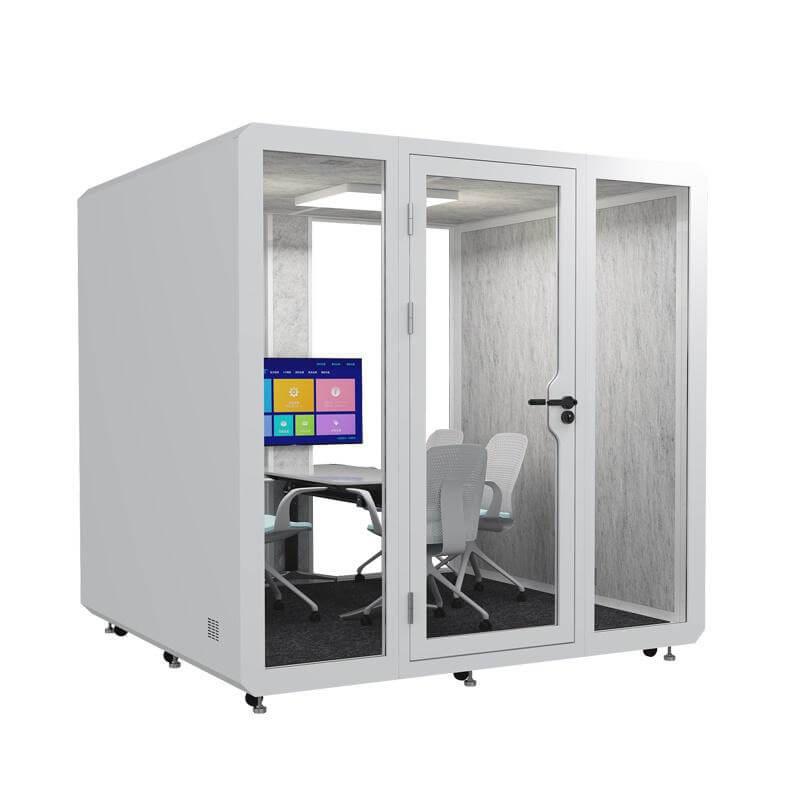
Assign each candidate task a current space, proposed booth type, fallback, and reason for moving. Mark tasks that should remain in conventional rooms because of occupancy, duration, accessibility needs, sensitive material, specialist technology, or formal meeting procedure. A migration plan prevents the booth from becoming the default answer for work it was not chosen to support.
Consider displacement in both directions. A booth may release a focus room, but concentrated workers could lose that room to meetings. A centrally located unit may attract calls from another zone and increase walking. A booking rule may reduce spontaneous availability. Use the migration map to predict these effects and decide what the pilot must observe.
Include a no-change option. Existing rooms might perform better after clearer eligibility, corrected equipment, a furniture adjustment, or a booking revision. Showing this comparator keeps the booth proposal honest and can reveal that only one task cluster needs a new enclosure while the rest of the portfolio needs operating repair.
Early use can reflect curiosity, a launch campaign, or restricted alternatives. A useful pilot runs long enough to include normal workloads and asks what people actually complete inside the booth. Record task, occupancy, duration, location, successful completion, early exit, queue, failed attempt, chosen fallback, and reason for non-use.
Separate product fit from awareness and policy. Low use may come from poor placement, unclear eligibility, difficult booking, heat, device problems, or an adequate nearby alternative. High use may hide repeated overrun or users occupying a scarce booth for tasks that need no enclosure. The operating team should investigate the pattern before adding quantity.
Review adoption by task and zone rather than by user popularity alone. A small number of successful confidential sessions may justify a specialist booth even when total occupation is moderate, while heavy casual use may add little portfolio value. The decision should reflect which failures were removed and which remained, not reward the busiest asset automatically.
Portfolio economics extend beyond purchase price. Normalize freight, delivery, route work, assembly, services, furniture and technology options, cleaning, booking administration, consumables, planned maintenance, parts, fault attendance, downtime, relocation, storage, and eventual removal. Also record any conventional room work avoided or deferred, without claiming a saving until scope is genuinely comparable.
Service capacity can limit growth. Identify who resets the booth, cleans high-touch surfaces, handles filters or other maintained items, receives fault reports, isolates an unsafe unit, supplies alternatives, arranges parts, and communicates downtime. A fleet that depends on informal effort may perform acceptably at pilot scale and fail after expansion.
Use the table as a portfolio ledger rather than a feature comparison. It should show where a task comes from, what moves with it, what resource is released, what new burden appears, and which observation authorizes the change.
Set a review horizon for costs and responsibilities. Parts, cleaning materials, service visits, technology subscriptions where applicable, and relocation work may occur on different cycles. Do not force them into an invented return figure. Record known amounts when supplied, uncertain scope as an allowance or question, and non-financial constraints such as unavailable support coverage.
| Observed task | Current location and failure | Proposed migration | Displacement to watch | Review decision |
|---|---|---|---|---|
| Short private call | Open desk; speech affects neighbours | One-person booth | Queue and loss of spontaneous use | Retain, move, or adjust rule |
| Two-person review | Oversized meeting room | Small meeting booth | Released room may attract different demand | Track both spaces |
| Hybrid project meeting | Room lacks stable device setup | Technology-equipped pod | Support load and session overrun | Reconfigure or retain |
| Focused individual work | Focus room often occupied by calls | Keep task in focus room | Protect the room from meeting migration | Exclude from booth plan |
| Visitor discussion | Informal area exposes content | Booth near reception | Sightlines, queuing, host procedure | Pilot with limits |
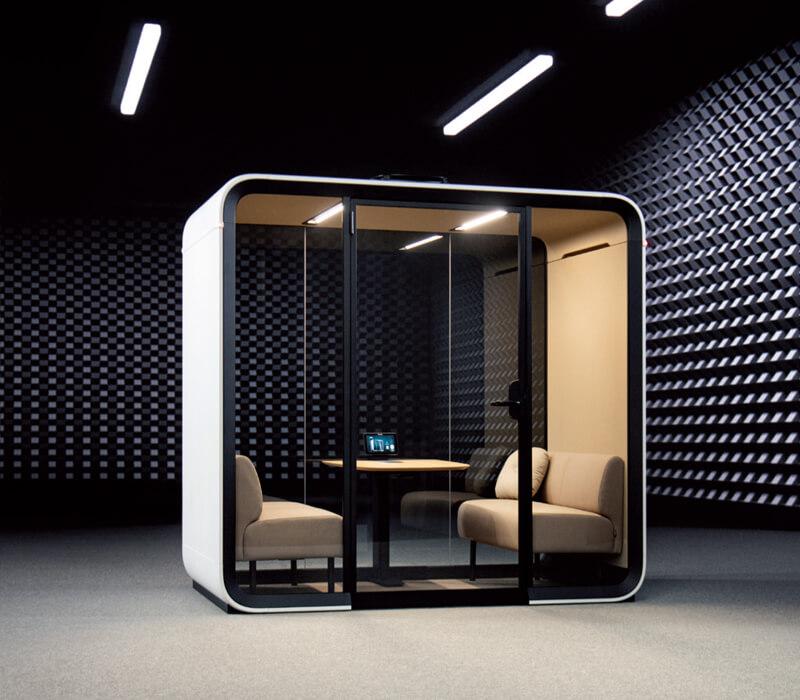
Placement should follow task origins and listener relationships. Review approach routes, queues, nearby desks, sightlines, door direction, surrounding speech, circulation, accessibility review, power, data, return air, glare, cleaning access, and maintenance space. A fleet can use common checks while accepting that individual locations need different restrictions.
Define discovery, booking or walk-up use, session length, overruns, no-shows, eligibility, resets, faults, and alternatives. Keep the rule proportionate. A complex reservation process can waste the time a short booth session was meant to protect, while unlimited use can let one task class capture the asset.
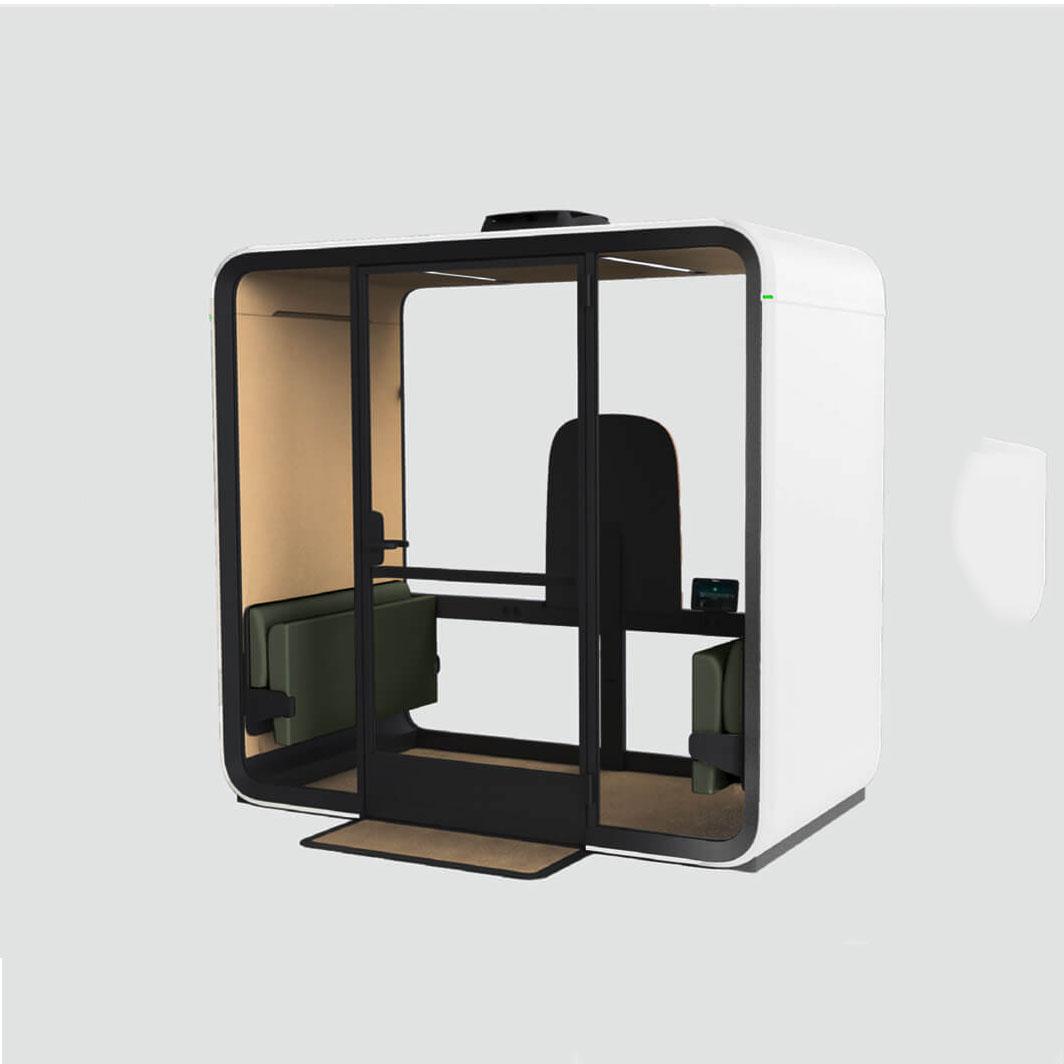
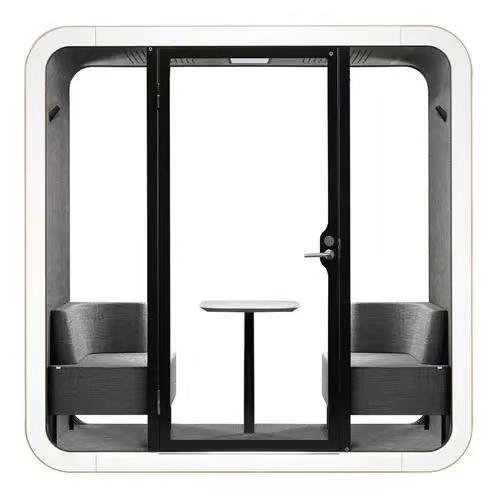
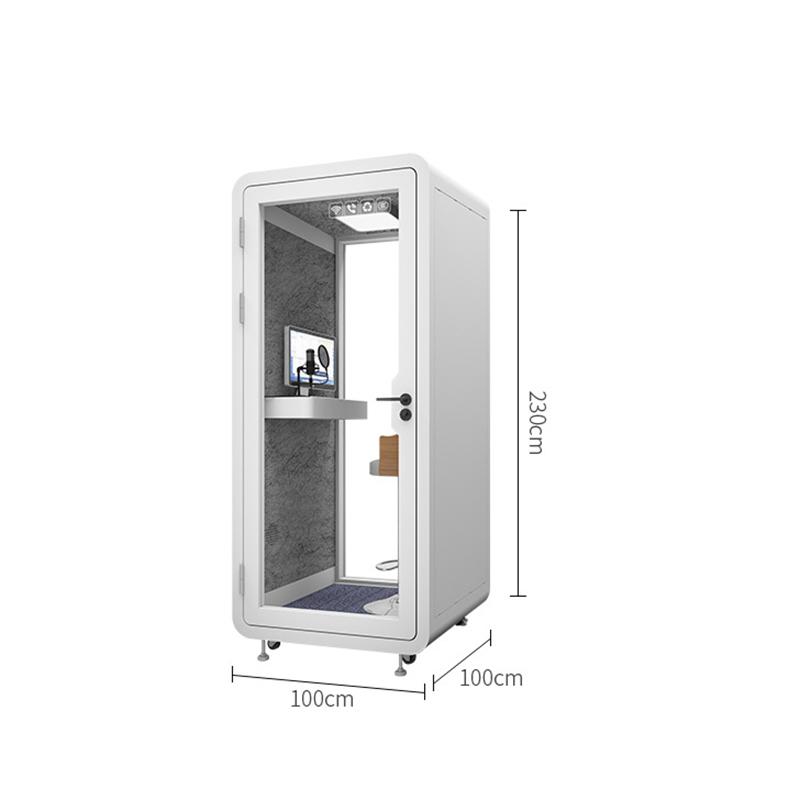
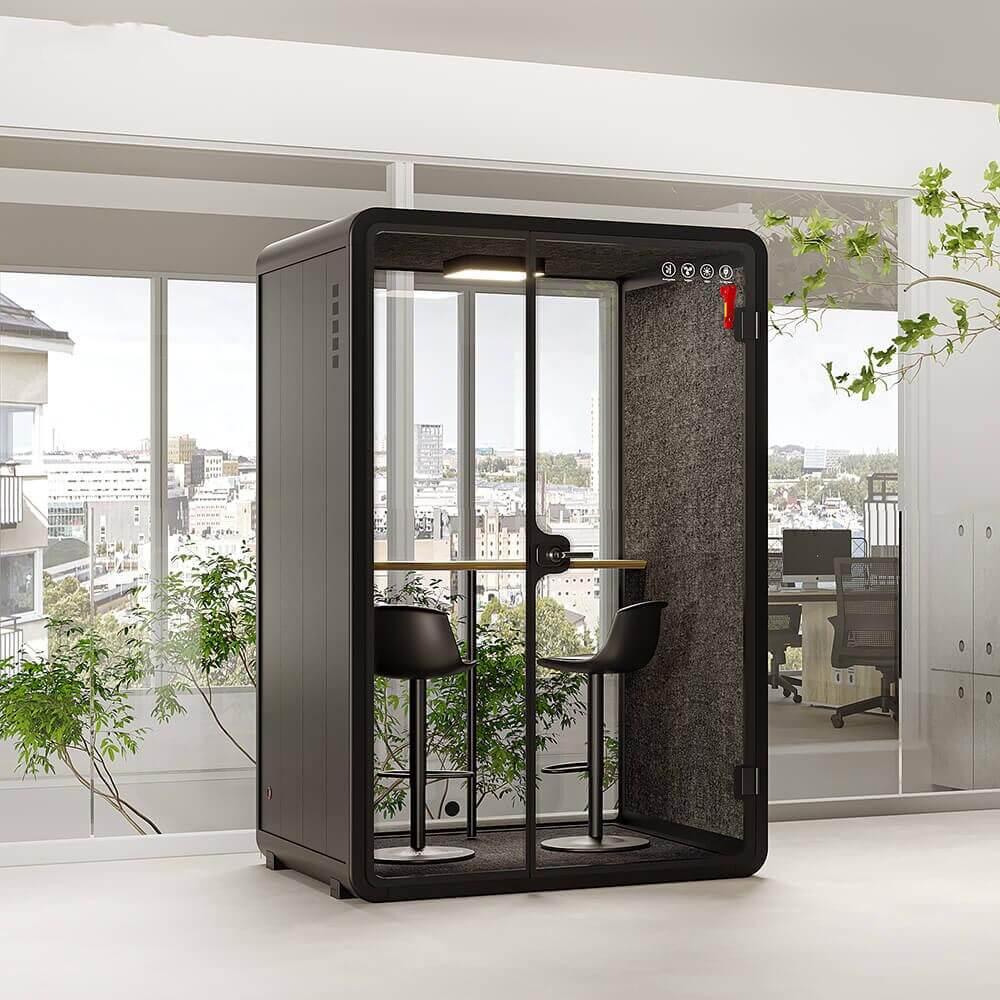
Review the office pod range as a configuration source only after fleet roles are written. Different roles may need different occupancy, furniture, technology, visibility, and location conditions; one standard model should not be imposed solely to simplify purchasing.
Make fault status visible to users without creating a complicated operating layer. Define how a closed unit is marked, where affected users go, who removes the notice after a verified repair, and how repeated faults reach the portfolio review. A booth that remains bookable while unavailable distorts demand evidence and erodes trust in the whole room system.
Give every pilot unit a review date and a small set of disposition choices. Retain it when eligible tasks repeat and the operating load is controlled. Relocate it when task demand is real but adjacency, queues, listener paths, or service access are poor. Reconfigure it when furniture, technology, policy, or visual treatment blocks an otherwise valid role. Expand only when unmet demand remains after those corrections.
Removal is a legitimate portfolio action. A unit may duplicate available rooms, support the wrong task, demand excessive support, or prevent a better use of the footprint. Preserve relocation method, route information, parts, protection needs, warranties, and disposal or reuse responsibilities so the reversible strategy is physically credible.
The portfolio record should show effects on other rooms after each decision. A retained booth that releases meeting capacity may justify a different action than one that simply shifts users between enclosed spaces. Review the system at the same time rather than evaluating each asset in isolation.
Revisit the baseline after organizational or layout change. Team moves, altered hybrid routines, a new reception pattern, or conversion of conventional rooms can invalidate the original migration assumptions. A reversible portfolio includes a trigger for fresh observation and does not treat the first successful pilot as permanent authorization for every later context.
Present the portfolio decision in room language that users and operators recognize. Name which tasks move, which spaces remain protected, where people go when a booth is closed, and which behaviour would trigger a review. This makes the strategy observable after the project team leaves and helps facilities distinguish a product defect from a task-allocation or room-policy failure.
Not by itself. Identify the tasks, failed attempts, queues, overruns, alternatives, and effects on other rooms. High occupation can reflect poor booking rules or tasks that could use open space. Expansion follows evidence of eligible unmet demand after location, policy, comfort, and technology issues have been corrected.
Use a period that includes representative work patterns rather than a fixed universal duration. It should move beyond launch curiosity and include recurring meetings, busy and quiet periods, operating faults, cleaning cycles, and available alternatives. Record contextual changes so the team knows what the pilot did not cover.
Define the decision events that matter more than a calendar target: enough eligible tasks to see repetition, at least one high-demand period, normal turnover, a realistic support event, and evidence from adjacent rooms. If a seasonal pattern is missing, label that limit and schedule a later portfolio review instead of extending the pilot without a question.
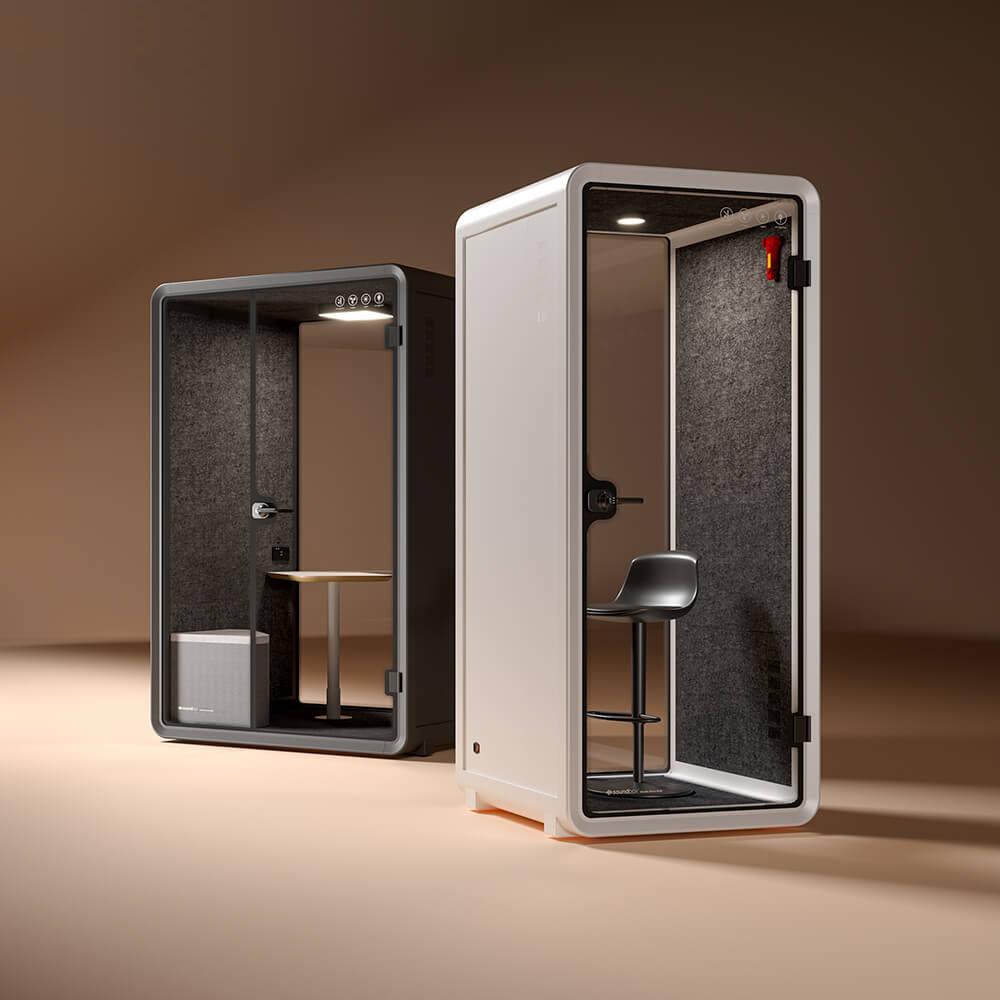
A common policy may help discovery, but different roles can need different session lengths, eligibility, technology support, and fallback spaces. Keep the rule set understandable, then allow documented exceptions where the task and location justify them. Measure whether the exception creates queue or enforcement burden.
Remove it when eligible demand is absent, the asset duplicates adequate rooms, operating effort is disproportionate, or no plausible location resolves the problem. Relocation is preferable only when the task need is proven and the receiving route, services, footprint, and recommissioning controls are credible.
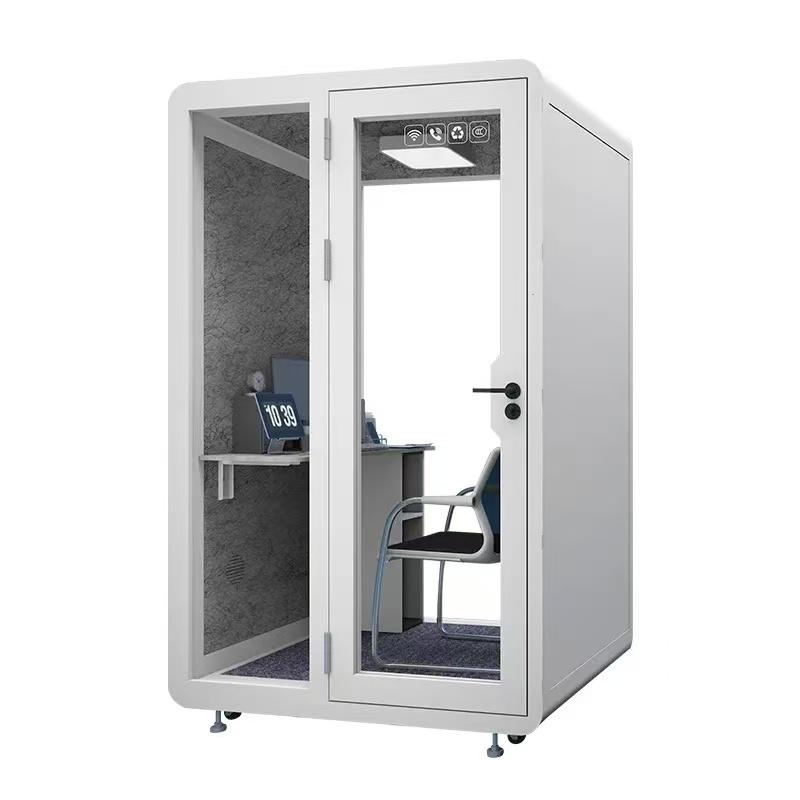
Meeting booths rise because workplace tasks, room supply, and operating choices interact. A useful portfolio review traces each task before and after migration, checks adoption after novelty, and counts the service and displacement effects that appear elsewhere.
Review retain, move, expand, and remove choices together. Keep each decision reversible, attach it to observed work and room consequences, and change the portfolio only when the combined evidence supports the next state.

 Tel: +8613538031763
 Email: info@sopworkpod.com
 MP/WhatsApp: +8613538031763
 Manufacturer Address:Liucheng Lujiang District,Meixi Road,Nanan City,Fujian,China