
Need Help?
Please leave your contact information to get our latest catalog
Get In Touch Now >


Author:SOP Work Pods Manufacturer TIME:2026-08-28
Office soundproof phone booths are useful when a workplace can name the calls that should leave open desks and the people affected by those calls. The purchasing task is not to collect generic benefits; it is to trace speech, interruption, comfort, access, and operating ownership through the proposed location.
This guide uses a threat-path review. It follows the caller, unintended listener, room position, enclosure, ventilation, booking behavior, and service response so privacy and focus can be judged under real office conditions.
A phone booth decision should also acknowledge behavior. Users may avoid a booth that feels exposed, too far away, too warm, or difficult to reserve. The product can provide an enclosure, but the office has to provide a location and rule set that make the intended calls move. The review file should therefore include both product evidence and adoption evidence.
An office soundproof phone booth can protect calls, reduce disturbance, and give employees a predictable place for focused communication. The useful benefit depends on the current failure. Some offices need confidential speech control. Others need fewer loud calls at desks, better video-call backgrounds, or a place where people can speak without feeling exposed.
Name the problem before selecting the booth. Record who calls, how long sessions last, when peaks occur, what information is sensitive, and who is disturbed today. This prevents a broad benefit list from replacing the actual workplace decision.
Name the work problem before describing benefits: exposed speech, interruption at nearby desks, lack of a stable video-call setting, delayed calls, or misuse of larger rooms. The chosen office soundproof phone booth should be assessed against the repeated problem that actually justifies it.
Run the path review at more than one time of day. A booth beside a quiet corridor in the morning may face a queue, collaboration zone, or cleaning route later. Record the speaker position, door condition, surrounding activity, and where a listener stands. These observations help the team identify which uncertainty belongs to placement and which requires configuration-specific evidence from the supplier.
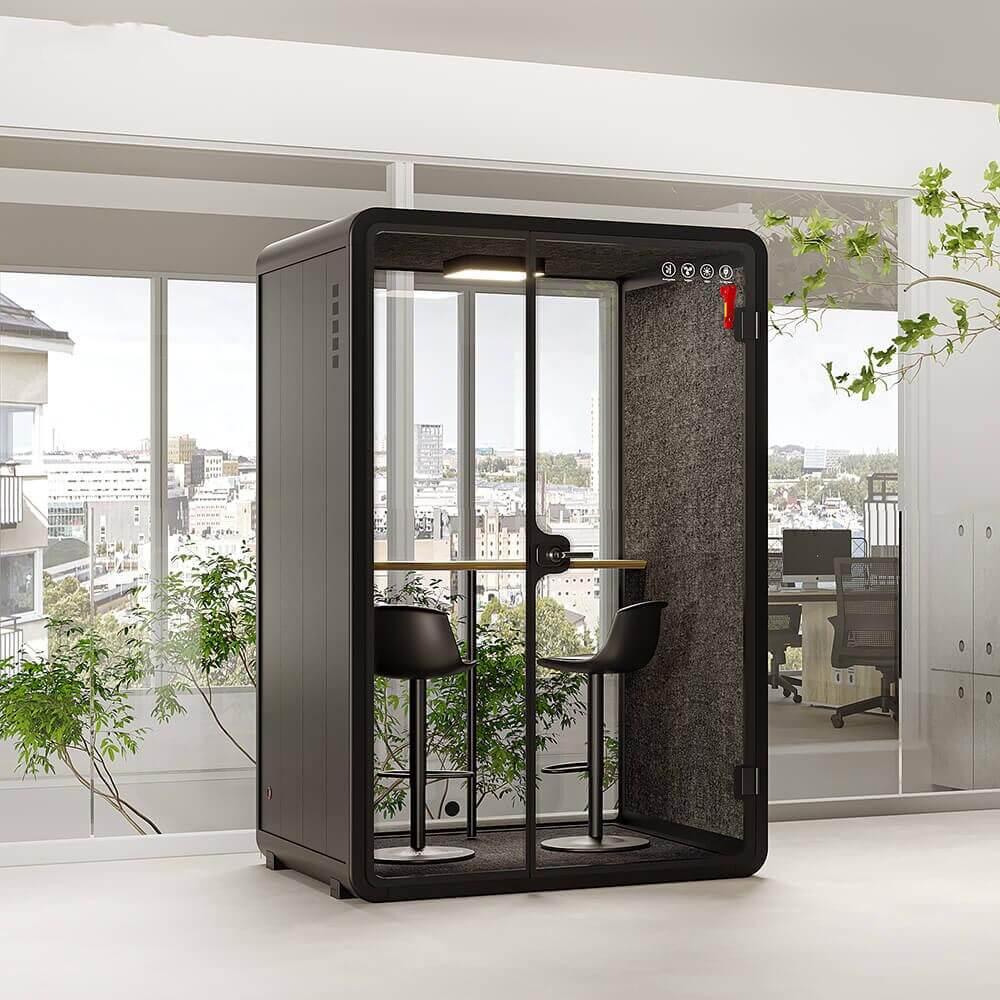
Speech privacy fails when words travel from the user to people who should not understand them. The path may be through the door, glass, panel joints, ventilation openings, floor contact, or simply through an unsuitable location. A phone booth reduces risk only when its enclosure and placement address the relevant path.
Test normal call volume with listeners at nearby desks, circulation paths, and adjacent rooms where applicable. Record whether words are intelligible, whether only a muffled voice remains, and whether the result is acceptable for the type of call. The same booth may be suitable for sales calls and insufficient for sensitive HR discussions.
Draw the path from caller to every plausible unintended listener. Include door orientation, seals, glazing, ventilation openings, adjacent desks, corridors, waiting users, and the changing background activity; then define the observation that would show whether speech remains understandable along that path.
The caller needs a place to speak naturally. Nearby employees need relief from repeated calls, speakerphone noise, and visual interruption. A booth supports both sides when it is close enough to use, acoustically useful enough to matter, and comfortable enough for repeated sessions.
Observe current call behavior before installation. Count desk calls, displaced calls, occupied meeting rooms, and times when employees search for privacy. After installation, repeat the observation. The benefit is stronger when the booth changes behavior, not merely when it is available.
Observe both sides of the enclosure during representative calls. The caller needs a workable boundary for speech and documents, while surrounding staff need fewer intelligible conversations and interruptions; improving only one side does not establish the claimed workplace benefit.
Include abandoned and displaced calls in the baseline. When a user cannot find an appropriate place, note whether the call remains at a desk, occupies a larger room, moves to a corridor, or is delayed. The pattern gives facilities a stronger measure of demand than a general survey question about whether employees like booths.
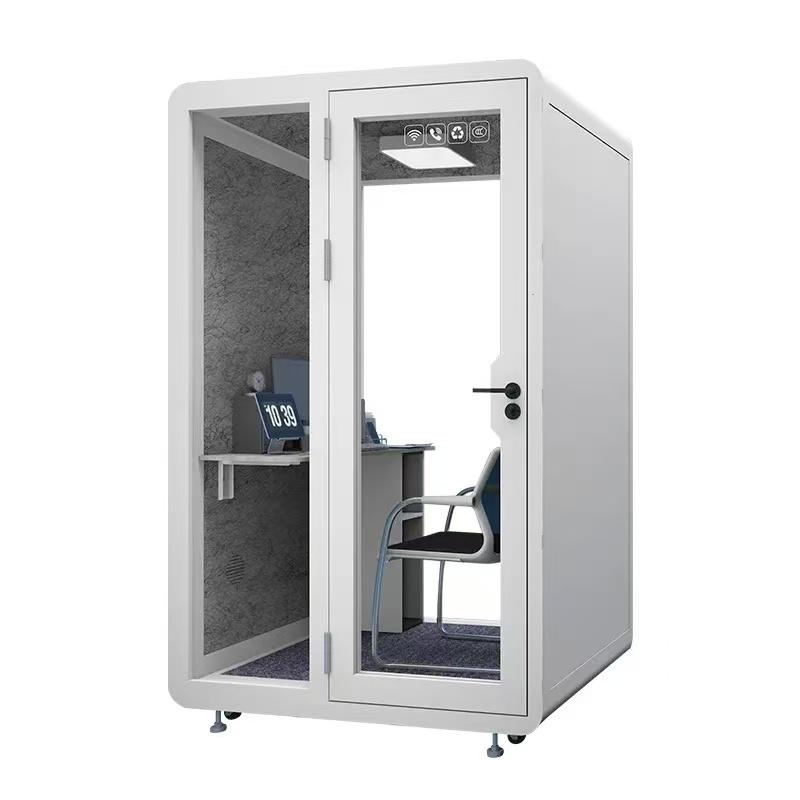
Phone booths often fail through comfort rather than acoustic weakness. Heat, air movement, fan noise, lighting, seating, desk depth, door handle position, and cable placement affect whether users close the door and stay inside. A fan that is acceptable in silence may be distracting through a headset microphone.
Run a call with the user's normal laptop, headset, and speaking style. Test the longest typical session and a short recovery interval before the next user. If people leave the door open, the privacy benefit collapses and the booth becomes a semi-enclosed call spot.
Ask a user to complete the normal call with their own phone or laptop, door and fan operating, and no coaching. Posture, shelf reach, camera framing, light, airflow, temperature perception, fan sound, controls, movement, session length, and early exit should all enter the result.
Place phone booths where access and privacy do not conflict
A booth must be easy to reach but not placed where sensitive speech exits toward unsuitable listeners. Consider nearby desks, reception, corridors, printers, pantry areas, meeting rooms, and managers' offices. Also check door swing, circulation, cleaning, power routing, and visibility of screens through glass.
The most central location may improve adoption but weaken privacy. A hidden location may protect speech but reduce use. Mark candidate positions and test both speech leakage and user convenience. The selected location should be documented with its trade-off.
Walk the approach from the teams that generate demand and inspect the listener positions created by each candidate footprint. A convenient location fails if waiting exposes call context or surrounding activity defeats the privacy boundary; a secluded location fails if users continue calling at desks.
Design booking and turnover rules for short calls
Phone booths often handle brief, frequent sessions. Booking rules should prevent long blocks from crowding out quick calls while still supporting legitimate focused sessions. Decide whether the booth is walk-up, bookable, or mixed. Add cleaning expectations and recovery time if back-to-back use is common.
A poor rule can make a good booth feel unavailable. Monitor abandoned bookings, no-shows, and repeat conflicts. Adjust the rule based on local evidence rather than copying a generic policy.
Set rules around discovery, walk-up use or reservation, session length, overrun, waiting, belongings, exit, reset, cleaning, and fault isolation. Short-call capacity depends on reliable turnover, so an installed booth with no service owner may remove less pressure than its nominal availability suggests.
Use a threat register to compare phone booth offers
A speech-privacy threat register connects each risk to evidence and action. Buyers can compare phone booth configurations after the threat paths and comfort conditions are named. This keeps the decision focused on work behavior instead of accessories.
Include acoustic evidence, door and seal details, ventilation behavior, electrical scope, site placement, cleaning, maintenance, and warranty response. Each unresolved risk should have an owner and a release condition.
Compare offers against the same caller, listener, location, device, duration, door state, ventilation condition, and operating route. The register should distinguish supplier evidence from workplace observation and retain every limitation that changes which calls the booth can support.
| Privacy or use risk | Booth and workplace observation | Response owner |
|---|---|---|
| 1. Define which phone booth benefit matters in this workplace | speech privacy threat register | Record the call risk, booth evidence, field test, user rule, and follow-up owner. Set the evidence threshold before the response is accepted. |
| 2. Map speech privacy as a threat path | speech privacy threat register | Record the call risk, booth evidence, field test, user rule, and follow-up owner. Assign the reviewer who can check this point in the real location. |
| 3. Use booths to protect both the caller and nearby workers | speech privacy threat register | Record the call risk, booth evidence, field test, user rule, and follow-up owner. Flag any dependency that changes the quote, drawing, or work method. |
| 4. Test occupied comfort during actual call behavior | speech privacy threat register | Record the call risk, booth evidence, field test, user rule, and follow-up owner. Keep nonnegotiable gates distinct from optional preferences. |
| 5. Place phone booths where access and privacy do not conflict | speech privacy threat register | Record the call risk, booth evidence, field test, user rule, and follow-up owner. Retain any unproven speech path, comfort limit, placement conflict, or operating duty as a condition on the phone booth decision. |
Release the booth when benefits remain visible after constraints
The final decision should say which calls move into the booth, which nearby disturbance is reduced, what privacy level is accepted, and how the office will manage use. If those answers are missing, the benefit claim remains too broad for procurement.
Approve the configuration that passes mandatory speech, comfort, route, and service gates. Keep a post-installation review date so the team can check whether the booth is used as intended and whether additional units or rules are needed.
The final decision should show that privacy, focus, access, comfort, turnover, and maintenance still support the intended calls after site constraints are included. Hold any claim that depends on a different location, untested configuration, or unassigned response to faults.
Define the response to a privacy or comfort concern before launch. The user should know when to end the call, how to mark the booth unavailable, and which team owns inspection. The facility record should distinguish a product fault, a host-room condition, a booking problem, and an activity that never belonged in a phone booth.
No. A phone booth is usually optimized for one person or short calls, while a meeting pod must support group occupancy, shared surfaces, and different comfort demands.
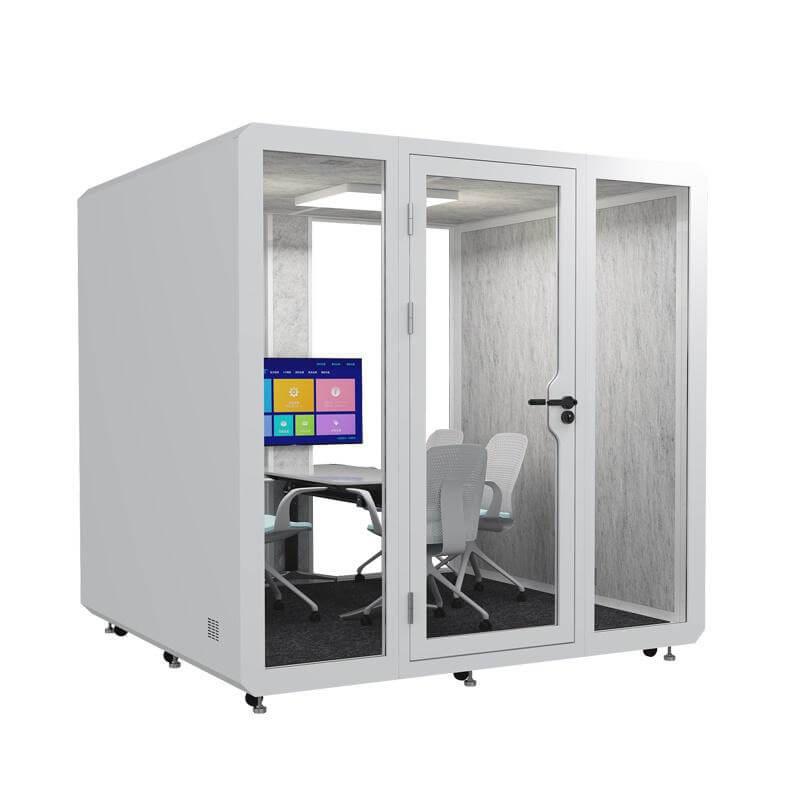
They can if the size, furniture, airflow, lighting, and booking rules support longer sessions. Do not assume every call booth is comfortable for extended work.
Use normal speaking volume, the final location, the fan setting users will choose, and listeners at realistic nearby positions. Record intelligibility, not only audibility.
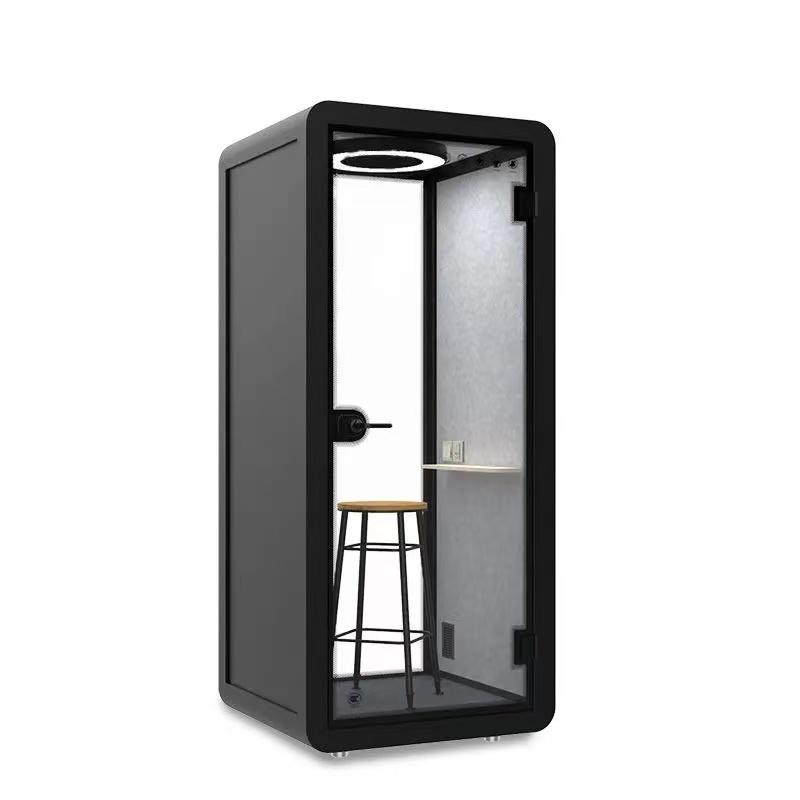
Place the booth near the people who need it, keep rules simple, provide reliable comfort, and make the intended use clear without creating booking friction.
A speech-privacy acceptance record should state the conversation, speaker and listener positions, surrounding activity, door and ventilation condition, device used, and the observation or measurement method. If a formal criterion is required, the responsible project party must define it and require applicable evidence. A casual demonstration can inform questions but should not be promoted into a guaranteed rating.
Review the booth as part of the room portfolio. Track when callers choose a meeting room, booth, desk, or off-floor space and why. If demand exceeds supply, decide whether the answer is another booth, a different location, clearer call etiquette, better booking visibility, or a larger space for activities outside the booth's use boundary.
Keep a limitations note with the acceptance record. State which conversations, occupancy, devices, session lengths, and surrounding conditions were reviewed, which were not, and which activities remain assigned to other rooms. This prevents a successful check for routine calls from being stretched into a claim about interviews, legal discussions, long work sessions, or every future office layout.
The decision is defensible when the office can trace a specific call from an open desk into a booth and show what changed for the caller and nearby listeners. Placement, closed-door behavior, occupied comfort, availability, and fault ownership all belong in that record.
Use the threat path to approve, relocate, or reject the proposed booth. Keep unverified acoustic or productivity claims outside the decision and require applicable evidence for the exact configuration.

 Tel: +8613538031763
 Email: info@sopworkpod.com
 MP/WhatsApp: +8613538031763
 Manufacturer Address:Liucheng Lujiang District,Meixi Road,Nanan City,Fujian,China