Need Help?
Please leave your contact information to get our latest catalog
Get In Touch Now >


Author:SOP Work Pods Manufacturer TIME:2026-08-28
A caller inside an office phone booth may hear less office noise while a colleague at one nearby desk can still follow several words. Another listener farther away hears only indistinct sound. That pattern is more useful than the statement that the booth is not soundproof. It identifies a symptom, a source, and a location from which a transmission path can be investigated.
Privacy and focus require two related diagnoses. Incoming distraction concerns speech, movement, equipment, or impacts reaching the occupant. Outgoing privacy concerns whether meaningful content reaches an unintended listener. Internal call quality concerns reflection, device settings, and the caller's tendency to raise their voice. A change that helps one result may leave another unchanged.
Use a path-isolation sequence rather than a single verdict. Stabilize the call condition, map listeners, inspect enclosure and site interfaces, check opening events, review device behavior, and retest after one correction. This article does not promise a decibel value or infer laboratory performance. It provides a field record for deciding whether the installed booth supports the intended office call and focus boundary.
Write what was observed without assigning a cause. Examples include words followed at the desk facing the door, a nearby conversation interrupting the caller, a sharp sound during door closure, echo on the remote side, or speech becoming clearer when the office background quiets. Add time, listener position, booth occupancy, device, door state, and surrounding activity.
Separate audibility from intelligibility. Hearing that a voice exists is different from following names, instructions, or the substance of a conversation. The accepted privacy boundary should identify which listener positions and conversation types matter. Higher-consequence calls may require another governed room even when routine speech is sufficiently obscured.
Define the focus symptom independently. Ask whether the occupant reacts to nearby words, foot traffic, visual movement, alerts, impacts, fan character, or interruptions at the door. Do not attribute reduced concentration to acoustics when the observable trigger is visual or procedural. The category points the inspection toward the condition that can be changed.
Use a representative speaker, normal call device, intended posture, typical voice behavior, and the furniture arrangement that will remain. Set device volume as users normally would and note whether a headset, laptop speaker, or phone is involved. A different device route can alter both internal clarity and outgoing speech level.
Mark listener positions on the floor plan or a simple sketch. Include adjacent desks, the door approach, glazing sides, a waiting point, and any location connected by an open return path. Keep the observer at the same points when comparing conditions. Walking randomly around the booth makes a before-and-after result difficult to interpret.
Record background state. General office speech can mask parts of a call, while a quiet period may make the same words easier to follow. The purpose is not to choose a favorable background. It is to check credible states and preserve them beside the result so privacy is not overstated.
Inspect the installed enclosure from the symptom outward. Review door alignment, latch engagement, perimeter seals, threshold condition, panel joints, glazing interfaces, corners, service penetrations, ventilation openings, and connections at floor and ceiling. Appearance can reveal damage or a gap, but it does not prove which route carries the observed speech.
Compare conditions by changing one plausible interface within approved procedures. Confirm that the door is fully latched, remove an obstruction from a seal, correct an allowed adjustment, or repeat after a documented service action. Never block ventilation, tape safety interfaces, or improvise modifications to manufacture a result. Unsafe isolation creates misleading evidence.
Request supplier guidance for the exact model and component when adjustment or replacement may be required. Drawings, installation instructions, seal details, approved tolerances, service access, and applicable test information can narrow the review. A document for another booth size or configuration remains background until applicability is confirmed.
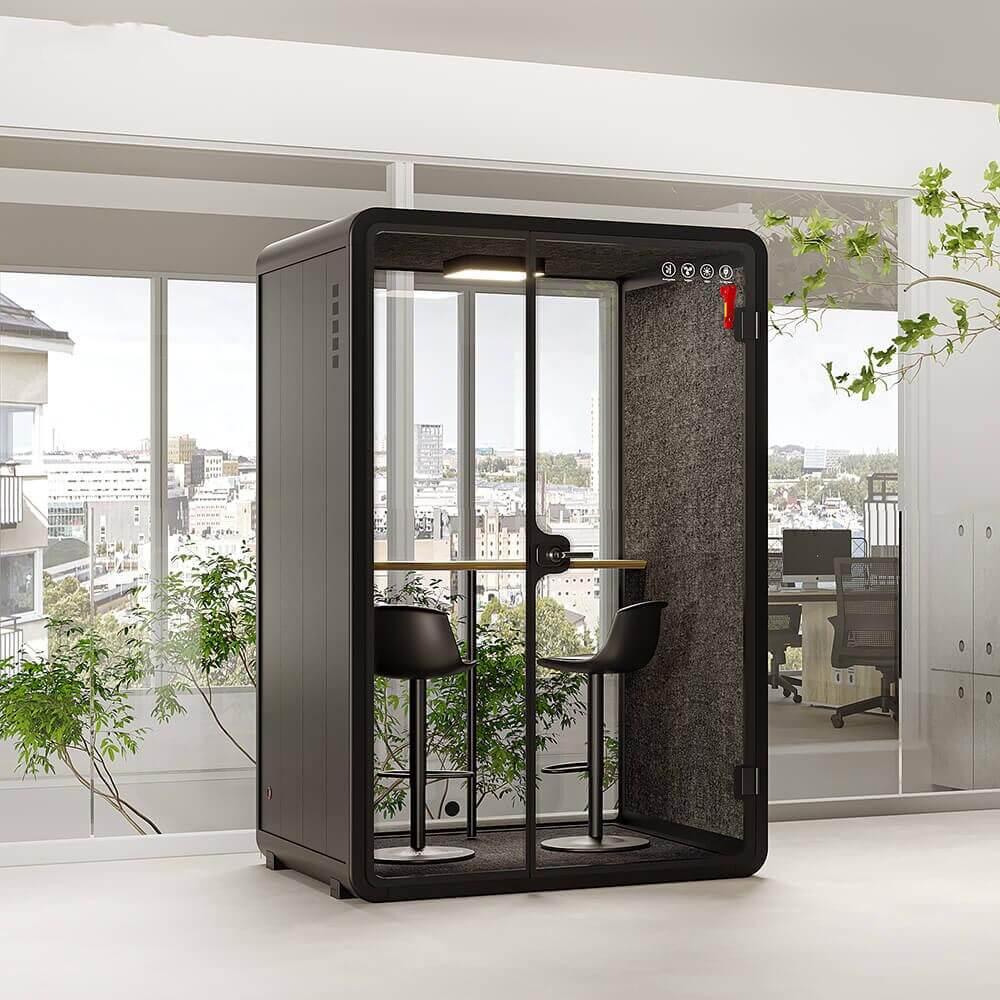
Privacy can fail during the transition even when the closed enclosure is suitable. Observe the caller approaching, starting the conversation, closing the door, receiving another participant, leaving, and continuing to speak outside. A listener near the approach may catch the most sensitive words during a short opening event.
Watch for behavior driven by the environment. A warm occupant may prop the door; poor device clarity may prompt louder speech; an uncertain availability signal may cause colleagues to knock; inadequate session time may push the closing exchange into the aisle. Correct the service cause where possible instead of treating every behavior as disregard for rules.
State which condition the acceptance covers. A booth can be approved for normal closed-door calls while instructions and layout reduce exposure during entry and exit. If the intended task cannot tolerate any opening exposure, assign it to a space with an appropriate operating protocol rather than relying on the phone booth alone.
Listen to both sides of a representative call. Internal reflection, microphone position, loudspeaker level, camera or laptop placement, wireless quality, delay, and the remote participant's environment can influence how loudly the caller speaks. Telling users to be quiet without correcting a poor signal chain can damage the meeting and may not protect privacy.
Test the normal device options the team will use. A headset may change outgoing room speech but create hygiene, storage, or compatibility duties; laptop speakers may increase room sound; a fixed device may simplify setup while adding support ownership. Record the selected route and fallback rather than declaring one method superior for every user.
Observe the longest intended call and a consecutive booking. Comfort and device behavior can change across time, leading occupants to move, adjust volume, or open the door. Keep these operating limits with the privacy result. A successful short demonstration does not establish a sustained focus session.
| Observed symptom | Held conditions | Single path or variable checked | Repeat result and disposition |
|---|---|---|---|
| Words followed beside the door | Call, device, listener mark, background, closed state | Door alignment, latch, seal, or opening sequence | Close action, move task, or escalate model review |
| Nearby speech interrupts the caller | Defined focus task and occupied setup | Adjacency, glazing view, impact route, or door approach | Change placement or surrounding operation |
| Caller raises voice during the call | Normal participant and session route | Microphone, loudspeaker, network, reflection, or comfort | Correct signal chain and repeat privacy check |
| Result changes after installation work | Original source and listener points | Named joint, service, ventilation, or site interface | Retest affected acceptance lines and document limit |
For incoming distraction, place credible office activity at known positions and ask the occupant to perform the defined task. Note which event draws attention and whether it is speech, impact, movement, equipment, or an interruption at the door. The observation should guide placement, office behavior, or enclosure review, not create an unsupported productivity claim.
For outgoing privacy, use the stable call and listener map. Ask observers what type of content, if any, they can follow without moving closer or straining beyond normal behavior. Record words being intelligible, speech being audible but unclear, or nothing noticed at that condition. Avoid translating the description into an invented rating.
Use the soundproof office phone booth range to retain the exact product route under review. Tie every finding to model, options, installation, location, device, and door state. If any of those change, repeat the affected line rather than carrying the result across automatically.
Assign the correction to the party that controls the cause. Facilities may alter adjacency or restore a building interface; the supplier may inspect a door or seal; IT may correct the call chain; workplace operations may change booking or waiting behavior; users may need a clear task boundary. One owner should close the action with date and evidence.
Repeat the original condition first. Use the same call type, device, posture, listener point, door state, and credible background. A new observation at a different location cannot show whether the correction affected the symptom. After the controlled repeat, test another ordinary condition to confirm that the improvement has not created a new problem.
Preserve unresolved limits. If words remain followable at a relevant listener point, move the task, alter the location, seek further technical review, or reject the configuration for that call class. If incoming distraction remains high despite suitable enclosure condition, the surrounding zone may be the stronger control. The record should support a decision, not force a pass.
Check for confounding changes before closing the diagnosis. A quieter office background, a different speaker, a new headset, fewer occupants, another listener stance, or a door held closed by an observer can make the repeat appear better without correcting the suspected path. List every changed condition and rerun the comparison when it affects the interpretation. This protects the maintenance record from attributing improvement to the wrong action.
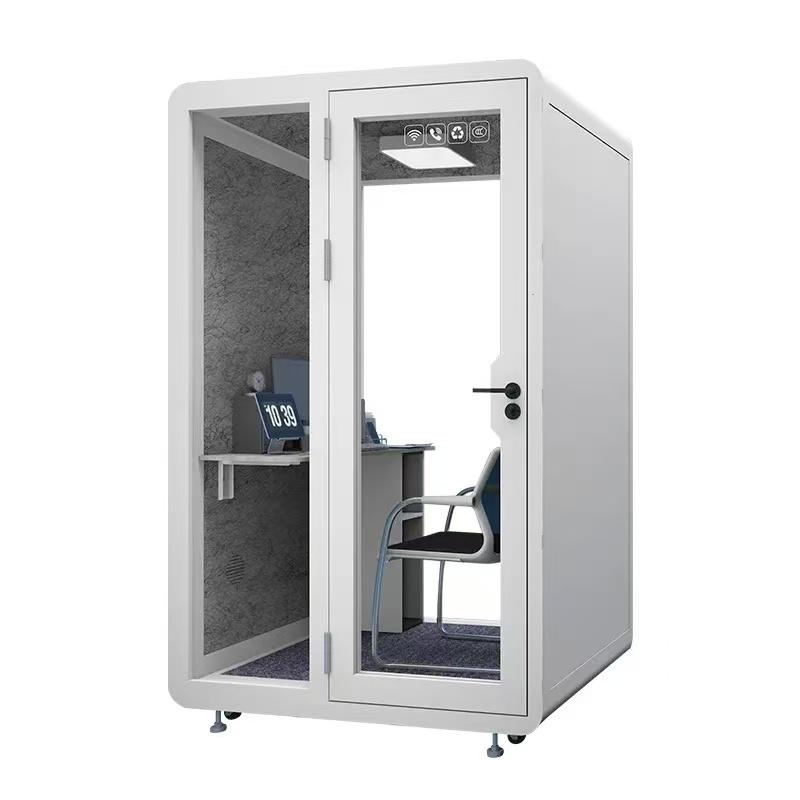
Not automatically. The decision depends on whether relevant listeners can follow meaningful content, which calls are assigned, and what boundary the workplace requires. Record audibility and intelligibility separately, then route higher-consequence conversations to an approved alternative when needed.
Only through approved installation or service guidance. Do not tape, block, compress, or alter components to create a favorable observation. Document the original symptom, authorized action, responsible party, and controlled repeat at the same listener positions.
Door orientation, adjacent desks, waiting behavior, background speech, reflective boundaries, visual movement, services, floor and ceiling relationships, and call devices can change the installed condition. Product evidence remains useful, but the site relationship still needs observation.
Escalate when the inspection involves component adjustment, damage, electrical or ventilation work, an unexplained installation difference, repeated failure after approved correction, or a privacy consequence beyond the workplace team's competence. Keep the booth out of the affected task route until the issue is resolved.
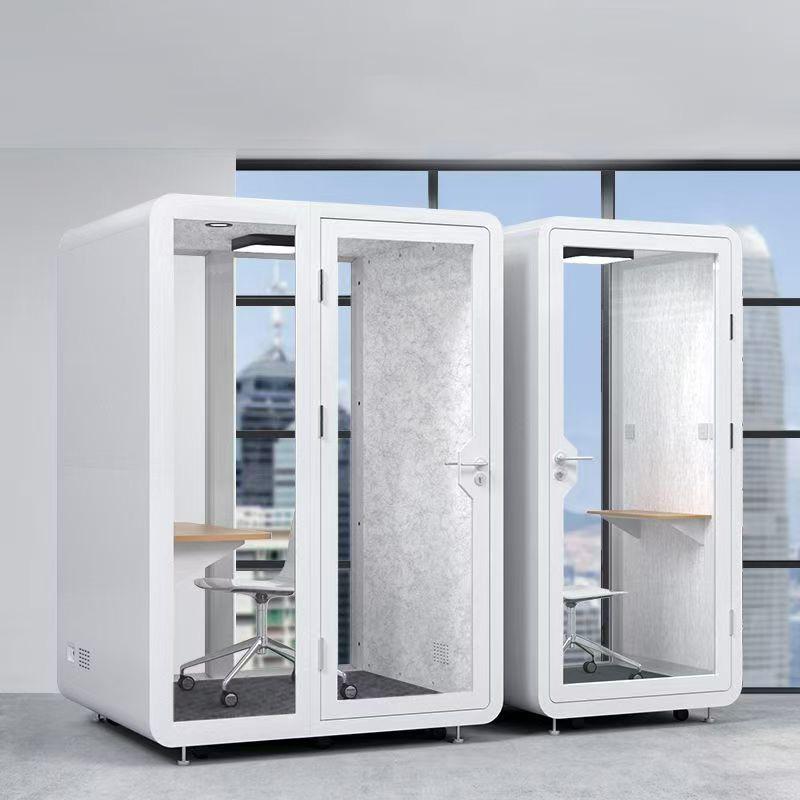
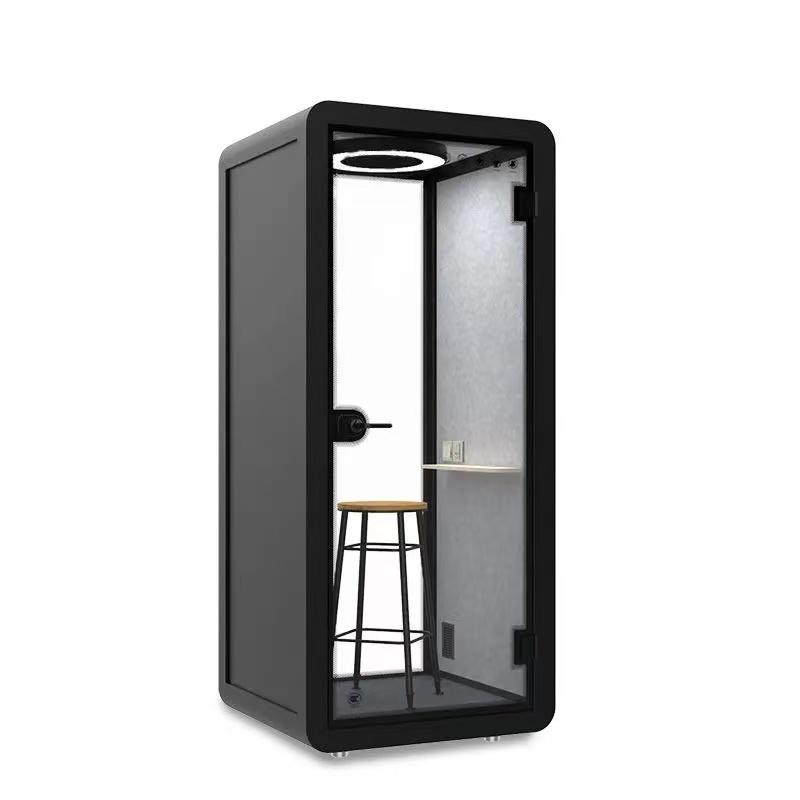
A soundproof office phone booth should be accepted through separate evidence for incoming distraction, outgoing speech privacy, internal call clarity, visual exposure, and occupied use. A broad impression of quiet cannot identify which listener path works, which remains open, or whether the cause belongs to product, installation, site, device, or behavior.
Mark the caller and listener positions, reproduce one symptom, and change one approved variable at a time. Repeat the original observation after correction and preserve any excluded call class. This disciplined isolation route protects privacy and focus without inventing a performance number or forcing a favorable verdict.
When requesting a phone booth proposal, submit the listener boundary, installation position, occupancy, and device needs through the inquiry form or WhatsApp.

 Tel: +8613538031763
 Email: info@sopworkpod.com
 MP/WhatsApp: +8613538031763
 Manufacturer Address:Liucheng Lujiang District,Meixi Road,Nanan City,Fujian,China