Need Help?
Please leave your contact information to get our latest catalog
Get In Touch Now >


Author:SOP Work Pods Manufacturer TIME:2026-08-28
Put the five reasons for adding a quiet booth office on a procurement board and they look persuasive: sensitive calls, fewer interruptions, nearby hybrid access, more workspace choice, and compact capacity. The board is still missing a verdict column.
Each reason needs its own evidence and failure condition. Privacy is not proved by focus behavior; hybrid access is not proved by room shortage; compact size is not useful if placement, comfort, booking, or support prevents the intended task.
The decision method below starts with one baseline, tests the five claims in paired routes, and finishes with five separate approve, correct, continue, or reject outcomes.
Five reasons are not five facts. Give them the same workplace baseline: eligible tasks, failed alternatives, location, duration, user groups, privacy need, technology, booking behavior, and operating burden.
Establish the workplace baseline behind all five reasons.
Record sensitive and routine calls, interruptions, failed room attempts, wait, fallback, hybrid access, user choice, room inventory, participant count, duration, speech, devices, privacy, location, time, existing policies, underused periods, planned change, and tasks unsuitable for a compact booth.
Observe representative work and retain contrary and zero observations before attributing a problem or benefit to the booth.
Reopen the reason board if five reasons being accepted because they sound plausible rather than because the office needs them becomes plausible.
Finish the reason board entry with a decision to release a shared evidence baseline. Name its correction owner and next trial condition.
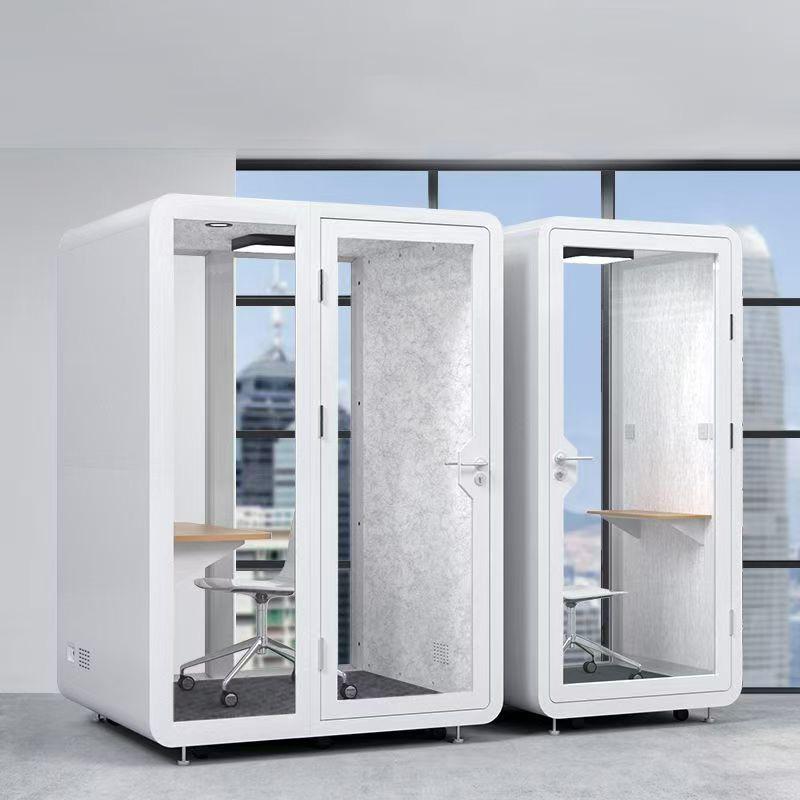
A sensitive call needs a bounded listener and sightline route. A focus task needs evidence about interruption, recovery, duration, and alternatives. One may pass while the other fails.
Reason one create a bounded route for sensitive calls.
Map speaker, intended participant, unintended listeners, nearby desks, approaches, waiting, entry and exit, door, seals, glazing, ventilation paths, screen sightlines, remote audio, normal surrounding activity, audibility and intelligibility, conversation handling, and alternative private rooms without promising absolute confidentiality.
Use non-sensitive representative speech and practical listener and sightline checks in the proposed location.
Reopen the reason board if the word quiet being interpreted as guaranteed privacy becomes plausible.
The reason board should state how to state accepted call types and privacy limits. Place each open limitation beside the responsible owner and review trigger.
Reason two test interruption recovery for eligible focus tasks.
Ask representative users to complete the same bounded task under current and pilot conditions and describe observable interruptions and coping behavior without inventing productivity gains.
Reopen the reason board if preference or novelty being reported as a durable attention outcome becomes plausible.
Release this reason board step only when the team can accept or reject the focus-use hypothesis. Its retained evidence shows unresolved conditions and next actions.
| Claimed reason | What to observe | Failure signal | Allowed verdict |
|---|---|---|---|
| Sensitive calls | Listener paths, sightlines, entry and exit, user behavior | Exposure remains or users avoid the route | Approve, relocate, or reject |
| Focus recovery | Eligible task, interruptions, setup, duration, return to work | The move adds friction or does not protect the task | Approve narrowly or continue |
| Hybrid access | Search path, device readiness, remote experience, support | Calls fail or simply shift a queue | Correct or approve |
| Workspace choice | Discovery, selection, non-use, misuse, alternatives | Choice is unclear or conflicts with policy | Guide, redesign, or reject |
| Compact capacity | Portfolio gap, footprint, circulation, service uptime | Space or operating loss exceeds the released capacity | Pilot, relocate, or approve |
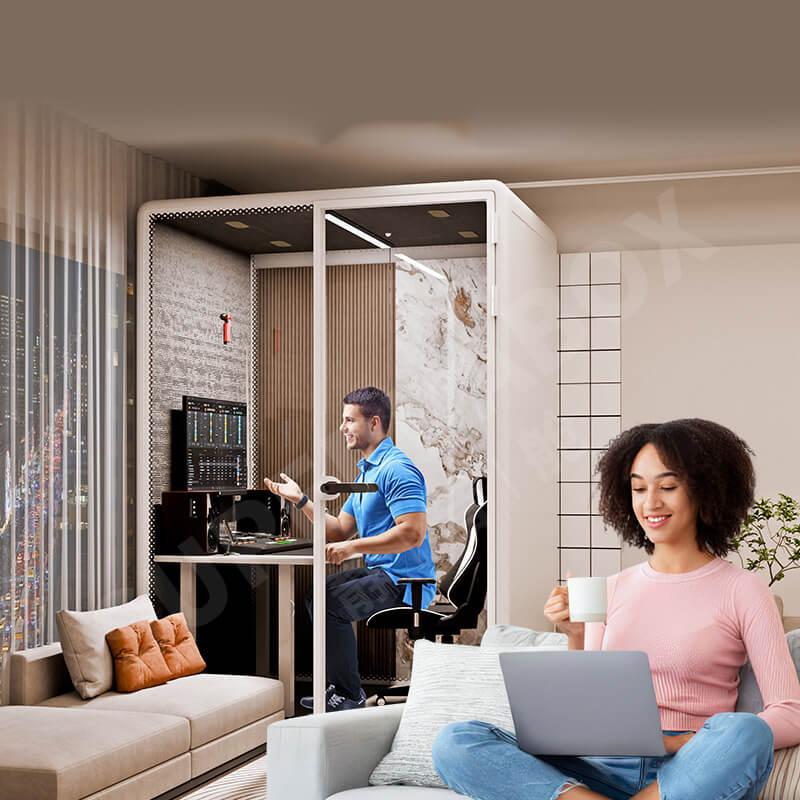
Nearby hybrid space can shorten a search, while another workspace choice may improve task matching. The pilot should show whether people discover, select, and complete the intended work without creating new queues or misuse.
Reason three provide nearby hybrid communication access.
Check call and video task, urgency, location, power, charging, data and wireless condition, cables, camera framing, lighting, microphone, speaker or headset, echo, platform and device compatibility, remote turn-taking, controls, support, setup, reset, privacy, session length, and recovery from a connection or device problem.
Run actual workplace devices and gather separate observations from the onsite and remote participant.
Reopen the reason board if an enclosure being available while remote communication remains poor becomes plausible.
Turn the reason board finding into an instruction to release a supported hybrid route. Record the invalidating condition and person who must respond.
Reason four add a governed workspace choice.
Invite representative users to trial the route and preserve different outcomes rather than averaging them into a universal preference.
Reopen the reason board if choice language masking exclusion or pressure to use one setting becomes plausible.
Close the reason board route by agreeing how to approve the booth as one optional route. Preserve its accepted boundary, correction, and reason for retest.
Use the passed reasons to screen the office pod product options for the required task, footprint, controls, and occupied duration rather than searching for one model that claims every benefit.
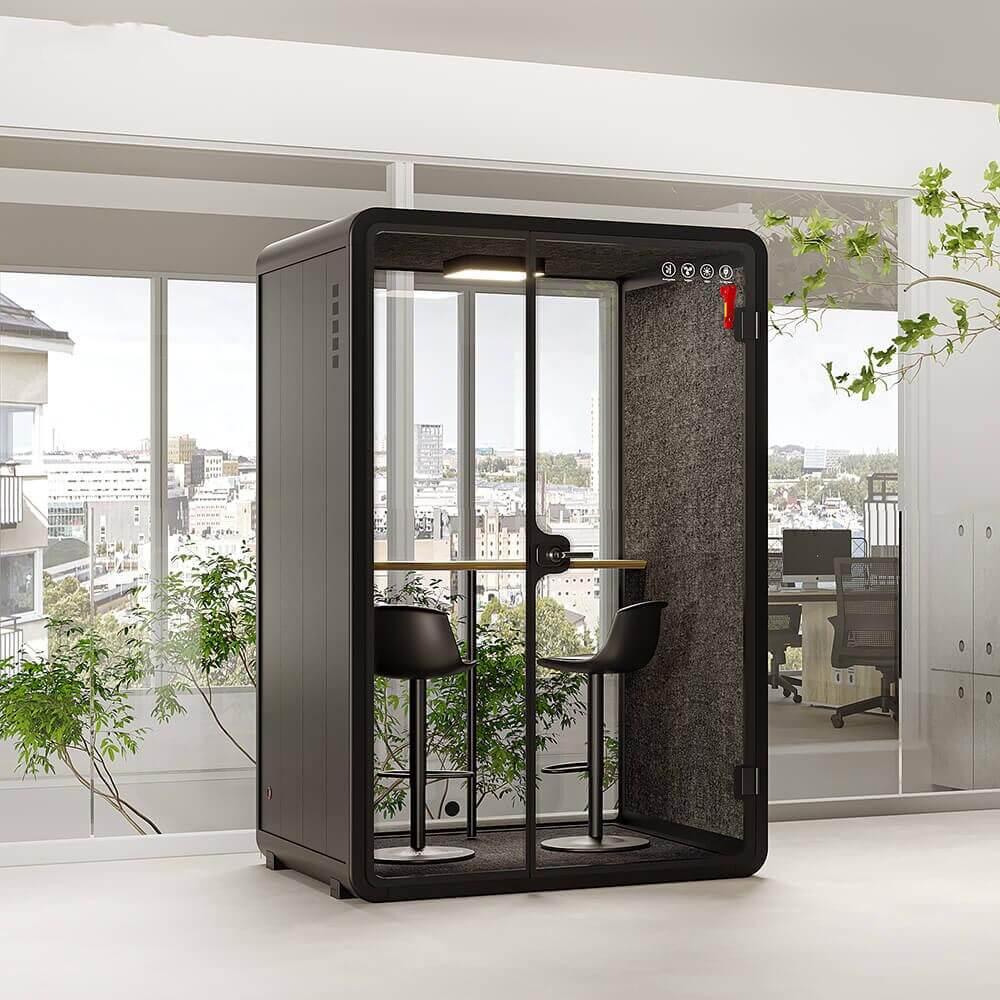
Compact capacity matters only in relation to the room portfolio and floor constraints. Test the claimed role, observe what it displaces or releases, and decide each reason independently instead of averaging the story.
Reason five add compact capacity without distorting the portfolio.
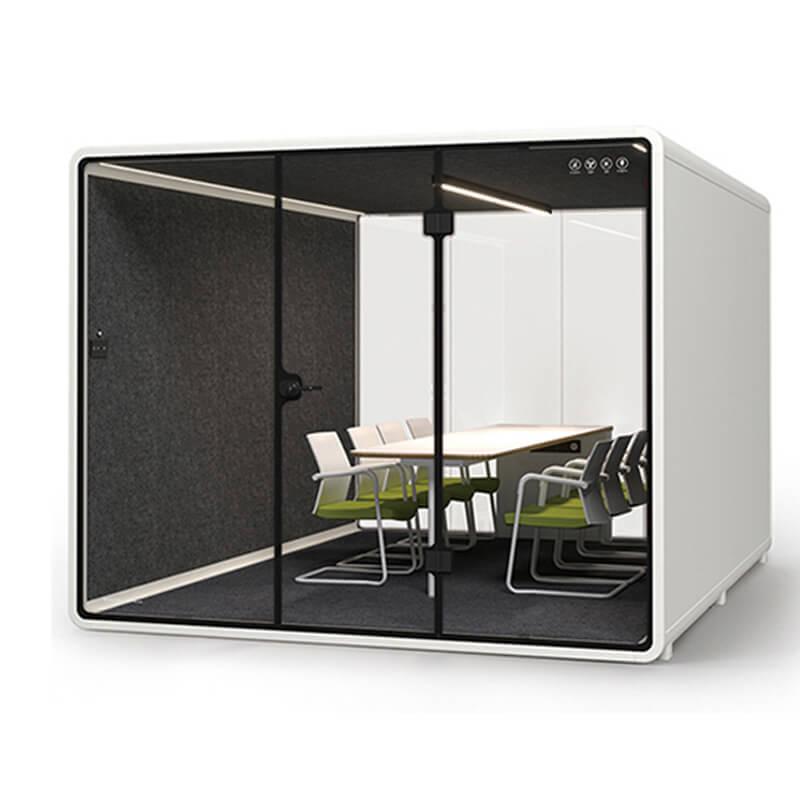
Compare footprint, eligible occupancy, walking distance, location, queue, current room types, displaced uses, circulation, delivery, assembly, power, data, ventilation interaction, cleaning, maintenance, availability, booking, no-show, overrun, downtime, relocation options, and tasks that must stay in larger or specialized rooms.
Model and pilot the smallest deployment while monitoring effects on existing rooms and work areas.
Reopen the reason board if more enclosures increasing nominal capacity but not usable room supply becomes plausible.
This reason board output explains how to approve bounded flexible capacity. It identifies the owner, remaining uncertainty, and change that reopens review.
Decide each reason through a measured pilot.
Review evidence by hypothesis and choose retain, relocate, reconfigure, extend observation, scale cautiously, or reject without assigning invented performance thresholds.
Reopen the reason board if one successful reason being used to validate all five becomes plausible.
End the reason board step with an explicit route to close an evidence-led booth decision. Attach context, limitation, and operating ownership.
Use a strict verdict rule
Approve a reason only when the assigned task improves under the same pilot conditions used to judge its limits. Mark a correct verdict when placement, guidance, technology, or service has a specific remedy. Continue only when the missing evidence has a bounded collection plan; otherwise reject the claim for this workplace.
Write the verdict beside the users, location, task, duration, alternatives, and operating condition covered by the pilot. That boundary allows another team to understand the decision without turning one observed benefit into a universal promise for every booth, floor, work pattern, or observation period.
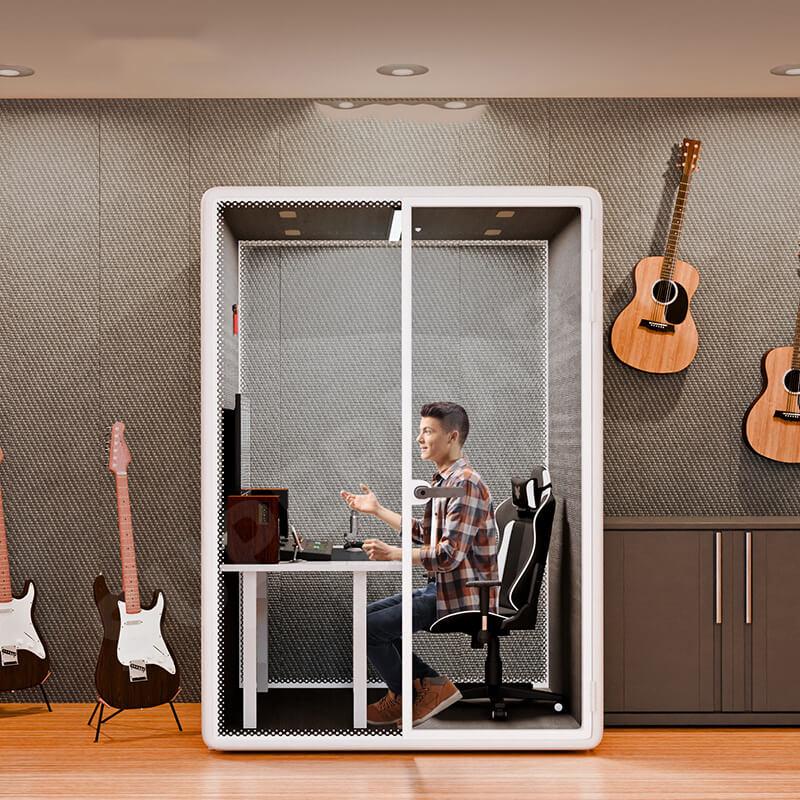
A quiet booth can give a sensitive call a defined speaker, listener, viewer, entry, and exit route. That is a bounded privacy control, not a promise that no sound or information can ever leave the enclosure.
Approve the reason when representative calls fit the route and users follow it without workarounds. State conversations, devices, listener positions, sightlines, and behavior that remain outside the boundary or require a different space.
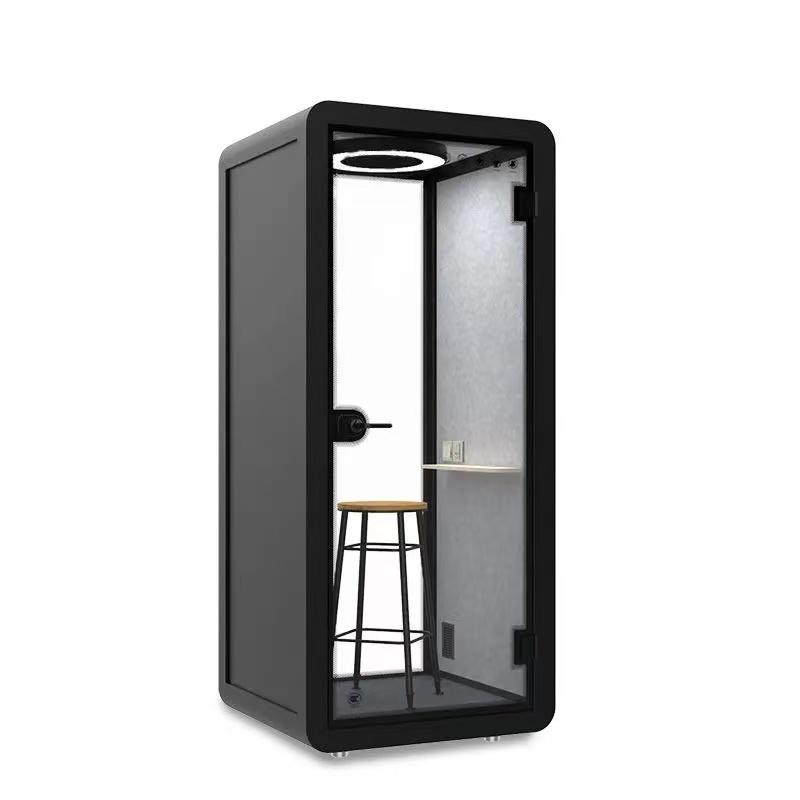
Useful attention recovery appears when an eligible task can move from interruption to protected work without excessive search, setup, discomfort, or return-to-desk friction. Observe the complete transition and compare it with the existing alternative.
Do not invent a productivity percentage. Record interruptions, coping behavior, early exit, door opening, abandoned attempts, and whether the task was completed under the same bounded condition. The reason passes only for the tasks that improve in a repeatable way.
Check discovery, device readiness, camera and microphone selection, remote speech, screen view, content sharing, power, connection ownership, comfort, and recovery from a routine fault. A nearby booth adds value only when the call can start and remain usable.
Include remote observations and the fallback used when the booth or connection is unavailable. If the route merely transfers a queue or creates a support dependency that the office cannot sustain, correct it before approving hybrid access as a reason to expand.
Compact capacity fails when it does not address the actual portfolio gap or when footprint, circulation, access, services, comfort, booking, faults, and turnover remove the capacity it was meant to add. A small exterior dimension is not the complete space claim.
Pilot the intended sessions and note which existing rooms are released, which users choose alternatives, and how often the unit is unavailable. Approve the reason only when the net role remains useful under normal office operation.
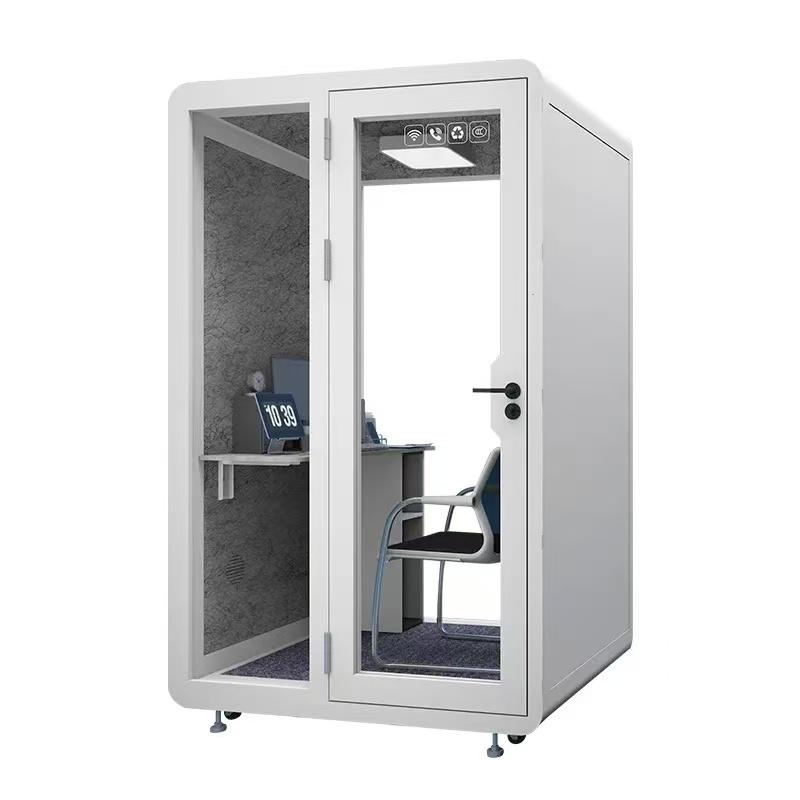
The best reason to add a quiet booth office is the one the workplace can demonstrate under ordinary conditions. Sensitive calls, focus recovery, hybrid access, workspace choice, and compact capacity are separate propositions with separate limits.
Approve only the reasons that pass. Correct placement, guidance, technology, or service where the result is recoverable; continue observation where the period is weak; reject a claim when the booth does not improve on the existing alternative.
Finish with five written verdicts and a purchase scope tied to the accepted roles. That record gives the booth a governable purpose and provides a clear trigger for rechecking the decision when work patterns, location, or operating ownership changes.

 Tel: +8613538031763
 Email: info@sopworkpod.com
 MP/WhatsApp: +8613538031763
 Manufacturer Address:Liucheng Lujiang District,Meixi Road,Nanan City,Fujian,China