Need Help?
Please leave your contact information to get our latest catalog
Get In Touch Now >

Author:SOP Work Pods Manufacturer TIME:2026-08-28
A one-person call booth and a small team pod should not compete for the same rank. The first may succeed through quick access, speech containment, and simple reset; the second must support interaction, shared materials, technology, longer occupancy, and a larger site envelope. Putting both into one universal list hides why either choice works.
Office booths and pods for comfort and productivity are better shortlisted through five task archetypes: private calls, concentrated individual work, two-person consultation, structured small meetings, and flexible team activity. Each route has an acceptance task, a disqualification test, and a site condition. Buyers compare offered models only within the relevant route.
Comfort and productivity are treated as observed working conditions, not guaranteed outcomes. A representative occupied trial reviews posture, movement, airflow, lighting, devices, privacy boundaries, interruption, and service effort, while the decision record preserves contrary observations and limitations.
Define the recurring work that current spaces fail to support. Record participants, duration, speech, confidentiality, devices, movement, furniture, urgency, location, current alternative, and failed attempts. Then identify site boundaries such as route, footprint, circulation, access review, power, data, return air, cleaning, and maintenance.
Use matched evidence for all candidates in one archetype. Product information defines features to inspect; the site survey establishes feasibility; the occupied trial shows task fit; and the commercial scope identifies continuing burden. Reject any model that misses a non-negotiable condition before weighting secondary preferences.
Build the shortlist record before supplier meetings. Include the acceptance task, maximum intended occupancy, session boundary, necessary furniture and technology, privacy route, site constraints, operating owner, and evidence still missing. This keeps demonstrations focused and lets procurement ask the same core questions of every candidate without forcing different archetypes into one feature checklist.
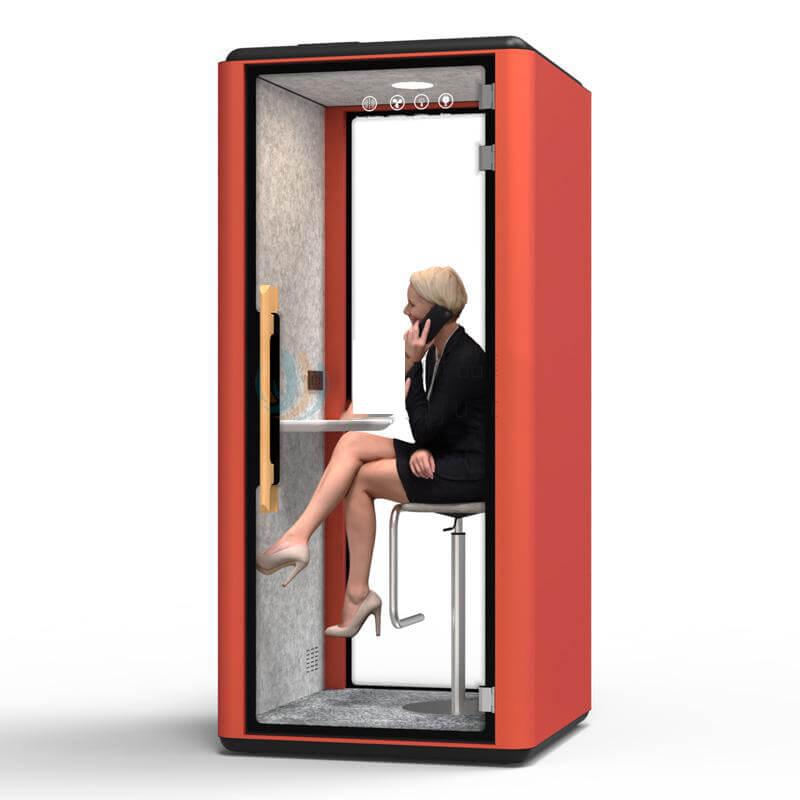
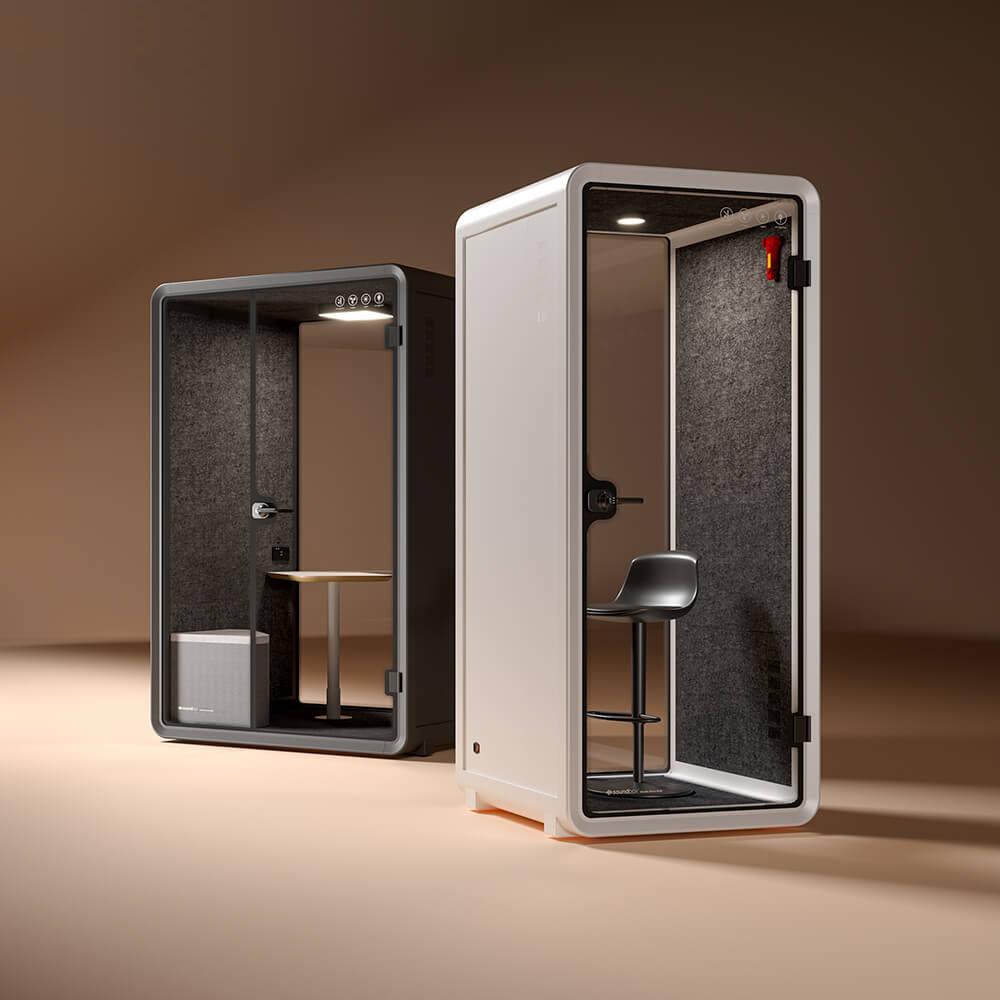
This route serves one person making short private or concentration-sensitive calls. Test entry, door operation, standing or seated posture as intended, device placement, lighting, microphone and loudspeaker use, fan setting, speech at plausible listener positions, call completion, and reset. Observe whether queues form and whether users overstay because other spaces are unavailable.
Disqualify a candidate when the occupied position is impractical, controls are difficult to reach, the intended call remains disruptive outside, ventilation or heat becomes unsuitable for the eligible duration, or the footprint creates a circulation problem. Do not judge it by how well it hosts work that belongs in a larger pod.
Include availability behavior in the test. A call booth can be functionally suitable and still fail the service when long bookings, no-shows, or informal desk work capture it. Observe turnover and the fallback route for an urgent call. The accepted archetype should state whether use is walk-up, booked, or mixed and who resolves repeated misuse.
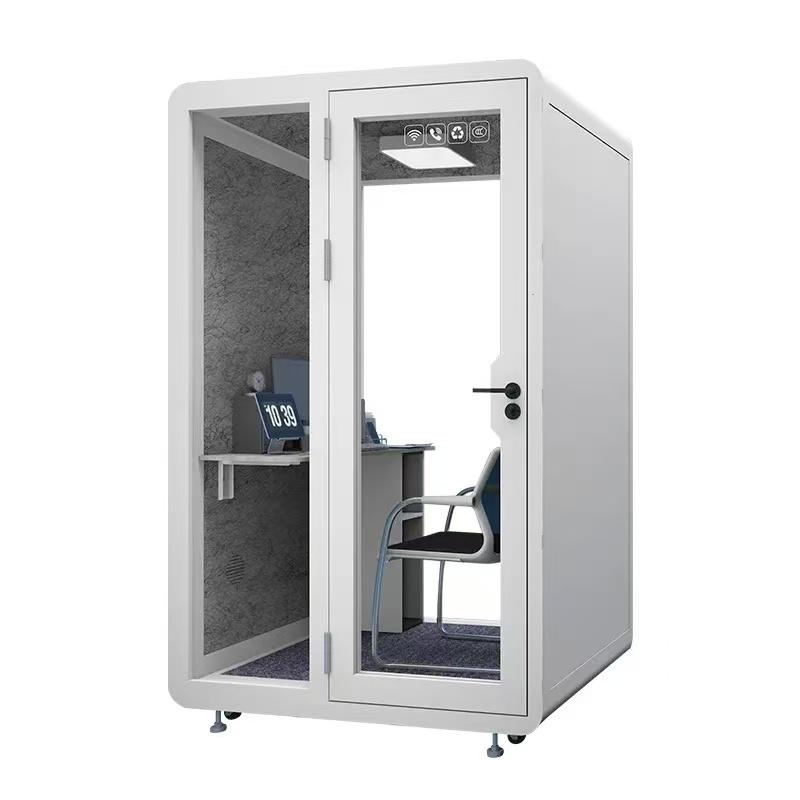
Concentrated desk work requires more than call privacy. Review seated posture, table depth and height, screen distance, keyboard and document space, lighting, glare, power, cable control, airflow, equipment heat, entry and exit, and the longest eligible session. Check whether the surrounding office still receives typing, voice, or other disturbance relevant to the use.
Disqualify the route when a normal workstation or focus room already solves the task with less floor and service burden, when prolonged occupation creates queue pressure, or when comfort depends on a session much shorter than the defined work. The decision should state which tasks remain outside the pod.
Compare focused output cautiously. The review can confirm that a representative task was completed with acceptable interruption and comfort, but it should not claim a universal productivity increase. Record the work type, session, surrounding condition, interruptions, early exit, and chosen alternative. The evidence supports a workplace-fit decision rather than a broad human-performance promise.
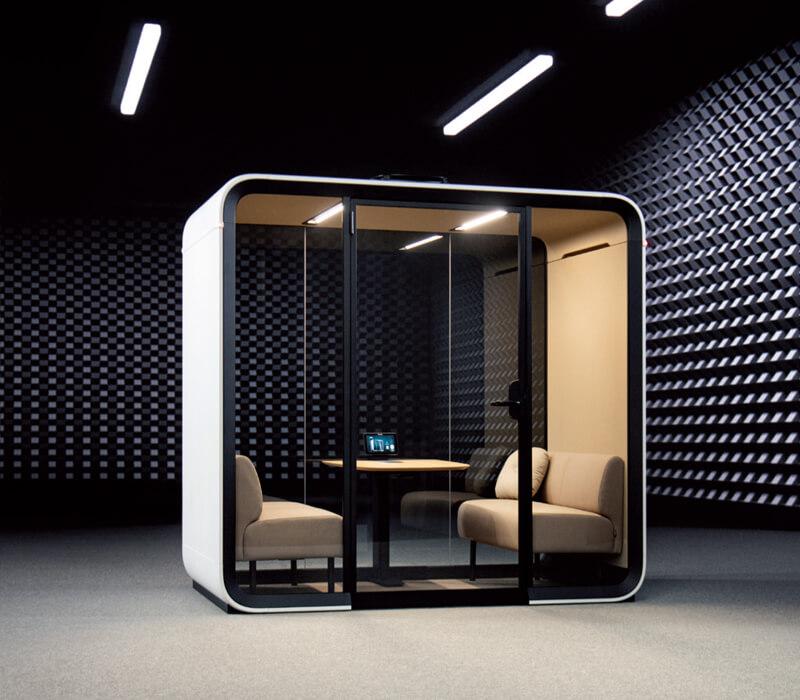
Two participants need suitable face-to-face distance, personal space, entry order, shared documents, screen sightlines, speech privacy, visual privacy, and an acceptable interaction with the door and furniture. Test a representative interview, support conversation, or review using ordinary materials and approved procedures.
Disqualify a model if nominal occupancy leaves one person unable to enter or move comfortably, if a screen or document is exposed from common approaches, if speech boundaries do not suit the content, or if the location lacks an appropriate alternative for sessions that exceed the pod's limit.
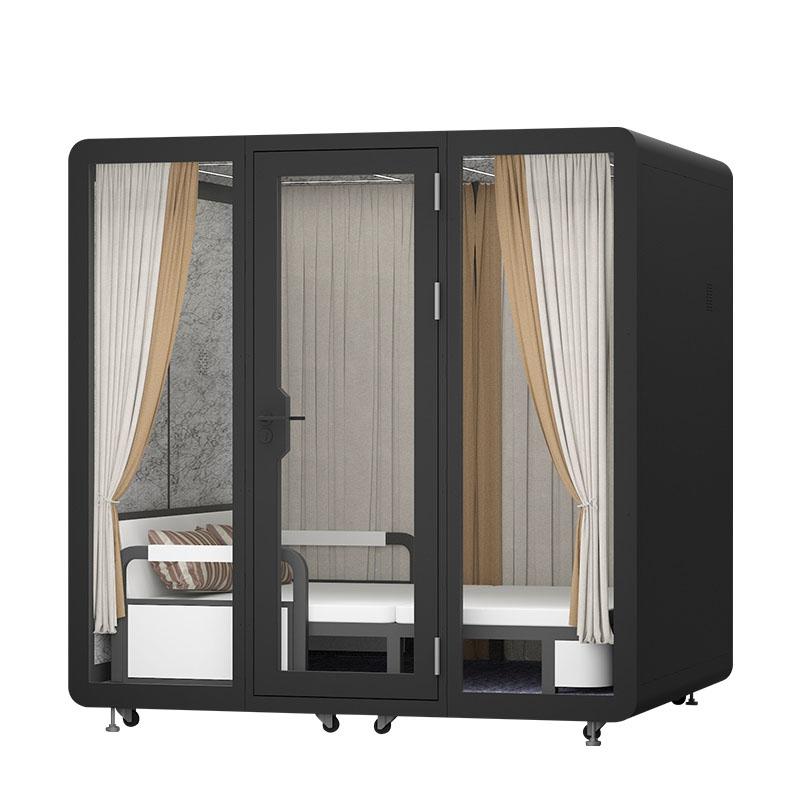
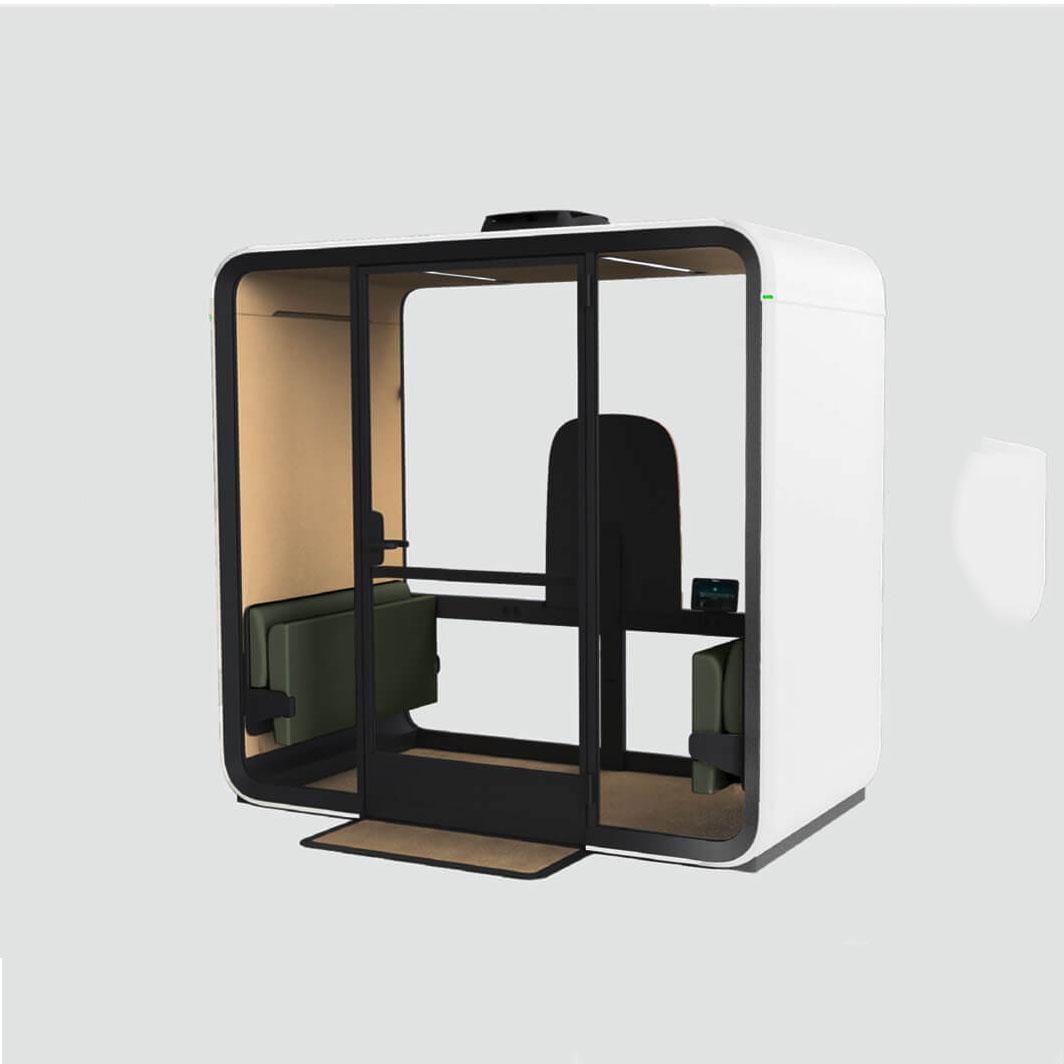
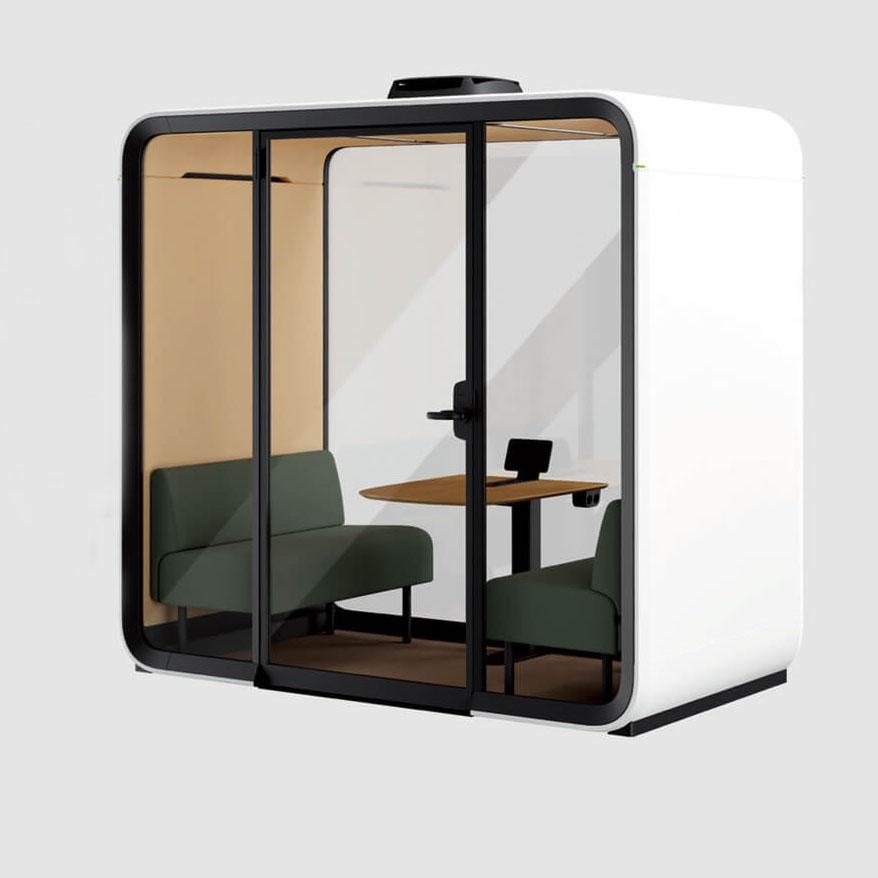
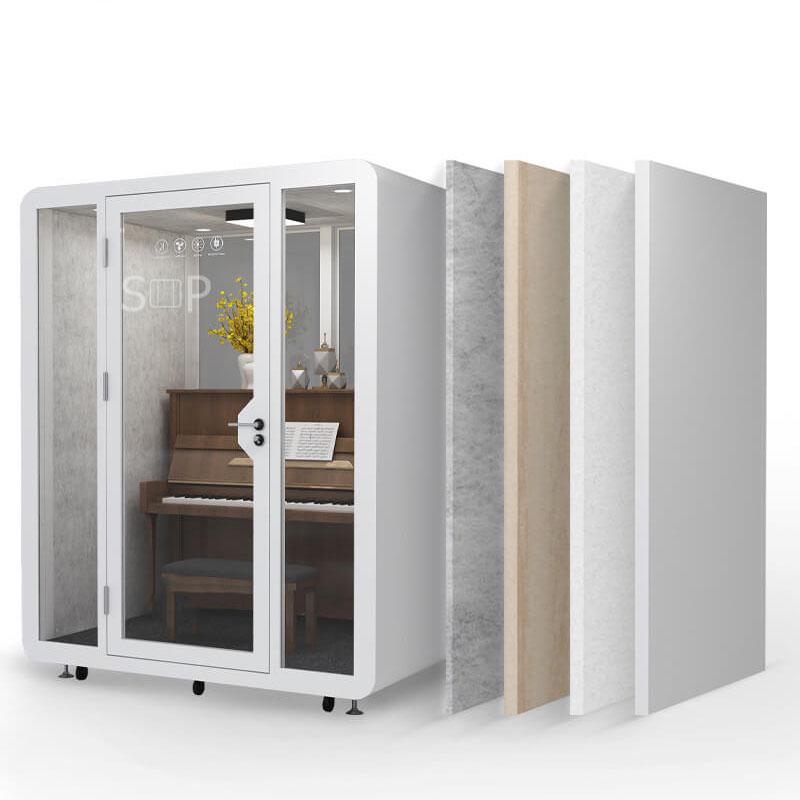
The office booth product reference can supply candidate configurations for this and the smaller archetypes. Keep the shortlist tied to the exact furniture, door, glazing, and technology options used in the trial.
Review the consultation route from both seats. Door proximity, screen angle, personal space, control reach, and visible documents may affect participants differently. Include arrival and departure, especially where one person hosts a visitor or sensitive conversation. A model that feels adequate to the host can still create an awkward or exposed experience for the second participant.
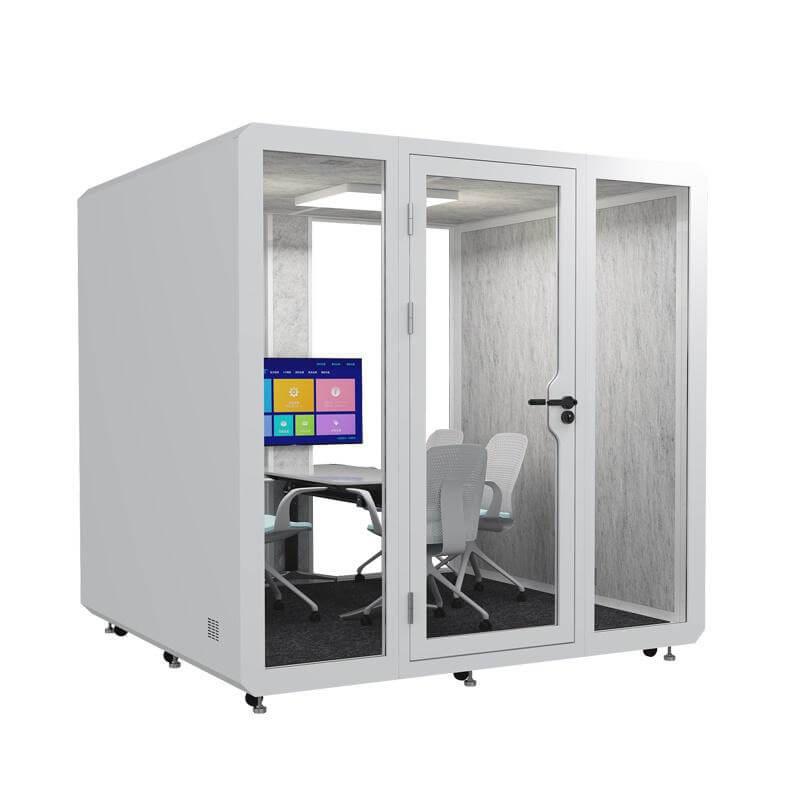
A structured meeting route includes occupancy, agenda, shared material, remote participants where relevant, camera framing, microphone and loudspeaker behavior, content sharing, power, data, turn-taking, airflow, lighting, duration, and reset. Test the meeting from arrival through departure rather than checking technology in isolation.
Disqualify the pod when the table and seating prevent the intended interaction, when remote participation is consistently awkward, when entry or equipment reduces usable occupancy, or when the proposed site cannot support surrounding circulation and meeting turnover. Larger nominal capacity should not compensate for a failed agenda.
Test technology recovery within the meeting route. Reconnect a normal device, change the presenting participant, or follow the approved response to a routine connection issue. Record whether controls are understandable and whether support ownership is available. Installed equipment adds little value when the meeting cannot recover without a specialist who is not part of normal operation.
Flexibility is useful when the team has several recurring activities and a controlled change between them. Define the approved configurations, who changes furniture or technology, what parts and storage are needed, how long reset takes, and which activities remain excluded. Test at least two intended transitions under normal operating ownership.
Disqualify the flexible route when changes rely on specialist effort that is not available, loose components have no custody, reset consumes the service window, or compromise layouts perform every task poorly. A stable single-purpose pod can be the stronger choice when demand is consistent.
After the archetype trials, compare finalists on non-negotiable task fit, site release, operating burden, complete scope, maintenance, parts, downtime, and change value. Weighting preferences is useful only after every candidate passes its route-specific rejection tests.
Keep the cost comparison archetype-specific. A larger flexible model may combine two recurring roles, but it can also consume more floor area, require additional site work, and create scheduling conflict between those roles. A smaller dedicated model may need more units while simplifying operation. Normalize freight, installation, options, support, relocation, and unavailable-time assumptions before treating purchase totals as comparable.
Preserve disqualified candidates and reasons in the decision record. A failed model might be suitable for another task or site, while a passed model can become invalid after an option or layout change. The record prevents future teams from turning a conditional trial into a brand-wide endorsement or rejection.
Ask each operating owner to confirm the shortlist from their route. Workplace teams confirm the task and user rule; facilities confirm footprint, cleaning, maintenance, and faults; IT confirms supported devices and recovery where technology is involved; procurement confirms comparable scope and exclusions. Unresolved ownership is a disqualification condition when it leaves a critical function without a credible response.
Plan a follow-up after normal use begins. Review whether accepted tasks are actually completed, whether users choose a different archetype, which limits are misunderstood, how long faults remain open, and whether comfort changes during consecutive sessions. The follow-up can retain the choice, narrow it, adjust operation, or reopen the shortlist without claiming that the initial pilot was wrong.
| Task archetype | Representative acceptance task | Comfort and function focus | Disqualify when |
|---|---|---|---|
| Private call booth | Complete a normal short call | Entry, speech path, controls, airflow, reset | Call or site boundary fails |
| Individual work pod | Perform the longest eligible focus session | Posture, desk, screen, light, heat, opportunity cost | Existing space is better or long use is unsuitable |
| Two-person consultation | Conduct a private review with shared material | Interaction, sightlines, speech, entry | Nominal occupancy does not support the real meeting |
| Structured meeting pod | Run the complete agenda with intended technology | Turn-taking, devices, duration, turnover | Interaction or hybrid route fails |
| Flexible team pod | Change between two approved activities | Reset ownership, parts, storage, compromise | Change burden exceeds the value |
They solve different work. Ranking them together would reward size or feature count instead of task fit. Select the relevant archetype, apply its disqualification conditions, and compare models under matched occupied trials. A compact call booth can be best for one route and unsuitable for another.
Use representative occupants, furniture, devices, location, controls, surrounding conditions, and the longest eligible session. Record posture, movement, light, glare, airflow perception, heat, noise, control access, and early exit. Keep the result bounded to the tested configuration and conditions.
Usually not without trade-offs. Occupancy, furniture, privacy, technology, session length, footprint, and reset requirements conflict. A flexible model is credible when named configurations support recurring tasks and the operating team can perform the change. It should not inherit tasks that fail its acceptance route.
Compare complete scope, site work, operating burden, maintenance, parts, downtime, warranties, relocation value, and the strength of supplier evidence. Weight preferences that matter to the defined task, preserve limitations, and select the candidate with the clearer controlled route rather than adding unrelated features.
Run one final matched task if the commercial comparison depends on a feature that was not tested equally. Keep the same participants, duration, devices, location type, and observation form, then document why the difference matters to the accepted use. When performance remains equivalent, choose on controllable scope, service ownership, and lifecycle fit instead of inventing a winner.
Five useful pod options are five task routes, not five universal winners. Private calls, sustained focus, consultation, structured meetings, and flexible team use each impose different conditions on occupancy, furniture, technology, comfort, privacy, placement, and operation.
Select the task fit rather than a universal winner. Keep the rejection tests, occupied observations, site release, commercial boundary, and accepted use beside the chosen configuration so the shortlist remains defensible after purchase.

 Tel: +8613538031763
 Email: info@sopworkpod.com
 MP/WhatsApp: +8613538031763
 Manufacturer Address:Liucheng Lujiang District,Meixi Road,Nanan City,Fujian,China