
Need Help?
Please leave your contact information to get our latest catalog
Get In Touch Now >


Author:SOP Work Pods Manufacturer TIME:2026-08-28
The real test of modular meeting pods often arrives months after installation, when a team moves, a floor is restacked, the meeting technology changes, or the pod is proposed for another building. At that moment, the word modular is not a method statement.
A useful flexibility claim names the expected change, the parts involved, the route and skills required, the services that must be disconnected or reassigned, the likely downtime, and the acceptance checks that restore the meeting role.
This article builds a change-feasibility ledger. It separates simple adjustment from specialist reconfiguration, relocation, and replacement so the buyer credits only future scenarios that can actually be executed.
Flexibility has value only if the current meeting service remains acceptable. Preserve the assigned sessions, occupancy, privacy, technology, comfort, location, and operating ownership as the baseline for every later change.
Stabilize the current meeting role and accepted configuration.
Define session classes, occupancy, duration, privacy, devices, furniture, technology, comfort, location, booking, site interfaces, maintenance, and the evidence used to accept the present pod.
Run a representative meeting and preserve the exact configuration and operating condition that works.
Reopen the change ledger if Preserve contradictory observations and limitations because future flexibility being credited before current use is viable becomes plausible.
Finish the change ledger entry with a decision to approve a controlled configuration baseline. Name its correction owner and next trial condition.
A future reorganization may mean a new team, different furniture, another device package, a changed floor position, or a move to another building. Each scenario creates a different technical and commercial route.
Name the future changes the office actually expects.
Separate furniture reset, technology addition, role change, capacity change where supported, rotation, same-floor relocation, cross-floor move, building move, storage, refurbishment, and eventual removal by likelihood and timing.
Review workplace and lease plans and ask responsible teams which changes are plausible enough to justify evidence and cost.
Reopen the change ledger if Preserve contradictory observations and limitations because a broad flexible label including scenarios the office will never execute becomes plausible.
The change ledger should state how to approve a limited change-scenario register. Place each open limitation beside the responsible owner and review trigger.
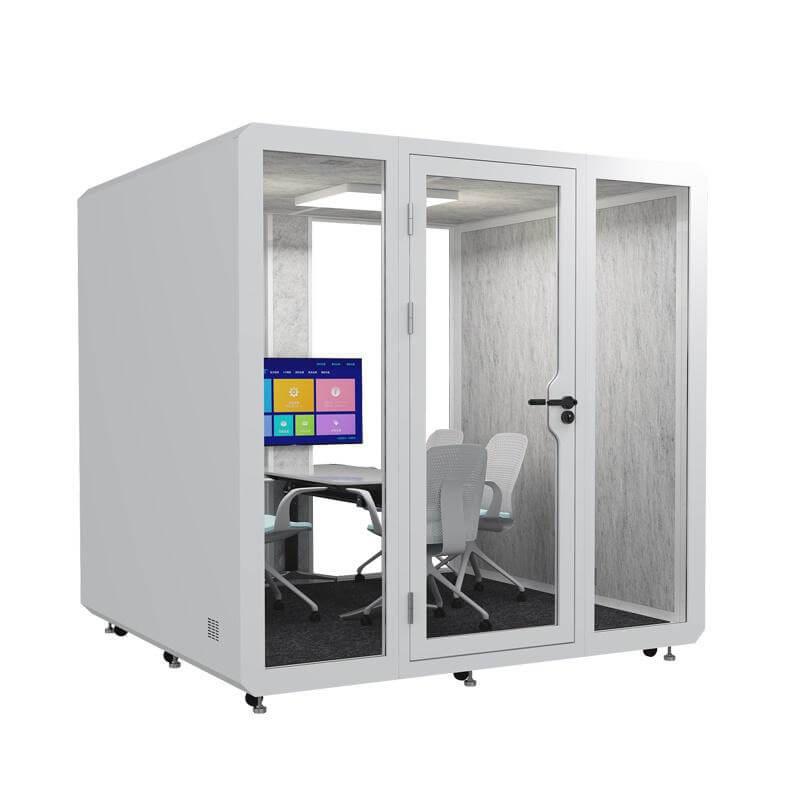
Panels, furniture, glazing, controls, ventilation parts, electrical interfaces, and technology do not share one reconfiguration rule. The offered model needs a component-by-component boundary that purchasing and facilities can understand.
Map reconfigurable fixed and replace-on-change components.
Review panels, door, glazing, ceiling, floor, seals, fasteners, trims, furniture, controls, lighting, fans, filters, power and data fittings, technology, finishes, consumables, tools, skills, and warranty effects.
Use model-specific instructions and supplier clarification to identify permitted change, sequence, parts, inspection, and exclusions.
Reopen the change ledger if Preserve contradictory observations and limitations because unapproved changes degrading fit function or warranty becomes plausible.
Release this change ledger step only when the team can release a component and change-permission map. Its retained evidence shows unresolved conditions and next actions.
| Expected change | Physical route | Dependencies to close | Recommissioning focus |
|---|---|---|---|
| Furniture or device adjustment | User or approved service adjustment | Clearance, cables, power, support | Posture, screen view, controls, call setup |
| Internal component reconfiguration | Model-specific disassembly and approved parts | Tools, consumables, skilled labor, warranty | Joints, door, ventilation, finish, occupied use |
| Move on the same floor | Complete or partial move through a surveyed route | Handling, protection, services, new position | Access, sound paths, light, airflow, technology |
| Move to another building | Removal, transport, receiving-site installation | Packing, freight, storage, enabling work, authority | Full meeting-service acceptance |
Demountable does not mean that a pod can pass every door or arrive ready for service. The route, largest component, handling method, floor protection, receiving area, storage, assembly clearance, and warranty conditions shape a credible move.
Survey route and receiving-site conditions for relocation.
Measure packaged or component dimensions, doors, corridors, turns, lifts, stairs, loading, floor protection, storage, working hours, assembly clearances, floor condition, circulation, accessibility, and future site services.
Walk current and plausible receiving routes with the largest planned component and mark every restriction and enabling work item.
Reopen the change ledger if Preserve contradictory observations and limitations because a demountable pod becoming practically immovable in the building becomes plausible.
Turn the change ledger finding into an instruction to qualify the relocation scenarios. Record the invalidating condition and person who must respond.
Location changes can alter more than the enclosure. Power, data, room air, device support, circulation, accessibility review, cleaning access, and nearby sound paths need owners at both the origin and receiving position.
Control power data ventilation and technology changes.
Trace plugs or hardwired interfaces, data and wireless conditions, controls, external ventilation interaction, detectors and sprinklers, screens, cameras, audio, cable routes, authorized trades, isolation, reconnection, setup, and testing.
Document who may change each interface and rehearse the functional checks required after reconnection or technology revision.
Reopen the change ledger if Preserve contradictory observations and limitations because a flexible furniture or location change breaking the meeting service becomes plausible.
Close the change ledger route by agreeing how to approve service change ownership. Preserve its accepted boundary, correction, and reason for retest.
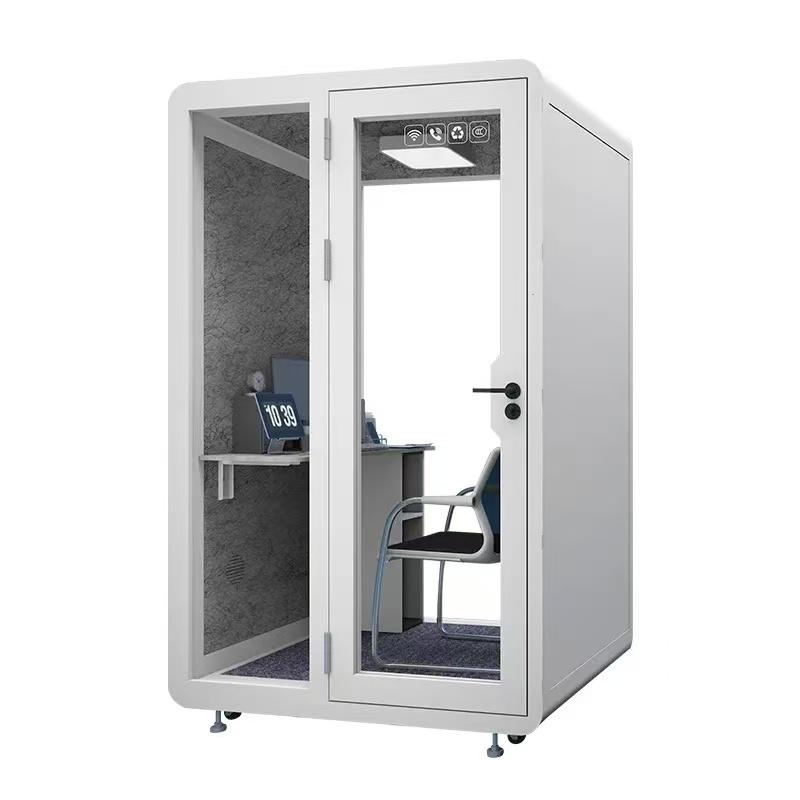
A reconfigured pod can fail operationally even when its parts are intact. Discovery, booking labels, eligible sessions, fault routing, user guidance, cleaning, and fallback spaces must reflect the revised role.
Adapt booking guidance and support after change.
Review meeting labels, capacity, booking descriptions, location, user instructions, device support, turnover, cleaning, faults, parts, maintenance, accessibility information, maps, signage, and communication of unavailable periods.
Rehearse the changed user journey and update service records before reopening the pod.
Reopen the change ledger if Preserve contradictory observations and limitations because physical change being completed while users follow obsolete rules becomes plausible.
This change ledger output explains how to release the revised operating service. It identifies the owner, remaining uncertainty, and change that reopens review.
The meeting pod configuration range becomes relevant after the change ledger identifies which component, occupancy, technology, and location scenarios the project must support.
Build the change request before anyone reaches for tools
A change request should identify the current accepted configuration, proposed outcome, affected components, destination if any, required date, and reason. Attach current drawings or records, the supplier's applicable method, site constraints, and the people who own technology, facilities, workplace operation, and acceptance.
The first review decides whether the request is adjustment, reconfiguration, relocation, or replacement. It should also expose unavailable parts, unknown joints, warranty restrictions, route constraints, buyer-provided work, and a period when the pod cannot be used. Do not schedule the move while those dependencies remain anonymous.
After work, compare the result with the original meeting role and the approved change. Close defects, update the asset and booking records, retain replaced parts or disposal evidence as applicable, and state which future request can reuse this method. A successful change is evidence for that route, not proof that every move will be easy.
Keep a before-and-after configuration record that an operator can retrieve without reopening the project archive. It should show the approved parts, settings, service connections, location, user guidance, and acceptance state. That record becomes the baseline for maintenance and the next proposed change.
A changed chair may require a comfort check; a moved wall can affect sound paths; a new location can change light, airflow, access, and technology. Recommission the consequences that matter to users and operators.
Recommission every approved change against its effect.
Check identity, assembly, door and seals, ventilation, lighting, controls, power, data, technology, furniture, privacy, occupied comfort, meeting interaction, location, booking, user guidance, defects, and documents according to the change scope.
Witness the affected use case and compare with the controlled baseline, recording accepted differences and unresolved corrections.
Reopen the change ledger if Preserve contradictory observations and limitations because change completion being mistaken for continued performance becomes plausible.
End the change ledger step with an explicit route to close change control with a revised acceptance record. Attach context, limitation, and operating ownership.
Modularity may support user adjustment, approved component reconfiguration, relocation, or replacement. These are different capabilities. A chair or device can sometimes change without altering the enclosure, while panels, services, transport, or receiving-site work may require specialist methods and new parts.
Credit only the routes documented for the offered model and plausible office scenarios. A buyer should be able to name what changes, who performs it, what the pod cannot do during the work, and which checks restore service.
The current meeting role is the control condition. Without it, a future configuration can be described as flexible even if it no longer supports the accepted occupancy, privacy, technology, comfort, access, or duration.
Freeze the model, parts, furniture, location, services, user guidance, and acceptance state that deliver the present role. Every change request can then identify what it touches and which user or operating effects must be compared after the work.
Request model-specific evidence when work affects structural joints, panels, ceiling or floor parts, glazing, door alignment, seals, ventilation components, electrical interfaces, proprietary furniture, finishes, or warranty-controlled assembly. Generic modular language is not a safe work instruction.
The evidence should identify tools, consumables, replacement parts, skills, handling, limits, and the correction route. If the method is unavailable for the exact configuration, classify the scenario as uncertain or replacement rather than promising reconfiguration.
Recommission the effects that could have changed. A new position can alter circulation, light, airflow, nearby listeners, return-air interaction, power, data, device support, cleaning access, and booking labels. An internal change can alter posture, controls, seals, ventilation, or meeting technology.
Do not repeat irrelevant checks merely to create paperwork. Link each check to the approved change, close defects, update the configuration record, and release the meeting role only after the affected conditions are acceptable again.
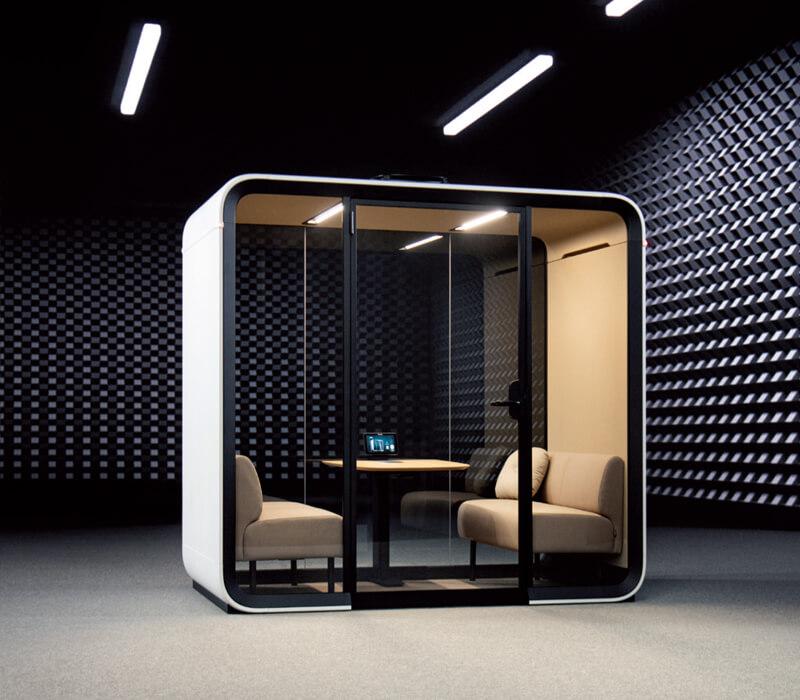
Modular meeting pods support a flexible office when their accepted meeting role can survive named future changes through a credible component, route, service, responsibility, and recommissioning method. The label alone does not establish that capability.
Credit flexibility scenario by scenario. Keep adjustment, reconfiguration, relocation, and replacement separate, and retain the supplier evidence and site assumptions that make each route possible.
The next action is to approve a change-feasibility ledger before purchase. When a real change is proposed, reopen the relevant line, confirm that its assumptions still hold, and recommission every user or operating effect that may have changed.

 Tel: +8613538031763
 Email: info@sopworkpod.com
 MP/WhatsApp: +8613538031763
 Manufacturer Address:Liucheng Lujiang District,Meixi Road,Nanan City,Fujian,China