Need Help?
Please leave your contact information to get our latest catalog
Get In Touch Now >


Author:SOP Work Pods Manufacturer TIME:2025-02-27
Buying a piece of furniture is a transaction. Approving an indoor office pod is a workplace investment whose value depends on demand, adoption, and avoided disruption. The distinction matters because the decision should not rest on the sticker price alone. Instead, the approval case must define the boundary of the investment: what is included, what is excluded, and what conditions must hold for the pod to deliver measurable returns.
Treat the decision as an investment memorandum with an installed-cost boundary, demand baseline, measurable outcomes, operating obligations, uncertainties, pilot method, and review date. The useful result is a conditional approval that can be revisited when local evidence changes.
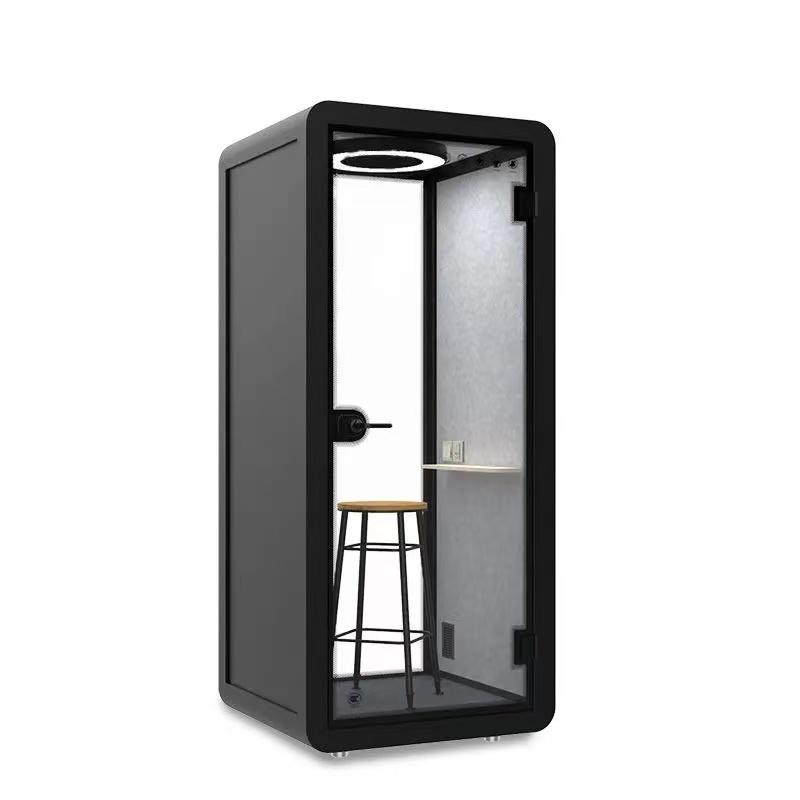
Before approving any investment, you need a demand baseline. This is the current and projected usage pattern that the pod is expected to serve. Without a baseline, you cannot measure whether the pod is being used enough to justify its cost.
Start by identifying the user groups: people taking confidential calls, teams seeking small meeting space, or individuals needing focused work away from open-plan noise. Observe requests during representative working periods and record when suitable rooms are unavailable, where calls move, how long people wait, and which tasks are abandoned or disrupted. Separate measured demand from interview estimates so the approval team can see the confidence level of each input.
Document the baseline in a simple table that can be revisited at the review date. The table should include the user group, the estimated demand in hours per week, the current alternative (e.g., meeting room, home office, or no space), and the pain point that the pod addresses. This baseline becomes the reference point for measuring adoption after installation.
The installed-cost boundary is the total cost to make the pod operational, not just the purchase price. This boundary includes delivery, assembly, electrical connection, ventilation integration, and any acoustic testing or adjustment. It also includes the cost of preparing the floor space, such as clearing the area, ensuring power availability, and confirming that the pod fits through doorways and elevators.
Define the scope clearly in the approval memorandum. For example, the installed scope might include one indoor office pod, standard acoustic panels, integrated lighting and ventilation, a power outlet, and assembly by the supplier. It would exclude any custom branding, additional shelving, or upgraded furniture inside the pod. By drawing this boundary, you avoid surprises when the final invoice arrives.
Also consider the opportunity cost of the floor space. The pod footprint and required circulation are no longer available for another use, so the opportunity cost of the proposed location should be visible. The memorandum should note this trade-off and confirm that the location chosen does not block circulation or emergency exits.
Utilization is the share of genuinely usable time during which the pod supports its intended work, but booking occupancy alone does not prove value. A room can appear busy because it is the only enclosed space, because users reserve it and do not attend, or because an unsuitable task occupies it for long periods. Read bookings together with turn-away demand, no-shows, session purpose, user feedback, and recovery time between occupants.
Set a local target from the observed demand baseline and the reason for buying the pod. A call booth purchased to absorb short peak demand should not be judged by the same occupancy pattern as a focus pod reserved for longer work. Record the target as an assumption, name its owner, and state what action follows if actual use is materially different.
Use privacy-conscious booking data, periodic observation, or a simple anonymous usage count where appropriate. Review the pattern after users have had enough time to understand the location and booking process. The decision is whether the pod serves the defined need reliably, not whether it reaches a universal percentage.
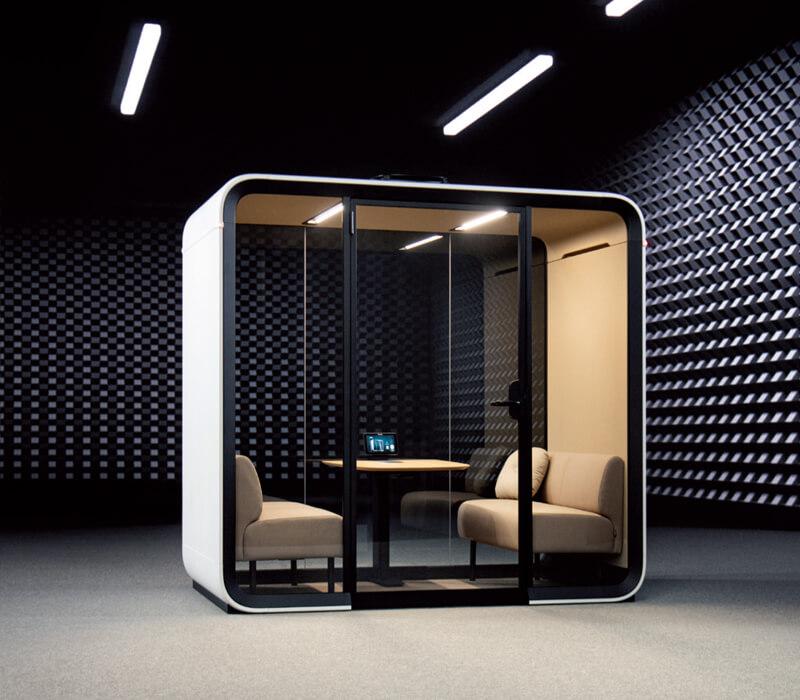
Avoided disruption may be a meaningful benefit, but it should not be converted into a productivity value without local evidence. The pod can move speech and focused work away from nearby desks; whether that change saves time depends on office behavior, placement, privacy performance, and whether people actually use the space.
Create a before-and-after observation log. Record where private calls occur, how often people search for a room, whether nearby staff report intelligible speech, and whether booked meeting rooms are used by one person because no smaller enclosure is available. After installation, repeat the same observation under comparable working conditions.
Keep measured observations separate from financial assumptions. If finance assigns a value to released meeting-room time or reduced disruption, record the method and owner. If no defensible value is available, report the operational change without inventing a monetary return.
Beyond the installed cost, the pod has ongoing operating obligations. These include electricity for lighting and ventilation, periodic cleaning, and occasional maintenance of the acoustic panels and door seals. Estimate these costs in the memorandum so the total cost of ownership is transparent.
Request electrical information for the offered configuration rather than assuming consumption. Cleaning depends on traffic and location; maintenance depends on access, component life, usage, and supplier support. Record parts, labor, travel, downtime, and the party responsible for each item.
Assign an owner for each operating obligation. For example, the facilities team owns cleaning, the IT team owns the booking system, and the office manager owns the maintenance schedule. Clear ownership prevents the pod from falling into disrepair and ensures that the investment continues to deliver value.
Before a wider rollout, use a pilot when the demand, location, or user response remains uncertain. Run it long enough to include representative quiet periods, peak demand, different user groups, and the intended session types. Record the site condition and offered pod configuration so the result is not detached from what was actually tested.
Define success and stop conditions before the pilot. Select measures from the local problem: fewer displaced calls, better availability of small rooms, acceptable occupied comfort, lower speech intelligibility at nearby desks, usable access, or reduced complaints. The approval team should choose thresholds from its baseline and risk tolerance instead of borrowing impressive-looking percentages from an unrelated workplace.
The pilot also provides evidence for the approval memorandum. Instead of relying on assumptions, you can present real data from your own office. This evidence is far more persuasive than generic claims about productivity gains.
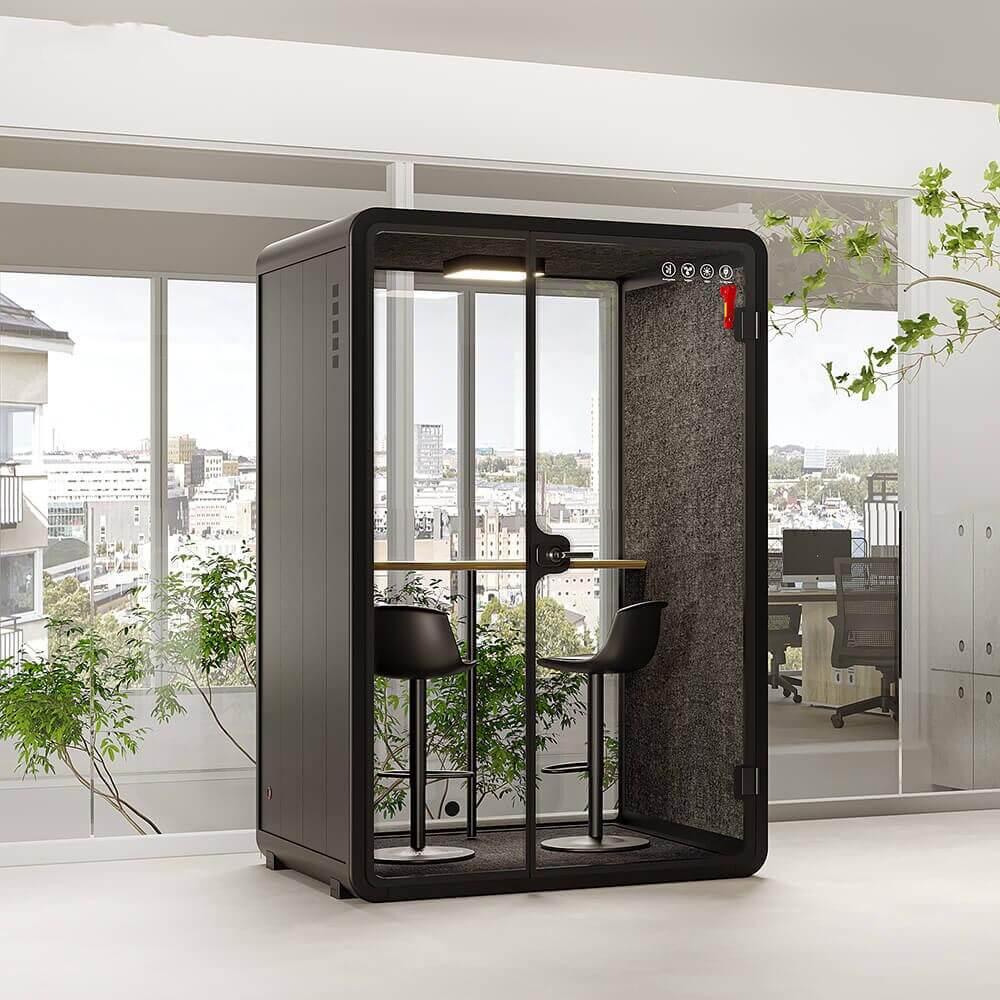
The approval memorandum is the final output of this investment case. It consolidates the installed-cost boundary, demand baseline, measurable benefits, operating obligations, uncertainty, pilot, and review date into a single document. The memorandum should be concise enough for the approval audience to review while preserving the assumptions and evidence needed to challenge the request.
Include the following sections in the memorandum: the investment boundary, the demand baseline with the table below, the installed scope, the utilization target, the avoided disruption estimate, the operating cost, the pilot plan, and the review date. The review date should follow a representative observation period and lead to a clear decision: expand, adjust, relocate, retain, or remove the pod.
The table below is the investment hypothesis register. It connects each benefit to a baseline, a measure, an owner, an observation period, and a stop-or-expand decision. This register is the core of the memorandum and should be reviewed on the date chosen for the local decision cycle.
| Benefit | Baseline | Measure | Owner | Observation Period | Stop-or-Expand Decision |
|---|---|---|---|---|---|
| Focused work time | Recorded interruption pattern before installation | Utilization rate and user survey | Office Manager | Representative pilot period | Use locally approved utilization, comfort, and availability conditions |
| Confidential calls | Calls taken in open plan or meeting rooms | Booking data and call quality feedback | IT Team | Representative pilot period | Compare served and unserved call demand with the baseline |
| Avoided disruption | Observed nearby speech and interruption baseline | Before-and-after survey | HR Team | Agreed review period | Apply the buyer's stated improvement threshold and evidence method |
| Space efficiency | Meeting rooms often underutilized | Meeting room booking data | Facilities Team | Agreed review period | Confirm whether one-person demand moved from larger rooms as intended |
How long does it take to see a return on an indoor office pod? The payback period depends on the complete installed and operating cost and on benefits the buyer can actually measure and value. Calculate it from local pilot data and finance-approved assumptions; do not use a generic utilization rate or recovery period as a promise.
What if the pod is not used enough? Low utilization is a signal to adjust, not necessarily to abandon the investment. Relocate the pod to a more visible area, simplify the booking process, or communicate the pod's availability more clearly. If use remains materially below the locally approved condition after a representative review period, test location, booking, awareness, comfort, and demand assumptions before deciding whether to relocate or remove it.
Can the pod be moved to another location later? Some indoor office pods can be dismantled or relocated, but the method, permitted moves, parts, labor, route, warranty, and recommissioning requirements vary by model. The approval memorandum should note whether the pod is intended to be permanent or flexible. If flexibility is important, choose a model that can be disassembled and reassembled without major disruption.
An indoor office pod is not a simple purchase; it is a workplace investment that must be justified by demand, adoption, and avoided disruption. By structuring the decision as an investment memorandum, you move beyond the question of "how much does it cost" and toward the more useful question of "what value will it deliver."
The approval memorandum should include an installed-cost boundary, a demand baseline, measurable benefits, operating obligations, uncertainty, a pilot, and a review date. The investment hypothesis register ties each benefit to a baseline, a measure, an owner, an observation period, and a stop-or-expand decision. This structure ensures that the decision is transparent, data-driven, and reversible.
Where uncertainty is material, start with a controlled pilot and collect evidence from the actual workplace. Use that record to decide whether to expand, adjust, relocate, retain, or remove the pod. This approach turns a speculative expense into a measured investment with a clear path to value.

 Tel: +8613538031763
 Email: info@sopworkpod.com
 MP/WhatsApp: +8613538031763
 Manufacturer Address:Liucheng Lujiang District,Meixi Road,Nanan City,Fujian,China