Need Help?
Please leave your contact information to get our latest catalog
Get In Touch Now >


Author:SOP Work Pods Manufacturer TIME:2026-10-22
Two approvals can leave an important gap. IT may accept a particular laptop lock, while facilities accepts a particular pod and desk. Neither decision necessarily establishes a supported connection between them. Before specifying a soundproof work pod for shared laptop use, join those separate decisions at the exact device, tether and fixed attachment point.
The useful answer is whether that approved combination permits the employee's ordinary work without obstructing the door or straining the connection. It is not a judgement about resisting theft, leaving equipment unattended or protecting information. No anchor provision is assumed here, and a product photograph cannot supply the missing approval.
Start with the device the workplace actually issues, including its model and any case intended to remain fitted. Ask the equipment owner to identify the exact lock or locking arrangement accepted for that device. A general purchasing description such as laptop cable leaves the interface undecided. Compatibility needs an applicable manufacturer statement and owner approval, not a visual resemblance between the lock head and an opening on the computer.
Keep the supplied configuration intact when asking the question. If the device requires a separate approved locking arrangement, identify it and its instructions rather than treating an accessory as an invisible part of the laptop. If no supported device-side method exists, stop this candidate at that interface. There is no reason to investigate desk reach for a combination that has not been approved at the computer. Do not improvise a connection or alter the device to continue the comparison.
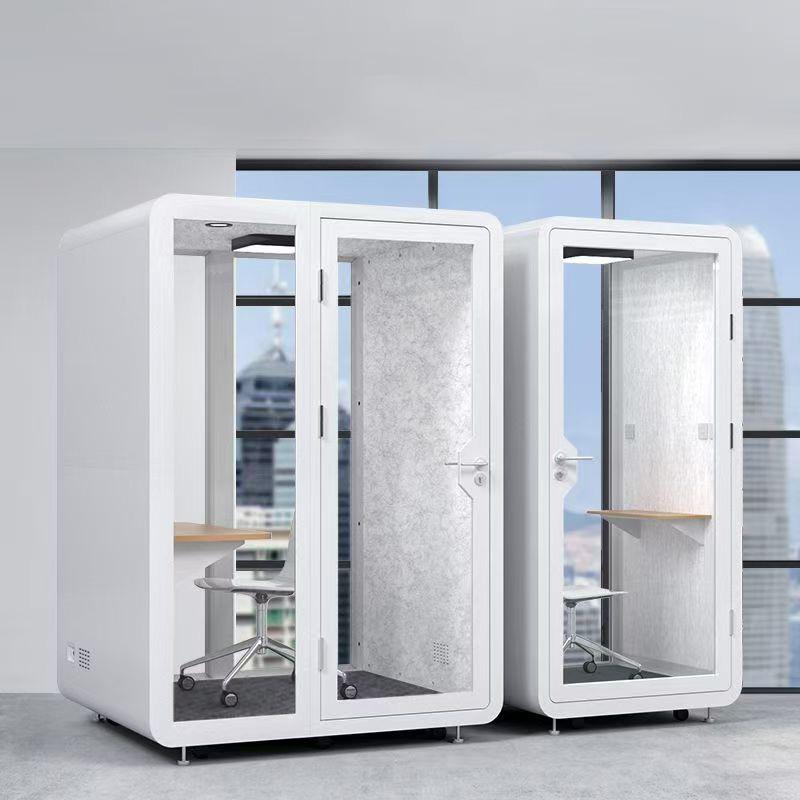
The furniture end requires a different answer. Ask the pod supplier and responsible workplace owner to identify a fixed attachment point and secure attachment method approved for the offered configuration. The answer must name the location and applicable furniture, not simply say that a cable can be used somewhere inside. If the quotation does not include such provision, record that absence before selecting accessories.
An exposed table leg, handle, service opening or trim is not an invitation to attach a tether. Do not add holes, adhesive fittings or improvised anchors. This review assumes any required provision has been expressly accepted and prepared through the responsible supplier's authorized scope; it offers no installation method. A workplace owner approving the security objective does not establish that an enclosure component is suitable for attachment.
Also distinguish a fixed attachment point from a movable accessory that happens to be on the desk. Ask the supplier to clarify what the proposed tether connects to and how that proposal relates to the quoted furniture. If there is no approved fixed point, the purchasing choice is another supported configuration or an unresolved requirement, not an on-site experiment.
When comparing SOP work pod configurations, ask whether the quoted furniture includes an approved fixed attachment point for the identified tether; treat an unanswered request as unresolved.
Now compare the actual component identities in both answers. The lock assembly approved for the laptop must be the one proposed for the fixed attachment point, with any connecting components explicitly included. Have the responsible providers confirm the complete combination before a demonstration. This is where individually acceptable purchases can fail to form an accepted system: an equipment team may have reviewed one lock while a furniture proposal assumes another. The table separates those dependencies so a missing answer remains attached to the correct interface. It is not a strength comparison, a security score or evidence that any illustrated pod supports an anchor. Preserve a declined combination as declined; a blank response means unconfirmed, which calls for clarification rather than a favourable interpretation.
| Interface | Approval must identify | What a separate approval cannot answer |
|---|---|---|
| Device to lock | Laptop, retained case and exact accepted lock assembly | Whether furniture offers an approved fixed point |
| Tether to fixed point | Identified tether and approved attachment method for that point | Whether a different lock works with the issued laptop |
| Fixed point to offered furniture | Point location and the exact approved furniture configuration | Whether the employee can work normally while connected |
| Complete normal-use route | Same components through work, closure and departure | Resistance to theft or permission for unattended storage |
A supported connection still needs a usable route. With the exact approved components identified, ask the provider to show the intended laptop position relative to the attachment point. Consider the lock assembly's occupied space alongside the cable itself. A route that reaches the device at one edge of the desk may not serve the position where the employee normally types, reads or joins a call.
Describe those working positions to the provider without inventing a universal cable length or bend allowance. Include the device's permitted lid positions, access to the lock for authorized operation, and access to the ports the employee actually uses. Keep charging and peripheral leads visible as separate objects. They are not part of the security tether, and their presence should not disappear from the review just to make the proposed route look clear.
Seek a provider-approved route that leaves normal chair movement, controls, door operation and exit unobstructed. No cable should be routed through a closing door or rely on a user lifting it aside to leave. If normal reach is unresolved, request a different supported tether or furniture configuration. Extra length is not automatically a solution: the revised route needs the same review.
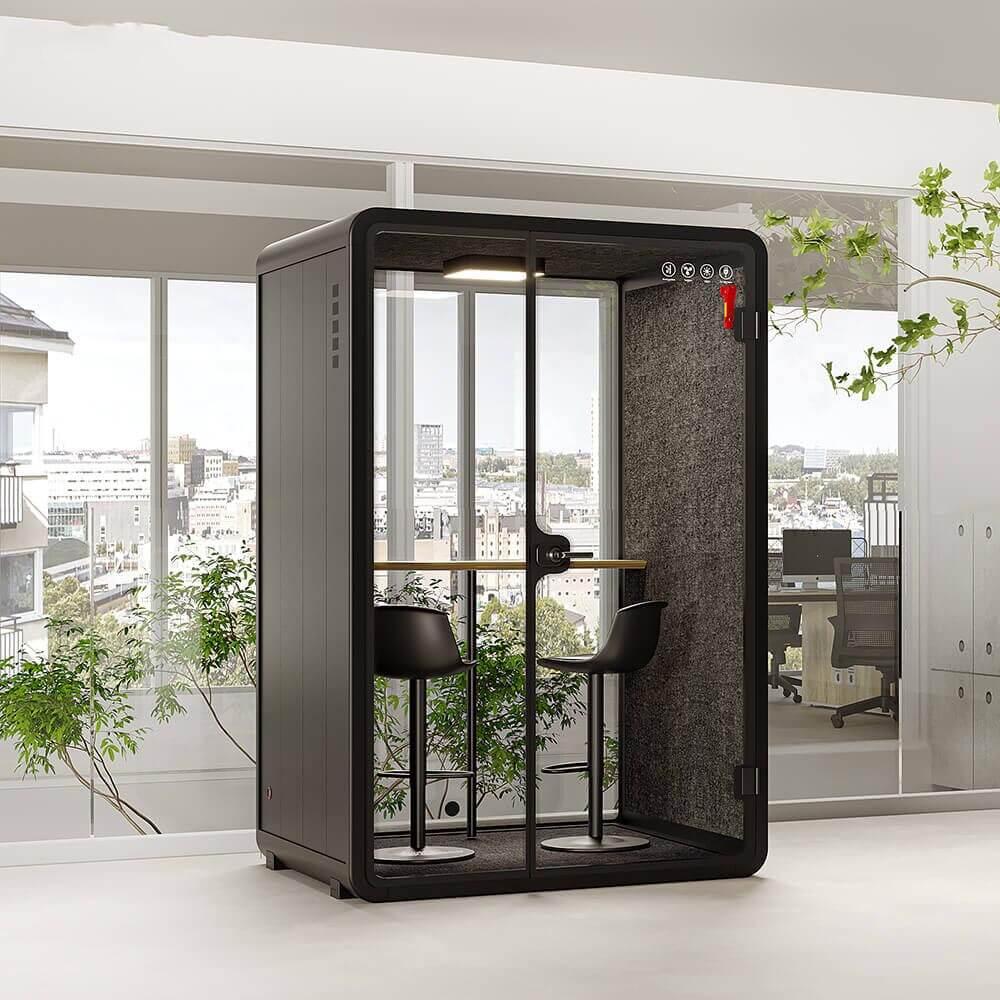
Arrange a normal-use observation only after the device owner and relevant providers have accepted the combination and defined how it may be used. The responsible person prepares the attachment according to the applicable instructions; the buyer does not trial unknown fixtures. Confirm that the demonstrated laptop, lock, tether, fixed point and furniture match the proposal. A substitute device or temporary attachment changes the question and must be identified before its result is used.
Invite the intended user to carry out a short, ordinary work sequence. They should be able to reach the working position, use the required ports, make permitted screen adjustments and finish the session without managing a cable across their movement path. Observe normal laptop and pod-door closure where relevant, without forcing either. Stop at unexpected tension, contact or interference and refer the issue to the responsible provider. Do not pull on the attachment, conduct a resistance test or reproduce a suspected snag to obtain a clearer result.
Define the approved device group explicitly. A shared workplace may issue more than one laptop model or allow visitors to bring their own equipment. A successful observation with one model does not answer for another case, device-side interface or lock assembly. Where the workplace cannot name the visitor's equipment in advance, leave it outside the approved combination unless the responsible owner has a supported route for that device.
Decide what remains in the pod after normal authorized disconnection and where the approved tether belongs. Have the provider identify a permitted resting position that leaves the next user's work and exit clear. Do not solve the reset by inventing a clip or attachment. Key or credential administration belongs to the equipment owner's process; this fit review neither records access secrets nor explains recovery or bypass. A shared-use decision should distinguish a supported equipment set from a promise that everyone can use the same lock.
Close the comparison with a disposition for the whole named combination: supported for the observed normal-use range, awaiting a specified approval, or unsuitable for the required task. Attach the exact unresolved interface rather than calling the entire pod insecure or compatible. When a laptop, case, lock, tether, attachment point or furniture option changes, identify which connection or movement observation no longer applies. A replacement is not covered merely because its commercial description is similar. Procurement can then compare an alternative against the unmet requirement without reopening unrelated pod features or accepting an unapproved workaround.
An accepted combination can still be incomplete as an order. State whether the equipment team supplies the lock and tether, whether the fixed point is included in the furniture option, and who delivers any separately approved provision. Ask each purchasing owner to reconcile its item identity with the accepted combination. Otherwise, one team can reasonably assume the other is supplying a necessary component. A demonstration item that belongs to the showroom should not quietly become a promised inclusion. Where an approved option must be ordered separately, decide its supply responsibility before treating the pod as ready for the intended device set. This closes a commercial gap without extending the attachment approval or inviting staff to complete it themselves.
Can the pod door replace the laptop tether requirement?
No. Treat the workplace's device requirement separately from the pod door. Door provision does not establish an approved device connection, and neither this review nor normal closure observation authorizes leaving a laptop unattended. Ask the equipment owner to retain its existing custody rules.
Does a longer approved cable automatically solve a reach problem?
Not necessarily. Its identity and accepted endpoints still matter, and its proposed route must remain clear during work, closure and departure. Ask the provider to review the replacement as a specific combination rather than prescribing extra length without seeing its route.
What if the quotation says security cable compatible but names no anchor?
Request the fixed point, furniture configuration and approved attachment method before accepting the phrase. Until those answers exist, the furniture-side requirement is unconfirmed. Do not choose a visible component yourself or use a demonstration attachment as a substitute for the offered provision.
Can an unlocked trial show that the selected lock fits?
It can illustrate only the state actually observed. Any complete-use observation must follow the owner's authorization and the relevant instructions with the accepted assembly. Do not infer normal secured-use clearance from a disconnected cable, and do not add force testing to the review.
Does this establish theft resistance?
No. The result concerns approved component compatibility and ordinary use only. It supplies no attack assessment, strength rating, insurance conclusion or loss guarantee. Security policy and any separate assurance requirements remain with the responsible workplace owner.
Buy the supported combination, not a cable and a pod that happen to appear in the same order. A soundproof work pod remains a candidate for this use only when the exact device, lock, tether and fixed point are accepted together and the normal work route is usable. If a mandatory interface stays unresolved, leave this configuration out of the approved device set. That is a precise purchasing decision, without turning a fit observation into a security guarantee.

 Tel: +8613538031763
 Email: info@sopworkpod.com
 MP/WhatsApp: +8613538031763
 Manufacturer Address:Liucheng Lujiang District,Meixi Road,Nanan City,Fujian,China