Author:SOP Work Pods Manufacturer TIME:2026-10-13
Listen to the pause before a caller answers. A ventilation sound that the person inside barely mentions may still be noticeable in the captured audio. Equally, an apparently quiet pause says little about whether the next sentence arrives intact. For an acoustic phone booth purchase, the useful question is what the intended microphone delivers during ordinary speaking and silence, with the booth operating normally.
Arrange a small listening trial before accepting a description such as quiet for calls. Its result is a record of identifiable clips, observed background sound and usable speech. It is not an acoustic certificate, a ventilation-sizing exercise or proof that people outside cannot hear the conversation.
Choose the listening destination first. Does the team need a live colleague to understand the caller, an approved recording to preserve a spoken briefing, or both? A recording made directly on the laptop and one retained by a meeting service are different evidence routes. Label the actual route instead of calling either file raw audio without knowing how it was made. Confirm that participants agree to the recording and that the organization permits the chosen storage location.
Write the purchase question in ordinary language: can our agreed device arrangement carry a complete, comfortable-to-follow exchange with the normal ventilation running? Ask the intended listeners what would interrupt that task, such as persistent background sound that competes with speech or an opening word they cannot follow. Keep enclosure sound-isolation documents in a separate part of the purchase review. Those documents answer a transmission question; this trial asks about the audio captured inside and delivered through a named device and application.
Bring the actual laptop and the microphone people expect to use. Record the selected input shown by the application, not merely the headset lying on the table. Note the application, any visible audio-processing mode and the recording route. Leave managed settings under IT control. If a setting is hidden or automatic, record that limitation rather than pretending it was held fixed.
Place the equipment as it will be used, including its normal support, power connection and screen position. Describe the microphone position relative to the seated speaker with a simple sketch or an approved equipment-only photograph. Include whether the caller turns toward notes. Do not ask someone to hold an unusually rigid posture just to produce the most favorable sample.
Have the supplier confirm the booth's approved occupied operating condition. Keep ventilation active, openings unobstructed and the door in its normal call position. Do not disable fans, open service panels or improvise treatments. A quieter demonstration obtained outside the approved condition cannot answer the buyer's everyday-use question.
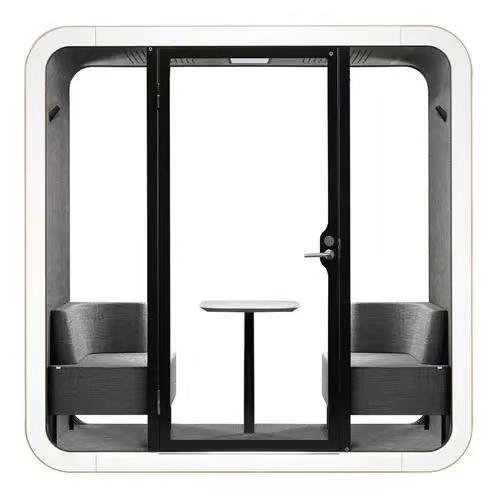
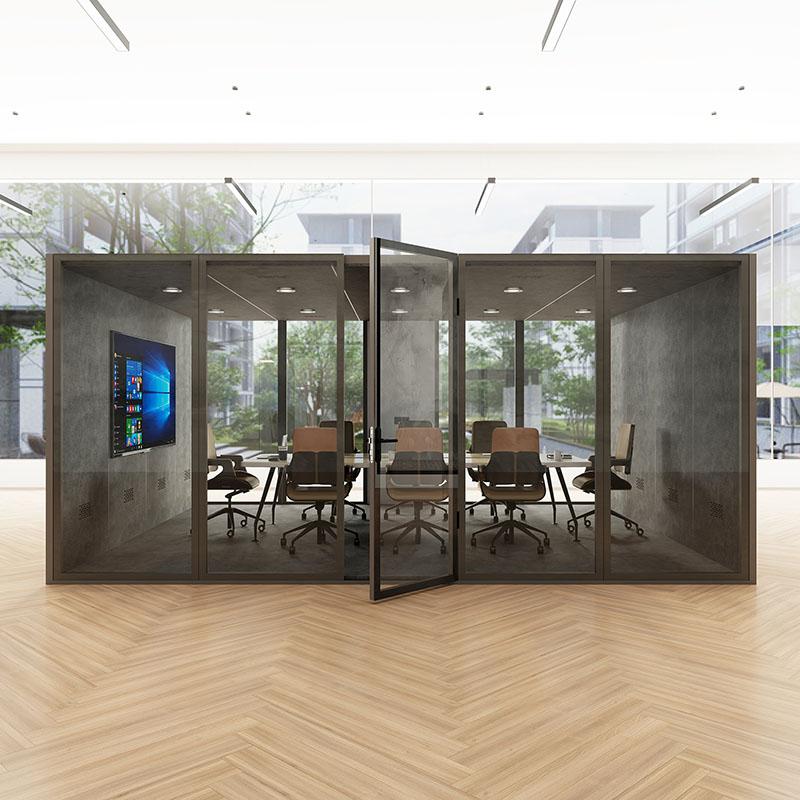
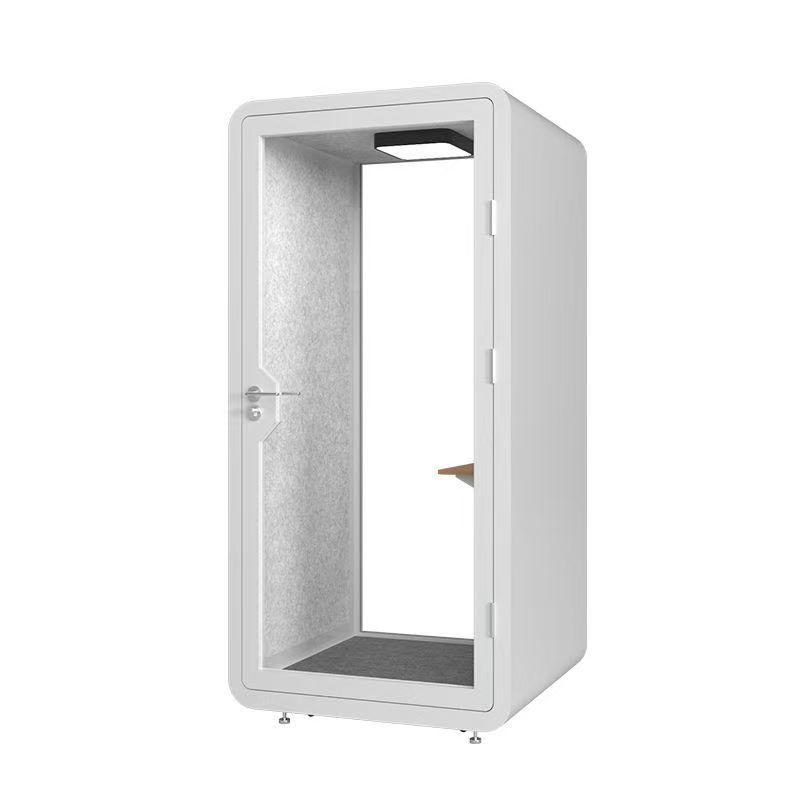
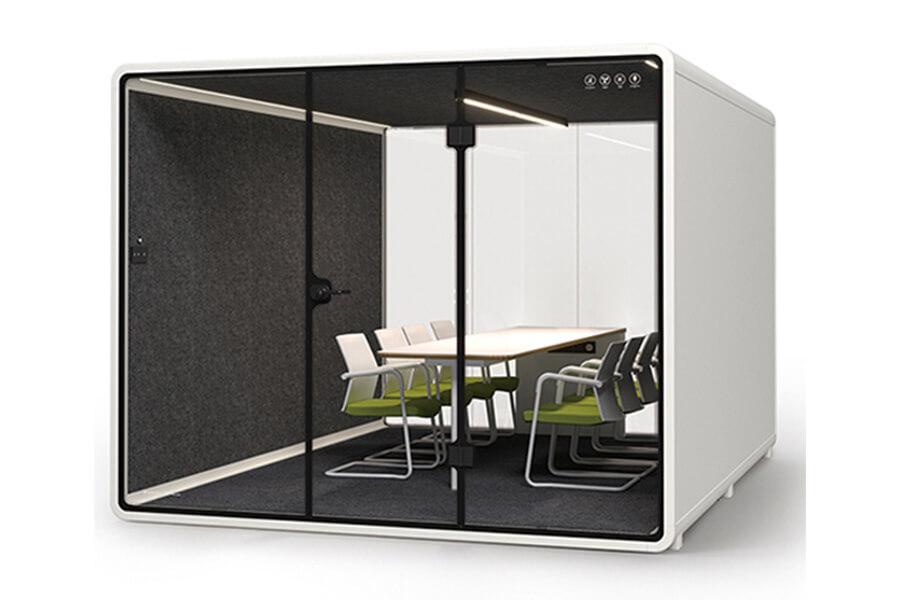
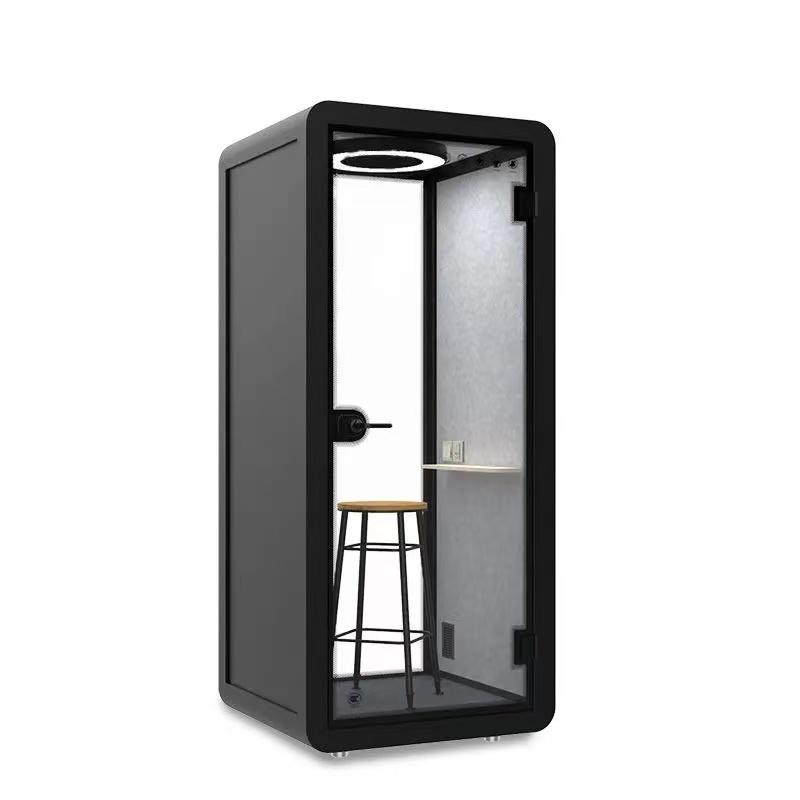
Identify the proposed enclosure among SOP acoustic phone booth options, then attach its quoted configuration to the microphone trial so a different demonstration unit is not mistaken for the offer.
Use a harmless passage that resembles the intended work: a short explanation, a pause to consult a note, then a reply. Invent names and figures rather than reading a customer file. Keep a copy of the passage for checking missing words. Agree the sequence before recording, and speak at the caller's ordinary level rather than projecting to overcome background sound. Start each clip with its identifier so later listeners can connect it to the setup record.
First listen while the seated person is quiet, then capture speech and the transition back into silence. Repeat a sentence after the pause. Add ordinary keyboard use in a separately identified segment only if that belongs to the job. This separation lets reviewers point to the moment that concerned them. Keep the original clip intact; do not remove a troublesome pause or polish the audio before review. If a door opens or another person interrupts, mark the event and repeat the affected pass without hiding the interruption.
The booth occupant and the playback listener have different evidence. Ask the occupant to describe what was audible in the enclosure, while the listener describes what arrived through the selected route. Use concrete language such as a continuous hiss beneath the passage, a brief rattle during the pause or an unclear first word. Do not turn those descriptions into a diagnosis of the fan.
Listen on the same playback equipment at a comfortable, unchanged volume when comparing clips. Avoid switching from headphones to laptop speakers midway and attributing every difference to the booth. Where two listeners disagree, retain both notes and revisit the same marked interval. Their disagreement can identify a task requirement that procurement has not yet defined.
Where the job includes both live calls and retained recordings, assess those outputs separately. Ask the remote colleague to note the relevant moment during the exchange, then compare that note with the saved clip. If the two accounts differ, identify where the recording was captured and ask IT to explain the route. Do not replace an unresolved live-call complaint with a favorable local recording. Conversely, a satisfactory live exchange does not settle whether a stored briefing is usable for its later audience. Give each required output its own disposition.
The table below is a recording sheet, not a set of claimed test results. Complete its cells with clip identifiers and observations from the trial. An empty cell means that part of the exchange was not assessed, not that it passed.
| Clip segment | Occupant note | Playback note | Decision to record |
|---|---|---|---|
| Quiet occupancy | Describe sound at the seat | Describe captured background | Background concern or none observed |
| Ordinary passage | Note voice effort | Mark obscured words, if any | Speech usable or repeat required |
| Pause then reply | Note changes during silence | Check the first complete phrase | Restart clear or unresolved |
| Separate keyboard segment | Identify typing or table contact | Locate the associated sound | Keep separate from suspected fan sound |
| Repeated original setup | Record changed surroundings | Compare the same clip moments | Consistent result or unexplained difference |
If both a built-in microphone and an approved headset are realistic choices, repeat the same passage with each. Keep the speaker, position, ventilation condition, application and listening destination as consistent as practical. Document the changed input and any settings that changed with it. This comparison answers which complete arrangement the team could use; it does not establish a laboratory ranking of microphones or enclosures.
Do not quietly solve an unacceptable laptop result by substituting an accessory that the buyer will not supply. A headset-dependent decision must name the headset, who provides it and whether callers can use it comfortably. If another application is essential, give that application its own trial entry. Repeating the first setup after the second can expose a changed office condition or device state. When that repeat sounds different, preserve the discrepancy instead of selecting only the preferred recording.
A sound heard with the booth ventilation running is not automatically fan noise. Note nearby office activity, any laptop activity that changed, contact with the table and the point when the sound appeared. These observations help route a question; they do not isolate the source. If the supplier suspects a service issue, let its authorized service team investigate and confirm readiness for another occupied trial. Do not disconnect equipment inside the enclosure merely to eliminate possible causes. Likewise, missing syllables in a call need IT review before being blamed on ventilation. A repeatable clip with an event marker is a useful starting point for that review. Return to the same listening sequence after an approved correction, and keep the earlier clip beside the repeat so the decision reflects what changed rather than a new, undocumented demonstration.
Close the trial with one of three practical outcomes: the identified combination is acceptable for the named call task, it is acceptable only with a specified device arrangement, or the audio question remains unresolved. Explain the decisive observation. For example, a hypothetical team might accept an ordinary headset call while leaving laptop-only use unapproved. That is a device-dependent boundary, not a claim that the booth performs equally well for every caller.
Attach the clip list, setup sketch, occupied ventilation condition, listener comments and unresolved source questions to the offer review. Agree who will repeat the check after installation if the demonstration occurred elsewhere. Preserve separate decisions about air provision, speech leaving the enclosure and call echo; a successful microphone trial settles none of them. Reopen the audio record when the selected input, application behavior, supported equipment or booth service condition changes. Procurement can then trace the accepted result without treating a marketing video as a substitute for the tested combination.
Should the fan be switched off for a comparison?
No. Keep the approved occupied ventilation running throughout this buyer trial. Do not change hidden controls or disable equipment. A concern about noise belongs with the supplier and a repeat demonstration in a supported operating condition.
Can a smartphone recording stand in for the work microphone?
Only if that is the actual intended recording arrangement. Otherwise it documents a different device and route. It may help communicate a concern, but it cannot establish what the selected laptop microphone or headset delivers to colleagues.
What if the background is noticeable but every word is clear?
Keep those two observations separate. The intended listener should judge whether the background interferes with the named task. Procurement should retain that judgment and its conditions without inventing a universal sound limit or calling the enclosure silent.
Does a clean meeting recording prove sound isolation?
No. It describes captured audio on that route. It does not show what a nearby person hears outside, establish a whole-enclosure acoustic rating or verify ventilation adequacy. Keep those questions in their own evidence reviews.
What if recordings are not permitted?
Use an agreed live listening session with contemporaneous notes and the same harmless passage. State that replay was unavailable. Do not create covert recordings or retain real call content to make the purchase record appear stronger.
Bring the decision back to a playable passage and a reproducible setup. The record should let another reviewer identify the microphone, hear the disputed moment and understand why the intended call task was accepted or left open. A general impression of quietness cannot do that work.
Before the order proceeds on an audio assumption, nominate the approved device combination and the person who will verify it at the installed location. Keep ventilation in its supported operating condition throughout. Where the sound source or speech result remains uncertain, request a targeted repeat instead of converting an incomplete listening trial into a product claim.

 Tel: +8613538031763
 Email: info@sopworkpod.com
 MP/WhatsApp: +8613538031763
 Manufacturer Address:Liucheng Lujiang District,Meixi Road,Nanan City,Fujian,China