Author:SOP Work Pods Manufacturer TIME:2026-10-06
The desk fits inside the outline. That is not yet an answer to whether it fits while moving. When comparing a soundproof office booth for a sit-to-stand desk, a buyer needs to understand the space occupied throughout the intended travel, including equipment, connectors, and nearby fixed parts. A tidy arrangement at either end can conceal an unresolved conflict between them.
Start with a proposed combination that the relevant suppliers can identify and review. This guide does not establish that SOP supplies an adjustable desk or permits an existing booth to be converted. It develops a moving-envelope brief for a supported configuration, without prescribing posture, work intervals, or furniture alterations.
Ask what the proposed desk actually does and which configuration the supplier is discussing. A seated surface and a standing ledge shown in different photographs do not establish an adjustable product. Obtain the desk identity, its applicable instructions, the enclosure identity, and the furniture arrangement offered together. Keep an unconfirmed request for adjustment separate from the supplied specification.
Describe the intended change of position without choosing a universal working height. The brief needs the movement the buyer wants reviewed, the equipment expected to travel with the surface, and the items that remain stationary. Supplier documentation must establish what operation is permitted. If the requested movement is unsupported, that candidate has not passed the first decision, even if its stationary dimensions appear promising.
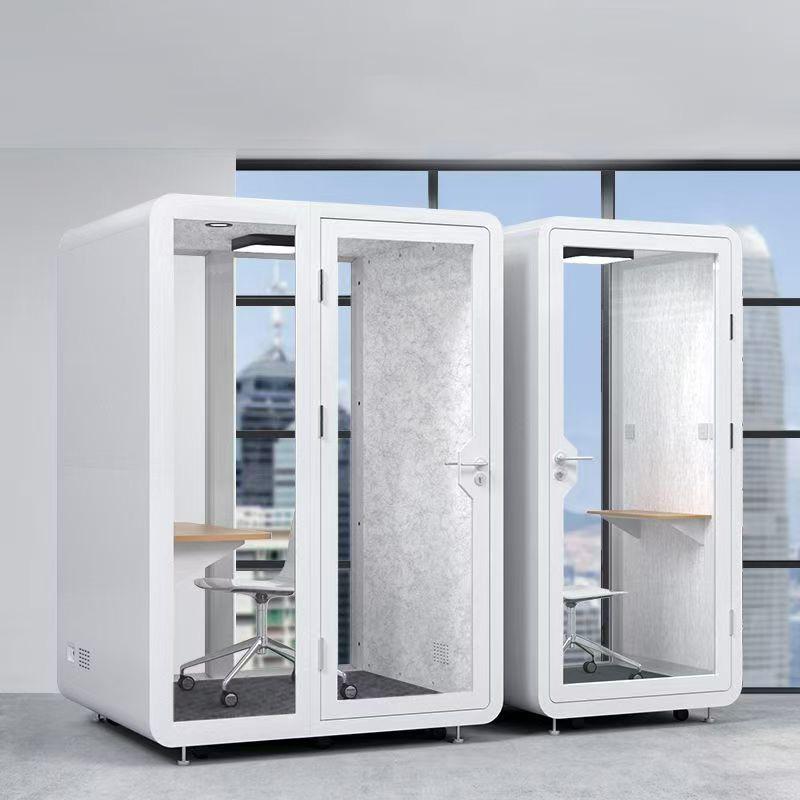
List the proposed desktop, supporting mechanism, screens, device stands, connectors, and other equipment that would move as one arrangement. Distinguish items carried by the desk from nearby equipment with its own support. A screen edge or projecting plug may extend beyond the worktop, so the worktop outline alone cannot describe the moving assembly.
Ask the desk provider which equipment arrangement its instructions support, including any restrictions on placement or loading. Ask the enclosure provider whether that complete arrangement is supported in the proposed model. These are connected questions, but neither supplier's answer should silently stand in for the other's.
Keep a named equipment list beside the drawing. Replacing a stand or adding a device later may change the space occupied even when the desk model stays the same. The buyer's comparison should follow an identifiable assembly, not an adjustable-desk category that can contain materially different arrangements.
Bring the proposed desk identity and movement drawing when discussing SOP office pod configurations; ask whether the exact combination is supported before treating it as a candidate.
Request a drawing that relates the moving assembly to the enclosure's fixed interior features. It should distinguish the proposed lower position, upper position, and space swept between them, using information confirmed for the offered configuration. A view from above helps locate side conflicts; a side view helps relate moving equipment to fixed features above or behind it.
Do not fill missing dimensions with estimates from product photographs. Ask the supplier to identify unresolved areas and explain how the combination will be reviewed. Where an equipment support can change orientation, identify which supported position the drawing represents rather than assuming every possible orientation is covered.
The point is exclusion, not maximum packing. The table identifies boundaries that a candidate must resolve. It does not supply clearance allowances or authorize a physical trial. Separate whether the equipment can occupy a position from whether it can reach that position through permitted movement. If a proposal requires a screen to be removed first, the intended arrangement has changed. Ask the provider to state that limitation instead of treating movement of an emptied desk as approval of the equipped assembly.
Retain the drawing revision and the equipment list together. Otherwise a clear-looking plan can describe an earlier worktop, a different support, or an enclosure detail that is absent from the quotation under consideration.
| Boundary in the proposal | Evidence needed | Reason to withhold fit approval |
|---|---|---|
| Equipment above the moving surface | Side view for the identified moving assembly | Upper or intermediate occupied space remains unknown |
| Fixed interior projections | Enclosure details on the same drawing revision | A panel or control is omitted from the comparison |
| Moving-to-fixed connections | Provider-confirmed cable movement arrangement | Fit depends on an improvised lead or attachment |
| Door and ordinary access | Permitted furniture and movement states together | Access depends on an undocumented desk position |
Ask the enclosure supplier to show the relevant fixed surfaces, door movement, installed controls, service access, and openings that must remain unobstructed. Include any proposed chair and its intended position in the review rather than removing it to make the desk appear compatible. The question is whether the supported furniture arrangement remains usable with the moving assembly present.
A concern should identify the particular relationship: equipment approaching an interior panel, a stationary control becoming hidden, or the door route depending on a desk position. Avoid the vague conclusion that the booth is too small when the actual unresolved issue is a specific projection or operating restriction. Equally, do not dismiss that conflict because most of the interior appears empty.
Refer an unresolved boundary back to the providers. Their response may identify another supported combination or establish that the proposed desk should not be used there. Removing fixed furniture, shifting a panel, or improvising a bracket is not part of this buyer review.
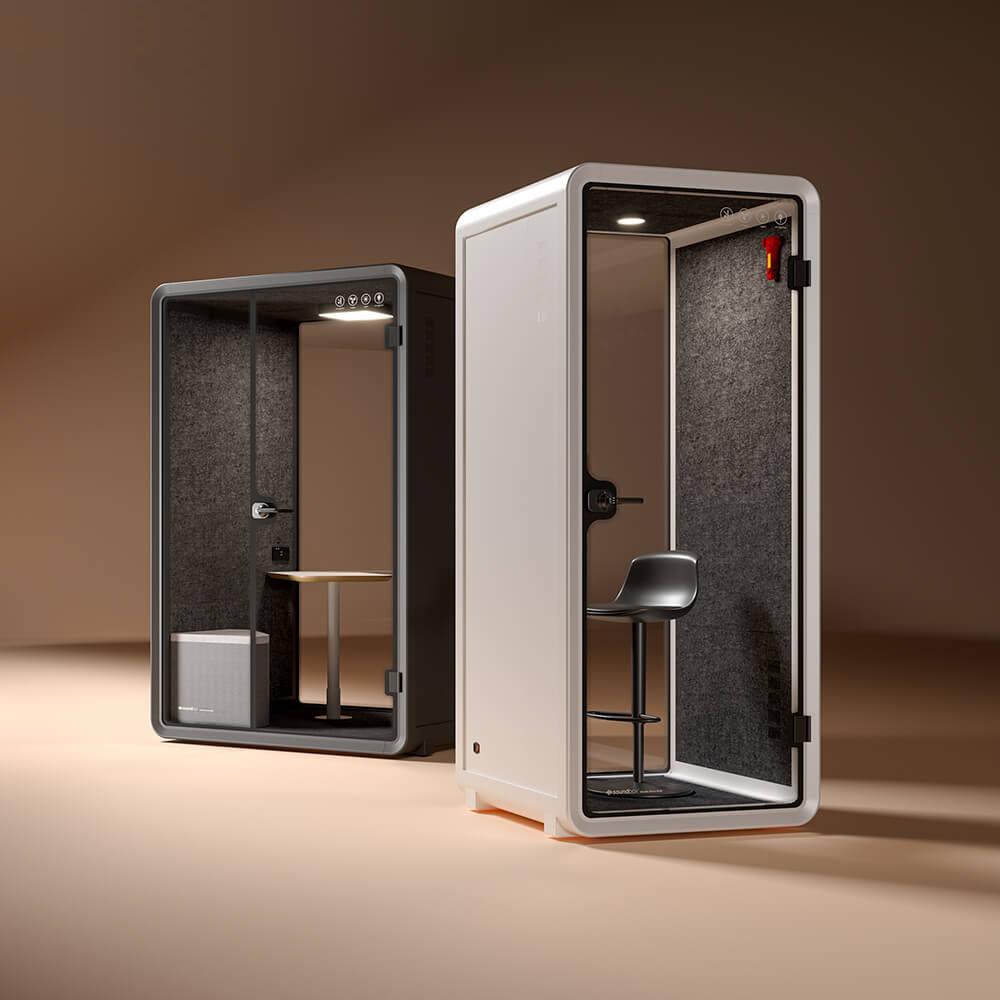
Separate connections that move together from connections between moving equipment and a stationary point. Identify the actual devices and the approved connection arrangement. A lead that appears orderly in a still photograph does not show what happens along the proposed travel or where a connector is loaded as the surface changes position.
Ask the responsible provider to explain the permitted cable arrangement for the complete combination, including what remains fixed and what moves. The checks below are questions for that review, not cable-routing instructions. Do not calculate spare cable from a photograph, add an extension, or fasten leads to enclosure parts to make an unsupported combination appear workable.
A physical demonstration belongs after the providers have accepted the proposed combination and defined the permitted procedure. It is not a way to discover whether an unknown desk will collide with an unknown enclosure. Ask who is responsible for demonstrating the arrangement and which instructions govern the activity. Keep the buyer's role to observing the agreed configuration and recording questions.
The demonstration should correspond to the drawing, equipment list, connection arrangement, and intended furniture state. Ask the provider to explain any difference before treating the observation as relevant. A bare worktop moving inside an empty enclosure does not answer a question about the specified equipment travelling beside stationary controls and a chair.
Record concerns without reproducing a suspected contact or manipulating a mechanism. If a snag, obstruction, or unexpected movement is reported, stop the affected review and return it to the responsible provider. A successful demonstration supports only the arrangement and permitted movement actually represented; it does not establish general compatibility with other desks.
Ask how the supported configuration is left when adjustment is unavailable or a fault is reported. The buyer needs the provider's operating guidance and contact route, not an improvised way to lower, release, or disconnect the desk. Keep questions about access to the door and identified controls visible in that discussion.
Separate a movement fault from a changed work preference. If a user needs another arrangement, that is a reason to offer an appropriate alternative, not to continue operating equipment that requires attention. Do not assume a desk stopped at a particular position can serve as ordinary fixed furniture without the responsible provider's assessment.
Also clarify the normal end-of-use state if the booth will be shared.
The instruction should refer to the approved arrangement and user controls, without requiring people to move furniture or reposition cables before the next session. If the proposed reset depends on such work, return that dependency to the supplier before approval.
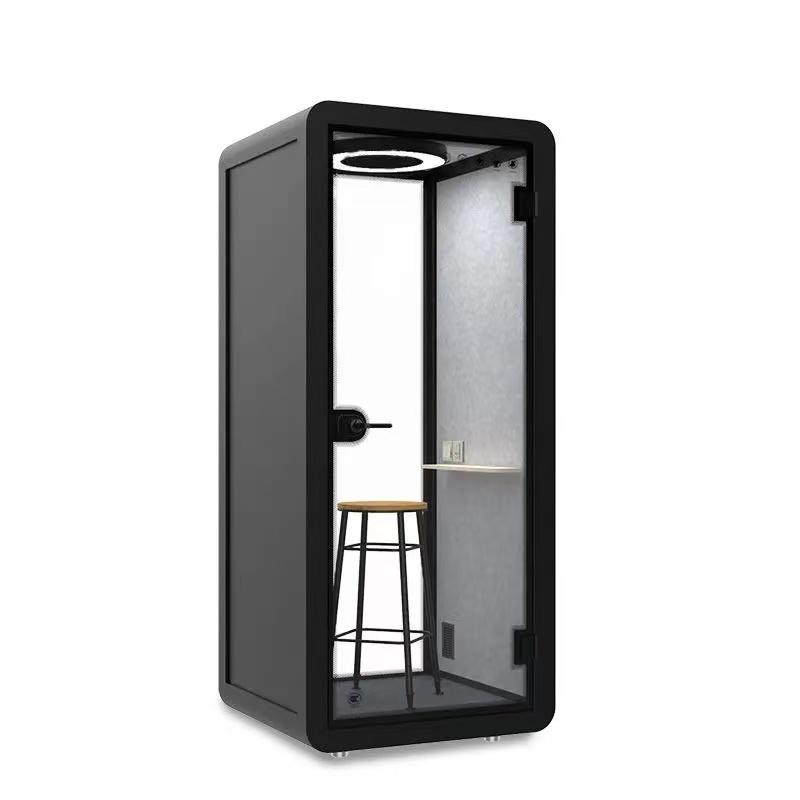
Classify each candidate as documented for further review, unresolved, or excluded for the intended movement. Record the specific reason instead of assigning a general fit score. An unresolved cable interface differs from a supplier declining the desk combination; the former needs an answer, while the latter calls for a different supported proposal.
Carry the accepted desk identity, enclosure configuration, equipment list, drawing revision, permitted movement, and support responsibilities into purchasing. A later substitution must return to the affected review rather than inherit approval from the original category name. The deciding evidence is a supported complete combination, not a desk sold as adjustable or a booth sold as soundproof.
Is clear space at both end positions enough?
No. The review must account for the occupied space between those positions, using the complete moving assembly and fixed enclosure details. Ask the providers to resolve the intervening travel rather than inferring it from separate stationary views.
Can a familiar desk model be assumed to work?
Familiarity does not establish support for that desk inside the proposed enclosure. Identify the equipment carried, connection arrangement, fixed boundaries, and applicable instructions. Obtain confirmation for the combination instead of transferring approval from its use elsewhere.
What if the supplier proposes a different desk?
Treat it as a new moving assembly. Compare the revised drawing, equipment support, connections, and permitted operation before accepting the substitution. The same general desk description does not preserve the earlier movement review.
Does this review recommend sitting or standing intervals?
No. Its purpose is to establish whether a proposed equipment combination is supported and its movement conflicts are resolved. Individual working preferences are not a reason to invent posture prescriptions or operate furniture outside its instructions.
Can the booth be altered when the desk does not fit?
This review does not authorize alterations. Keep the candidate excluded or unresolved and request another supported configuration. Removing furniture or modifying enclosure parts would require a separate, expressly approved scope, not an informal workaround during selection.
Choose a soundproof office booth for a sit-to-stand desk only through an identified, supported combination. Static fit is an opening question; the decision depends on the full moving assembly, fixed boundaries, connection travel, and permitted operating states remaining consistent in the supplier's evidence.
Send back the unresolved boundary rather than a request to make the desk fit somehow. Keep the purchase pending until the relevant providers confirm the combination or propose a supported alternative. Preserve that decision with its drawing and equipment list so a substitution cannot quietly reopen an excluded conflict.

 Tel: +8613538031763
 Email: info@sopworkpod.com
 MP/WhatsApp: +8613538031763
 Manufacturer Address:Liucheng Lujiang District,Meixi Road,Nanan City,Fujian,China