

Need Help?
Please leave your contact information to get our latest catalog
Get In Touch Now >


Author:SOP Work Pods Manufacturer TIME:2026-09-15
An office phone booth rental can solve a temporary capacity problem without turning every project into a permanent furniture purchase. The commercial risk is not the monthly rate by itself. It sits in the boundary between delivery, installation, utilities, service, damage, moves, and removal. A short quotation can therefore look simple while leaving the facilities team responsible for work it did not budget or schedule.
Treat the rental as a controlled operating period with a defined entry condition, service record, and exit condition. The checklist below follows that lifecycle. It does not assume that renting is cheaper than buying; it shows which evidence allows a buyer to compare the two routes on the same scope.
The record also gives legal, procurement, workplace, and facilities reviewers one shared set of assumptions. Each team can see the event that creates demand, the offered asset, the work expected at the site, the response when something fails, and the evidence used at return. That common view matters when the rental outlasts the person who requested it or when the booth moves between cost centres during a wider workplace project.
Before requesting final prices, issue the same information pack to every rental supplier. Include the site address, route constraints, floor and position, operating period, expected capacity, required furniture and controls, permitted working hours, service expectations, and return assumptions. Ask each supplier to identify exclusions and customer duties against that pack. Comparable inputs will not make different products identical, but they prevent a low figure from winning simply because delivery, access equipment, service visits, or end-of-term work was omitted. Keep clarifications attached to the quotation so the signed agreement reflects the actual answer rather than an isolated email.
Start with the business event that creates demand. A temporary project team, a lease transition, a floor refurbishment, or a seasonal call campaign each has a different start date, uncertainty window, and exit trigger. Record the earliest required use date, the expected end date, and the decision point for extending or returning the booth. This prevents an open-ended rental from becoming the default simply because nobody owns the stop decision.
Match the duration to actual workplace use rather than calendar convenience. Identify the number of private calls, likely session length, peak hours, user groups, and any alternative rooms already available. If the demand is intermittent, the facilities team may need fewer booths plus a booking rule. If the demand is continuous, service response and replacement arrangements become more important than a low introductory rate.
Put the demand record beside a purchase option and a no-build alternative. The comparison should use the same capacity, accessories, delivery constraints, and end date. A rental decision is stronger when it answers a temporary operational need, not when it merely postpones an undefined capital decision.
Ask the supplier to separate recurring rent from one-time project charges. Delivery, unloading, access equipment, installation labor, commissioning, packaging removal, training, and collection should appear as distinct lines. Taxes, deposits, insurance requirements, minimum terms, and extension rates also need their own entries. A single monthly figure cannot reveal which costs repeat or which charges return at the end.
Check how the first and last partial months are calculated and when billing begins. The invoice date, delivery date, completed installation, and accepted handover are not always the same event. State which event starts rent and what happens if site access is delayed by either party. The same discipline should apply to return notice: specify the notice window, collection lead time, and rent treatment while the booth waits for pickup.
Build a cash-flow view rather than multiplying one rate by the expected months. Include deposits, project charges, optional accessories, likely extensions, and return work. Keep uncertain items visible as assumptions. This gives procurement a range that can be reconciled later instead of a false single-number forecast.
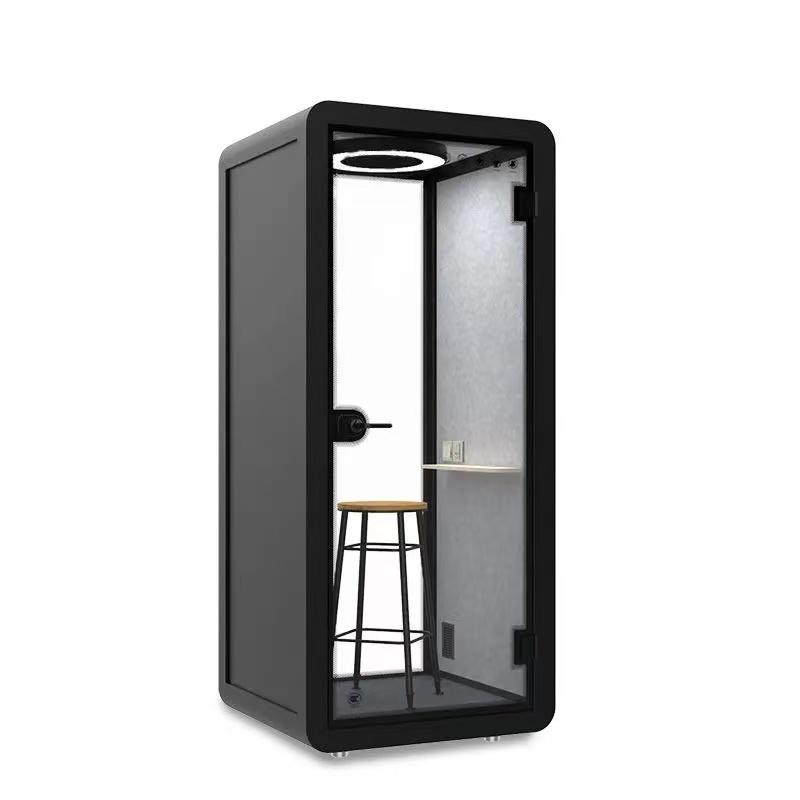
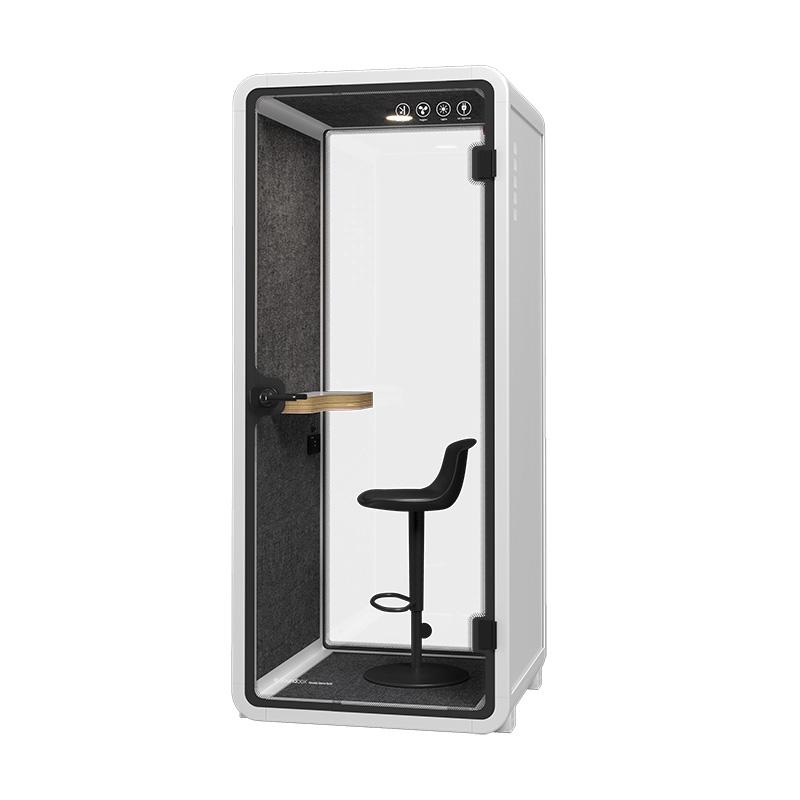
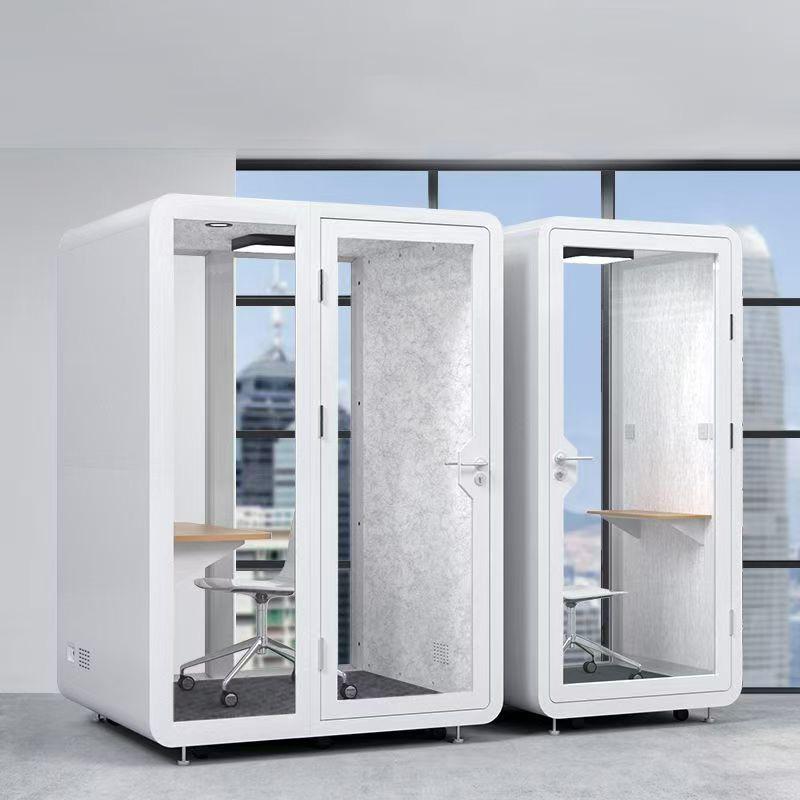
The agreement should identify the exact configuration to be delivered. Record exterior and interior dimensions, door orientation, glazing, seat or stool, work surface, lighting, ventilation controls, power arrangement, finishes, and any call-status or occupancy feature. Use drawings, photographs, and a configuration schedule as contract attachments. A product family name is not enough when several versions share similar marketing images.
Confirm whether the unit is new, refurbished, or drawn from an active rental fleet. That status does not determine suitability by itself, but it changes the inspection baseline. List acceptable cosmetic condition, required cleaning, replacement of worn contact parts, and how pre-existing marks will be recorded. The buyer should not inherit a damage dispute that began before delivery.
Avoid unsupported acoustic or comfort assumptions. Request the supplier information that applies to the offered configuration and record any limits relevant to the planned calls. Ventilation, lighting, and power should be reviewed as operating systems, not decorative options. If a feature is essential, place it in the configuration schedule and acceptance checklist rather than relying on sales correspondence.
| Decision point | Supplier record | Buyer record | Unresolved risk |
|---|---|---|---|
| Handover | Configuration and functional checks | Location, defects, acceptance sign-off | Rent starts before usable acceptance |
| Service | Response route and completed action | Fault time and return-to-use confirmation | Downtime has no commercial treatment |
| Relocation | Approved method and quoted scope | New route, position, and authorization | Unapproved move creates damage dispute |
| Return | Inspection evidence and collection record | Condition photos and deposit reconciliation | Final charges remain open |
Map the route from vehicle to final position before the contract is signed. Loading restrictions, doors, turns, lifts, floor protection, ceiling clearance, working hours, security access, and waste rules can all change the delivery method. State who surveys the route, who approves the final position, and who pays when actual conditions differ from the information supplied.
Clarify what the site must provide. Typical questions include power availability, floor condition, clearance around air paths, permission to anchor or connect components, and the working area needed for assembly. The supplier should state its installation prerequisites; the buyer should confirm them against landlord, building, and facilities controls. Neither side should infer site readiness from a floor plan alone.
Define completion and acceptance separately. Completion may mean that assembly is finished, while acceptance requires configuration checks, functional checks, cleaning, documentation, and correction of recorded defects. A signed handover record should identify the booth, location, date, open items, and responsible person. That record becomes the starting condition for the rental period.
A rented booth remains an operating asset. The contract should explain how users report faults, what information the service desk needs, and which party performs routine cleaning and simple checks. Lighting, ventilation, controls, doors, seals, furniture, and power components may have different service routes. One generic support email does not establish a response commitment.
Separate acknowledgement, diagnosis, attendance, repair, and replacement. The buyer may need only a reasonable process, but it should know when a non-working booth stops being billable or qualifies for a substitute. Define access arrangements for technicians and whether service can occur during occupied hours. For a temporary high-demand project, replacement availability may matter more than repair of the exact unit.
Keep a short service log with dates, symptoms, actions, parts, and return-to-use confirmation. The log supports extension decisions and prevents recurring faults from disappearing between help-desk conversations. It also distinguishes normal wear from damage caused by misuse, which matters when the booth is eventually returned.
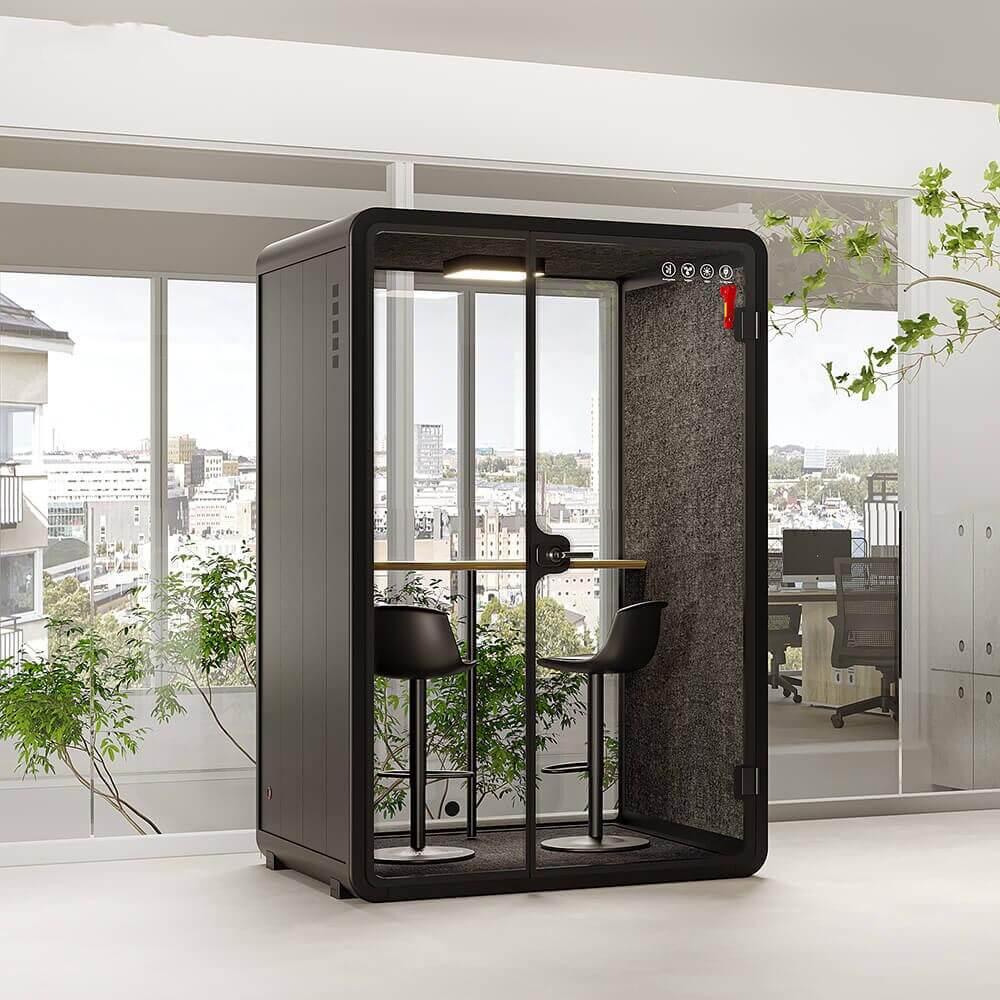
Office plans change during a rental. State whether the customer may move the booth, whether a trained supplier team is required, and what conditions make relocation possible. A nearby shift on the same floor is not automatically equivalent to a dismantle, lift transfer, and reassembly. Obtain a quoted move method before promising flexibility to internal stakeholders.
Create a simple change process for accessories, finishes, signage, network devices, or furniture. The agreement should distinguish reversible additions from alterations that create restoration cost. Users also need practical care guidance covering food, drinks, cleaning products, door use, ventilation openings, and storage. These instructions should be operational, not a broad clause that makes the customer responsible for every later defect.
Assign one facilities owner to approve moves and changes. Unrecorded modifications make service and return inspections harder. A configuration log with dated photographs, approved changes, and current location is enough for most projects and gives both parties a common record when responsibility is disputed.
For configuration context, review office phone booth configurations, then return to the site-specific evidence and responsibility checks in this guide.
Plan the return while the contract is being negotiated. Define the required notice, access booking, cleaning condition, removal scope, packaging responsibility, and treatment of building finishes. State whether the supplier inspects before collection, at collection, or after the unit reaches its depot. The customer needs an opportunity to see and respond to any claimed damage.
Use the original handover record as the reference. Compare serial or asset identification, configuration, documented pre-existing marks, approved changes, service history, and current condition. Separate ordinary wear from missing parts, contamination, unauthorized alteration, or physical damage. If repair charges may apply, the agreement should explain evidence, estimate approval, and deposit reconciliation.
Closeout is complete only when the booth is collected, the space is restored as agreed, final charges are reconciled, and the deposit or credit is resolved. Archive the signed return record and final invoice with the demand review. That evidence helps the next project decide whether another rental, a purchase, or a different workspace response is justified.
When should rent start?
Tie the start to a defined event, normally accepted handover rather than an ambiguous dispatch or arrival date. Record how delayed site access and open defects affect billing.
Does a rental quote need a deposit line?
Yes. Show the amount, holding period, permitted deductions, evidence required for deductions, and the date or event that triggers reconciliation.
Who should move a rented booth?
Follow the agreed method. If the supplier requires trained dismantling or reassembly, treat each move as a controlled change with a route review and written authorization.
How should normal wear be distinguished from damage?
Use dated handover photographs, a configuration list, service records, approved changes, and an agreed definition of ordinary wear in the contract.
What makes rental preferable to purchase?
Rental can fit temporary or uncertain demand, but compare the full project and return scope with purchase over the same operating period before deciding.
An office phone booth rental works best when the contract follows the asset from demand trigger to final collection. The facilities team should be able to trace configuration, project charges, site duties, acceptance, service, changes, condition, and final reconciliation without relying on verbal assumptions.
Use one lifecycle record and keep uncertain costs visible. That turns rental into a reversible capacity decision with a clear exit, while preserving a fair comparison with purchase or other workplace options.

 Tel: +8613538031763
 Email: info@sopworkpod.com
 MP/WhatsApp: +8613538031763
 Manufacturer Address:Liucheng Lujiang District,Meixi Road,Nanan City,Fujian,China