
Need Help?
Please leave your contact information to get our latest catalog
Get In Touch Now >


Author:SOP Work Pods Manufacturer TIME:2026-08-28
At one library table, a student may need silence for reading; a few metres away, another learner may be joining an online seminar, rehearsing a presentation, or attending a confidential support call. The conflict is not simply loud versus quiet. It involves duration, speech, devices, group size, visibility, booking, inclusive access, staff oversight, and the expectation attached to each zone.
Choosing office pods for university libraries therefore begins with a service map. It identifies activities the current environment cannot support, decides which of those activities are suitable for enclosure, and tests whether a candidate pod works with campus rules and library operations. The product is one part of the service alongside location, booking, cleaning, support, technology, and alternatives.
This selection method avoids assuming that every campus has the same learner profile or safety requirements. It produces a conditional choice for a defined building and observation period, with university specialists retaining responsibility for local access, safeguarding, fire, building, and operational reviews.
Build the demand record from activities rather than general requests for more private space. Separate quiet individual study, spoken online learning, recorded presentation practice, interviews, student support conversations, two-person tutoring, collaborative work, and meetings that require a conventional room. For each activity, record occupancy, typical duration, speech level, devices, confidentiality, movement, materials, urgency, current alternative, and what failure looks like.
A pod-eligible activity should benefit from enclosure without creating a worse problem elsewhere. A long silent study session may be possible in an open quiet zone and could occupy a scarce pod unnecessarily. A group discussion may exceed the pod's intended occupancy or disturb nearby readers at entry and exit. A confidential conversation may need both speech and visual privacy. State the inclusion and exclusion rule before comparing products.
Gather evidence across representative periods. Booking records, bounded observation, staff notes, learner feedback, failed-room searches, and queue patterns can show where conflicts recur, but they should be interpreted with context. Examination periods, orientation weeks, timetable changes, and temporary room closures can distort demand. Preserve the period and limitations beside the finding.
Code observations consistently enough to compare them without pretending they are a campus-wide survey. A simple record can capture date band, zone, intended activity, space sought, result, delay, fallback, and staff intervention. Review ambiguous entries with library staff, because a request labelled quiet may actually involve spoken rehearsal, while a request labelled group work may be a two-person confidential tutorial. The coding decision changes the eligible pod type.
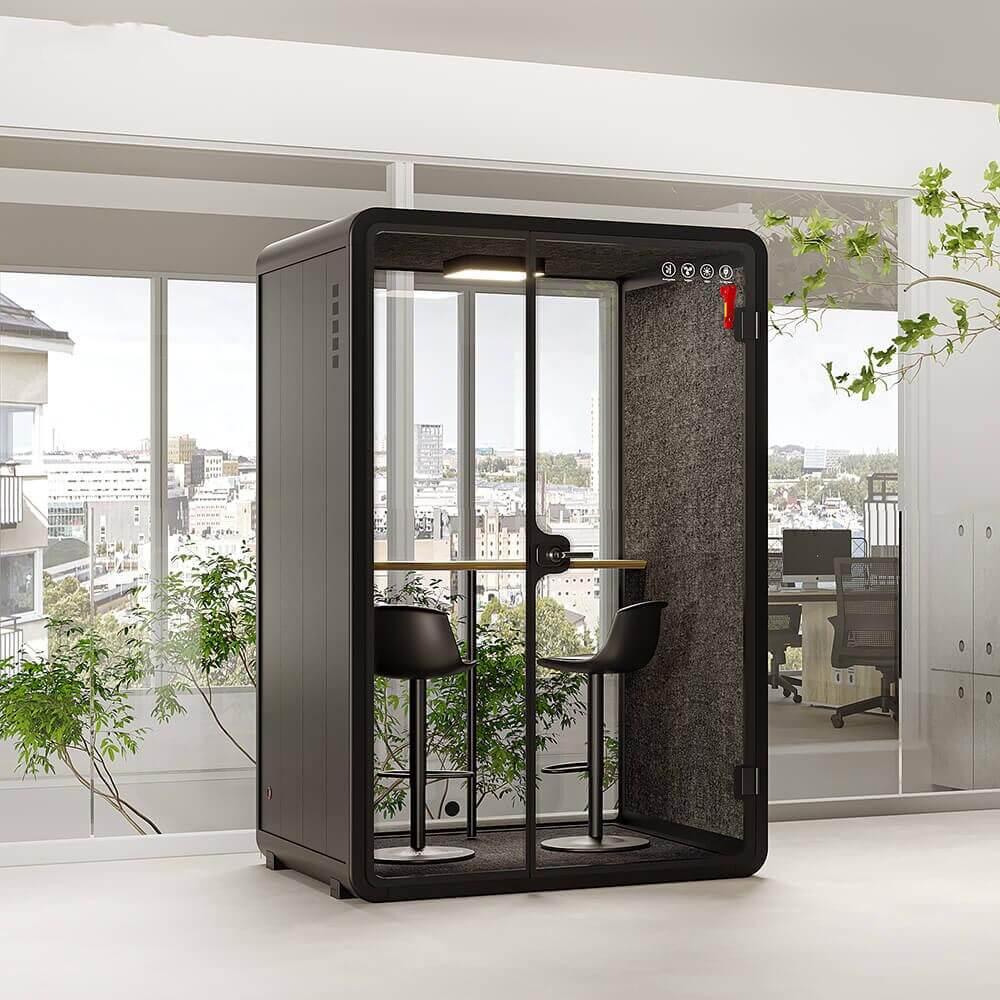
Location changes whether the same pod succeeds. Map silent areas, collaborative areas, circulation, help desks, entrances, printer zones, stairs, lifts, daylight, glare, building services, and nearby seats. Trace likely speaker positions inside the pod and listeners outside it. Door orientation, queues, passers-by, and a screen facing glazing can matter as much as the nominal acoustic description.
Review occupied access, not only external dimensions. Check the approach, clear opening, threshold, door force, turning and transfer needs, seat and table arrangement, control reach, emergency communication, and how assistance would be provided under approved campus procedures. A general label such as accessible is not a substitute for the university's own review of the exact model and location.
Visibility requires a deliberate balance. Staff may need appropriate oversight of a study area, while users may need protection from casual viewing of screens or documents. Test sightlines from seated and standing approaches under daytime and evening lighting. Where screening options exist, verify what they obscure and what they leave visible rather than assuming that more opacity is always the correct answer.
Site checks should also cover power, data, wireless conditions, return air, ventilation interaction, cleaning access, and maintenance routes. Reject a footprint that blocks circulation or forces routine service through a silent study zone.
Compare at least two orientations when sightlines or listener paths are uncertain. Mark the external operating envelope, not only the pod base, and observe arrivals from normal approaches. Keep facilities, accessibility, library operations, and safeguarding reviewers on their own areas of responsibility. The selection record should show unresolved local approvals explicitly instead of implying that a successful occupied demonstration closes them.
Run the actual learning task with the intended device. For an online seminar, check screen position, camera framing, microphone pickup, loudspeaker level, echo perception, wireless stability, power access, cable control, note-taking space, and the learner's ability to enter and leave without rearranging furniture. For tutoring, check face-to-face distance, shared material, sightlines, and conversational comfort. Different activities may point to different pod archetypes.
Comfort must be tied to session length and turnover. Observe posture, seat adjustment where provided, table height, leg space, lighting, glare, airflow perception, heat from occupants and equipment, fan sound, control reach, and the reset required between users. One brief demonstration cannot establish suitability for a longer study period. A pilot should include the longest eligible activity and consecutive bookings.
Compare candidates under matched conditions. Use the same activity, number of people, device, duration, location type, surrounding activity, and observation form. Record both positive and adverse evidence. Product literature can identify features to inspect, but the selection decision should state which learner activity was witnessed and what limitations remain.
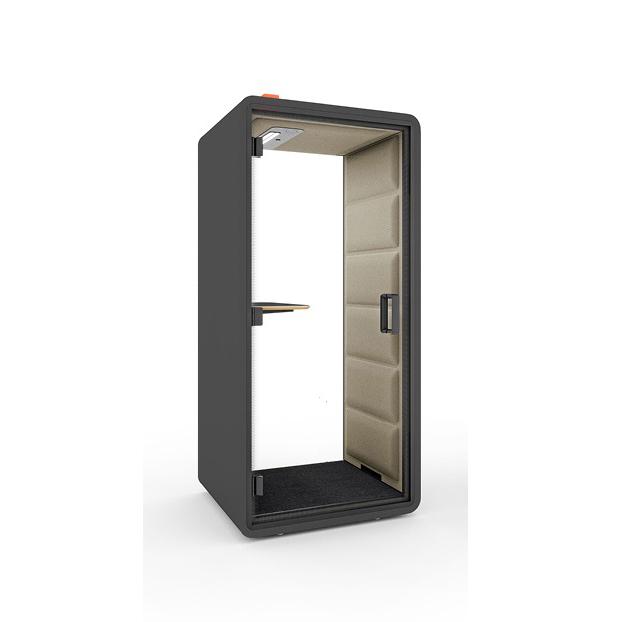
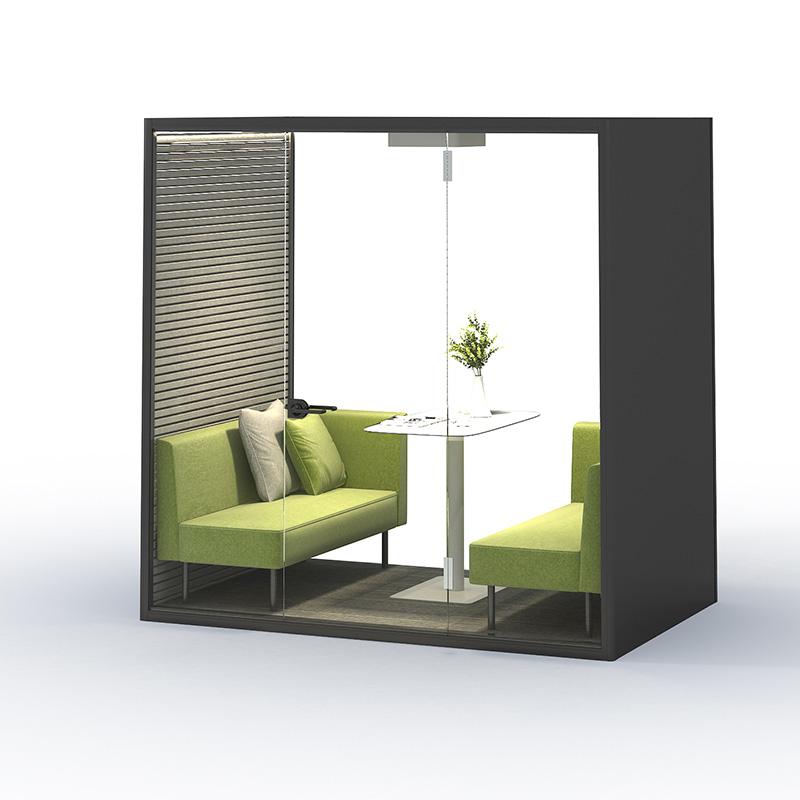
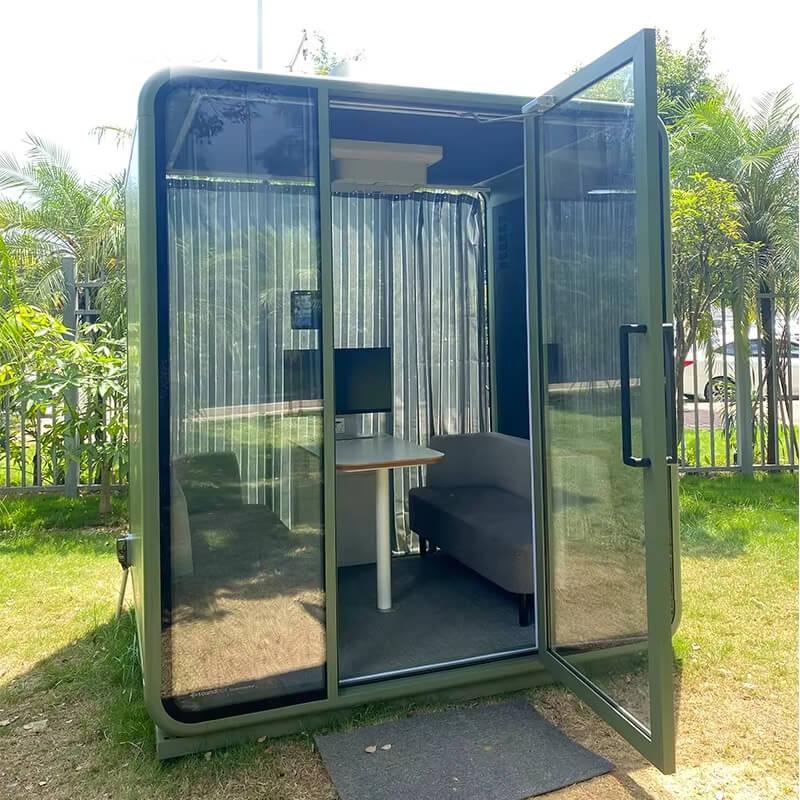
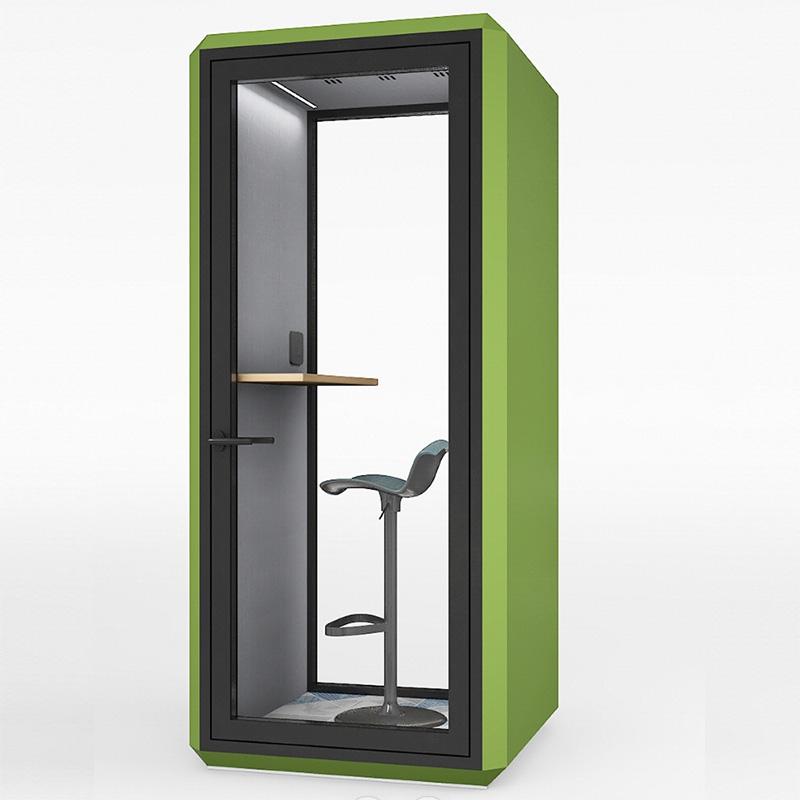
Review the office pod configuration reference only after the activity and site criteria are fixed. This keeps model selection attached to a documented service need instead of allowing a feature list to define the need retroactively.
Include turnover materials in the trial. Bags, books, mobility aids, charging cables, coats, and shared equipment alter the usable space and the cleaning route. Observe what users carry, where items rest, and whether the next learner receives a clear and functional setup. A configuration that works only when the booth is empty of normal study material is not ready for the proposed activity.
| Learner activity | Pod eligibility question | Site and service evidence | Disposition |
|---|---|---|---|
| Spoken online class | Can speech and devices be contained without excessive occupation? | Matched call trial, wireless check, surrounding-reader observation | Eligible, conditional, or redirect |
| Quiet individual study | Does enclosure solve a demonstrated problem unavailable in the quiet zone? | Duration, seat availability, comfort, opportunity cost | Reserve or keep open |
| Private support conversation | Are speech and sightline boundaries suitable for the approved service? | Listening route, screen view, staff procedure, alternative room | Approve with limits or exclude |
| Two-person tutoring | Do occupancy, interaction, access, and turnover work together? | Occupied layout trial, shared materials, queue effect | Assign pod type or room |
| Group collaboration | Is the activity within occupancy and surrounding-zone limits? | Conversation trial, entry flow, nearby-reader response | Small pod, meeting room, or collaborative zone |
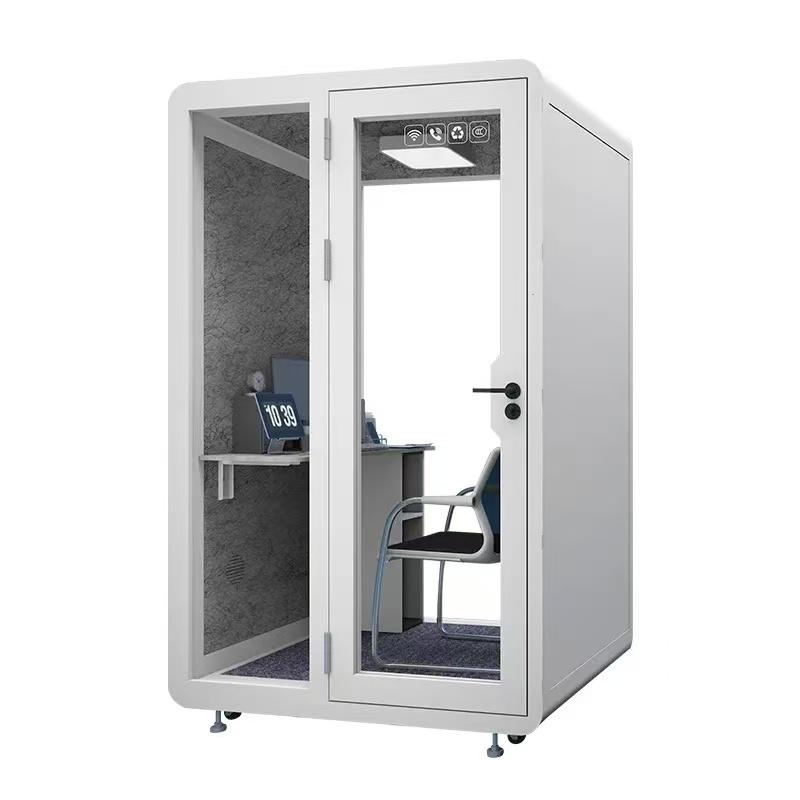
A library pod becomes a shared service on its first day. Decide whether use is booked, walk-up, or mixed; who is eligible; how long sessions last; how overruns, no-shows, queues, faults, cleaning, abandoned items, and urgent needs are handled; and which alternative space is offered when the pod is unavailable. Rules should be visible without adding distracting instructions to the study environment.
Fair access is not proved by equal booking slots alone. Observe whether the interface is usable, whether some learners repeatedly lose access to high-demand periods, whether a single activity dominates, and whether staff interventions are realistic. A policy that requires constant manual arbitration may not scale even when the pod itself performs well.
Pilot a small number in the proposed zones through representative teaching conditions. Record eligible activity completion, non-use, failed attempts, queue, early exits, comfort observations, technology support, cleaning effort, faults, complaints from nearby readers, and use of alternatives. Separate product failure from location, awareness, policy, or timetable effects before changing the quantity.
The campus standard should remain provisional until library operations, student services, accessibility reviewers, IT, facilities, and representative learners have reviewed the same evidence. Different buildings may legitimately retain different configurations or no pod at all.
Close the pilot with a service-capacity decision as well as a product decision. Estimate who checks the unit, resolves booking questions, responds to device problems, isolates a fault, arranges maintenance, and communicates alternatives. If that work cannot be absorbed, reduce the proposed role or quantity, simplify the service design, or retain conventional rooms for activities that need more intervention.
Report the outcome by activity rather than with one pass label. The same candidate might be accepted for spoken online classes, limited for short tutoring, and excluded from long silent study or sensitive support meetings. Keep the location and operating conditions beside each disposition. This gives students and staff a clearer service promise and prevents later procurement from treating a partial fit as campus-wide approval.
No. Buildings differ in learner activities, acoustic zoning, circulation, oversight, technology, service staffing, and local review requirements. A campus may standardize documentation and test methods while allowing different models or no pod in particular locations. Consistency should support operation without erasing evidence from the individual building.
Where common purchasing is useful, define a small approved range with explicit activity and site conditions. Each library can then select from known configurations while retaining the right to reject a footprint, alter the service role, or require a local pilot. Standardization should reduce repeated administration, not bypass location evidence.
Define eligible activities and session rules, then observe actual occupation. Booking limits alone may shift the problem to staff, so provide suitable alternatives for long quiet study and make the purpose of each pod clear. Review repeated extensions, unattended belongings, early reservation patterns, and unmet spoken-task demand before adjusting policy.
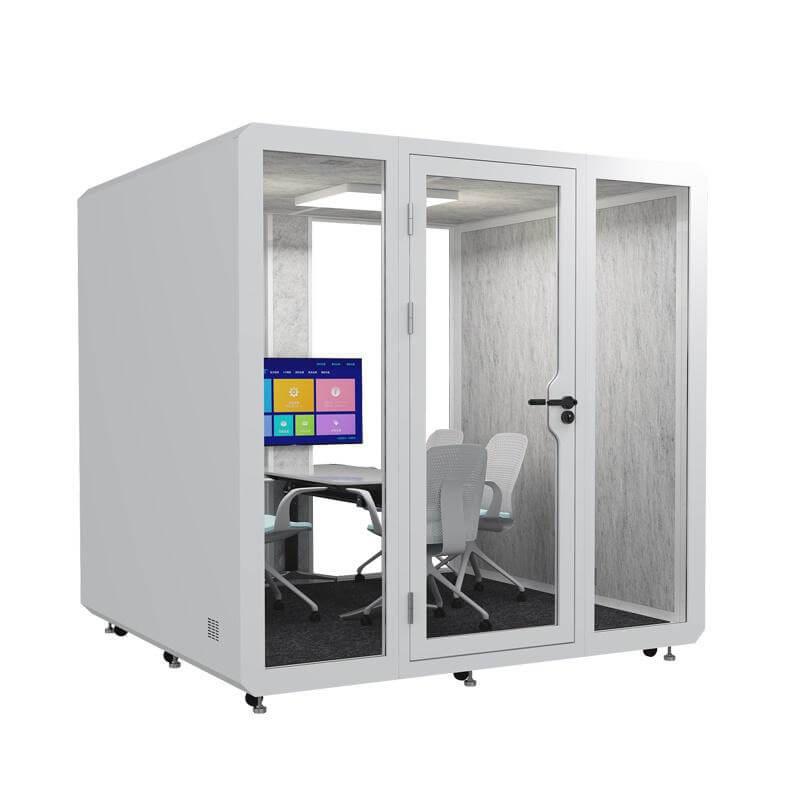
Use the learner's normal device and platform to review power, data or wireless stability, camera framing, microphone and loudspeaker behavior, screen glare, table space, posture, airflow, control reach, speech outside the pod, and the reset before the next user. Keep the result tied to the tested location and session duration.
Pause when the eligible activity is unclear, the proposed footprint conflicts with circulation or access review, the site cannot support services, privacy boundaries are unresolved, or the library lacks a workable booking and fault process. Resolve the blocking condition or pilot an alternative instead of relying on product features to compensate.
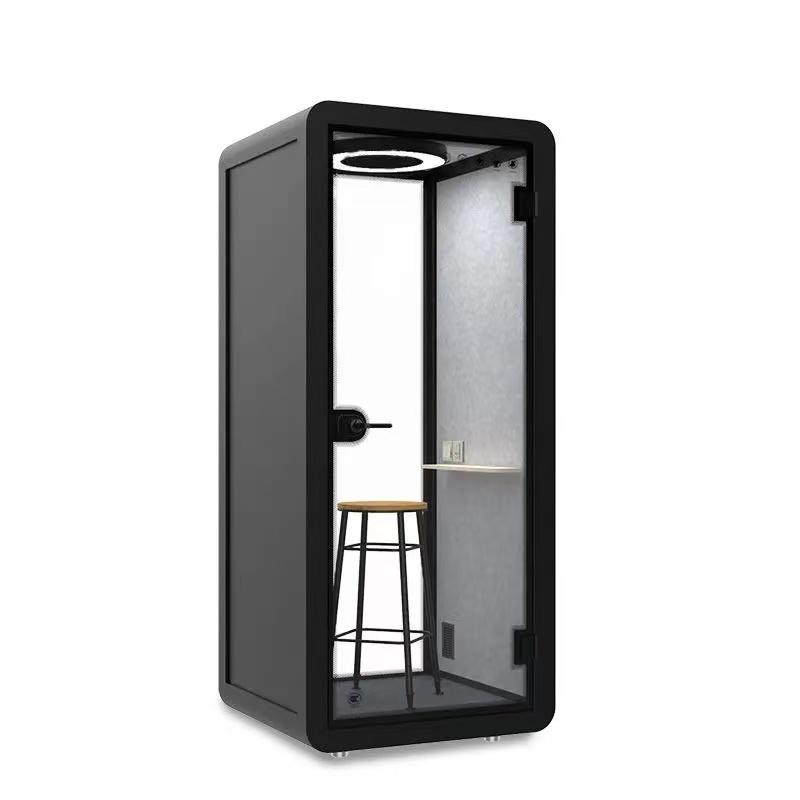
The right university library pod is the one that supports a defined learner activity while respecting the surrounding zone and the library's capacity to operate it. Occupancy, access, visibility, technology, comfort, booking, cleaning, support, and alternative spaces belong in the same selection record.
Run a term-time pilot before fixing a campus standard. Keep the activity allocation, location, matched trial, unresolved limits, and service observations together, then choose, relocate, restrict, or decline the candidate from that evidence.

 Tel: +8613538031763
 Email: info@sopworkpod.com
 MP/WhatsApp: +8613538031763
 Manufacturer Address:Liucheng Lujiang District,Meixi Road,Nanan City,Fujian,China