





Need Help?
Please leave your contact information to get our latest catalog
Get In Touch Now >


Author:SOP Work Pods Manufacturer TIME:2026-06-10
Supplier verification answers a practical question: can the named manufacturing entity reproduce the approved office pod configuration across the ordered batch and support it after delivery? The file should connect legal identity, factory role, controlled specification, sample identity, production records, packing records, and warranty responsibility. A polished sample or responsive salesperson is useful, but neither proves repeatability on its own.
Define the verification boundary before contacting suppliers. Record the buyer roles, unit count, installation locations, electrical destination, intended occupancy, privacy task, delivery sequence, and service expectations. Then identify who actually manufactures the product, who owns the quotation, who receives payment, and who accepts warranty claims. When those entities differ, the contract should explain the relationship rather than leave procurement to infer it.
The objective is not to eliminate every uncertainty. It is to distinguish verified facts, supplier declarations, buyer assumptions, and open conditions before commercial release. That distinction lets procurement stop a batch at a defined gate instead of discovering after delivery that the approved sample, quoted scope, and production units were never tied to one record.
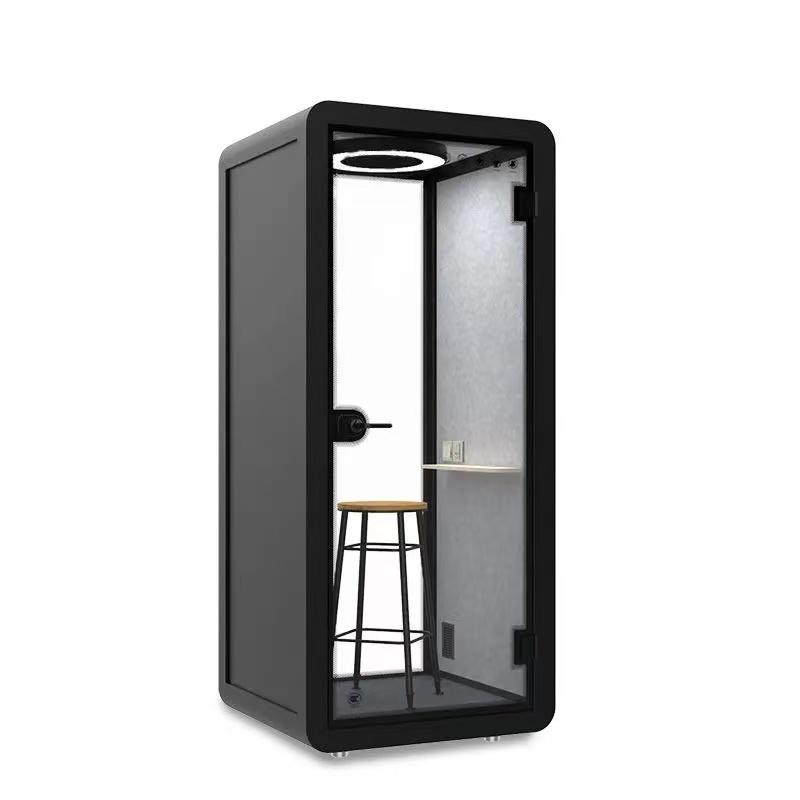
Classification is the first step in serious evaluation. Without classification, buyers may compare unlike options and mistake a lower price for a better decision. Divide the review into product, operating, supplier, and cost variables so unlike offers are not compared as if they had the same boundary.
| Classification layer | What it covers | Why it matters |
|---|---|---|
| Product variables | Speech privacy, ventilation, and door sealing | These factors describe whether the offer matches the intended use. |
| Operating variables | Power standard, floor plan, and daily workflow | These factors decide whether the product remains practical after purchase. |
| Supplier variables | Documentation, testing, lead time, service, spare parts, and communication | These factors reduce risk after the order is placed. |
| Cost variables | Unit price, freight, preparation, maintenance, replacement parts, and downtime | These factors reveal the real cost beyond the first quote. |
Classification note: Each critical variable needs a defined response field. Record the offered value or configuration, the evidence owner, the applicable unit or test condition, the buyer verification step, and the point at which the item becomes contractually controlled. An empty field is an unresolved condition, not permission to assume the favorable answer.
Bulk verification follows a cause-and-effect chain. A change to a fan, seal, glass panel, electrical component, or packing method can alter comfort, privacy, compliance work, installation, or project cost. The buyer therefore needs to understand how the supplier controls interfaces, not merely whether each component appears on a feature list.
For example, speech privacy cannot be judged alone. It interacts with ventilation, door sealing, and the surrounding operating environment. A supplier who explains these relationships usually gives more useful guidance than a supplier who only repeats a catalog claim. When a buyer orders one pod, a minor ambiguity may be acceptable. When the same ambiguity is repeated across many sites, a small specification gap becomes a fleet-wide defect. This is the core reason bulk-order verification must be treated as a supplier evidence audit rather than a product selection exercise.
Buyers should also understand that the operating logic changes with scale. A single pod can be adjusted on site. A bulk order cannot be corrected without significant cost. Therefore, the buyer must verify that the supplier's production process, not just the sample, can deliver the same result repeatedly. This shifts the conversation from "what does the pod look like" to "how does the supplier prove consistency."
Before requesting a quote, buyers should convert the topic into a specification checklist. The checklist should contain measurable facts, not only adjectives. Words such as premium, reliable, clean, quiet, efficient, or high quality do not help a buyer compare offers. Instead, the buyer should ask for numbers, units, test conditions, and evidence ownership.
For each specification, the buyer should record who owns the evidence. Is the test report from the supplier's own lab, an independent laboratory, or a previous customer site? Who signed the document? What was the exact test condition? These questions matter because a specification without evidence ownership is only a marketing claim.
Buyers should also prepare a site-specific checklist that includes the following: the number of units, the delivery address, the floor plan constraints, the power supply availability, the expected occupancy pattern, and the installation path. These items are not optional extras. They determine whether the pod can be installed, used, and maintained as intended. A pod that performs well in a showroom may fail in a narrow corridor or a space with limited ventilation.

The evaluation method should be based on a declaration-evidence-verification-release ledger. This ledger is not a generic yes-or-no checklist. It is a structured record that tracks each supplier claim from declaration to final release. The buyer should create one row for each critical claim and fill in the following columns: the supplier's declaration, the evidence provided, the verification method used by the buyer, and the release decision.
For example, if a supplier declares that the pod achieves a certain level of speech privacy, the buyer should ask for the test report, the test standard, the room conditions, and the sample identity. The buyer should then verify whether the sample tested is the same as the production unit. If the supplier cannot connect the tested sample to the offered production configuration, the report cannot by itself demonstrate batch equivalence.
This method also applies to material substitution. A supplier may declare that the production unit uses the same materials as the approved sample. The buyer should ask how the supplier controls material changes. Is there a change control process? Who approves a substitution? What documentation is issued when a material changes? Without these controls, the buyer cannot be sure that the delivered pods match the approved sample.
Every verification plan has limitations. The buyer should state these limitations clearly before signing a contract. For example, a sample test cannot guarantee that every production unit will perform identically. The buyer should therefore ask about the supplier's production checkpoints, quality control records, and batch traceability.
Another limitation is the difference between the test environment and the actual installation site. A pod may perform well in a controlled acoustic test but differently in a real office with background noise, hard floors, and open ceilings. The buyer should ask the supplier how the product performs under realistic conditions and whether the supplier has installation references that support the claim.
Assumptions should also be documented. If the buyer assumes that the pod will be used by one person at a time, this assumption should be written into the specification. If the buyer assumes that the pod will be placed on a carpeted floor, this assumption should be verified with the supplier. Unstated assumptions are a common source of dispute after delivery.
The decision framework for bulk orders should include escalation gates. These gates are points in the purchasing process where the buyer can stop, review, or cancel the order if the evidence is insufficient. The first gate is before the sample order. The second gate is after the sample inspection. The third gate is before production. The fourth gate is after the first production batch. The fifth gate is before final delivery.
At each gate, the buyer should ask a specific question. Before the sample order: does the supplier have a legal identity, a factory address, and a responsible contact? After the sample inspection: does the sample match the specification, and is the evidence traceable? Before production: has the supplier confirmed the controlled specification and the change control process? After the first batch: do the production records match the approved sample? Before delivery: are the packing and delivery records complete and consistent with the order?
This framework prevents the buyer from making a single large payment before all evidence is collected. It also creates a clear record of what was verified and when. If a problem appears later, the buyer can refer to the ledger and identify which gate failed.
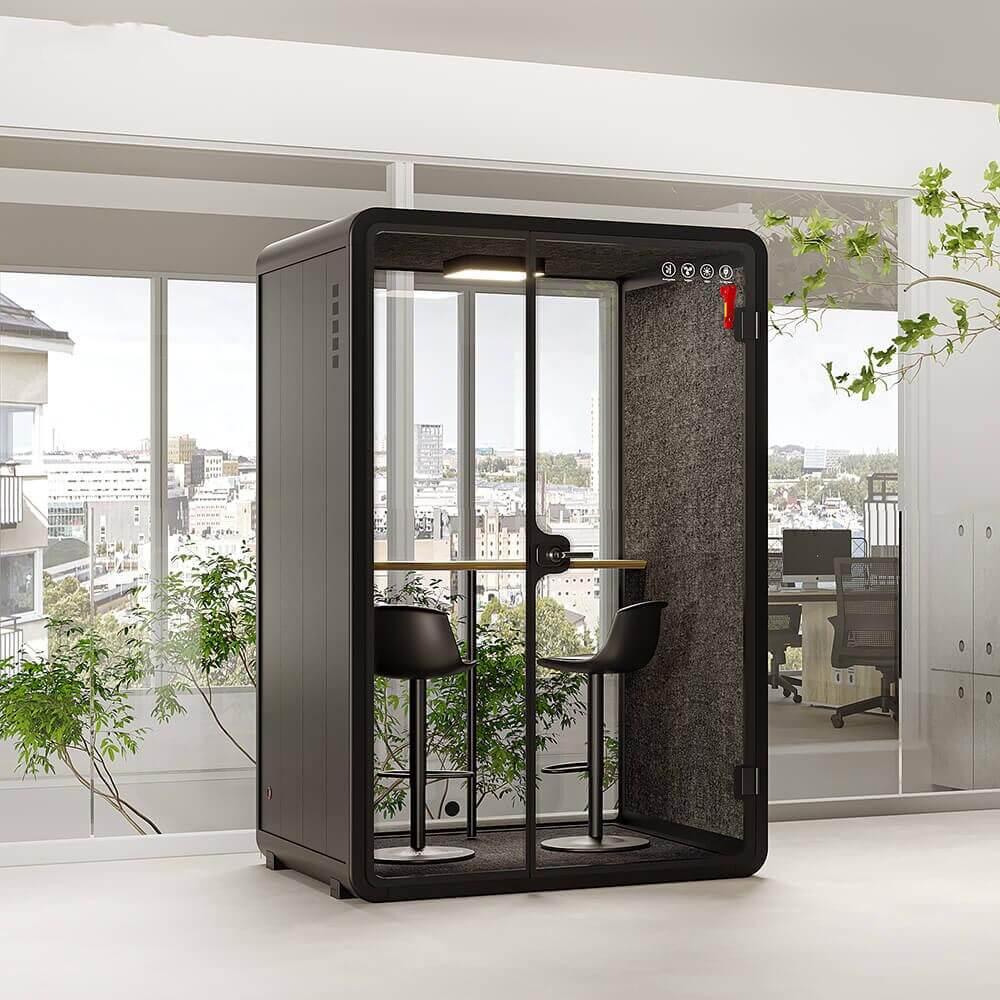
Buyers should prepare a set of direct questions for the supplier. These questions should focus on evidence, not promises. The following questions are useful for bulk-order verification:
These questions are not intended to create conflict. They are intended to establish a shared understanding of what evidence is required before a bulk order is released. A supplier who answers these questions clearly is more likely to deliver consistent quality than a supplier who avoids the questions or provides vague responses.
Which evidence should anchor a bulk office pod order?
Use a connected evidence set rather than one document: legal and contractual identity, a controlled specification, approved-sample identity, change control, production checkpoints, unit or batch traceability, packing records, and warranty ownership. Together, these records let the buyer compare delivered units with the configuration that was approved.
How can a buyer verify a supplier's acoustic claims?
The buyer should ask for the test report, the test standard, the test environment, and the sample identity. The buyer should also ask whether the test was performed by an independent laboratory or by the supplier. A sample review, factory review, or permitted report verification can add confidence, but each method has a defined scope and should be recorded as such.
What should be included in a bulk order contract to protect the buyer?
The contract should include the controlled specification, the evidence ledger, the escalation gates, the change control process, the production checkpoint records, and the delivery verification procedure. The contract should also state the assumptions and limitations of the verification plan.
Checklist for Office Pod Supplier Verification Before Bulk Orders is not a simple list of features to compare. It is a structured evidence audit that protects the buyer from repeating a single sample error across many sites. The buyer must define the use case, classify the variables, review the specifications, evaluate the evidence, state the limitations, and use a decision framework with escalation gates.
The supplier due-diligence file should include evidence ownership, sample controls, change control, production checkpoints, delivery records, and escalation gates. This file is the buyer's protection against inconsistency, substitution, and unverified claims. By following this method, the buyer can move from a generic product inquiry to a controlled bulk-order release with clear evidence at every stage.

 Tel: +8613538031763
 Email: info@sopworkpod.com
 MP/WhatsApp: +8613538031763
 Manufacturer Address:Liucheng Lujiang District,Meixi Road,Nanan City,Fujian,China