
Need Help?
Please leave your contact information to get our latest catalog
Get In Touch Now >


Author:SOP Work Pods Manufacturer TIME:2026-08-28
A hybrid workplace can look underprovided on Tuesday morning and overprovided on Friday afternoon. Calls, focused work, coaching, interviews, remote participants, and in-person collaboration do not rise in the same proportion as attendance. Selecting office pods from average headcount or one crowded walkthrough can therefore lock the floor into the wrong mix.
The central decision is not which pod has the longest feature list. It is which combination of enclosed roles remains useful as the office moves between low, typical, and peak conditions. Occupancy, call duration, speech privacy, device setup, room alternatives, circulation, comfort, booking, and support all interact differently across those days.
This method uses an attendance-volatility stress test. The buyer defines contrasting day patterns, gives each candidate pod a narrow service role, observes what happens when demand shifts, and records the conditions that trigger expansion, relocation, or rejection. It produces a conditional choice for a real hybrid operating model rather than a universal recommendation.
Select a small set of representative day patterns from actual workplace planning. A low-attendance day may have many remote calls and few in-person meetings. A collaboration day may bring teams together while remote participants still join. A peak overlap may combine scheduled meetings, confidential one-to-ones, ad hoc calls, and concentration needs. Describe the tasks and timing without inventing a percentage forecast.
For each pattern, record which activities need enclosure, normal occupancy, duration, equipment, privacy boundary, acceptable alternatives, and what happens when no space is available. Separate a person who prefers a quieter location from a conversation that must use an approved private setting. Both matter, but their refusal conditions and substitution routes differ.
Add spatial distribution. Demand near sales, HR, project teams, client-facing groups, and shared touchdown areas may peak at different times. A total count can hide a local queue while another pod remains unused across the floor. Map origins, walking tolerance, confidential routes, and whether crossing a busy zone changes the usefulness of the option.
Keep existing rooms in the model. A conventional meeting room, focus room, open collaboration area, desk call, remote day, or changed schedule can absorb some tasks. The office pod should solve a documented gap without removing an alternative whose larger occupancy, accessibility, equipment, or governance remains necessary.
| Day pattern | Enclosed work pressure | Pod role to test | Failure or adjustment signal |
|---|---|---|---|
| Low attendance with remote calls | Many individual conversations despite open desks | Short-call and extended-video roles | Queues at one role while larger rooms stay empty |
| Typical mixed day | Calls, focus, coaching and compact meetings overlap | Distributed individual and two-person roles | Travel, substitutions or repeated booking conflict |
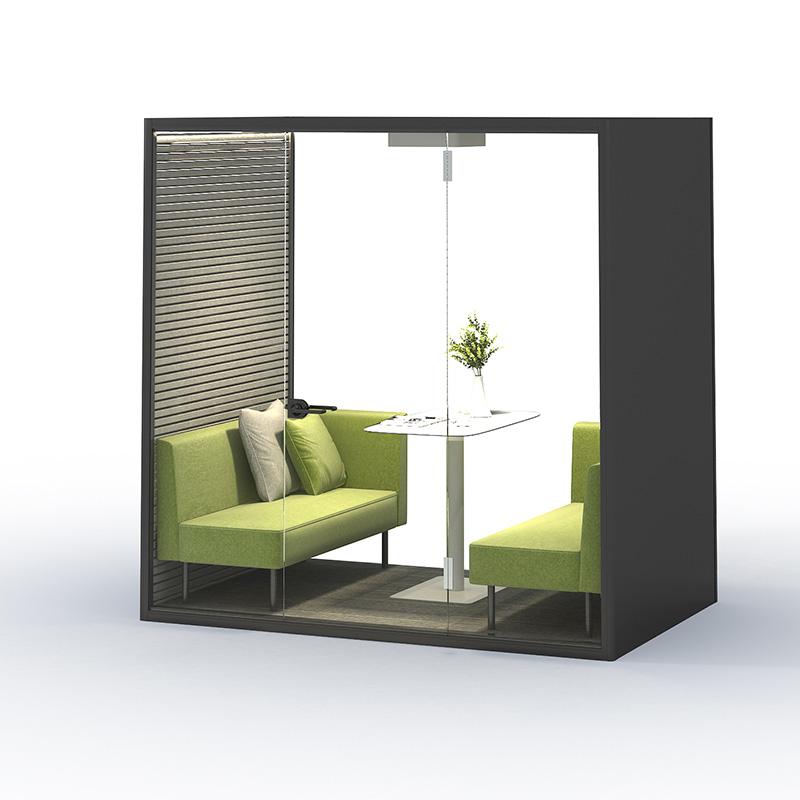
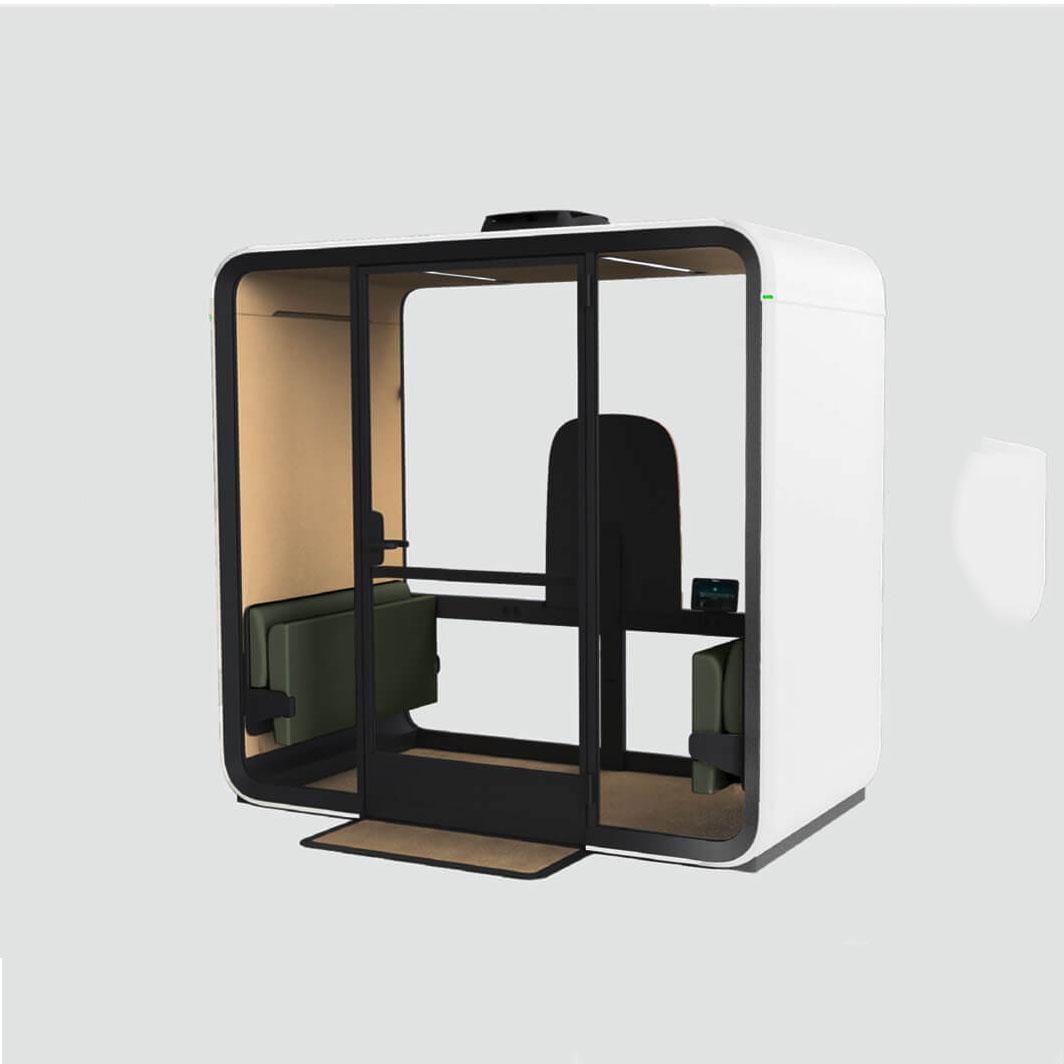
| Team collaboration day | In-person work still includes remote participants | Compact mixed-meeting role plus retained rooms | Technology reset or room displacement defeats the role |
| Peak overlap | Confidential, ad hoc and scheduled work compete | Full proposed mix under normal policy | Denied demand, external disruption or unsafe waiting |
| Post-peak recovery | Cleaning, faults, reset and support reduce supply | Operating service rather than new capacity | Calendar shows availability before the pod is ready |
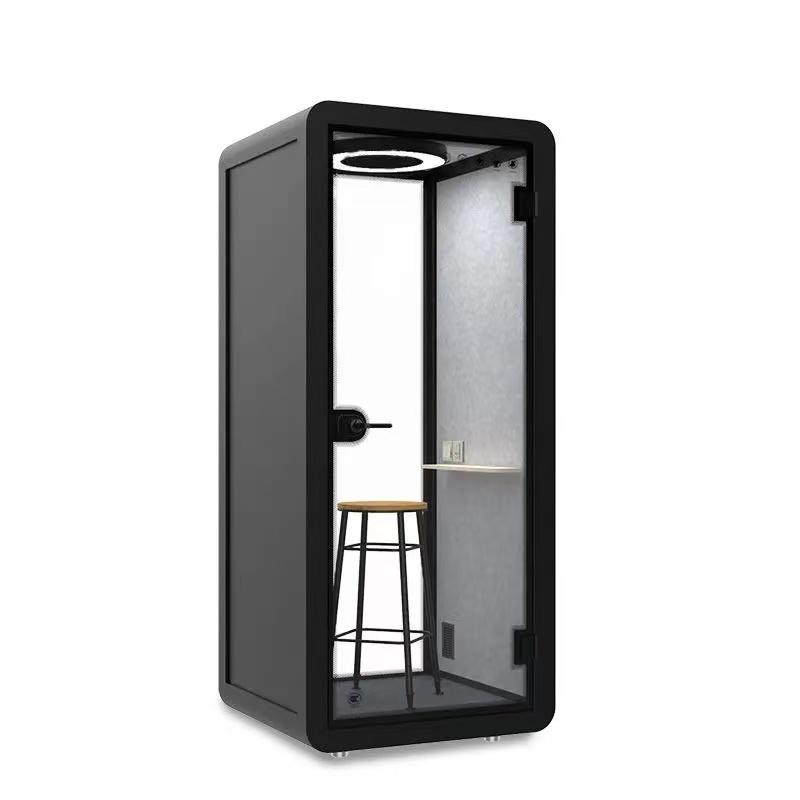
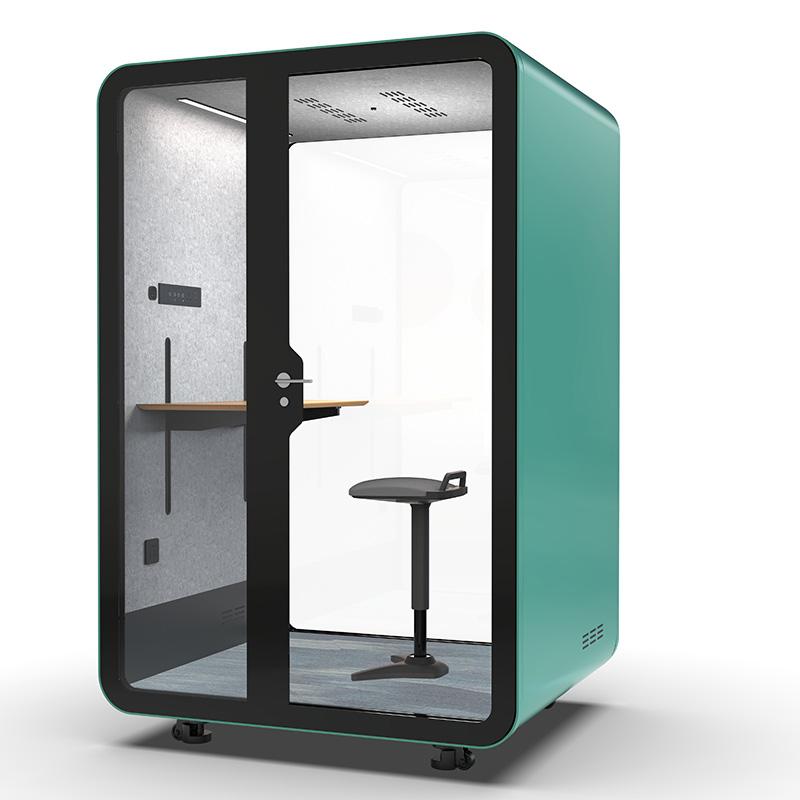
Give candidates roles such as short individual calls, extended video work, two-person coaching, compact mixed meetings, or focused work with an occasional call. Avoid asking one configuration to cover every activity. The role should state occupancy, expected duration, speaking pattern, furniture, device use, privacy condition, and the task that requires another space.
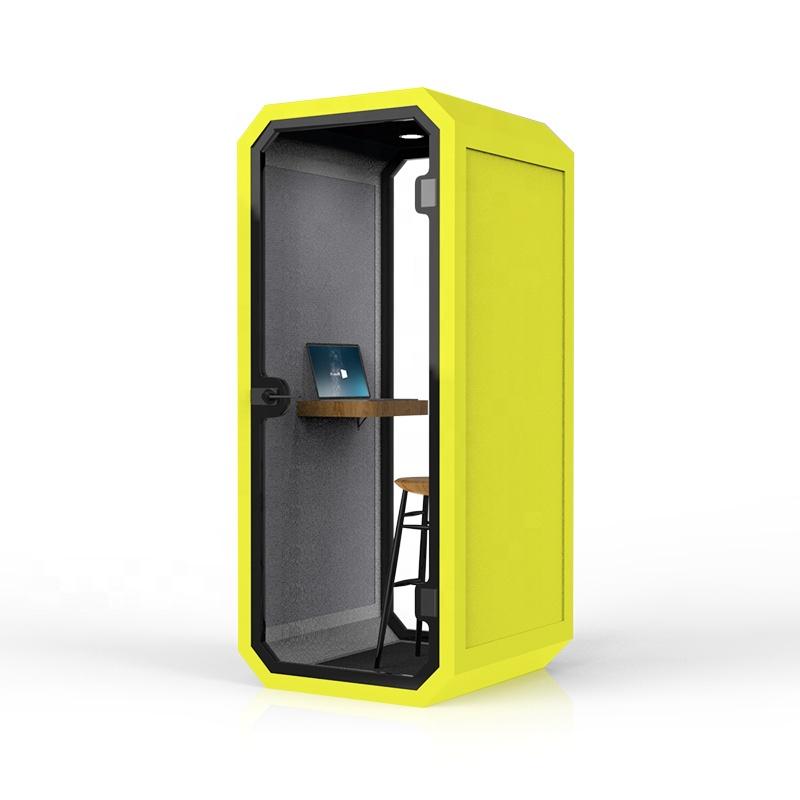
Match internal dimensions and furniture to occupied actions. Observe entry, seating, posture, note-taking, screen and camera position, control reach, belongings, and exit. A nominal capacity does not establish that the intended meeting works with normal equipment and documents. Use the exact configuration, not a family name.
Match enclosure evidence to the listener problem. Review door, joints, glazing, ventilation openings, placement, and surrounding paths; request applicable product documentation; then observe representative speech from the listener positions that matter. Do not claim a general soundproof result from an unrelated number or an empty demonstration.
Match services to the day pattern. Power, data or wireless conditions, lighting, airflow, equipment heat, fan response, and recovery between bookings can become more important during peak consecutive use. The office pod range reference can identify candidate routes after these requirements are fixed, but it cannot approve the site or prove occupied performance.
Mark the complete operating envelope for each proposed location. Include approach, door swing, circulation, accessible route, queue or waiting behavior, nearby desks, visual and listener paths, maintenance clearance, cleaning, return air, power, data, detectors, sprinklers, and delivery access. A location can fail even when the pod itself fits inside the drawn rectangle.
Run the peak pattern as a sequence of decisions. Who looks for a pod, how availability is known, how far the person walks, what happens at a no-show, where an overrun goes, and which alternative receives a confidential or equipment-heavy meeting? Observe whether booking makes access fair or simply moves the queue into a calendar that users cannot trust.
Test substitution deliberately. If an individual-call pod is occupied, can the task move to another suitable pod without displacing a two-person meeting? If a compact meeting pod is unavailable, does a conventional room absorb the task at an unacceptable opportunity cost? Record these exchanges so quantity and mix are judged together.
Examine external effects during turnover. Door activity, people waiting, speaker volume before entry, cleaning, faults, and repeated arrivals can disturb nearby workers. Relocation may solve the issue more effectively than buying a higher specification. Keep placement changes available during the pilot instead of treating the first plan as permanent.
Use the longest intended session and a sequence of normal bookings. Check posture, seat and table relationship, leg space, screen glare, camera framing, microphone and loudspeaker behavior, lighting, airflow perception, equipment heat, control reach, and the reset needed for the next user. A short showroom call does not establish a stable hybrid work condition.
Include different device routes that are approved for the office. Staff laptops, guests, personal headsets, room displays, direct cables, and wireless connections may expose different setup burdens. Time is not the only issue; watch for incorrect audio routes, cable hazards, abandoned adapters, visible meeting details, and settings that remain from the previous user.
Treat recovery as part of capacity. The pod may need air exchange, cleaning, fault isolation, furniture reset, or technology support between sessions. Do not convert the booking calendar directly into usable supply without these interruptions. Record unavailable periods by cause so policy, maintenance, and product issues can be corrected separately.
Ask users about the completed task, not whether they liked the pod in general. Did they join on time, hear and see participants, keep the intended information boundary, remain comfortable for the planned duration, and leave a ready condition? Short comments attached to known conditions are more actionable than a broad satisfaction score with no task context.
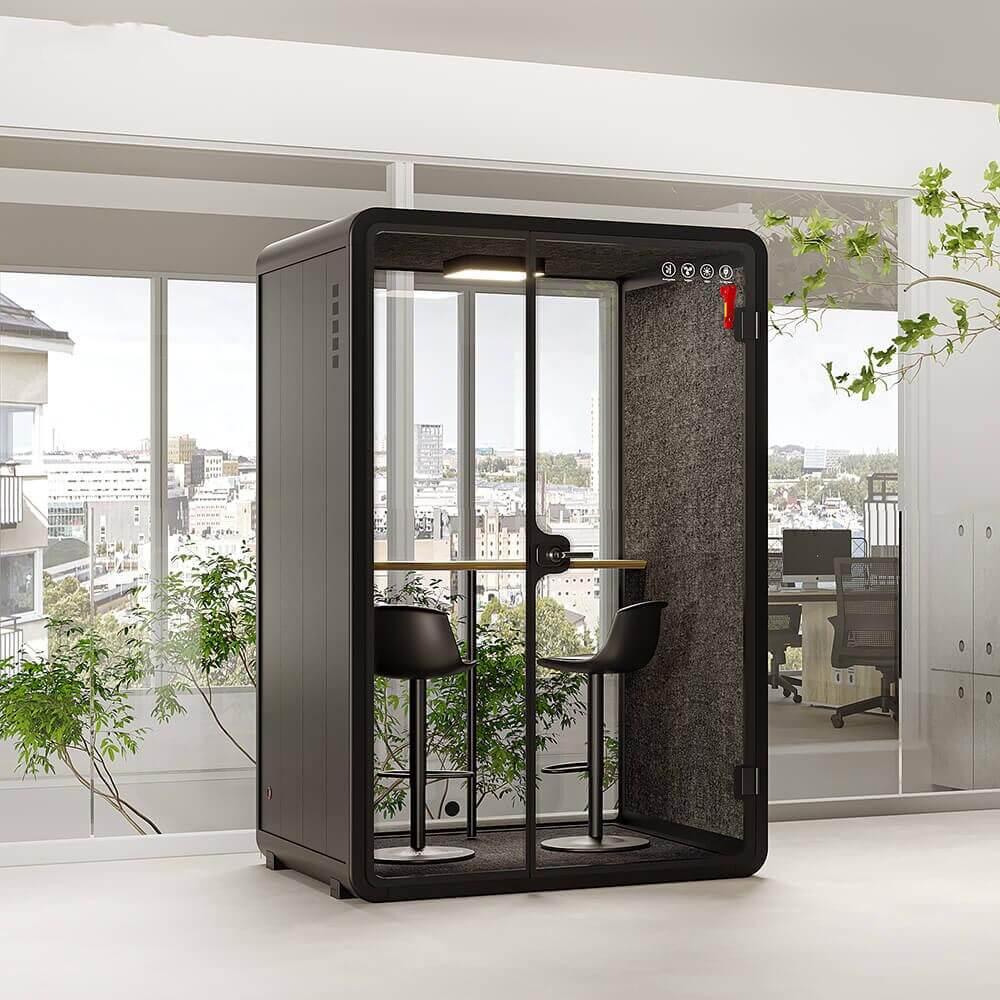
Pilot a limited mix across the contrasting day patterns. Record eligible tasks completed, denied or abandoned demand, substitutions, room displacement, travel, early exits, support events, faults, cleaning, recovery, external complaints, and periods of unused supply. Separate a location problem from a role problem before changing quantity.
Define no-buy conditions. A candidate should stop when it cannot support the occupied task, depends on an unapproved site interface, creates an unresolved access or circulation barrier, transfers disruption to another zone, lacks lifecycle ownership, or has no credible alternative during a fault. A polished demonstration cannot override those holds.
Compare commercial offers only after the mix is stable enough to describe. Normalize model, options, delivery, route, assembly, site work, power and data boundaries, commissioning, training, cleaning, warranty, maintenance, software or subscription obligations, and defect response. A lower unit price may accompany a larger buyer scope.
Test the proposed mix against floor-plan change as well as current attendance. A team move, reduced conventional-room inventory, new secure zone, or altered reception route may change which roles can substitute for one another. Record which pod can be relocated, what evidence a receiving site would need, which service connections must be reopened, and what downtime or specialist work remains outside the purchase. This does not assume that every unit is portable. It shows whether the hybrid plan has a credible response when its spatial assumptions move.
Procurement can stage the decision by role. Release the candidate that solves a verified recurring gap, hold the role whose occupied or site evidence is incomplete, and retain a room alternative for work outside the pod boundary. A staged record prevents pressure to buy the whole proposed mix simply because one route performed well.
Preserve an adjustment rule. State which repeated observation would justify moving a pod, changing a booking rule, exchanging a role, adding capacity, or removing an underused unit. Hybrid work will continue to change. A decision that includes its revision trigger is more durable than one built around a fixed attendance prediction.
Average attendance can hide short periods of concurrent enclosed work and local team queues. Use contrasting day patterns, task duration, location, alternatives, and recovery. Quantity and mix should respond to repeated observed demand rather than a single average or peak anecdote.
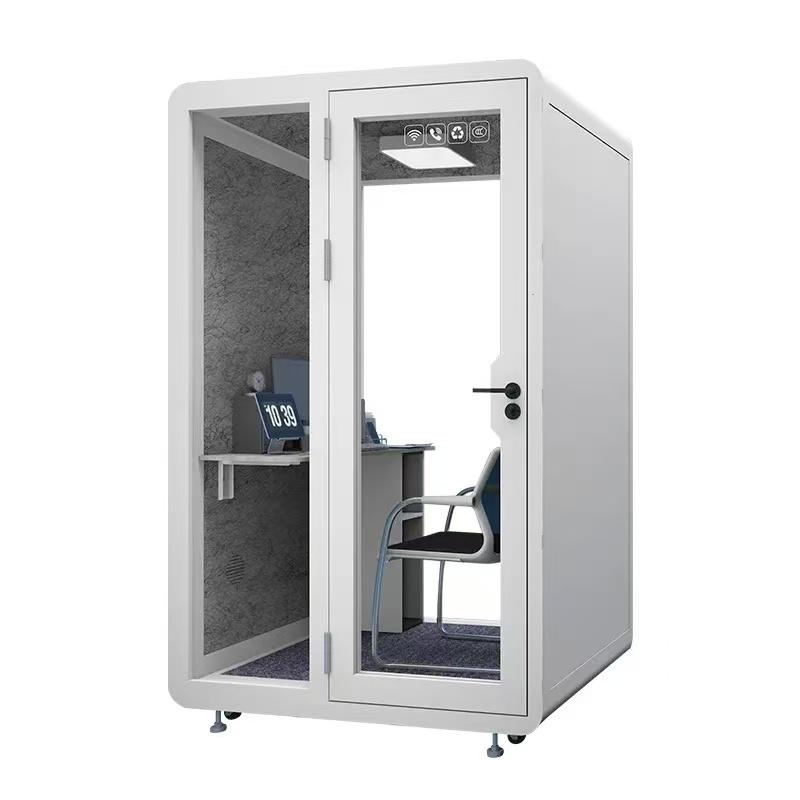
No. A larger pod may support more occupants, yet it consumes more floor area and can be inefficient when individual calls dominate. Compare task fit, room displacement, occupied comfort, location, booking, and substitution. Retain different roles when the work genuinely differs.
Run it long enough to capture the contrasting attendance and work patterns that drive the decision, including normal operating interruptions. Do not invent a universal duration. Define the events that must be observed and extend the pilot when a critical pattern has not occurred.
Look for repeated eligible demand that cannot use a suitable alternative, appears in a known location and time band, survives booking or placement corrections, and is large enough to support a defined role. Keep the expansion trigger and the observations together so additional units are not ordered from isolated complaints.
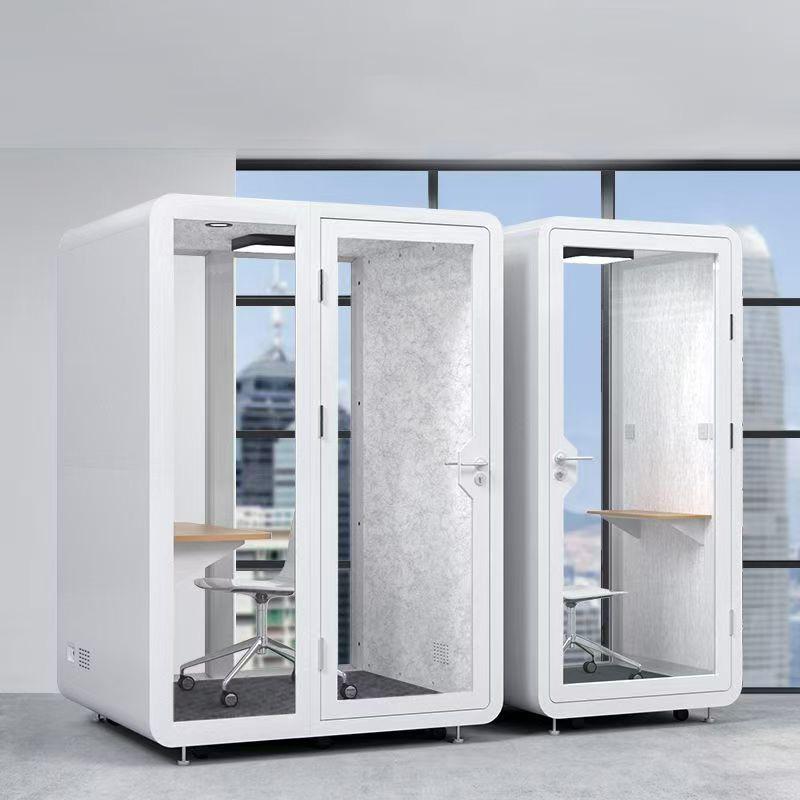
Choosing office pods for hybrid workplaces requires a mix that survives attendance volatility, not a product ranking built from one crowded day. Define contrasting patterns, assign bounded roles, stress placement and substitution, observe consecutive occupied use, and keep conventional alternatives in the service model.
Pilot the proposed mix across low, normal, and peak conditions before standardizing it. Move or reassign roles when evidence points to location and policy, add capacity only under a recorded demand trigger, and reject configurations whose site, comfort, privacy, technology, or ownership boundary remains unresolved.

 Tel: +8613538031763
 Email: info@sopworkpod.com
 MP/WhatsApp: +8613538031763
 Manufacturer Address:Liucheng Lujiang District,Meixi Road,Nanan City,Fujian,China