Need Help?
Please leave your contact information to get our latest catalog
Get In Touch Now >


Author:SOP Work Pods Manufacturer TIME:2026-08-28
Asking what acoustic rating a soundproof office pod should have skips the problem the rating is meant to solve. A component value, a whole-enclosure test, a product declaration, and an onsite speech observation can describe different objects and answer different questions.
This evidence chain begins with a source, an intended listener, an unintended listener, and a workplace failure to prevent. It then follows the document back to its method and specimen, compares that specimen with the quoted pod, includes operating conditions and site effects, and ends with a repeatable field observation. It does not invent a universal threshold or convert unlike metrics.
Before comparing numbers, place every document in a simple evidence map: what object was assessed, which method was used, how the result is expressed, what specimen and operating condition applied, and which limitation the author stated. Values that occupy different rows should not be ranked as though they were the same measurement. Ask a qualified reviewer to explain any necessary interpretation for the project.
The field check is not a substitute laboratory test. It is a reproducible workplace observation that confirms whether the selected evidence and installed condition address the buyer's stated speech path. Use the same source material, positions, door and fan condition, devices, surrounding activity, observers, and recording form when a correction is retested.
Begin With the Privacy Task and Source Listener Path turns the preceding evidence into a controlled release question. State source, speaker or equipment, listener, distance, location, surrounding activity, conversation sensitivity, whether audibility or intelligibility matters, door and fan operation, and the failure the requirement should prevent. Carry the limitation and review trigger into the final release record.
Use a document and field review to challenge the assumption. Map representative source and listener positions and record the workplace decision the acoustic evidence must support. Preserve context and contrary observations because a rating target being chosen before the problem is defined would change the approval route.
The release entry must state how to decide how to approve a bounded acoustic task. The task evidence note should identify the observed condition, limitation, accountable owner, correction or confirmation due, and effect on the acoustic evidence decision.
Classify the Acoustic Evidence Before Reading Its Number opens with the task evidence that the buyer can actually observe. Distinguish current test report, summary, declaration, certificate, component data, whole-enclosure result, design estimate, marketing statement, and field observation by issuer, date, model, method, units, and limitations. Keep the finding attached to the named task, users, and observed condition.
Use a document and field review to challenge the assumption. Obtain the complete relevant document where available and mark the pages, specimen, result, and stated scope used in the purchase record. Preserve context and contrary observations because documents with different purposes being compared as equivalent ratings would change the approval route.
The output is a documented decision about how to classify evidence before numerical comparison. The document type evidence note should identify the observed condition, limitation, accountable owner, correction or confirmation due, and effect on the acoustic evidence decision.
Organize the next evidence around Compare the Tested Specimen With the Quoted Pod. Compare model, size, wall and ceiling construction, floor, door, seals, glazing, ventilation, fan, openings, penetrations, furniture, options, assembly, and any difference between test specimen and quoted configuration. Compare alternatives under the same location, user, and operating-period assumptions.
Use a document and field review to challenge the assumption. Reconcile drawings, quotation, current documents, and supplier clarifications, assigning each discrepancy an effect or confirmation action. Preserve context and contrary observations because a result from a stronger or different specimen being transferred to the offer would change the approval route.
Use the gathered record to decide how to release a specimen applicability statement. The specimen evidence note should identify the observed condition, limitation, accountable owner, correction or confirmation due, and effect on the acoustic evidence decision.
Read Method Metric and Boundary Together narrows a broad product claim to a defined operating condition. Record what was measured, frequency or aggregation boundary where stated, source and receiving conditions, background, specimen setup, laboratory or field context, uncertainty or limitations provided, and whether the result addresses transmission or another property. State the boundary that prevents this observation from becoming a general product claim.
Use a document and field review to challenge the assumption. Ask the responsible technical reviewer to explain how the reported result connects to the defined task without inventing conversions or thresholds. Preserve context and contrary observations because a familiar number being used outside its method and purpose would change the approval route.
Resolve this part by deciding how to state what the metric can and cannot support. The metric boundary evidence note should identify the observed condition, limitation, accountable owner, correction or confirmation due, and effect on the acoustic evidence decision.
| Buyer question | Evidence type | Applicability check | Field confirmation |
|---|---|---|---|
| What reaches a nearby listener? | Relevant whole-pod document plus stated limitations | Model, specimen, method, door, fan, and options match | Defined source-listener observation in the proposed office |
| Does a component value describe the enclosure? | Component data | Do not extend beyond the tested component | Use only as supporting construction information |
| Does installation alter the condition? | Assembly and inspection record | Damage, joints, seals, floor, and interfaces reviewed | Repeat the accepted speech path after correction |
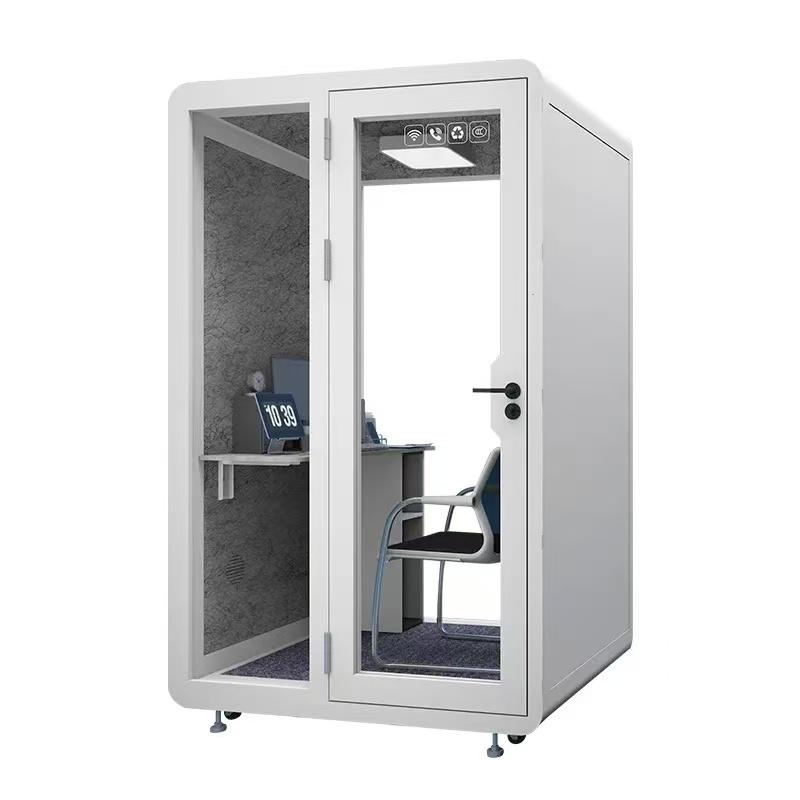
Use Include Doors Ventilation and Occupied Operation to connect the documents with occupied behavior. Review door closure, seal compression, fan setting, air paths, service openings, speaker position, device audio, occupancy, furniture, controls, maintenance condition, and user behavior represented or excluded by the evidence. Retain the device, occupancy, and session condition used for the trial.
Use a document and field review to challenge the assumption. Repeat practical checks across the accepted operating conditions and retain any condition under which privacy or comfort changes. Preserve context and contrary observations because evidence from a closed or inactive condition not matching daily use would change the approval route.
The occupied trial should end with a decision about how to set the accepted operating configuration. The operation evidence note should identify the observed condition, limitation, accountable owner, correction or confirmation due, and effect on the acoustic evidence decision.
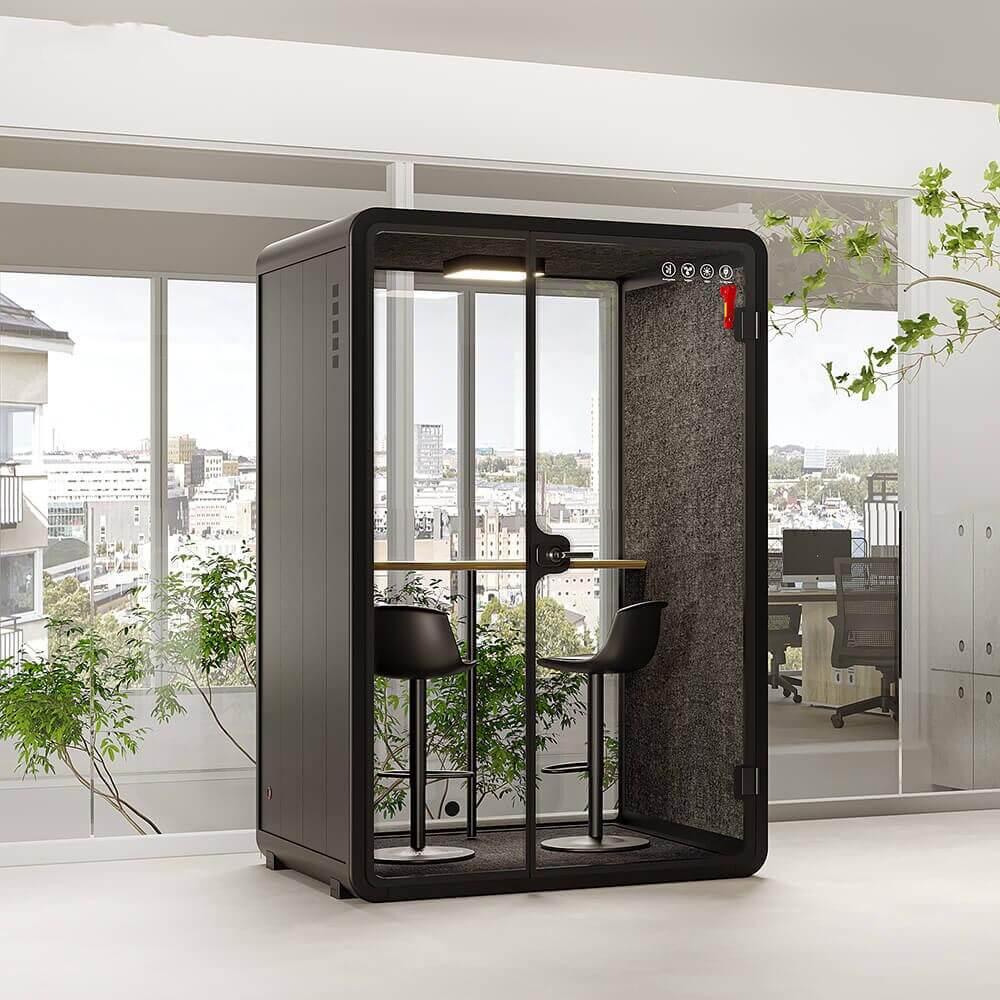
Use the office-pod reference to identify the proposed product family, then reconcile the quoted configuration with the evidence: review the relevant product configuration.
Account for Assembly and the Receiving Office tests whether the proposed configuration survives its site context. Inspect floor level, assembly fit, damage, perimeter interfaces, adjacent walls and ceilings, reflective surfaces, nearby desks, listener positions, background activity, return air, and changes from the tested assembly. Record any site change that would require this decision to be revisited.
Use a document and field review to challenge the assumption. Conduct source-path-listener observations after installation in the proposed office zone and record the actual surroundings. Preserve context and contrary observations because laboratory applicability being assumed to remove all site dependence would change the approval route.
Before moving forward, decide how to release the installed evidence boundary. The site evidence note should identify the observed condition, limitation, accountable owner, correction or confirmation due, and effect on the acoustic evidence decision.
Operational ownership becomes visible under Join Documents to a Repeatable Field Check. Define document references, offered configuration, source, speech task, speaker, listener, positions, door, fan, devices, office activity, observation, limitation, correction, retest, and responsible sign-off. Name the service owner and fallback before treating the route as available.
Use a document and field review to challenge the assumption. Witness the check and retain results beside the applicable evidence rather than converting the observation into an unsupported laboratory rating. Preserve context and contrary observations because either paperwork or informal listening being treated as sufficient alone would change the approval route.
Assign the responsible owner, then decide how to close acoustic acceptance through a traceable evidence chain. The acceptance evidence note should identify the observed condition, limitation, accountable owner, correction or confirmation due, and effect on the acoustic evidence decision.
Final operating note. Repeat practical checks across the accepted operating conditions and retain any condition under which privacy or comfort changes. Review door closure, seal compression, fan setting, air paths, service openings, speaker position, device audio, occupancy, furniture, controls, maintenance condition, and user behavior represented or excluded by the evidence. Do not transfer the result while evidence from a closed or inactive condition not matching daily use remains plausible.
Map representative source and listener positions and record the workplace decision the acoustic evidence must support. State source, speaker or equipment, listener, distance, location, surrounding activity, conversation sensitivity, whether audibility or intelligibility matters, door and fan operation, and the failure the requirement should prevent. Do not transfer the result while a rating target being chosen before the problem is defined remains plausible.
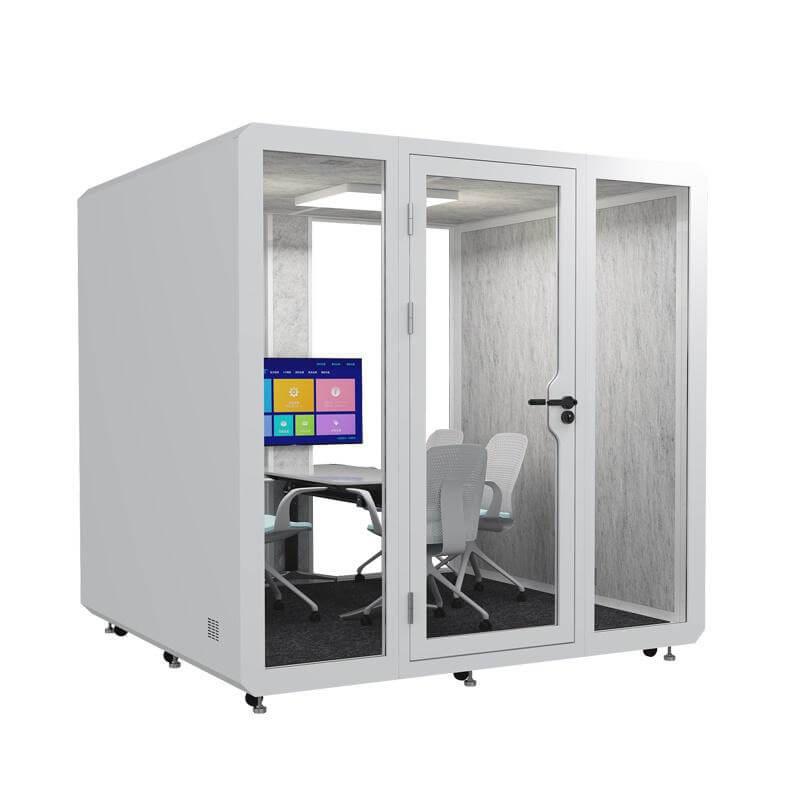
Obtain the complete relevant document where available and mark the pages, specimen, result, and stated scope used in the purchase record. Distinguish current test report, summary, declaration, certificate, component data, whole-enclosure result, design estimate, marketing statement, and field observation by issuer, date, model, method, units, and limitations. Do not transfer the result while documents with different purposes being compared as equivalent ratings remains plausible.
Reconcile drawings, quotation, current documents, and supplier clarifications, assigning each discrepancy an effect or confirmation action. Compare model, size, wall and ceiling construction, floor, door, seals, glazing, ventilation, fan, openings, penetrations, furniture, options, assembly, and any difference between test specimen and quoted configuration. Do not transfer the result while a result from a stronger or different specimen being transferred to the offer remains plausible.
Ask the responsible technical reviewer to explain how the reported result connects to the defined task without inventing conversions or thresholds. Record what was measured, frequency or aggregation boundary where stated, source and receiving conditions, background, specimen setup, laboratory or field context, uncertainty or limitations provided, and whether the result addresses transmission or another property. Do not transfer the result while a familiar number being used outside its method and purpose remains plausible.
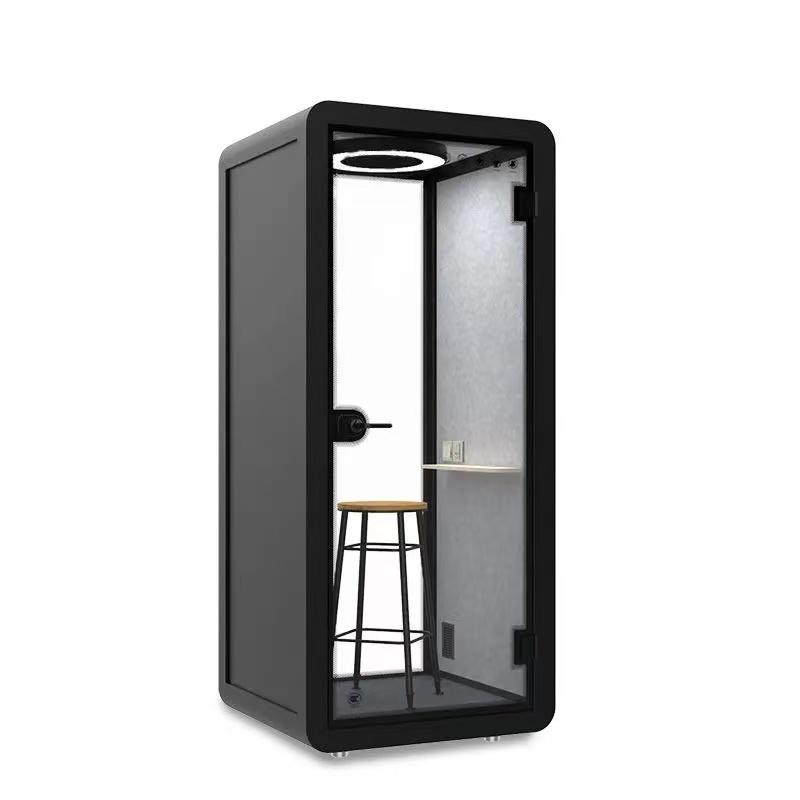
The right acoustic rating for a soundproof office pod is not a universal number. The useful requirement is an applicability chain: a defined workplace task, relevant evidence, a known method and specimen, a matching offered configuration, understood operating limits, and a site observation that checks the intended source-listener path.
Preserve the complete document reference, configuration comparison, reviewer interpretation, site condition, field method, result boundary, discrepancy, and correction. That record prevents a familiar number from being reused after the model, options, installation, or workplace context changes.

 Tel: +8613538031763
 Email: info@sopworkpod.com
 MP/WhatsApp: +8613538031763
 Manufacturer Address:Liucheng Lujiang District,Meixi Road,Nanan City,Fujian,China