Author:SOP Work Pods Manufacturer TIME:2026-08-28
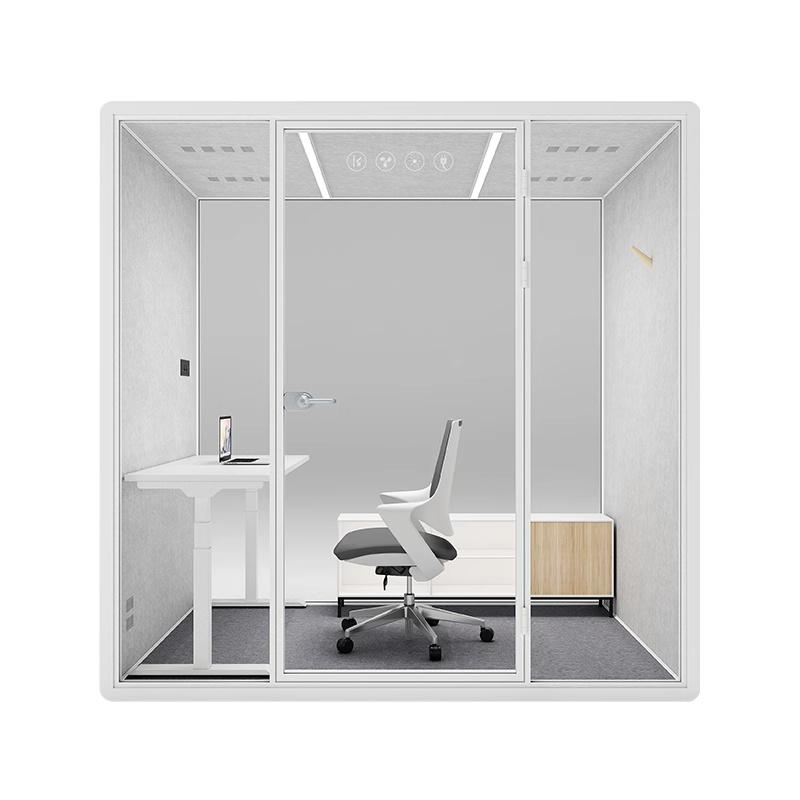
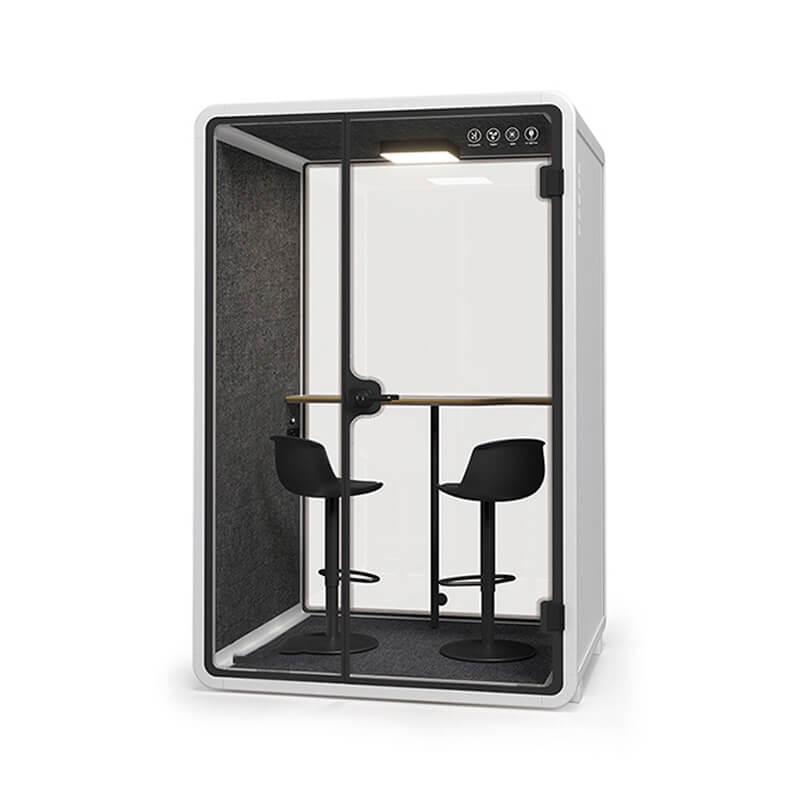
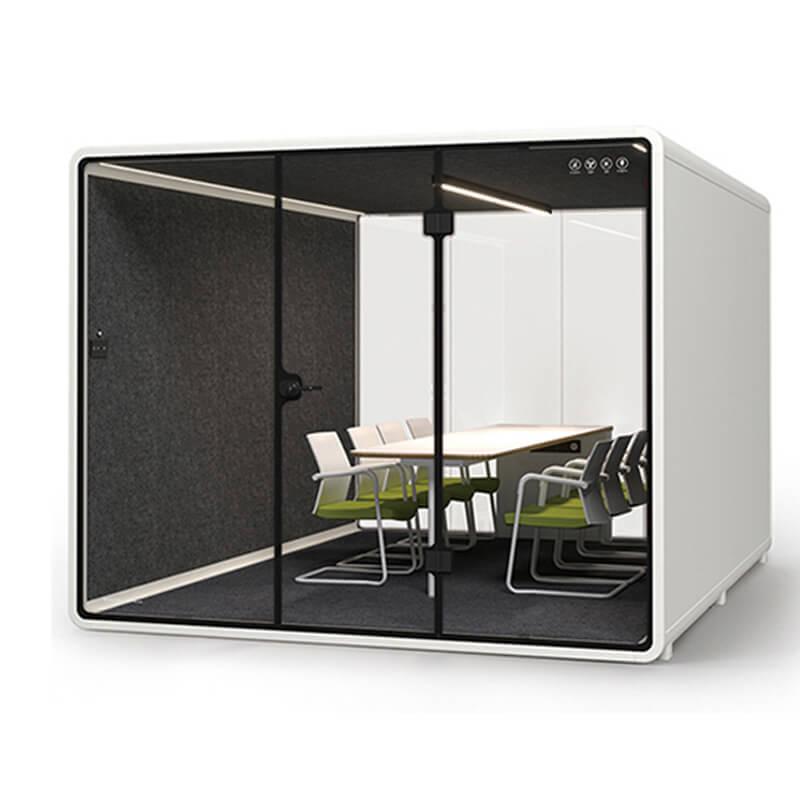
Meeting booth pod demand is not one market-wide number. Within a workplace it is a set of applications: private discussions, hybrid reviews, interviews, consultations, short team decisions, project check-ins, visitor conversations, or overflow from larger rooms. Each application differs in participant count, duration, speech, devices, privacy, urgency, location, and alternatives.
The planning method segments applications and users, observes when demand occurs, tests concurrency and failed attempts, and then matches capacity, configuration, and placement. It distinguishes a task suitable for a meeting booth from one that needs another room type, so broad interest does not inflate the deployment case.
A staged pilot tests the actual application mix and operating workload before scale. Booking, turnover, cleaning, technology, faults, support, and relocation are part of demand because they determine whether installed capacity remains available.
List private discussions, routine meetings, hybrid reviews, interviews, consultations, project check-ins, visitor sessions, focused paired work, urgent conversations, overflow, participant roles, occupancy, duration, speech, privacy, devices, movement, materials, booking lead time, wait tolerance, fallback, and tasks requiring larger or specialized rooms.
Apply a segmented demand study before approval. Observe current meetings and classify the work event rather than relying only on calendar labels or room names. Preserve contrary observations and scope limits because incompatible sessions being combined into one demand total would change the buyer conclusion.
Close "Inventory applications before estimating demand" by deciding how to approve an eligible application set. The application inventory entry in the application decision names context, evidence, owner, correction or confirmation, retest need, limitation, and effect on the final decision.
Distinguish resident teams, shared-desk users, remote or visiting staff, managers, recruiters, support functions, project groups, guests, users needing authorized access review, technology support needs, confidentiality levels, work zones, schedule patterns, discovery routes, and alternatives without inferring personal needs beyond evidence.
Apply a segmented demand study before approval. Interview representative users and map observed application origins, access friction, and current fallback across the floor. Preserve contrary observations and scope limits because an average user profile hiding groups that cannot reach or use the capacity would change the buyer conclusion.
Close "Segment users access needs and location constraints" by deciding how to release user and access segments. The user segments entry in the application decision names context, evidence, owner, correction or confirmation, retest need, limitation, and effect on the final decision.
Record date, period, location, application, participants, duration, eligible demand, available pods and other rooms, failed attempts, wait, cancellation, delay, fallback, desk disruption, no-show, overrun, unused periods, policy effects, atypical events, and changes that may alter the pattern.
Apply a segmented demand study before approval. Collect repeated representative observations and retain quiet periods so peaks are interpreted in context. Preserve contrary observations and scope limits because a busy snapshot or booking count becoming a universal quantity claim would change the buyer conclusion.
Close "Measure time concurrency failure and hidden demand" by deciding how to state bounded time-based demand. The time concurrency entry in the application decision names context, evidence, owner, correction or confirmation, retest need, limitation, and effect on the final decision.
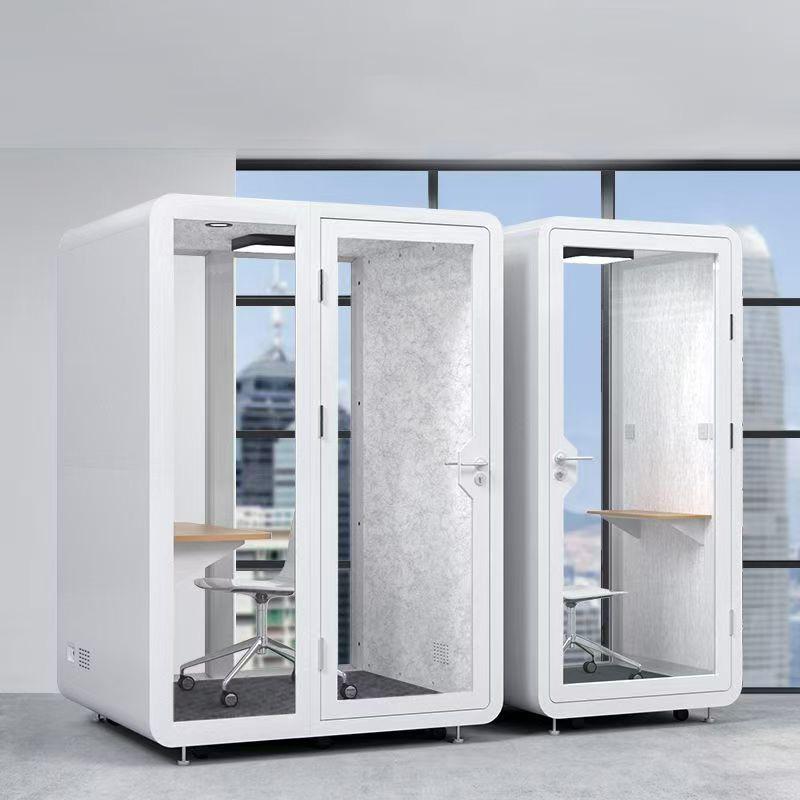
Compare booth occupancy and configuration with single-person rooms, small rooms, larger meeting rooms, open collaboration areas, quiet areas, remote participation alternatives, current utilization evidence, queue, walking distance, meeting quality, privacy, technology, duration, turnover, and the effect of moving an application between room types.
Apply a segmented demand study before approval. Model compatible allocation scenarios and test them in a pilot before fixing quantity. Preserve contrary observations and scope limits because adding pods while larger or smaller rooms continue to carry the wrong tasks would change the buyer conclusion.
Close "Match pod capacity with the wider room portfolio" by deciding how to approve a room-portfolio allocation. The capacity portfolio entry in the application decision names context, evidence, owner, correction or confirmation, retest need, limitation, and effect on the final decision.
Map application origins, sensitive adjacency, intended and unintended listeners, circulation, waiting, sightlines, accessibility review, power, data, ventilation interaction, delivery, assembly, cleaning, maintenance, wayfinding, booking zones, shared access, and the effect of central, local, or distributed placement.
Apply a segmented demand study before approval. Mark alternative footprints and walk discovery, entry, exit, fallback, service, and delivery routes with responsible users. Preserve contrary observations and scope limits because adequate total capacity being unavailable where an application occurs would change the buyer conclusion.
Close "Distribute applications across demand zones" by deciding how to release a zone and routing plan. The placement routing entry in the application decision names context, evidence, owner, correction or confirmation, retest need, limitation, and effect on the final decision.
| Demand signal | Capacity implication | Portfolio review action |
|---|---|---|
| 1. Inventory applications before estimating demand | Observe current meetings and classify the work event rather than relying only on calendar labels or room names. | Approve an eligible application set |
| 2. Segment users access needs and location constraints | Interview representative users and map observed application origins, access friction, and current fallback across the floor. | Release user and access segments |
| 3. Measure time concurrency failure and hidden demand | Collect repeated representative observations and retain quiet periods so peaks are interpreted in context. | State bounded time-based demand |
| 4. Match pod capacity with the wider room portfolio | Model compatible allocation scenarios and test them in a pilot before fixing quantity. | Approve a room-portfolio allocation |
| 5. Distribute applications across demand zones | Mark alternative footprints and walk discovery, entry, exit, fallback, service, and delivery routes with responsible users. | Release a zone and routing plan |
Define application labels, eligible occupancy, booking or walk-up rules, setup and session length, overrun, no-show, queue, availability indicators, devices, reset, belongings, sensitive materials, cleaning, ventilation recovery, door and seal checks, faults, isolation, parts, service contact, downtime communication, alternatives, ownership, and recurring portfolio review.
Apply a segmented demand study before approval. Rehearse a normal day with consecutive different applications and representative faults to expose workload and handoff gaps. Preserve contrary observations and scope limits because installed capacity failing because operational effort was excluded from demand would change the buyer conclusion.
Close "Resource booking turnover technology cleaning and support" by deciding how to approve a sustainable service model. The operating model entry in the application decision names context, evidence, owner, correction or confirmation, retest need, limitation, and effect on the final decision.
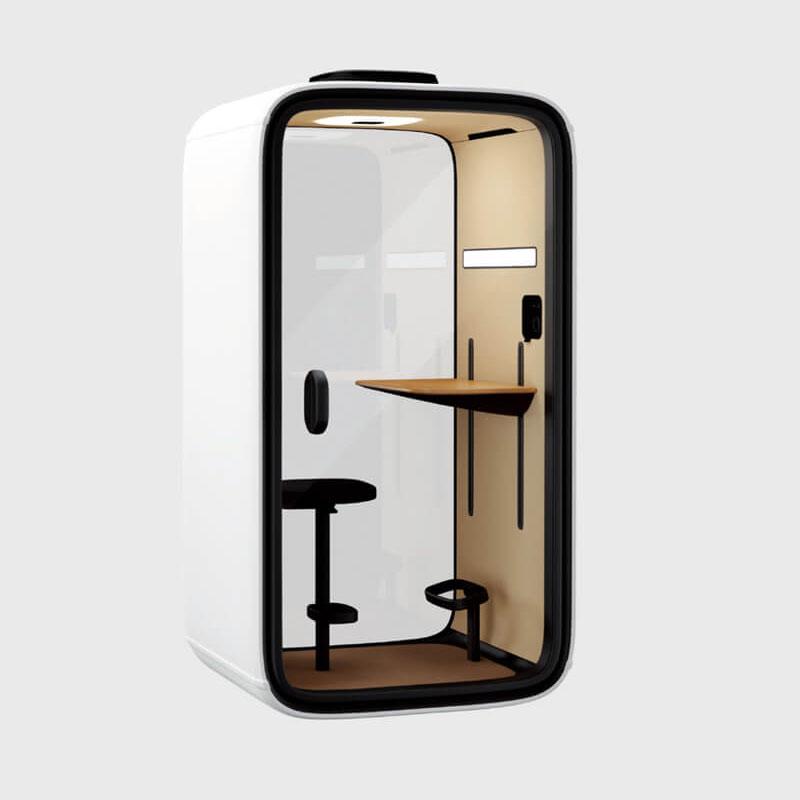
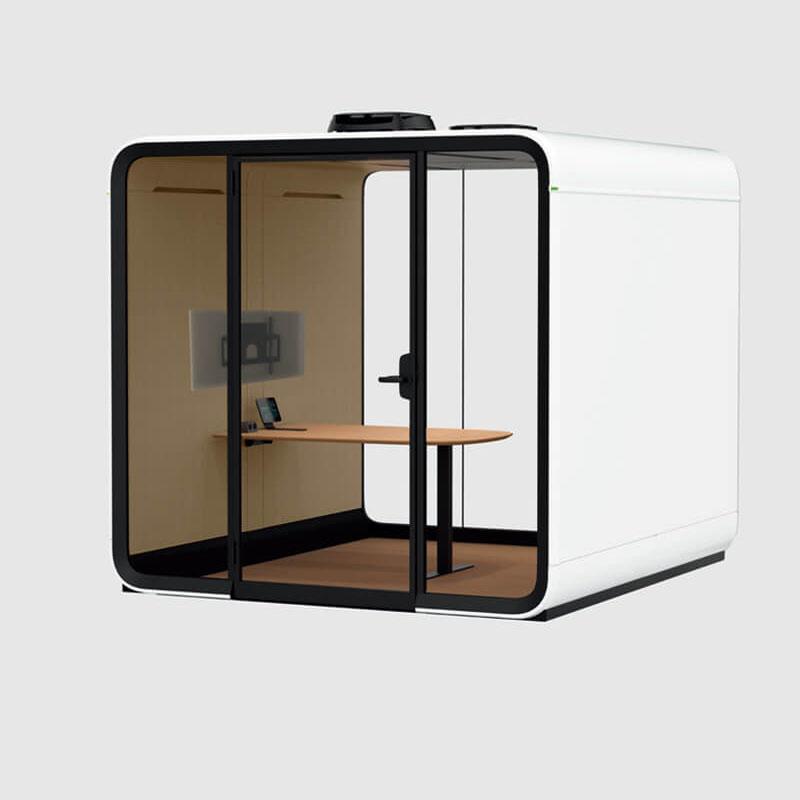
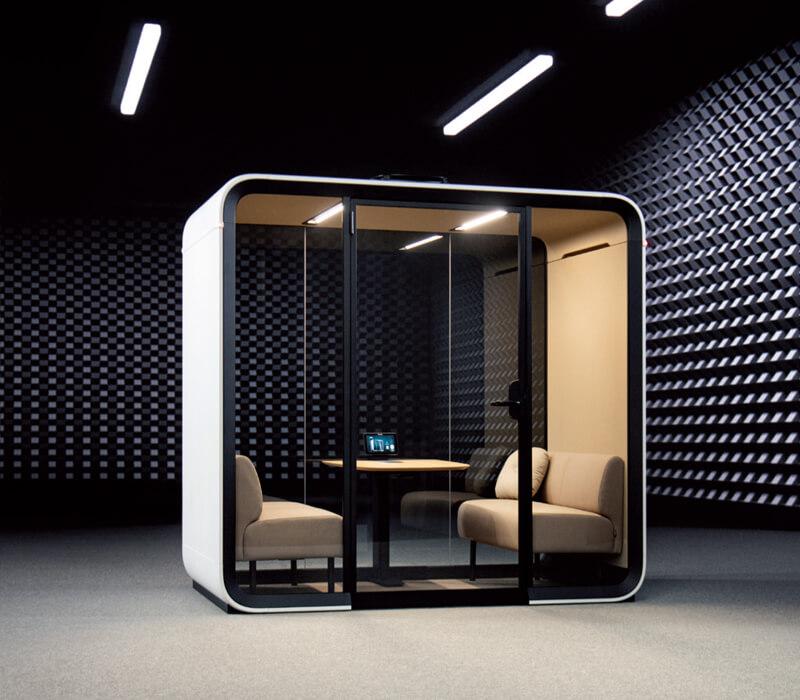
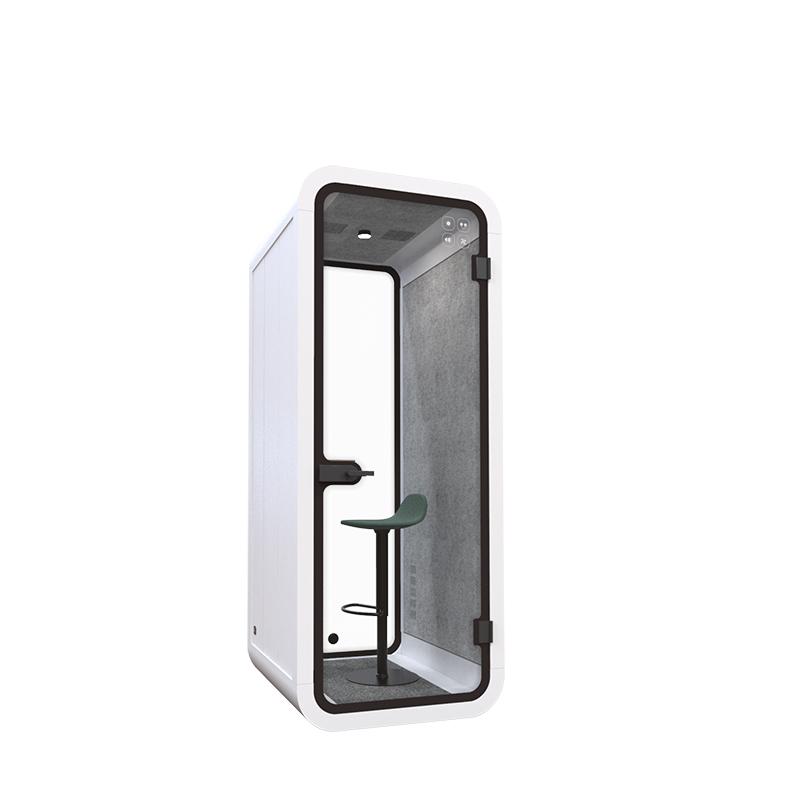
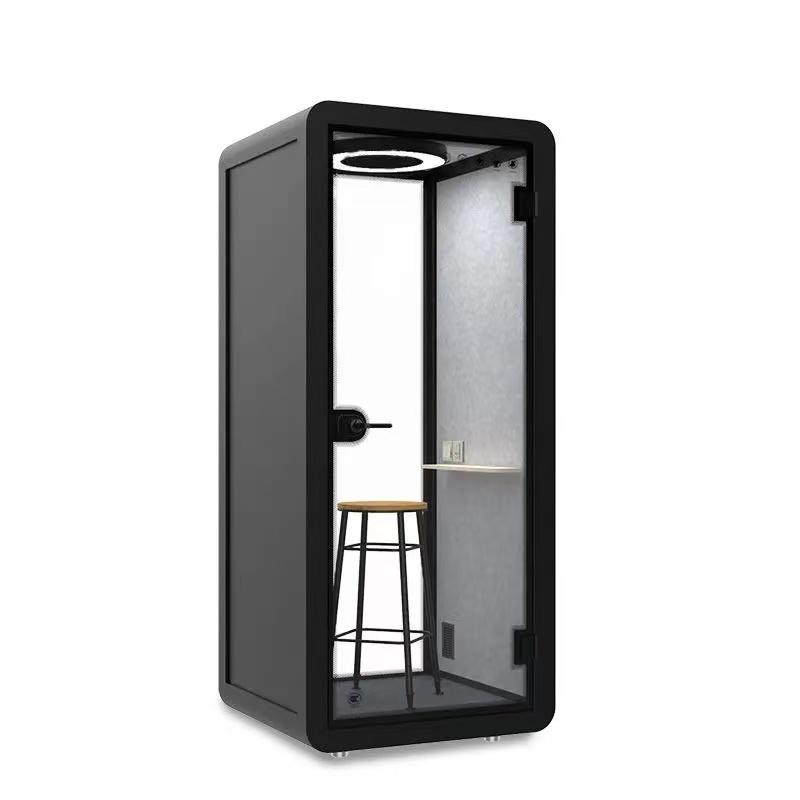
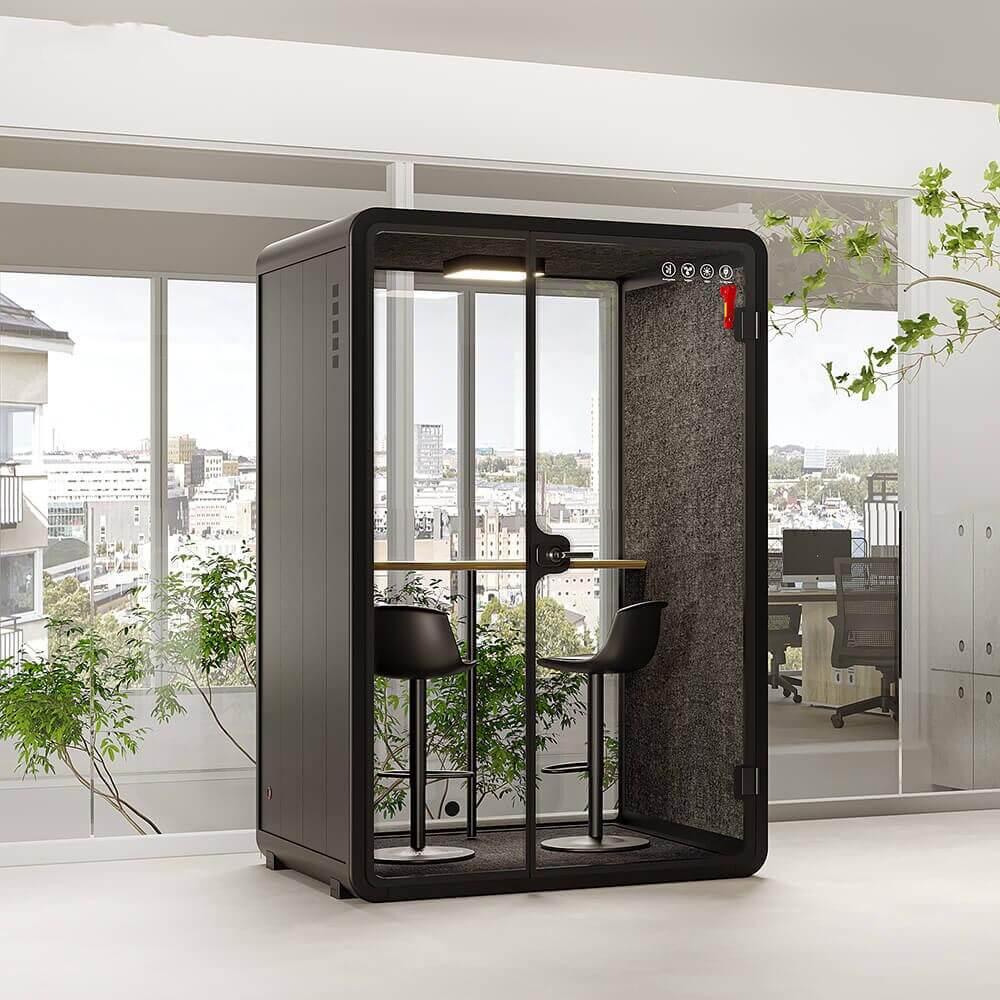
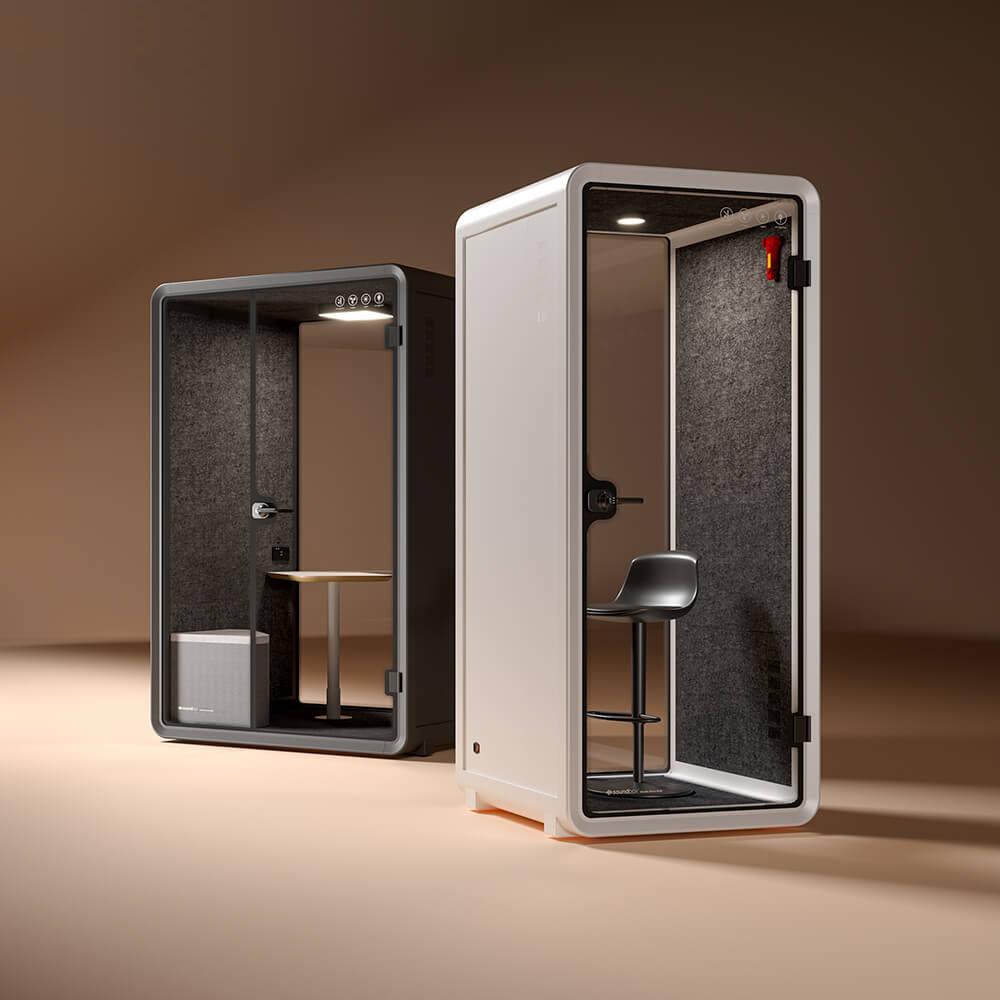
Use the meeting booth pod configuration page to define the candidate configuration in the allocation register. Application concurrency, the wider room portfolio, placement, and service capacity remain separate workplace decisions.
Set pilot duration based on representative conditions, locations, configurations, user groups, observation fields, privacy and technology checks, booking data interpretation, manual observations, complaints and positive outcomes, service effort, unavailable time, alternative use, limitations, decision owners, and triggers for relocation, reconfiguration, quantity change, or discontinuation.
Apply a segmented demand study before approval. Review evidence by application segment rather than averaging every session into one score. Preserve contrary observations and scope limits because pilot popularity being treated as proof for every application and office would change the buyer conclusion.
Close "Pilot applications and govern portfolio change" by deciding how to authorize a bounded portfolio decision. The staged portfolio entry in the application decision names context, evidence, owner, correction or confirmation, retest need, limitation, and effect on the final decision.
Use unavailable-time evidence alongside completed bookings when reviewing capacity. A booth can appear busy while serving low-priority sessions, or appear lightly used because eligible users abandon the search before a booking is recorded. Combine booking records with observed failed attempts, waits, fallbacks, location, and room alternatives before changing quantity or moving applications between the pod and the wider meeting-room portfolio.
Answer from the application-portfolio record: Observe current meetings and classify the work event rather than relying only on calendar labels or room names. Interpret it with this condition: List private discussions, routine meetings, hybrid reviews, interviews, consultations, project check-ins, visitor sessions, focused paired work, urgent conversations, overflow, participant roles, occupancy, duration, speech, privacy, devices, movement, materials, booking lead time, wait tolerance, fallback, and tasks requiring larger or specialized rooms. Keep the conclusion conditional while incompatible sessions being combined into one demand total remains possible.
Answer from the application-portfolio record: Interview representative users and map observed application origins, access friction, and current fallback across the floor. Interpret it with this condition: Distinguish resident teams, shared-desk users, remote or visiting staff, managers, recruiters, support functions, project groups, guests, users needing authorized access review, technology support needs, confidentiality levels, work zones, schedule patterns, discovery routes, and alternatives without inferring personal needs beyond evidence. Keep the conclusion conditional while an average user profile hiding groups that cannot reach or use the capacity remains possible.
Additional review: why must time and concurrency be recorded with meeting counts.
Answer from the application-portfolio record: Collect repeated representative observations and retain quiet periods so peaks are interpreted in context. Interpret it with this condition: Record date, period, location, application, participants, duration, eligible demand, available pods and other rooms, failed attempts, wait, cancellation, delay, fallback, desk disruption, no-show, overrun, unused periods, policy effects, atypical events, and changes that may alter the pattern. Keep the conclusion conditional while a busy snapshot or booking count becoming a universal quantity claim remains possible.
Answer from the application-portfolio record: Model compatible allocation scenarios and test them in a pilot before fixing quantity. Interpret it with this condition: Compare booth occupancy and configuration with single-person rooms, small rooms, larger meeting rooms, open collaboration areas, quiet areas, remote participation alternatives, current utilization evidence, queue, walking distance, meeting quality, privacy, technology, duration, turnover, and the effect of moving an application between room types. Keep the conclusion conditional while adding pods while larger or smaller rooms continue to carry the wrong tasks remains possible.
Answer from the application-portfolio record: Mark alternative footprints and walk discovery, entry, exit, fallback, service, and delivery routes with responsible users. Interpret it with this condition: Map application origins, sensitive adjacency, intended and unintended listeners, circulation, waiting, sightlines, accessibility review, power, data, ventilation interaction, delivery, assembly, cleaning, maintenance, wayfinding, booking zones, shared access, and the effect of central, local, or distributed placement. Keep the conclusion conditional while adequate total capacity being unavailable where an application occurs remains possible.
Meeting booth pod demand becomes actionable when eligible applications, user groups, time patterns, concurrency, capacity, configuration, locations, alternatives, and operating ownership are visible. A portfolio should contain compatible tasks and redirect incompatible ones. Complete the analysis with an allocation register that shows which application uses which room type, when concurrency occurs, and what pilot evidence would justify a portfolio change.
Deploy a measured portfolio of compatible applications. Preserve the segmentation, observation periods, zeros and peaks, assumptions, pilot setup, user outcomes, queue behavior, service effort, limitations, and review rules for relocation, reconfiguration, expansion, or removal.

 Tel: +8613538031763
 Email: info@sopworkpod.com
 MP/WhatsApp: +8613538031763
 Manufacturer Address:Liucheng Lujiang District,Meixi Road,Nanan City,Fujian,China