Author:SOP Work Pods Manufacturer TIME:2026-08-28
A project team can put Framery meeting pods on a shortlist and still have no agreed meaning for privacy. Procurement may be thinking about a recognized product family, HR about conversations that should not be followed from nearby desks, IT about dependable calls, and facilities about a unit that can be placed and maintained without disturbing circulation. Those are related requirements, but none is proved by the brand name or by a single feature line.
The useful decision begins by naming the meeting that needs protection. A sensitive one-to-one conversation, a routine video meeting, a short project huddle, and sustained individual work expose different listener paths, screen risks, occupancy loads, furniture needs, and support duties. The selected model, options, door orientation, surrounding activity, user behavior, and building services may all change what the occupants experience.
This guide treats privacy and innovation as claims that must travel through an evidence chain. The buyer connects each claim to model-specific documents, a site condition, an occupied observation, an operating limit, and an owner. It does not declare a measured acoustic result or repeat marketing language as fact. It creates a practical way to decide whether a particular configuration belongs in a particular workplace.
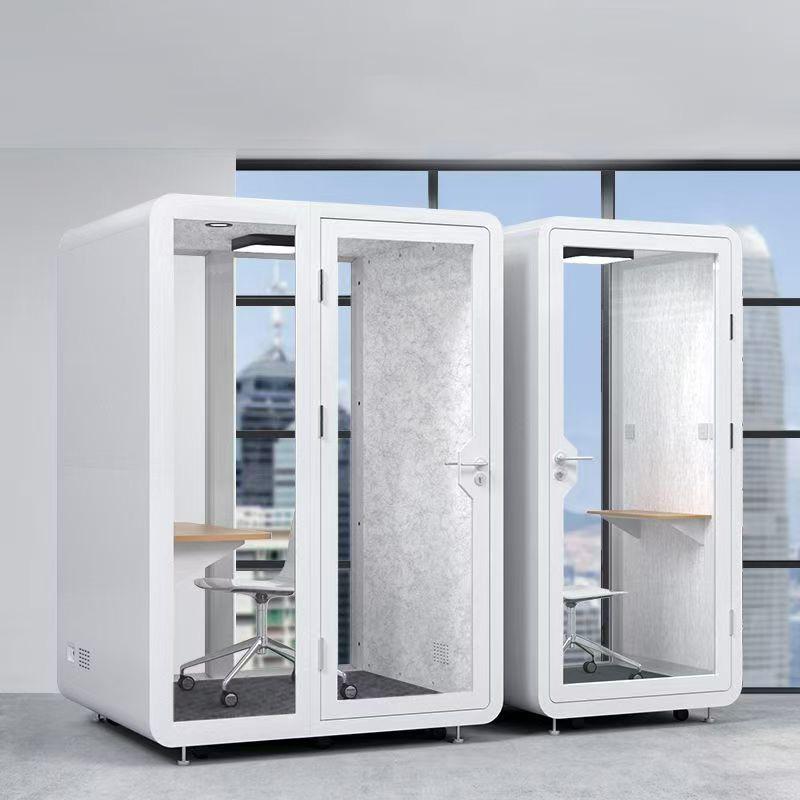
Start with a meeting register, not a catalogue page. Record who uses the space, the normal and maximum occupancy, whether people speak continuously or intermittently, the likely session length, the devices and papers they carry, and what information could be exposed outside. Add the current alternative, because a pod should be compared with the room, desk, or remote arrangement it may replace rather than with an imaginary perfect space.
Describe privacy as an observable boundary. A nearby listener might hear sound without following words, a passerby might see a screen through glazing, or a person waiting at the door might overhear the first part of a call. The project team should state which listener positions matter and what conversation types require another approved room. This avoids asking one pod to cover tasks whose governance or risk needs a different enclosure.
Innovation also needs a job. A control, sensor, interface, lighting option, ventilation behavior, or technology provision is useful only when it removes a documented obstacle from the assigned meeting. Write the obstacle first, then identify the feature that may address it and the evidence needed to verify the link. Novelty without a decision consequence should not earn extra weight.
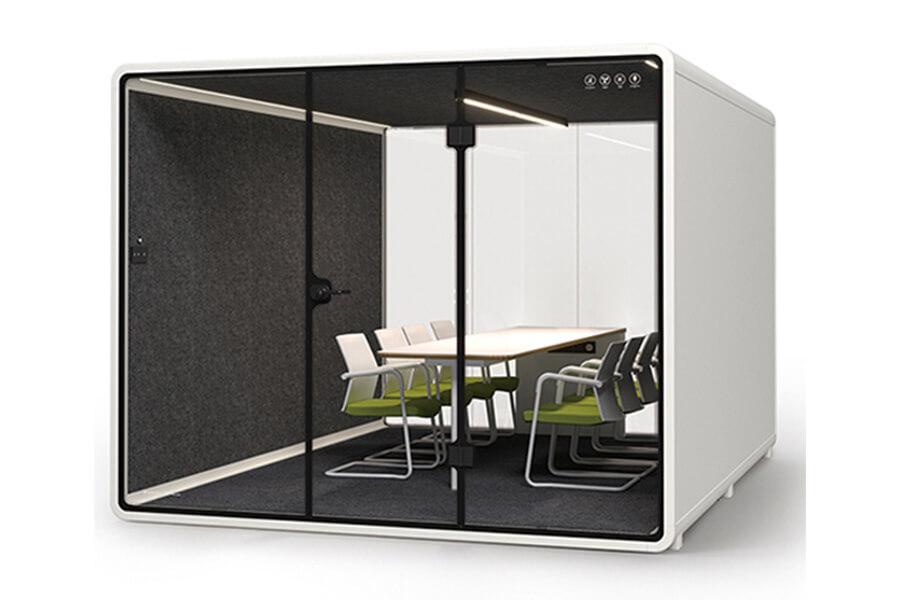
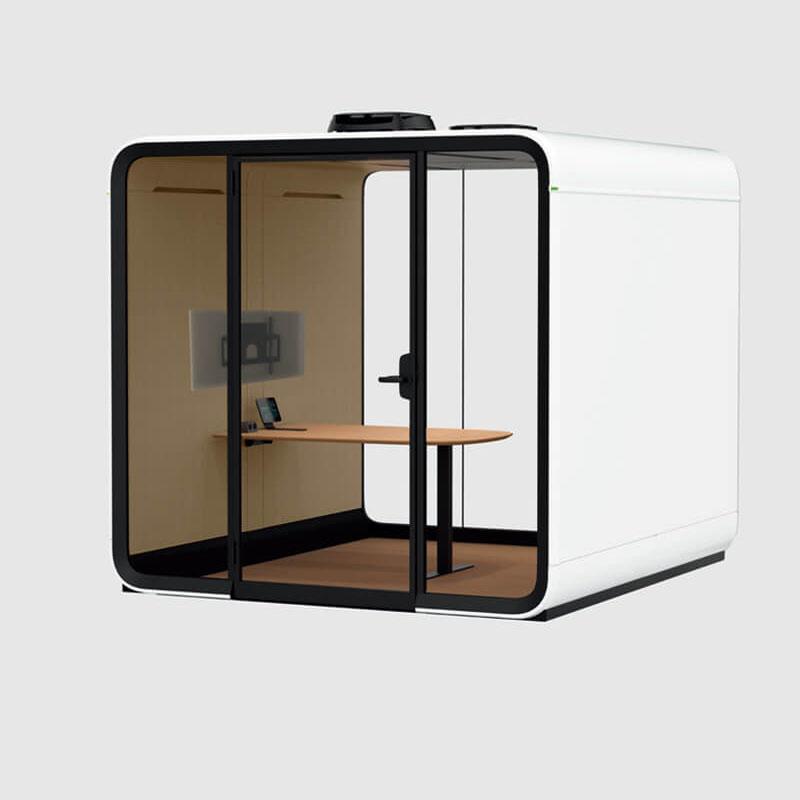
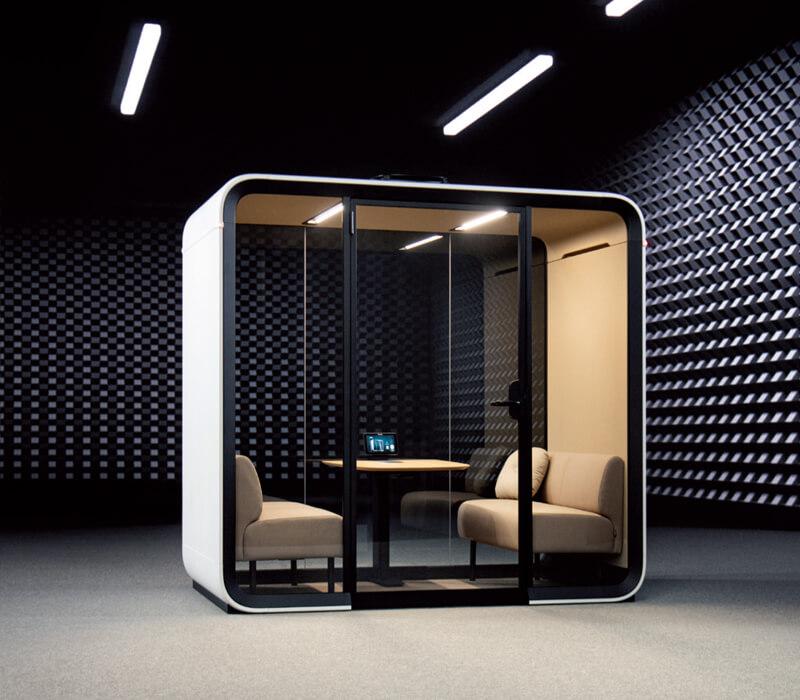
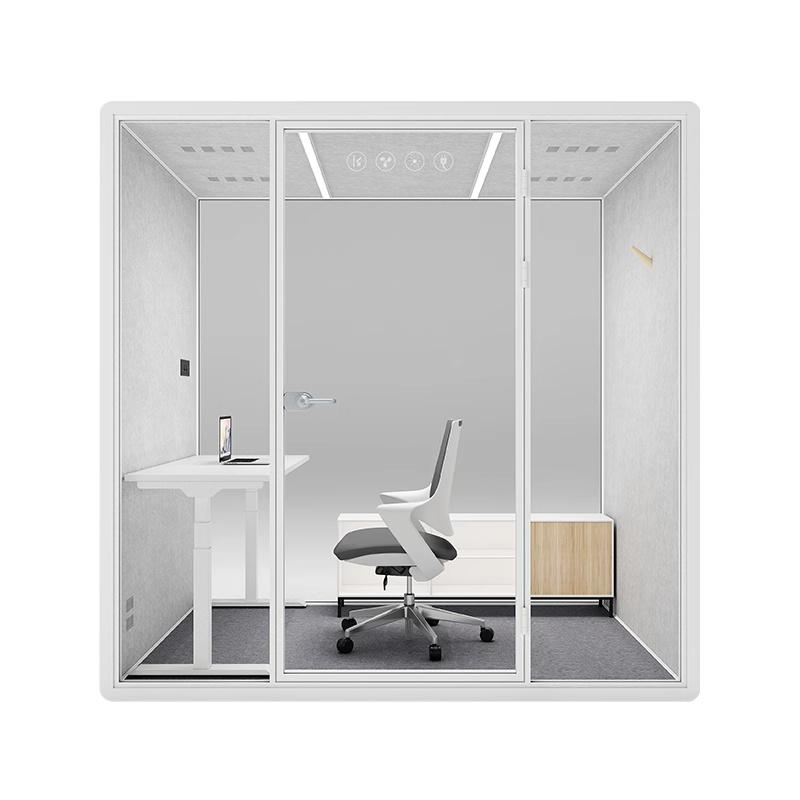
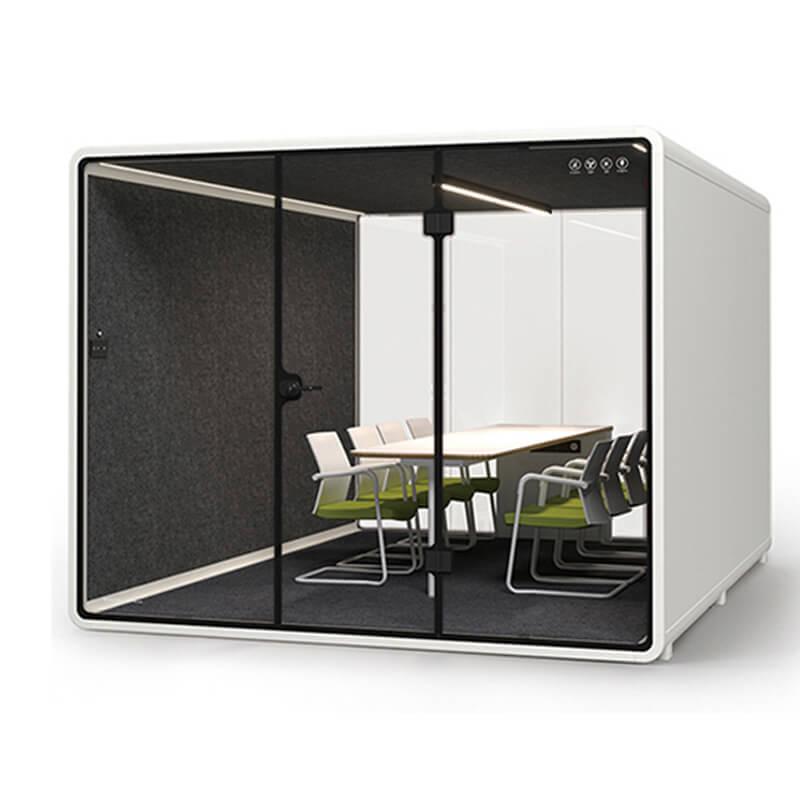
Use the meeting pod configuration reference to identify the exact product route under review. Preserve the model designation, option list, furniture arrangement, finish, service assumptions, and document revision in the comparison file. If a bidder substitutes another configuration, reopen the affected checks rather than carrying approval across by brand association.
Speech privacy and meeting usefulness are different questions. The first concerns whether meaningful content reaches unintended listeners under stated conditions. The second covers whether occupants can hear one another, use microphones and loudspeakers, see screens, sit comfortably, manage cables, and complete the planned work. A pod that helps one boundary may still be unsuitable for a longer or more technical session.
Map likely sound routes around the complete installed condition. Review the door edge, seals, panel joints, glazing interfaces, service penetrations, ventilation openings, floor and ceiling relationships, and the surrounding paths where people stand or walk. Do not infer the contribution of any component from appearance. Request applicable model evidence, then use the workplace trial to check the listener positions that matter locally.
Screen and document exposure deserve their own walk-around. Test seated and standing sightlines from normal approaches with the screen in its intended position and under representative lighting. Blinds, frosting, orientation, or furniture placement may change the result, but they can also reduce supervision, daylight, or ease of entry. The decision record should show the chosen balance rather than describe privacy as one undivided property.
Occupants can defeat an otherwise suitable boundary by leaving the door open, raising device volume, or conducting a meeting beyond the intended occupancy. Operating rules should be proportionate and easy to follow. Where a conversation has a higher confidentiality requirement than the observed arrangement supports, direct it to an approved alternative instead of relying on reminders alone.
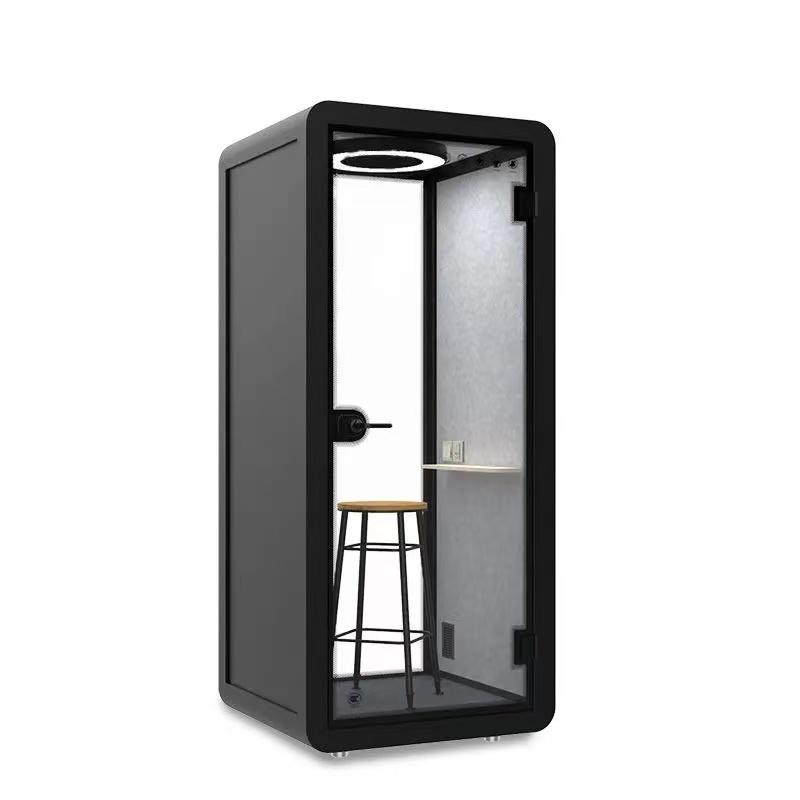
Ask the supplier to identify which statements apply to the exact offered model and option set. Useful material may include drawings, component descriptions, installation requirements, control information, maintenance access, electrical and data boundaries, cleaning guidance, warranty terms, and any relevant test documentation with its conditions. A document for another size or earlier revision should be marked as background until applicability is confirmed.
Read any performance document for scope before reading its headline result. Note the specimen, test arrangement, door state, mounting, measurement method, reported metric, and exclusions. The workplace is not the laboratory, so the document can support comparison without predicting every listener position in the proposed office. Record what it establishes, what it suggests, and what remains for site observation.
Services can alter both comfort and privacy. Confirm how power reaches the unit, what data connection is expected, how ventilation interacts with the room, where heat is released, which controls occupants can reach, and what happens after a fault. The facilities and IT teams should review their own interfaces; a supplier statement cannot silently approve a building-side condition.
Keep a gap column in the evidence file. An unanswered question about replacement controls, software support, filter access, specialist attendance, or disassembly may not reject the pod immediately, but it changes commercial risk and ownership. Give each gap an owner, response date, and decision consequence so it cannot disappear inside a general approval comment.
| Decision claim | Model evidence to request | Workplace observation | Limit or owner |
|---|---|---|---|
| Conversation privacy | Applicable enclosure and installation evidence | Listener walk-around during the assigned meeting | State excluded conversation types and review owner |
| Useful meeting technology | Exact power, data, control, and option scope | Representative call with normal devices and reset | IT owns compatibility and fallback |
| Occupied comfort | Ventilation, lighting, furniture, and control information | Longest intended session plus consecutive use | Facilities records conditions and complaints |
| Workplace fit | Dimensions, service clearances, delivery and assembly needs | Marked footprint, route, circulation, and maintenance review | Site team retains building approvals |
| Innovation value | Feature purpose, dependencies, support, and change terms | Task obstacle before and after the feature is used | Procurement credits only evidenced usefulness |
Placement begins outside the footprint. Mark door swing, approach space, circulation, accessible route, waiting behavior, maintenance clearance, nearby workstations, reflective boundaries, return-air paths, sprinklers and detectors, power, data, and the route used to deliver the largest component. A neat plan symbol does not show all of these operating envelopes.
Listener exposure changes with orientation and adjacency. A door facing a busy aisle creates a different condition from a door facing a low-traffic wall; a pod beside concentrated desks has a different impact from one near shared collaboration space. Compare at least two plausible orientations where the site allows it. Observe both the people inside and the workers who remain outside.
Equip the pod for the assigned meeting rather than filling every available connection. Check camera height, lighting on faces, microphone position, loudspeaker level, screen glare, laptop and paper space, charging, cable restraint, and the time needed to reset the setup. Technology that requires users to rebuild the call environment at each booking may reduce the value of an otherwise capable enclosure.
The surrounding room also needs a response plan. Decide where users wait, how faults are reported, whether calls can move elsewhere, who cleans high-touch surfaces, and how a unit is isolated without blocking circulation. These operational details affect adoption and confidentiality because a failed or unavailable pod can push sensitive work back into open areas.
Run more than a showroom demonstration. Use representative occupants, normal devices, the intended furniture arrangement, a realistic call, and surrounding activity that resembles the proposed location. Observe entry, seating, posture, control use, conversation, listener positions, screen sightlines, airflow perception, lighting, call quality, exit, and reset. Record conditions and limitations instead of awarding a vague pass.
Include an adverse but credible condition. This might be a nearby conversation, consecutive bookings, a user carrying normal work materials, a network interruption, or the preferred orientation becoming unavailable. The purpose is not to manufacture failure. It is to learn whether the configuration has a usable fallback and whether the claimed benefit survives ordinary variation.
Separate product, site, technology, and operating findings. A wireless problem should not be filed as an enclosure defect; a poor location should not become a universal statement about the product; an overlong booking policy should not be blamed on ventilation without evidence. This classification sends corrective action to the party that can actually change the condition.
Close the chain with lifecycle owners. Name who keeps model records, handles software or control changes, arranges cleaning and maintenance, sources replacement items, reviews complaints, and decides whether a changed use still fits the approved boundary. Privacy can drift when seals wear, layouts move, devices change, or meeting types expand. A dated recheck keeps the original decision useful.
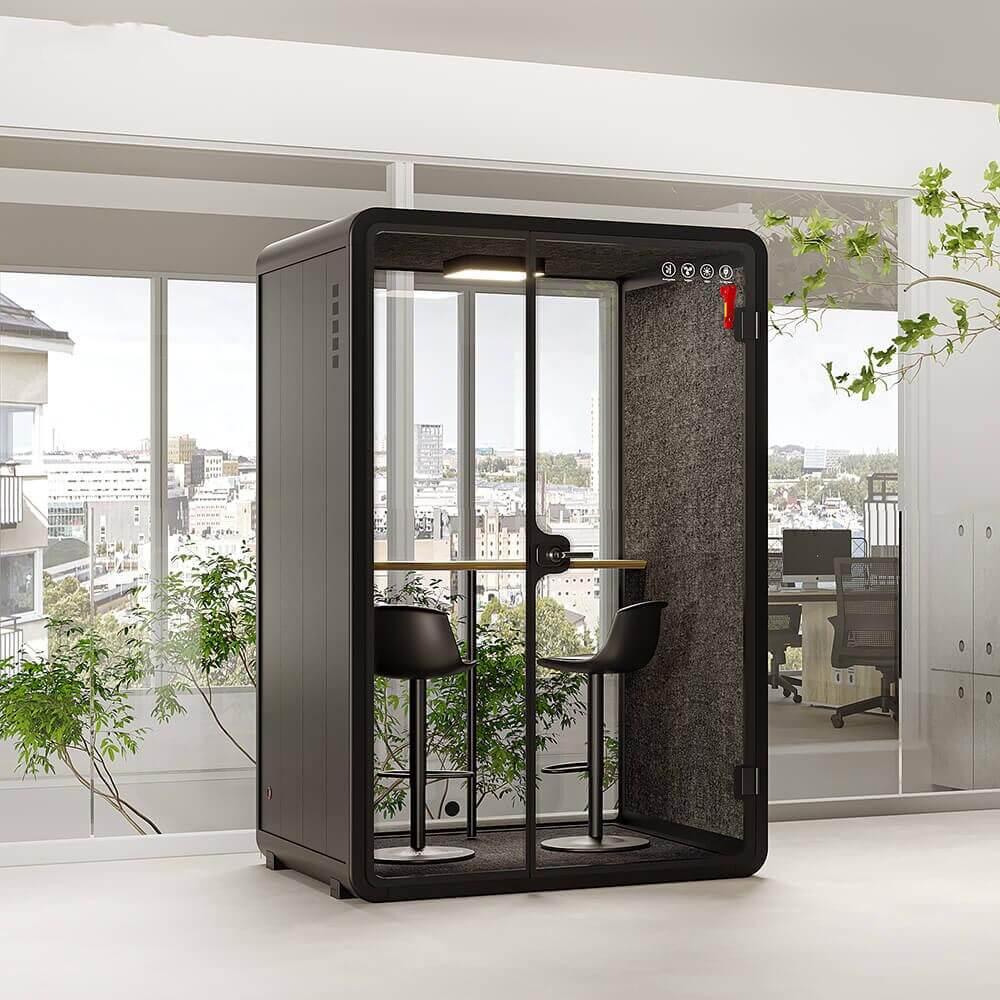
No. Reputation may justify asking for a place on the shortlist, but the decision still concerns a named model, options, installation, location, meeting task, and listener boundary. An occupied trial reveals site and user interactions that a brand-level judgement cannot contain. Keep the trial bounded and avoid presenting it as a laboratory measurement.
Compare the work each configuration must support, then normalize occupancy, furniture, controls, services, technology, maintenance access, delivery state, included installation, support, and warranty scope. Mark an option as valuable only when it addresses an agreed obstacle. Do not treat a longer feature list as a better meeting result without the connecting evidence.
Place representative screens and papers where they will be used, set normal lighting, and walk the real approach paths at seated and standing heights. Record what can be seen, from where, and under which condition. Repeat after any orientation or screening change, and route higher-risk material to an approved alternative when the observed boundary is insufficient.
Keep or use a conventional room when the meeting exceeds the pod's intended occupancy, requires a locally approved confidentiality boundary, needs equipment or access the pod cannot support, or depends on a duration and comfort condition that has not passed observation. A mixed workplace can assign different enclosures to different work without declaring one format universally superior.
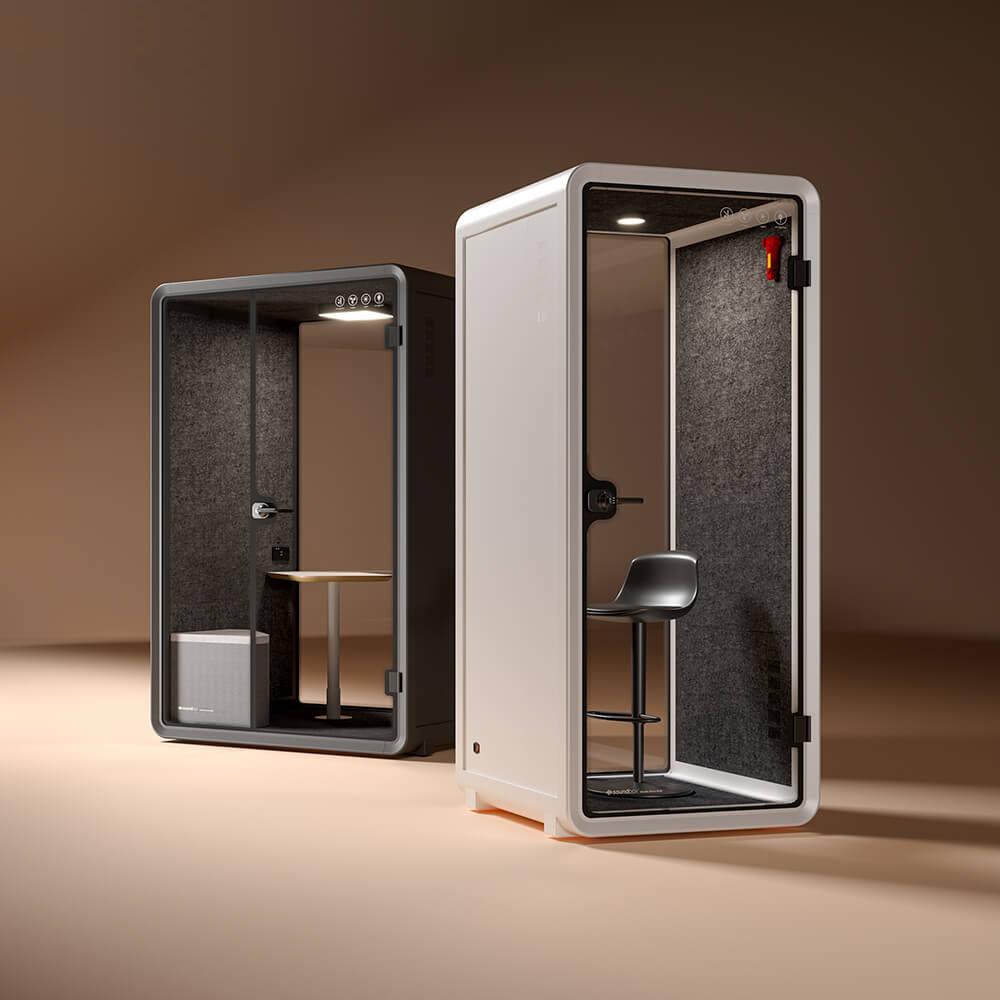
Framery meeting pods should be judged as specific workplace configurations, not as a brand-wide promise of privacy or innovation. The defensible route starts with the meeting, defines listener and screen boundaries, checks model evidence, releases the site and technology interfaces, witnesses occupied use, and preserves the limits in an operating record.
Request the applicable model documents and close the evidence gaps before treating a feature as value. Then witness the assigned meeting in the proposed location with normal users and devices. Approve only the configuration whose privacy boundary, meeting usefulness, fallback, and lifecycle ownership remain clear in that combined record.

 Tel: +8613538031763
 Email: info@sopworkpod.com
 MP/WhatsApp: +8613538031763
 Manufacturer Address:Liucheng Lujiang District,Meixi Road,Nanan City,Fujian,China