Need Help?
Please leave your contact information to get our latest catalog
Get In Touch Now >


Author:SOP Work Pods Manufacturer TIME:2026-08-28
Meeting room booths cannot be compared from a feature list and a unit price alone. Capacity, furniture, technology, privacy evidence, delivery state, site work, assembly, and handover may sit in different parts of each supplier's offer.
The practical method is a dependency map: begin with the meeting task, connect each feature to that task, then identify every cost and responsibility needed to make the selected configuration operational.
A feature that is valuable for one meeting route may be unnecessary for another. A built-in display, upgraded seating, or stronger acoustic package should be priced against the meeting it improves. Otherwise the buyer may pay for a visible upgrade while leaving the real bottleneck untouched. The quote should show which meeting problem each priced option solves, who supports it, and how it will be accepted. If a feature is attractive but unused in the target workflow, record it as optional rather than required for approval.
Before approval, ask whether each paid feature changes the meeting outcome, reduces operating risk, or closes a site requirement. This keeps the comparison practical when several booths look similar in a brochure.
Meeting room booth features and prices make sense only when the buyer knows the meeting task. A private two-person review, a hybrid client call, a recurring project stand-up, and a confidential HR meeting require different space, privacy, equipment, and comfort. The feature list should answer that task rather than become a catalog of optional extras.
Write a meeting brief with attendee count, session length, devices, display needs, speech sensitivity, booking pattern, and nearby office conditions. Then compare price against the features that protect that brief. This avoids paying for visible accessories while missing the service or acoustic detail that matters.
Write one representative meeting script before opening supplier offers. Participant count, session length, documents, remote attendees, display use, privacy boundary, turnover, and fallback room determine which meeting room booth features have value and which merely lengthen the specification.
Use one meeting script to test every shortlist. State the participants, duration, laptops or documents, remote attendees, display use, privacy boundary, and room turnover. Ask each supplier to show how the quoted configuration supports that script. A feature that cannot be connected to the repeated meeting should not receive automatic commercial weight.
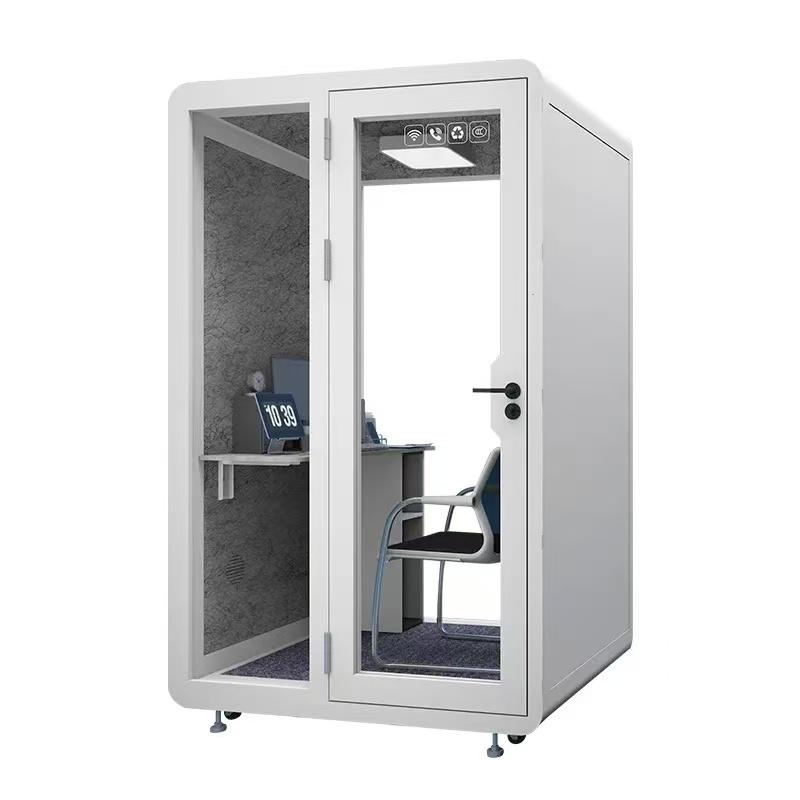
A quoted booth may include seats, table, lighting, ventilation, power, glass, acoustic panels, door hardware, and finishes. It may also treat some items as options. Site work such as electrical connection, floor preparation, delivery access, and IT equipment may sit outside the supplier's price. Buyers should ask for a feature-by-feature scope table.
The important distinction is not whether a feature appears in a brochure. It is whether the feature is included in the offered configuration, installed at the site, and covered by warranty or service support. Record these answers before comparing prices.
For each quoted feature, identify the exact standard component, paid option, buyer-supplied item, and enabling site work. Keep model codes, drawings, finishes, furniture, controls, cabling, commissioning, and exclusions on the same line so price differences remain traceable.
Acoustic performance affects price when the booth includes stronger construction, seals, glazing, or tested assemblies. But an acoustic label without method, configuration, and installed context is not enough. The buyer should request evidence and then add a practical speech privacy test.
The acceptance test should reflect the meeting type. A booth used for confidential review needs stronger speech control than one used to reduce general distraction. Price extra acoustic features against the required privacy outcome, not against the largest number in a brochure.
Compare acoustic evidence only after confirming what was assessed and how it relates to the quoted booth. Door and fan state, openings, specimen, metric, source and listener positions, installation condition, and documented limits determine whether the claim supports the planned meeting.
Separate a feature from the interface that enables it. A display may require a mount, power, signal path, device ownership, support, and cable management. Ventilation claims depend on configuration, controls, occupancy, host-room conditions, and maintenance. Recording these dependencies prevents an included component from being mistaken for a complete working service.
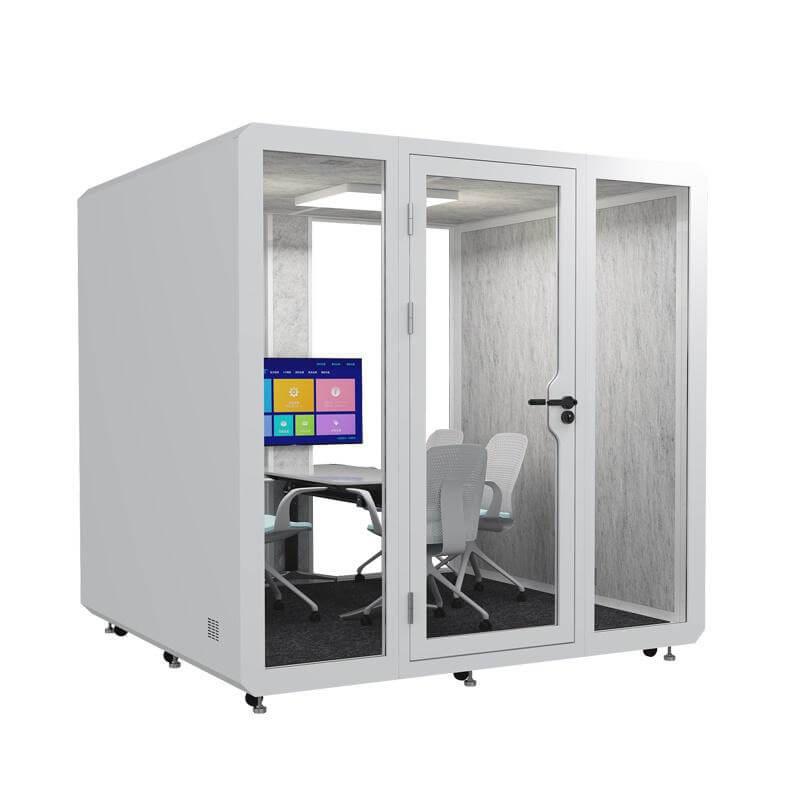
Ventilation, seating, lighting, table depth, display position, cable routing, and door ease determine whether people will use the booth for full sessions. A low price can be expensive if meetings move back to open desks because the booth feels warm or cramped. Test comfort with real participants, devices, and session length.
Ask how air enters and exits, how fan sound is controlled, how lighting is switched, and how furniture is replaced or cleaned. These features should be part of the comparison because they affect adoption and maintenance.
Run the longest common meeting at intended occupancy before valuing comfort options. Seat spacing, table reach, movement, lighting, glare, airflow, temperature perception, fan sound, controls, belongings, and exit behavior reveal whether an upgrade changes usable meeting time or only brochure appeal.
Some meeting room booths include power and basic lighting but not display hardware, conferencing devices, wired data, camera mounts, or cable management. Others offer technology packages that must be coordinated with IT. The quote should name what is included and what the buyer supplies.
A hybrid meeting test should check camera framing, microphone pickup, screen visibility, charging, network connection, and glare. If the booth requires additional IT equipment, price that work beside the product rather than treating it as a later detail.
Trace the complete hybrid chain from user device to remote participant. Display, mount, power, signal path, camera, microphone, loudspeaker, cable management, platform compatibility, support, and reset may belong to different parties; the quote should show who supplies and proves each interface.
Add delivery and assembly to the price comparison
Meeting booths may require freight planning, elevator booking, route protection, after-hours labor, unpacking, assembly, electrical review, and waste removal. These costs can differ sharply by supplier and building. A feature-rich product is not ready for comparison until delivery and installation boundaries are clear.
Request package data and assembly requirements for the exact booth. If the route is tight, ask whether the product can ship in smaller modules and whether that changes labor or quality checks. The installed price is the number that matters.
Bring package data, freight, unloading, route protection, lift booking, staging, assembly clearance, installer labor, site connections, condition records, and waste removal into the comparison. Delivery feasibility and responsibility can change the meeting-ready total even when unit prices are similar.
Use a feature-price ledger for each shortlisted booth
A ledger keeps price differences visible. For each feature, state whether it is included, optional, buyer-supplied, unverified, or not required. Buyers can compare meeting pod configurations using the same columns so a premium option and a budget option are judged on equal terms.
The ledger should include acoustic evidence, comfort, technology, delivery, installation, warranty, maintenance, and open assumptions. It should also record which features are mandatory for the meeting task and which are preferences.
Maintain one ledger per shortlist that connects the meeting requirement to offered configuration, evidence source, price status, responsible party, field observation, and unresolved dependency. Reviewers can then compare mandatory failures separately from optional value instead of hiding both inside one score.
| Meeting requirement | Quoted feature and dependency | Meeting-ready decision |
|---|---|---|
| 1. Define the meeting task before comparing features and prices | feature-price comparison ledger | Record the feature, included configuration, price condition, meeting use, and acceptance gate. Set the evidence threshold before the response is accepted. |
| 2. Separate standard features from paid options and site work | feature-price comparison ledger | Record the feature, included configuration, price condition, meeting use, and acceptance gate. Assign the reviewer who can check this point in the real location. |
| 3. Treat acoustic performance as a feature with conditions | feature-price comparison ledger | Record the feature, included configuration, price condition, meeting use, and acceptance gate. Flag any dependency that changes the quote, drawing, or work method. |
| 4. Price comfort features through occupied use | feature-price comparison ledger | Record the feature, included configuration, price condition, meeting use, and acceptance gate. Keep nonnegotiable gates distinct from optional preferences. |
| 5. Clarify technology scope before assuming a booth is meeting-ready | feature-price comparison ledger | Record the feature, included configuration, price condition, meeting use, and acceptance gate. Move unresolved feature, technology, delivery, or site interfaces into the quoted conditions with a responsible reviewer and due action. |
Release the quote only when features support the meeting task
The final purchase decision should say which booth configuration supports the named meeting task, what the installed price includes, which options were rejected, and what acceptance checks remain. If the decision cannot explain those points, feature comparison has not done its job.
Keep the conclusion conditional. The best value may be a simpler booth if it supports short internal meetings, or a better-equipped model if hybrid client calls are the repeated task. The price should follow the work.
Approve the quotation that completes the defined meeting with owned interfaces and bounded evidence. The release record should preserve optional scope, exclusions, allowances, site duties, acceptance method, and change rules, not simply repeat the feature list or headline total.
After normalizing the initial quote, test one change scenario. Add or remove an option, revise a finish, alter the delivery route, or move the installation date. The supplier's response reveals how clearly scope, lead decisions, exclusions, and change control are defined before the contract is signed.
The most important feature is the one that protects the meeting task. For many buyers that is speech privacy, occupied comfort, or hybrid-call support.
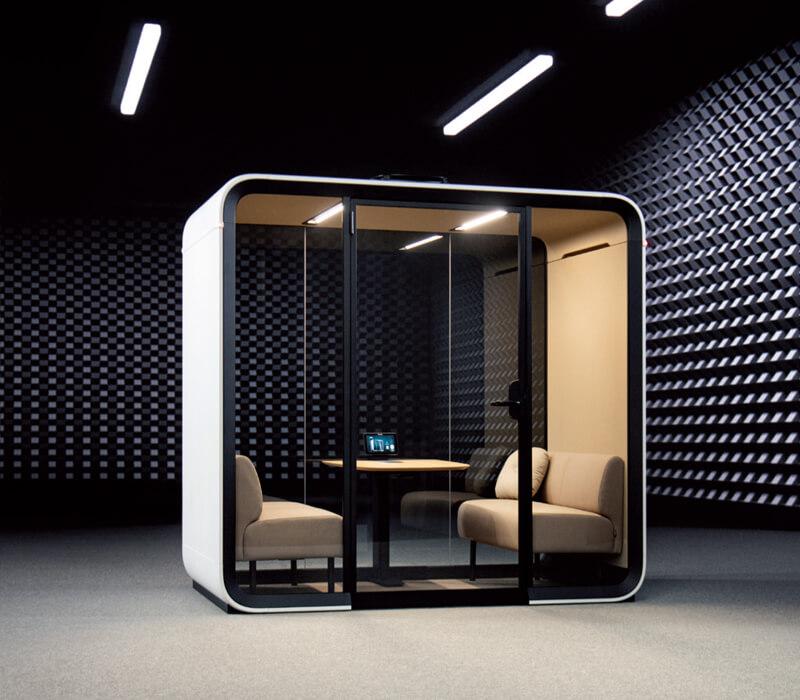
Only when they match the meeting workflow and IT can support them. Price display, camera, microphone, power, data, and cable needs explicitly.
Ask for evidence tied to the offered configuration and run a practical speech check at the intended location.
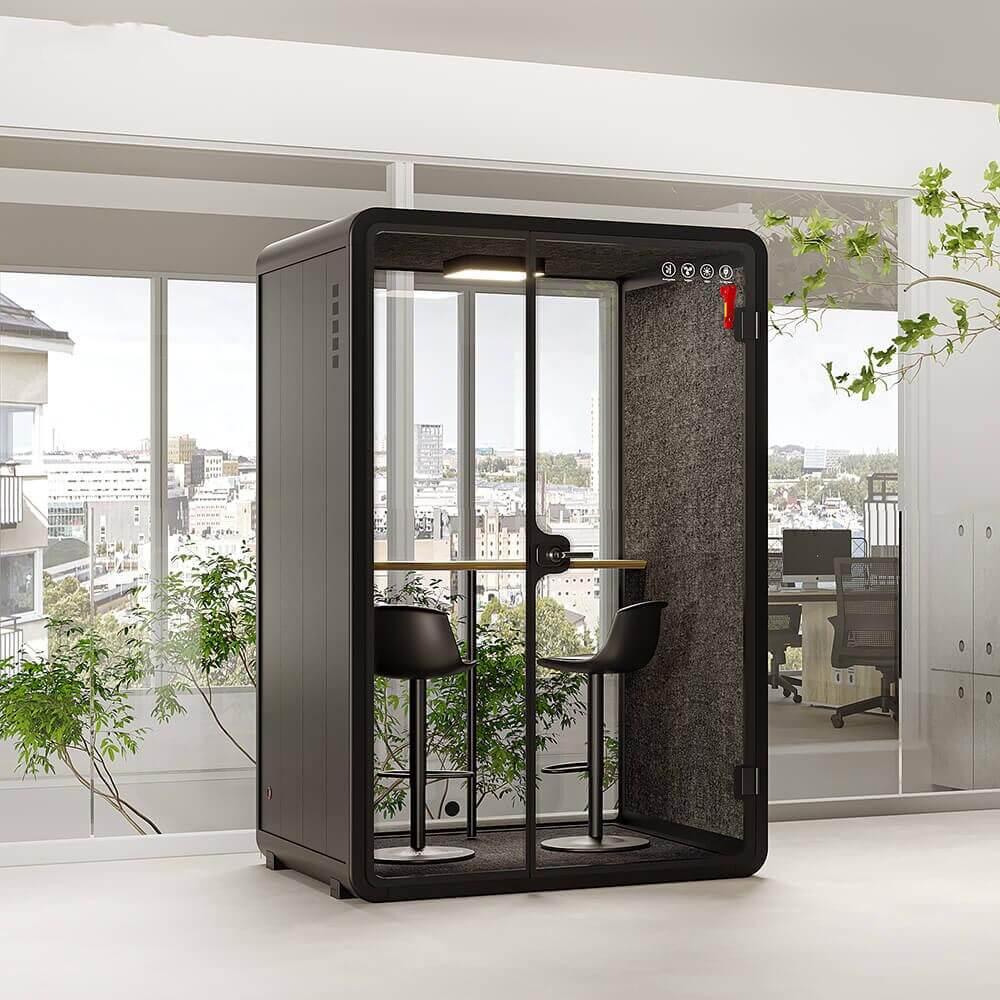
Use installed scope, including product, options, freight, assembly, site work, technology, warranty, and unresolved allowances.
Create a responsibility line for commissioning and handover. Confirm who checks identity, furniture, controls, lighting, ventilation operation, power, display connections, visible condition, documentation, user guidance, and unresolved defects. A meeting-ready quotation should show whether these activities are included, witnessed, buyer-supplied, or outside the offer.
Score commercial risk separately from feature value. An attractive feature may carry low technical uncertainty but high delivery or service uncertainty; a basic configuration may have excellent documentation but fail the meeting script. Keeping these dimensions separate prevents a single weighted score from hiding a mandatory failure or an unowned interface.
Ask suppliers to return the comparison ledger with references rather than only yes-or-no answers. A line should point to a drawing, option code, document, written scope, responsible party, or stated exception. The buyer can then distinguish a confirmed feature from a sales assumption and can preserve the same reference when the selected offer becomes the handover baseline.
Before award, hold a short cross-functional review with procurement, facilities, IT, and the meeting owner. Each party should confirm its interfaces and unresolved conditions on the same ledger. This prevents a feature from being approved commercially while the team that must power, support, install, or operate it assumes a different scope.
A meeting room booth price is meaningful only when every included feature supports the defined meeting and every enabling interface has an owner. The comparison should expose optional scope, assumptions, exclusions, and acceptance evidence beside the total.
Release the quotation that remains coherent after the dependency check, not simply the one with the longest feature list or lowest headline number.

 Tel: +8613538031763
 Email: info@sopworkpod.com
 MP/WhatsApp: +8613538031763
 Manufacturer Address:Liucheng Lujiang District,Meixi Road,Nanan City,Fujian,China