Need Help?
Please leave your contact information to get our latest catalog
Get In Touch Now >


Author:SOP Work Pods Manufacturer TIME:2026-08-28
A facilities request says the phone booth is making a comeback and asks how many the office should buy. The claim sounds plausible, but it skips the local question. Which work event is failing now, what alternatives already exist, and what observation would show that a booth is the wrong response? A trend statement is not a capacity plan.
Five demand drivers often sit behind the request: more individual calls, unresolved speech or screen privacy, hybrid communication that needs a stable setup, small sessions occupying rooms designed for larger groups, and floor plans that need reversible capacity. Each driver is a hypothesis. An office may have one, several, or none. The same evidence should be able to support or weaken the claim.
This review uses a disconfirmation scorecard. It records the driver, local event, existing alternative, contrary evidence, site and operating condition, and the smallest pilot that could settle the question. No market percentage or generalized popularity claim is needed. The result is a bounded explanation of why a Phone Booth for Office Space fits this workplace now, or why another action should come first.
Choose an observation period that reflects the office's normal attendance and work mix. Record individual calls at desks, failed searches for private settings, delays, room bookings, actual room occupancy, sensitive screen or document exposure, walking distance, queues, sessions abandoned, and tasks moved off site. Preserve time and zone because a peak on one team day may not represent the rest of the week.
Interview users about the task, not their preferred product. Ask where the call began, why the first setting failed, what they tried next, how long the task lasted, which device was used, and what consequence followed. A request for more privacy may describe speech, sightlines, interruption, concentration, or social permission to make a call. These require different responses.
Map existing alternatives with equal care. Small rooms, larger rooms, quiet zones, headsets, scheduling, remote arrangements, layout changes, and behavior agreements may already handle some demand. Note capacity, quality, and operating problems rather than declaring an alternative unavailable from reputation. The baseline should show the unsolved remainder.
A no-buy result is useful. It can direct the team toward room equipment, zoning, scheduling, call guidance, or another verified intervention while preserving budget and floor area for the actual constraint. Record the rejected driver and the evidence that would justify reopening it later, so a future request begins with changed facts rather than the same trend language.
Driver one is growth in individual voice or video calls. Confirm concurrency and duration, not just total call count. Calls spread across the day may fit existing capacity, while a short peak may create a real access problem. Driver two is a persistent privacy gap. Define source, listener, screen path, sensitivity, and task consequence; a general wish for quiet is not enough.
Driver three is a need for stable hybrid communication. Check camera, microphone, loudspeaker or headset, connection, lighting, background, privacy, setup time, and remote-participant experience. A booth cannot repair an unmanaged device or network problem by itself. Driver four is a mismatch between compact sessions and the room portfolio. Show that one-person or two-person work is displacing group activity rather than assuming every small room booking is waste.
Driver five is demand for reversible capacity. Link the claim to lease, restack, team, or floor uncertainty, then qualify the offered booth's route, component method, services, handling, destination, parts, and recommissioning. Modular appearance does not prove an easy move. If the likely destination cannot receive the unit or its components, flexibility has not been evidenced.
For every driver, write one observation that would weaken it. Falling call concurrency, acceptable alternative performance, no relevant privacy failure, underused room capacity, unsuitable occupied fit, or a conditional relocation route can change the decision. The board should not reward a driver merely because it appears in the title.
| Claimed driver | Local support | Evidence that weakens it | Pilot decision |
|---|---|---|---|
| Individual call growth | Concurrent calls exceed suitable current settings at defined times | Calls are dispersed, rare, or handled by available alternatives | Pilot availability and task completion at the peak |
| Speech or screen privacy gap | A defined source-listener or sightline failure affects a real task | The concern is general noise or a correctable behavior and layout issue | Pilot the exact privacy boundary and surrounding condition |
| Stable hybrid setup | Users repeatedly need a bounded device and communication environment | The main failure belongs to network, device, or remote-side setup | Pilot the complete call chain, not the enclosure alone |
| Room portfolio mismatch | Compact sessions displace work that needs larger room capability | Suitable smaller settings remain available or booking causes the mismatch | Track room release and continued fallback |
| Reversible floor capacity | A credible future move scenario and receiving route exist | Handling, services, access, parts, or destination make movement conditional | Approve only model-specific move and recommissioning evidence |
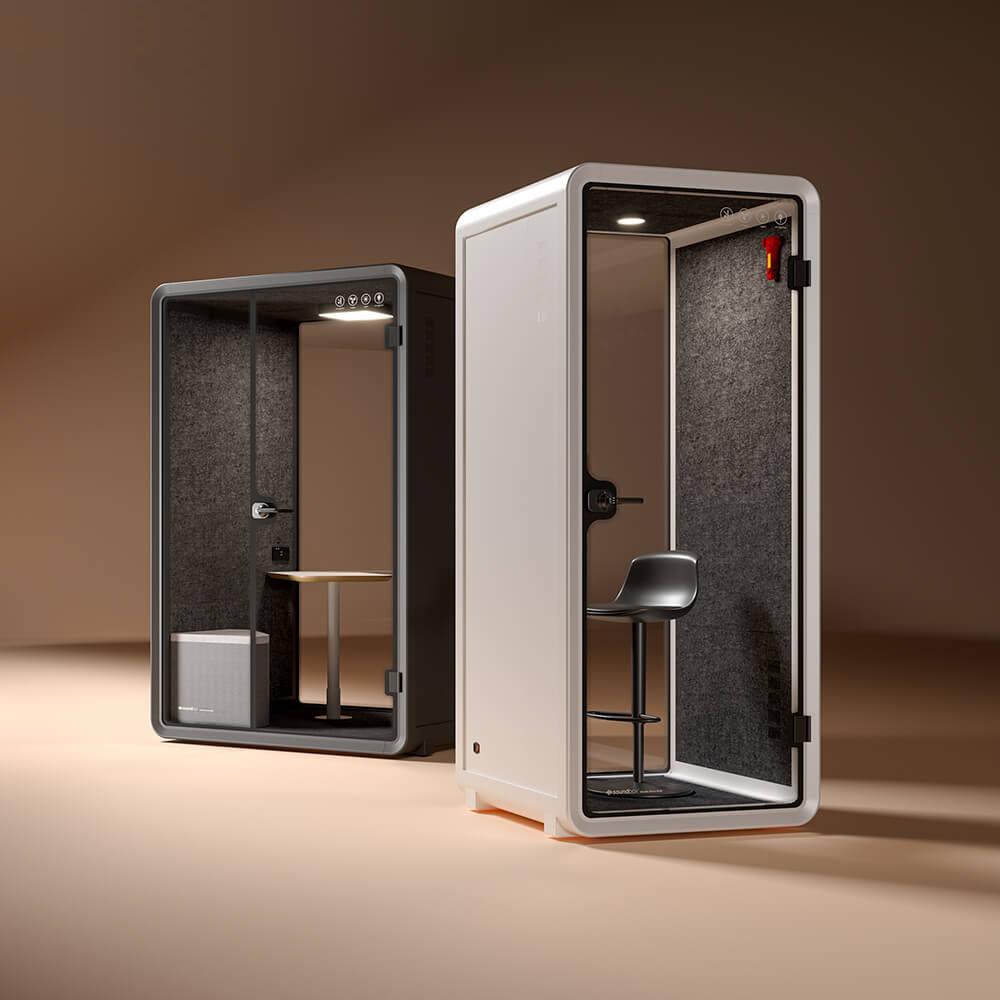
A local driver becomes a viable booth case only after the complete route is known. Review packaged and component dimensions, vehicle and loading arrangements, doors, corridors, turns, lifts, floor protection, storage, assembly clearance, proposed position, circulation, authorized accessibility review, power, data, ventilation interaction, detectors or sprinklers where responsible local reviewers require coordination, and maintenance access.
Include operating burden. Define reservation or walk-up behavior, overrun, queue, cleaning, personal-item reset, door and seal inspection, fan and lighting faults, support, parts, downtime, and fallback. A booth can solve a space problem while creating a service problem. The scorecard must carry both sides so the purchase case remains complete.
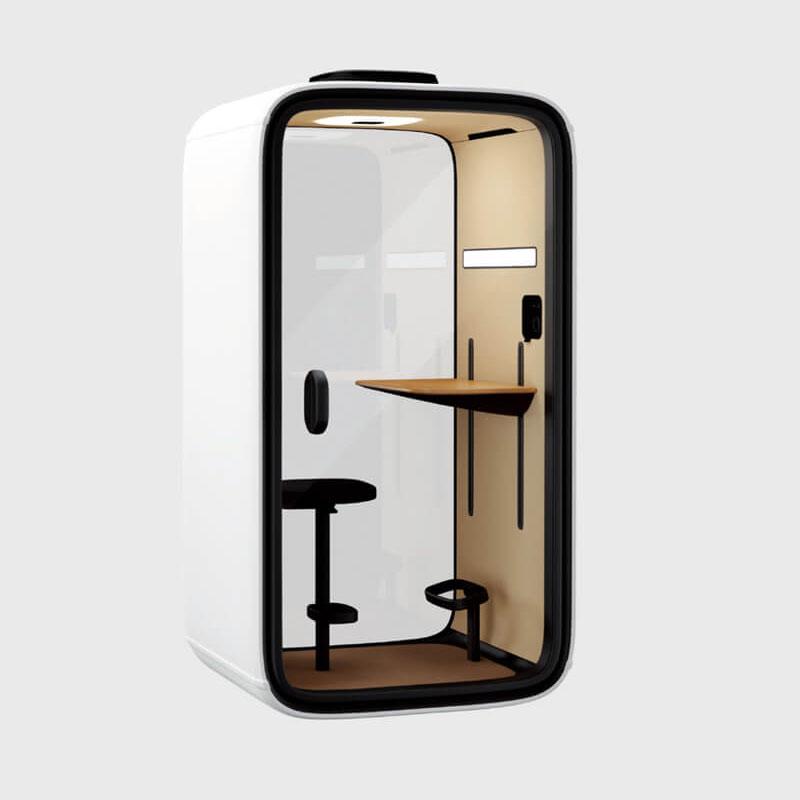
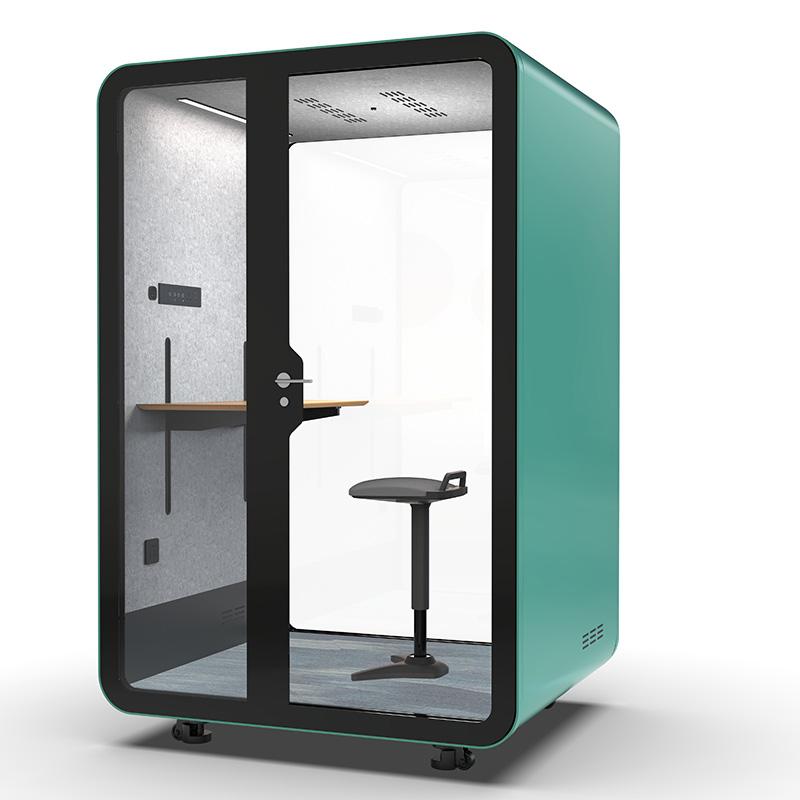
Compare the unresolved driver with the offered configuration and alternatives on the same boundary. Once the local problem, location, and operating route are stable, the phone booth product range may be used to review options. Product selection comes after the demand test because a strong feature list cannot create a missing local driver.
Design the smallest pilot that represents the claimed driver without arranging the office around success. Select a real location, assigned task, normal users, relevant attendance period, ordinary surrounding activity, approved configuration, support route, and fallback. Define what will be observed before the unit arrives. Useful evidence includes completion, non-use, queue, failed attempt, privacy boundary, device behavior, occupied comfort, turnover, support demand, and impact on existing rooms.
Keep negative evidence. Users may continue taking calls at desks, reserve the booth and not attend, leave early, avoid the location, open the door, or use a large room anyway. These actions require investigation, not automatic blame. They can show that the original driver was overstated, the site is wrong, the operating rule is unclear, or the configuration does not fit the task.
Close each driver separately. One may pass while another remains unsupported. For example, the booth may release room capacity but provide no credible future movement route. Approve the value that was observed and retain the limitation. Do not let a successful call demonstration validate every reason on the scorecard.
Set a refresh trigger rather than declaring a permanent comeback. Attendance, team composition, call tools, room supply, floor plans, behavior, and service condition can change. Review the board after a material change or repeated exception. The office should be able to reduce, move, reassign, or stop using the channel when the evidence changes.
Include the people who operate adjacent channels in the closeout. Room coordinators, IT support, facilities, workplace teams, managers, and representative users may see different effects from the same pilot. Their evidence should resolve a named driver or hold it open; broad enthusiasm is not a substitute for a completed decision row.
The most important driver is the one supported by the buyer's recurring task and consequence. There is no fixed ranking. A privacy failure may dominate in one office, while room mismatch or call concurrency may matter elsewhere. Several weak drivers should not be added together to imitate one strong case.
Use the scorecard to identify the local event, contrary evidence, and required pilot. Approve each driver on its own boundary.
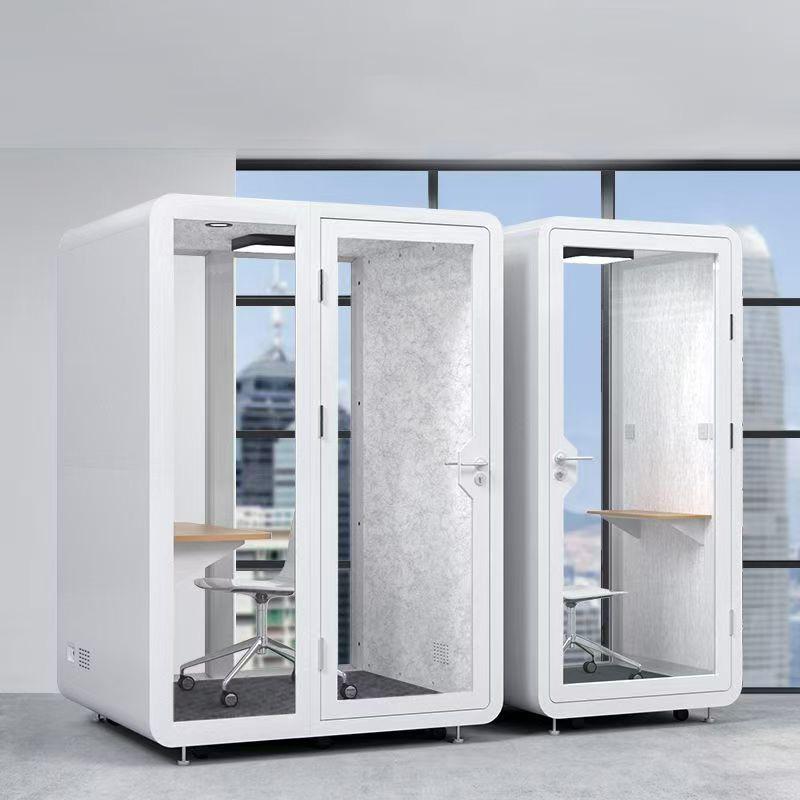
Measure concurrency among tasks that the accepted booth configuration can actually support. Include session duration, peaks, walking distance, queues, no-shows, fallback capacity, and time when the unit is unavailable for cleaning or faults. Total call volume alone does not determine quantity.
Pilot one location or a small reversible scope first where practical. Scale only after the demand pattern and operating route remain visible under normal attendance.
They can move selected calls or focused tasks into an enclosure, which may change particular source and listener paths. They do not automatically correct every background source, reflection, layout conflict, behavior issue, or building condition in the wider office.
Define the event the booth is supposed to change. Keep broader acoustic treatment, zoning, policy, and room decisions in the portfolio rather than assigning the whole office sound environment to one product.
Review after meaningful changes in attendance, teams, call technology, privacy requirements, room supply, floor layout, location, service condition, or repeated user behavior. A cluster of queues, non-use, open-door workarounds, or faults is also a reason to reopen the board.
Keep the original baseline and pilot condition. Without them, the team cannot tell whether the driver changed or the booth drifted away from its accepted state.
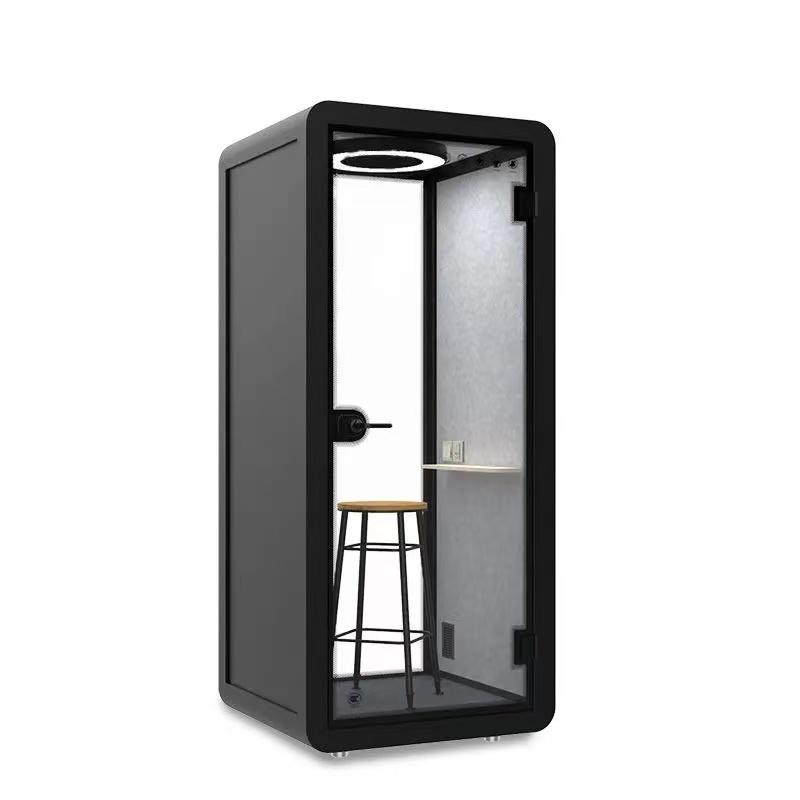
The phone booth is making a meaningful comeback only where local evidence supports one or more of five drivers: individual call demand, a defined privacy gap, stable hybrid communication, room mismatch, or a credible need for reversible capacity. The claim should weaken when alternatives or contrary observations explain the problem better.
Adopt only the demand drivers that survive local counterevidence. Record the accepted task, complete configuration, site, operating owner, fallback, failed observations, and review trigger. That bounded decision explains why the booth fits now without turning a workplace hypothesis into an unsupported market fact.

 Tel: +8613538031763
 Email: info@sopworkpod.com
 MP/WhatsApp: +8613538031763
 Manufacturer Address:Liucheng Lujiang District,Meixi Road,Nanan City,Fujian,China