Need Help?
Please leave your contact information to get our latest catalog
Get In Touch Now >


Author:SOP Work Pods Manufacturer TIME:2026-08-28
A discovery call begins at a sales desk, moves into a large meeting room when the prospect asks a sensitive question, and ends in a corridor because the next booking arrives. The representative then returns to the desk to update notes within earshot of colleagues. The failure is not a missing list of nine benefits. It is a broken call route with several privacy, device, access, and handoff points.
A Room Office Phone Booth deserves investment when it repairs specific stages of that route. Segment calls by purpose and risk, witness speech and screen boundaries, test the remote experience, include preparation and follow-up, allow coaching where intended, and observe peak access and service. Each reason must earn its place through sales work, not through invented conversion or productivity figures.
The output is a stage-gate dossier. It shows which calls the booth supports, which still need a meeting room or another setting, what complete commercial and operating scope is required, and what the pilot must prove before more units are approved. Urgency in the title does not remove the need for evidence; it makes the hold conditions more important.
Separate prospecting, discovery, demonstration, negotiation, account review, renewal, support escalation, coaching, and internal follow-up. Record participants, urgency, duration, devices, shared content, commercial sensitivity, speaker behavior, manager involvement, and the consequence of delay or exposure. A quick outbound call and a negotiated screen-sharing session do not need the same setting.
Map the route used today. Show where representatives prepare, wait, call, involve a colleague, recover from a device issue, finish, and record notes. Include room searches, calls taken at desks, sessions moved, repeated setup, interruptions, and follow-up completed in another location. These handoffs reveal whether the booth would remove friction or add another transition.
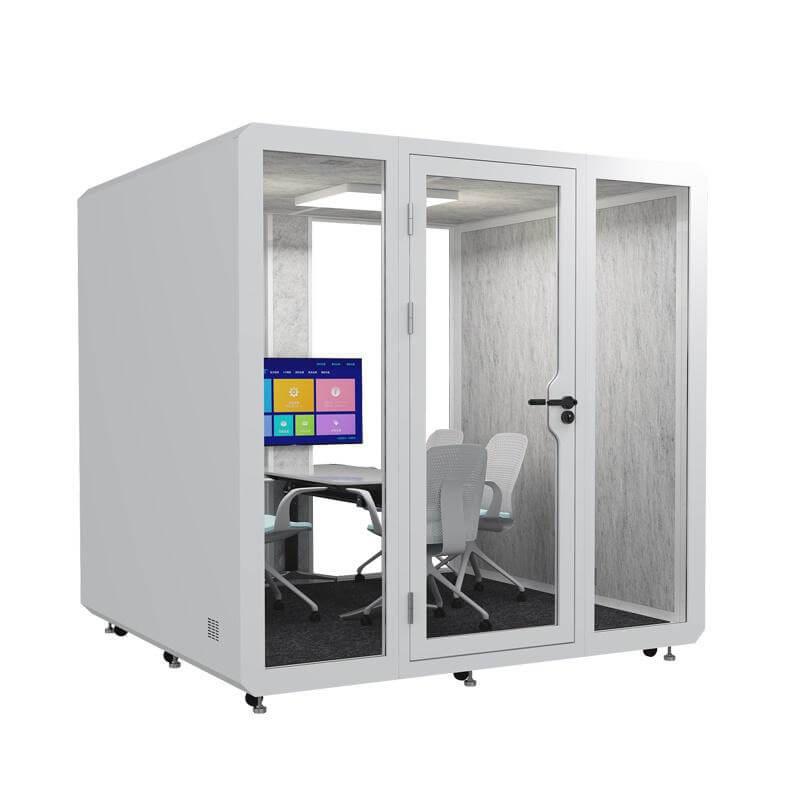
Identify the source, nearby listeners, screen sightlines, document handling, door state, location, surrounding activity, and whether the concern is audibility, intelligibility, visual exposure, or interruption. A sensitive call may have different boundaries during preparation, live conversation, manager escalation, and note entry. Test each relevant moment rather than one staged sentence.
Run the complete communication chain with the intended laptop or phone. Check camera framing, microphone, loudspeaker or headset, connection, lighting, fan state, reflections, voice level, content sharing, and remote-participant response. Observe whether the representative repeats, raises their voice, turns the screen, opens the door, or changes setting. These are operational facts, not measured sales outcomes.
Keep privacy claims bounded. A useful field observation names the call condition and receiving positions. It does not promise legal confidentiality or universal silence. Sensitive data handling and organizational policy remain with authorized business owners, and the booth assignment must fit those decisions.
Repeat a meaningful part of the call after any correction. A different headset, changed screen angle, adjusted booth position, repaired door interface, or revised user procedure can improve one boundary and weaken another. Preserve the before and after conditions so the sales team does not credit the enclosure for a device change or overlook an external privacy trade-off.
Sales calls include work before and after the live conversation. Review where the representative reads account information, arranges documents, checks devices, joins early, records outcomes, sends a summary, and updates systems. If those actions move back to an exposed desk, the booth may protect speech while leaving the commercial route incomplete.
Coaching adds another route. Decide whether the manager joins locally, listens through an authorized technology method, or reviews after the call. Confirm occupancy, consent and organizational process, device behavior, privacy, and fallback. Do not expand a single-person booth into a two-person coaching room without witnessing fit and communication in that configuration.
| Call stage | Failure to observe | Evidence for the booth | Purchase gate |
|---|---|---|---|
| Prepare | Sensitive screen or account material exposed; repeated device setup | Accepted surface, sightline, device, entry, and preparation block | Configuration gate |
| Connect | Poor voice or video path, background interruption, delayed room search | Full remote call chain in the intended location | Communication gate |
| Discuss or negotiate | Speech reaches a relevant listener or representative adopts a workaround | Defined source-listener condition and organizational privacy route | Boundary gate |
| Escalate or coach | Manager involvement breaks occupancy, consent, technology, or room assignment | Witnessed coaching method with accepted participants | Interaction gate |
| Close and record | Overrun or turnover pushes follow-up to an exposed setting | Complete visit block, reset, fallback, and operating owner | Service and scale gate |
Quantity should follow concurrency among accepted call segments. Map team schedules, time zones, campaign periods, planned demonstrations, urgent escalation patterns, typical session blocks, preparation and follow-up, no-shows, overrun, cleaning, and downtime. Preserve uncertainty. A short observation can justify a pilot, not a permanent forecast of demand.
Compare alternatives on the same sales route. Existing rooms, small rooms, quieter zones, remote work where approved, scheduling, headsets, layout changes, and behavior rules may handle part of the need. Note what each alternative solves, what it leaves exposed, how quickly it is available, and what operating burden it creates. Unit price alone cannot compare these scopes.
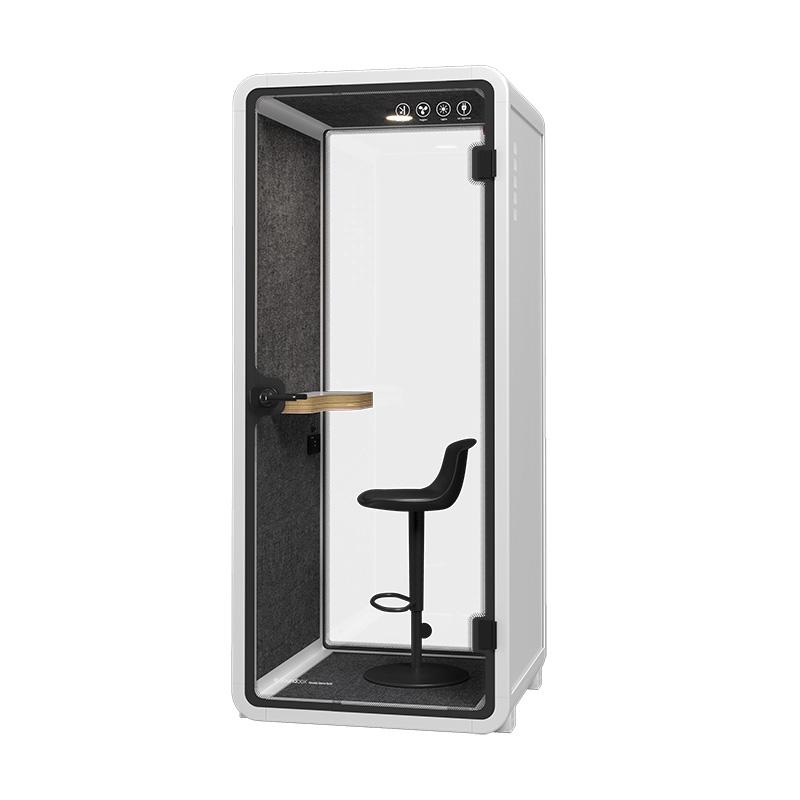
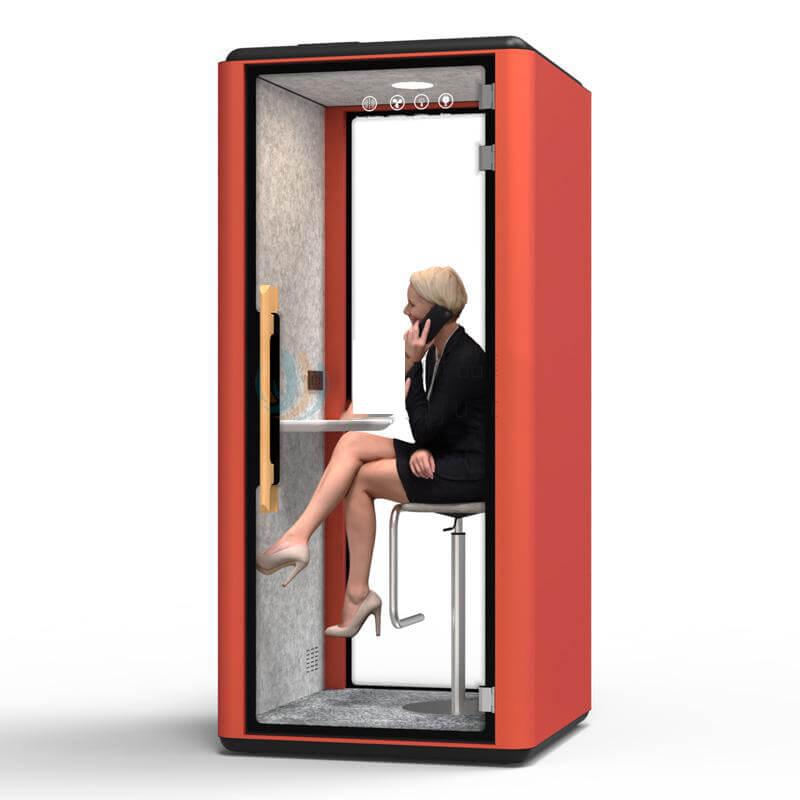
Normalize the booth commitment: model and options, freight, delivery route, assembly, installation, power and data, site work, furniture, technology, acceptance, user guidance, cleaning, maintenance, parts, warranty, relocation assumptions, taxes or other project treatment where applicable, and exclusions. The office phone booth range can inform configuration review after the accepted sales segments and site scope are fixed.
Add decision authority and timing to the demand view. Sales leadership can define call priorities, but facilities and IT must confirm site and support capacity, while procurement and finance use the organization's own approval process for the complete scope. A campaign deadline may justify a focused pilot; it does not authorize omitted route work or an unsupported forecast.
Include the cost of the operating response in the comparison without inventing figures. Cleaning ownership, fault diagnosis, spare devices, replacement parts, support time, and downtime need named scope. If those duties are excluded from an offer, place them beside the buyer rather than treating them as free benefits.
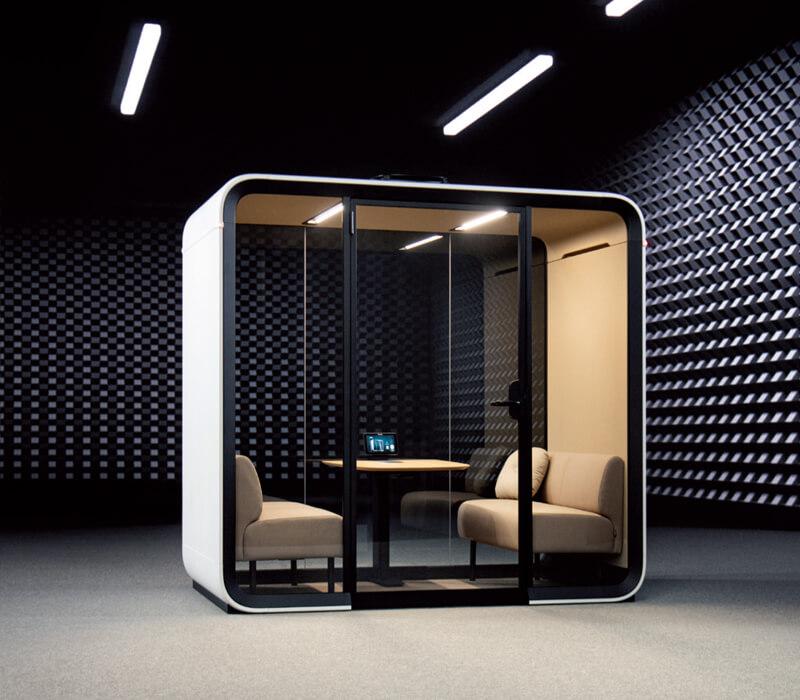
Choose one or more representative sales segments, a real floor location, intended users, normal surrounding activity, accepted device chain, support owners, and fallback. Define observations before the pilot begins. Include successful completion, failed attempts, queue, room release, privacy boundary, remote response, setup and follow-up behavior, occupied comfort, turnover, non-use, faults, and support demand.
Do not calculate revenue uplift, conversion improvement, or time savings unless the organization has an approved method and real data beyond this article. The operational evidence can still answer the purchase question. It shows whether the booth removes a verified route failure, fits the people and calls assigned, and can be run at peak without displacing another problem.
Close separate gates for use, site, service, and scale. A successful call does not approve an incomplete delivery route. Good privacy does not close a comfort fault. Strong demand does not prove that support ownership exists. Scale only the conditions that passed, keep rejected call segments on their fallback route, and reopen the dossier when team behavior or the floor changes.
Retain a rollback action for the pilot. Define how the temporary location is restored, where calls return, how users are informed, and what happens to the unit if the assigned route fails. Reversibility makes adverse evidence usable and prevents the team from treating an installed pilot as an automatic approval.
Hold a closeout with representatives, sales operations, workplace, facilities, IT, and the commercial approver. Resolve each open line as accepted, corrected, assigned with a due action, or rejected. A meeting note that merely records positive feedback is not enough to authorize a wider commitment.
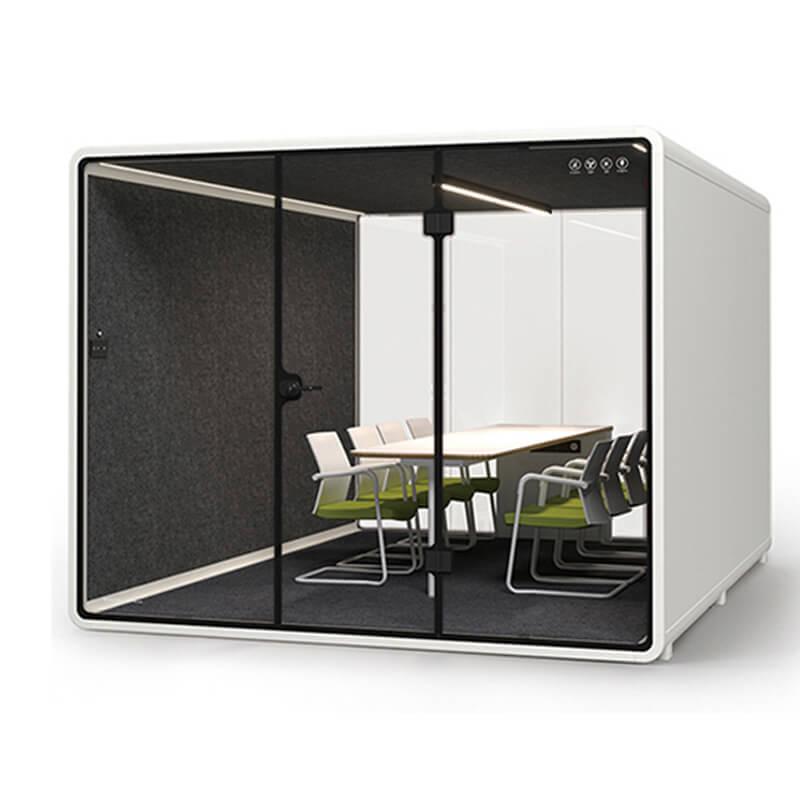
Assign only call segments witnessed for the booth's occupancy, speech and visual boundary, device chain, surface, duration, comfort, access, and location. Discovery, negotiation, or account review may fit one configuration, while a group demonstration or local manager session may need a meeting room.
Write the accepted segment and fallback. A generic sales call label is too broad for daily allocation.
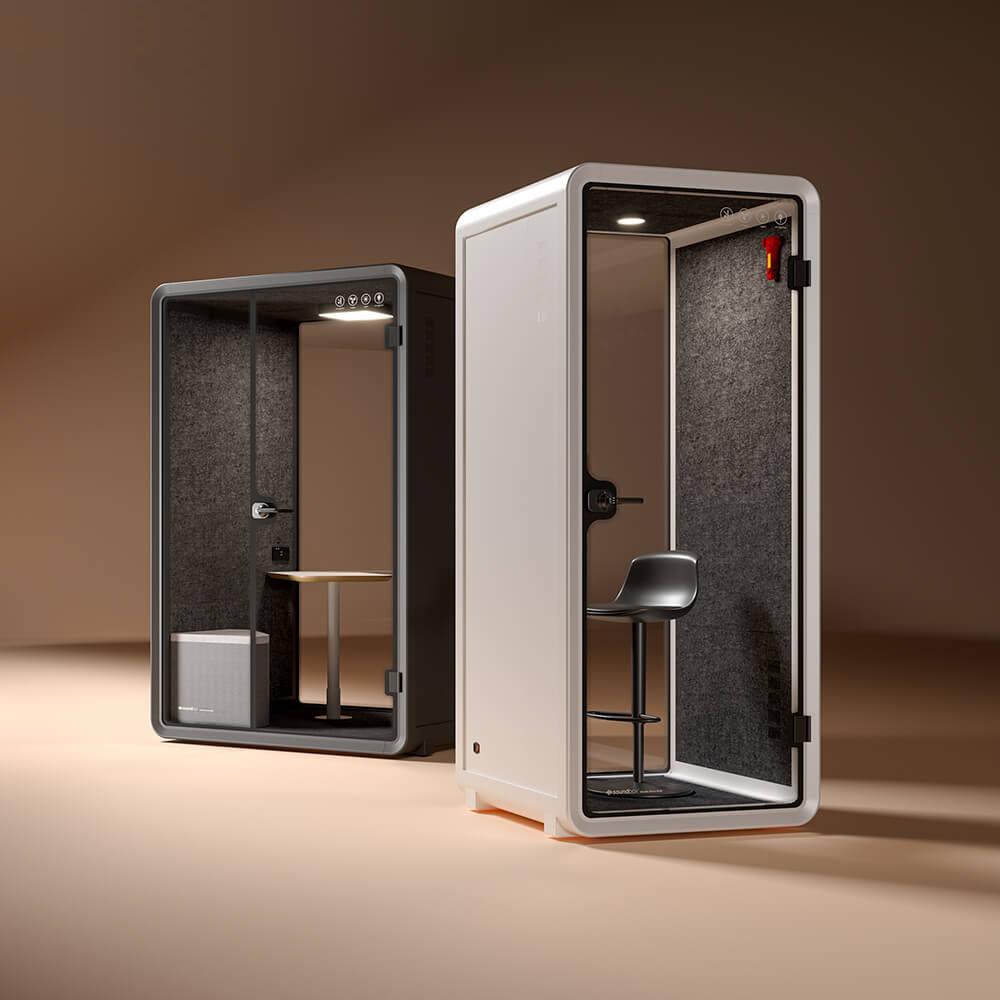
The booth pilot can show operational facts such as completed calls, fewer route breaks, accepted privacy conditions, workable device behavior, room release, queue, non-use, and support burden. It does not by itself prove revenue, conversion, or productivity effects.
Any commercial outcome analysis needs the organization's approved data and method. Keep that separate from the facilities purchase gate so unsupported benefit figures do not enter the dossier.
Define an authorized method that fits organizational policy and the offered configuration. A manager may join in another approved setting, use supported technology, or review after the call. Local co-occupancy should be accepted only when space, communication, privacy, comfort, and access have been witnessed for both people.
Include consent, device ownership, fallback, and what happens when the coaching route fails. Do not improvise at the start of a sensitive call.
Use accepted-segment concurrency, peak queues, failed searches, completed and abandoned visits, room displacement, privacy and remote-call observations, turnover, faults, and support demand. Quantity follows overlapping eligible work plus realistic downtime and fallback capacity.
Recheck after schedules, team size, territory time zones, call tools, room supply, or office attendance changes. Earlier demand should not be projected indefinitely.
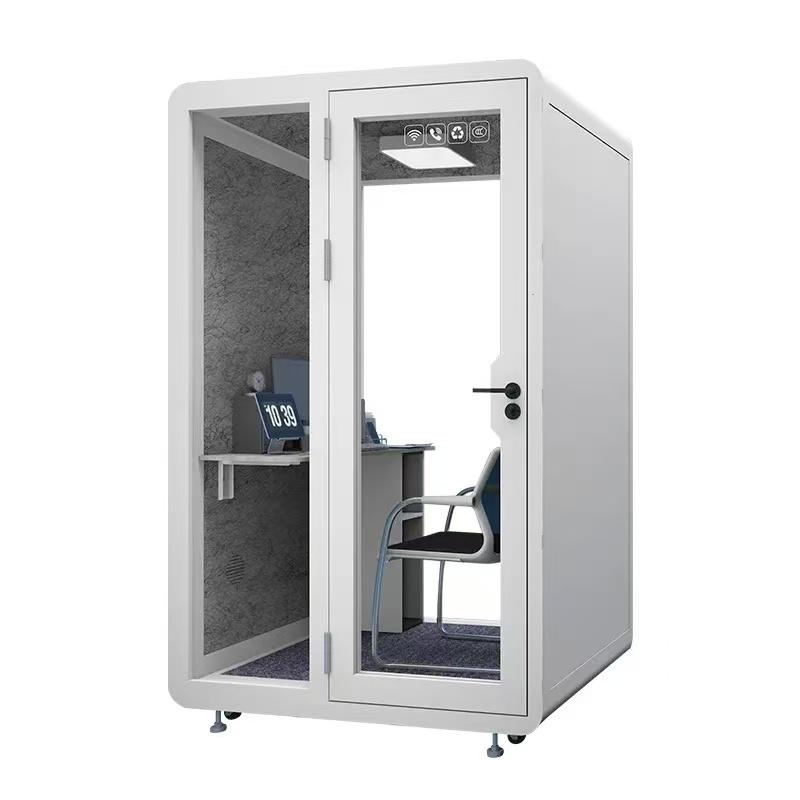
A sales team needs a Room Office Phone Booth when defined call segments repeatedly fail across privacy, communication, preparation, handoff, access, or room availability and the complete booth route performs better under a representative pilot. Nine generic benefits are weaker than one witnessed sales workflow.
Approve one sales-call route and scale only after peak evidence. Retain the accepted segments, exclusions, source-listener condition, device configuration, site scope, operating owner, fallback, adverse observations, and review triggers. That dossier supports a timely decision without pretending that urgency or a product label proves a financial return.

 Tel: +8613538031763
 Email: info@sopworkpod.com
 MP/WhatsApp: +8613538031763
 Manufacturer Address:Liucheng Lujiang District,Meixi Road,Nanan City,Fujian,China