Need Help?
Please leave your contact information to get our latest catalog
Get In Touch Now >


Author:SOP Work Pods Manufacturer TIME:2026-08-28
A room office pod can meet a technical checklist and still be left unused by the person it was meant to support. The route may feel exposed, the door action may be uncertain, a control may be hard to interpret, fan or lighting behavior may be distracting, or booking rules may remove the ability to choose at the moment it is needed. None of those observations means every neurodivergent user will respond in the same way.
Neuro-inclusive workplace design should make more forms of participation possible without assigning people to a special enclosure. The practical variables are choice, predictability, sensory conditions, control, physical access, privacy, recovery, and a reliable alternative. Pods can contribute to that system when they are selected and operated around actual work rather than presented as a universal remedy.
The seven principles below are a design review, not a medical assessment. They convert broad inclusion language into observable routes, user actions, adjustable conditions, and service decisions. The buyer can document what was offered, what created friction, what changed, and what remained unresolved while individual health advice and local accessibility duties stay with the appropriate people.
Begin with the work and the available choices. A person may need a brief private call, a period of lower distraction, a small collaborative meeting, a predictable desk, or simply permission to move away from a busy area. Ask what condition obstructs the task and what alternatives already exist. Do not require a diagnosis to request a quieter, brighter, dimmer, more open, or more enclosed setting.
Choice is meaningful only when options are usable at the same time. A pod that is constantly booked, difficult to reach, reserved for managers, or treated as a place for people who do not fit the office does not expand participation. Compare the pod with quiet rooms, open settings, remote participation, adjusted schedules, and other approved arrangements. The aim is a portfolio, not a single prescribed answer.
Record how a user selects and exits the space. People should be able to decline a pod, leave early, change setting, or report a barrier without being asked to justify a personal condition publicly. Managers need a simple route for responding to the work impact while HR or occupational specialists retain any formal accommodation process.
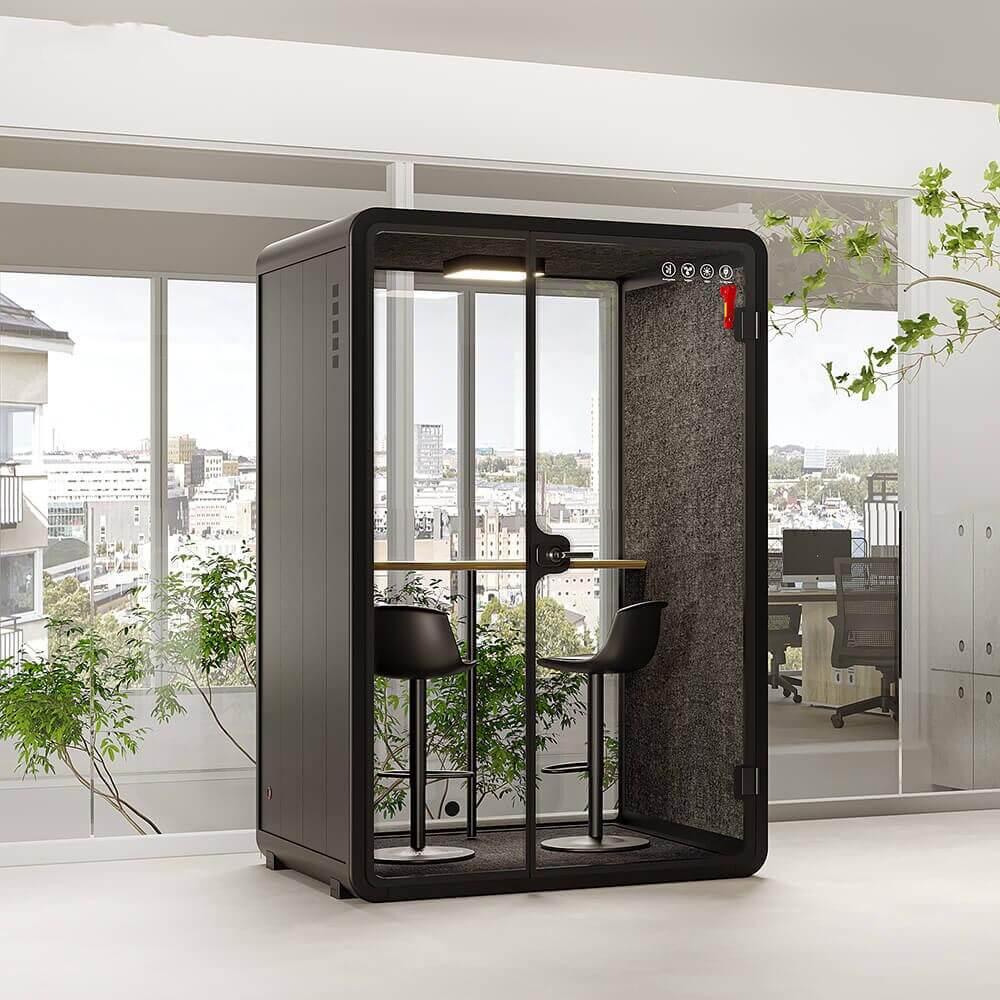
Uncertainty can begin before the door opens. Show where the pod is, how availability is indicated, whether use is booked or walk-up, how the door and controls operate, what will happen to lights and airflow, and how help is requested. Keep instructions concise and stable. A surprise software prompt or an unexplained automatic response can create more friction than the enclosure removes.
Walk the normal route from the user's work area. Review crowding, visual exposure, noise changes, thresholds, door weight, turning space, signs, waiting positions, and whether entering draws unwanted attention. The pod location should not force a person through the very stimulus or social interaction they are trying to manage.
A first-use preview can be offered without making it mandatory. Let people see the vacant space, operate controls, check the exit, and understand booking before a demanding task. Preserve the same instructions after handover so the experience does not depend on one facilities employee being available.
Visual load includes more than brightness. Movement outside glazing, reflections, screen glare, direct views of circulation, busy finishes, indicator lights, and abrupt changes between the room and pod can affect concentration or comfort differently. Test the proposed orientation at the times when the area is normally occupied, not only in an empty showroom.
Give occupants whatever adjustment the selected configuration actually supports, then make the limits visible. Lighting level, screen position, blind or film options, door orientation, and seating direction may change the experience. Avoid claiming that one color temperature or degree of enclosure suits all users. Observe whether the control is understandable and whether its setting persists or resets unexpectedly.
Privacy treatments can carry a cost. More screening may reduce casual observation of screens, yet it may also reduce desired visibility, daylight, or reassurance about the surrounding area. Facilities, accessibility reviewers, and users should examine the trade-off together. The decision record should retain both the benefit and the condition it may worsen.
A quiet enclosure is not silent, and sound preferences vary. Listen for fan character, door and latch sounds, equipment alerts, speech within the pod, nearby office activity, and sudden noise at the entrance. Ask whether a person can predict or influence the condition. Do not promise sensory relief from an acoustic label that was established under different circumstances.
Air movement and temperature can also shape whether someone stays. Review control reach, response, drafts, equipment heat, occupancy, session length, and recovery between users. A brief empty demonstration cannot establish comfort during concentrated work. Trial the longest intended task and consecutive bookings while keeping any building-side ventilation responsibilities explicit.
Controls need bounded authority. Users may adjust available settings, but safety, building services, and maintenance protections should not depend on improvised workarounds. If a preferred condition cannot be achieved, the service route should offer another space rather than encourage blocked vents, propped doors, disconnected equipment, or unsupported modifications.
| Design principle | Observable friction | Choice or control to test | Equivalent alternative |
|---|---|---|---|
| Voluntary choice | User is assigned to one enclosure | Decline, leave, or switch without public justification | Another approved quiet or private setting |
| Predictable use | Entry, controls, or booking produce surprises | Preview route, stable instructions, clear help path | Supported booking or staff-assisted option |
| Sensory control | Light, movement, sound, or airflow interrupts work | Available adjustments tested during the real task | Different orientation, room, or work pattern |
| Action fit | Furniture or technology blocks normal movement | Occupied sequence with usual devices and belongings | Alternative workstation or meeting space |
| Connected privacy | Enclosure reduces access to help or creates stigma | Neutral service rules, communication and exit check | Private room with approved support route |
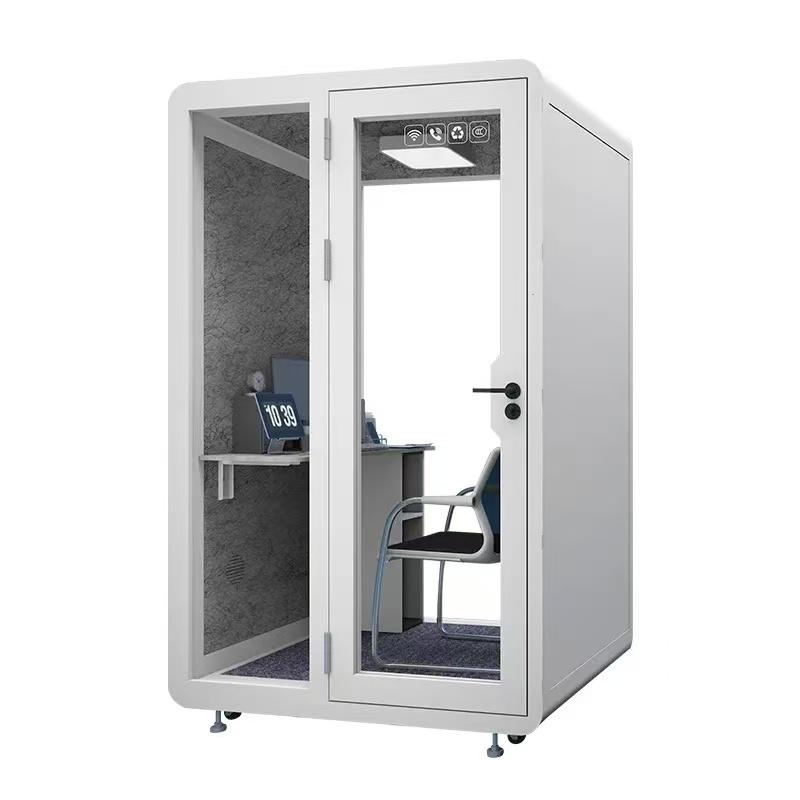
Product dimensions do not describe the whole action sequence. Observe approach, door use, transfer or turning where relevant, sitting, standing, reaching controls, placing a bag, positioning a laptop, writing, joining a call, and leaving. Include normal personal equipment and approved mobility aids in the review. The exact model and furniture arrangement matter more than a general accessibility adjective.
Posture needs can change with task length. Check seat support, table relationship, leg space, device height, camera framing, lighting on the face, cable location, and whether movement is possible without striking a surface. A setup suitable for a ten-minute call may not suit a focused work period. Keep the accepted duration and task beside the configuration.
Technology should reduce steps, not add a new puzzle. Test connection methods, volume behavior, status indicators, wireless performance, charging, and the route for assistance. Provide a manual or alternative path when an interface fails. A user should not lose access to the workspace because a personal device cannot complete an optional pairing process.
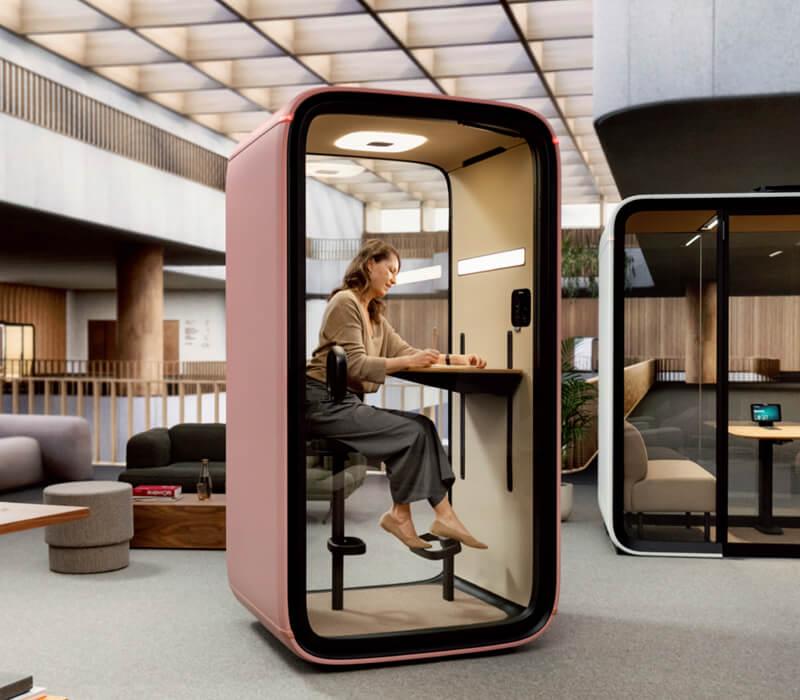
Use the office pod configuration reference only after the occupied actions, sensory choices, and site limits are documented. It can identify a candidate route, while the exact model, furniture, controls, location, and local review determine whether that route is acceptable.
Some work needs separation from overheard speech or casual viewing. Define the conversation and listener routes that matter, then test them under normal office activity. Also check how an occupant signals for help, receives an urgent message, notices an alarm under approved procedures, and exits promptly. Privacy should not erase connection to the workplace service.
Social meaning matters. If only certain employees are directed to pods, the space can become stigmatizing even when the physical design is competent. Make booking and use available for legitimate tasks across the workforce, explain the service in neutral terms, and avoid labels that expose personal information. Managers should focus on the work condition rather than guessing why an individual chooses a setting.
Review the effect on colleagues outside. Door activity, calls waiting nearby, status lights, fan exhaust, and a pod placed inside a quiet zone can transfer disruption. An inclusive choice should not create an unexamined barrier for another group. Record conflicts and adjust location, policy, or task allocation rather than assigning blame to users.
A pod is one node in a sequence of work, breaks, meetings, and movement. Decide what happens when it is occupied, faulty, too warm, visually uncomfortable, or simply not preferred. Equivalent alternatives might differ by task, but they should be known before a person reaches a point of overload or misses a private call.
Review use through voluntary feedback and observable service data. Useful signals include failed bookings, early exits, repeated setting changes, faults, unresolved support requests, tasks moved elsewhere, and locations that stay empty despite apparent demand. Do not infer a medical reason from behavior. Ask what part of the service blocked the task and whether the response worked.
Include affected users in changes without making one individual represent a broad population. Offer more than one way to comment, protect personal details, and report themes rather than identities. Facilities can then adjust instructions, orientation, settings, booking, maintenance, or alternatives and document which barrier the change was intended to address.
Revisit the arrangement after office layouts, team attendance, devices, or policies change. A choice architecture can degrade when an alternative room disappears or booking rules become restrictive even though the pod itself is unchanged. Inclusion therefore belongs to ongoing workplace governance, not only to the procurement specification.
No. Preferences and barriers differ, and the same person may need different conditions for different tasks. Favor understandable controls, predictable behavior, voluntary choice, and a workable alternative over a supposedly universal setting. Record the limits of the exact configuration instead of making a broad wellbeing claim.
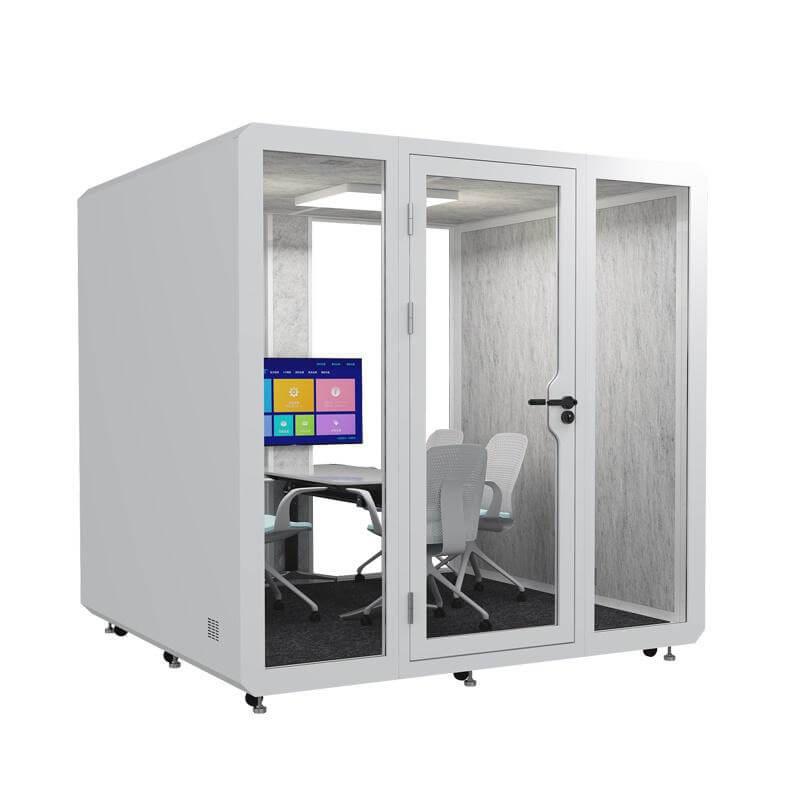
Managers can discuss the work need and whether the available setting supports it, but personal health information should follow the organization's approved privacy and accommodation process. A general workspace choice should not require public disclosure. Local HR and legal guidance should govern any formal request.
Observe service events such as successful tasks, failed access, early exits, control difficulties, support requests, booking conflicts, and use of alternatives. Invite voluntary comments about the environment and process. Avoid diagnosing behavior, ranking individuals, or publishing identifiable stories as evidence.
Reject or relocate it when the route, door, occupied actions, controls, sensory conditions, privacy boundary, help path, or operating policy creates a barrier that cannot be corrected for the intended role. Also reject a plan that removes equivalent alternatives and turns the pod into compulsory segregation.
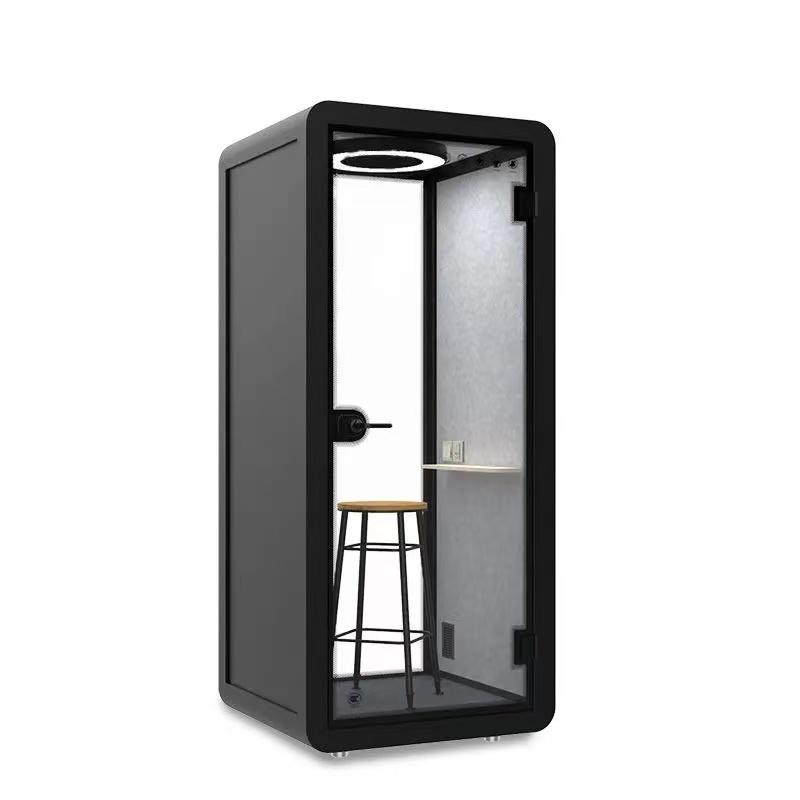
Seven useful design principles turn room office pods into part of a wider choice system: voluntary selection, predictable approach, manageable visual conditions, bounded sound and airflow control, real action fit, connected privacy, and dependable alternatives. None guarantees a response for every person, and none replaces local accessibility or accommodation responsibilities.
Run an opt-in observation with the intended tasks, retain equivalent ways to participate, and record barriers without attaching diagnoses to users. Adopt the configuration only when the route, controls, operating service, and fallback expand genuine choice instead of moving workplace friction behind a door.

 Tel: +8613538031763
 Email: info@sopworkpod.com
 MP/WhatsApp: +8613538031763
 Manufacturer Address:Liucheng Lujiang District,Meixi Road,Nanan City,Fujian,China