
Need Help?
Please leave your contact information to get our latest catalog
Get In Touch Now >


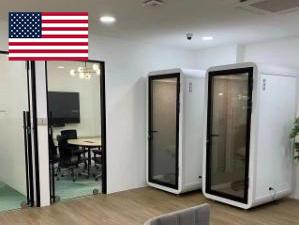
This reference considers soundproof office pods for a San Francisco workplace. The archived title and images support the location and product context, but they do not substantiate a named startup, an approved quantity, a live supplier demonstration, delivery timing, installation duration, employee-satisfaction data, productivity improvement, or return on investment.
A safer and more useful replacement is a pilot decision ledger. It shows how a workplace team can test assumptions, compare tradeoffs, and decide whether an enclosed pod belongs in the office without claiming an outcome that was never documented.
Describe the work that the existing office handles poorly. Separate individual concentration, private calls, scheduled video meetings, short discussions, and overflow from fully occupied rooms. Record frequency, session length, equipment, confidentiality, proximity to teams, and the consequence when a suitable space is unavailable.
This prevents the project from beginning with a predetermined quantity or pod type. It also gives stakeholders a shared way to judge alternatives such as scheduling changes, reuse of existing rooms, zoning, or an enclosed product. The chosen response should address the recorded deficit under stated conditions.
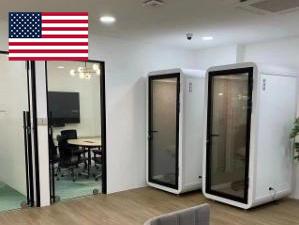
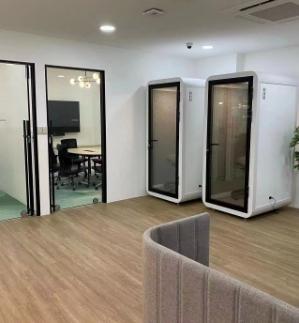
Candidate positions should be compared across access, circulation, visual privacy, surrounding noise, daylight, heat, room airflow, electrical supply, cleaning, and service access. A position near users may improve convenience but create a door conflict or expose screens. A quieter corner may be harder to reach or supervise.
Record these tradeoffs on a plan and ask the supplier to review any product-side clearances or interfaces. Building approvals, fire safety, accessibility, and electrical work remain the responsibility of the qualified local project parties.
If a pilot is appropriate, define its question before installation. The team might examine whether the selected location supports the intended task, whether users can operate the controls, whether booking behavior is manageable, and whether routine cleaning and issue reporting fit the workplace process. Do not promise a productivity or satisfaction result.
Choose a limited observation period and agree what will be recorded. Useful evidence includes occupancy by task type, unavailable-use incidents, operating faults, maintenance effort, and structured comments linked to the intended activities. A pilot should also state what would trigger relocation, configuration review, or discontinuation.
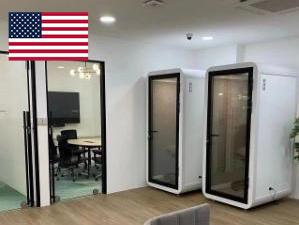
Request comparable quotations for the exact proposed configuration. Separate unit price from options, transport, unloading, assembly, building work, taxes, documentation, training, maintenance, and service. Ask suppliers to identify the conditions behind performance information and which documents apply to the quoted model.
Commercial comparison should preserve unknowns instead of hiding them in a single total. A lower initial figure may exclude responsibilities that the buyer must procure elsewhere. A higher figure should not be treated as proof of suitability without configuration-specific evidence.
| Decision lane | Question | Evidence | Decision rule |
|---|---|---|---|
| Task demand | Which activities lack an appropriate space? | Observed demand log | Need is specific and recurring |
| Placement | Can the location support access and operation? | Measured plan and interface review | Constraints are assigned |
| Configuration | Does the quoted unit match the intended use? | Drawings, options, and applicable documents | No material assumption remains hidden |
| Pilot | What will be observed and for how long? | Protocol and issue log | Evidence answers the stated question |
| Commercial scope | Who pays for each interface and service? | Normalized quotation | Total responsibility is understood |
At handover, verify model identity, condition, position, access, controls, included options, documentation, and outstanding actions. After the defined observation period, compare evidence with the original work deficit. Record the decision and its limitations rather than generalizing a local observation into a universal result.
The decision note should show which alternatives were considered and why they were retained or rejected under the agreed criteria. It should also distinguish reversible choices, such as a location that can be reviewed, from commitments that affect building work or commercial scope. This makes a later expansion decision traceable without turning the pilot into promotional evidence.
Set a review owner and date. If office occupancy, furniture, team location, or call patterns change, the original placement decision may no longer be valid. A documented review trigger is more credible than a permanent claim that the pod improved the workplace.
The office pod product family can support initial option discovery. Final approval should connect the chosen configuration to the site plan, supplier evidence, commercial scope, and pilot criteria.
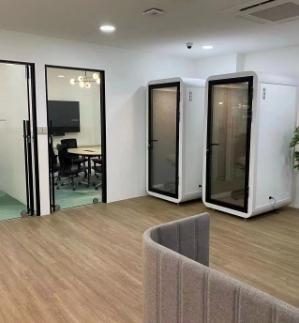
The San Francisco reference now functions as a pilot decision ledger rather than an unsupported startup success story. Define the work deficit, compare placement tradeoffs, design a bounded pilot, normalize evidence and cost scope, and record the final decision. This gives future buyers a repeatable process without inventing quantities or outcomes.

 Tel: +8613538031763
 Email: info@sopworkpod.com
 MP/WhatsApp: +8613538031763
 Manufacturer Address:Liucheng Lujiang District,Meixi Road,Nanan City,Fujian,China