
Need Help?
Please leave your contact information to get our latest catalog
Get In Touch Now >

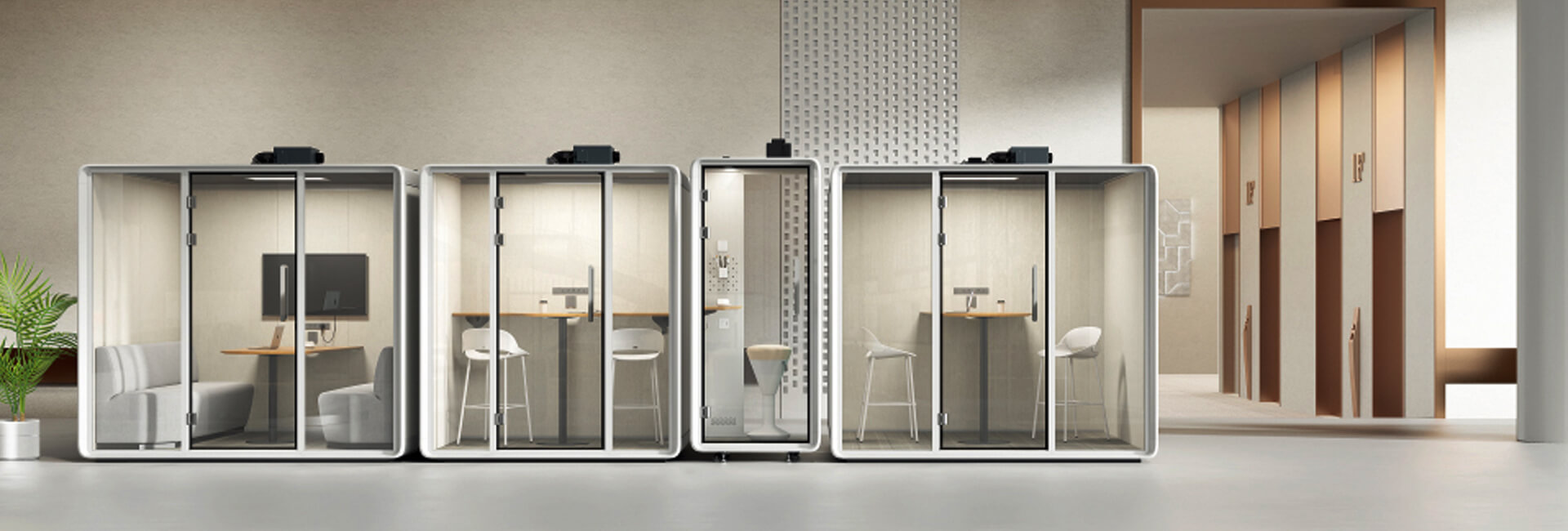
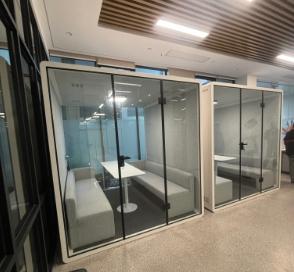
This 2-person meeting pod case study is presented as an Auckland application reference. The retained title and images support a two-person pod and New Zealand context, but the available material does not verify a digital-agency identity, dimensions, acoustic value, rendering turnaround, production or shipping dates, installation duration, client feedback, or future purchase intent.
The revised page examines meeting rhythm: what happens before, during, and after a two-person session, and which configuration and project records are needed to support that rhythm responsibly.
Record the interactions that genuinely require two enclosed seats. Short manager check-ins, design reviews, interviews, remote calls, and private feedback sessions create different needs for table space, screen position, session length, visibility, and speech privacy. Note peak demand and changeover time instead of starting with a claimed number of pods.
A two-person format should not be assumed suitable for every conversation. The team should identify activities that need a larger meeting room, different accessibility provision, specialist equipment, or another privacy process. This boundary protects both user experience and procurement scope.
Include preparation and follow-up in the rhythm. Users may need somewhere to wait, connect a device, collect a colleague, store papers, or continue work after the enclosed session. These adjacent activities affect location and office flow even though they occur outside the pod.
| Meeting phase | What users need | Configuration question | Record |
|---|---|---|---|
| Before | Availability, privacy decision, equipment preparation | Entry, booking, power, screen use | Use profile |
| Start | Unobstructed entry and simple controls | Door orientation, lighting, airflow | Layout review |
| During | Appropriate seating, work surface, communication | Interior arrangement and options | Approved configuration |
| Close | Remove materials and reset the space | Cleaning and fault reporting | Operating guide |
| Review | Understand demand and issues | Relocation or option changes | Observation log |
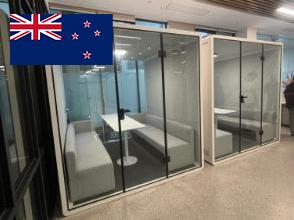
Place the quoted footprint and door orientation on a current plan. Check circulation, nearby furniture, emergency routes, daylight, heat, room airflow, power, cleaning access, and supplier-stated clearances. Then review how two users enter, sit, place equipment, view a screen if required, and leave without blocking the surrounding workplace.
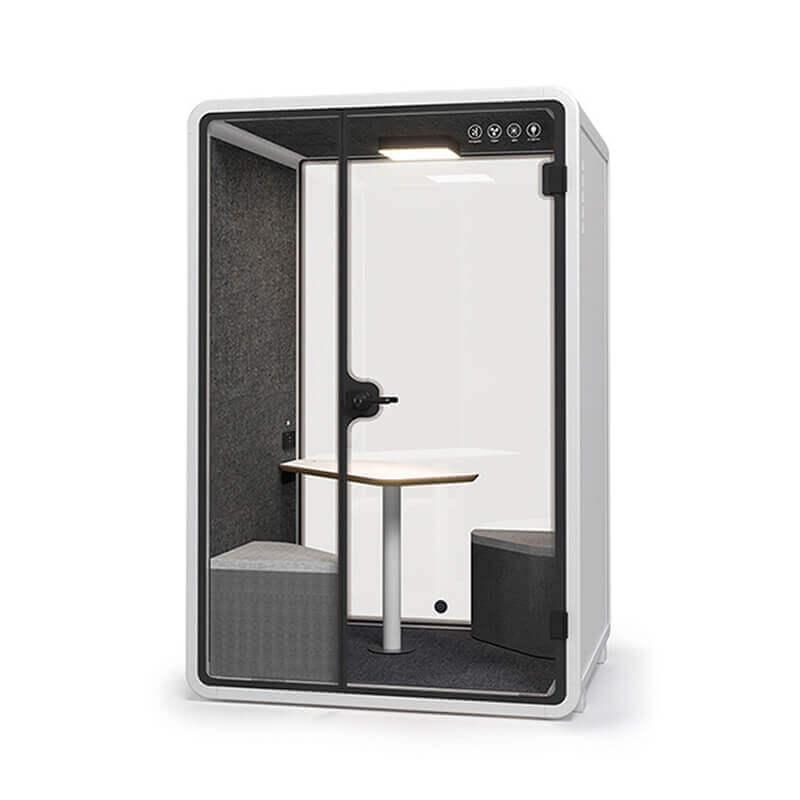
The visible product images can support questions about enclosure and interior arrangement. They cannot establish the dimensions, furniture, or options included in a new quotation. Those details belong in controlled drawings and the configuration schedule.
Color, upholstery, graphics, charging points, screens, and other options can affect cost, manufacturing scope, maintenance, and replacement. Record each requested option with an approved reference and identify who owns artwork, color confirmation, content licensing, and final sign-off.
A render is a communication aid, not the complete product contract. The buyer should compare it with written drawings, finish references, included equipment, interface information, and exclusions. If a feature is important to acceptance, it should appear in the signed configuration record.
Normalize quotations across product, options, packaging, transport, unloading, access, assembly, building work, testing, training, waste removal, and service. Walk the delivery path using supplier package information. Confirm local building rules and any electrical, fire, accessibility, or contractor requirements with the responsible New Zealand project parties.
Assign every handoff before order release. Unknown route data, unclear power work, or an unowned assembly task should remain an open condition rather than being concealed by an assumed fast installation.
Acceptance should confirm the supplied model, options, visible condition, position, access, controls, documentation, and unresolved items. Demonstrate the agreed user reset and fault-reporting process. If performance is measured, use the pre-agreed method and conditions; otherwise record observations without inventing a numeric result.
Create a simple meeting-use log for the early operating period. It can record session type, approximate duration band, unavailable-use events, equipment problems, and cleaning or control faults. The log is intended to reveal whether the defined meeting rhythm was correct; it is not an employee survey and should not be presented as proof of productivity.
Review furniture and optional equipment after real sessions. A screen position, table edge, charging point, or seat layout that looked acceptable in a render may create a practical constraint when two people use laptops and documents. Any adjustment should be captured in the configuration history rather than treated as an informal change.
Buyers can review the meeting pod product family when developing a shortlist, then request a configuration and delivery plan that match their meeting rhythm and site.
The Auckland reference is now a meeting-rhythm planning record, not a claim about an unnamed agency's delivery or satisfaction. Profile real two-person sessions, test seated use and room fit, control options, assign delivery interfaces, and close handover with observable evidence. That sequence is transferable even when project results are not documented.

 Tel: +8613538031763
 Email: info@sopworkpod.com
 MP/WhatsApp: +8613538031763
 Manufacturer Address:Liucheng Lujiang District,Meixi Road,Nanan City,Fujian,China