Need Help?
Please leave your contact information to get our latest catalog
Get In Touch Now >


Author:SOP Work Pods Manufacturer TIME:2026-08-28
Office phone booth price differences are difficult to interpret because two quotations rarely describe the same delivered result. One price may include freight, unloading, assembly, furniture, power accessories, and commissioning; another may cover only a factory unit. Acoustic claims may refer to a complete booth, one panel, or an unexplained test. A low headline price can therefore become the higher project cost after omissions are added.
The buyer needs a quote-normalization workbook rather than a universal price range. It should state the use case, location, quantity, capacity, performance evidence, options, delivery conditions, site work, acceptance, service, and ownership period. The budget then reflects comparable scope and known uncertainty instead of a collection of incompatible totals.
A defensible budget starts with scope equivalence, then preserves uncertainty as named allowances rather than hiding it inside one total.
Decide what one comparison unit means. It might be one installed single-person booth ready for normal calls, a package of six booths delivered to three floors, or a two-person configuration with a display and wired data. Record currency, tax treatment, destination, delivery date, site hours, warranty location, and any local approvals.
Describe intended occupancy, session length, call sensitivity, furniture, power, data, lighting, accessibility, and required finish. A supplier cannot price an equivalent outcome when the request says only "phone booth." The brief should also identify floor level, lift, stairs, loading restrictions, installation clearances, and whether the office remains occupied during work.
Separate mandatory, optional, and future items. Mandatory features should be included in every base comparison. Optional finishes, displays, and furniture variants belong in a separate schedule. Future items should show compatibility and estimated change implications without inflating today's accepted scope.
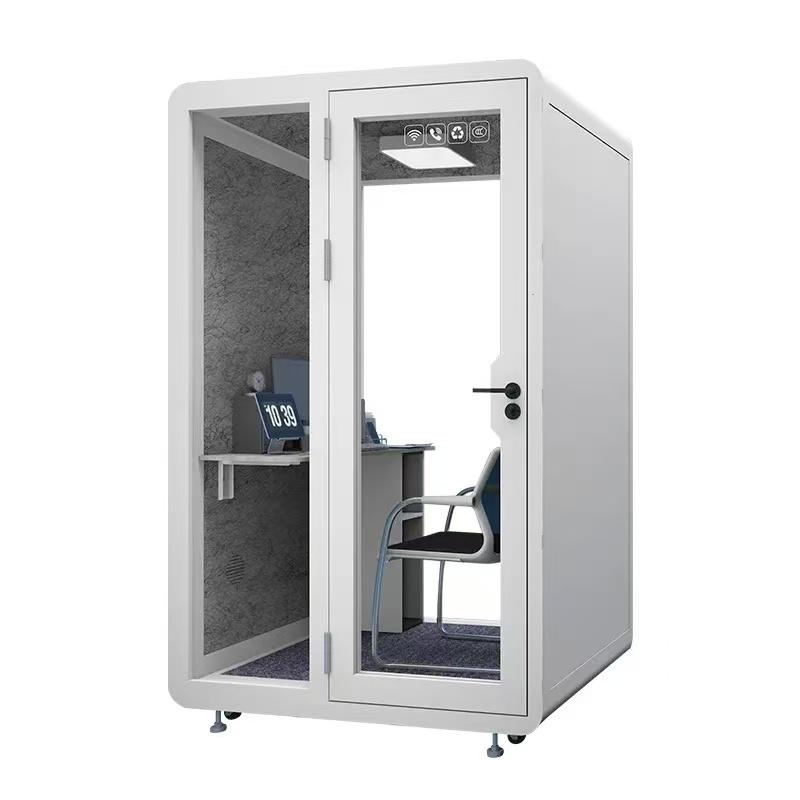
Use the phrase phone booth office price only for a normalized purchasing question, not a standalone market number. State the model revision, quantity, destination, delivery boundary, installation scope, site assumptions, acceptance evidence, warranty, and service period behind every figure. Without that context, a price difference may represent missing work, different evidence, or a different delivered condition rather than a true saving.
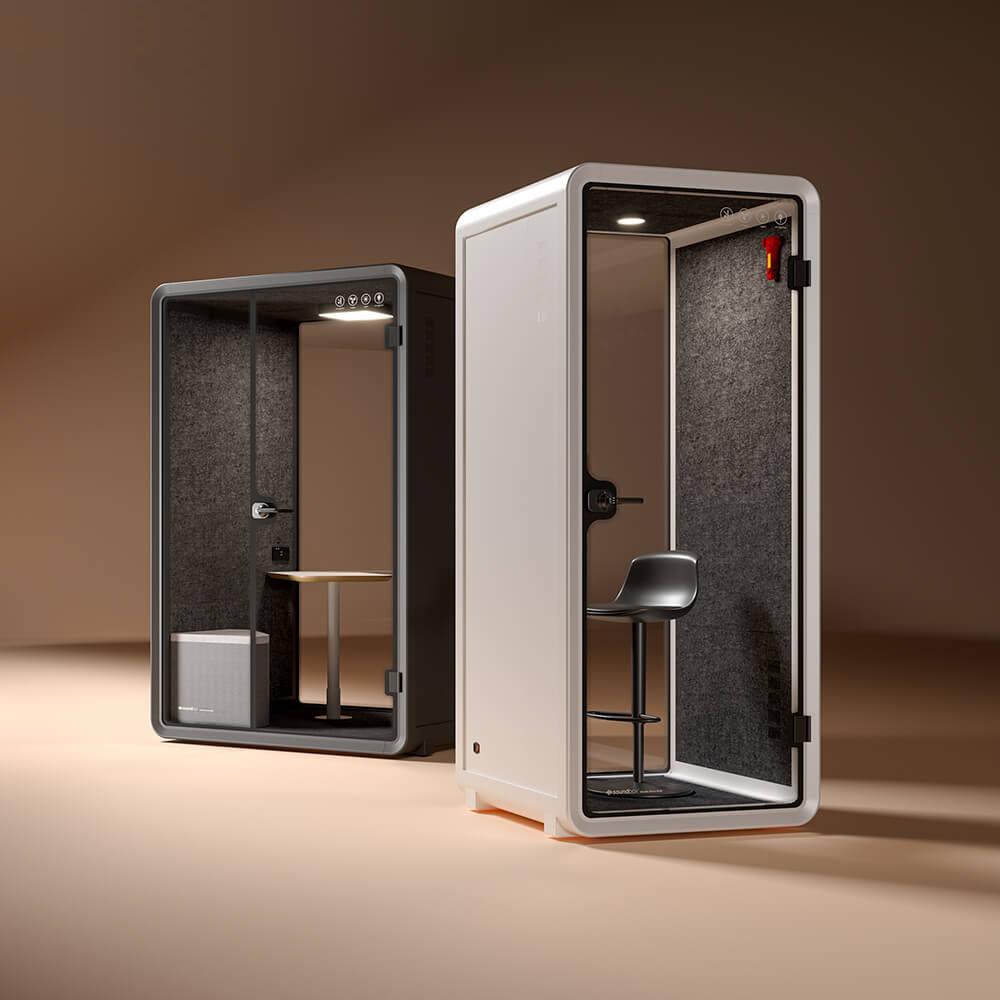
Build a line-by-line inclusion matrix. Cover model, external and internal dimensions, occupancy, panels, glazing, door, seals, floor, ventilation, lighting, sockets, USB charging, furniture, controls, signage, finishes, packaging, freight, customs responsibility, unloading, vertical transport, assembly, connections, testing, training, documentation, warranty, and service.
For each line, mark included, excluded, optional, allowance, or unclear. An allowance is not a fixed price; record its basis and the event that changes it. Ask suppliers to confirm exclusions in writing. Vague phrases such as "standard installation" should be translated into crew, hours, location, access assumptions, waste removal, protection, and final cleaning.
Check quantities and units. A quote can list sockets per booth while another lists them per order. Freight may be one shipment or several. Installation may exclude travel, weekend work, or upper floors. Convert these differences before comparing totals and keep the original supplier wording beside the normalized interpretation.
Acoustic value should be tied to applicable evidence. Ask whether results concern the complete assembled booth, which test method and configuration were used, and how doors, glazing, joints, floor, and ventilation were represented. Do not assign extra budget to a larger number until the buyer understands what it measures and whether it addresses speech privacy in the planned office.
Ventilation evidence should cover design occupancy, air path, control, fan sound, maintenance access, and an occupied-duration demonstration. Lighting should be evaluated for work surface, face visibility, glare, and control. Door cycles, hardware ratings, surface care, and replacement parts matter where a booth will serve many daily users.
Create a compliance column that references the submitted evidence. A higher-priced booth may be the better value when it demonstrates a required outcome and reduces project risk. It may also be overpriced if premium language is not supported. Evidence allows buyers to distinguish meaningful performance cost from branding.
Compare the materials users touch and facilities teams maintain. Review door frame, hinges, latch, handle, seals, glazing, work surface, seat, controls, floor finish, acoustic lining, panel edges, and ventilation grilles. Ask which items are replaceable and whether replacement changes the booth's verified configuration.
Finish cost should be considered with durability and cleaning. A lower-cost textile can be unsuitable for high-turnover locations if it stains easily or has narrow cleaning limits. A premium finish may add little value in a back-office call zone. Request approved cleaning products, sample colors under site lighting, and repair procedures.
Hardware serviceability can justify a price difference. Record expected wear item, part reference, lead time, authorized installer requirement, and access method. A proprietary component is not automatically bad, but its availability and cost should be visible in the ownership model.
List the workflow before adding technology. Most single-person calls may need power, charging, lighting, and reliable network access. A display, camera, occupancy sensor, booking panel, wireless charger, or environmental monitor should solve a defined operating need. Optional electronics add heat, support, software, cabling, and replacement responsibilities.
Check who supplies, installs, configures, owns, secures, licenses, and supports each device. A low booth quote may assume the buyer provides all technology; a higher quote may include equipment that cannot join the organization's managed network. Price the integration and security work, not only the device.
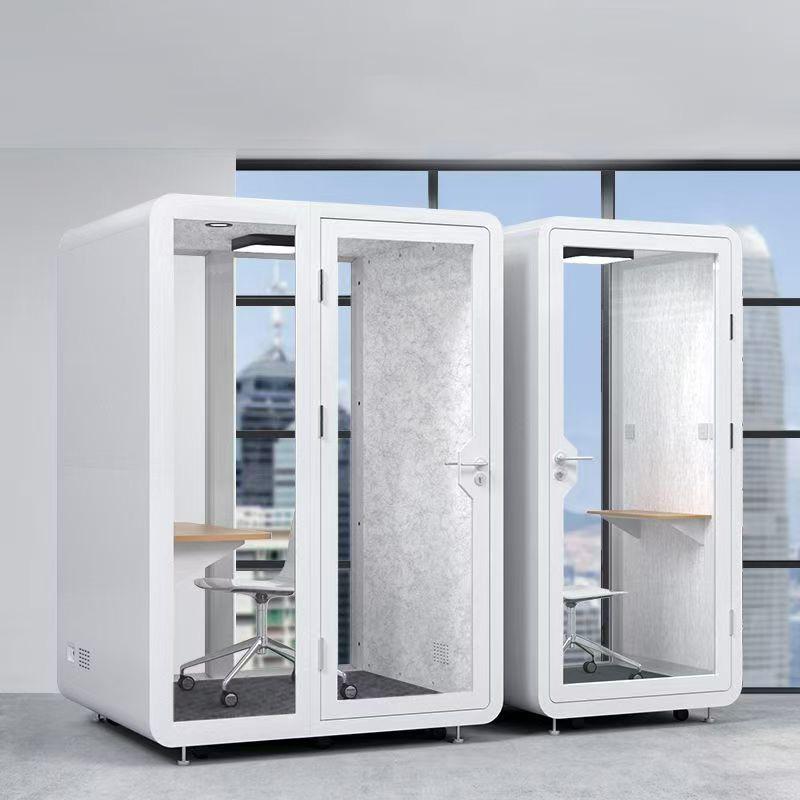
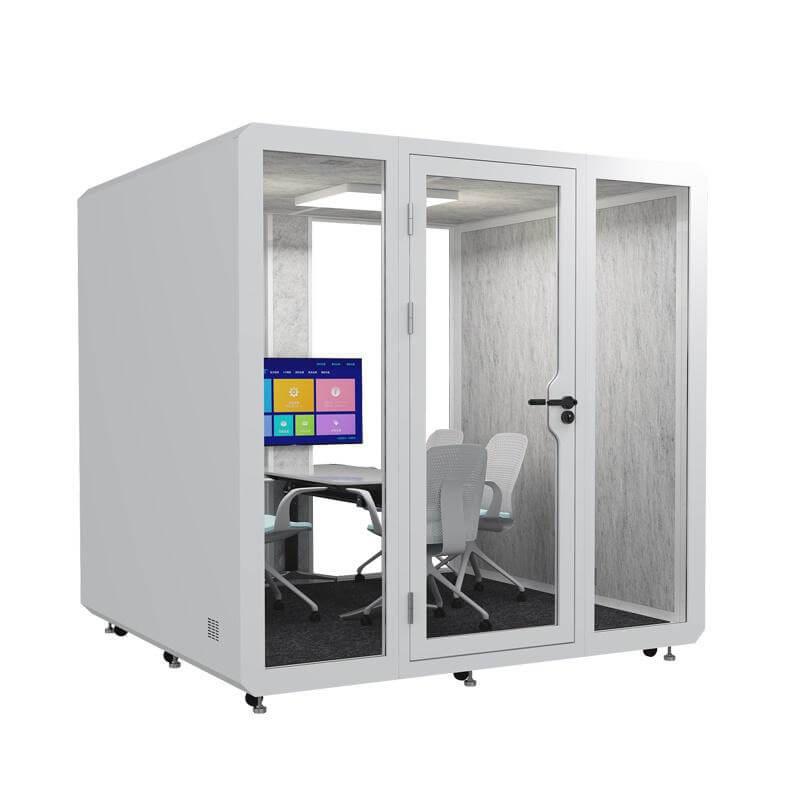
Keep options reversible where practical. A mounting point and cable route may preserve future flexibility without buying hardware immediately. Buyers can review the office phone booth product range for configurations, then place every selected option into the normalized schedule before approving the budget.
Request packaging dimensions, shipment count, gross weight, delivery term, destination assumptions, insurance boundary, unloading equipment, and responsibility for damage. International or long-distance freight can include customs, duties, port handling, storage, demurrage, local delivery, and documentation. Use current professional advice for project-specific import treatment.
Survey the route from vehicle to final position. Price loading bay access, street permits where applicable, lift booking, stair carrying, floor protection, security induction, work-hour restrictions, assembly area, waste removal, and cleaning. Ask how a failed access assumption changes cost and schedule.
Installation quotes should identify crew size, expected duration, supervision, travel, tools, services, testing, and return visit. Clarify whether electrical connection is included or limited to an internal lead. A qualified local electrician may still be required for the building side. Keep commissioning separate from assembly so the budget includes proof of operation.
The office may need floor leveling, power, data, outlet relocation, fire-system review, signage, furniture movement, ceiling coordination, network changes, access protection, or after-hours working. Record each task, designer, contractor, approval, and estimate. A booth that requires less site intervention can have a higher product price and a lower project total.
Value disruption. Measure desks unavailable, meeting rooms used for storage, security escorts, noisy work, cleaning, and return-to-work delay. Do not convert every inconvenience into an invented financial amount; describe material operational effects and include verified costs where available.
Keep contingency tied to identified uncertainty. Use one allowance for an unverified floor condition and another for access restrictions rather than adding an unexplained percentage to everything. Close each risk as information improves and release the unused contingency transparently.
| Budget layer | What to include | Evidence | Decision question |
|---|---|---|---|
| Factory configuration | Complete model, materials, services, furniture, options | Controlled quotation and drawings | Are all suppliers pricing the same functional unit? |
| Performance scope | Acoustic, ventilation, lighting, durability demonstrations | Applicable test data and acceptance plan | Does the price support the required outcome? |
| Logistics | Packaging, freight, import, unloading, internal transport | Route survey and delivery terms | Where does cost and risk transfer? |
| Installation | Crew, assembly, connections, protection, waste, tests | Method and responsibility matrix | What remains for the buyer to arrange? |
| Site enabling | Floor, power, data, fire review, access, office changes | Local scopes and estimates | Which product changes building work? |
| Ownership | Cleaning, service, parts, downtime, moves, removal | Warranty, maintenance, scenario assumptions | What is the credible cost over the chosen period? |
| Contingency | Named unresolved risks only | Risk register with owner | Can the uncertainty be closed before order? |
Choose a realistic comparison period based on lease, business plan, and expected use. Include routine cleaning, filters, inspections, replacement seals, door adjustments, technology support, parts, service travel, downtime, moves, reassembly, storage, and final removal. Avoid claiming a guaranteed resale value.
Estimate useful capacity rather than theoretical availability. A booth may be occupied for calls only part of the day yet still provide strong value by protecting sensitive or high-consequence conversations. Conversely, a heavily booked booth with long fault closures can underperform. Connect ownership cost to the use case and service evidence.
Check warranty boundaries: start date, coverage location, labor, travel, parts, consumables, misuse, relocation, unauthorized connection, and response process. A longer warranty is not automatically better if key labor or transport is excluded. Request a sample service journey and named support channel.
The table should show comparable totals while preserving uncertainty. Replace example labels with the buyer's actual currencies and supplier data; do not hide exclusions inside a footnote.
Create a low, expected, and high ownership scenario without inventing market prices. Vary only conditions the buyer can explain, such as unit quantity, route complexity, installation attendance, service response, replacement wear items, relocation likelihood, and the period of use. Ask bidders to state the boundary behind each allowance. The resulting range shows which unknowns can move the budget and which evidence should be requested before contingency is reduced.
They may differ in configuration, evidence, materials, hardware, technology, freight, installation, site assumptions, warranty, and service. Normalize the scope before judging value.
Price is one decision factor. Review evidence quality, exclusions, delivery risk, maintainability, downtime, and ownership cost alongside compliance with mandatory requirements.
Use project-specific unresolved risks rather than a universal number. Delivery access, import treatment, floor conditions, and site services should have named assumptions and owners.
Not unless the methods, frequency scope, assembly, and test conditions are understood. Ask how the evidence applies to the complete booth and intended office outcome.
Buyers should budget for office phone booth price differences by comparing an equivalent delivered and supported outcome. A normalized workbook exposes whether a price gap comes from performance evidence, material and hardware quality, technology, freight, site work, installation, service, or a simple omission.
The strongest budget is not the lowest factory number or the largest contingency. It is a transparent total linked to a defined use case, verified site assumptions, acceptance tests, and a credible ownership period. That record supports negotiation without reducing the decision to price alone.
What should be fixed before the purchase order? Fix the model, options, quantity, price basis, exclusions, delivery boundary, installation, acceptance, warranty, service, schedule, and change process in controlled documents.

 Tel: +8613538031763
 Email: info@sopworkpod.com
 MP/WhatsApp: +8613538031763
 Manufacturer Address:Liucheng Lujiang District,Meixi Road,Nanan City,Fujian,China