
Need Help?
Please leave your contact information to get our latest catalog
Get In Touch Now >


Author:SOP Work Pods Manufacturer TIME:2026-08-28
An office pod delivery path is a chain of measured spaces, booked permissions, handling decisions, and responsibility handoffs. It begins at the vehicle position and ends after components reach the assembly area without unexplained damage or access improvisation.
This route notebook records evidence at each transition: package data, unloading, entrances, turns, elevators, thresholds, staging, final positioning, assembly space, and condition handover.
Access review is also a communication tool. Building management, security, the receiving team, the installer, and procurement should see the same route assumptions before delivery day. If one party expects curbside delivery and another expects a finished installation, the project already has a preventable failure point. Add photos of tight turns, elevator labels, dock rules, and staging zones to the release file.
Office pod delivery risk begins before the product reaches the suite. The checklist should trace the full route from truck stopping point to final position. Include loading dock access, curb restrictions, security rules, freight elevator booking, corridor width, turning points, thresholds, finished-floor protection, and the route from packaging breakdown to assembly.
A delivery path that looks simple on a floor plan can fail at a lift lobby, ramp, stair turn, fire door, or low ceiling. The buyer should measure and photograph each constraint instead of relying on memory. If the route is not controlled, the project can incur delays, extra handling, or finish damage before the pod is even installed.
Walk the office pod delivery path from the agreed vehicle position through unloading, entry control, corridors, lifts or stairs, staging, final room, and close-out route. Every transition needs measured clearance, a handling method, permission, protection, timing, and an owner before dispatch.
Measure usable clear space rather than relying on architectural labels. Elevator dimensions should account for door opening, handrails, protective lining, control panels, loading limits, booking rules, and the approach needed to rotate a package. Record who took each measurement and compare it with the supplier's packaged component data.
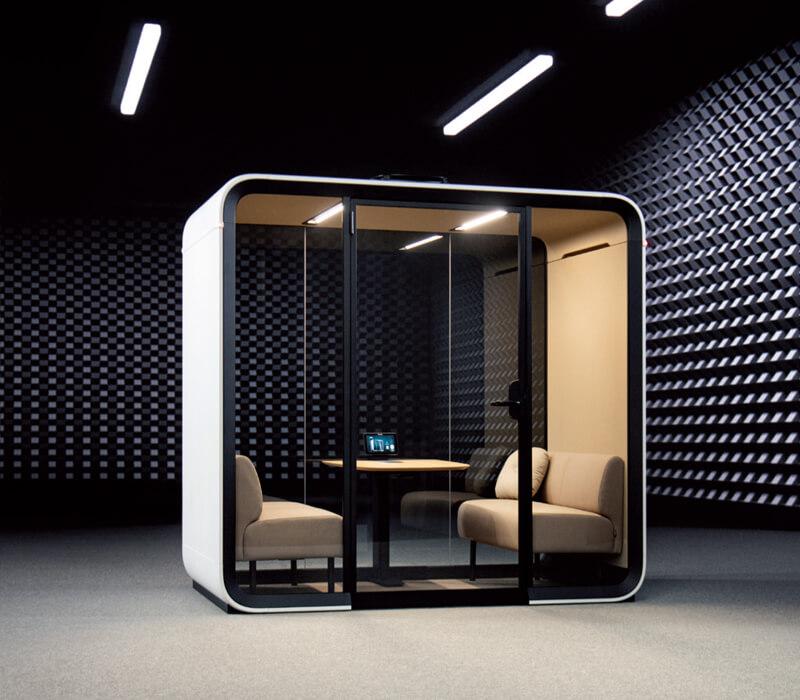
Ask whether the pod ships assembled, in modules, or as panels. Package length, width, height, weight, center of gravity, glass protection, lifting points, and pallet condition matter. A drawing for the finished pod does not prove that the packaged unit can pass through the route.
If the supplier offers several shipping states, compare route risk and assembly scope. Smaller packages may pass through elevators but require more installation labor and quality checks. Larger packages may reduce assembly work but demand stronger handling equipment and route clearance.
Obtain the package schedule for the ordered model and options, including dimensions, weight where provided, orientation limits, lifting or carrying points, fragile faces, stack limits, tool needs, and the largest component after any planned disassembly. Product dimensions alone do not prove route fit.
Elevator access should be confirmed by internal car dimensions, door width and height, load rating, protection rules, reservation process, service hours, security requirements, and whether a building engineer must be present. A passenger elevator should not be assumed suitable for pod components without approval.
Measure the approach to the elevator as well as the elevator itself. Components must turn into the lobby, clear door frames, and exit at the destination floor. Record protective materials required by the building and who installs and removes them.
Measure the lift car, clear door opening, approach, handrails and controls, protection allowance, loading limit, and space needed to rotate the package. Then confirm booking hours, operator or security requirements, exclusive-use rules, and who releases the lift for the planned load.
Long panels can fail at corners even when corridor width appears sufficient. Check diagonal clearance at turns, door swing conflicts, ceiling lights, sprinklers, handrails, reception desks, and temporary barriers. Use the package dimensions, not the final assembled dimensions, for the route check.
Where a route is tight, request supplier input before order release. It may be necessary to change package mode, schedule special handling, remove temporary obstructions, or choose a different pod size. The decision belongs before payment milestones, not on delivery day.
Record clear width and height at corridor bends, door approaches, vestibules, thresholds, ceiling changes, handrails, and temporary obstructions. Test the package orientation through each turn on a scaled plan or controlled mock-up; a straight-line width check misses the diagonal space long panels need.
Walk the route with the people who will control it. Building management may own elevator booking and contractor access; the carrier may own unloading; the installer may own handling after staging. A route can be physically possible and still fail because the agreed team, equipment, timing, or permission is unavailable.

Delivery timing affects cost and risk. Buildings may restrict freight movement to certain hours, require certificates, limit dock time, or demand supervision. Offices may need after-hours installation to avoid employee disruption. The checklist should name who books access, who receives the shipment, who signs for condition, and who can approve a change.
Keep delivery and installation windows realistic. If the pod must be assembled after hours, confirm lighting, power availability, waste handling, security access, and noise restrictions. Missed timing can convert a simple project into multiple visits.
Align carrier arrival, loading access, contractor induction, lift booking, floor protection, noisy work limits, occupied-office restrictions, security, staging duration, and installer sequence. The route should remain feasible within the approved time window rather than relying on access that exists only on an empty survey day.
Even when components fit the route, the team still needs space to unpack, stage panels, assemble the pod, protect finishes, and remove packaging. The final location should have enough clearance for tools, door installation, glass handling, electrical connection, and inspection. Do not assume that a pod can be assembled exactly within its final footprint.
Ask for the assembly method and minimum working clearances. Confirm whether the installer needs a flat floor, power tools, ladders, lifting aids, or temporary storage. Buyers comparing office pod options should include assembly space as part of the size decision.
Reserve clear space for component order, tools, packaging, door and panel movement, worker access, protection, inspections, and waste segregation. Confirm that emergency routes and normal circulation remain available; reaching the room is not route completion if the pod cannot be assembled safely there.
The route release checklist should be signed off before the supplier dispatches goods. It connects product packing to the site route and prevents unresolved access issues from becoming freight exceptions. Include dimensions, permissions, schedule, handling method, owner names, and contingency actions.
If a field remains unknown, classify it as a hold point. The supplier may still prepare production, but shipment should not be released until the path is confirmed. This protects both buyer and supplier from avoidable failed delivery.
Combine package data, measured route, photographs, bookings, handling resources, protection, staging, assembly plan, contacts, and alternatives in one controlled record. Mark each route segment accepted, conditional, or blocked and require the carrier, installer, facilities team, and building contact to work from the same revision.
| Route segment | Measured access and handling evidence | Release or stop action |
|---|---|---|
| 1. Start the checklist at the truck, not at the office door | route release checklist | Record the route constraint, measurement evidence, building approval, handling method, and release or hold status. Set the evidence threshold before the response is accepted. |
| 2. Request package dimensions and handling data for the exact configuration | route release checklist | Record the route constraint, measurement evidence, building approval, handling method, and release or hold status. Assign the reviewer who can check this point in the real location. |
| 3. Confirm elevator access as a booked and measured condition | route release checklist | Record the route constraint, measurement evidence, building approval, handling method, and release or hold status. Flag any dependency that changes the quote, drawing, or work method. |
| 4. Measure turning points where long panels create real risk | route release checklist | Record the route constraint, measurement evidence, building approval, handling method, and release or hold status. Keep nonnegotiable gates distinct from optional preferences. |
| 5. Control delivery timing around building rules and workplace disruption | route release checklist | Record the route constraint, measurement evidence, building approval, handling method, and release or hold status. Mark unresolved route dimensions, permissions, handling resources, or assembly conditions as shipment blockers with named owners. |
Close delivery with photos, condition notes, and acceptance items
Delivery is not complete when the cartons enter the office. Photograph package condition, route protection, unpacking, visible damage, assembled position, door operation, electrical connection, ventilation function, and waste removal. Record defects, missing parts, and follow-up owners before the installation team leaves.
The handover record should include final location, model, serial or unit identity where available, installer name, test notes, cleaning guidance, warranty contact, and unresolved items. This record supports maintenance and any future relocation.
At each handoff, photograph package identity and visible condition, record discrepancies before unpacking or onward movement, and name the party receiving responsibility. Close the route only when the assembly team has the expected component set, damage actions are assigned, and tools, packaging, protection, and waste have an owned exit path.
Create a stop rule for delivery day. If packaging is damaged, a dimension differs, protection is missing, or the planned handling method cannot be followed, the team should know who pauses movement and who authorizes a revised method. Photographs and condition notes should be captured before the route continues.
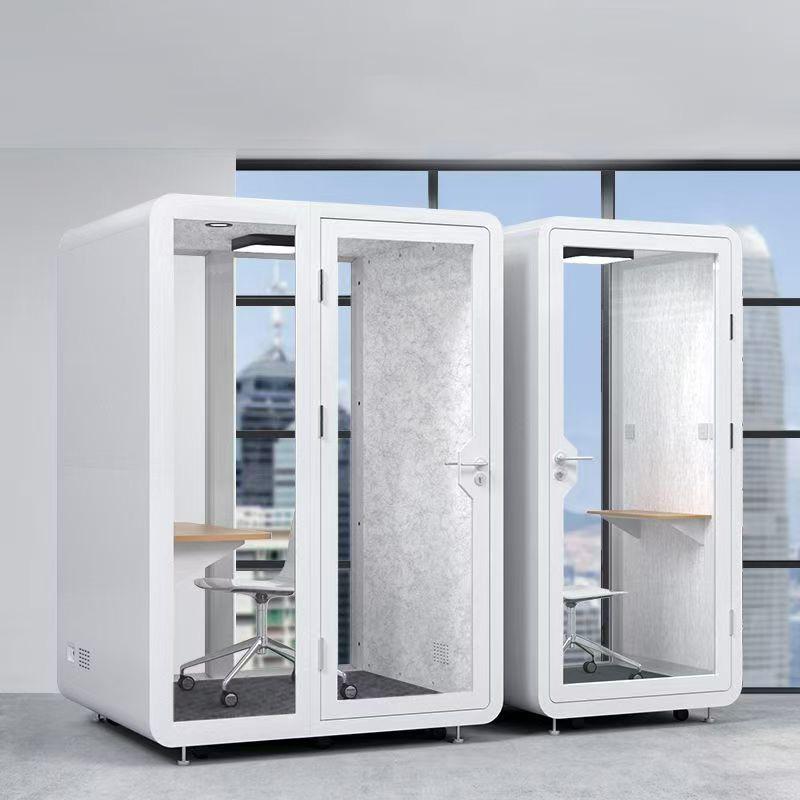
Start with the largest packaged component or assembled unit, then test every truck-to-room restriction against that size and handling method.
No. Also check door opening, internal dimensions, turning access, booking rules, protection requirements, and building approval.
Facilities, building management where required, the supplier or installer, and the buyer's project owner should confirm the route before shipment.
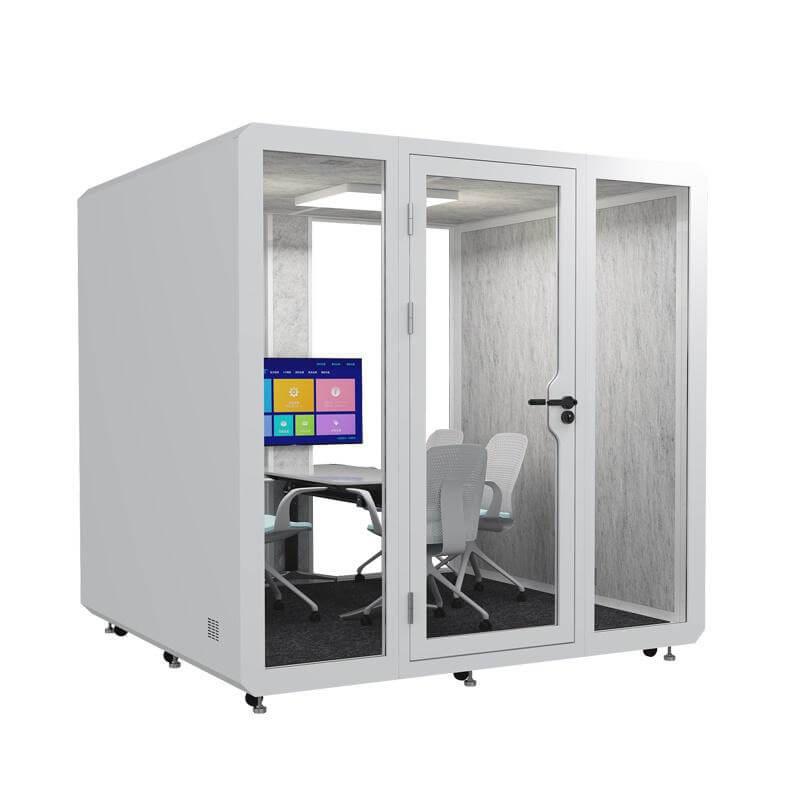
Hold shipment or choose a different packing or pod configuration. Do not leave access risk unresolved until the delivery team arrives.
Treat staging as a controlled part of the route. Confirm floor capacity where relevant, weather protection, security, component sequence, packaging retention, emergency access, and how long materials may remain. A staging area that is merely empty on the survey day may not be available during the booked installation window.
After components reach the room, reconcile the route record with delivered condition. Photograph identifiers and packaging before unpacking, log discrepancies, and preserve evidence needed for supplier or carrier review. Route completion should hand over a known component set to assembly, not just confirm that a vehicle left the site.
Build alternatives only for known constraints. If an elevator cannot accept a component, a revised route may involve stairs, another lift, external access, smaller packages, different assembly sequencing, or specialist handling. Each alternative needs new dimensions, permissions, resources, protection, risk review, and supplier agreement. Never let an unreviewed delivery-day improvisation replace the approved method.
Confirm the return route for tools, packaging, protective materials, and waste. It may differ from the inbound route once components occupy the staging or assembly area. Building rules, elevator bookings, recycling requirements, and working-hour limits should cover close-out as well as delivery, so the office is not left with an unowned obstruction.
A delivery route is proven when every package can move from the agreed vehicle position to the assembly zone under measured, permitted, and owned conditions. Elevator access is one segment of that route, not a standalone yes-or-no field.
Keep dispatch on hold until package data, route dimensions, bookings, handling resources, assembly space, protection, and stop rules are all fully recorded.

 Tel: +8613538031763
 Email: info@sopworkpod.com
 MP/WhatsApp: +8613538031763
 Manufacturer Address:Liucheng Lujiang District,Meixi Road,Nanan City,Fujian,China