Need Help?
Please leave your contact information to get our latest catalog
Get In Touch Now >


Author:SOP Work Pods Manufacturer TIME:2026-06-05
A brief demonstration inside an empty office pod can feel fresh, quiet, and comfortable. The same pod can feel very different after thirty minutes of continuous use with the door closed, a laptop running, and a second person adding body heat. This difference is the core reason why office pod ventilation should be evaluated through repeated occupied sessions rather than a single showroom visit.
For buyers, the central question is not simply whether a pod has a fan. A more useful question is whether the ventilation system matches the pod volume, expected occupancy, session length, surrounding office temperature, acoustic requirement, and maintenance condition. This article explains how to evaluate office pod ventilation before purchase using a reference-style framework rather than a sales checklist.
Ventilation evaluation should begin with the planned use profile, not with the fan specification. A pod used for five-minute private calls has a different burden from a pod used for hour-long interviews, remote meetings, or concentration sessions. The buyer should define the expected session length, number of users, office temperature range, and whether the pod will be placed near a wall, window, air-conditioning vent, or crowded open office zone.
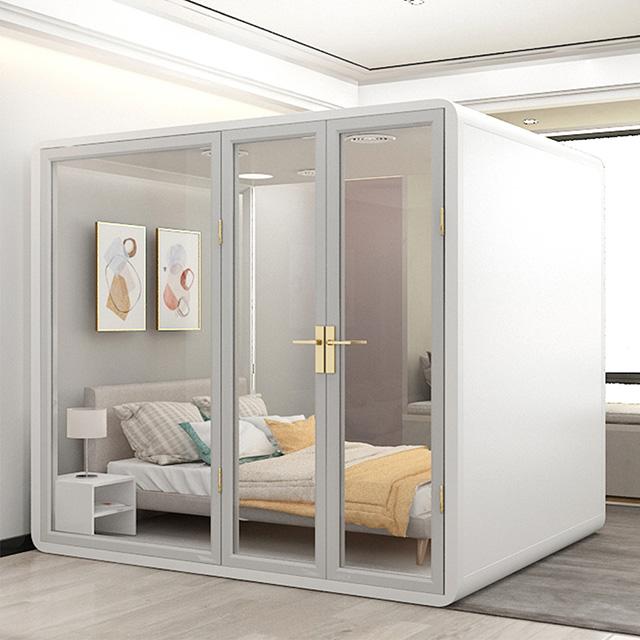
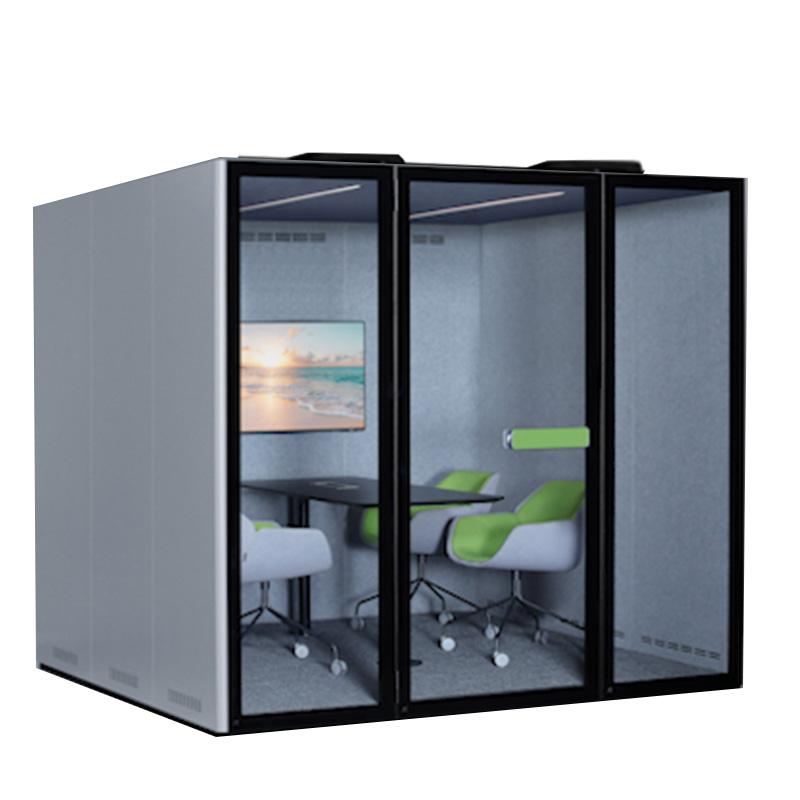
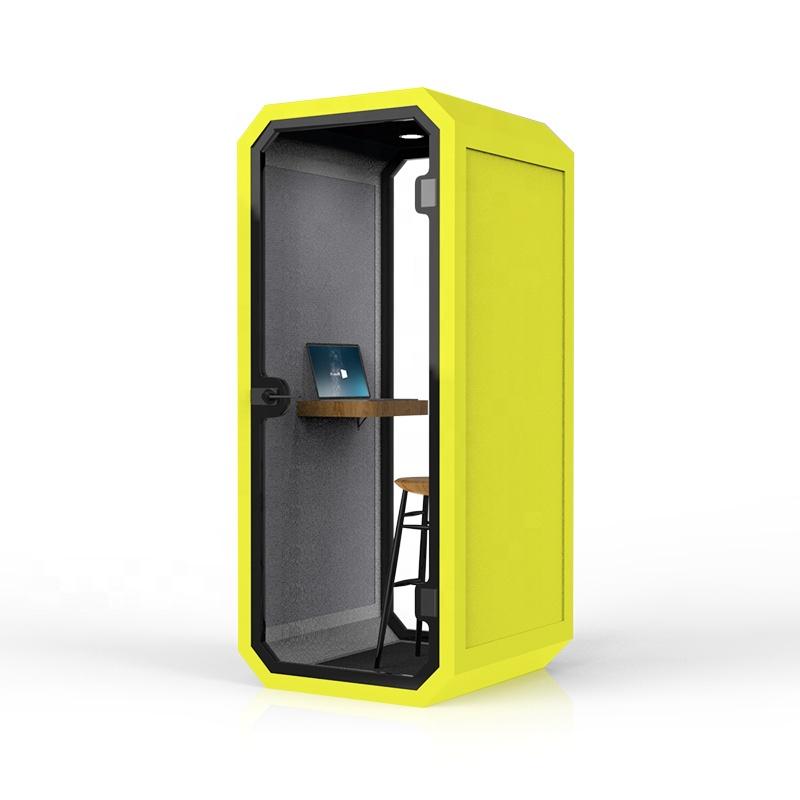
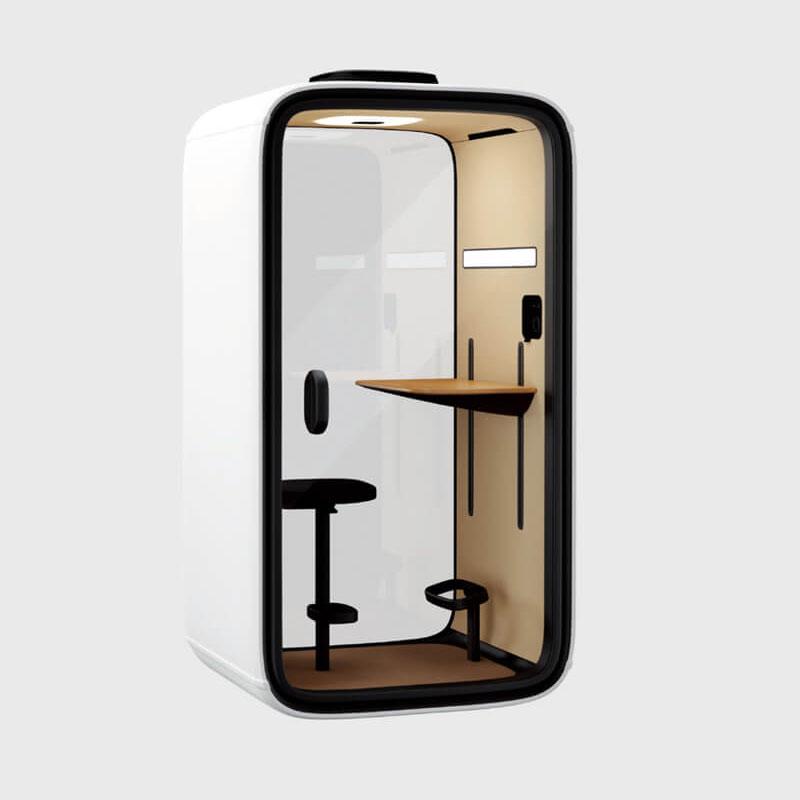
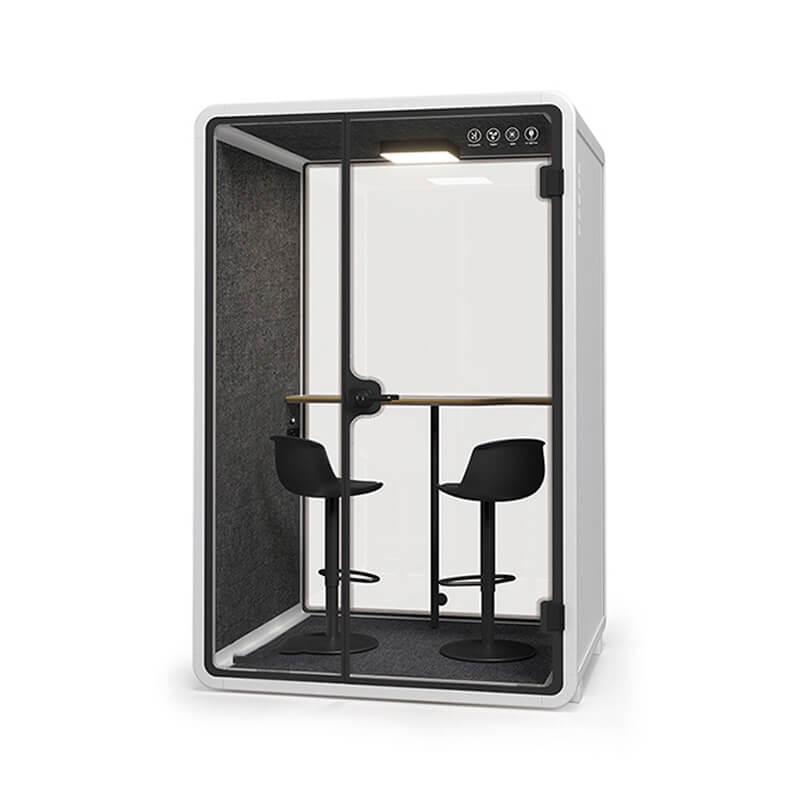
A single-person phone booth has a smaller air volume and usually supports shorter sessions, while a two-person or four-person meeting pod has greater volume but also more occupants releasing heat and moisture. The same fan specification can therefore produce different user experiences in different pod sizes. One person in a phone booth may mainly need quiet airflow and rapid odor dilution after a call. Four people in a meeting pod may need stronger air movement, better inlet-outlet separation, and more careful heat management.
Method note: When comparing suppliers, ask for a practical ventilation explanation rather than only a fan count. A useful answer should describe air inlet position, outlet position, fan control, noise behavior, and the intended use duration. If a supplier can only say that the pod has a fan, the specification is incomplete for serious evaluation.
| Pod type | Typical ventilation concern | Evaluation focus |
|---|---|---|
| One-person phone booth | Stuffy feeling during back-to-back calls. | Low-noise fan, quick air refresh, comfortable airflow near head height. |
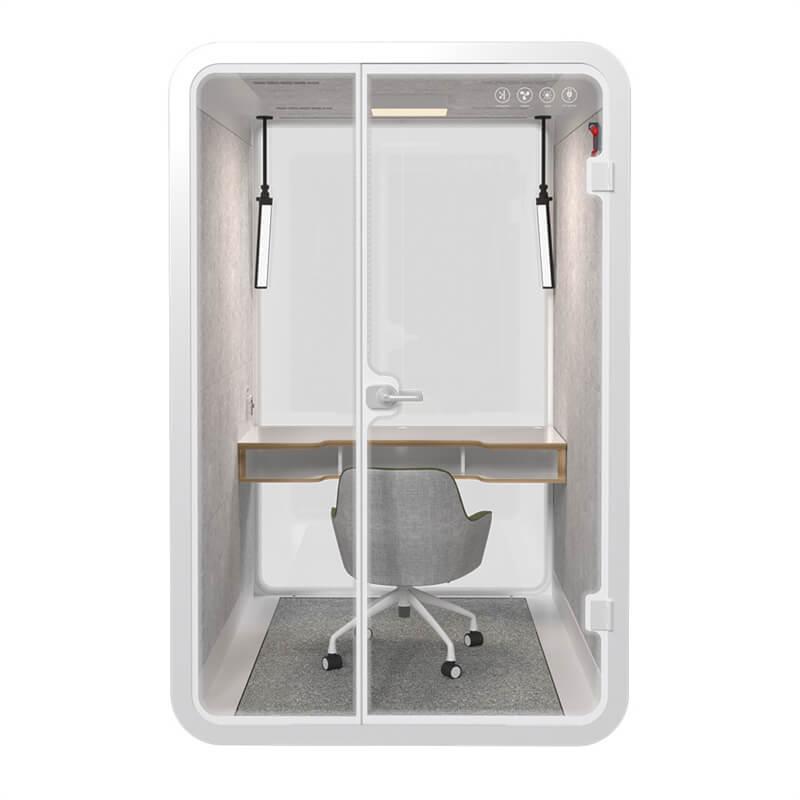
| Focus pod | Longer occupancy for writing, coding, reading, or online meetings. | Stable airflow, thermal comfort, quiet operation, power access. |
| Two-person meeting pod | Heat and moisture from more than one occupant. | Airflow route, fan capacity, seating layout, acoustic balance. |
| Four-person meeting pod | Continuous meetings may make the interior feel warm. | Multiple air paths, room HVAC condition, meeting duration, maintenance access. |
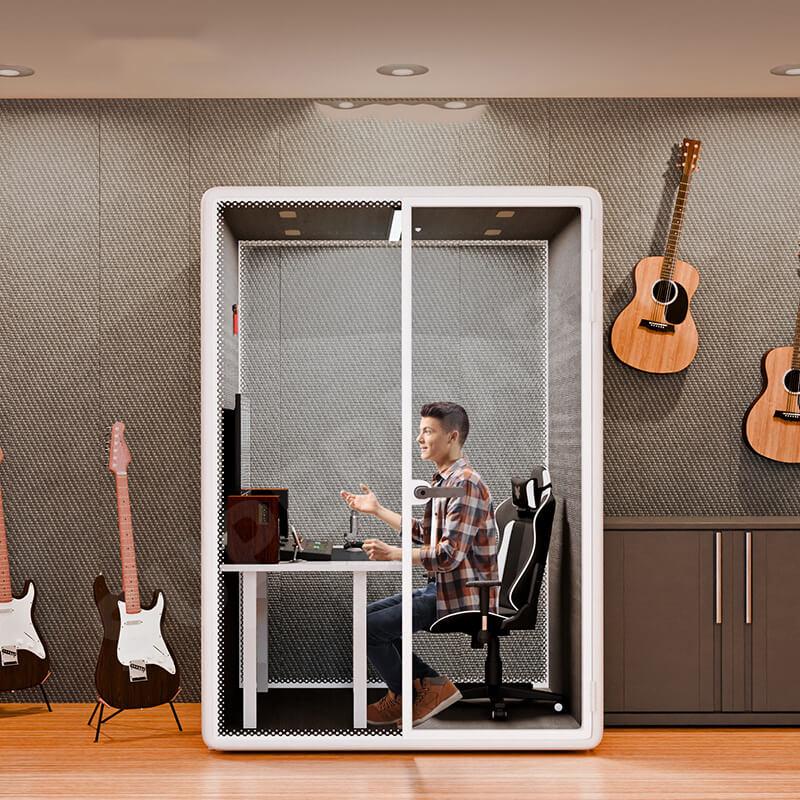
For buyers comparing an office pod for focused work and private meetings, ventilation should be reviewed together with sound insulation, lighting, power modules, seating, and installation conditions. Treat any configuration that cannot sustain the intended occupied session as unresolved, even when its fan count or showroom demonstration appears satisfactory.
Office pod ventilation exchanges air with the room where the pod is installed. If the surrounding office has poor air quality, weak cooling, or unstable temperature, the pod will inherit part of that condition. The pod fan can circulate and exchange air inside the enclosure, but it cannot fully correct a broader indoor environment that is already hot, humid, dusty, or poorly conditioned.
Placement can also change performance. A pod pushed tightly against a wall may restrict a rear outlet. Thick carpet may affect base air movement. Direct sunlight through nearby windows can increase heat inside the enclosure. In a dense office, the pod may be located away from the main HVAC supply, which makes the surrounding air less stable than in the central workspace.
Baseline check: Before testing the pod, measure or observe the surrounding room condition. Note the air-conditioning setpoint, the number of people in the nearby zone, and the clearance around the pod. A ventilation test performed in a cool, quiet, empty room will not predict performance in a warm, busy office during summer afternoons.
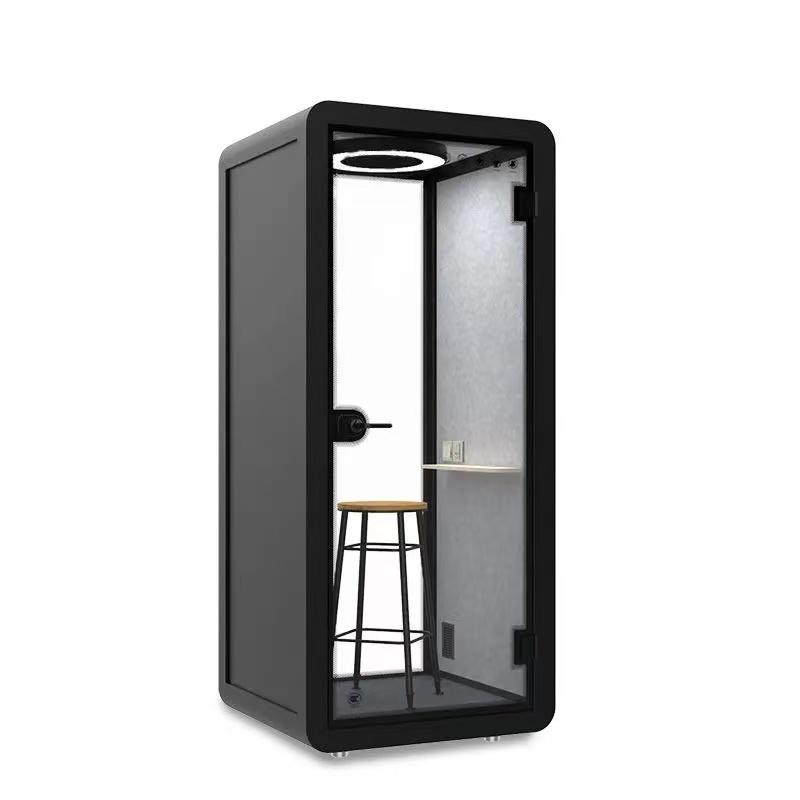
The visible part of pod ventilation is often small: a ceiling grille, side outlet, base opening, or control switch. The important design work is usually hidden inside the wall, ceiling, or base structure. Air needs to enter the pod, move through the occupied zone, and exit without creating excessive turbulence, whistling, or acoustic leakage.
A ventilation path that is too direct may reduce acoustic performance because sound can travel through openings. A ventilation path that is too restricted may preserve acoustic isolation but limit airflow. Good pod design therefore treats ventilation and acoustic isolation as a combined engineering problem, not as separate features.
Airflow observation: During an occupied test, sit in the normal working position and notice whether air can be felt gently at the face, hands, or upper body. If air appears to move only near one grille or ceiling corner, the occupied zone may not be receiving the benefit of the fan. Ask the supplier to explain the intended air path from inlet to outlet.
| Airflow observation | Good sign | Risk sign |
|---|---|---|
| Air movement at seated position | Gentle, steady airflow can be felt near the upper body. | No noticeable air movement at the user position. |
| Inlet and outlet separation | Inlet and outlet are placed to create a path across the interior. | Air appears to short-circuit near one grille or ceiling corner. |
| Draft sensation | Airflow is noticeable but not uncomfortable. | Strong draft is felt on the head, neck, or hands. |
Thermal comfort inside a pod is influenced by the number of occupants, the duration of the session, the heat from lighting and devices, and the temperature of the surrounding room. A fan may be running, but if the airflow path does not reach the occupant zone, or if the room air is warm, the interior can still feel stuffy.
A short showroom test with the door open does not reveal much about heat accumulation. The more reliable method is to sit inside with the door closed for the same duration as a normal work session. Notice whether the air feels stagnant near the face, warm around the head, or uneven around the feet. If the pod is intended for two or four people, repeat the test with the expected number of occupants.
Heat load note: Heat from lights, devices, and occupants contributes to the sensation of warmth. A pod used for back-to-back calls may not have time to recover between sessions. Buyers should ask how the ventilation design accounts for continuous occupancy rather than a single short demonstration.
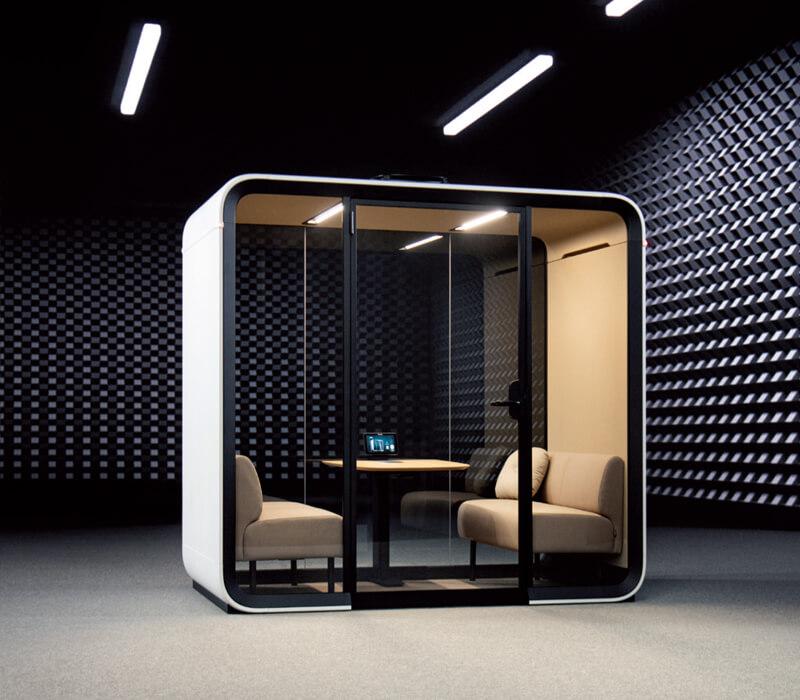
Fan noise is a critical part of ventilation evaluation because it directly affects the user's ability to speak naturally, hear the other party, and concentrate. A fan that is too loud may force users to raise their voices, which reduces acoustic privacy and increases fatigue during longer calls.
The evaluation should distinguish between steady fan hum, airflow noise, vibration, and intermittent changes in fan speed. A steady low-level hum may be acceptable, while a whine, rattle, or noticeable speed change can be distracting. The fan should also be evaluated during speech, not only in silence, because the interaction between voice and fan sound determines perceived comfort.
Acoustic balance: Ventilation openings must coexist with acoustic isolation. Completely open airflow paths are rarely compatible with strong speech privacy. Ask how the airflow channel is treated to limit speech leakage. A pod that is quiet but uncomfortable will have low daily use, while a pod that ventilates strongly but produces noticeable fan noise may not support confidential calls well.
| Fan observation | Good sign | Risk sign |
|---|---|---|
| Fan sound during speech | Fan is steady and does not interfere with conversation. | Fan whine, vibration, or airflow noise becomes obvious. |
| Fan speed changes | Fan operates at a consistent level during the session. | Fan speed changes noticeably and distracts the user. |
| Speech privacy | Ventilation path does not create obvious sound leakage. | Air openings appear to compromise acoustic isolation. |
In a busy office, a pod may be used continuously throughout the day with only short breaks between sessions. The ventilation system must not only handle a single session but also recover the interior condition before the next user enters. This recovery period is often overlooked in a simple demonstration.
A practical test is to run a normal session, leave the pod closed for a few minutes, and then re-enter to check whether the air feels fresh. If the interior remains warm or stale after a short break, the pod may not support high turnover in a real office. This is especially important for phone booths placed near busy workstations where users expect a quick, comfortable transition.
Recovery check: Ask the supplier whether the fan continues to run after the user leaves, or whether it stops immediately when the door opens. A fan that continues for a short period can help clear the interior before the next session. The buyer should also consider whether the fan control is automatic or requires manual adjustment.
| Session and recovery log | Observation | Acceptance note |
|---|---|---|
| Baseline before session | Record room temperature, fan setting, and initial freshness. | Confirm the surrounding room condition is stable. |
| Occupied session | Sit inside with the door closed for the expected session length. | Note airflow, heat, fan sound, and overall comfort. |
| Turnover break | Leave the pod closed for a short break between sessions. | Check whether the fan continues to run or stops immediately. |
| Recovery re-entry | Re-enter after the break and assess freshness. | Confirm the interior feels ready for the next user. |
Ventilation performance changes over time. Filters, grilles, and fan units collect dust, and a pod that felt fresh on day one may feel stale after several months if the airflow path is not maintained. Buyers should therefore evaluate service access before purchase, not after installation.
Ask where the fan unit is located and how it can be reached. A fan mounted behind a sealed ceiling panel may be difficult to service without moving the pod. A filter that requires removing the entire wall panel will likely be ignored by facility staff. The best design allows routine checks and cleaning through a simple access point.
Maintenance plan: Before signing an order, confirm the recommended cleaning interval for the fan and filter, the replacement part availability, and the procedure for checking airflow performance. A pod with excellent initial ventilation but poor service access may become a long-term comfort problem.
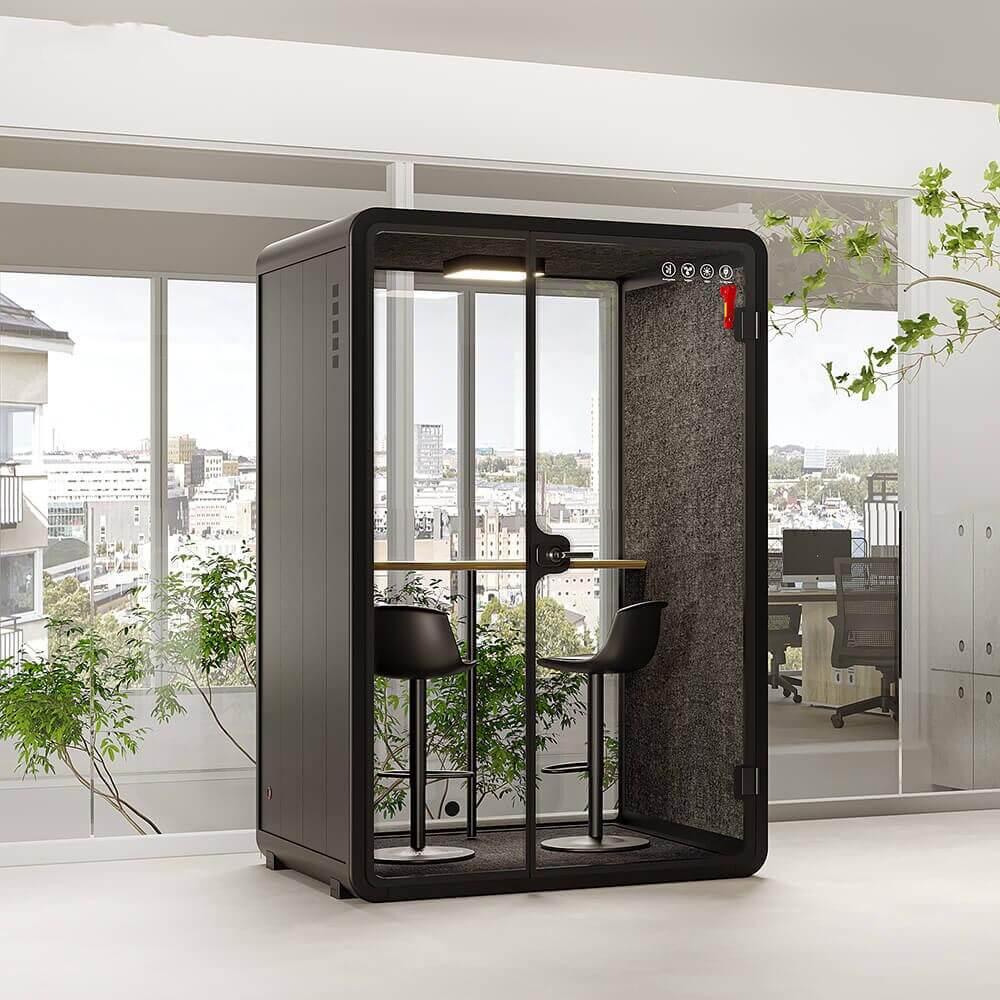
A structured acceptance record helps buyers compare different pods and confirm that the delivered unit matches the tested sample. The record should include the surrounding room condition, the occupied session result, the turnover and recovery observation, the fan acoustics note, and the service access review.
When the pod is delivered, repeat the same occupied test rather than relying on the showroom experience. Installation position, room temperature, and surrounding noise may differ from the showroom. A written record also helps facility teams understand the expected ventilation behavior and maintenance schedule.
Acceptance checklist: Use the session-and-recovery log as the core document. Add the fan acoustics observation, the airflow path description, and the service access confirmation. Keep the record with the purchase documents so that future maintenance and replacement decisions are based on the original performance target.
How long should an occupied ventilation test last?
The test should match the longest expected work session. A five-minute check is not enough for a pod intended for hour-long meetings. Sit inside with the door closed for the full planned duration and note how the air feels at the end of the session.
Can a pod fan replace the office air conditioning?
No. The pod fan circulates and exchanges air with the surrounding room, but it cannot cool or dehumidify the room air. If the office is warm, the pod interior will also be warm. The surrounding room condition is part of the ventilation evaluation.
Why does the pod feel stuffy even when the fan is running?
A running fan does not guarantee comfort. The airflow may not reach the seated position, the inlet and outlet may be too close together, or the surrounding room air may be warm. The occupied test should identify which factor is causing the stuffy feeling.
Should the fan continue running after the user leaves?
A short post-session run can help clear the interior before the next user enters. Ask the supplier whether the fan has a delay-off function or whether it stops immediately when the door opens. This feature is useful for high-turnover phone booths.
How often should pod ventilation be serviced?
The service interval depends on the office environment, inlet design, fan access, and any filter used by the selected model. A dusty workplace may need more frequent inspection than a clean office. Ask the supplier to identify the parts that users may clean, the parts reserved for service technicians, and the signs that airflow is being restricted. Record the agreed method in the handover file instead of assuming one universal interval.
Office pod ventilation should be approved through an occupied-use test, not by counting fans or reading an isolated airflow claim. Define the expected occupancy and session pattern, record the surrounding room baseline, trace the inlet-to-outlet path, listen for fan interference, observe heat through a realistic work period, and check how the space recovers before the next user. These observations show whether the pod and its proposed location work as one system.
The purchase record should state the tested configuration, site conditions, user load, controls, maintenance access, and acceptance result. If the pod remains comfortable, speech remains usable, recovery fits the booking pattern, and service points are accessible, procurement has evidence for release. If any condition is unclear, resolve it with a sample trial or written supplier clarification before production rather than treating ventilation as a decorative specification.

 Tel: +8613538031763
 Email: info@sopworkpod.com
 MP/WhatsApp: +8613538031763
 Manufacturer Address:Liucheng Lujiang District,Meixi Road,Nanan City,Fujian,China