
Need Help?
Please leave your contact information to get our latest catalog
Get In Touch Now >


Author:SOP Work Pods Manufacturer TIME:2026-08-28
Most buyers do not need every fact about office phone booths at once. They need the right questions in the right order. Starting with finishes, accessories, or a capacity label can produce a detailed quotation for the wrong workplace problem. Starting with call demand and decision boundaries narrows the field before technical and commercial detail becomes expensive to change.
This guide is organized as a question tree. Each branch closes one uncertainty: why the booth is needed, who will use it, what privacy means, how people and devices fit, whether the site can receive it, what the quotation covers, and who will operate it. The answers become a purchase brief and later an acceptance record.
No single booth configuration is presented as best for every office. The purpose is to help facilities and procurement decide what evidence they require and which trade-offs are acceptable in their own building.
Begin with observed demand. Note when calls move into corridors, meeting rooms are occupied by one person, confidential conversations are postponed, or open desks create repeated interruption. Separate phone and video calls from team meetings, focused work, interviews, and informal collaboration. These activities may need different spaces even when people use the word booth for all of them.
Review existing room supply and operating rules before buying. Poor booking discipline, missing headsets, a network problem, or an unpopular location can imitate a shortage. If an operational change resolves the issue, a new enclosure may not be the first action. If demand remains, describe the unresolved call route and the times or teams affected.
Set an exclusion as well as a goal. A single-person booth should not be expected to host a group workshop. A booth intended for short calls should not silently become the only place for long confidential sessions. Clear exclusions protect the later configuration decision from growing into an undefined promise.
Estimate demand with observation rather than an assumed utilization target. Sample relevant periods, note unsuccessful room searches, distinguish booked from actually occupied time, and record which activity displaced which other activity. A short study will not predict every future week, but it can show whether the proposed booth addresses a recurring pattern or merely an isolated complaint. Keep seasonal or organizational changes as named assumptions.
Ask what information must be protected and from whom. Speech privacy concerns whether nearby people can understand conversation detail. Visual privacy concerns screens, notes, expressions, and camera backgrounds. Transition privacy concerns what happens while entering, leaving, waiting, or opening the door. A buyer can need one, two, or all three.
Describe the office context. A booth beside an active collaboration area behaves differently from one in a quiet legal department. Record likely listener positions, surrounding activity, speaker behavior, and the sensitivity of the task. Supplier evidence can inform the review, but its configuration and test context should remain attached to the claim.
Plan a site observation with normal speech and real devices. Avoid demanding an absolute soundproof result without an authoritative basis. Instead, decide what would make the assigned call unacceptable, what can be managed by placement or behavior, and what needs a different configuration or room type.
Include privacy during waiting and turnover. Someone standing outside may see a screen through the door, hear the end of a call when it opens, or pressure the occupant to finish early. Booking buffers, door orientation, screen placement, and a clear occupancy signal can reduce these transition problems. If the call requires stronger control than the proposed arrangement can provide, route it to a more suitable room.
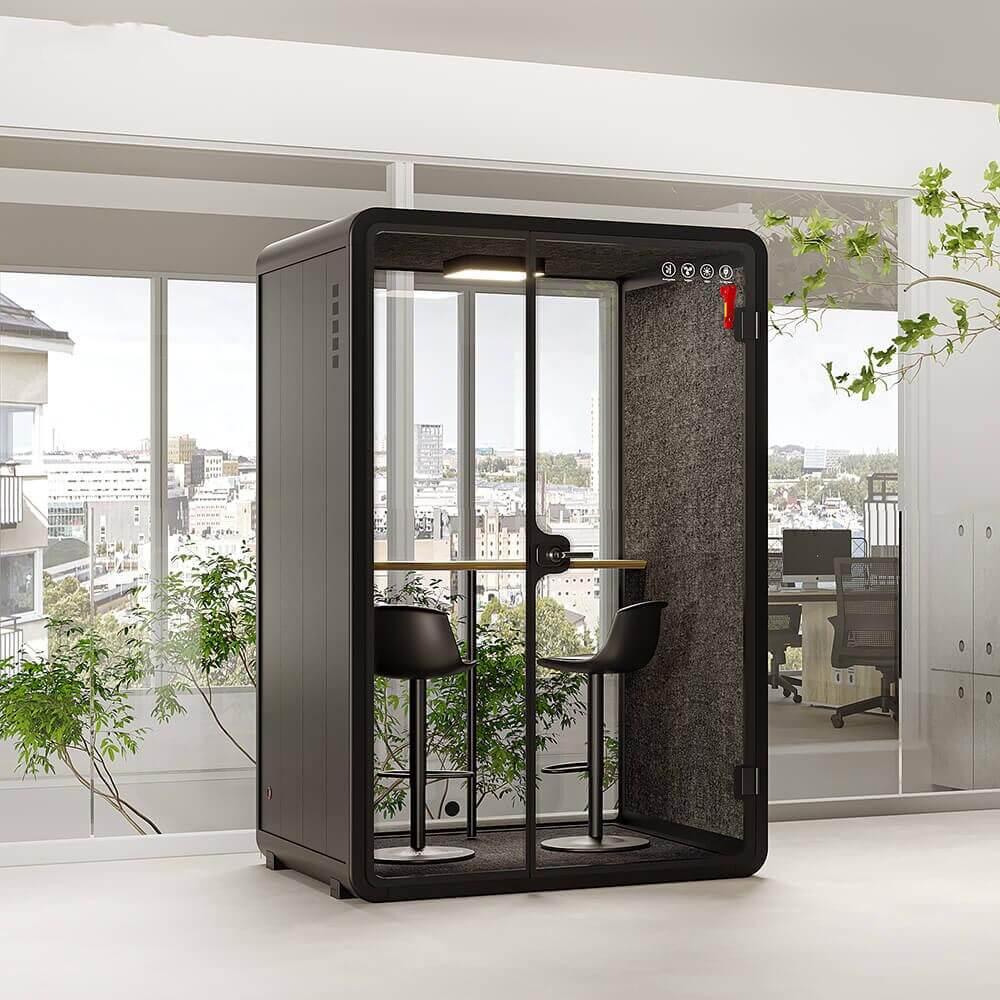
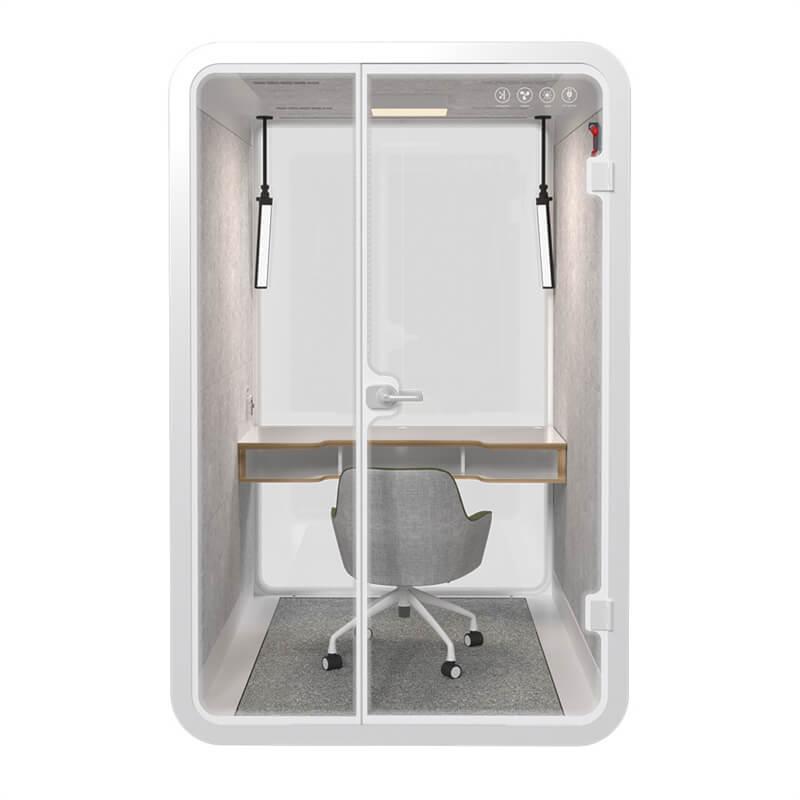
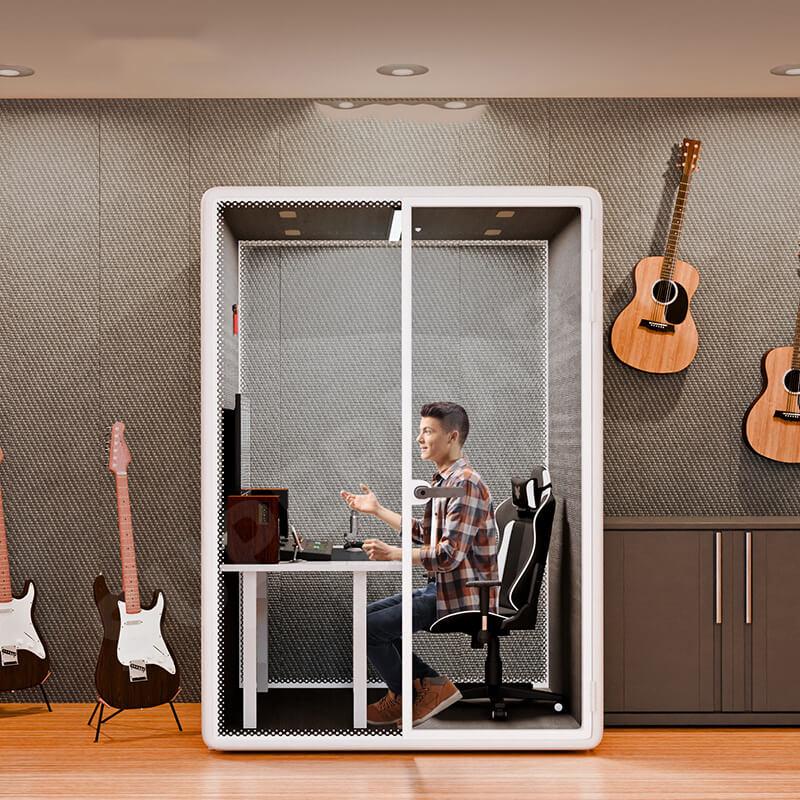
Chair count is not usable capacity. List the laptop, headset, notebook, bag, charger, assistive device, and any camera or display that enters with the user. Check table depth, leg clearance, reach, posture, door movement, internal circulation, and the position of controls. Use representative users rather than relying only on a drawing.
Duration changes the test. A space acceptable for a brief call may not suit a longer interview or support session. Use the demanding normal duration and note airflow, temperature perception, seat comfort, lighting, glare, and whether the user changes behavior by opening the door or ending early. These are observations, not universal comfort claims.
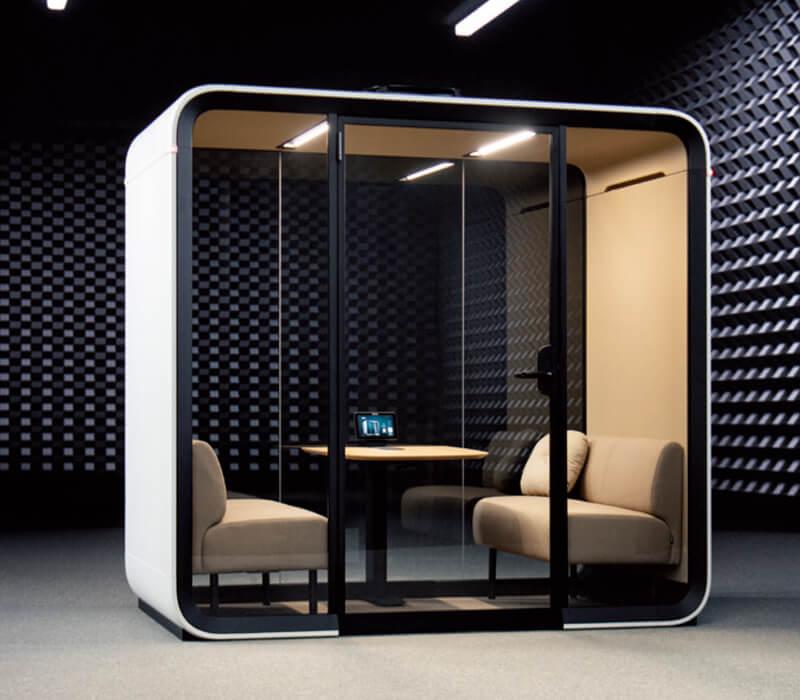
Review the available office phone booth range only after this fit brief exists. The product page can orient the discussion, while the project still needs verified dimensions, selected components, and a trial of the actual use route before approval.
Trace delivery from the unloading point to the installation area. Confirm the delivery state and handling units, then check doors, turns, lifts, floor protection, storage, working hours, and packaging removal. A finished external dimension does not automatically describe the largest component or the space needed for assembly.
Mark the service boundary. Identify the building-side power and data route, final connection responsibility, network equipment, and any workplace technology supplied by the buyer. Confirm that the proposed floor and surrounding area can support the approved installation using project information from responsible parties. Do not invent building criteria inside a product article.
Evaluate location as part of the user journey. Consider visibility, circulation, nearby noise, glare, emergency routes, cleaning access, and whether the booth blocks another workplace function. A technically installable location can still fail if people cannot find the booth, feel exposed while entering, or routinely disturb nearby desks.
| Buyer decision | Question to close | Evidence to retain | Reason to pause |
|---|---|---|---|
| Demand | Which repeated call problem remains after operating fixes? | Room-use observation and user route | The use case is still broad or contradictory |
| Privacy | Which speech, visual, or transition exposure matters? | Contextual observation and bounded supplier evidence | Privacy is described only as an absolute adjective |
| Fit | Can representative users and devices complete the normal session? | Layout, component schedule, and occupied trial | Capacity is inferred from a label |
| Site | Can the selected configuration reach, connect, and operate at the location? | Route survey and responsibility map | Access or service owner is missing |
| Commercial release | Does the order contain the accepted configuration and responsibilities? | Normalized scope and handover plan | Blank cells are treated as included |
Normalize quotations against the same brief. Separate the physical booth, selected options, freight, unloading, assembly, building connections, testing, documentation, and handover. Keep excluded work and buyer-supplied items visible. If suppliers propose different configurations, show the difference before ranking totals.
Look beyond acquisition without inventing a payback. Decide who manages booking, occupancy status, cleaning, user guidance, faults, service contact, replacement component requests, and any future move. Ask the supplier to describe the support route that applies to the selected offer and contract. The buyer can then judge whether ownership is realistic for the site.
Use conditions rather than a vague risk premium. A route not yet surveyed, local connection not priced, or accessibility criterion not confirmed should remain a named open item. Assign an owner and a date. A purchase should not be released merely because every uncertainty has been converted into an unexamined allowance.
Review how the booth will sit within the wider room portfolio. A phone booth should release larger rooms for group work only if users can find it, trust the privacy boundary, and complete their devices setup. Compare proposed quantity with meeting-room policy and support capacity. The answer may be a mix of booth locations and other room types rather than a single repeated configuration across the entire site.
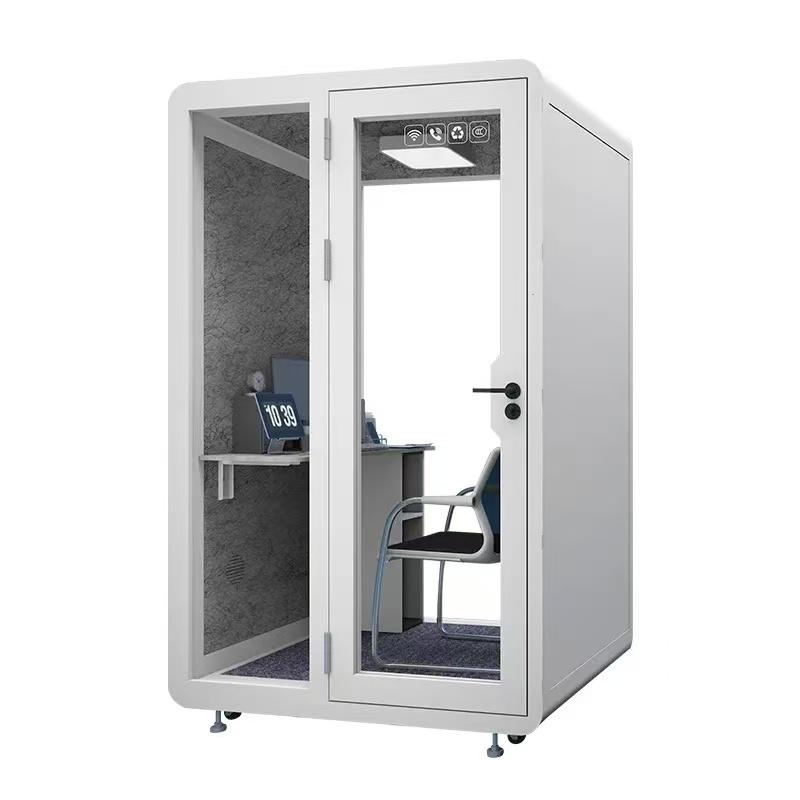
Use a representative call to verify the intended route. Include finding the booth, entry, device setup, normal speech, remote experience where relevant, occupied duration, exit, reset, and fault reporting. Record conditions and unresolved actions. A staged trial is more informative than a general showroom impression.
Repeat any part of the route affected by a correction. A resolved cable issue should be checked with the intended device; a changed location should reopen privacy and circulation observations; a booking change should be tested by a first-time user. This keeps acceptance proportionate to the change while preserving the conditions of the original trial.
Bring the decisions into one controlled brief: use cases and exclusions, privacy observations, user and device fit, selected configuration, site route, service interfaces, quotation scope, operating owners, and handover evidence. Reference source documents rather than copying unsupported claims into the brief.
At order release, confirm that the commercial document, configuration schedule, and purchase brief agree. At handover, reuse the same brief as the acceptance path. This continuity is what turns broad buyer knowledge into a specific, maintainable decision for the workplace.
After handover, protect the decision record from becoming static paperwork. Add confirmed configuration changes, accepted defects, updated service contacts, and location moves while keeping the original baseline. When a new team asks for another booth, review whether its call demand matches the earlier brief. Reuse the method, not the conclusion; a different task or building condition may justify a different answer.
A final buyer review should be short and adversarial. Ask what assumption would make the purchase wrong, which document is still provisional, and which team could not maintain its assigned responsibility. Resolve those questions or carry them as explicit conditions. This gives the approval meeting more value than another feature summary and makes the remaining uncertainty readable to the person authorizing the order.
Do not assume an absolute result from the product name. Review the supplier’s evidence within its stated configuration and test context, then observe normal speech at relevant positions in the proposed office. Define the privacy outcome and limitations the project actually needs.
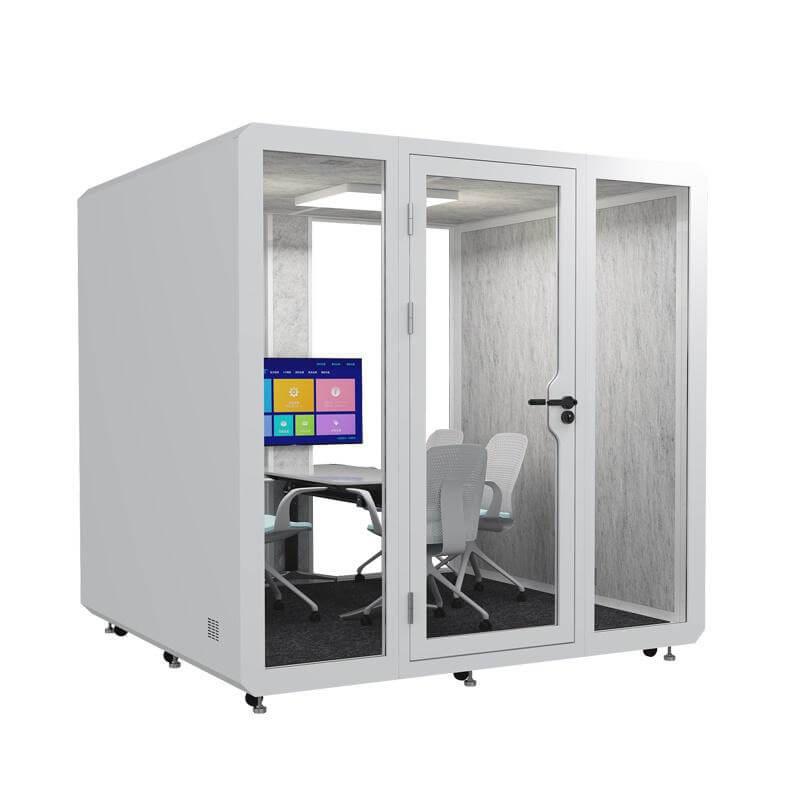
Use representative people, devices, furniture, door movement, internal circulation, and the demanding normal session. A capacity label alone cannot show usable fit. Retain the tested layout and selected component schedule with the decision.
Potential omissions include freight, unloading, route protection, assembly, local connections, buyer technology, testing, documentation, cleaning, service, and later relocation work. Do not assume any item is missing or included; mark the actual responsibility in each offer.
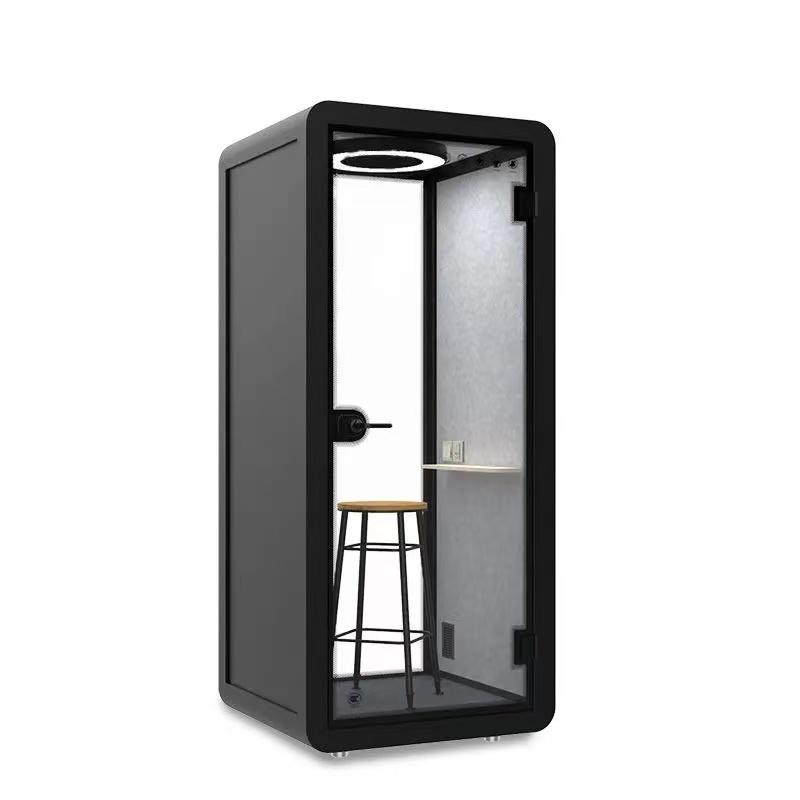
Ownership is usually shared. Workplace teams manage use and booking, cleaning teams follow approved methods, IT supports buyer devices and network services, facilities routes faults, and the supplier covers its contracted service boundary. Name the handoffs for the specific site.
Everything a buyer needs to know about office phone booths can be reduced to a disciplined sequence of decisions. Confirm the call-space problem, define privacy, test occupied fit, verify the site, normalize scope, assign operations, and witness the complete route.
The final output should be a concise purchase brief, not a pile of disconnected features. When the order and handover both refer to that brief, the workplace can see why the booth was selected and how its limitations will be managed.
Future teams can reuse the questions while making their own decision from current evidence.

 Tel: +8613538031763
 Email: info@sopworkpod.com
 MP/WhatsApp: +8613538031763
 Manufacturer Address:Liucheng Lujiang District,Meixi Road,Nanan City,Fujian,China